Wine Faults
Corked, oxidized, or just funky? A smell-by-smell guide to wine faults — how to tell if wine is bad, which bottles to send back, and which to forgive.
31 articlesStart here
Copper Haze in Wine: What It Looks Like and Why It FormsCopper haze is a cloud of copper sulfide that forms in sealed white and rosé bottles. How to spot it, how it differs from tartrates and protein haze, and why the copper got there.
Wine faults are chemical or microbial defects that make a wine smell or taste wrong — not unusual, not challenging, but genuinely damaged. The three you will meet most often are cork taint (a compound called TCA, which smells of wet cardboard and damp basement), oxidation (too much air, which turns wine flat, nutty, and bruised-apple sweet), and reduction (too little air, which smells of struck match, rubber, or boiled egg). Each has a recognizable signature, and each is confirmed the same way: swirl, sniff again, and ask whether the smell dominates the fruit or merely seasons it. This hub teaches you those signatures — plus the harder skill most guides skip: telling a true fault from a bold stylistic choice, so you can send a bottle back with confidence and keep an open mind in the same evening.
That second skill matters more than memorizing chemistry. Several of wine's most infamous "off" smells are deliberate in some traditions and defects in others, and the difference is usually dosage, not the smell itself. Learning where that line sits is what separates a taster who trusts their own nose from one who quietly drinks a flawed bottle because they assumed the problem was them.
How can you tell if wine is corked?
A corked wine smells of wet cardboard, damp basement, or musty old newspaper, and its fruit aromas seem muted or missing. The smell does not blow off with swirling — it gets more obvious as the wine warms in the glass. The palate confirms it: a corked wine tastes dull and finishes short, as if someone turned the volume down.
The culprit is TCA (2,4,6-trichloroanisole), a compound formed when natural fungi in cork meet chlorine-based compounds. Your nose is astonishingly good at finding it: published sensory research collected by the Australian Wine Research Institute puts the human detection threshold at roughly 2 to 5 nanograms per litre — parts-per-trillion territory, among the lowest thresholds of any aroma compound in wine.
The tricky cases are the low-level ones. A lightly corked bottle may not smell musty at all — it just tastes strangely hollow, with the fruit scrubbed out. If a wine you expected to be expressive seems flat and short, suspicion is warranted even without the tell-tale smell. Our full guide to how to tell if wine is corked walks through the check step by step, and the swirl-and-sniff technique in how to smell wine is the same one you will use to catch every fault on this page.
How common is cork taint?
Estimates published in the late 1990s and early 2000s put cork taint at roughly 2 to 5 percent of bottles sealed with natural cork. Rates have fallen sharply since: the Cork Quality Council reports that TCA detections in its audited cork samples have dropped by more than 95 percent since testing began in 2001.
In practical terms, the old numbers meant a tainted bottle in every few cases; today you may go months without meeting one. Cork producers achieved this with steam-cleaning processes, individual cork screening, and the quiet retirement of chlorine-based cleaning agents that fed TCA formation in the first place.
Two details most guides omit. First, TCA does not only come from corks — it can contaminate barrels, wooden pallets, even a winery's walls, which is why a wine under screw cap can occasionally still show "corked" aromas. Second, closure choice is a genuine trade-off rather than a solved argument; the fresh-versus-ageworthy debate is unpacked in our screw cap vs cork comparison.
What does oxidized wine taste like?
Oxidized wine tastes flat and looks tired. White wines darken toward amber and take on bruised apple, toffee, and stale-sherry notes; reds fade to brick-brown and taste stewed and thin. The fresh fruit is gone. Unlike reduction, oxidation cannot be swirled away — air caused the damage, and more air deepens it.
Oxidation happens when a wine gets more oxygen than the winemaker intended: a failed cork, a bottle stored upright for years until the cork dried out, or simply an opened bottle left too long on the counter. Color is your best early witness — a young white that pours deep gold or a young red with a brown rim is telling you something, and wine color and age shows you how to read those signals before you even sniff.
The essential nuance: controlled oxidation is a legitimate style. Sherry, Madeira, and the deliberately oxidative whites of the Jura are built on it. The fault is not oxygen itself — it is unintended oxygen in a wine meant to be fresh. Our deeper dive into oxidized wine covers both sides of that line.
Is it safe to drink faulted wine?
Yes — a faulted wine is unpleasant, not unsafe. Cork taint, oxidation, reduction, Brett, and volatile acidity change how a wine smells and tastes; they do not make it harmful to drink. The problem is purely sensory: the wine will not improve, so the only real question is whether you want another sip.
This is worth saying plainly because "is this wine bad?" usually carries a note of worry. Nobody has ever needed more than a sink to deal with a corked bottle. If your concern is about what is in wine generally rather than a specific fault, the most common source of confusion is additives — start with our plain-language explainer on sulfites in wine, which are a preservation tool and a separate topic from faults entirely.
Can you fix a faulted wine?
Only one common fault responds to first aid: mild reduction, which often blows off with vigorous swirling or ten minutes in a decanter. Cork taint, oxidation, heavy Brett, and high volatile acidity are permanent — no amount of air, time, or temperature will bring the fruit back. Diagnose first, then decide whether to pour it out.
Reduction is the exception because its sulfur compounds are volatile and unstable — expose them to air and many simply dissipate. That is why a faint rubbery note on first pour is a reason to decant, not to despair.
Cork taint, by contrast, has inspired one famous piece of cellar folklore: swirling crumpled plastic wrap through a corked wine. It genuinely works in the narrow chemical sense — TCA binds to polyethylene — but it strips fruit aromas along with the taint and leaves the wine tasting hollow. Treat it as a party trick that proves the chemistry, not a rescue. The honest playbook is simpler: fix what air can fix, and replace what it cannot.
Fault or feature: when is a smell intentional?
Several "fault" aromas are deliberate in some wine styles. A struck-match note in a taut white, a leathery farmyard whisper in a traditional Rhône red, and the nutty tang of Sherry are winemaking choices, not accidents. The test is dosage and balance: a feature seasons the fruit; a fault buries it.
This is the judgment call that separates confident tasters from anxious ones, and it has no shortcut — the same compound can be a signature at one concentration and a flaw at ten times that. Context helps: smoky, toasty notes that read as "burnt" to a new taster are usually just barrel influence, explained in what oaked means, and some traditions — natural wine especially — deliberately run closer to the edge on several of these smells than mainstream styles do.
So rather than a blanket rule, here is the verdict smell by smell.
Which smells mean a wine is faulty? A six-smell diagnostic
Use this as a field guide: find the smell, read the verdict. For the full nose-training version with practice exercises, see how to identify wine faults by smell.
Wet cardboard, damp basement, musty newspaper — verdict: always a fault. This is TCA, and no tradition anywhere considers it desirable. It does not blow off, it worsens as the wine warms, and even below the level you can consciously smell it mutes fruit. There is no borderline case. Send it back.
Vinegar — verdict: a fault when you notice it. This is volatile acidity (VA), mostly acetic acid, produced when bacteria meet oxygen. At trace levels VA can add lift and perfume — some celebrated wines carry a little — but the moment a wine smells recognizably of vinegar, it has crossed the line. Natural wines made with minimal sulfites run closer to that line by design, which is why the same bottle can be "alive" to one taster and "flawed" to another. The chemistry and the controversy are both in our guide to volatile acidity.
Nail polish remover — verdict: a fault when it stings. This is ethyl acetate, VA's chemical sibling, formed when acetic acid meets alcohol. A faint solvent-like edge on a just-opened, very young wine can fade within minutes; a sharp, nostril-prickling hit that persists is a defect. If it makes you flinch, trust the flinch.
Struck match, flint, rubber — verdict: usually a feature at low levels, a fault when it turns eggy. These are reduction aromas from sulfur compounds formed when wine sees too little oxygen. A whiff of struck match is a prized signature in many mineral-driven whites, and mild cases blow off with a swirl. The fault begins where the smell shifts from flinty to rotten egg, boiled cabbage, or garlic and refuses to leave. Train the distinction with how to smell reduction in wine.
Barnyard, horse saddle, sticking plaster — verdict: the genuine borderline. This is Brettanomyces ("Brett"), a yeast whose signature compounds — 4-ethylphenol and 4-ethylguaiacol, characterized by the researcher Pascal Chatonnet in the early 1990s — read as earthy, leathery complexity at low levels and as a dirty stable at high ones. Some traditional European reds wear a trace of it proudly; most modern wineries treat any of it as contamination, because Brett grows in barrel and rarely stays subtle. If the fruit still leads, many call it character; if all you smell is animal, it is a fault. Decide for yourself with our profile of Brett in wine.
Stale beer, corn chips, mouse cage — verdict: always a fault, and a sneaky one. Mousiness is a bacterial fault with a cruel twist: its compounds are not volatile at wine's acidic pH, so you cannot smell it in the glass at all. It appears only after you swallow, when your mouth's higher pH releases the aroma retronasally — a delayed wave of stale-cracker funk on the finish. Sensitivity varies enormously from person to person, and mousiness has become more common as more producers work with minimal sulfites. There is no level at which it is a feature.
When should you send a bottle back?
Send a bottle back when it shows a clear fault — corked, oxidized, vinegary — not when you simply dislike it. Name what you smell, ask the server to check, and stay friendly: restaurants replace faulted bottles as a matter of routine, and a specific description like "wet cardboard" settles the question quickly.
The same logic applies at a wine shop: most retailers will take back a faulted bottle if it is mostly full and you have the receipt. What earns goodwill in both settings is precision. "This smells like damp basement and the fruit is gone" is a diagnosis; "I don't love it" is a preference — and only one of them is the wine's fault. For scripts, etiquette, and the gray areas, read when to send wine back.
Where to go from here
The guides in this section take each fault one at a time — what causes it, what it smells like at low and high levels, and what to do about the bottle in front of you. Start with cork taint, the fault you are statistically most likely to meet, then work through oxidation and reduction, the two sides of wine's relationship with air.
Reading builds the framework; smelling builds the skill. Sommy's guided tastings include fault-recognition exercises that help you calibrate your nose on real wines, so that the next time something smells wrong, you will know — quickly, specifically, and with enough confidence to do something about it.
Articles in this topic
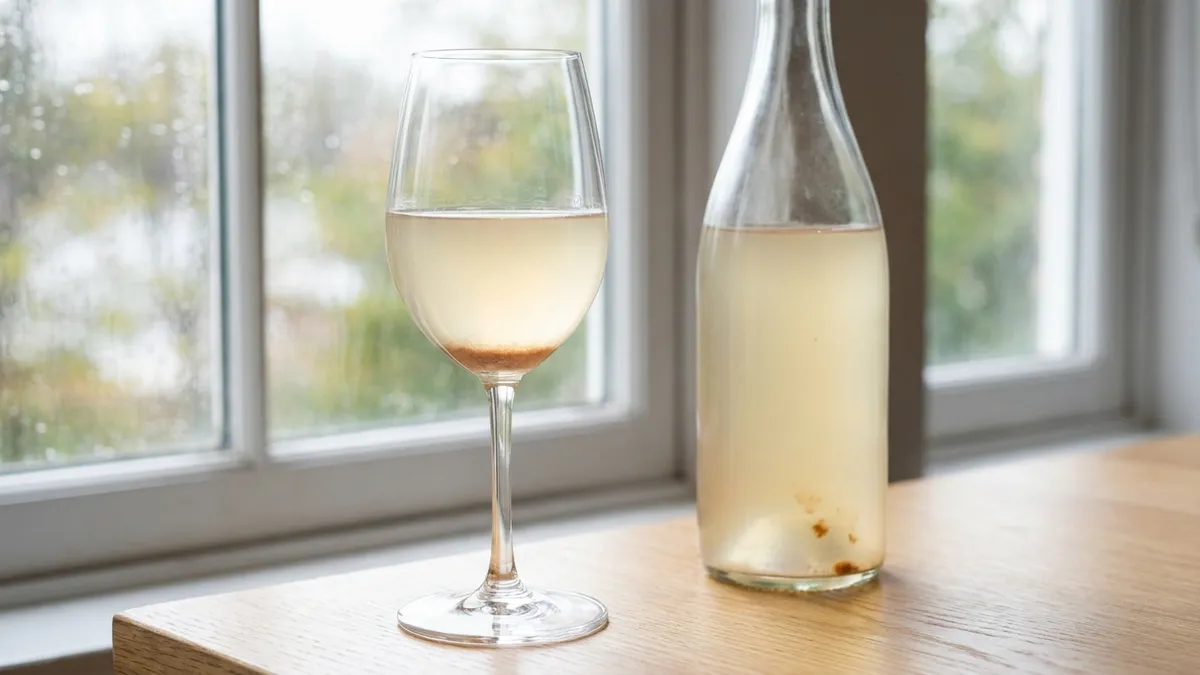
Copper Haze in Wine: What It Looks Like and Why It Forms
Copper haze is a cloud of copper sulfide that forms in sealed white and rosé bottles. How to spot it, how it differs from tartrates and protein haze, and why the copper got there.
Wine Too Tannic? Why It Grips and How to Fix It Tonight
A wine is too tannic when its grip outlasts its fruit. What causes it, the three quick tests that tell a harsh wine from a young one, and why food beats the decanter.
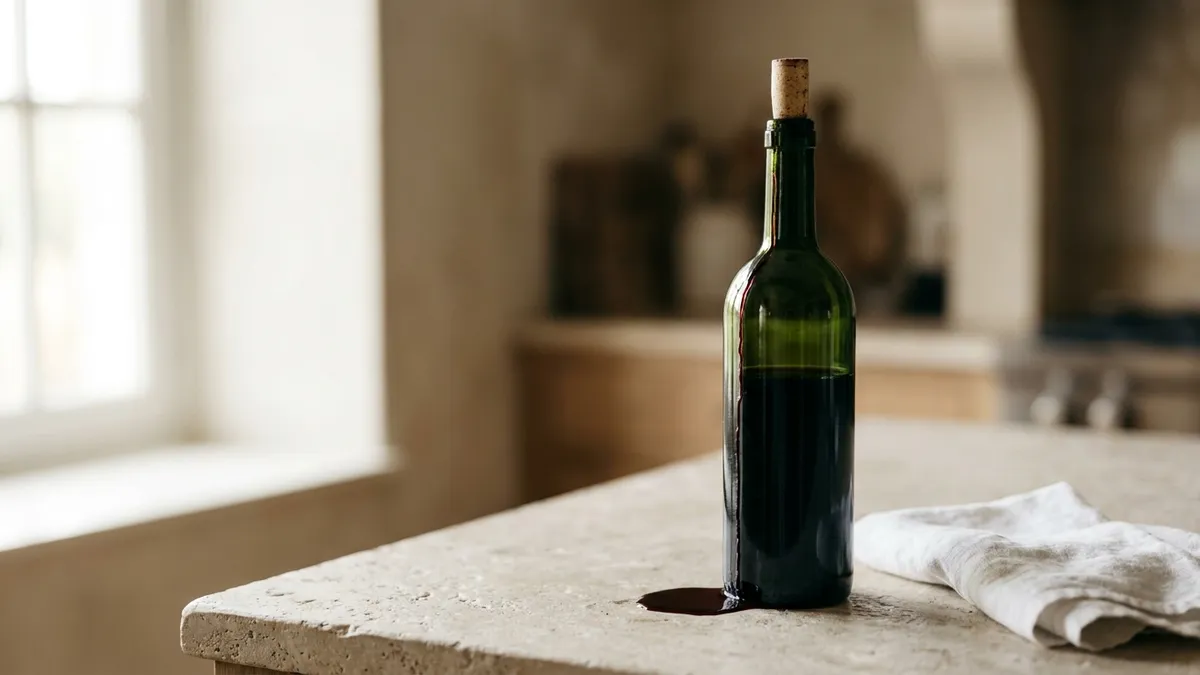
Wine Bottle Exploded? The Four Causes and What to Do
A wine bottle explodes or loses its cork for one of four reasons: yeast making gas, heat, ice, or weak glass. How to tell which, how to handle a bulging bottle, and how to store wine so it never happens.
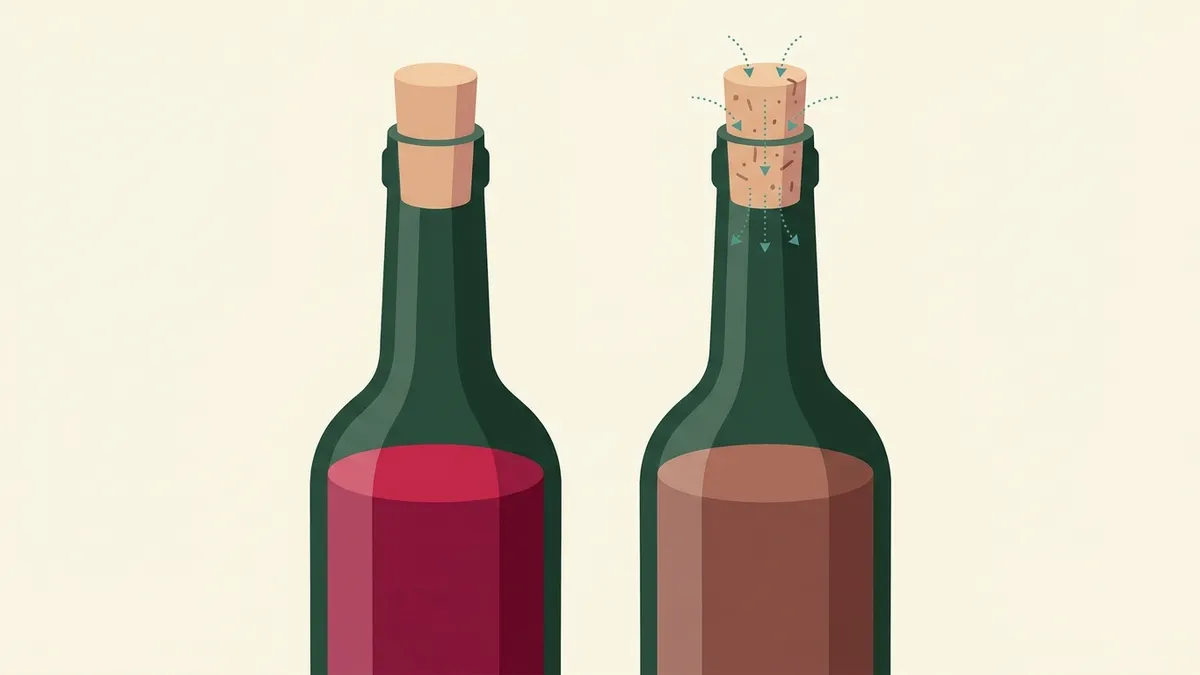
Bottle Variation in Wine: Why Two Bottles Taste Different
Bottle variation in wine comes from corks that let in different amounts of air, bottles that travelled differently and nights that were served differently. A second bottle tells you which.
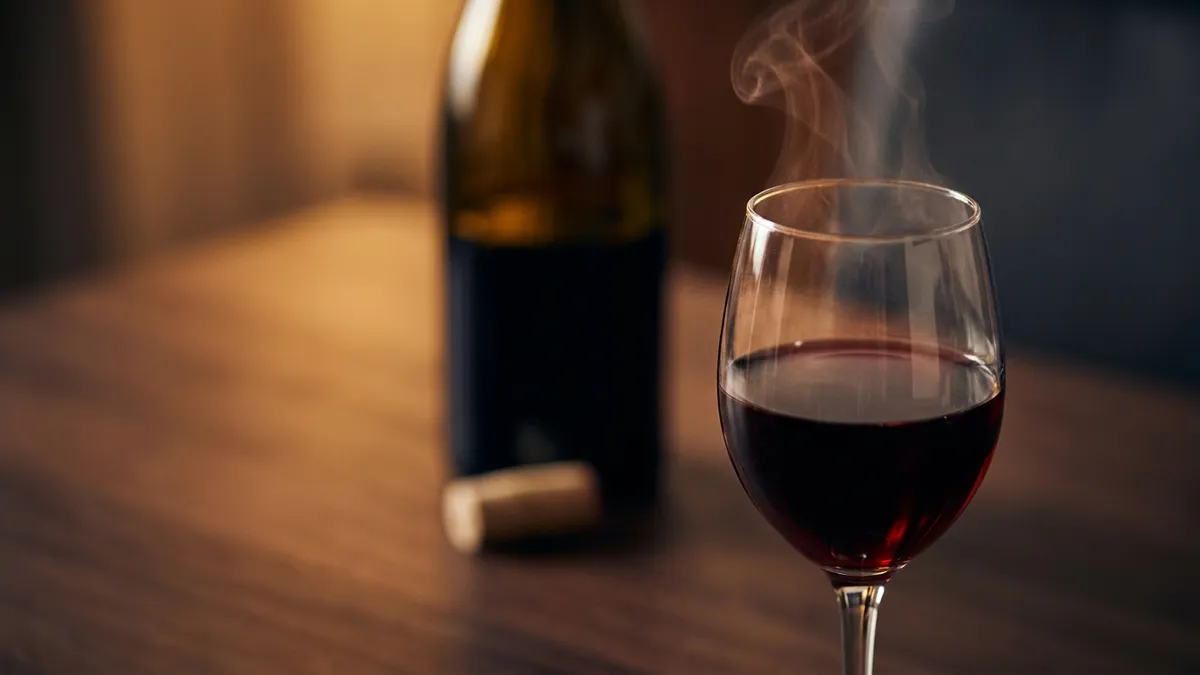
Ethyl Acetate Wine Fault: The Nail Polish Remover Smell
Why some wines smell of nail polish remover: what ethyl acetate is, how it differs from volatile acidity, what causes it, the US and EU legal limits, and how to check a glass.
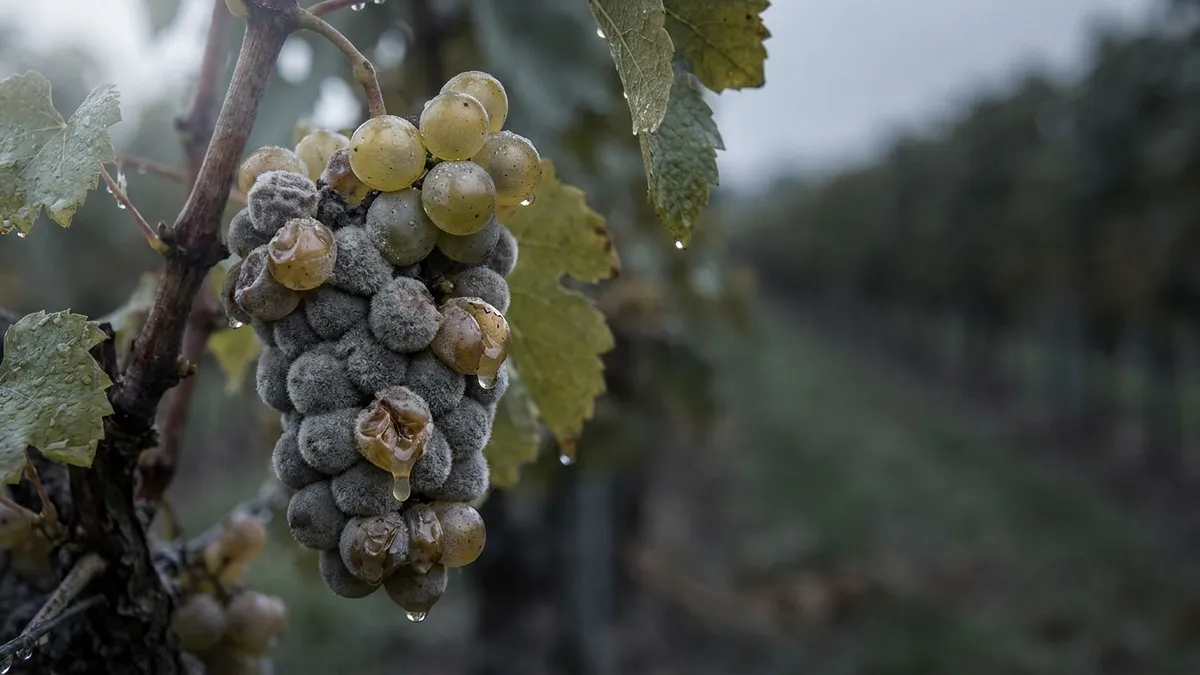
Laccase Enzyme in Wine — When Botrytis Turns Wine Brown
The laccase enzyme in wine explained: how grey rot brings a browning enzyme into grape juice, why sulfur dioxide barely slows it, and how winemakers keep it out.
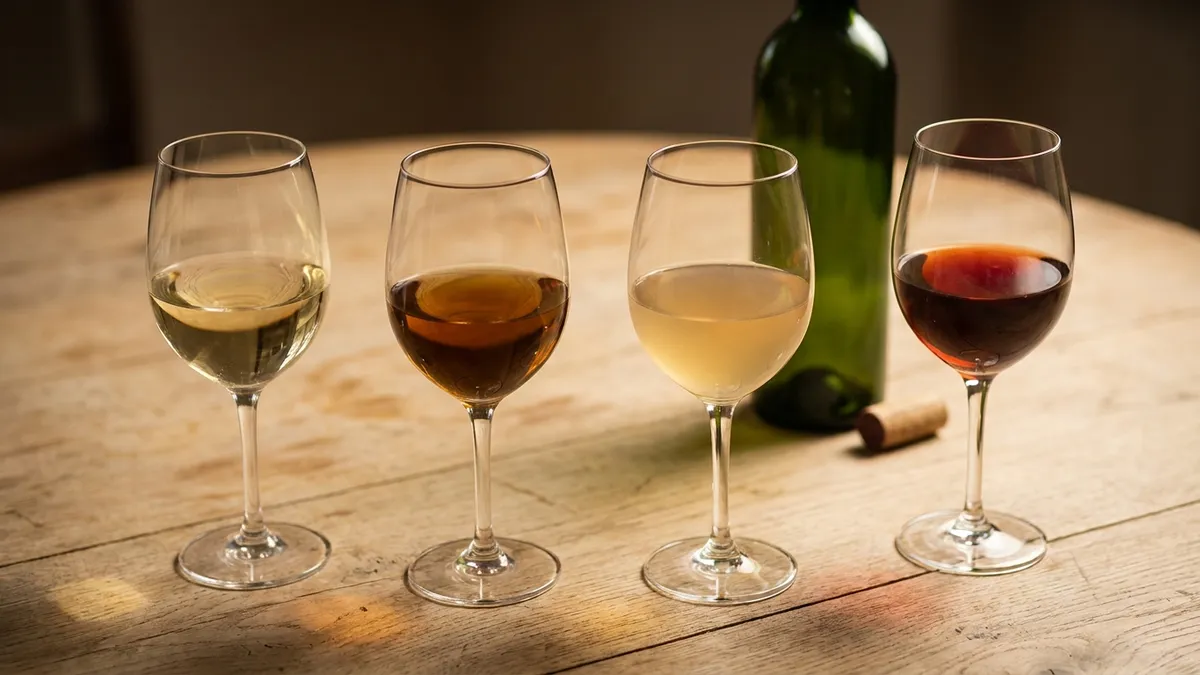
Wine Color Faults: Brown, Cloudy and Unusual Hues Decoded
How to read wine color faults: when brown, brick, cloudy, orange or crystal-flecked wine is a normal style, when it is a fault, and what to do with the bottle.

Excess SO2 in Wine: The Burnt Match Smell That Fades
What excess SO2 in wine smells like, why the burnt match prickle usually fades with a swirl, how to tell it from rotten egg, and when a sulfitic bottle is worth sending back.
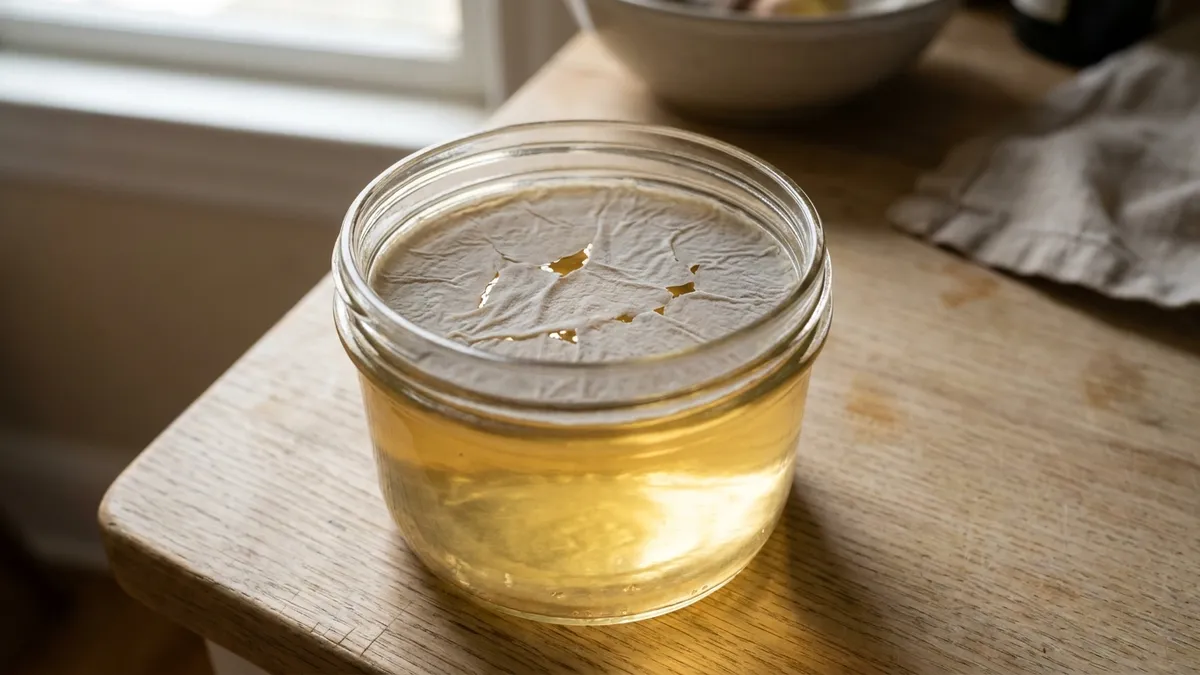
Film Yeast on Wine: What That White Surface Film Means
Found a white skin on leftover wine? Learn what film yeast is, how to tell it from mold, whether the wine is still drinkable, how to save it, and why sherry grows a film on purpose.

Herbaceous Green Wine Faults: When Unripe Grapes Take Over
Why some wines smell of green pepper or cut grass, the two chemical sources behind it, when green crosses from style into fault, and how to taste for it.
Microbial Spoilage in Wine: Brett, Vinegar and Mouse
Microbial spoilage in wine comes from three microbe families: Brett yeast, vinegar bacteria and lactic acid bacteria. Learn what each smells like and what stops it.

Protein Haze in Wine: Why Your White Wine Went Cloudy
Protein haze in wine explained: why a white wine turns cloudy after heat, whether it is safe, how to tell it from tartrate crystals or a fault, and how winemakers prevent it.

Geranium Taint in Wine: The Floral Fault From Sorbic Acid
Geranium taint makes a wine smell of crushed geranium leaves. Learn what causes it, which wines are at risk, how to tell it from a floral grape, and what to do with a tainted bottle.
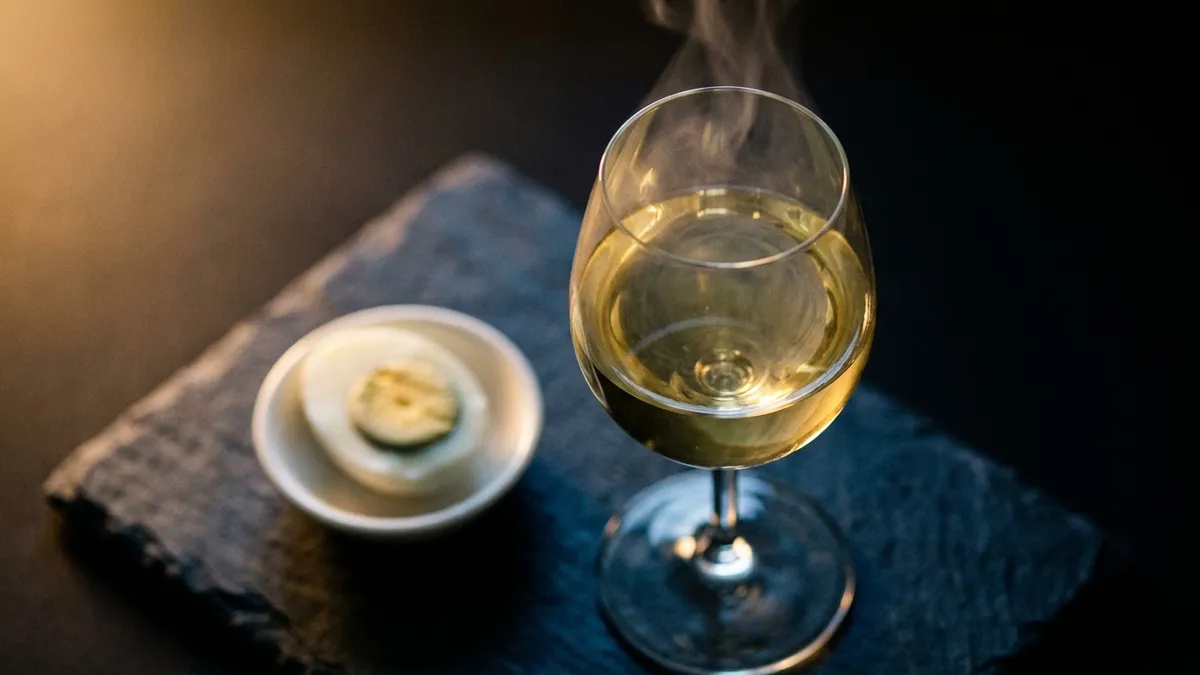
Hydrogen Sulfide in Wine — The Rotten Egg Smell Explained
Hydrogen sulfide in wine is the rotten-egg smell. Learn why hungry yeast make it, how it differs from sulfites and cork taint, and when air fixes it.

Lightstruck Wine Fault: How Light Turns Wine to Cabbage
Why a white, rosé or sparkling wine left under shop lights smells of cabbage and wet cardboard, which bottle colours protect it, and why the damage cannot be undone.
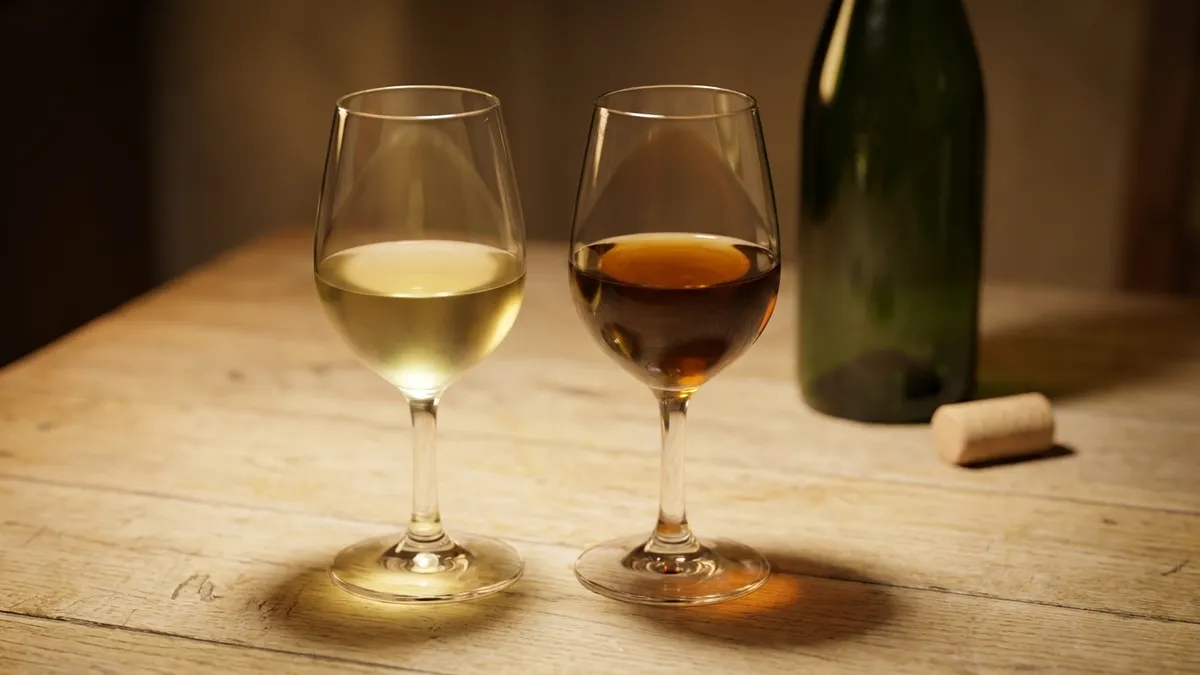
Premature Oxidation in Wine: Why Young Whites Turn Brown
Premature oxidation turns young white wine brown, flat and Sherry-like years too early. Learn the signs, how it differs from normal aging, the causes and what to do.
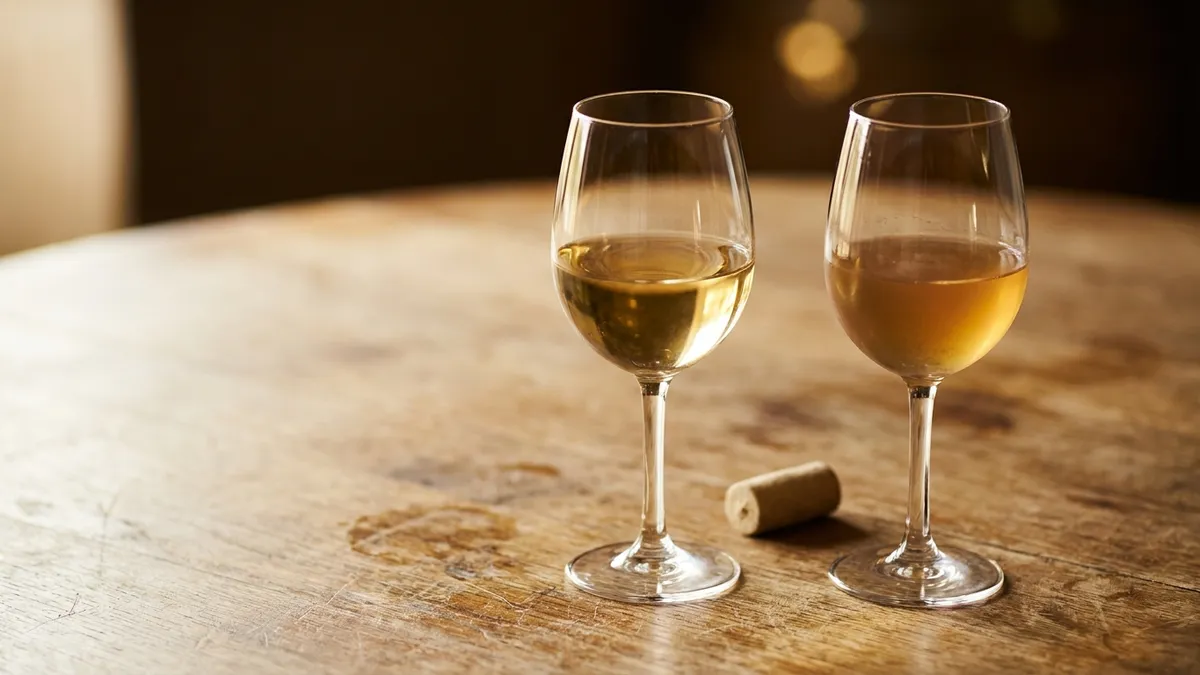
Wine Fault vs Style: How to Tell Funk From a Bad Bottle
Wine fault vs style, settled with numbers: the doses where brett, volatile acidity, reduction and diacetyl turn from character into faults, and the three questions to ask at the table.

Smoke Taint in Wine: How Wildfires Affect Vineyards
How wildfire smoke gets into grapes, why smoke taint hides until after fermentation, what it tastes like, how to tell it from oak, and what winemakers can do about it.
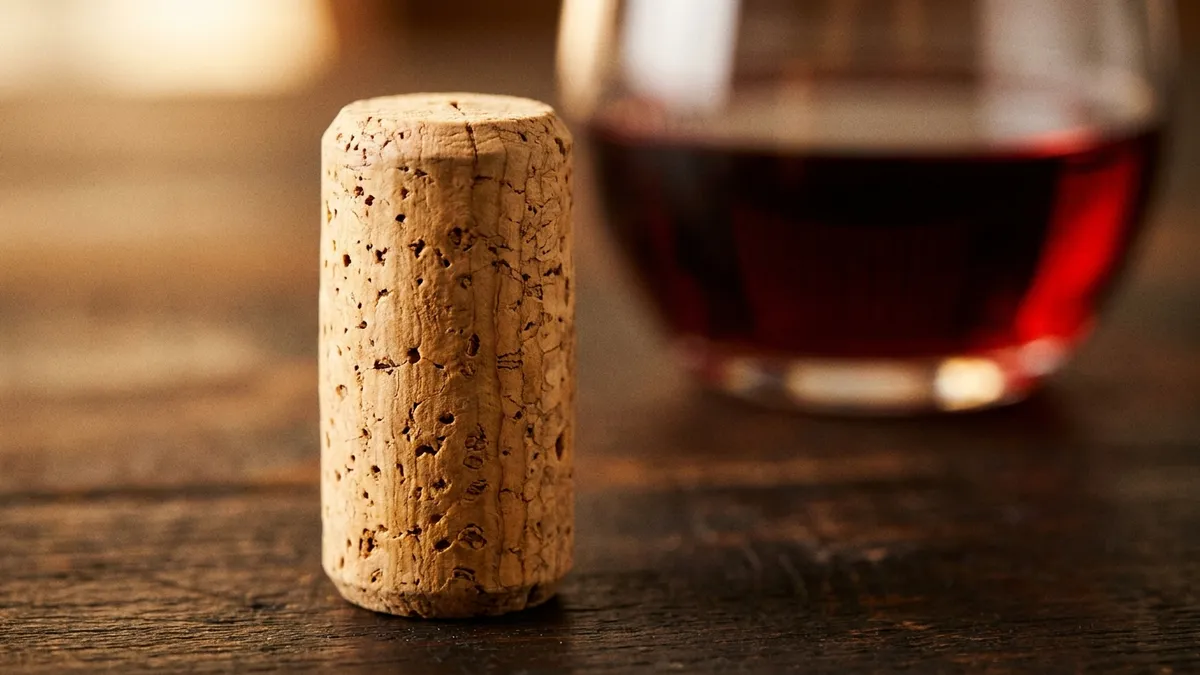
TCA and Cork Taint: The Real Science Behind a Corked Wine
TCA cork taint science, explained plainly: what 2,4,6-trichloroanisole actually is, how it forms, why it mutes fruit instead of just smelling musty, and why the taint-rate numbers you see everywhere disagree.
Mousy Wine Taint: The Fault You Taste but Can't Smell
Mousy wine taint smells like nothing in the glass and like a hamster cage on the finish. Learn the compounds, the pH trick behind it, the home test, and how it differs from brett and VA.
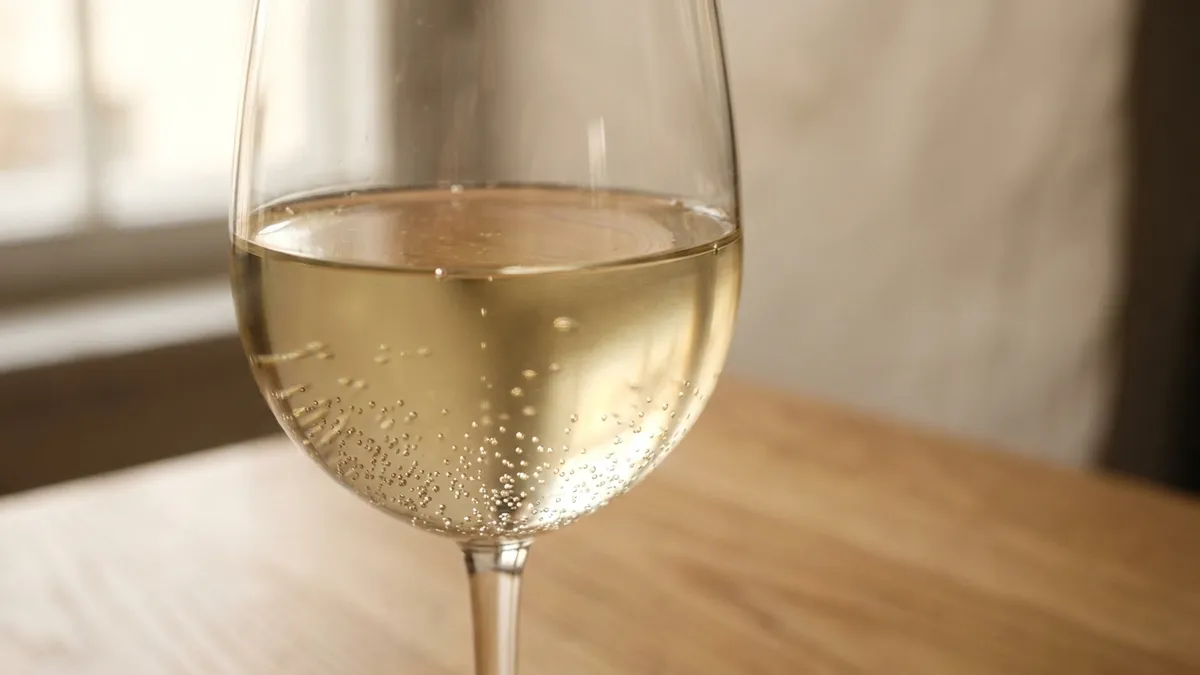
Why Is My Wine Fizzy? Refermentation in the Bottle Explained
Bubbles in a still wine? Learn what refermentation is, how to tell a deliberate prickle from a real fault, whether fizzy wine is safe, and when to return the bottle.
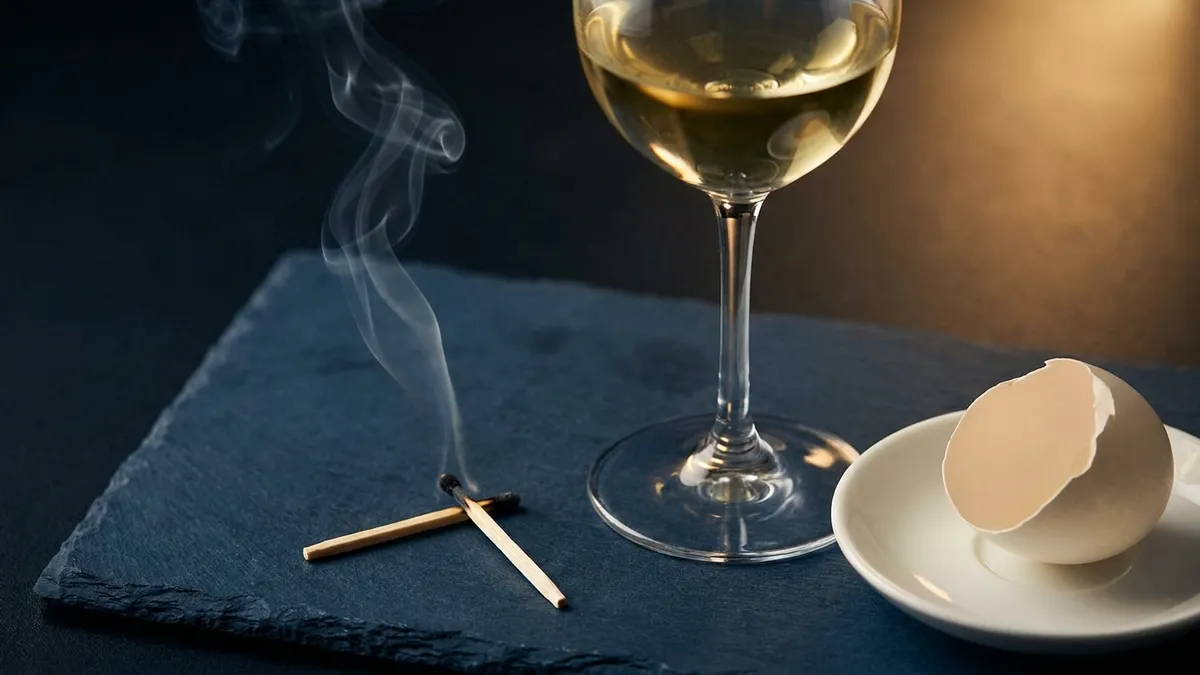
Sulfur Smell in Wine — Rotten Egg, Match, or Fault?
A sulfur smell in wine can mean three very different things — added preservative, reductive winemaking, or a fault. Here is how to tell them apart and what to do.
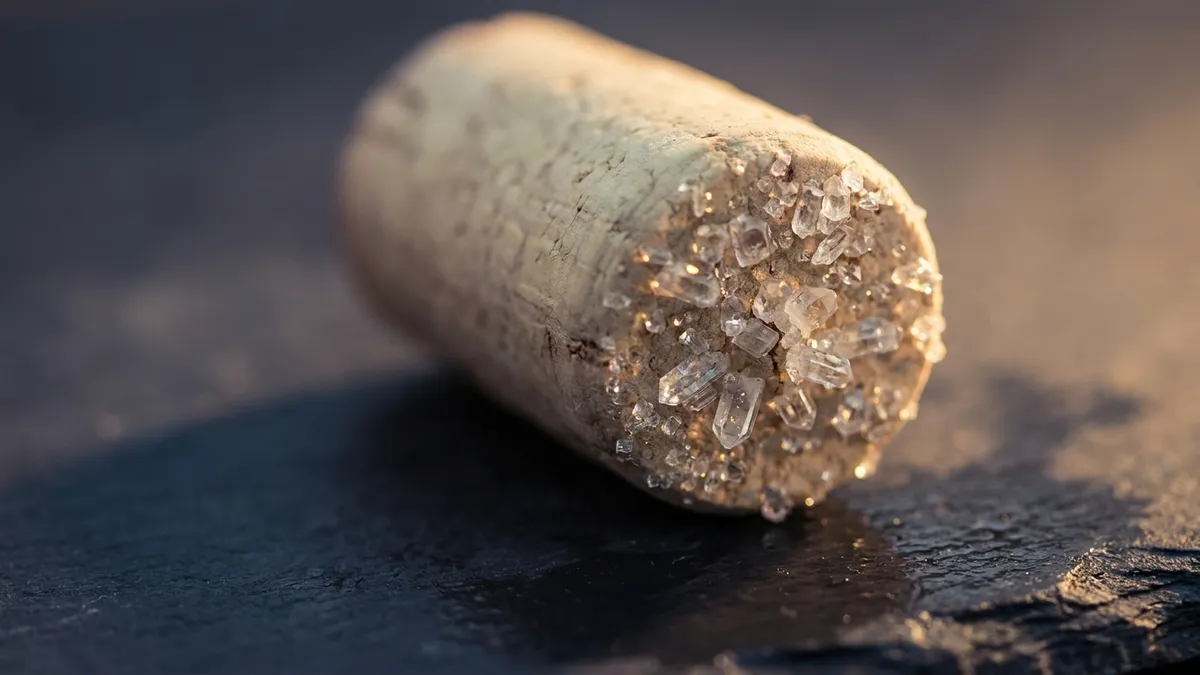
Tartrate Crystals in Wine: Harmless Wine Diamonds Explained
Those clear crystals on a wine cork are not broken glass or sugar — they are tartrate crystals, a harmless natural salt. Here is what causes them, why whites and rosés show them most, and how to serve a bottle so they stay put.
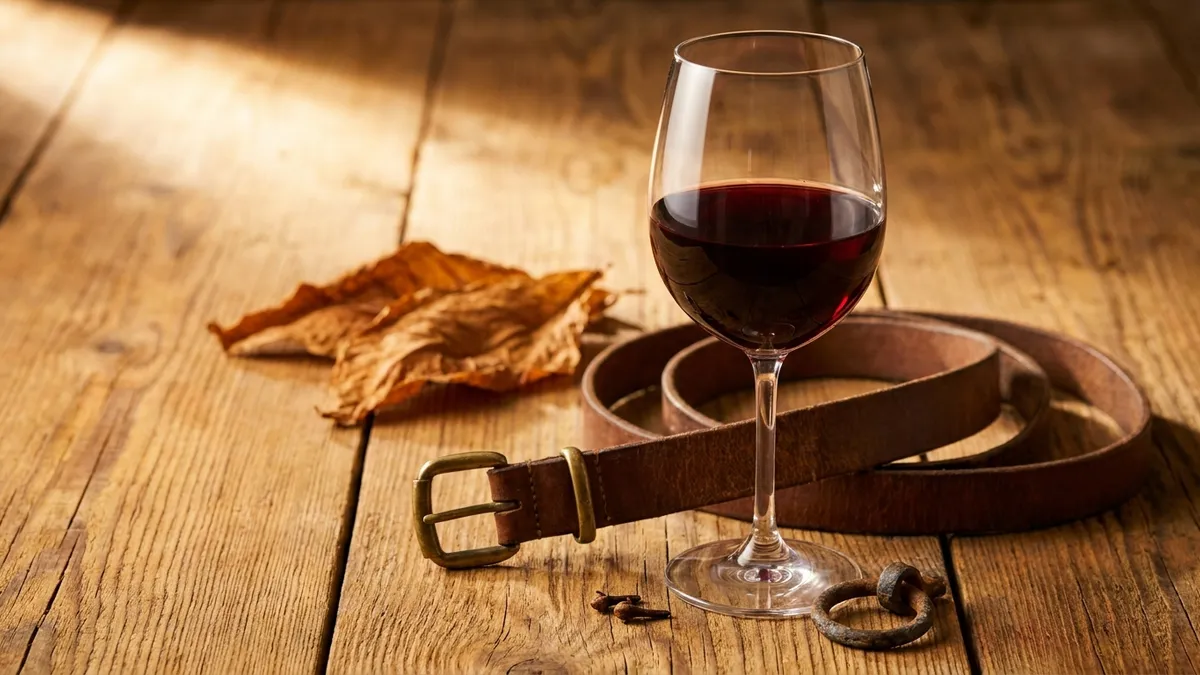
What Causes Brett in Wine? Smell, Fault and What to Do
Brett is a wild yeast, Brettanomyces, that turns leftover sugar into barnyard and band-aid smells. What causes it, when it counts as a fault, how labs test for it, and what a drinker can do.
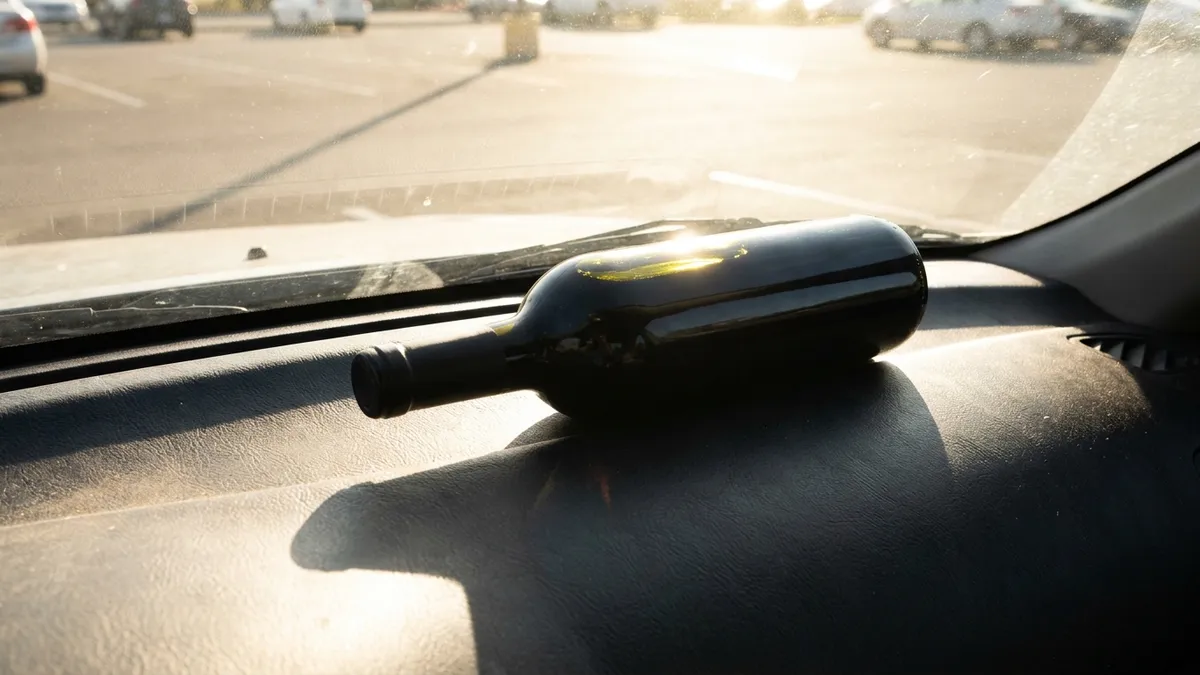
What Is Cooked Wine? How Heat Ruins a Bottle
Cooked wine is wine damaged by heat exposure during shipping or storage. Here is what the fault smells like, why it happens, the temperature thresholds that ruin a bottle, and how to spot a heat-damaged wine before you buy it.
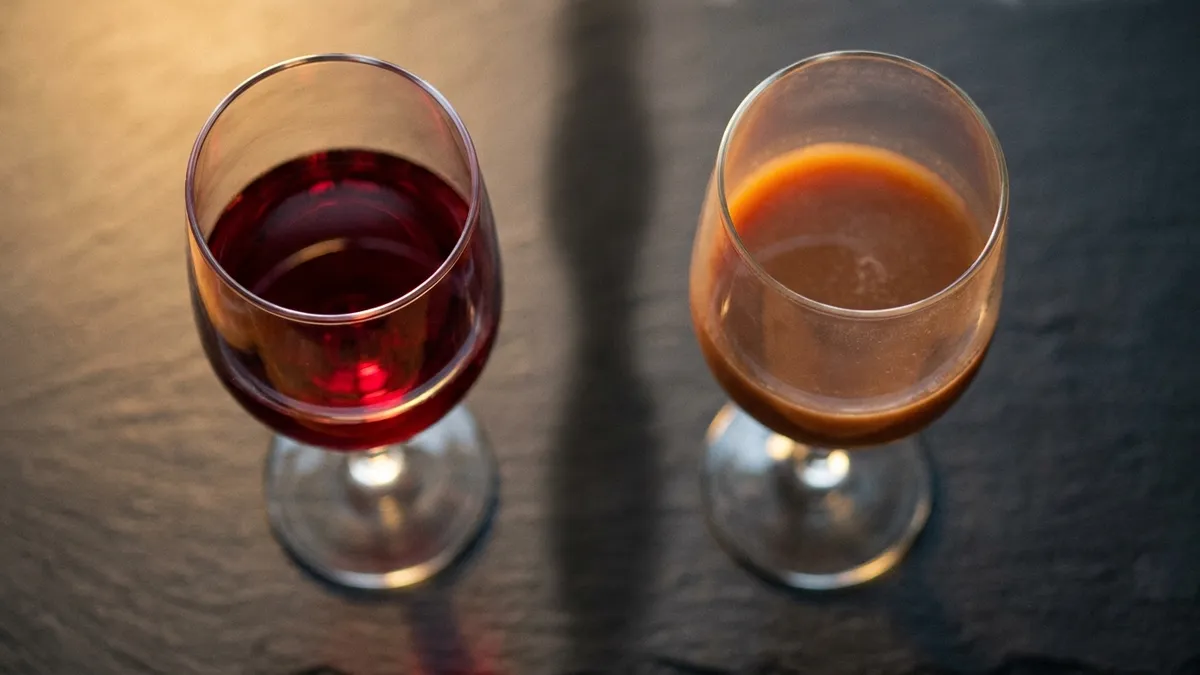
Oxidized Wine: What It Smells Like and How It Happens
Oxidized wine smells of bruised apple, sherry, and roasted nuts because oxygen has converted ethanol into acetaldehyde. Here is exactly what oxidation does, when it is a fault, and when it is the whole point of the bottle.
Volatile Acidity in Wine: When Vinegar Notes Go Too Far
Volatile acidity in wine is the sharp vinegar note that creeps into a glass when acetic acid bacteria meet oxygen and ethanol. Here is what causes it, when it ruins a bottle, and when it is the whole point of the style.

When to Send Wine Back at a Restaurant (and How to Do It)
The polite, practical guide to when you can send wine back at a restaurant — the three valid faults, the three invalid reasons, the tasting ritual decoded, and the exact words to use.
Has Your Wine Gone Bad? 5 Ways to Tell Before You Sip
Wondering if your wine has gone bad? Five visual, aromatic, and physical signs that tell you whether a bottle is still drinkable — before you take that first sip.
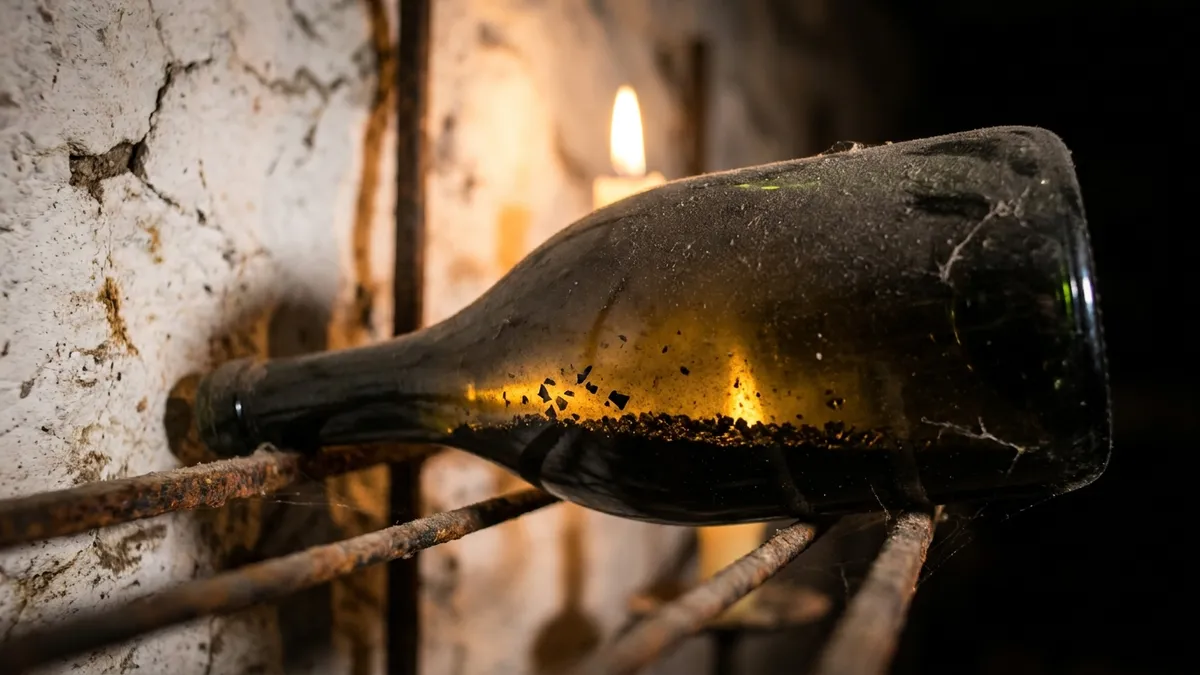
Wine Sediment: Is It Safe and What Does It Mean?
Wine sediment is harmless, predictable, and often a sign of quality. Here is exactly what those crystals and dark grains are, why some bottles have them, and how to serve a bottle so the sediment stays in the bottle, not the glass.
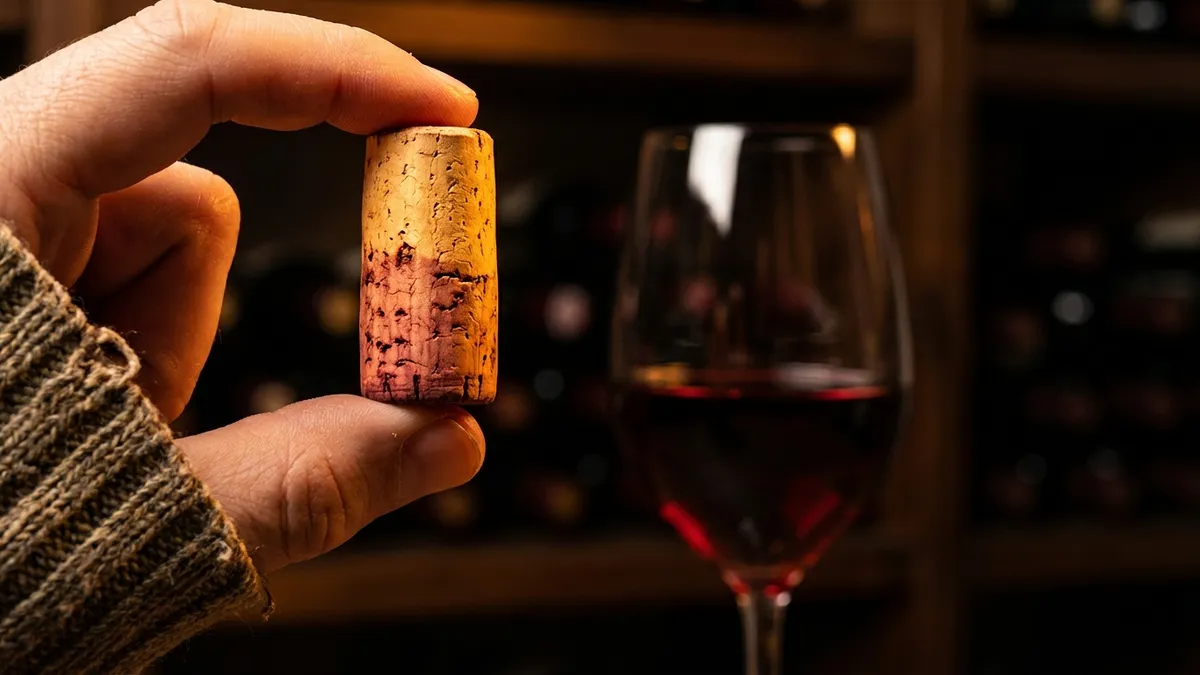
How to Tell If Wine Is Corked: Signs, Smell, and What to Do
Corked wine is the most common wine fault, but most people have never been taught to spot it. Here is exactly what corked wine smells like, why it happens, and how to handle it at home or in a restaurant.