Wine Bottle Exploded? The Four Causes and What to Do

By the Sommy Team — AI-assisted, human-edited.
Updated Oct 1, 2026
Contents (9)
- Why Did My Wine Bottle Explode, in One Paragraph?
- Which of the Four Causes Was It?
- What Should You Do Right Now With a Burst or Bulging Bottle?
- Can Refermentation Make a Wine Bottle Explode?
- Can Heat Push the Cork Out or Break a Bottle?
- Can Wine Explode in the Freezer?
- Is the Wine Still Drinkable After the Cork Pushed Out?
- How Do You Store Wine So Bottles Do Not Burst?
- Why Did Early Champagne Bottles Burst So Often?
TL;DR
A wine bottle bursts or pushes out its cork for four reasons: yeast refermenting leftover sugar, heat expanding the wine, water freezing into ice, or flawed or knocked glass. Fizz and haze mean refermentation. Chill a bulging bottle before opening it, cover it with a towel, and never pour from cracked glass.
When a wine bottle exploded in a rack, a car or a freezer, one of four things did it: yeast making gas, heat, ice, or weak glass. Each cause leaves its own clues on the bottle. Those clues name the culprit and show whether the bottles beside it are at risk.
Why Did My Wine Bottle Explode, in One Paragraph?
A wine bottle explodes when the pressure inside grows faster than the cork or glass can hold. The most dangerous cause is refermentation (yeast restarting fermentation inside the sealed bottle), which turns leftover sugar into carbon dioxide gas. A still-wine bottle is not built for that pressure, while a Champagne bottle is made to hold about 6 bar, or 90 psi. Heat makes the wine expand and push the cork up. Freezing turns water into ice that lifts the cork or cracks the glass. A flaw or a hard knock can break a bottle with no pressure at all.
Which of the Four Causes Was It?
Read the clues: fizz and haze point to refermentation, a raised cork after warmth points to heat, slush points to ice, and a clean crack with none of these points to the glass. Check where the bottle was in the last few days, then match it below.
| Clue on the bottle | Likely cause | When it happens | What to do |
|---|---|---|---|
| Still wine turns fizzy, hazy or yeasty; cork pushed up; hiss on opening | Refermentation | Weeks or months after bottling, often in sweet or homemade wine | Chill, open with a towel over a sink, then pour it away or return it |
| Cork raised, wine on top of the cork or sticky under the foil | Heat | After a hot car, a sunny window, a summer delivery | Smell and taste a little; pour it away if it smells stewed |
| Slush or ice inside, cork lifted, or a crack after the freezer | Freezing | A forgotten bottle in the freezer or a car in deep frost | Thaw upright in the sink; discard if the glass cracked |
| Clean crack or broken base, no fizz, no heat, no cold | Flawed or knocked glass | After a drop, a bump in a rack or a sudden temperature shock | Pour nothing from it; wrap and discard |
If more than one bottle from the same case shows fizz or a raised cork, assume the batch is refermenting and chill the rest of the case before opening any of it.
What Should You Do Right Now With a Burst or Bulging Bottle?
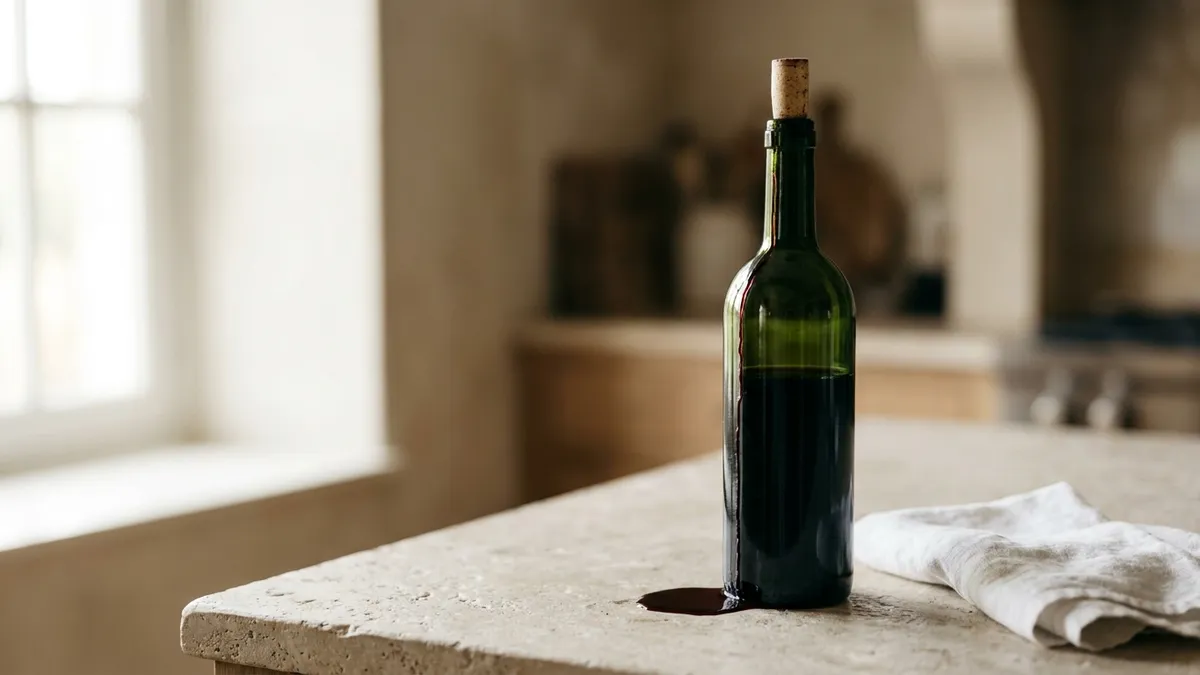
Cool it, cover it and keep your face away from it. A bottle that has already burst is a cleaning job. A bottle that is bulging, hissing or leaking is the risk, because it may still be under pressure. The gas only drops when the wine gets cold or the cork comes out.
- Leave broken glass alone at first. Wine soaks a wide area, and splinters travel far. Put on shoes and gloves before you clear it.
- Chill any suspect bottle in the fridge for a few hours. Cold wine holds more gas in solution, so the pressure on the cork drops.
- Wrap it in a thick towel and wear glasses or safety glasses. A cork under pressure leaves at speed.
- Point the neck away from people, hold the bottle at about 45 degrees over a sink, and ease the cork out slowly.
- Check other bottles from the same case or the same storage spot.
If the glass is cracked or chipped, pour nothing from it, because shards can sit in the wine. If the cork has moved but the glass is whole, move on to the smell test further down.
Can Refermentation Make a Wine Bottle Explode?
Yes, and it is the cause most likely to break glass rather than just lift a cork. Refermentation happens when yeast feed on the residual sugar (grape sugar left unfermented) in a bottled wine. Yeast turn sugar into alcohol and carbon dioxide. In a tank the gas escapes; in a sealed bottle the pressure climbs.
Pressure is measured in bar (1 bar is roughly the air pressure around you). EU rules call a wine semi-sparkling between 1 and 2.5 bar of extra pressure, and sparkling at 3 bar (44 psi) or more. Champagne holds about 6 bar, around 90 psi, in heavy glass made for it. A thin still-wine bottle sealed with an ordinary cork carries none of that margin.
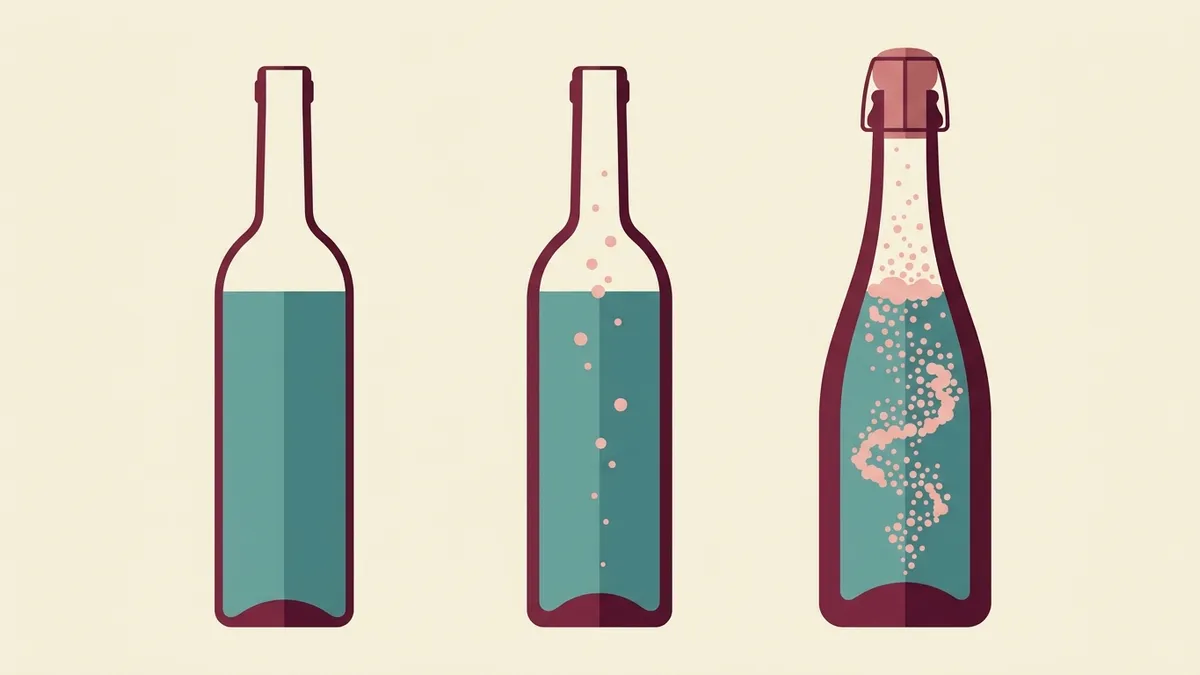
Sweet wines bottled without proper sterilisation are the classic victims: any surviving microbes still have sugar to eat. Wineries prevent it three ways. They bottle the wine dry, with under 1.0 gram of residual sugar per litre. They sterile filter it before bottling. Or they add a preservative such as dimethyl dicarbonate (DMDC, an additive that kills yeast). Potassium sorbate is a weaker fix. Lactic acid bacteria can break it down into a smell of crushed geranium leaves.
Homemade wine is a common source of burst bottles. If the yeast have not finished and sugar remains, the job carries on inside the glass. If you make wine at home, bottle it only once fermentation has fully stopped. The signs in a shop-bought bottle, from a faint prickle to haze and sediment, are covered in our guide to refermentation in the bottle.
Can Heat Push the Cork Out or Break a Bottle?
Heat usually pushes the cork out rather than bursting the glass. Wine expands as it warms, and in a bottle filled almost to the cork the extra volume has one way out: up between the cork and the neck. A hot bottle ends up with a raised cork, a sticky top, or wine sitting on the cork.
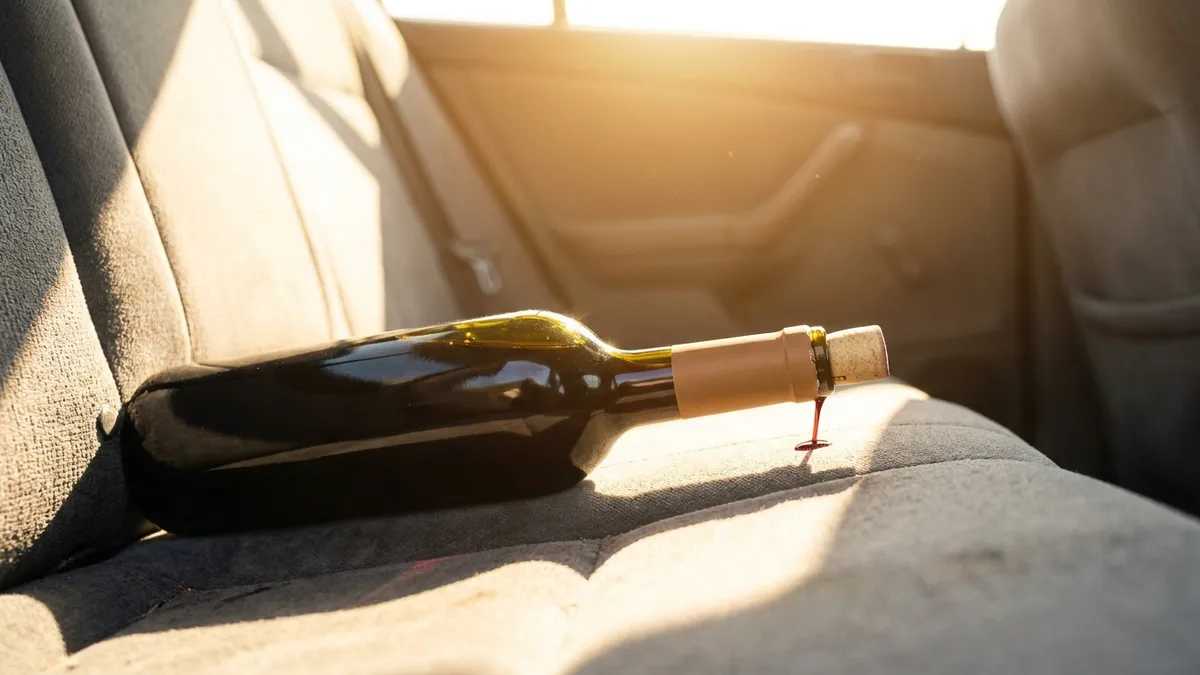
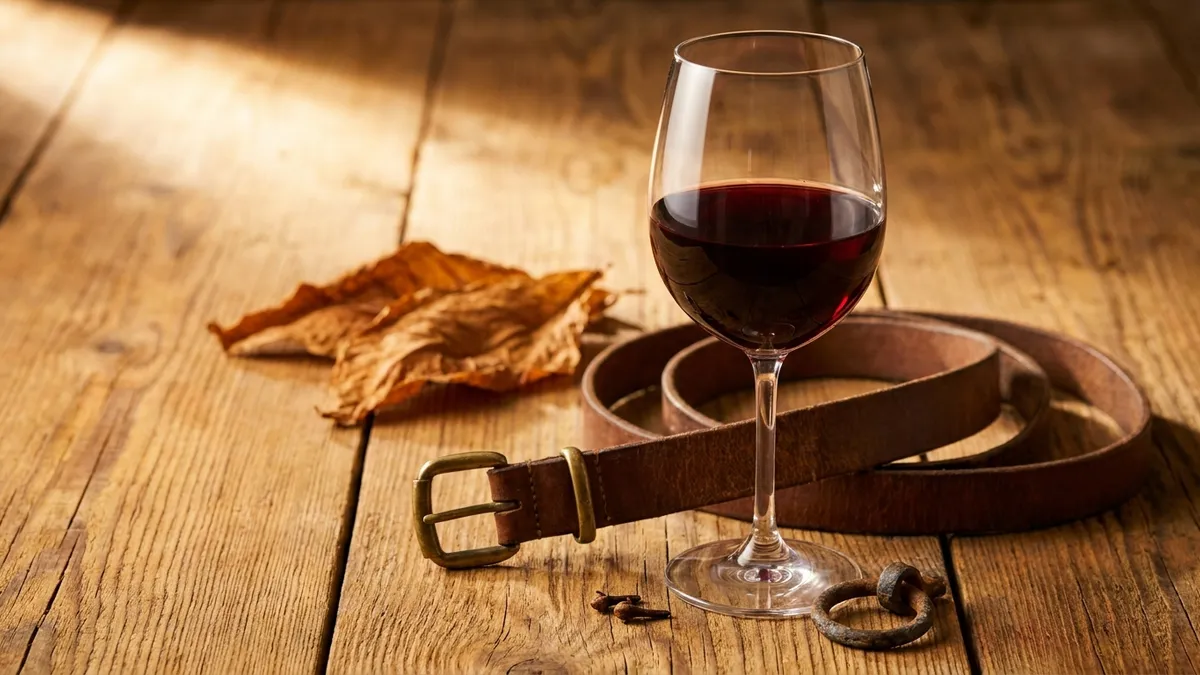
Those signs mean the wine has most likely been heat damaged. Heat speeds up ageing, and the result is called maderized (cooked, like the deliberately heated wine of Madeira): flat, brownish and tasting of stewed fruit rather than fresh. A parked car in summer, a sunny windowsill and a long summer delivery are the usual culprits. Temperature thresholds and the supply-chain traps are set out in cooked wine and heat damage.
If a bottle has a raised cork and you know it sat somewhere hot, open it soon and judge the smell. Waiting does not reverse the damage, and a cork that has moved once lets in air.
Can Wine Explode in the Freezer?
Yes. Water expands as it turns to ice, and a full wine bottle has no spare room. The ice either pushes the cork up the neck or, if the closure holds firm, presses on the glass until it cracks. Screw caps give way less easily than corks, so cracking may be more likely under one.
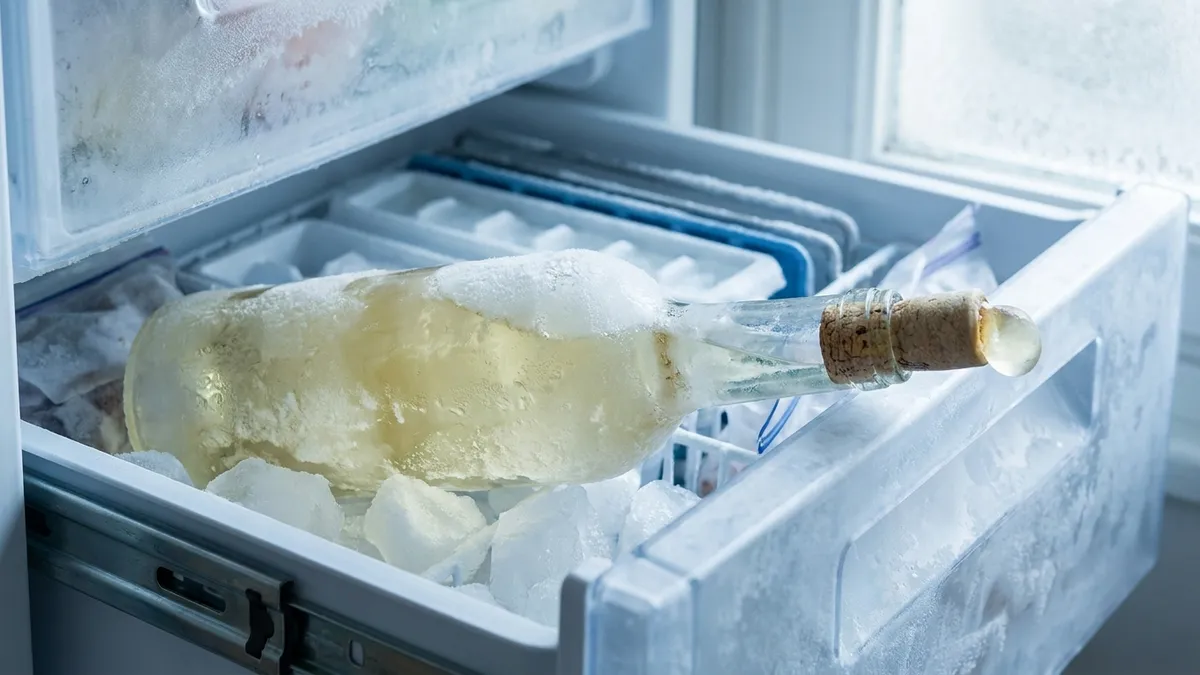
Sparkling wine is the worst case, because it starts under pressure before any ice forms. Chill it in a bucket of ice and water, never the freezer. For a still bottle, the freezer is fine as a quick chill with a timer; the safe window and the freezing points by alcohol level are in can you put wine in the freezer. A deep-frozen car boot in winter does the same damage as a forgotten freezer drawer.
If you find slush and the cork has not moved, thaw the bottle upright in the fridge. If the cork has moved, drink the wine within a day or two.
Is the Wine Still Drinkable After the Cork Pushed Out?
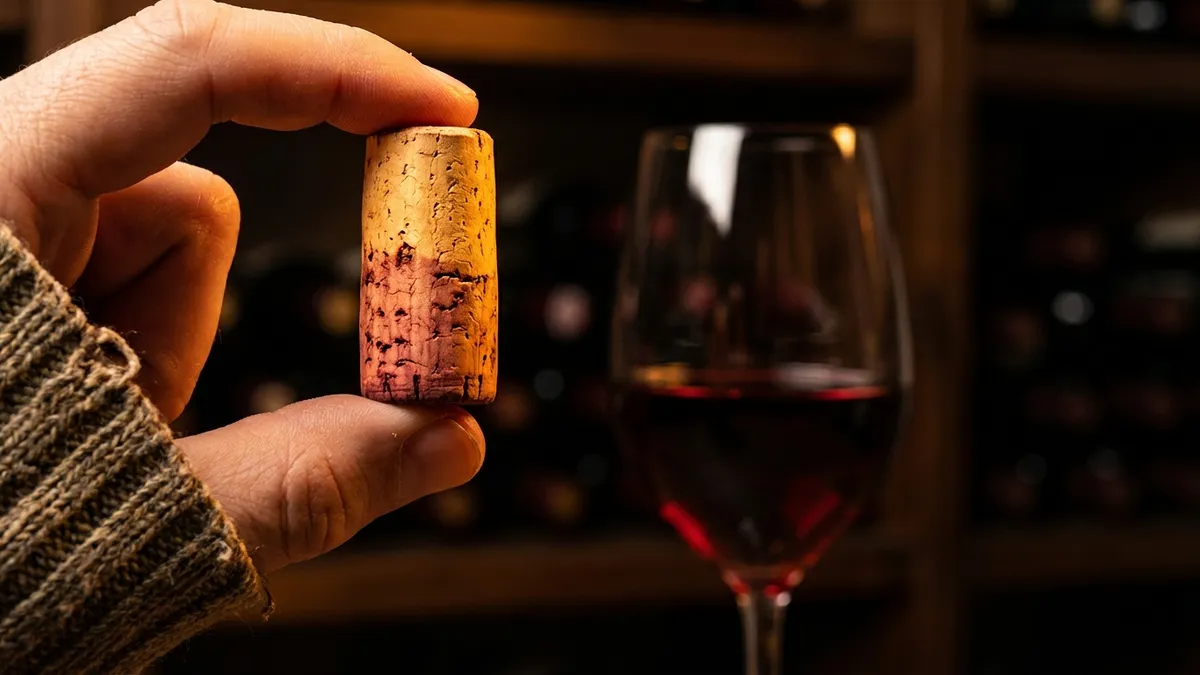
If the glass broke, no; if only the cork moved, smell it before you decide. A moved cork breaks the seal, so air has reached the wine, and heat often came with it. Neither makes the wine dangerous, but both can make it taste worse.
Pour a small glass and check three things:
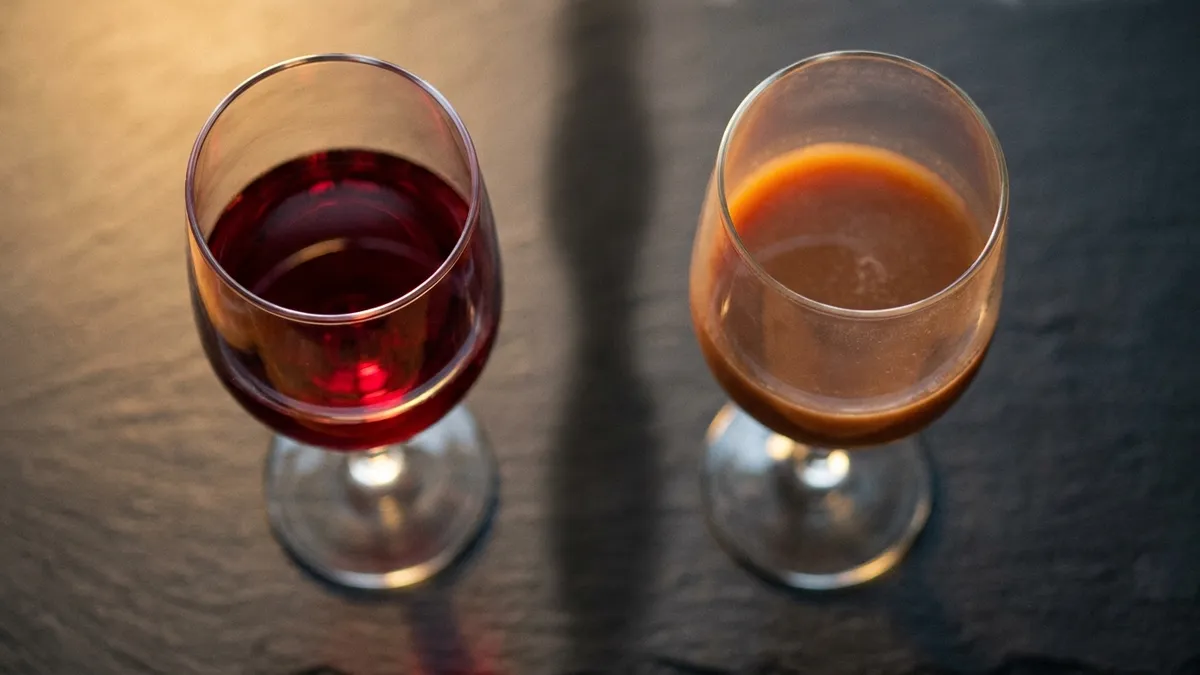
- Colour. A white turning gold-brown or a red turning brick at the rim points to air or heat.
- Smell. Stewed fruit means heat; bruised apple or nuts means oxidation (air flattening the fresh fruit); vinegar means bacteria got in.
- Fizz. Bubbles and haze in a wine sold as still mean refermentation.
If it smells clean and tastes fresh, drink it soon. If it smells stewed, of vinegar or of yeast, pour it away, or return it to the shop if it was bought recently. Our guide to oxidized wine shows what air damage smells like, and how to identify wine faults by smell covers the rest of the off-smells.
How Do You Store Wine So Bottles Do Not Burst?
Keep bottles at a steady 13°C if you can, and anywhere from 7 to 18°C if changes are gradual. That one rule removes heat and freezing from the list. It also keeps bottles away from the sudden temperature shocks that can crack weak glass.
Three habits cover the rest:
- Never leave wine in a car, in summer or in deep frost. Carry it home and put it away the same day.
- Keep wine out of the kitchen's hot spots: above the fridge, next to the oven, on a sunny shelf.
- Treat the freezer as a timer job, never storage.
If a wine is sweet, off-dry or homemade, store it in the coolest dark place you have and drink it young, since it carries the sugar that refermentation needs. If you ship bottles in summer, choose a cool-weather service, as set out in how to ship wine. The full home setup is in how to store wine at home, and the most common slips are listed in wine storage mistakes.
Why Did Early Champagne Bottles Burst So Often?
Because the bubbles came first and bottles strong enough to hold them came later. Fermentation kept going inside weak glass, and one bursting bottle could set off its neighbours in a chain reaction. Cellars routinely lost 20 to 90% of their bottles this way. In the early 1700s, cellar workers wore heavy iron masks against flying glass.
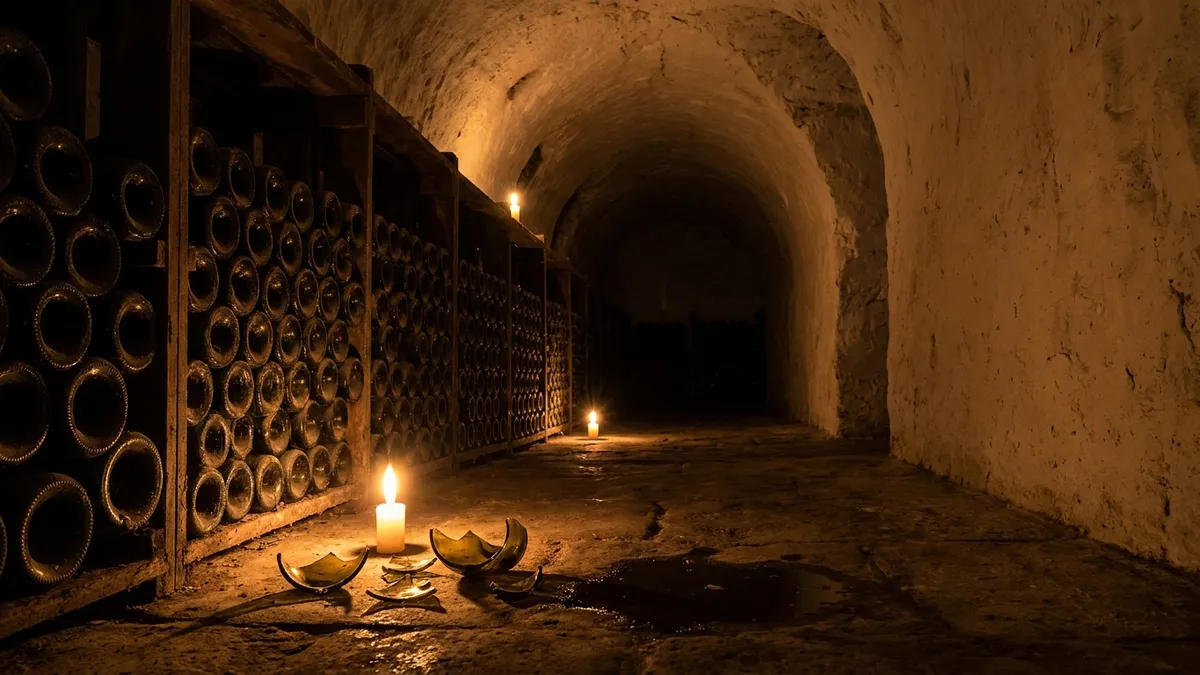
English glass-makers had already learned, in the late 1600s, to make bottles that could withstand the pressure of a second fermentation; French glass-makers could not yet match them. That is why a sparkling bottle today feels heavy in your hand and a still-wine bottle feels light: the still bottle was never asked to hold gas. The second fermentation that now happens on purpose is explained in the méthode champenoise, and the pressure differences between styles are in sparkling wine types. More bottle problems, from cork taint to cooked wine, sit in the wine faults hub.
Tonight, check the bottles stored in the warmest spot of your home. Look for any cork sitting above the lip of the neck, move sweet or homemade wine to the coolest dark cupboard, and chill anything that looks hazy before you open it. Then open one sound bottle and taste it through the look, smell and taste steps in the Sommy app at sommy.wine, so you know how a sound bottle of that wine tastes.
Sources
Frequently Asked Questions
Why did my wine bottle explode?
Pressure inside grew faster than the cork or glass could hold. The four usual causes are yeast refermenting leftover sugar into carbon dioxide, heat making the wine expand, water in the wine freezing into ice, and a bottle with a flaw or a knock. Fizz and haze point to refermentation; a cooked smell after warm storage points to heat.
Can a wine bottle explode in a hot car?
A hot car usually pushes the cork out rather than shattering the glass. Wine expands as it heats and forces its way up between the cork and the neck, so you find a raised cork, a sticky top or wine on the cork. The wine inside is often heat damaged, tasting flat and stewed, even if the bottle survived.
Can wine explode in the freezer?
Yes. Water expands as it freezes, and a wine bottle is filled almost to the cork, so the growing ice either shoves the cork up the neck or cracks the glass. Sparkling wine is the bigger risk because it already holds pressure. Set a timer whenever a bottle goes into the freezer to chill.
Is it safe to open a bulging wine bottle?
Treat it as a pressure hazard. Chill it in the fridge for a few hours first, because cold wine holds gas better and the pressure drops. Then wrap it in a towel, protect your eyes, point the neck away from people and ease the cork out slowly over a sink. If the glass is cracked, do not open it at all.
Can I drink wine if the cork was pushed out?
If the glass is intact, smell it first. A pushed cork lets air and often heat reach the wine, so it may smell flat, stewed or of vinegar. If it smells clean and fresh, it is a quality question. If it is fizzy and hazy when it should be still, or smells of yeast, pour it away or return it.
Can homemade wine bottles explode?
Yes, and homemade wine is a common source of burst bottles. If yeast is still alive and sugar remains, fermentation restarts in the sealed bottle and the gas has nowhere to go. Wineries prevent it by bottling wine fully dry, sterile filtering it, or adding a preservative. At home, confirm fermentation has finished before you bottle.
Sommy Team
LinkedInFounder & Wine Educator
The Sommy Team is building the world's most approachable wine education app, helping beginners develop real tasting skills through structured courses and AI-guided practice.