Why Is My Wine Fizzy? Refermentation in the Bottle Explained

By the Sommy Team — AI-assisted, human-edited.
Updated Sep 23, 2026
Contents (9)
- What Is a Refermentation Wine Fault, in One Paragraph
- Is a Little Fizz in Still Wine Normal?
- What Is Refermentation, Exactly?
- Can Malolactic Fermentation Restart in the Bottle?
- What Are Your Bubbles Telling You?
- Is Fizzy Wine Safe to Drink?
- Which Wines Are Supposed to Fizz?
- How Do Wineries Prevent Refermentation?
- Should You Return a Fizzy Bottle?
TL;DR
Fizz in a still wine usually means refermentation: yeast or malolactic bacteria that survived bottling woke up and made carbon dioxide inside the sealed bottle. A faint prickle in a clear, fresh-smelling young white is normal and often deliberate. Bubbles plus haze, sediment, off smells or a pushed cork point to a fault, so return the bottle.
What Is a Refermentation Wine Fault, in One Paragraph
A refermentation wine fault is fermentation that happens after the wine has been sealed in its bottle. Yeast that survived bottling find leftover residual sugar (grape sugar that did not ferment) and turn it into alcohol and carbon dioxide, or malolactic bacteria wake up and eat leftover malic acid, which also releases carbon dioxide. With the cork in place, that gas has nowhere to go, so it dissolves into the wine and shows up as an unexpected prickle or visible bubbles, usually alongside haze, sediment and a yeasty or sour smell. It is the usual answer to "why is my wine fizzy," and it is easy to tell apart from the harmless, often deliberate touch of fizz in a young white. The table below shows you how.
Is a Little Fizz in Still Wine Normal?
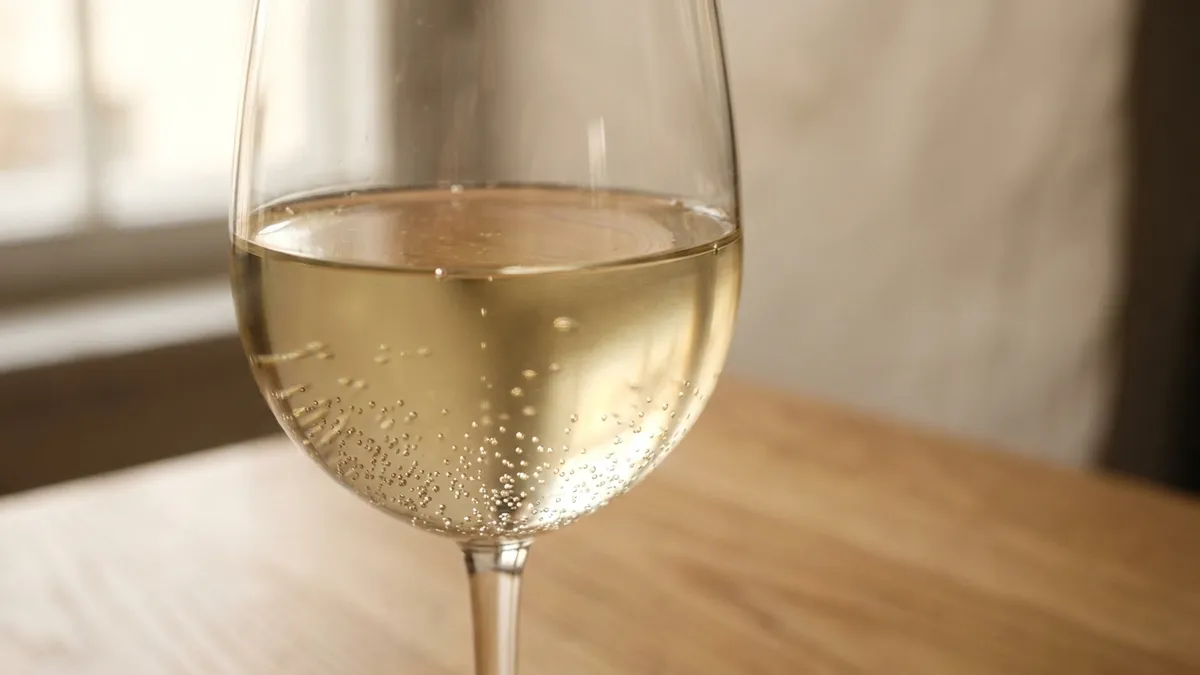
Often, yes. Many winemakers deliberately leave a small amount of carbon dioxide in young white and rosé wines to keep them tasting fresh and to protect them from oxygen. That gentle prickle on the tongue, in a wine that is otherwise bright and clear, is a style choice. It is not the refermentation wine fault this article is about.
Wine Spectator's Dr. Vinny puts it plainly: winemakers may intentionally add extra CO2 before bottling to freshen the wine, create a crisp impression, or prevent oxidation. You will meet this most often in Sauvignon Blanc, Albariño, Grüner Veltliner, dry Riesling and pale rosé, and occasionally in a light, chillable red.
There is a legal ladder behind this, and it reframes a faint prickle as normal rather than alarming. Under EU Regulation 1308/2013, plain still wine carries no carbon dioxide pressure requirement at all. A wine only becomes semi-sparkling (what an Italian label calls frizzante) once it holds an excess pressure of at least 1 bar and no more than 2.5 bar at 20°C. Sparkling wine needs at least 3 bar. So a wine can carry a whisper of dissolved gas and still be, legally and sensibly, a still wine.
Temperature changes how much of that gas you notice. Carbon dioxide becomes less soluble as wine warms, so a bottle poured straight from a cold fridge can seem to gain prickle as it sits in a warm room. Swirl it, give it ten minutes, and a deliberate prickle fades. For more on how serving temperature shifts what you taste, see how temperature affects wine taste.
What Is Refermentation, Exactly?
Refermentation is alcoholic fermentation starting up again after bottling. It needs only two ingredients: live yeast cells and fermentable sugar. As the WineMaker Magazine "Wine Wizard" column explains, a re-ferment can happen any time there are yeast present and there is still fermentable sugar present in the wine. The sealed bottle simply traps the carbon dioxide that fermentation always produces.
Wine yeast are tough. Some commercial strains, the column notes, motor through predictable alcohol levels of 15 percent or more and still conduct a fermentation to dryness. A yeast that can do that in a tank can finish a job in a bottle if a few cells slip past bottling. Our guide to wine yeast and fermentation covers what these organisms do in the first place.
The sugar side is just as unforgiving. The Australian Wine Research Institute (AWRI) warns that Saccharomyces yeast can be a problem in bottled wine containing residual sugar, where even a small number of cells in a bottle can referment, causing cloudiness and eventually sediment, and a yeasty aroma and flavour. That is why the visual signs matter so much: a refermenting wine does not just fizz, it clouds, drops a fine deposit, and smells like bread dough or beer.
Off-dry and sweet wines are the most exposed, because they are bottled with sugar on purpose; tasting residual sugar in wine shows how much different styles carry. A bone-dry wine with nothing left for yeast to eat is far less likely to restart, so when a bone-dry wine turns fizzy and cloudy together, look to the cause in the next section.

Can Malolactic Fermentation Restart in the Bottle?
Yes, and this is the cause most consumer guides skip entirely. Malolactic fermentation (MLF) is a second, bacterial fermentation in which lactic acid bacteria convert sharp malic acid into softer lactic acid, releasing carbon dioxide as they go. If it did not finish before bottling, it can finish inside the bottle, and you get fizz, haze and sediment at once.
Almost every red wine and many fuller whites go through MLF on purpose in the cellar, where the gas escapes harmlessly. The problem is a wine bottled with malic acid still in it and a few bacteria still alive. Vinmetrica, a winery lab-equipment maker, describes the scenario exactly: it is always possible that a few stragglers of Oenococcus oeni could wake up to a nice malic acid breakfast and start making CO2 in your bottle. The same page notes that MLF starting up in the bottle can lead to fizzy wine, or worse, exploding bottles.
The AWRI describes the same outcome from the lab side: if MLF proceeds in the bottle, dissolved carbon dioxide, haze and sediment result. The sensory clues differ a little from a yeast refermentation. Instead of bread dough, look for a softer, creamier or slightly buttery character that does not belong in a crisp style, sometimes drifting toward sauerkraut or sour milk. That is why a bone-dry wine can still fizz: no sugar for yeast, but malic acid for bacteria. For the full story of what MLF does when it goes right, read what is malolactic fermentation.
What Are Your Bubbles Telling You?
Match what you see and smell against the table below. A prickle alone means drink; a prickle with company means fault. The verdicts assume a wine sold and labeled as still. If the label says pét-nat, frizzante or Vinho Verde, skip to the deliberate-fizz section.
| What you notice | Likely cause | Drink or return? |
|---|---|---|
| Faint prickle only; wine clear and bright; smells fresh | Dissolved CO2 left in on purpose, common in young whites and rosés | Drink. Swirl or let it warm a few minutes if you prefer it calmer. |
| Bubbles plus haze through the whole glass; yeasty or beery smell; maybe a fine deposit | Yeast refermentation of leftover sugar | Fault. Return it. Not a health risk, but it will not improve. |
| Bubbles plus haze or sediment in a wine that should be crisp and dry; creamy, sour-milk or sauerkraut note | Malolactic fermentation restarting in the bottle | Fault. Return it. |
| Cork pushed up or leaking; hiss on opening; wine spurts | Pressure from refermentation (heat damage can also push a cork) | Fault. Open pointed away from people, then return it. |
| Fizz plus vinegar or nail-polish smell | Volatile acidity, a separate spoilage fault that can share a bottle with refermentation | Return it. |
| Fizz plus barnyard, band-aid or smoky-bacon smell | Brettanomyces yeast, a sensory fault rather than a fizz cause, sometimes alongside refermentation | Judgment call at low levels; return if the smell dominates. |
| Small clear crystals at the bottom, no bubbles | Tartrate crystals, harmless | Drink. Decant off the crystals if you like. |
| Gentle bubbles, sometimes cloudy under a crown cap; label says pét-nat, frizzante or Vinho Verde | Deliberate style | Drink, well chilled. |
Sediment on its own is not a fault; aged reds and unfiltered wines drop deposits naturally, and wine sediment explained shows how to tell a settled deposit from a wine that is cloudy all the way through. Tartrate crystals look alarming but are just harmless tartaric acid salts that fell out of solution in the cold.
The smells in the table are the fastest tiebreakers. If you are not sure whether you are smelling bread dough or barnyard, how to identify wine faults by smell gives you the vocabulary, and the guides to Brett in wine and volatile acidity cover the two faults that most often share a bottle with fizz.
Is Fizzy Wine Safe to Drink?
The winemaking references behind this article treat refermentation as a quality fault, not a toxicity problem, and none of them describe the wine itself as harmful. The genuine safety issue is physical: gas building pressure in a bottle that was never designed to hold it. Treat a suspect bottle the way you would treat a warm bottle of sparkling wine.
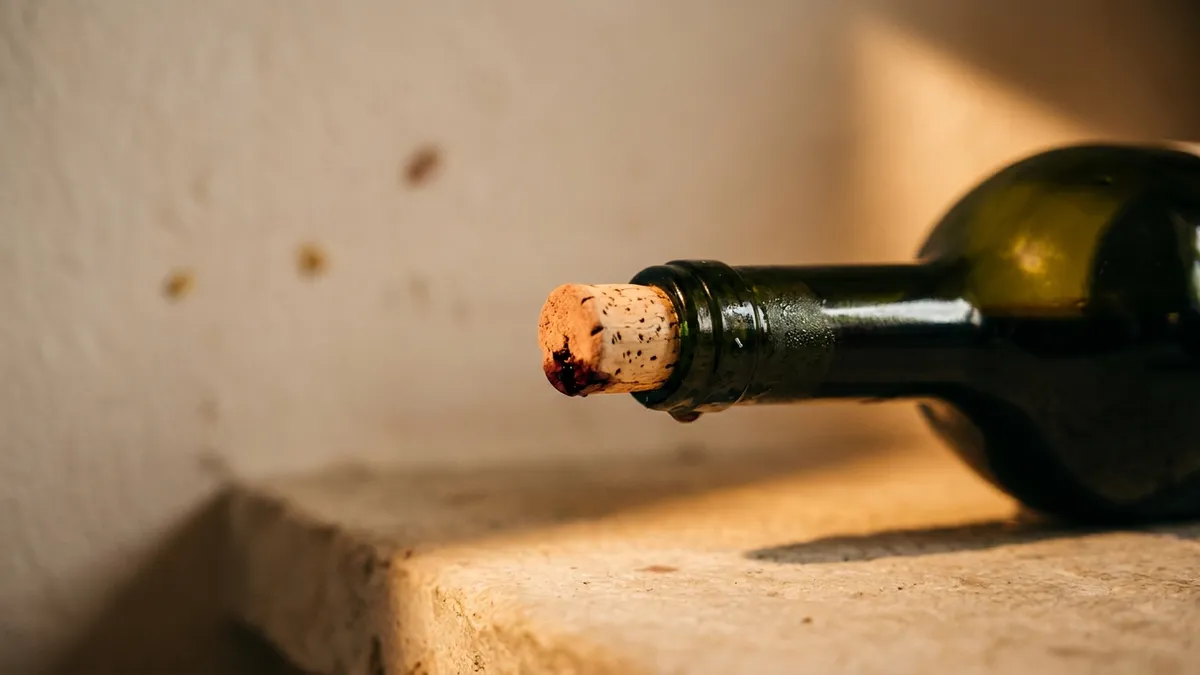
Vinmetrica's warning about exploding bottles is aimed at winemakers, but the same physics applies to the one bottle in your kitchen. A cork that has crept up out of the neck, a capsule bulging at the top, or a hiss when you break the seal are all signs that pressure has built. Chill the bottle first, which lowers the pressure, then open it slowly with the neck pointed away from anyone's face and a towel over the top.
Taste is a separate question from safety. A refermented wine usually tastes thinner than it should, with a sour, yeasty edge and a scrubbing prickle that flattens the fruit: unpleasant rather than undrinkable, and it will not recover with air or time. The broader checklist in how to tell if wine has gone bad covers what else to look for before you decide.
One thing refermentation is not: cork taint. A corked wine smells of wet cardboard and has no bubbles at all, because the culprit is a compound called TCA, not a living organism. People often lump the two together, but how to tell if wine is corked shows why they need completely different tests.
Which Wines Are Supposed to Fizz?
Several styles are bottled with gas on purpose, and for them bubbles, haze and even sediment are features. The chemistry can be identical to a refermentation fault; the difference is that the winemaker chose it, planned for the pressure and told you on the label.
Pét-nat (short for pétillant-naturel) is the clearest example. It is bottled while its first fermentation is still finishing, so the leftover sugar becomes bubbles inside a crown-capped bottle, and the yeast that did the work is left in as a cloudy haze. That is refermentation by design, in a bottle built for it. Our pét-nat guide explains what to expect from the glass.
Vinho Verde from northern Portugal is often bottled with a light spritz for freshness, which sits comfortably under the EU's semi-sparkling threshold. The Vinho Verde region guide covers the style. Italian frizzante wines such as many Lambrusco bottlings sit in the 1 to 2.5 bar semi-sparkling class, and their labels say so.

How Do Wineries Prevent Refermentation?
Wineries stop refermentation by removing one of its ingredients before bottling: they take away the sugar, the malic acid, the organisms, or their ability to grow. Most use several of these at once, because a few surviving cells are enough.
The main tools, in the order a winemaker thinks about them:
- Ferment to dryness. The WineMaker Magazine column notes that most wineries treat under 0.3 percent residual sugar as dry, and the columnist uses a stricter 0.1 percent, so that yeast have nothing left to eat. Sweet and off-dry wines cannot do this, which is why they lean harder on the other steps.
- Finish malolactic fermentation, or block it. Either let MLF run to completion in the cellar so no malic acid remains, or keep the bacteria suppressed so it never starts. Bottling a wine halfway through MLF is asking for trouble.
- Get the sulfur dioxide right. Sulfur dioxide (SO2) is wine's standard preservative. The WineMaker column suggests free SO2 of 28 to 35 parts per million, depending on the wine's pH, to keep bacteria in check; the AWRI expresses its target as molecular SO2, ideally about 0.8 milligrams per litre. Our explainer on sulfites in wine covers why this additive is so widely used.
- Sterile filtration. Passing the wine through a very fine filter at bottling physically removes yeast and bacteria. Vinmetrica recommends a 0.4 micron filter to catch bacterial stragglers, and the AWRI calls sterile filtering at bottling the best way to avoid problems with Zygosaccharomyces, a hardy spoilage yeast.
- Keep everything clean and full. Sanitised lines, bottles and corks, plus tanks kept topped up and sealed from air, deny survivors what they need.
None of this is visible to you as a buyer, but it explains a pattern you may have noticed: refermentation shows up most often in low-intervention wines that skip filtration and keep sulfur low. That is a deliberate trade-off, and natural wine explained sets out both sides of it. A hazy, lightly fizzy natural wine is not automatically faulty; ask the shop whether that bottle is meant to be that way.
Should You Return a Fizzy Bottle?
Return it when the fizz comes with haze, sediment, an off smell or a pushed cork in a wine that was sold as still, and keep it when the prickle stands alone in a clear, fresh-smelling glass. Most shops and restaurants will replace a genuinely refermented bottle without argument, especially if you can describe what you noticed.
A quick checklist before you decide:
- Read the label. Pét-nat, frizzante, Vinho Verde, "col fondo" or any sparkling category means the fizz is intended. Stop here and chill the bottle.
- Look at the glass against something white. Is the wine clear, or hazy all the way through? Haze plus bubbles is the strongest single sign of a fault.
- Smell before you judge. Bread dough or beer points to yeast; sour milk or sauerkraut points to bacteria; vinegar or nail polish is a different fault altogether. Fresh fruit means you are probably fine.
- Check the cork and fill level. A cork that has risen, a sticky capsule or wine weeping from the seal means pressure or heat, and either one justifies a return.
- Give a deliberate prickle a chance. Passed all four? Swirl and wait ten minutes. A style prickle softens; a fault does not.
Fault or feature, the exercise sharpens the same skill: looking properly before you drink. Sommy walks you through look, smell and taste for every bottle you photograph, and the wine faults hub collects every fault guide in one place. For the bigger question of when a quirk becomes a flaw, wine flaws vs faults draws the line.
Sources
- WineMaker Magazine — Wine Wizard: Refermentation and Malo on the Move
- Australian Wine Research Institute — Microbiological Hazes and Deposits
- Vinmetrica — Malolactic Fermentation Tips and Tricks
- Regulation (EU) No 1308/2013, Annex VII Part II: Categories of Grapevine Products
- Wine Spectator — Dr. Vinny: Is Fizzy Bad for Red Wine?
Frequently Asked Questions
Why does my still wine have bubbles?
Two reasons. Either the winemaker left a little dissolved carbon dioxide in the wine on purpose to keep it fresh, which is common in young whites and rosés, or something fermented inside the sealed bottle. That second case is refermentation: surviving yeast ate leftover sugar, or malolactic bacteria ate leftover malic acid, and both give off carbon dioxide gas with nowhere to go.
Is fizzy wine safe to drink?
The winemaking references behind this article treat refermentation as a quality fault, not a poisoning risk, and none describe the wine itself as harmful. The real hazard is physical. Gas builds pressure inside a bottle that was never designed for it, which can push the cork out or, in rare cases, break the glass. Open a suspect bottle carefully, pointed away from people, and pour slowly.
Can still wine referment in the bottle?
Yes. A refermentation can happen any time live yeast and fermentable sugar share a sealed bottle. Wineries aim for very low residual sugar, add sulfur dioxide, and often sterile-filter the wine to stop it, but even a small number of surviving cells can restart fermentation. The result is fizz, cloudiness, and eventually sediment, sometimes with a yeasty smell.
Is a little fizz in white wine normal?
Often, yes. Many winemakers bottle young whites with a touch of carbon dioxide to give a crisp impression and protect against oxidation. Under EU rules, a wine only becomes semi-sparkling at one bar of excess pressure, so a wine can carry a faint prickle and still be legally still. If the wine is clear and smells fresh, that prickle is a style choice, not a fault.
How do I know if my wine is corked or just fizzy?
They are unrelated problems. A corked wine smells of wet cardboard or damp basement and has no bubbles; the culprit is a compound called TCA. A refermented wine has visible fizz, often with haze or sediment, and may smell yeasty or sour. A bottle can in theory have both, but the fizz alone never means cork taint, and cork taint never makes a wine fizzy.
What is the difference between pét-nat and a wine fault?
Pét-nat is bottled on purpose before its first fermentation finishes, so the bubbles, the haze and the crown cap are all part of the design. Refermentation is the same chemistry happening by accident in a wine that was meant to be still and clear. The label tells you which one you are holding: pét-nat, frizzante or Vinho Verde announce their fizz; a Chardonnay or Merlot does not.
Does swirling get rid of unwanted bubbles?
Swirling and a few minutes in the glass will drive off a small amount of dissolved carbon dioxide, and warming the wine slightly helps too, because gas is less soluble in warmer liquid. That works for a deliberate prickle. It will not fix a true refermentation fault, because the haze, sediment and off flavors that came with the gas stay behind.
Sommy Team
LinkedInFounder & Wine Educator
The Sommy Team is building the world's most approachable wine education app, helping beginners develop real tasting skills through structured courses and AI-guided practice.