How to Identify Wine Faults by Smell Alone

By the Sommy Team — AI-assisted, human-edited.
Updated Apr 28, 2026
Contents (13)
- The Skill That Saves Every Wine Drinker
- What Counts as a Wine Fault
- How to Identify Wine Faults by Smell in Thirty Seconds
- Cork Taint: The Wet Cardboard Fault
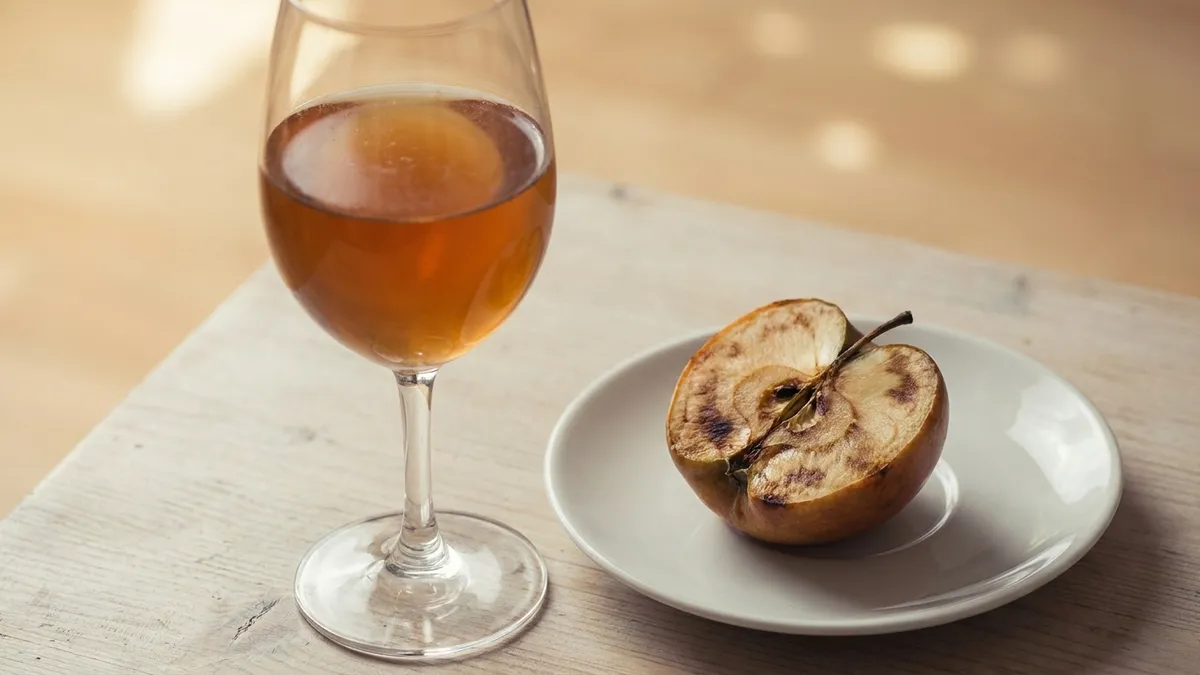
- Oxidation: The Bruised Apple Fault
- Brettanomyces: The Barnyard Fault
- Volatile Acidity: The Nail Polish Fault
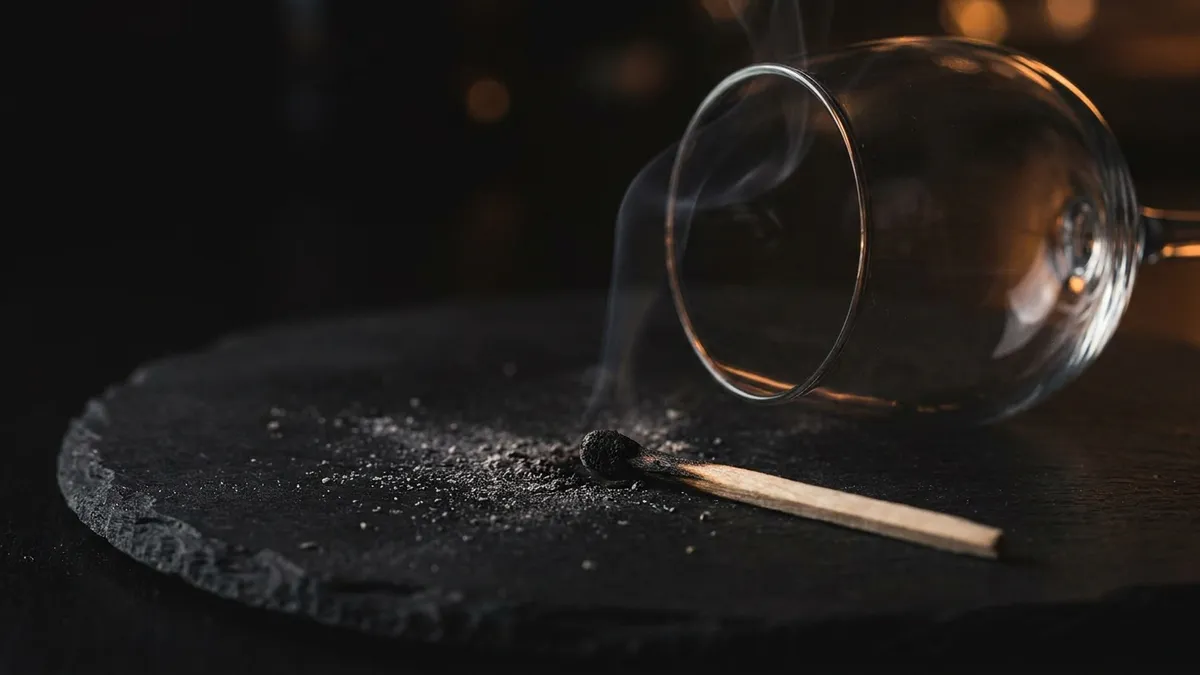
- Reduction: The Struck Match Fault
- Heat Damage: The Stewed Fruit Fault
- Telling Faults Apart When More Than One Is Present
- When the Wine Is Not Faulty, Just Closed
- What to Do When You Find a Faulty Bottle
- Building the Reflex
TL;DR
Most wine faults reveal themselves on the nose before the first sip. Cork taint smells like wet cardboard, oxidation like bruised apple, brett like a barnyard, volatile acidity like nail polish, reduction like a struck match, and heat damage like stewed fruit. Learn the six signature smells and you will catch a faulty bottle in under a minute.
The Skill That Saves Every Wine Drinker
Sooner or later, every wine drinker pulls a cork and pours a glass that just smells wrong. The fruit is missing. Something musty, vinegary, or stewed has taken its place. The bottle was supposed to be a treat, and now there is a question no one taught you to answer: is the wine bad, or is your palate off? Learning to identify wine faults by smell is the skill that ends that doubt. Once you can name what is wrong with a bottle, you stop blaming yourself and start trusting your nose.
Most common wine faults broadcast themselves through aroma long before you take a sip. The nose catches what the tongue would miss anyway, since up to 80 percent of what people call flavor is olfaction in the first place. Six signature smells cover almost every fault you will encounter at home or in a restaurant. Memorize them once and you will catch a faulty bottle in under a minute, every time, for the rest of your wine-drinking life.
This guide walks through the six core faults — what each one smells like, what is chemically happening inside the bottle, how to tell faults apart, and what to do when you find one. By the end you will have the same triage checklist sommeliers run silently every time they open a wine.
What Counts as a Wine Fault
A wine fault is a measurable chemical or microbial defect that overrides the wine's intended character. It is not a matter of taste. A simple Pinot Grigio you find boring is not faulty. A Pinot Grigio that smells like a wet basement is. The first is preference, the second is a defect.
Faults fall into a few broad families based on what caused them: contamination from the cork, runaway oxygen exposure, microbial spoilage from rogue yeast or bacteria, sulfur compounds from low-oxygen environments, and physical damage from heat. Each family has a fingerprint smell, and that smell is your diagnostic. The sulfur family is the trickiest for beginners, because a sulfur smell in wine can be harmless added preservative, fixable reduction, or a genuine fault — the dedicated guide walks through telling those three apart.
Faults are about chemistry, not taste. If a wine smells of wet cardboard, bruised apple, barnyard, nail polish, a struck match, or stewed fruit — and the fruit you expected is missing — something is broken.
The good news for beginners is that there is a small, finite vocabulary here. You do not need to recognize three hundred aromas. You need to recognize six. Once those are locked in, you have most of the toolkit a sommelier uses on a busy floor.

Quick check
One question on what you just read
You open a white and it smells of bruised apple, with the fruit gone. What is the likely fault?
Tap an answer to see how you did.
How to Identify Wine Faults by Smell in Thirty Seconds
Before going through the six faults one by one, it helps to have a single triage routine you run on every newly opened bottle. Sommeliers do this almost subconsciously. With practice, so will you.
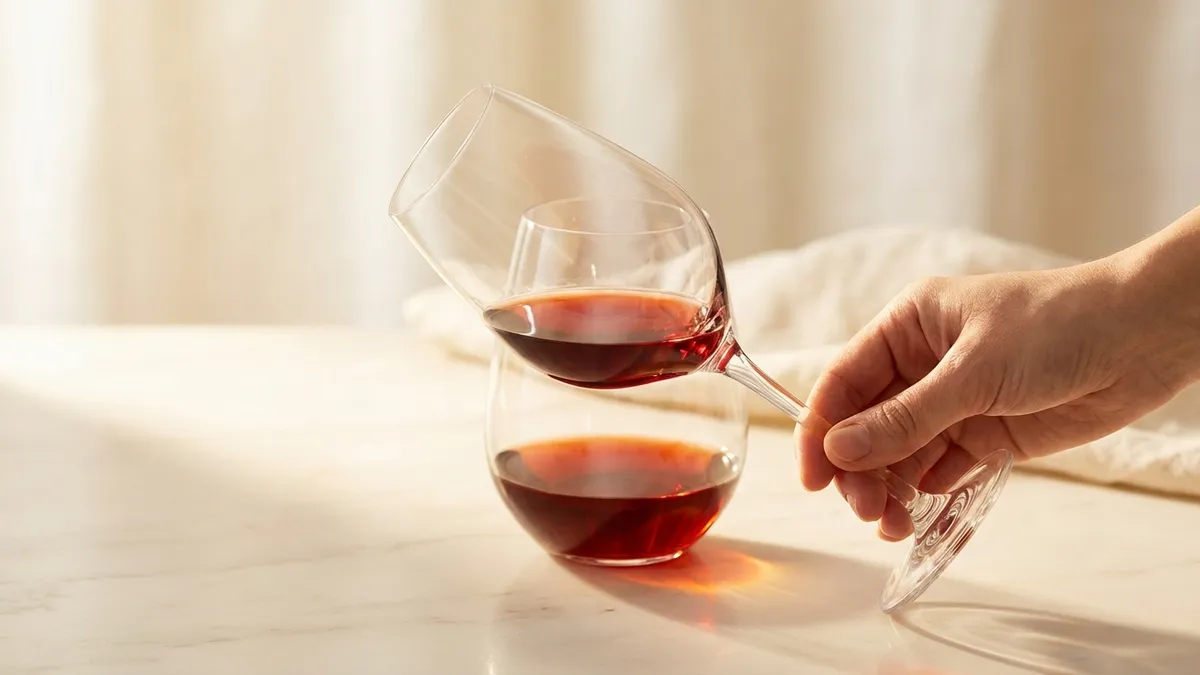
- Pour a small amount into a proper wine glass — a tulip-shaped bowl that concentrates aromatics at the rim.
- Swirl gently for three or four seconds to release volatile compounds.
- Take two short sniffs, not one dramatic inhale, since the nose fatigues within seconds.
- Ask one question: is the fruit there, or has something else replaced it?
- Match the off-note to one of the six fault profiles below.
Smelling well is the foundation, and faulty wines reveal themselves only to a properly trained nose. If your sniffing technique still feels uncertain, work through the step-by-step guide on how to smell wine before going deeper into faults.
Serve at the Right Temperature First
Temperature changes how aromatics behave. Cold wine releases far less aroma, and a faintly faulty cold wine can smell almost normal. Heat-damaged wines, by contrast, are most obvious when warm. Always evaluate a bottle near its proper serving temperature before judging it. A wine that smells off at fridge temperature deserves five minutes to come up before you call the fault.
Cork Taint: The Wet Cardboard Fault
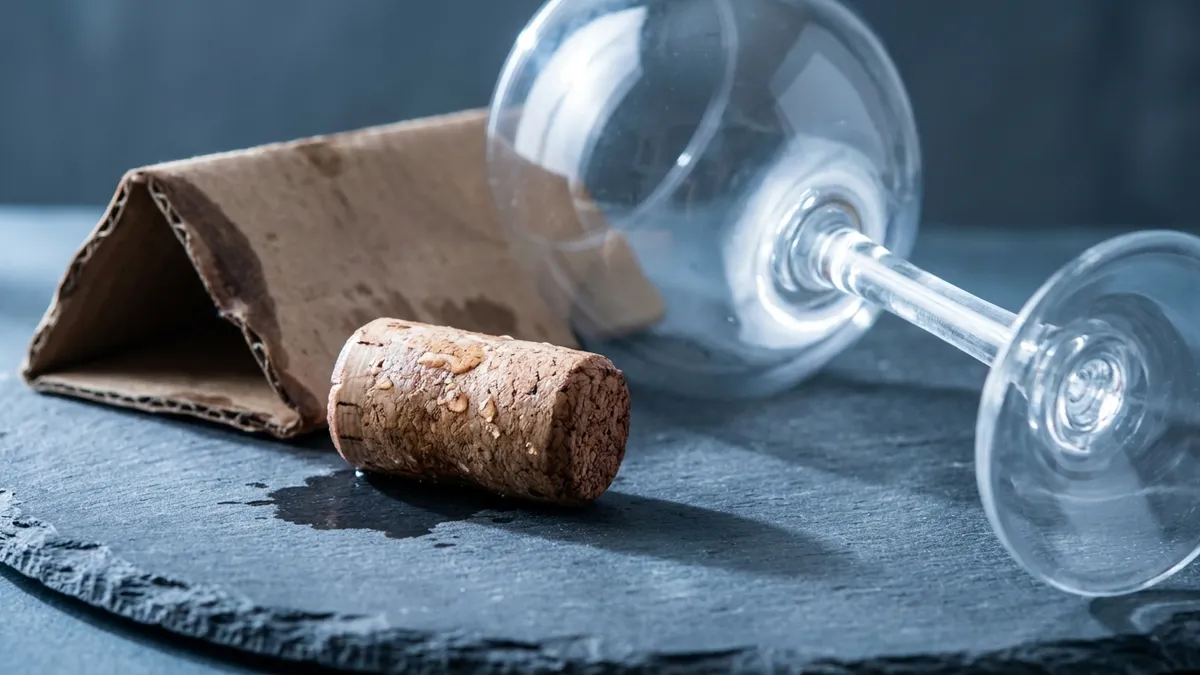
The most famous wine fault is cork taint, caused by a chemical compound called 2,4,6-trichloroanisole, almost universally shortened to TCA. TCA forms when natural phenols in cork meet certain fungi and chlorine-based compounds, a reaction covered in full, along with why some tasters catch it and others don't, in our guide to the science behind TCA and cork taint. The molecule transfers from the cork into the wine over time, and human noses can detect it at staggeringly low levels — as little as one to two nanograms per liter in some studies.
Corked wine smells of:
- Wet cardboard
- Damp basement or musty cellar
- Wet dog
- Mouldy old books
- An attic that has been closed for too long
The bigger giveaway is what is missing. Even mild cork taint strips a wine of fruit, freshness, and lift. The wine feels flat, dusty, dull. A heavily corked bottle punches you in the face the moment you pour. Industry estimates put cork taint at roughly one to two percent of cork-sealed bottles today, down from five to ten percent two decades ago. Screw-cap wines are virtually never corked. For a deeper walkthrough of this single fault, see the dedicated guide on how to tell if wine is corked.
Oxidation: The Bruised Apple Fault
Oxidation happens when wine is exposed to too much oxygen, usually through a faulty seal, prolonged storage past the wine's drinking window, or a bottle left open too long. Air is essential to wine in small, controlled doses — that is the entire point of swirling. In excess, it transforms fresh fruit into something that smells cooked, dried, and lifeless.
Oxidized wines smell of:
- Bruised apple or applesauce
- Sherry, even when the wine is not a sherry
- Roasted hazelnut or almond
- Honeyed dried fruit, especially in whites
- Caramel or toffee
Color is a second clue. White wines turn deep gold, amber, or even brown. Reds shift from ruby toward brick or rust. The palate goes flat — acidity dulls, fruit collapses, and a sherry-like thinness takes over. Note that intentional oxidative styles like dry Sherry, Madeira, or orange wine are not faulty. The same nutty, bruised-apple character is a feature there. The fault is when those notes show up in a wine that was never meant to taste that way.
Brettanomyces: The Barnyard Fault
Brettanomyces — almost always shortened to brett — is a wild yeast that can survive in wineries and proliferate in barrel and bottle. Brett is the most argued fault in the wine world because in trace amounts it adds savory complexity that some drinkers love. In larger amounts it overwhelms a wine and is unmistakably a defect.
Brett smells of:
- Barnyard or stable
- Sweaty leather saddle
- Plastic Band-Aid or medical adhesive
- Smoked meat or cured sausage
- Wet animal fur or gamey notes
In small doses, those characters appear in some old-world reds — northern Rhône Syrah, parts of Bordeaux, certain Italian reds — and many drinkers consider them part of the regional identity. In large doses, brett strips fruit and leaves only barnyard, which crosses the line into fault. The judgment is partly personal, but most professional tasters mark it down as a fault when brett dominates everything else in the glass.
Volatile Acidity: The Nail Polish Fault
Volatile acidity, often abbreviated VA, is produced when acetobacter bacteria convert wine alcohol into acetic acid and ethyl acetate. Tiny amounts of VA are present in every wine and can add lift and aromatic complexity. Excess VA is a clear fault and one of the easiest to spot once you know the smell.
VA smells of:
- Nail polish remover or acetone
- Sharp vinegar
- Fruit that has gone past ripe into spirit
- Pickle juice or fermenting cider
- A solvent edge that stings the nostrils
A small whiff of nail polish in a young red is sometimes intentional, especially in rich, ripe styles. But a wine that smells more of vinegar than fruit is broken. The line is whether the volatile note adds to the wine or replaces the fruit underneath. If the acetone is the loudest thing in the glass, you have a fault. That solvent note has its own chemistry, explained in ethyl acetate in wine.

Reduction: The Struck Match Fault
Reduction is the opposite of oxidation. It happens when wine has been kept in a low-oxygen environment for too long, allowing sulfur compounds to build up. Reduction is common in modern winemaking because tightly sealed tanks and reductive bottling protect freshness, but the same conditions can let sulfides accumulate.
Reduced wines smell of:
- A struck match
- Burnt rubber or burnt hair
- Rotten egg
- Cooked cabbage or boiled onion
- Garlic skin or sulfur
The key distinction with reduction is that mild reduction often blows off. Pour the wine, swirl vigorously for thirty seconds, walk away for ten minutes, and try again. If the struck-match note fades and fruit emerges, the wine was simply closed and is now ready. A quick decant or splash through a carafe achieves the same thing faster. If the smell deepens or shifts into rotten egg, the reduction is severe and the bottle is faulty. If a pale wine from a clear bottle smells of cabbage that air never shifts, suspect light strike instead. That rotten-egg gas, and why it forms during fermentation, is explained in hydrogen sulfide in wine.
This is also why a brand-new wine sometimes smells better on day two — what felt like a fault was only a wine in a sleepy state. Patience and air solve more reduction problems than any other technique.
Heat Damage: The Stewed Fruit Fault
Heat damage is one of the most preventable faults and one of the most heartbreaking. It happens when a bottle is exposed to high temperatures during shipping or storage, usually a delivery truck baking in summer or a kitchen cabinet next to the oven. The wine effectively cooks inside the bottle.
Heat-damaged wines smell of:
- Stewed or cooked fruit
- Jammy, raisined character with no freshness
- Dull caramel
- A flat, lifeless quality even when other notes are intact
Visual cues help here too. A heat-damaged bottle often has a pushed-up cork, sometimes with wine seeping past the foil. The fill level may be unusually low. The palate is flabby — acidity feels dulled and the finish drops away. Unlike reduction, heat damage cannot be reversed. The wine is finished.
This fault is one of the strongest reasons to buy from a shop that controls the temperature of its storage and to avoid wines that have spent a summer in a warehouse. If you ever wonder why retail prices for the same bottle vary so much between stores, storage conditions are a big part of the answer.
Telling Faults Apart When More Than One Is Present
Wines can show more than one fault at the same time, and beginners sometimes get tangled trying to name what is wrong. A simple rule helps: identify the loudest off-note first, then check whether anything else is layered underneath. The signatures rarely overlap exactly. A struck match and a damp basement do not smell similar. Bruised apple and nail polish do not smell similar. Each fault has its own fingerprint. Rarer faults follow the same rule: a sweet wine that smells of crushed geranium leaves points to geranium taint.
A few quick comparisons that trip up beginners:
- Cork taint vs heat damage — cork taint is musty and damp, heat damage is cooked and stewed. Different temperature words.
- Oxidation vs heat damage — both rob freshness, but oxidation smells nutty and sherry-like, while heat damage smells jammy and dried.
- Brett vs reduction — both can have a savory, funky edge, but brett goes barnyard and animal, while reduction goes sulfur and matchstick.
- Brett vs smoke taint: brett's smoke comes with barnyard on the nose, while smoke taint tastes of ash that builds in the mouth and lingers after you swallow.
- VA vs reduction — both have a sharp edge, but VA pulls toward nail polish and vinegar, while reduction pulls toward eggs and matches.
- Brett vs mousiness — brett is loud on the nose, while mousy taint cannot be smelled in the glass at all and only appears on the finish after you swallow.
Building this vocabulary is faster with structured drills or a dedicated faults aroma kit. Sommy's From Bottle to Glass course has a lesson on common faults, and the app's AI-guided tasting logs the smells you name to your journal. That kind of repetition, more than any book, is what turns recognition into reflex.
When the Wine Is Not Faulty, Just Closed
Not every off-smelling moment is a fault. Wines pass through quiet phases, especially young, structured reds that are still settling. A wine that seems mute or slightly sulfurous on opening may be perfectly clean and simply needs air. The triage above accounts for this — short sniff, pause, swirl, sniff again, wait ten minutes, try again. If the wine is improving with air, leave it alone and let it open. If it is degrading or holding steady at a fault profile, you have your answer.
This is also why pouring a small first taste matters. The first glass is a diagnostic, not a serving. If the wine is fine, the rest of the bottle waits patiently. If the wine is faulty, you have caught it before pouring three more glasses.
What to Do When You Find a Faulty Bottle
At home, pour it out and open another. There are folk tricks involving plastic wrap for cork taint, splash-decanting for reduction, and pouring oxidized wine through a coffee filter, but most of them either mask the fault briefly or strip more flavor than they fix. The honest answer is that a clearly faulty bottle is finished. Most reputable wine shops will replace a faulty wine without question if you bring back the bottle and the cork, especially in the first week or two after purchase.
At a restaurant, the small taste your server pours at the start of a meal is the moment to check for faults. Swirl, sniff, and run through the six profiles silently. If the wine is faulty, say so calmly: "This wine smells musty to me, I think it might be corked," or "This smells stewed — I think the bottle has been heat damaged." A well-run restaurant will replace the bottle without hesitation. Pointing out a fault is exactly what the ritual exists for.
Ready to put it all into practice? Visit sommy.wine to start Sommy's courses, including a lesson on spotting a faulty bottle.
Building the Reflex
Recognizing wine faults feels mysterious until you have met each one once or twice. After that, the wet-basement note for cork taint, the bruised-apple note for oxidation, the barnyard note for brett, the nail-polish note for VA, the struck-match note for reduction, and the stewed-fruit note for heat damage become as automatic as recognizing burnt toast in your kitchen. Six smells, one triage routine, thirty seconds — that is the entire skill.
Adding fault recognition to your tasting toolkit also sharpens everything else. Once you know what wrong smells like, the smell of a clean, well-made wine becomes more vivid by contrast. The fruit feels brighter. The structure feels cleaner. To round out the broader tasting framework — color, aroma, palate, finish — work through how to taste wine and the common wine tasting mistakes guides, both of which share the same nose-first methodology used here. A little deliberate practice, on real bottles, is what turns a hesitant beginner into a confident taster faster than almost anyone expects.
Frequently Asked Questions
What does a faulty wine usually smell like?
Most common wine faults map to one signature smell. Cork taint smells like wet cardboard or a damp basement. Oxidation smells like bruised apple or sherry. Brettanomyces smells like a barnyard or a Band-Aid. Volatile acidity smells like nail polish or vinegar. Reduction smells like a struck match or rotten egg. Heat damage smells stewed or jammy. Memorize those six and you will catch most faulty bottles before sipping.
Are wine faults the same as bad wine?
No. A simple wine you do not like is a matter of taste. A faulty wine has a measurable chemical or microbial defect — TCA contamination, excess oxygen exposure, runaway brettanomyces yeast, acetobacter activity, sulfur reduction, or heat damage. Faults override style. A truly oxidized red Burgundy is broken regardless of how much you usually enjoy that producer. Style is preference, faults are a defect.
Can a wine be faulty and still safe to drink?
Yes. Almost every common wine fault is harmless to swallow. TCA, brettanomyces, mild oxidation, and volatile acidity will not make you sick. The wine just smells and tastes wrong. The exception is a wine that has gone fully to vinegar or shows visible spoilage like floating film or active fizz where none should be. Those bottles are not dangerous either, just undrinkable.
How long does it take to identify wine faults by smell?
Once you have met each fault once or twice, recognition becomes nearly instant. The whole check takes about thirty seconds. Pour a small amount, swirl for three seconds, take two short sniffs, and ask whether anything on the wet cardboard, bruised apple, barnyard, nail polish, struck match, or stewed fruit list shows up. If the fruit is gone and one of those notes is present, the bottle is faulty.
Why does my wine smell like a struck match when I open it?
That is reduction, a sulfur compound issue from low-oxygen winemaking or storage. Mild reduction often blows off with a few minutes of air or a quick decant. If the struck-match note fades and the fruit emerges within ten minutes, the wine was simply closed and is now drinkable. If the smell deepens into rotten egg or burnt rubber, the reduction is severe and the bottle is faulty.
Is brettanomyces always a fault?
No, and this is why brett is the most argued fault in wine. In trace amounts, brett adds savory complexity — leather, smoke, gamey notes — that fans of certain old-world reds actively seek out. In larger amounts, it overwhelms the fruit with sweaty saddle, plastic Band-Aid, or barnyard smells. The line between style and fault is personal, but most tasters call it a fault when the brett note dominates everything else in the glass.
What is the difference between oxidation and heat damage?
Oxidation comes from too much air contact, usually through a poor seal or long storage past the wine's window. It smells of bruised apple, sherry, or roasted nuts and often shows a brownish color. Heat damage comes from temperature spikes during shipping or storage and smells stewed, cooked, or jammy. Heat-damaged wines often have a pushed-up cork and a flat, lifeless palate. Both faults kill freshness, but the smells and causes are distinct.
Can young wines have faults that disappear with age?
Some, yes. Mild reduction often resolves with bottle age or aeration. A trace of volatile acidity can integrate over years and add lift to a complex wine. Cork taint, brettanomyces, oxidation, and heat damage do not fix themselves — they get worse over time. The hopeful idea that a faulty wine will improve in the cellar is almost always wishful thinking. Trust your nose at the moment of opening.
Sommy Team
LinkedInFounder & Wine Educator
The Sommy Team is building the world's most approachable wine education app, helping beginners develop real tasting skills through structured courses and AI-guided practice.