10 Common Wine Tasting Mistakes (and How to Fix Them)
By the Sommy Team — AI-assisted, human-edited.
Updated Apr 17, 2026
Contents (18)
- TLDR
- Why Most Beginners Stall
- Mistake 1: Serving Wine at the Wrong Temperature
- Mistake 2: Using the Wrong Glass
- Mistake 3: Smelling Before Swirling
- Mistake 4: Sniffing Too Hard or Too Often
- Mistake 5: Reading the Label First
- Mistake 6: Tasting Too Many Wines in One Session
- Mistake 7: Swishing Wine Like Mouthwash
- Mistake 8: Writing Vague Tasting Notes
- Mistake 9: Confusing "Bad" with "Not for Me"
- Mistake 10: Not Cleansing the Palate Between Wines
- A Few Honorable Mentions
- Which Ones Matter Most
- How to Practice Without Drinking More
- What Progress Looks Like
- FAQ
- The Bottom Line
TL;DR
Most wine tasting mistakes are tiny technique errors that quietly flatten the experience. Serving temperature, glass shape, sniffing before swirling, palate fatigue, label bias, vague notes, and no palate cleansing are the big offenders. Each has a one-minute fix that needs no extra gear. Correct them deliberately and your next bottle will reveal more.
TLDR
Most wine tasting mistakes are small technique errors that quietly flatten the experience. The big ten — wrong temperature, wrong glass, bad sniff habits, palate fatigue, label bias, and a few others — are easy to fix once named. A couple of minutes of adjustment per mistake is usually enough to unlock a noticeably sharper palate.
Why Most Beginners Stall
Wine tasting looks simple: pour, swirl, smell, sip. In practice, there are a dozen small decisions in that sequence — the temperature of the pour, the angle of the swirl, the number of sniffs, the size of the sip — and most beginners quietly get them wrong. Not dramatically wrong. Just enough to lose half the experience.
The good news is that nearly every wine tasting mistake on this list is a one-minute fix. You do not need to enroll in a course, buy special gear, or drink more expensive wine. You need a list of specific corrections you can apply on the next bottle you open.
That is what this guide is. Ten honest mistakes, one fix each, and a short verdict on which ones matter most.
Mistake 1: Serving Wine at the Wrong Temperature
The single biggest mistake, and the one that quietly ruins more tastings than any other. Refrigerator-cold white wine locks its aromas in the glass. Room-temperature red in a hot apartment tastes flabby and hot.
Fix: Take white wines out of the fridge 15 minutes before tasting. Chill reds for 15 to 20 minutes before serving, especially in summer. A quick reference range:
- Sparkling: 6–8 °C (43–46 °F)
- Light whites: 8–11 °C (46–52 °F)
- Full whites: 11–13 °C (52–55 °F)
- Light reds: 13–15 °C (55–59 °F)
- Full reds: 15–17 °C (59–63 °F)
Our wine serving temperature chart goes deeper on which style belongs where. Most fridges run at 4 °C and most apartments sit at 22 °C — almost nothing tastes its best at either extreme.
Mistake 2: Using the Wrong Glass
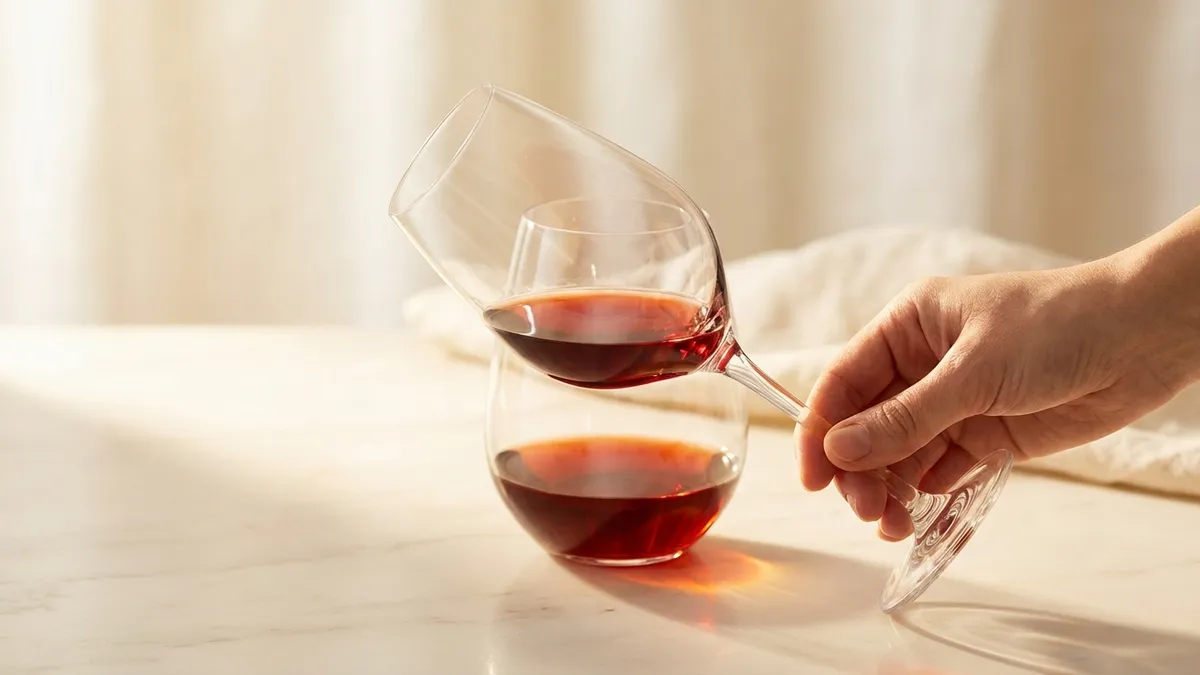
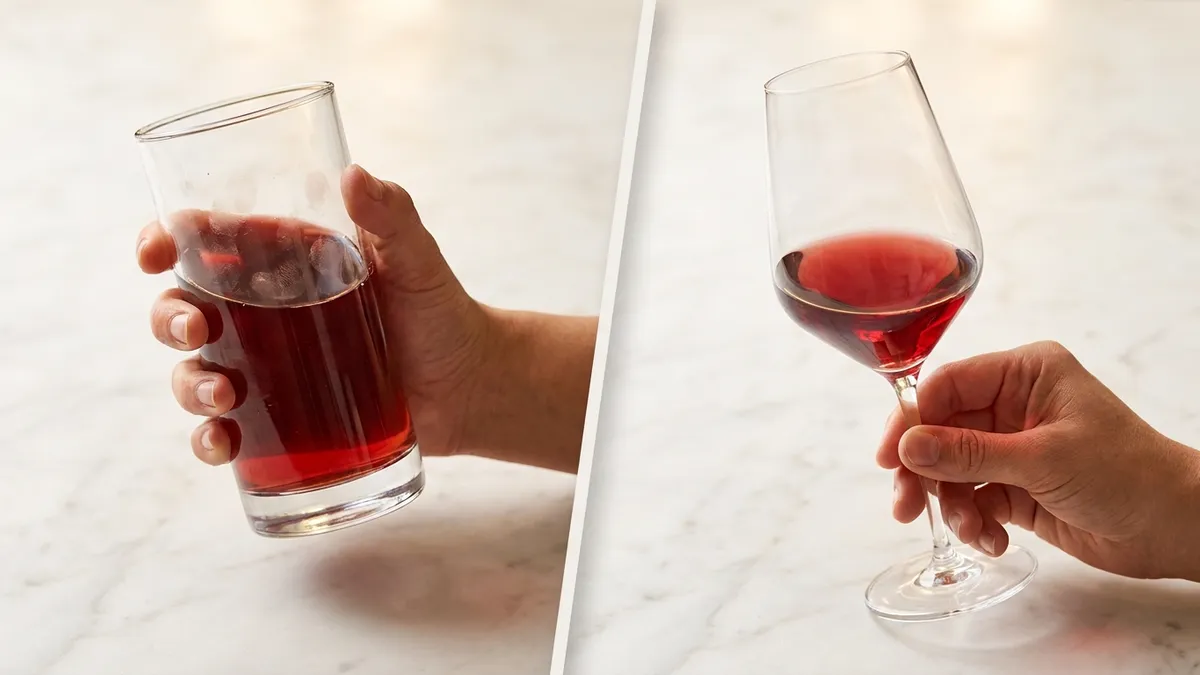
A tumbler or a narrow flute hides most of the wine's aromas. A shallow coupe lets them escape before you can smell them. The shape of the glass matters more than beginners expect.
Fix: Use a tulip-shaped stemmed glass for everything. One all-purpose shape is enough for 95 percent of wines — a medium bowl, slightly narrowed rim, thin rim edge. Get six for the price of dinner out and you are done for life.
Hold it by the stem, not the bowl. Holding the bowl warms the wine with your hand and leaves fingerprints on the part you are trying to see through.
Mistake 3: Smelling Before Swirling
Pour, sniff, sip is the default instinct. It is also the reason beginners miss most of a wine's aroma.
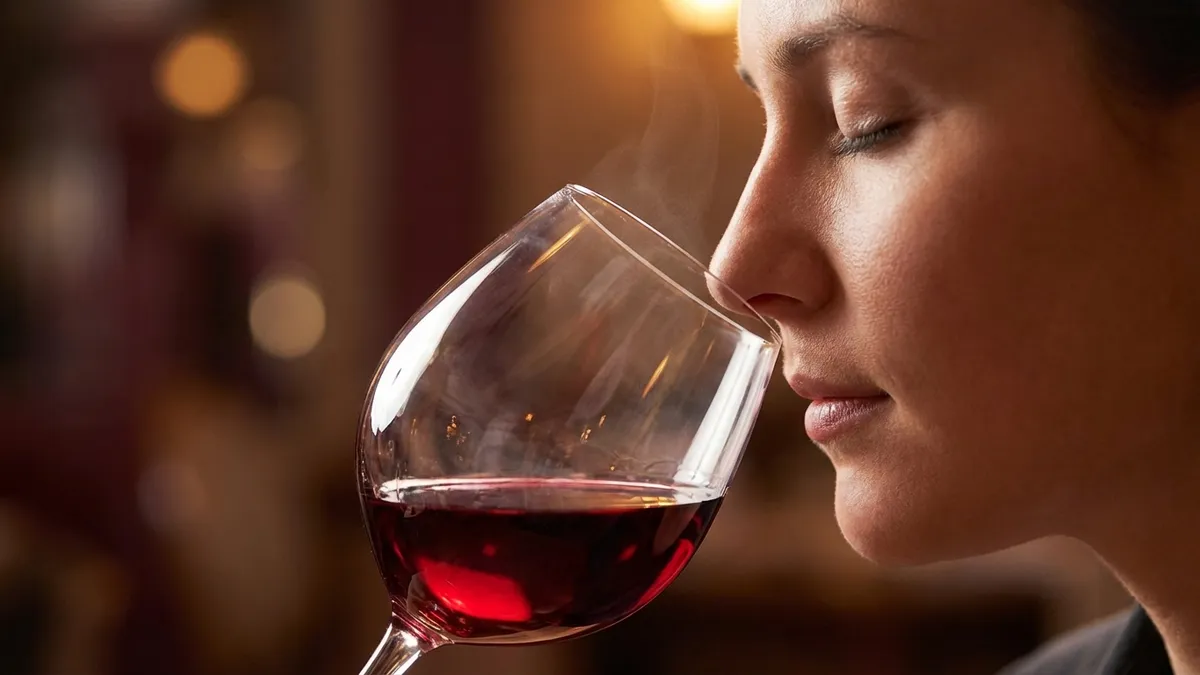
Wine aromas are locked in the liquid until they are agitated into the air above the glass. Swirling releases them. Smelling a still glass is like listening to a song with the volume at 20 percent.
Fix: After pouring, give the glass one deliberate swirl — 3 to 5 full rotations, keeping the base on the table. Then lower your nose into the bowl and inhale through the nose for 2 to 3 seconds. Repeat if the first pass was shallow. The full technique is covered in how to taste wine.
Mistake 4: Sniffing Too Hard or Too Often
This is the opposite error. Beginners often bury their nose in the glass and take deep, forceful inhales, or they sniff five or six times in a row. Both flatten perception.
Your nose fatigues fast. After about three seconds of continuous sniffing, aroma receptors saturate and everything starts smelling like the same wine. You cannot force more information out of an over-sniffed glass.
Fix: Take two short, gentle sniffs. Pause for 10 seconds. Take two more. That is all the nose you need from a single glass. If you want more, come back after a few sips.
Mistake 5: Reading the Label First
The moment you see "Napa Cabernet" on the bottle, your brain starts generating the tasting note before the wine hits your glass. You end up describing what you expect rather than what you actually smell and taste.
Fix: When you can, pour from an opaque decanter or wrap the bottle in a sleeve. Taste first. Read the label after you have written a short note. You will be wrong in useful ways — those surprises train the palate faster than any amount of attentive reading.
If you cannot blind yourself completely, at least cover the price. Price bias is even more distorting than grape bias.
Mistake 6: Tasting Too Many Wines in One Session
A flight of twelve wines at a tasting event sounds educational. It is not. After eight wines in quick succession, palate fatigue sets in, acidity starts flattening, and tannin sensitivity dulls. By wine twelve, you are mostly tasting your own mouth.
Fix: Cap serious tasting sessions at 6 to 8 wines. Take a 5-minute break at the halfway point. Sip water, eat a neutral cracker, and step outside if you can. A short reset extends your useful attention by almost an hour.
For home tastings, two to four wines is plenty. Structure beats volume every time.
Mistake 7: Swishing Wine Like Mouthwash
Aggressive swishing or chewing the wine does not reveal more — it coats the palate in alcohol, deadens the tongue, and makes every subsequent wine taste hotter.
Fix: A moderate 3 to 5 second hold is enough. Let the wine roll over the middle and back of the tongue with a small intentional movement. Then swallow or spit. Anything longer than 5 seconds and you lose perception, not gain it.
If you are learning to spit during tastings, the technique is worth the awkward first few attempts. Our how to spit wine tasting guide has the full mechanics.
Mistake 8: Writing Vague Tasting Notes
"Nice wine. A bit dry." That is a note that will teach you nothing six months later.
Vague notes are the single fastest way to waste a tasting habit. You spend the time but lose the data. Beginners tend to reach for adjectives that are almost meaningless: "smooth," "balanced," "nice," "complex."
Fix: Force yourself to be specific. Name three aromas. Name one structural element you noticed most (the acidity, the tannin, the heat of the alcohol). Name one thing you would buy this wine for, or one thing that put you off. Even if you are wrong, specificity trains recall in ways vague notes cannot.
Mistake 9: Confusing "Bad" with "Not for Me"
A wine can be well-made and still not match your palate. Beginners frequently label every wine they do not enjoy as "bad" — which masks useful preference data and invites impostor syndrome when a friend loves the same bottle.
Fix: Adopt a two-part verdict in your notes:
- Is it well-made? — clean, balanced, finish does not drop off
- Is it for you? — a separate judgment about personal taste
A tannic Nebbiolo can be beautifully made and still feel punishing to a beginner. A soft sweet Moscato can be well-made and still bore someone who prefers bone-dry whites. Separating the two questions keeps your map of preferences honest.
Mistake 10: Not Cleansing the Palate Between Wines
Switching from a buttery oaked Chardonnay to a bone-dry Sauvignon Blanc with no reset in between is like tasting the second wine through the first one. The residue distorts everything.
Fix: Between wines, rinse with still water and bite a plain cracker or a slice of bread. Avoid fatty cheeses, salty nuts, and anything with strong aromatics — they stick around longer than the wine you just drank. A clean mouth is a more honest one.
Sommelier note: Still water is better than sparkling. The bubbles sensitize your tongue to the next wine in ways that skew the impression.
A Few Honorable Mentions
Three mistakes almost made the list:
- Drinking immediately after brushing your teeth. Mint paste strips acidity from the wine. Wait 20 minutes.
- Wearing strong perfume to a tasting. Your nose is so close to the glass that your own scent contaminates the aroma.
- Using a chilled glass for red wine. A refrigerator-cold glass drops the wine 3 to 5 degrees the moment it is poured.
None of them are showstoppers on their own. All of them quietly reduce the experience.
Which Ones Matter Most
If you want to fix one mistake at a time, prioritize in this order:
- Temperature. Fixes more wine than any other variable.
- Glass shape. Second-biggest impact, one-time investment.
- Swirling before smelling. Transforms the aroma experience.
- Label bias. The biggest trap for "educated" tasters.
- Specific notes. Compounds over months, not minutes.
Get those five right and the rest take care of themselves. Most beginners never consciously correct even one of them — which is why they stall at the same level for years despite drinking plenty of wine.
How to Practice Without Drinking More
None of the fixes above require more wine. They require more attention per bottle. Three small habits accelerate the correction:
- Keep a short tasting note for every serious bottle. Consistency builds a record a single bottle cannot.
- Revisit one bottle across two sessions — pour a glass tonight at fridge temperature, another tomorrow at the correct temperature. The difference is a masterclass.
- Pair every tasting with a structure check: name the acidity, tannin, body, and alcohol. Even if you are wrong, the exercise trains the muscle.
The Sommy app bakes these corrections into its default tasting flow — it prompts the swirl, suggests the temperature for the grape you logged, and structures the palate rating as discrete 1–5 scores so vague notes become harder to write.
What Progress Looks Like
A beginner who fixes these ten mistakes will notice three things within a month:
- Wines reveal aromas they never did before, especially at lunch-time or early-evening tastings when the nose is fresh.
- Their notes get shorter but more specific.
- They start disagreeing with back-label descriptions, and are sometimes right.
That last one is the quiet milestone — the moment you trust your own palate enough to contradict the label. Every wine tasting mistake on this list is a barrier between you and that moment. Remove them one at a time.
FAQ
What is the most common wine tasting mistake?
Serving wine at the wrong temperature, by a wide margin. Refrigerator-cold whites hide their aromas, and room-temperature reds in warm rooms taste flabby and hot. Fix this first — everything else improves downstream.
How long should I really swirl a wine glass?
Three to five full rotations, with the base kept on the table until you are comfortable, is enough. Longer swirls do not release more aromas; they just risk spilling. One good swirl, then sniff.
Is it rude to spit wine when tasting?
No — spitting is standard practice at any professional tasting and many home ones. It prevents alcohol from dulling your palate across multiple wines and is expected rather than frowned upon. A wine bucket or spittoon is a normal fixture at serious tastings.
Can I taste wine after coffee or spicy food?
You can, but the fidelity drops sharply. Coffee numbs the nose for up to an hour, and spicy food saturates the tongue's heat and bitterness receptors. For serious tasting, wait an hour or do it before lunch instead.
Should I taste wine blind at home?
For learning, yes, at least some of the time. Wrapping bottles in a cloth or pouring from a decanter strips out label and price bias, which speeds up recognition dramatically. For dinner, full context is fine — not every bottle needs to be a training exercise.
How do I stop my palate from getting fatigued?
Cap tastings at 6 to 8 wines, take a 5-minute break halfway through, drink still water between wines, and avoid strong cheeses or salty foods at serious tastings. Palate fatigue is a physiological limit, not a matter of discipline.
Does a wine need to breathe before tasting?
Some do, some do not. Young tannic reds often open up after 15 to 30 minutes in a decanter, while light whites and delicate reds are at their best the moment they are poured. If in doubt, taste a sip on the pour, then another 20 minutes later — your own comparison is the best guide.
The Bottom Line
Ten wine tasting mistakes, ten one-minute fixes. None of them require expensive gear or more wine. They require naming the mistake and correcting it deliberately on the next bottle. Run through this list on your next three openings and the difference will be audible in the notes you write.
Want a tasting flow that handles the most common mistakes automatically? Sommy prompts the right temperature, enforces the swirl, and asks for a specific structure rating so vague notes never get a chance to form.
Frequently Asked Questions
What is the single most common wine tasting mistake?
Serving wine at the wrong temperature, by a wide margin. Refrigerator-cold whites at around 4 °C lock their aromas in the glass, and room-temperature reds in warm apartments taste flabby and hot. Take whites out 15 minutes before tasting and chill reds for 15 to 20 minutes before serving. Fix this first — everything else improves downstream.
How long should I actually swirl a wine glass?
Three to five full rotations with the base kept on the table is enough. Longer swirls do not release more aromas and just risk spilling. One deliberate swirl, then lower your nose into the bowl and inhale through the nose for two to three seconds. Repeat only if the first pass felt shallow.
How many wines can I taste in one session before palate fatigue kicks in?
Cap serious tasting sessions at six to eight wines. After eight, acidity starts flattening and tannin sensitivity dulls, so by wine twelve you are mostly tasting your own mouth. Take a five-minute break at the halfway point, sip still water, and eat a neutral cracker. For home tastings, two to four wines is plenty.
Should I taste wine blind at home?
For learning, yes, at least some of the time. Pour from an opaque decanter or wrap the bottle in a cloth. Tasting first and reading the label after strips out label and price bias, which are more distorting than most people expect. The surprise of being wrong trains recall faster than attentive labeled drinking.
What should I eat or drink between wines to reset my palate?
Rinse with still water and bite a plain cracker or a slice of bread. Sparkling water sensitizes the tongue and skews the next wine. Avoid fatty cheeses, salty nuts, and anything with strong aromatics — they stick around longer than the wine you just swallowed. A clean mouth is a more honest one.
Does a wine really need to breathe before I taste it?
Some do, some do not. Young tannic reds often open up after 15 to 30 minutes in a decanter, while light whites and delicate reds are at their best the moment they are poured. If in doubt, taste a sip on the pour and another 20 minutes later. Your own direct comparison is the best guide.
How do I write tasting notes that actually teach me something?
Force yourself to be specific. Name three aromas, name one structural element you noticed most — the acidity, the tannin, or the heat of the alcohol — and note one thing you would buy this wine for or one thing that put you off. Even if you are wrong, specificity trains recall in ways vague adjectives cannot.
How do I tell a bad wine from a wine that just is not for me?
Adopt a two-part verdict. First ask if the wine is well-made: clean, balanced, finish does not drop off. Then ask separately whether it suits your palate. A tannic Nebbiolo can be beautifully made and still feel punishing to a beginner. Separating the two questions keeps your preferences honest and prevents unfair judgments.
Sommy Team
LinkedInFounder & Wine Educator
The Sommy Team is building the world's most approachable wine education app, helping beginners develop real tasting skills through structured courses and AI-guided practice.