Has Your Wine Gone Bad? 5 Ways to Tell Before You Sip

By the Sommy Team — AI-assisted, human-edited.
Updated Apr 29, 2026
Contents (12)
- The Bottle You Are Not Sure About
- Has Your Wine Gone Bad?, in 90 Seconds
- Sign 1: The Color Has Shifted
- Sign 2: The Smell Is Off
- Sign 3: The Cork or Capsule Looks Wrong
- Sign 4: There Is Fizz in a Still Wine
- Sign 5: A Tiny Sip Tells You Everything
- Bad Wine Versus Oxidative Style: An Important Distinction
- A Practical At-Home Test
- When Bad Wine Is Actually Dangerous (Almost Never)
- What to Do When You Find a Bottle Gone Bad
- Building the Reflex Once, Keep It Forever
TL;DR
Wine has gone bad when the color shifts to brown or amber, the smell turns to vinegar, wet cardboard, or bruised apple, the cork is pushed up or leaking, a still wine fizzes on the surface, or a small sip tastes flat and sour. Bad wine is rarely dangerous, just unpleasant.
The Bottle You Are Not Sure About
Almost every wine drinker has reached the back of a cupboard, found a half-forgotten bottle, and wondered whether it is still worth opening. Maybe the foil looks scuffed. Maybe the cork peeks out a little. Has your wine gone bad, or is it still safe to pour?
The good news is that wine rarely turns dangerous. The not-so-good news is that it can absolutely turn unpleasant — flat, sour, musty, or solvent-like — and there is no point pouring a faulty bottle for anyone. The trick is learning to read the signals before you take that first sip.
This guide walks through five concrete signs to check, in order, every time you open a bottle you are unsure about. Each sign covers a different fault — oxidation, cork failure, heat damage, microbial activity, and palate-level imbalance. By the end, you will know the difference between a tired wine you can rescue with a stew, a faulty wine you can take back to the shop, and a fine wine that just needed a little air.
Has Your Wine Gone Bad?, in 90 Seconds
A wine gone bad shows itself through five signs. First, color — a young red shifting to dull brown, or a white turning deep amber, both point to oxidation. Second, smell — vinegar, wet cardboard, bruised apple, or nail polish remover all signal a fault. Third, the cork and capsule — a pushed-up cork, leaking foil, sticky residue, or a low fill level signal heat damage or seal failure. Fourth, the surface — bubbles or fizz in a still wine that is not meant to sparkle suggest unwanted fermentation. Fifth, a tiny taste — flat fruit, no length, sharp acetic edge, or a dusty stale finish confirm what your nose already suspected. Bad wine is rarely dangerous, but it always tastes worse than the bottle next to it.
Sign 1: The Color Has Shifted
Color is the first thing to read on any wine, and it is also the easiest fault check. Pour a small amount into a clear glass against a white background and look straight down through the rim.
A healthy young red wine sits somewhere between deep ruby and bright purple. A healthy white sits between pale lemon and bright straw. Aged reds shift toward brick and garnet, and aged whites move toward gold — that is normal evolution, not a fault.
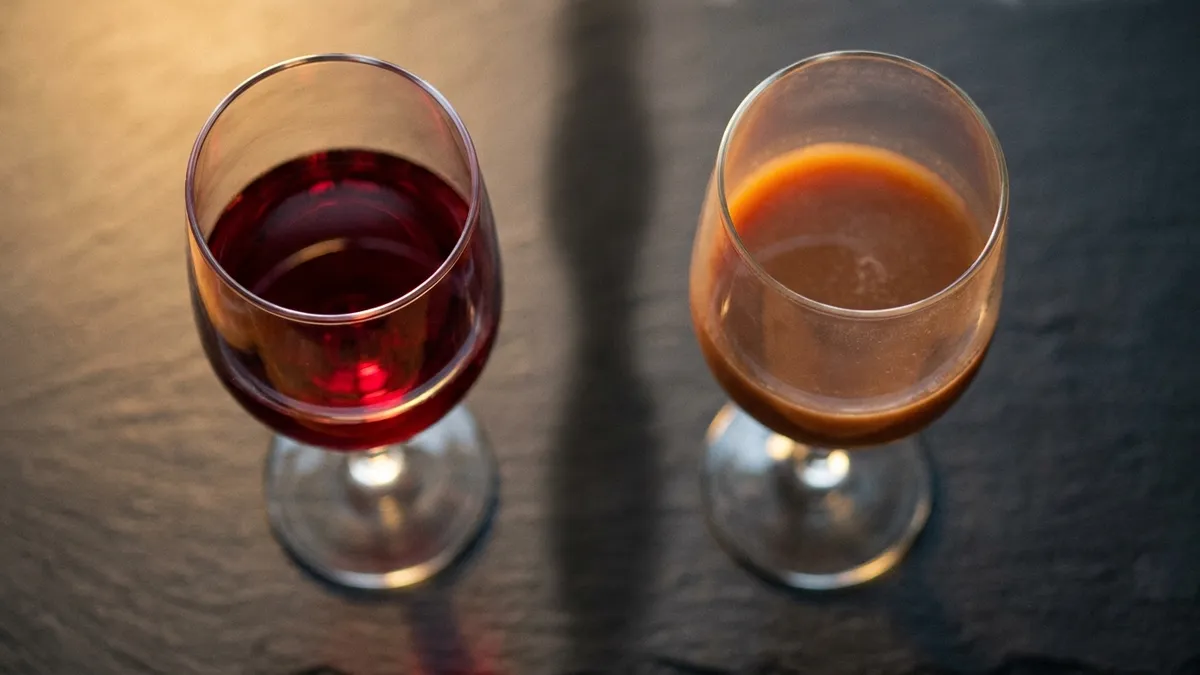
The warning signs are dramatic shifts away from the expected color. A young Pinot Noir or Sangiovese that looks dull rust-brown is oxidized. A fresh Sauvignon Blanc or Pinot Grigio that looks deep amber or honey-brown is also oxidized. The progression is unmistakable when you compare the bottle to a fresh pour of the same wine side by side.
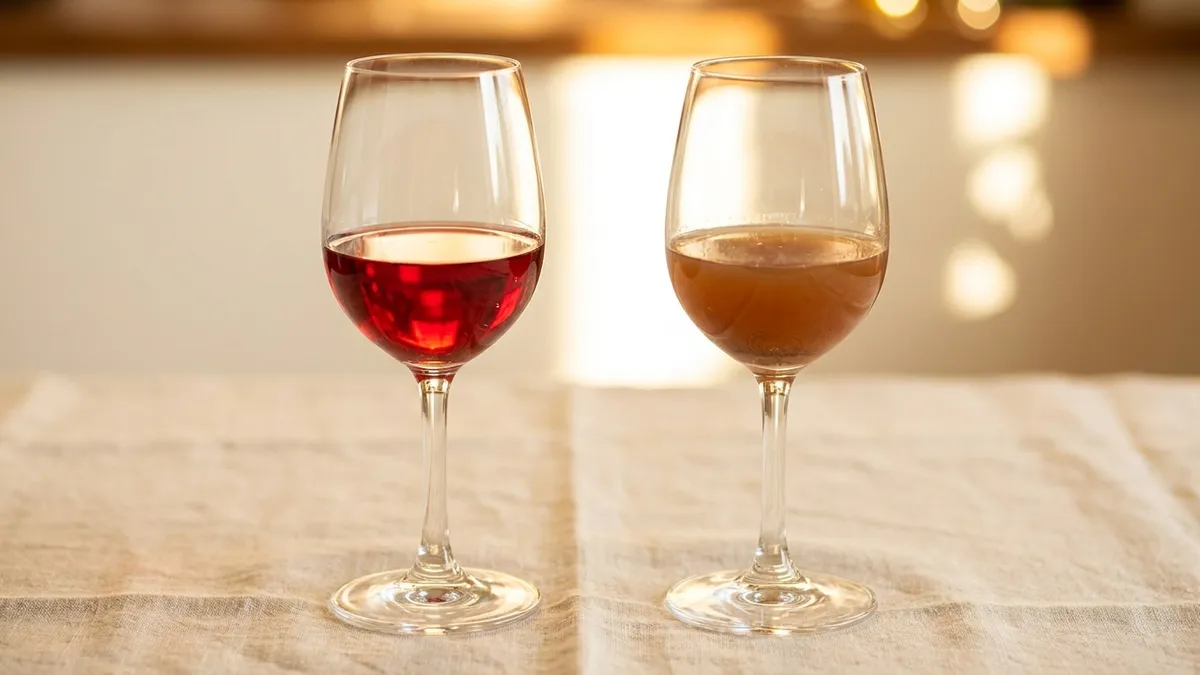
Oxidation is the most common cause of color drift. Oxygen converts ethanol into acetaldehyde, which not only smells like bruised apple but also darkens pigment as the wine ages out of balance. For a deeper walkthrough of what hue tells you about a wine's life cycle, the oxidized wine guide breaks down the three stages of oxidation and how they show up in the glass.
A bottle that has shifted color and lost its fresh fruit is faulty. A bottle with a darker color but bright, lifted fruit is just old. The two are not the same thing.
Sign 2: The Smell Is Off
Smell is where most faults declare themselves. The bottle does not need to be fully opened — even a careful sniff at the neck after pulling the cork is often enough.
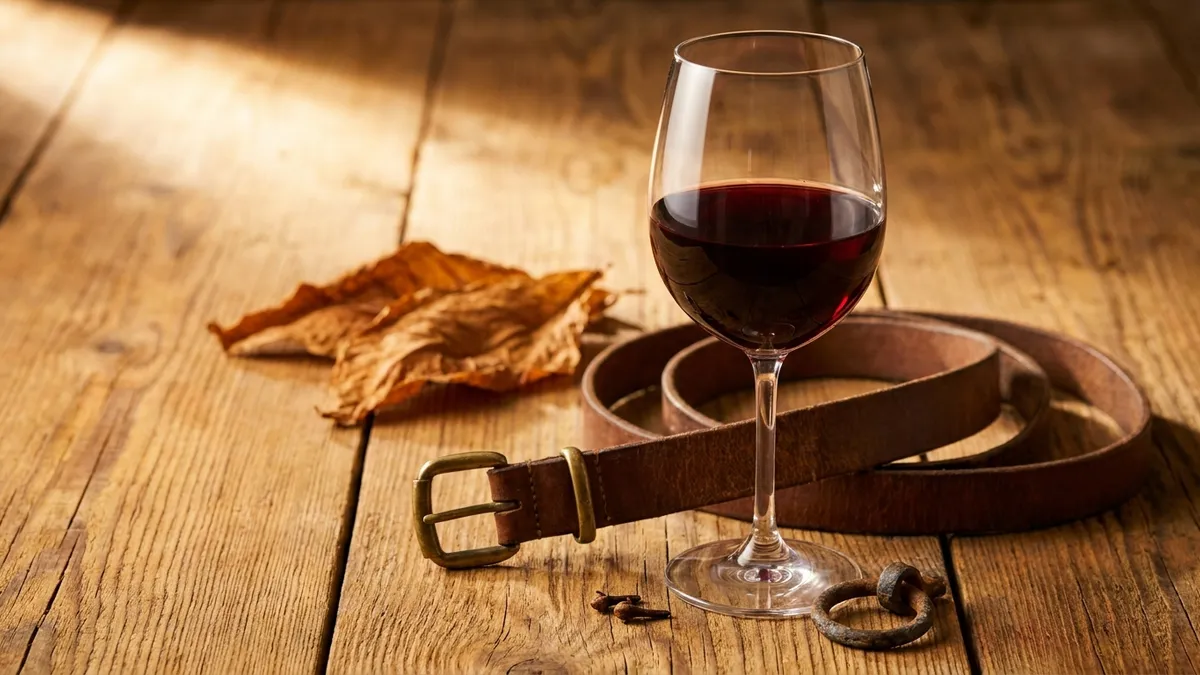
A clean wine smells like a wine. Fruit, flowers, sometimes oak or earth, but always lifted and inviting. A faulty wine smells wrong in one of five very specific ways, and learning the vocabulary takes most of the guesswork out of the moment.
Vinegar (Volatile Acidity)
A sharp, sour, acetic note pinching at the back of the nose. Mild VA can add complexity to certain wines, but a wine that smells distinctly like salad dressing is past saving. The cause is acetic acid bacteria converting alcohol into vinegar, usually after long oxygen exposure.
Wet Cardboard, Damp Basement (Cork Taint)
A musty, dusty, mouldy note. The fruit you would expect has gone silent. This is cork taint caused by TCA (a chemical compound formed when chlorine reacts with mould in cork bark). For the full breakdown of the most-misnamed fault in wine, see how to tell if wine is corked — most beginners call every bad wine "corked," but only about one to two percent actually are.
Bruised Apple, Sherry, Walnut (Oxidation)
A cooked, dried, slightly nutty character where fresh fruit should be. The wine smells like a bowl of bruised apples that sat out overnight. Oxidation flattens the palate as much as the nose.
Nail Polish Remover (Severe Oxidation)
The next stage past vinegar. Acetic acid combines with remaining ethanol to form ethyl acetate, which smells exactly like a bottle of nail polish remover or model glue. Pour it out.
Cooked Fruit, Stewed Strawberry Jam (Heat Damage)
A dried, cooked-fruit profile that signals a wine has spent time too warm. Heat damage often pairs with a pushed-up cork and a low fill level, because heat expands liquid and forces the cork outward. The wine tastes both flat and over-ripe at the same time.
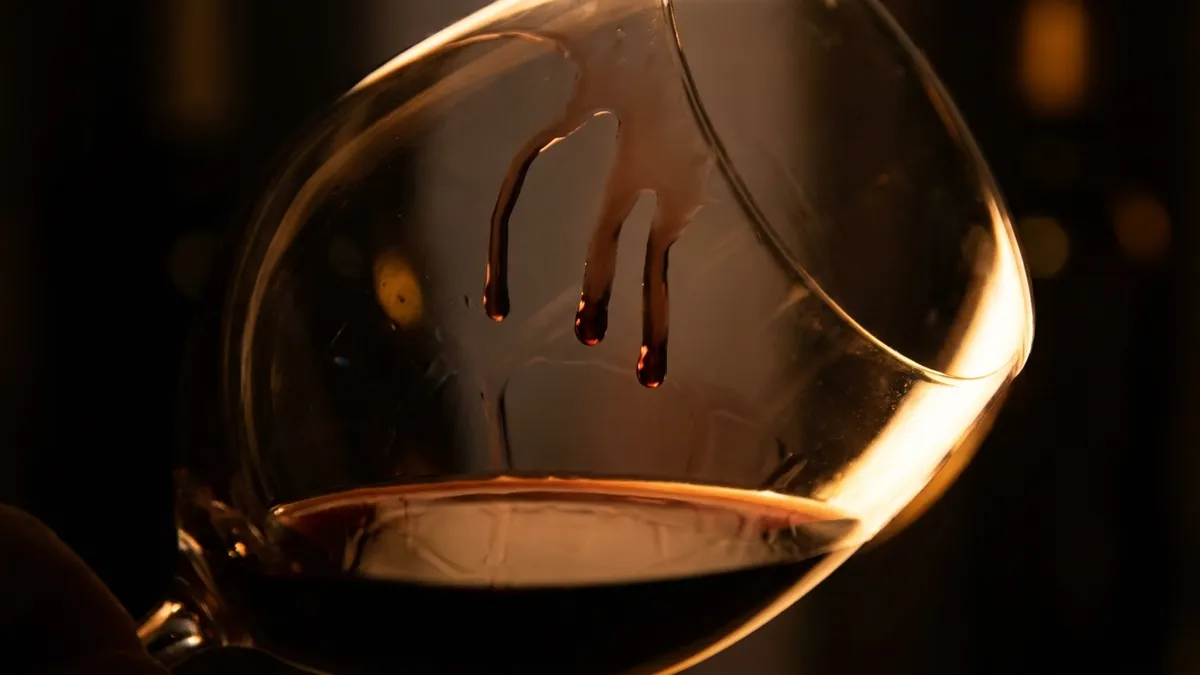
One important exception lives inside this list. Reduction smells of struck matches, rotten egg, or burnt rubber, and beginners often confuse it with a fault. Reduction is not a fault — it is the opposite of oxidation, caused by too little oxygen, and a vigorous swirl usually solves it within a minute or two. If the off-note fades with air, it was reduction. If it deepens or stays, the wine is genuinely faulty. A sweet wine that smells of crushed green leaves and never clears has geranium taint, a rarer fault from a preservative meeting bacteria.
Sign 3: The Cork or Capsule Looks Wrong
Before the bottle is even open, the closure tells a story about how the wine has lived.
A healthy bottle has a flush, foil-sealed top with no leakage, a cork still seated firmly inside the neck, and a fill level just below the bottom of the foil. Any deviation from that picture is a flag.
Pushed-Up Cork
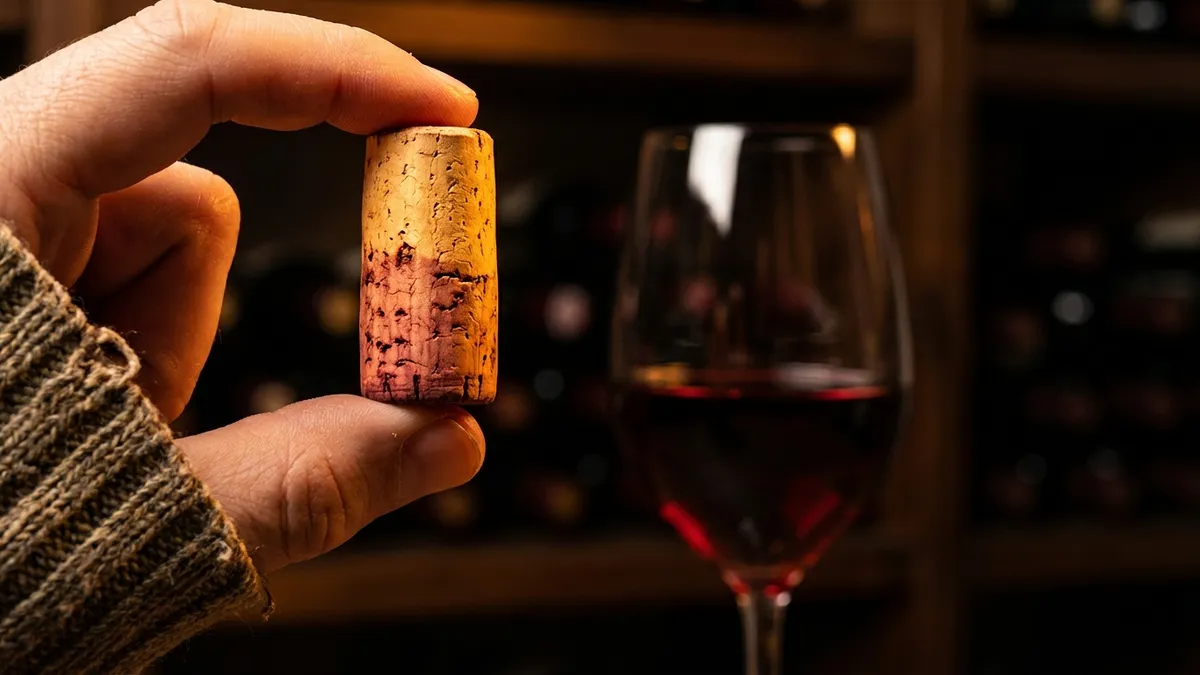
A cork sticking out beyond the bottle lip, sometimes lifting the capsule into a small dome, almost always means heat damage. When wine warms, it expands; the cork is forced upward and oxygen rushes in past the seal. A bottle with a pushed cork has likely cooked at some point.
Leaking Foil or Sticky Residue
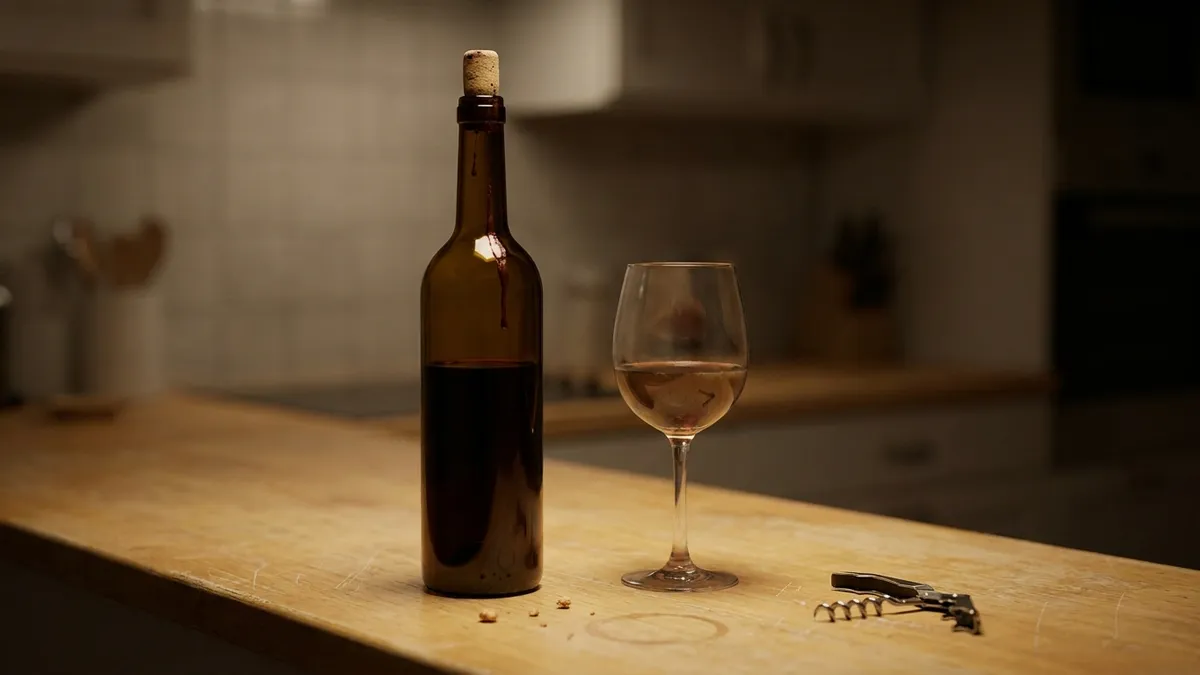
Wine seeping past the cork shows up as a sticky brown crust under the capsule or a small dribble down the neck. Either signals a failed seal — too much oxygen has reached the wine, and oxidation has already started.
Low Fill Level (Ullage)
The space between the wine and the cork is called ullage (the air gap above the wine in the bottle). A few millimetres of ullage is normal. A drop of two centimetres or more in a young bottle suggests evaporation or seal failure. In aged wines, mid-shoulder ullage is acceptable; below mid-shoulder is a real warning.
Crumbly or Dry Cork
A cork that breaks apart on the way out is a storage issue, not a flavor issue. Most often it means the bottle was stored upright in a dry environment for too long, drying the cork and shrinking it. The wine itself can still be fine — judge the wine on smell and taste, not on the cork's physical condition.
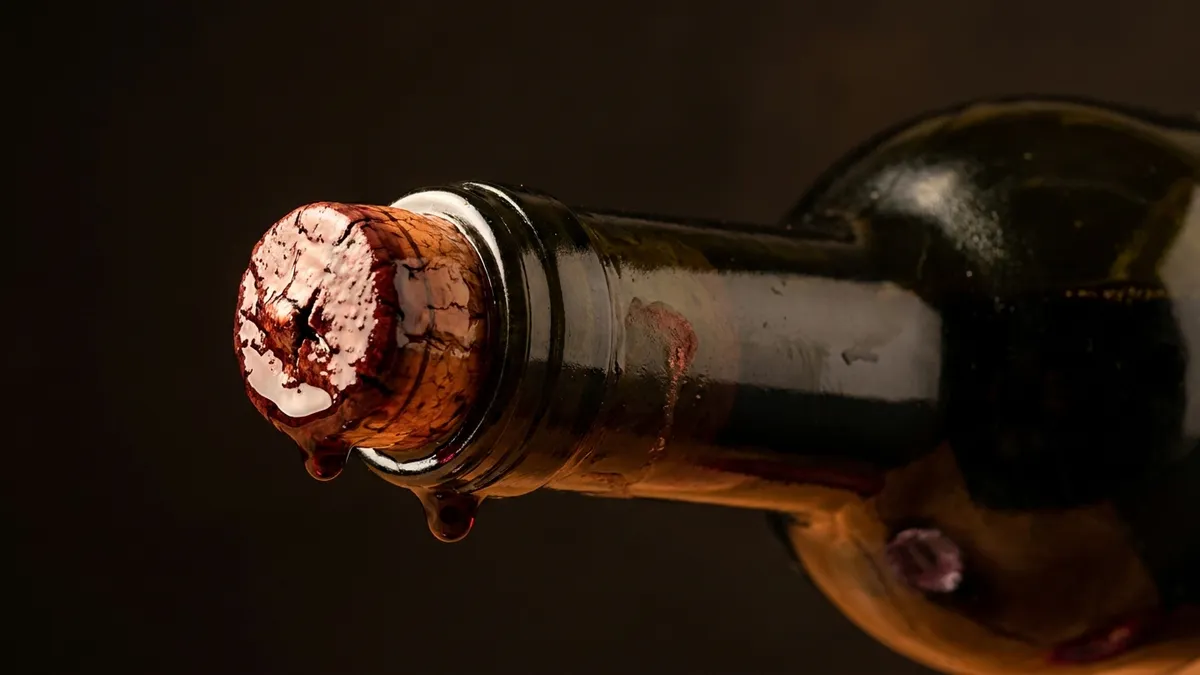
Stored on its side, in a cool dark place, with stable temperatures, even a modest cork lasts decades. For the full storage playbook every home drinker should run, our guide to how to store wine at home walks through fridges, racks, and the cheap closet hacks that work just as well as a dedicated cellar.
Sign 4: There Is Fizz in a Still Wine
Once the bottle is open, watch the surface of the pour for a few seconds before sniffing.
A still wine should sit calmly in the glass with no visible bubbles. Fine, persistent fizz around the rim of a still red or white wine almost always means secondary fermentation — yeast or bacteria converting residual sugar into carbon dioxide inside the bottle. The wine will often taste slightly spritzy, slightly sour, and not in a charming way. Our guide to refermentation in the bottle explains how to tell that fault from a deliberate prickle.
Sediment is a different story. Tiny floating particles in an older red, or a small layer of grit at the bottom of the bottle, are completely normal. Tannins and color compounds bond and drop out over time. Decant the bottle off the sediment, or pour gently, and the wine itself is fine.
White sediment in a young white wine is a real warning. Tartrate crystals look like clear or white shards and are harmless flavor-wise — our guide to tartrate crystals in wine explains why cold produces them — but if the deposit is fluffy, fuzzy, or visibly cloudy, the wine has had a microbial issue.
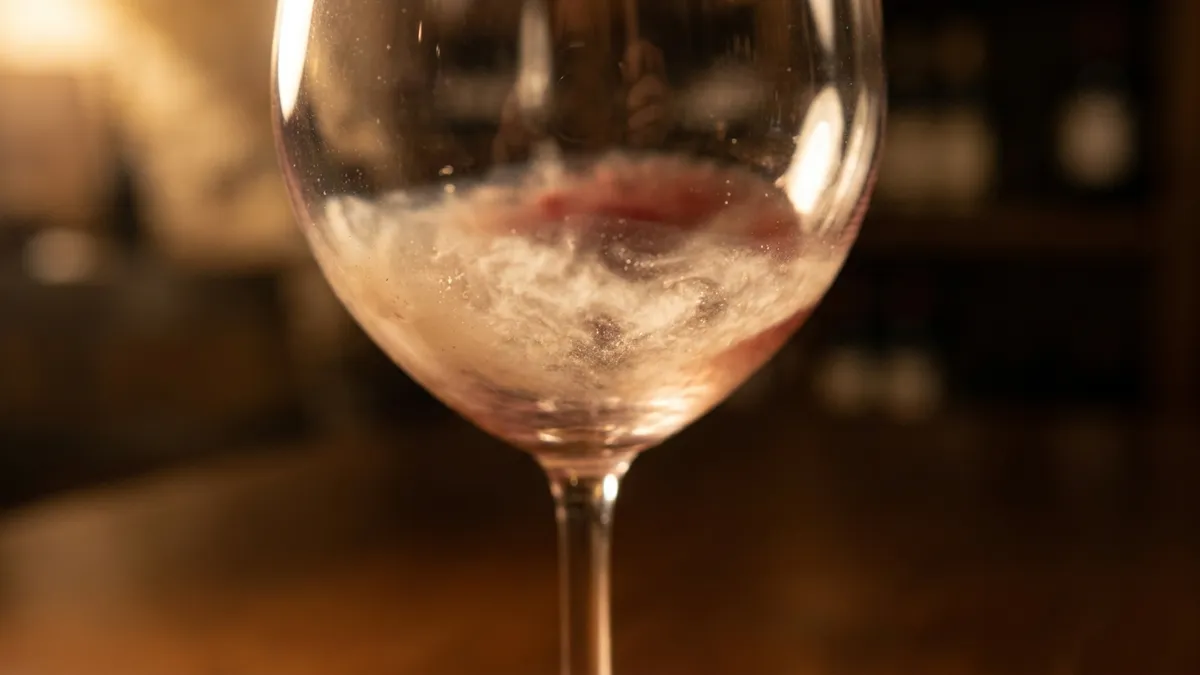
For the visible-sediment-vs-fizz question on every aged bottle, the wine appearance guide covers the four-pillar tasting framework — color, aroma, palate, finish — so you can place each clue in context.
Sign 5: A Tiny Sip Tells You Everything
When the visual and aromatic checks are inconclusive, the palate is the final arbiter. Pour about 30 to 50 millilitres into a glass, swirl gently for a few seconds, sniff, then take a small sip and let it move across the entire mouth.
A clean wine has fruit, structure, and length. The palate should feel alive — acidity refreshes, fruit appears, alcohol warms gently, and the finish carries on for several seconds after you swallow.
A wine that has gone bad fails at least one of those tests. It tastes flat with no fruit. It tastes sour and acetic. It tastes dusty and stale. It feels like nothing — no texture, no length, no spark. The contrast with a clean glass of the same wine is so obvious that even a complete beginner can usually call it after one taste.
This is exactly the reflex the common wine tasting mistakes guide is designed to fix, because beginners often blame themselves for not enjoying a faulty wine. The wine is the problem, not the palate.
The Five-Second Cork-Taint Test
For the specific case of suspected cork taint, run this drill. Smell the cork itself when you pull it out. Smell the wine in the glass. Wait sixty seconds and smell the glass again. A corked wine smells musty all three times — the wet-cardboard note will not fade with air. A reduced wine smells off at first and clean by the third sniff. A clean wine smells inviting at every step.
The Sommy app's fault-recognition lessons walk through this sequence with real-time feedback, so the same cork-vs-wine-vs-air ritual becomes muscle memory after a handful of sessions.
Bad Wine Versus Oxidative Style: An Important Distinction
This is the trap that catches more beginners than any other. Oxidation is sometimes the entire point of the bottle.
A few styles are made to taste oxidized, and the bruised-apple, walnut, and dried-fruit notes that signal a fault in a fresh white Burgundy are the signature profile of:
- Sherry — Fino and Manzanilla age under a yeast layer called flor and read fresh, salty, almond-like; Amontillado and Oloroso age with full oxygen and read deeply nutty and raisined.
- Tawny Port — aged in barrel for 10, 20, 30, or 40 years, building dried-fruit, walnut, and toffee notes by design.
- Madeira — heat-aged and oxidatively aged at the same time; an open bottle can last months.
- Vin Jaune — aged six years under flor in the Jura; curry, walnut, and dried apple are the entire point.
- Some traditional orange wines — extended skin contact and minimal sulfites push toward a controlled oxidative profile.
If the label says Sherry, Madeira, Tawny, Vin Jaune, or a serious natural orange wine, the same notes that would condemn a bottle of Sauvignon Blanc are doing exactly what they are supposed to do. The rule of thumb is simple. If a wine is meant to be fresh and tastes oxidized, it is faulty. If a wine is meant to be oxidative and tastes oxidative, it is doing its job.
A Practical At-Home Test
The fastest way to lock the smells of bad wine into memory is to make some on purpose.
Pour about 50 millilitres of any clean, fresh white wine into a glass and leave it on the counter, uncovered, for 48 hours. Pour a fresh glass of the same wine alongside it and compare. The exposed glass should smell of bruised apple, soft sherry-like nuttiness, and a flat, lifeless edge. The fresh glass should smell of citrus and orchard fruit. That contrast is the entire signature of mild oxidation, captured in one drill.
For the underlying technique that makes any sniffing exercise actually stick, the how to smell wine walkthrough teaches the gentle, deliberate sniffing pattern used by trained tasters, and the develop your wine palate guide builds a long-term training plan around it.

When Bad Wine Is Actually Dangerous (Almost Never)
Wine is one of the safest beverages on a kitchen shelf. Alcohol, acidity, and (usually) sulfite preservatives keep almost every microbial threat out. Visible mould at the rim of an opened bottle is the only real safety concern, and it is rare — pour it out without tasting. For everything else, the worst-case outcome of drinking a faulty wine is unpleasantness, not illness.
What to Do When You Find a Bottle Gone Bad
At Home
If the wine is mildly oxidized and the bottle is fresh from a shop, take it back. Most reputable wine shops will replace it, especially if you bring the cork. If the bottle has been open several days, redirect it. Mildly oxidized wine cooks beautifully — pour it into a stew, deglaze a pan, finish a vinaigrette. The fault notes disappear under heat and the acidity does its job. Wine that has gone fully vinegary can stand in for red or white wine vinegar. Severe oxidation, with that solvent-like nail polish edge, is finished. Pour it down the sink.
For the upstream question of why open bottles fade and how to slow the clock, the how long does wine last after opening guide gives day-by-day windows for every common style.
At a Restaurant
When a server pours you a small taste before serving the table, that ritual exists for exactly this moment. Swirl, sniff, and run through the fault profiles. If the wine smells of vinegar, wet cardboard, or bruised apple where it should smell of fresh fruit, name it calmly:
"This wine smells off to me — there is a musty note where I would expect fresh fruit. Could we try another bottle?"
Be specific about the fault if you can. Calling an oxidized wine "corked" is the most common mistake at restaurant tables, and a sommelier will respect a precise diagnosis far more than a generic complaint. For the broader pillar overview of every fault you might meet, the faults learning hub walks through each one with side-by-side comparisons.
Building the Reflex Once, Keep It Forever
Reading whether a wine has gone bad feels mysterious the first few times. After three or four real encounters, the right note jumps out of the glass before you have finished the first swirl. Beginners often go from "something is wrong, I cannot name it" to "this is oxidized" within a few months of deliberate practice.
Structured aroma training is the shortcut. The Sommy app walks you through fault recognition with real-time feedback, layering the visual, aromatic, and palate signals together so the whole picture forms in a single sniff. The same framework powers the rest of the tasting flow — color, aroma, palate, finish — and transfers to every clean wine you taste afterward. To round out the foundation, the wine tasting vocabulary cheat sheet gives you the right words for the moment a fault appears.
Visit sommy.wine to start training your nose for every fault, flavor, and style you will meet in a glass. Five signs, one bottle, thirty seconds — and you never have to wonder again whether the wine in front of you is worth the pour.
Frequently Asked Questions
Can wine actually go bad?
Yes, but not in the way food spoils. Wine does not grow harmful bacteria once it is bottled because alcohol and acidity keep most microbes out. What changes is flavor. Oxygen, heat, and time convert fresh fruit into bruised apple, vinegar, or solvent notes. The wine becomes unpleasant to drink long before it becomes unsafe.
Is it dangerous to drink wine that has gone bad?
Almost never. A wine that has turned to vinegar, oxidized, or gone musty is safe to swallow. The compounds responsible — acetaldehyde, acetic acid, TCA — are not toxic at the levels found in faulty wine. The only real reason to pour it out is that it tastes terrible. Visible mold or a contaminated bottle is the rare exception.
How can I tell if my wine has gone bad without opening it?
Inspect the bottle. A pushed-up cork, leaking foil, sticky residue around the neck, or a fill level that has dropped well below the shoulder all suggest heat damage or seal failure. The color through the glass can also hint — a white wine that looks deep amber or a young red that looks dull brown is a warning sign before you ever pull the cork.
What does bad wine smell like?
Bad wine smells of vinegar, wet cardboard, bruised apple, nail polish remover, or stewed cooked fruit, depending on the fault. Vinegar means volatile acidity. Wet cardboard means cork taint. Bruised apple means oxidation. Nail polish remover means severe oxidation. Stewed fruit means heat damage. Whatever the note, the bright fresh fruit you would expect is missing.
Does an old wine always mean a bad wine?
No. A properly stored wine designed for aging — a structured Bordeaux, a top Barolo, a vintage Champagne — can drink beautifully at twenty or thirty years. Most everyday wines are made to drink within one to three years and lose their fruit faster. Age and quality are not the same thing, and a darker color on an aged red is normal, not a fault.
Can I cook with wine that has gone bad?
Mildly oxidized or tired wine works well in stews, braises, pan sauces, and risotto. Heat drives off the off-notes and concentrates whatever fruit and acid remain. Wine that has turned fully to vinegar can replace red or white wine vinegar in a vinaigrette. Severely oxidized solvent-smelling wine should go down the sink, not into food.
How do I tell oxidation apart from cork taint?
Oxidation smells cooked and dried — bruised apple, sherry, walnut. Cork taint smells damp and musty — wet cardboard, basement, mouldy books. They have different temperature words. Oxidation removes fresh fruit and replaces it with nutty notes. Cork taint removes fresh fruit and leaves a flat, dusty hole. Naming the right fault matters when you take a bottle back.
How long can a bottle of wine sit unopened before it goes bad?
An unopened bottle of everyday wine, stored cool and on its side, holds up for one to three years past the vintage with no problem. Wines built for aging can run twenty years or longer. Cheap wines stored upright in a warm kitchen can fade in under a year. Storage matters far more than the year on the label.
Sommy Team
LinkedInFounder & Wine Educator
The Sommy Team is building the world's most approachable wine education app, helping beginners develop real tasting skills through structured courses and AI-guided practice.