How to Develop Your Wine Palate: Exercises That Work
By the Sommy Team — AI-assisted, human-edited.
Updated Apr 16, 2026
Contents (15)
- TLDR
- What a Palate Actually Is
- Why Most Advice Fails
- Exercise 1: Build a Scent Library
- Exercise 2: The Two-Wine Comparison
- Exercise 3: The Blind Reveal
- Exercise 4: The Daily 5-Minute Drill
- Exercise 5: Taste With a Structure Scorecard
- Exercise 6: Train in the Other Direction
- Exercise 7: Learn by Describing to a Beginner
- The 30-Day Starter Plan
- Mistakes That Stall Progress
- What Improvement Actually Feels Like
- FAQ
- The Bottom Line
TL;DR
A wine palate is a trainable stack of skills — smell recall, structure recognition, and honest comparison — not an innate gift. Short daily drills, two-wine side-by-side tastings, scent libraries, blind reveals, and structure scorecards build recall faster than volume drinking ever will. Four weeks of ten-minute sessions outpace a year of passive bottles, at any age.
TLDR
A wine palate is not a gift — it's a skill built from smell recall, structure recognition, and honest notes. You can develop yours faster than most guides suggest, but only with the right exercises. Smell training and side-by-side comparisons beat any amount of drinking alone. Seven drills, most under 10 minutes each, form the core of the approach.
What a Palate Actually Is
When people talk about a "good wine palate," they're really describing three separate abilities stacked together:
- Smell recall — the mental library that links an aroma to a word you can retrieve.
- Structure recognition — telling acidity from tannin, body from alcohol, sweetness from fruit.
- Comparison instincts — noticing the difference between two wines and explaining why.
All three are trainable. None of them require talent or a wealthy upbringing. Starting from zero? A 90-day plan for getting into wine sets out which bottles to open first. The only requirement is consistent, deliberate practice — the same pattern that builds any other skill.
To develop wine palate skill, stop measuring progress in bottles drunk and start measuring it in aromas named.
Why Most Advice Fails
Three pieces of common advice waste more time than they save:
- "Just drink a lot of wine." You can drink 500 bottles in a year and never get better because you never practiced recall. Volume without attention is just drinking.
- "Memorize a list of descriptors." Reading that Cabernet "tastes like blackcurrant" does nothing if you have never smelled a blackcurrant. Words without sensory anchors are useless.
- "Take an expensive class." Classes help, but only if you practice between sessions. Sitting through 20 hours of lectures with no drills in between produces short-term knowledge and long-term forgetting.
The rest of this guide replaces those with exercises that build real recall.
Exercise 1: Build a Scent Library
Start here. Before wine, smell things on their own.
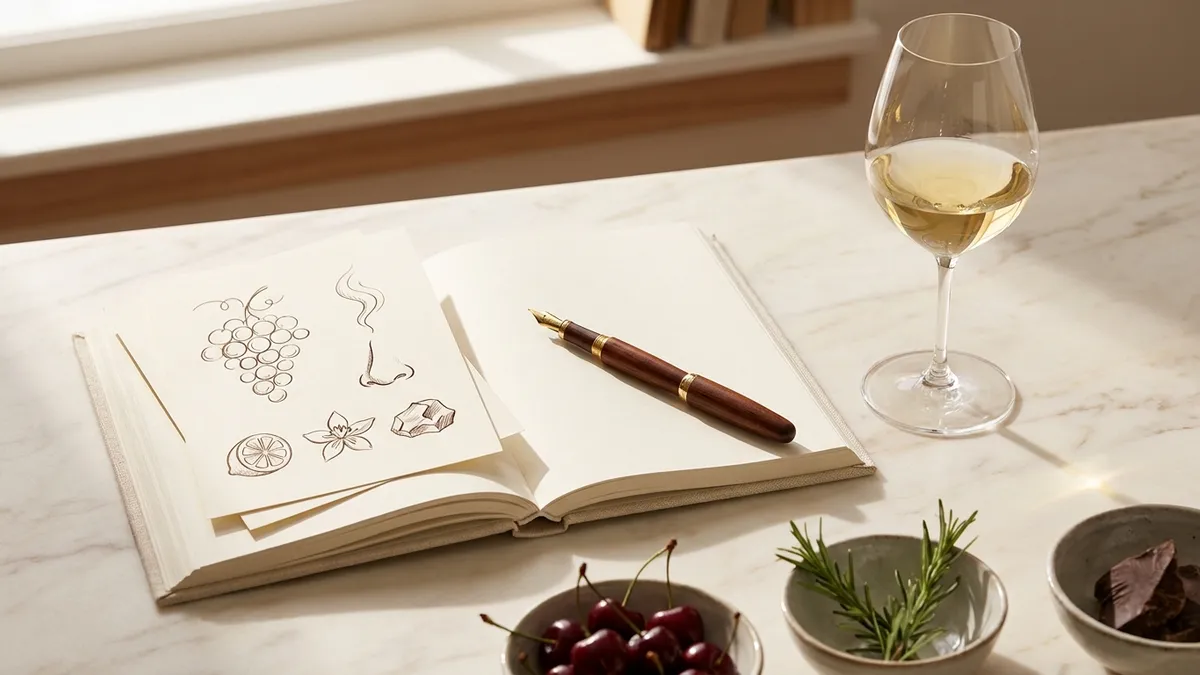
Pick five common wine aromas and set out the real objects:
- Red cherries
- Black pepper
- Fresh mint leaves
- Lemon peel
- Oak chips or a new-oak toothpick
Smell each one with eyes closed. Say the name out loud. Smell again. Move on. Do this in three short sessions across a week — not once for thirty minutes. Short sessions beat marathons because smell fatigue sets in within minutes.
Over a month, rotate in new aromas: green apple, ripe peach, dried tobacco, black olive, vanilla, violet. Our wine aroma wheel guide covers the categories most wines cluster around.
Why this works: the bottleneck in most beginner palates is not the nose — it's the memory. Your nose already works. You just need words to attach to what you smell.
Exercise 2: The Two-Wine Comparison
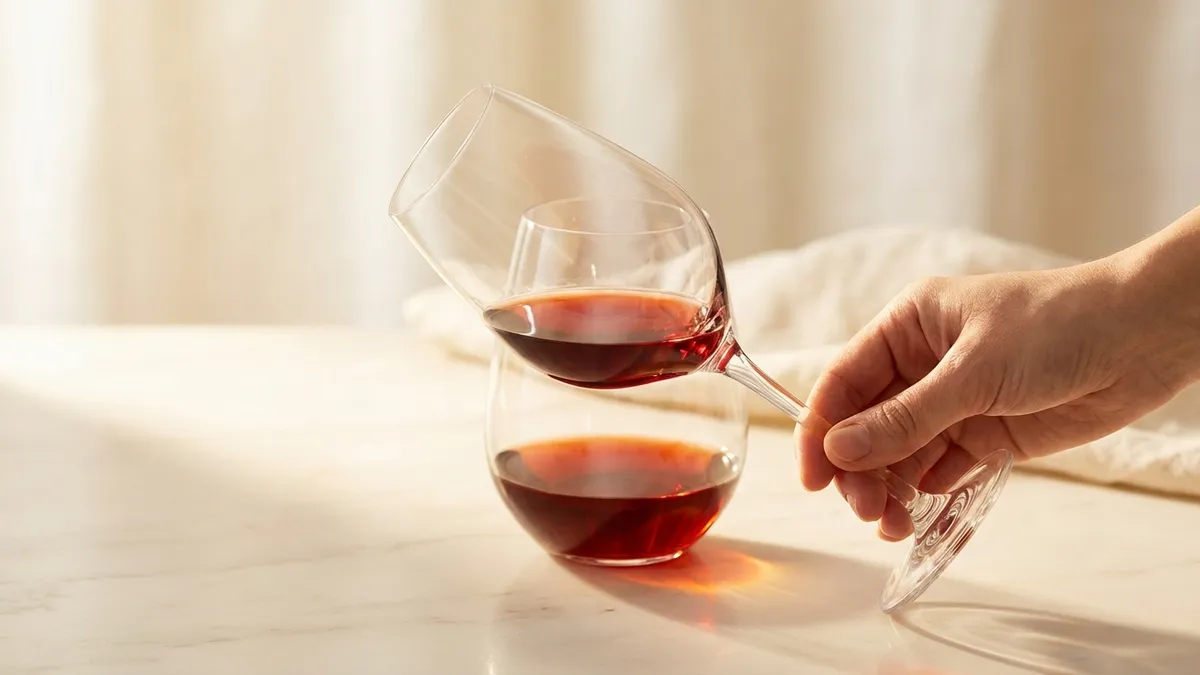
Buy two bottles of the same grape from different places. Two Pinot Noirs — one from Burgundy and one from Oregon. Two Sauvignon Blancs — one from Marlborough and one from Sancerre. Two Chardonnays — one unoaked and one barrel-aged.
Pour both at the same time. Smell one, then the other. Sip one, then the other. Write one sentence per wine describing how they differ.
Limit yourself to 10 minutes. Any longer and palate fatigue starts flattening your perception.
Repeat with a different grape every week. Within a month, you will start hearing yourself say things like "this one has more citrus and a tighter finish" without thinking about it. That's structure recognition showing up.
Exercise 3: The Blind Reveal
Have someone pour a single wine into an opaque glass. Taste it cold. Try to guess:
- Red or white
- Sweet or dry
- Light, medium, or full body
- High, medium, or low acidity
- Old-world (cool-climate) or new-world (warm-climate)
Write answers down before the reveal. Then compare.
You will be wrong. That is the point. The surprise of being wrong is what burns a pattern into memory. A single 5-minute blind exercise does more for your recall than an hour of attentive drinking.
This exercise scales up into full deductive tasting, a framework used by sommeliers at every level. You do not need to go that deep to benefit.
Exercise 4: The Daily 5-Minute Drill
Short and repeated beats long and occasional. Every day, for 5 minutes, pick one wine from your fridge or cellar and do this:
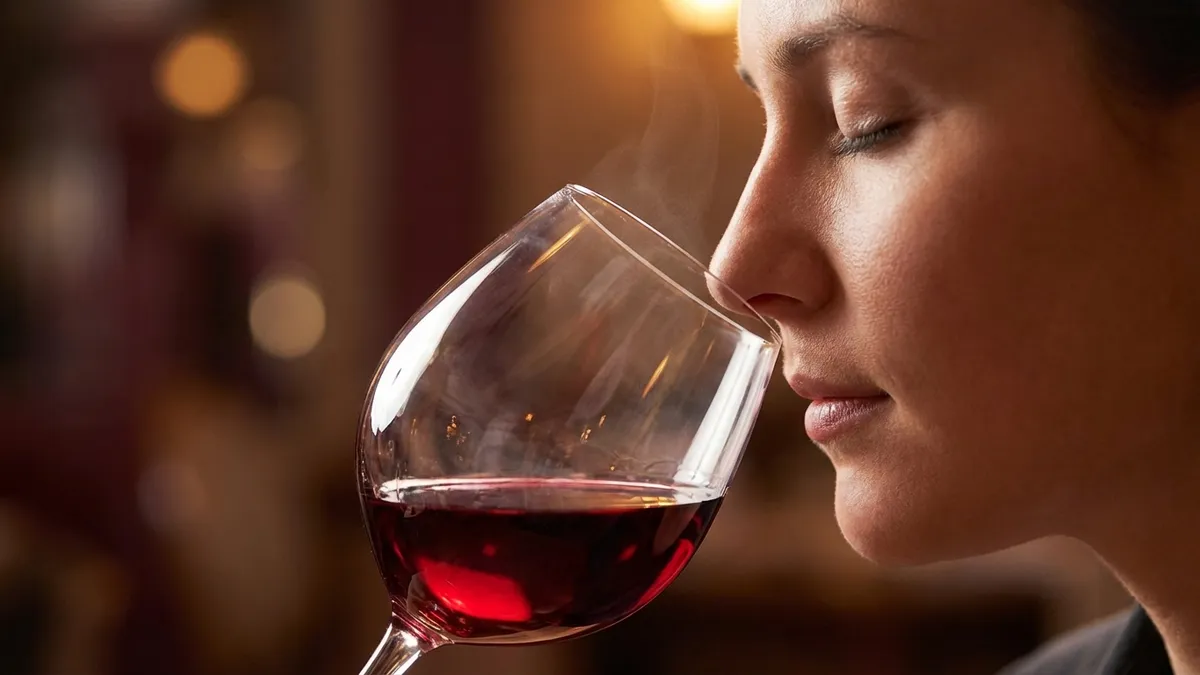
- Smell it for 30 seconds without sipping.
- Name three aromas out loud.
- Sip. Name the structure — high or low acidity, soft or grippy tannin, light or full body.
- Write one sentence in a notebook.
That's it. Five minutes. The wine does not even need to be fancy. The practice is what matters.
A month of daily drills beats a weekend of intensive tasting every time. Smell fatigue limits how much you can learn in one session — but skills consolidate between sessions while you sleep, so spacing matters more than duration. Research on memory consolidation has shown the same pattern across dozens of skill-learning domains.
Sommelier note: Use the same glass every time for the drill. One variable removed from the exercise is one more bit of attention for the wine itself.
Exercise 5: Taste With a Structure Scorecard
Beginners often confuse "I don't like this" with "this wine is bad." A scorecard separates the two.
Rate every wine on a 1–5 scale for five structural elements:
- Sweetness: 1 = bone dry, 5 = dessert-level sweet
- Acidity: 1 = flat, 5 = mouth-watering
- Tannin: 1 = silky, 5 = puckering (red wines only)
- Body: 1 = light like water, 5 = heavy like cream
- Alcohol: 1 = barely there, 5 = hot and burning
After 20 wines, patterns emerge. You'll notice that what you called "too dry" was actually "too tannic." What you called "too strong" was often "too high in alcohol" or "too acidic." Naming the real variable is the first step to developing preferences you can communicate.
The Sommy app ships with a built-in palate scorecard that logs these 1–5 ratings automatically so you can track patterns over time instead of rebuilding the data from memory.
Exercise 6: Train in the Other Direction
Most training works the same way: taste, then guess. Reverse it.
Tell yourself the answer before you taste. "This is a Riesling from the Mosel. It should have high acidity, medium sweetness, green apple and petrol aromas, and 9 percent alcohol." Then taste and see how close reality gets to the description.
This reverse drill primes your attention. You pick up details you would have missed because you knew to look for them. Over time, the priming becomes automatic — you start recognizing styles in the first sip because you know the signatures in advance.
This is how every professional taster learns a wine region fast. They don't taste blind for years hoping to pattern-match. They read the region's profile, then taste against it.
Exercise 7: Learn by Describing to a Beginner
Put yourself in front of someone who knows less than you do. A friend, a partner, a dinner guest. Describe the wine in their glass in plain language. No jargon. No "earthy" or "mineral" or "round." Just everyday words.
"This one tastes like strawberries and a little like wet stones."
The second you reach for a wine word that means nothing to a non-taster, you realize how little you understood it yourself. Plain language is a brutal filter. It strips out filler and forces precision.
A month of explaining wines to beginners will improve your palate more than a year of silent tasting. Our how to smell wine guide has a short vocabulary ladder if you want a starting point.
The 30-Day Starter Plan
Put five of the exercises above on a simple calendar:
| Day | Exercise | Time |
|---|---|---|
| Mon | Scent library (5 aromas) | 10 min |
| Tue | Daily 5-minute drill | 5 min |
| Wed | Daily 5-minute drill | 5 min |
| Thu | Two-wine comparison | 15 min |
| Fri | Daily 5-minute drill | 5 min |
| Sat | Blind reveal (1 wine) | 10 min |
| Sun | Rest or review notebook | 0–10 min |
Repeat for four weeks. That's roughly four hours of actual practice per month — less than many people spend mindlessly scrolling in a single evening. At the end of the month, you will recognize three to five wine styles by nose alone, rate structure with some reliability, and talk about wine in your own words instead of borrowing from a back label.
Mistakes That Stall Progress
- Tasting too many wines in one session. More than 8 wines in a row flattens your perception. Professional tastings use palate cleansers, short breaks, and smaller pours for exactly this reason.
- Drinking too cold. Refrigerator-cold white wine hides half its aromas. Let it warm for 10 minutes before serious tasting.
- Reading notes before smelling. Back labels contaminate your perception. Smell first. Read second.
- Treating it as a final exam. Tasting is practice, not performance. You do not need to be "right." You need to be consistent.
- Skipping the notebook. Memory decays. A one-line note saves you from re-learning the same wine six months later.
What Improvement Actually Feels Like
Skill gains are rarely linear. You'll spend three weeks thinking nothing is changing, and then one evening you'll correctly identify a Syrah blind and realize the recognition was instant. That pattern is typical. Recall thresholds tend to cross quickly — small wins add up silently for weeks before showing.
Signs your palate is improving:
- You recognize aromas before you sip.
- You start saying "this reminds me of that other one we had" about two bottles weeks apart.
- You catch yourself disagreeing with a back label and being right.
- Strangers ask you what you taste in the glass.
None of those require formal credentials. They require practice.
FAQ
Can you really train your palate as an adult?
Yes. The sense of smell remains trainable for life. Studies of perfumery students, sommelier trainees, and flavor scientists all show measurable improvement in identification accuracy with six to twelve weeks of consistent practice, regardless of starting age. Expect steady gains if you practice in short sessions.
How long does it take to develop a good wine palate?
Most beginners see meaningful progress in 4 to 8 weeks of 5-to-15-minute daily sessions. Reaching professional-level recognition for a specific region or style takes 1 to 3 years of focused work, but you do not need to go that deep to enjoy and talk about wine confidently.
Do I need expensive wine to practice?
No. A $15 bottle teaches the same structural lessons as a $100 bottle. Expensive wines sharpen your sense of quality once the basics are in place, but daily drills on everyday bottles build the core skill. Save the splurge for a monthly reward.
Should I smoke or not smoke if I want to improve my palate?
Smoking meaningfully dulls smell and taste. Quitting restores most of the lost sensitivity within weeks. If you want to develop your palate seriously, not smoking is one of the highest-impact choices you can make.
Do smells you encounter outside of wine count?
Absolutely. Smelling spices in your kitchen, fresh fruit at the market, a new herb at the garden store — every one of these adds to the library you pull from when tasting wine. Wine-trained sommeliers routinely credit home cooking and gardening for faster aroma recall.
Is there a best time of day to train?
Late morning, before lunch, is ideal — your nose is fresh, your mouth is clean, and fatigue is low. Training after a heavy meal, with a stuffy nose, or after coffee all cut your sensitivity. If those are your only windows, practice still helps; just expect lower fidelity.
How do I know if I'm improving if I don't have a teacher?
Keep a short notebook. Every month, re-read your notes from the previous month and notice how specific your language has gotten. If you wrote "fruity" in January and "cherry with a bit of cola on the finish" in March, you improved. Your own notes are the teacher.
The Bottom Line
A developed wine palate is a stack of small, trained skills — not a gift. Smell deliberately, compare wines side by side, score structure, and keep notes. Short daily practice beats occasional marathons. Four weeks of 10-minute drills will take you further than a year of passive drinking.
Ready to train without the guesswork? Sommy turns those daily drills into structured lessons you can do in five minutes a day, with scent prompts and instant feedback built in.
Frequently Asked Questions
Can you really train your wine palate as an adult?
Yes. The sense of smell stays trainable for life. Studies of perfumery students, sommelier trainees, and flavor scientists all show measurable gains in identification accuracy with six to twelve weeks of consistent practice, regardless of starting age. Expect steady progress if you practice in short, repeated sessions rather than long, occasional marathons.
How long does it take to develop a solid wine palate?
Most beginners notice meaningful progress in four to eight weeks of 5 to 15 minute daily sessions. Reaching professional-level recognition for a specific region or style takes one to three years of focused work. You do not need to go that deep to enjoy wine confidently and talk about it in your own words.
Do I need expensive wine to train my palate?
No. A fifteen-dollar bottle teaches the same structural lessons as a hundred-dollar bottle. Expensive wines sharpen your sense of quality once the basics are in place, but daily drills on everyday bottles build the core skill of recognizing acidity, tannin, body, alcohol, and a handful of aromas. Save the splurge for an occasional reward.
What is the fastest exercise for improving recall?
Build a scent library. Pick five common wine aromas — red cherry, black pepper, mint, lemon peel, oak — and smell the real objects with eyes closed, saying each name out loud. Three short sessions across a week beats one long session. The bottleneck for most beginners is not the nose but the words attached to it.
How many wines should I taste in one training session?
Two to four is the sweet spot, and never more than eight. After about eight wines in quick succession palate fatigue sets in, acidity flattens, and tannin sensitivity dulls. For side-by-side comparisons, cap yourself at ten minutes and two wines. Short, focused sessions teach more than large flights because your perception stays reliable.
When is the best time of day to practice tasting?
Late morning, before lunch, is ideal. Your nose is fresh, your mouth is clean, and fatigue is low. Training after a heavy meal, with a stuffy nose, or right after coffee cuts your sensitivity sharply. If those are the only windows you have, practice still helps — just expect somewhat lower fidelity and shorter useful attention.
How do I know if my palate is actually improving?
Keep a short notebook. Each month, re-read your notes from the previous month and notice how your language has changed. If you wrote 'fruity' in January and 'cherry with a bit of cola on the finish' in March, you improved. Recognizing aromas before you sip and disagreeing with back labels accurately are also reliable signs.
Do smells outside of wine count toward palate training?
Absolutely. Smelling spices in your kitchen, fresh fruit at the market, a new herb at the garden store — every one of these adds to the library you pull from when tasting wine. Sommeliers routinely credit home cooking, baking, and gardening for faster aroma recall. The more deliberate smelling you do anywhere, the quicker your wine recall sharpens.
Sommy Team
LinkedInFounder & Wine Educator
The Sommy Team is building the world's most approachable wine education app, helping beginners develop real tasting skills through structured courses and AI-guided practice.