Reading Wine by Appearance: Clues Before Your First Sip

By the Sommy Team — AI-assisted, human-edited.
Updated Apr 29, 2026
Contents (11)
- Why Appearance Is the Most Underused Tasting Step
- The Six-Cue Wine Appearance Read, in One Paragraph
- How to Set Up the Glass for an Honest Read
- Cue 1: Color Depth
- Cue 2: Hue and the Color Spectrum
- Cue 3: Clarity and What Cloudiness Means
- Cue 4: The Rim and the Age Gradient
- Cue 5: Legs and What They Really Tell You
- Cue 6: Bubbles in Sparkling Wines
- What to Read Into Appearance — and What Not To
- Putting Appearance Into Your Tasting Routine
TL;DR
A wine appearance guide reads six visual cues before you smell or sip: depth, hue, clarity, rim, legs, and bubbles. Together they reveal grape thickness, climate, age, filtration, alcohol, and method. Tilt the glass on white in daylight, scan for ten seconds, and your tasting hypothesis is half built.
Why Appearance Is the Most Underused Tasting Step
Most beginners glance at a glass for half a second, register "red" or "white," and jump straight to the swirl. That habit throws away the easiest free information a glass of wine ever offers. A proper wine appearance read takes about ten seconds and gives you a working hypothesis about the grape, the climate, the age, the alcohol, and even the winemaking style — all before the first aroma rises off the glass.
This wine appearance guide walks through the full visual checklist that trained tasters run on every pour. Six cues, in order: depth, hue, clarity, rim, legs, and bubbles. Each one is a small piece of evidence. Together they form a picture that you then either confirm or revise once you start to smell and taste. Get this step right and the rest of the tasting becomes faster, sharper, and far less mysterious.
The Six-Cue Wine Appearance Read, in One Paragraph
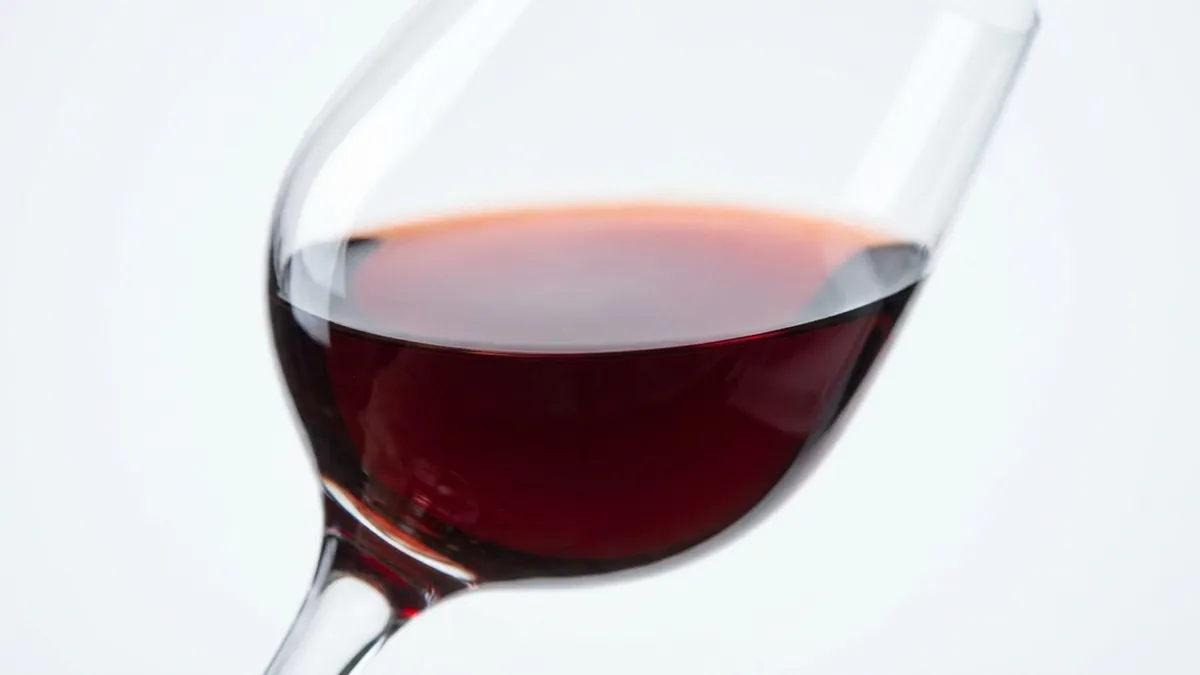
A complete wine appearance read covers six clues in about ten seconds. Depth — saturated wines suggest thick-skinned grapes or warm climates; pale wines suggest thin-skinned grapes or cool climates. Hue — purple-rimmed reds are young, brick-rimmed reds are aged, lemon-green whites are young, deep gold whites are aged or oaked. Clarity — brilliant means filtered and healthy, hazy means unfiltered or possibly faulty. Rim — the color gradient from core to edge reveals age more reliably than any other cue. Legs — the tears after a swirl track alcohol and sugar viscosity, not quality. Bubbles — fine, persistent beads point to traditional method sparkling, larger and faster bubbles suggest tank method. Read all six in order, write down what you see, then move to the nose.
How to Set Up the Glass for an Honest Read
The technique is simple but the conditions matter. Get them wrong and your eye will lie to you about every cue.
Use a Clean, Clear Glass
A patterned, tinted, or stemless tumbler distorts color and suppresses legs. A clean, dry, clear, stemmed wine glass with a curved bowl gives every cue room to express itself. Detergent residue on the inside of the glass is one of the most common reasons beginner tastings come out wrong — rinse with hot water and let the glass air-dry before pouring. Glass shape itself also matters for aroma. For a deeper look at how the bowl shapes what reaches your nose, see our guide to whether wine glass shape affects taste.
Stand in Neutral Light
Daylight by a window is the gold standard. A clean white indoor light works too. Restaurant candlelight, colored bulbs, and tinted lampshades all distort hue — a young Pinot Noir can look like an aged Barolo under the wrong light. If the room is warm and dim, walk to the nearest window before evaluating.
Tilt the Glass on a White Background
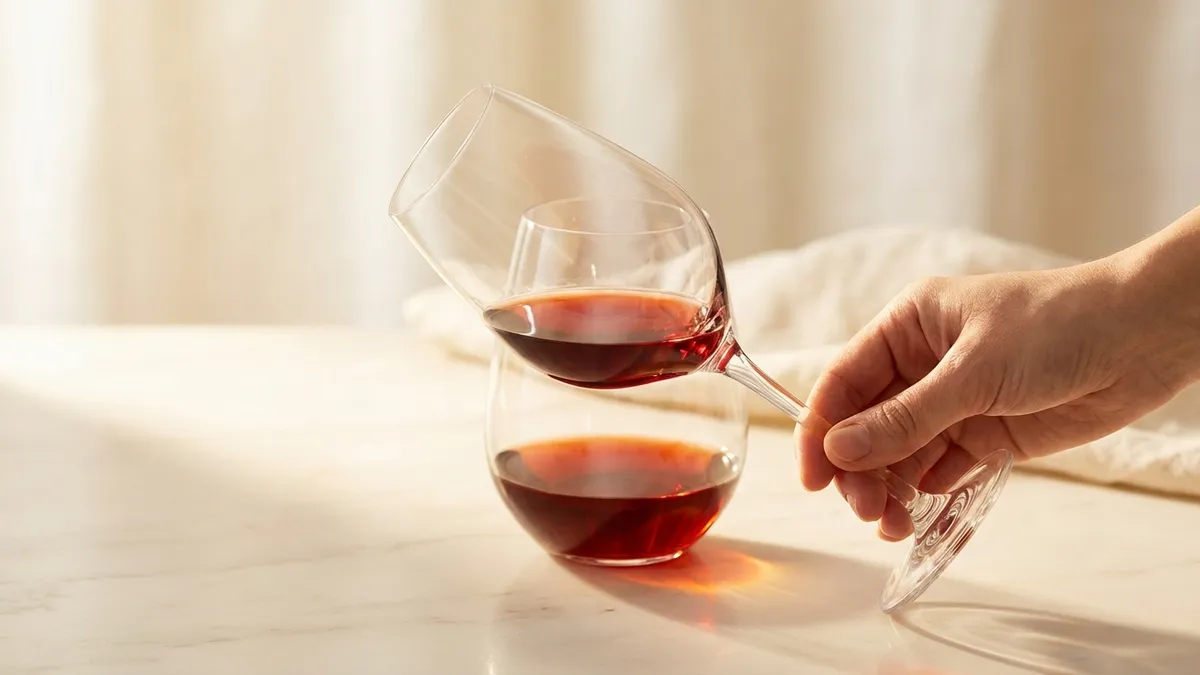
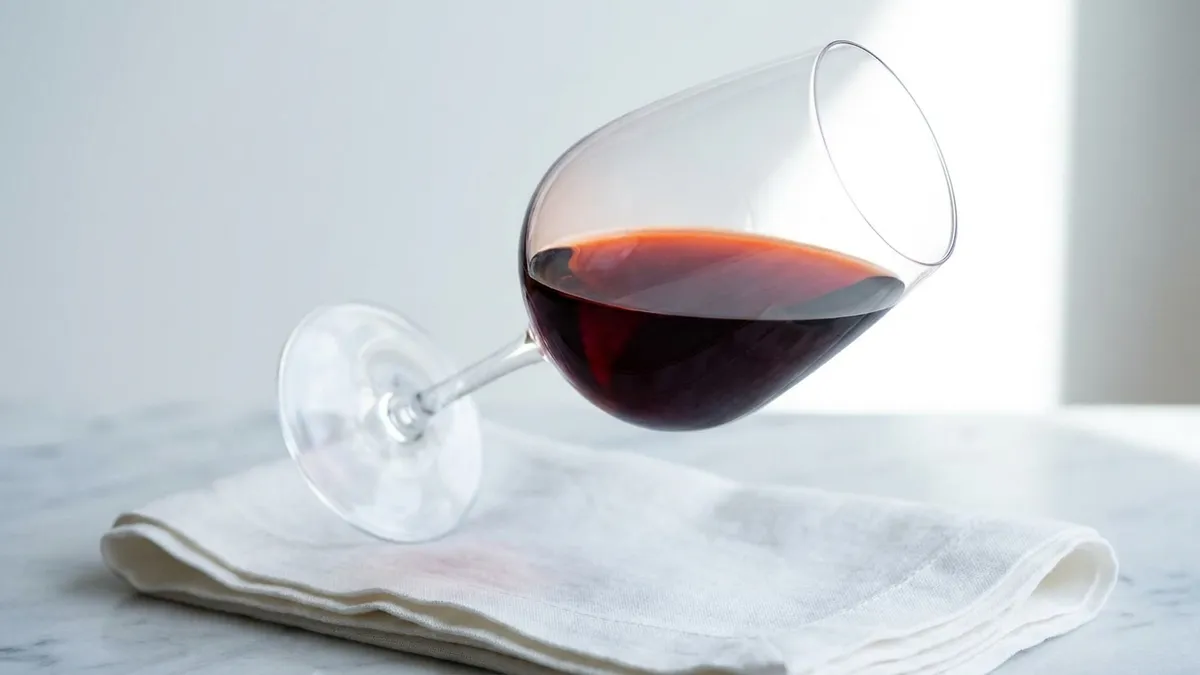
Hold the stem and tilt the bowl to about 45 degrees so the wine flows toward one edge and thins out at the upper rim. Place a clean napkin, tablecloth, or sheet of paper behind the glass. The white background is what makes the rim, clarity, and core all readable. A dark backdrop hides everything.
Cue 1: Color Depth
Depth is the first visual signal your eye picks up. It answers a single question: how much light passes through the wine?
A deeply saturated, opaque wine — you cannot see your fingers through the bowl — usually came from a thick-skinned grape grown in a warm climate with full extraction. Cabernet Sauvignon, Syrah, Malbec, Petite Sirah, and Zinfandel all show this saturation in their youth. The grape skins were rich in pigments, the sun was generous, and the winemaker let the juice soak with the skins long enough to pull all that color out.
A pale, translucent wine — you can see the stem of the glass through the bowl — usually came from a thin-skinned grape or a cool climate. Pinot Noir, Gamay, and Nebbiolo all sit here. Do not mistake pale for weak. Some of the most structured, complex reds in the world barely tint the glass.
For an in-depth breakdown of which grapes naturally produce which depths and how that maps onto specific styles, see our wine color guide.
What Depth Does Not Tell You
Depth is not a price tag. A twelve-dollar Mendoza Malbec can look inkier than a hundred-dollar Burgundy. Depth tracks grape and climate, not quality. Beginners often assume "darker is better." That assumption is wrong, and shedding it is one of the fastest credibility upgrades in any new taster's vocabulary.
Cue 2: Hue and the Color Spectrum
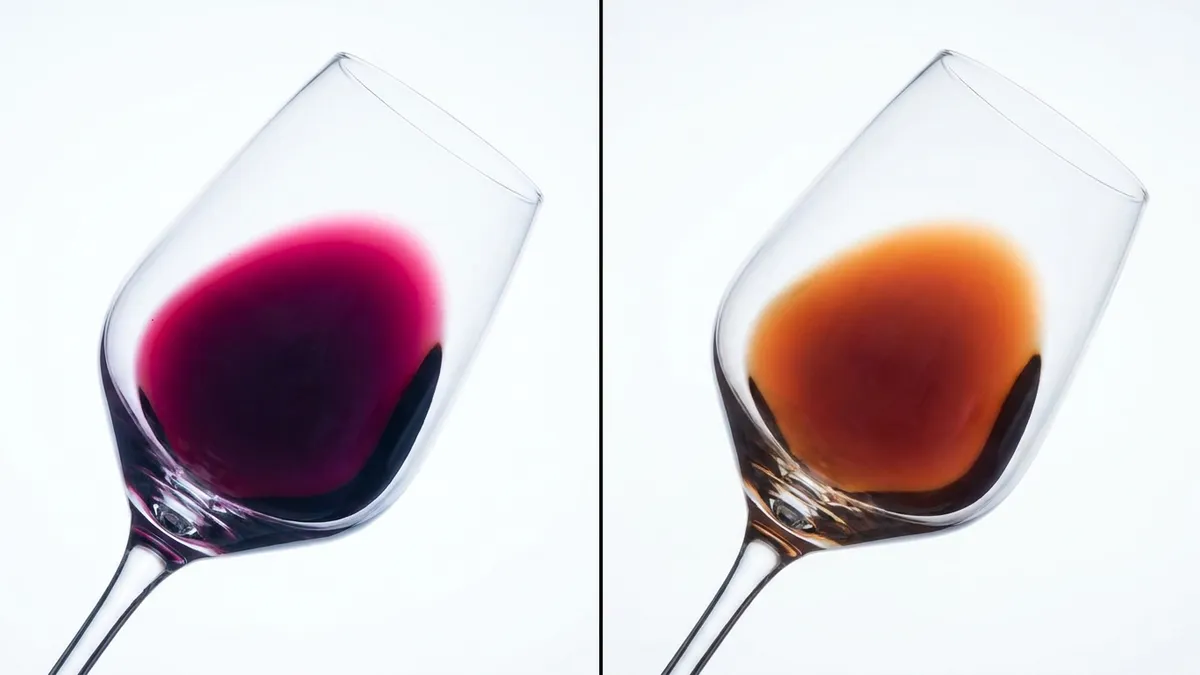
Hue is the specific color word — not just "red" but ruby, purple, garnet, brick, tawny. Not just "white" but lemon-green, straw, gold, amber. Hue layers age, grape, and style on top of the depth signal.
Reading Red Wine Hues
- Purple-rimmed ruby — young red, often warm-climate or thick-skinned
- Medium ruby — young to medium-aged, broad middle ground
- Garnet — five to fifteen years old, slightly browned warm tone
- Brick or tawny rim — fully mature, twenty-plus years for most reds, anthocyanins largely precipitated out
Reading White Wine Hues
- Lemon-green — very young, cool climate, unoaked
- Pale straw — young, unoaked, default for most everyday whites
- Gold — oaked or moderately aged
- Deep gold or amber — aged, late harvest, or intentionally oxidative
Cue 3: Clarity and What Cloudiness Means
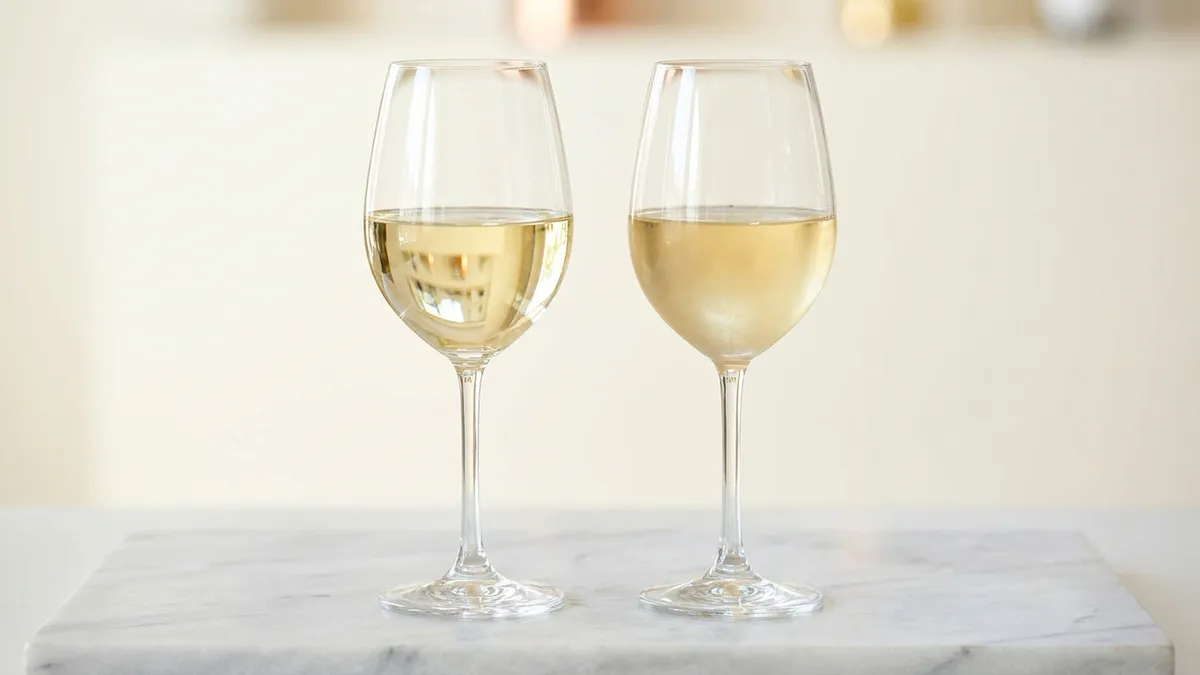
Clarity describes how much light passes through the wine without scattering. The four working categories are brilliant, clear, hazy, and cloudy.
A brilliant wine looks polished, almost glowing — light passes through cleanly with a slight sparkle. This is the baseline for a filtered, well-made commercial wine. A clear wine shows no obvious haze but lacks the polished glow of brilliance. Both are perfectly normal.
A hazy wine has a visible cloudiness that softens light passing through. In a natural or unfined wine, this is by design. The winemaker chose not to filter, so suspended yeast cells and proteins remain in the bottle. For more on this style and what to expect from it, see our explainer on natural wine and orange wine.
A cloudy wine — heavy, soupy haze with visible particles — can also be a fault signal. Bacterial spoilage, refermentation, or bottle damage can all produce cloudiness. Smell and taste will quickly confirm whether the haze is by design or by failure, and the guide to wine color faults sorts the four common causes of haze. A third cause, protein haze in white wine, appears after a bottle gets warm and cannot be tasted at all. For the warning signs of an off bottle, see our guide on identifying wine faults by smell.
Sediment Is Not a Fault
Older red wines often throw a fine layer of sediment — small dark flakes at the bottom of the bottle or glass. That is anthocyanins binding with tannins and dropping out of solution. It is a sign of age, not a fault. Decant carefully if you want to leave the sediment behind, but do not return the bottle to the shop.
Cue 4: The Rim and the Age Gradient
The rim is where age hides. When you tilt the glass, the wine thins at one edge and deepens at the other. The thin edge — the rim — is where the wine's color shows its true direction of travel.
For a young red, the rim is tight and matches the core. Ruby core, ruby rim. Purple core, purple rim. A vivid blue-purple edge on a Malbec or young Syrah is a screaming "young, warm, thick-skinned" signal.
For a medium-aged red, the rim begins to shift away from the core. The middle is still ruby or garnet but the very edge starts pulling toward orange. This is the visual fingerprint of a wine that has spent five to fifteen years evolving in bottle.
For a fully mature red, the rim is unmistakably brick or tawny while the core may still hold some red. A 25-year-old Bordeaux or a 30-year-old Barolo can look almost translucent at the rim, with a pale orange halo against the white background.
Whites travel the opposite direction. A young white shows a tight, pale rim — sometimes with a green tinge. As the wine ages, the rim deepens toward gold and eventually amber. The rim of a 15-year-old sweet wine can look like liquid honey.
For a deeper look at how appearance evolves alongside palate and aroma over a wine's life, see our guide to tasting young versus aged wine.
Cue 5: Legs and What They Really Tell You
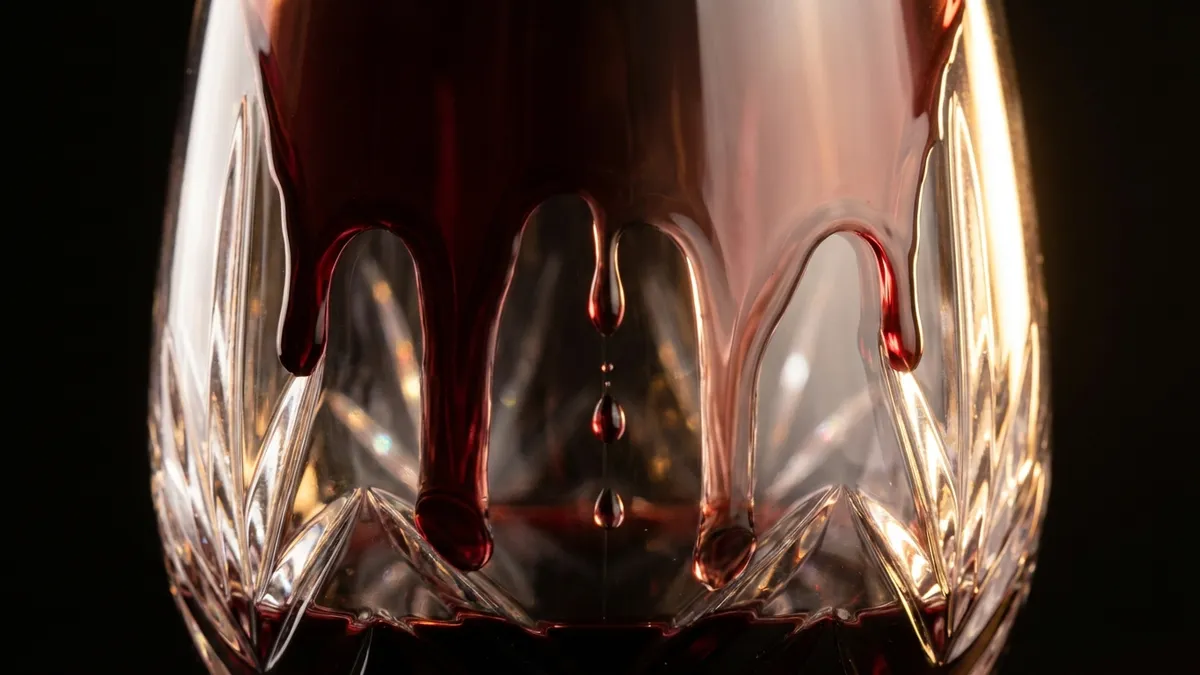
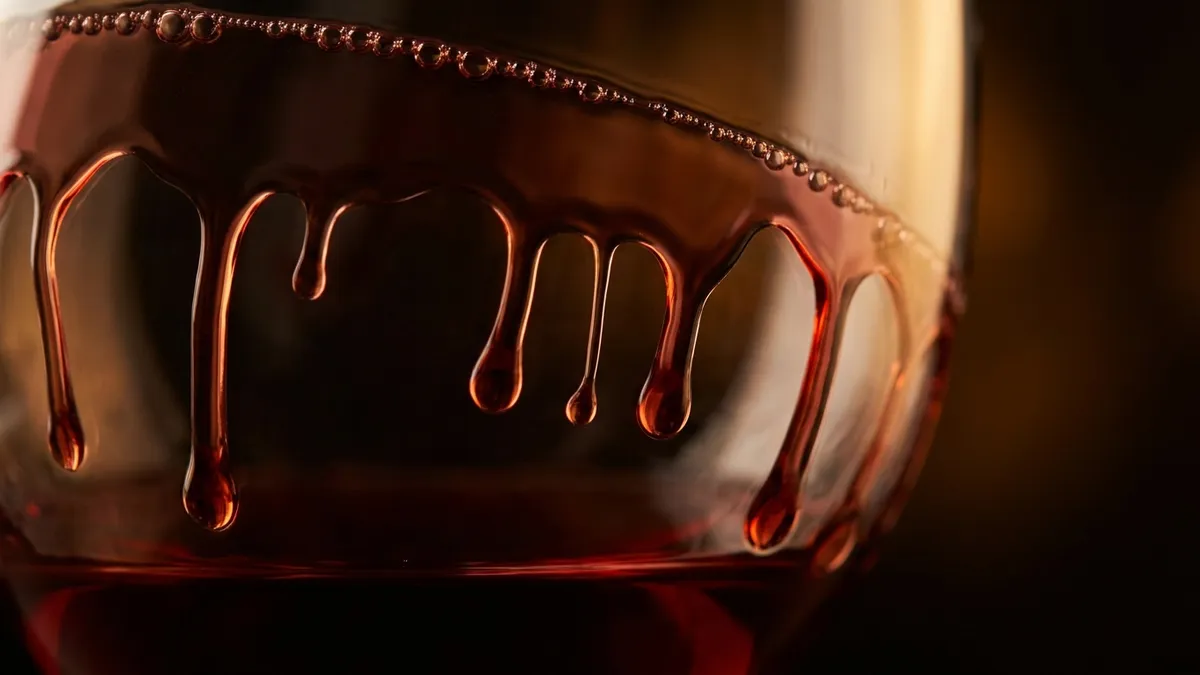
After a quick swirl, watch the inside wall of the glass. Within seconds you will see thin droplets and streams forming at the top of the wine film and sliding back down. These are wine legs, sometimes called tears.
Legs are caused by surface-tension differences between water and alcohol. Alcohol evaporates faster at the upper edge of the film, the remaining liquid becomes more watery and gains higher surface tension, and that gradient pulls more wine upward until it beads and falls back as visible tears. The phenomenon has a name — the Gibbs–Marangoni effect — and it has nothing to do with quality.
What legs do tell you, in order of reliability:
- Alcohol level. Slow, thick, prominent legs usually mean a higher-alcohol wine
- Residual sugar. Sweet wines slow the rate at which legs drop, creeping rather than racing
- Body, roughly. Body tracks alcohol and extract, so legs and body often travel together
What legs do not tell you: anything about quality, expressiveness, balance, complexity, or age-worthiness. For the full physics and the experiment that makes the effect obvious, see our breakdown of what wine legs mean.
Cue 6: Bubbles in Sparkling Wines
For sparkling wines, the bubbles themselves are part of the appearance read. Look at three things: bead size, bead persistence, and the mousse — the foam that forms after pouring.
Fine, tightly packed beads that rise slowly in steady streams point to traditional method sparkling — wines that did their second fermentation in the bottle and spent months or years on lees. Champagne, Cava, English sparkling, and traditional method Crémant all show this signature.
Larger, faster, less persistent bubbles point to tank method sparkling, where the second fermentation happens in a sealed pressure tank and the wine is bottled under pressure. Prosecco is the most familiar example. The bubbles are bright and fresh but dissipate faster.
Almost no bubbles, or a brief fizz that fades within seconds suggests the wine is petillant — gently sparkling — or has lost most of its carbonation through age or a bad cork. For a full breakdown of the methods and what each one tastes like, see our guide to sparkling wine types and the comparison of Champagne, Prosecco, and Cava.
What to Read Into Appearance — and What Not To
Appearance is rich with information, but it is full of common false reads. Beginners cling to two myths in particular.
Myth 1: Darker Wine Is Better Wine
Already covered, but worth repeating. Color depth tracks grape and climate. A pale Pinot Noir can be one of the most refined wines in the cellar. An inky, opaque Petite Sirah can be perfectly nice but utterly simple. Depth is a clue, not a verdict.
Myth 2: Big Legs Mean a Great Bottle
Already covered too. Legs read alcohol, not quality. The most expressive low-alcohol Mosel Riesling on the table will show modest legs, and the cheapest 15-percent Zinfandel will show dramatic ones. Move on after the two-second alcohol glance.
What You Cannot Read From Appearance
Appearance does not tell you about aroma intensity, balance, finish length, oak character, or food pairing fit. Those live in the nose, the palate, and the finish. Appearance gives you a hypothesis. The rest of the tasting confirms or revises it. For the full four-step framework, see our guide to how to taste wine and how to taste wine like a sommelier.
Putting Appearance Into Your Tasting Routine
The whole appearance read should take about ten seconds once the habit is built. The order is fixed: tilt, depth, hue, clarity, rim, swirl, legs, bubbles if relevant. Write down a one-line note. Then move to the nose.
Over a few weeks of practice, your visual vocabulary grows from "red" and "white" to "deep ruby with a tight purple rim, brilliant clarity, slow legs" — a working hypothesis about climate, grape, age, and alcohol, all from a glance. That hypothesis sharpens every aroma and every flavor that follows. The Sommy app's tasting courses build this exact habit step by step, with calibrated visual references for each cue and AI-guided practice that compares your read against the wine's actual profile.
For those building a daily tasting habit, pair the appearance read with the common wine tasting mistakes checklist and the wine tasting notes template to lock in a consistent format. The Sommy team built the in-app workflow around exactly this six-cue routine, so the visual habit reinforces itself every time you open the app.
Visit sommy.wine to start practicing structured appearance reads with the Sommy app, where each tasting session walks you through every cue in order and gives feedback on what you saw. A few weeks of deliberate ten-second appearance reads change every glass of wine you ever pour — not by adding mystery to it, but by stripping the mystery away.
Frequently Asked Questions
What is a wine appearance assessment?
Wine appearance assessment is the first step of a structured tasting. Before swirling or sniffing, you tilt the glass against a white background and read six visual cues — color depth, hue, clarity, rim, legs, and bubbles. Each cue points to a specific underlying fact about the grape, climate, age, or winemaking style.
Why does color depth matter in wine appearance?
Depth tracks grape skin thickness, ripeness, and extraction. Saturated, opaque wines usually come from thick-skinned varieties grown in warm climates with full extraction. Pale, translucent wines usually come from thin-skinned varieties or cool climates. Depth is a strong climate and grape clue, but it is not a quality grade.
What does the rim of a wine reveal?
The rim is the thinnest edge where the wine meets the glass. It is the most reliable age signal in a tasting. A young red shows a tight purple or ruby rim. An aged red fades to garnet, then orange, then brick. Whites do the opposite, deepening from lemon-green to gold to amber.
Do wine legs mean a wine is high quality?
No. Legs are caused by surface-tension differences between water and alcohol — the Gibbs–Marangoni effect. Slow, thick legs usually indicate higher alcohol or residual sugar, not better winemaking. A delicate, world-class red can show almost no legs, and a cheap fortified wine can show dramatic ones. Read them as alcohol, never as quality.
What does cloudy or hazy wine mean?
Hazy appearance usually points to one of two things. Either the wine is unfiltered or unfined by choice — common in natural and orange wines — or it carries a fault such as bacterial spoilage. Bright, brilliant clarity suggests a filtered, healthy wine. Slight cloudiness in a natural wine is normal, not a problem.
How should I evaluate wine appearance properly?
Use a clean, dry, clear glass. Stand near a window or a neutral white light. Place a white napkin or sheet of paper behind the glass. Tilt the bowl to about 45 degrees and look across the surface. Note core color, depth, rim color, clarity, legs after a swirl, and any bubbles. Ten seconds is enough.
Can wine appearance tell me how old a wine is?
Yes, with surprising accuracy on reds. The rim and core both shift with age. A young red shows a vivid purple-edged ruby. A ten-year-old red shows a garnet core with a slight orange hint at the rim. A twenty-year-old red looks brick-rimmed with a softer, paler core. Whites move the opposite direction, from lemon-green to deep gold.
Does color depth correlate with price or quality?
No. Some of the most expensive and refined wines in the world — Pinot Noir from Burgundy, Nebbiolo from Piedmont — are pale in the glass. Some inexpensive everyday reds look almost black. Depth correlates with grape variety, climate, and extraction. Quality lives in balance, complexity, and finish, not in saturation.
Sommy Team
LinkedInFounder & Wine Educator
The Sommy Team is building the world's most approachable wine education app, helping beginners develop real tasting skills through structured courses and AI-guided practice.