Wine Tasting Notes Template: What to Write Down and Why

By the Sommy Team — AI-assisted, human-edited.
Updated Apr 17, 2026
Contents (15)
TL;DR
A good tasting notes template turns a fading impression into searchable data. Use five short sections — the wine, appearance, nose, palate, and a one-line verdict — in the same order every time. Aim for eight to ten minutes per entry. Review your last ten notes monthly; consistency at moderate length beats occasional long paragraphs you never reread.
TLDR
A good wine tasting notes template turns memory into data. Capture the wine, its appearance, nose, palate, and one honest verdict — in that order, in about ten minutes. Use the same five sections every time. Consistency beats detail. A two-line entry you review in six months is worth more than a paragraph you never open again.
Why Write Tasting Notes at All
A wine passes through your mouth in about three seconds. The impression fades in an hour. Six months later, you cannot reliably tell whether the Cabernet you had last October was soft or structured, cherry-driven or herbal, finished short or long.
A wine tasting notes template fixes that. It creates a searchable record of what you noticed, what surprised you, and what you want to repeat or avoid. Over time, the notes form a map of your own palate — the styles you reach for, the flavors you consistently miss, the structural elements that shift your opinion.
Professional tasters keep notes for the same reason chefs keep recipe books: you do not remember taste the way you remember images or words. You have to capture it in the moment or it is gone.
What a Good Template Looks Like
The best wine tasting notes template is the one you will actually complete. That rules out anything too long. Most beginner frameworks fail because they ask for fifteen descriptors when five would have been enough, and the user quietly stops after a week.
A working template has five short sections, in this order:
- The Wine — what it is and when you drank it
- Appearance — what you see in the glass
- Nose — what you smell
- Palate — what you taste and how it feels
- Verdict — one line on whether you liked it and why
Each section is three to five lines of writing, never a paragraph. The whole entry takes eight to ten minutes per bottle and fits on a single notebook page or one phone screen. That is it.
The rest of this guide walks through every section, explains what to write, and shows a complete example at the end.
Section 1: The Wine
Before you smell or sip, write down the facts. If you skip this step you will have tasting notes without a wine attached to them — a common and frustrating mistake.
Capture:
- Grape variety or blend — Pinot Noir, Chardonnay, Tempranillo blend, etc.
- Region — as specific as the label allows (Willamette Valley, not just "Oregon")
- Producer and name — the label front
- Vintage — the year on the bottle
- Date you drank it — today's date
- Context — with dinner, blind flight, a class, etc.
Context matters more than beginners expect. A wine you taste at the end of a long dinner with strong food is a different experience than the same wine cold from the fridge at a structured flight. Recording the context prevents you from blaming the wine for conditions that had nothing to do with it.
Five bullet points, thirty seconds. Done.
Section 2: Appearance
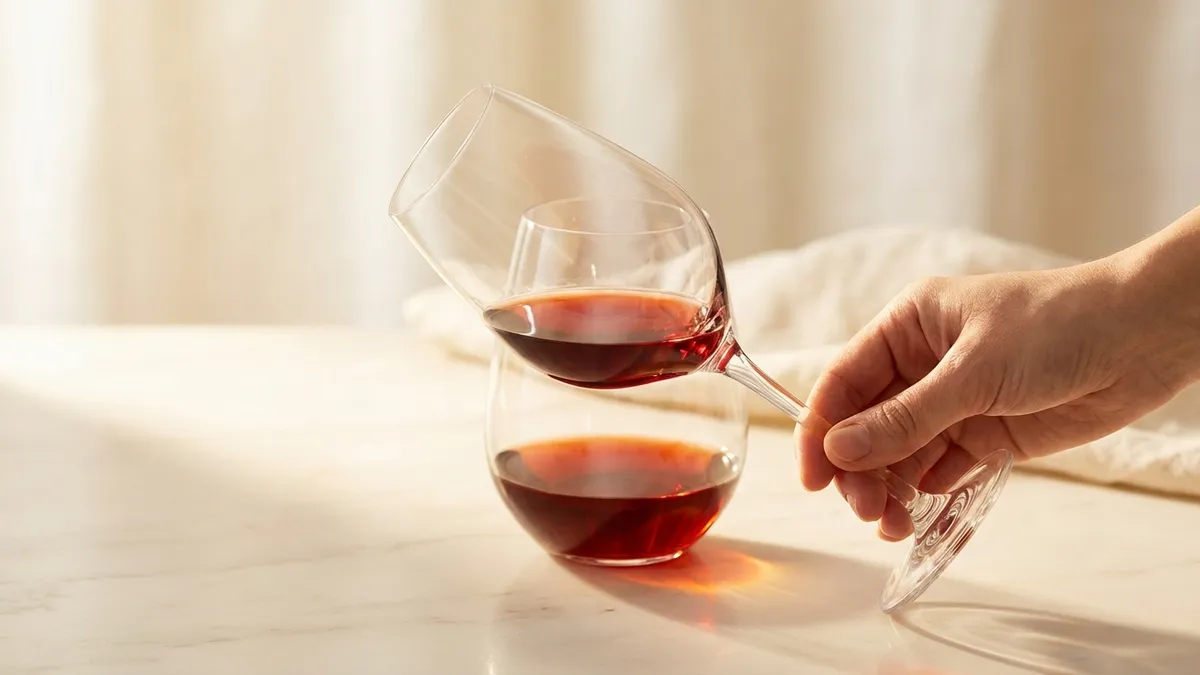
Hold the glass at an angle against a white background and look down into it.
Note three things:
- Color — specific name (ruby, garnet, straw-gold, amber)
- Intensity — pale, medium, or deep
- Clarity — clear, slightly cloudy, or visibly sediment
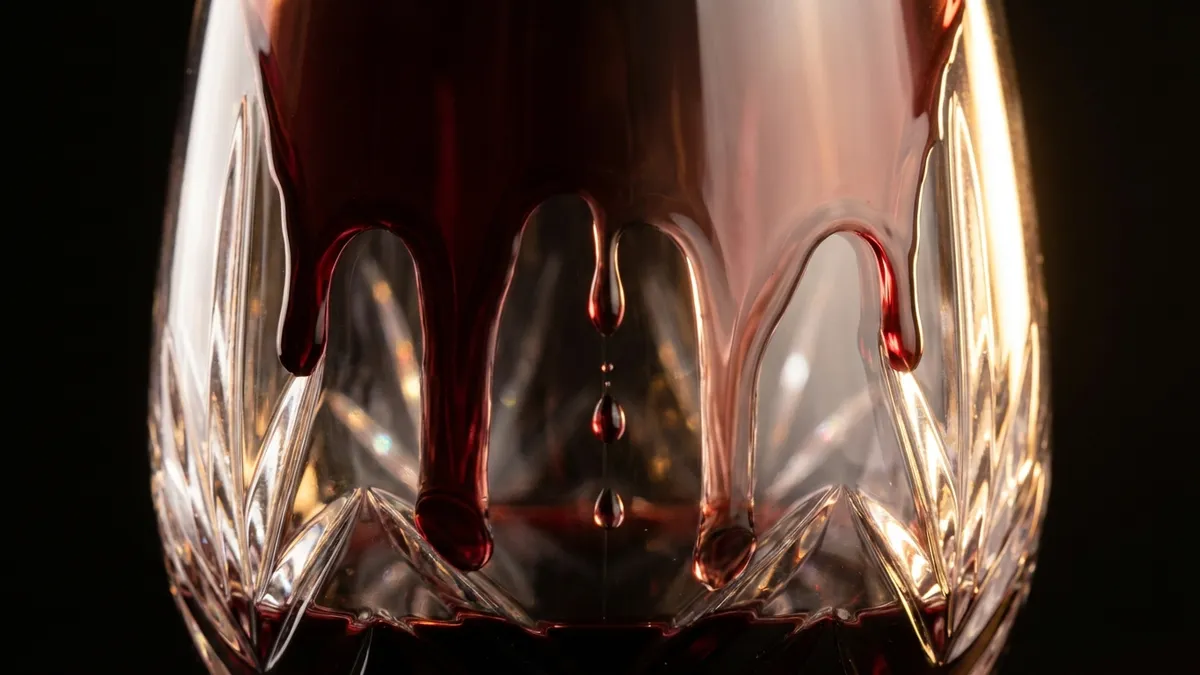
That is the entire appearance section. Two sentences maximum. Do not describe the legs or the rim unless you are training for a certification — they tell you very little about quality for the time they cost.
Why bother at all? Because color is a surprisingly good predictor. A deep inky purple suggests a young, tannic red. An orange rim on a red wine suggests age. A pale lemon-green white suggests youth and high acidity. You are calibrating your eye to the rest of the experience.
Section 3: Nose
This is where most people under-write. The nose is where half the flavor lives, and a good wine tasting notes template gives it real space.
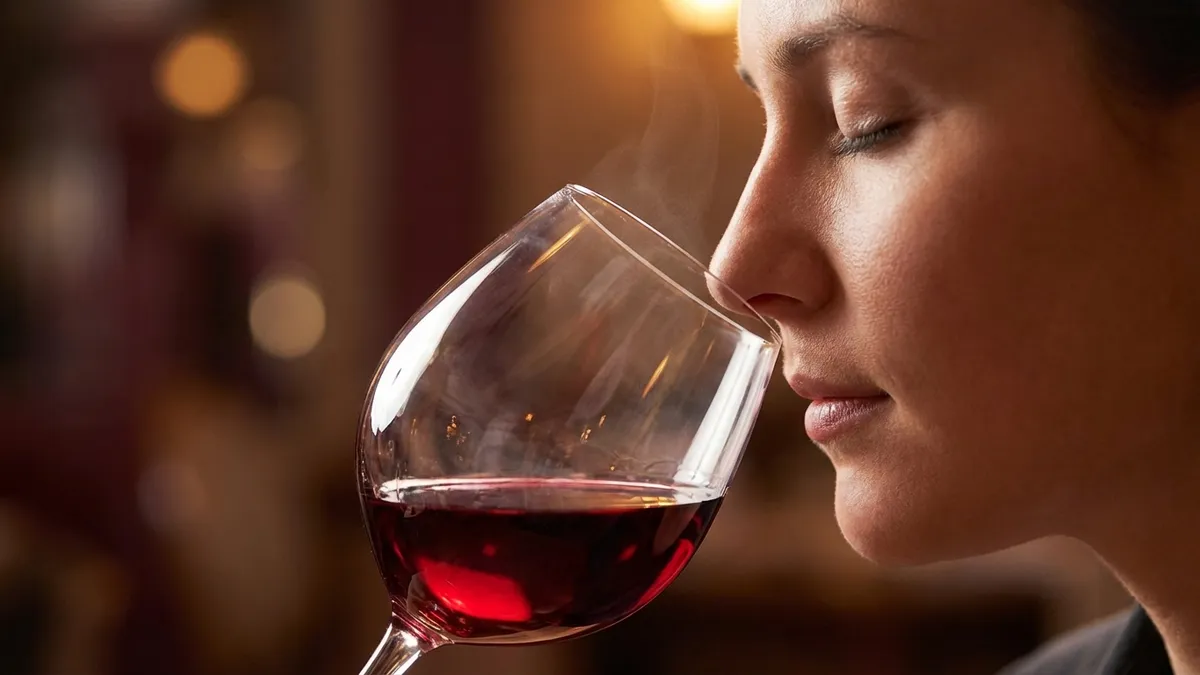
Swirl the glass once, smell, and write:
- First impression — one word: fruity, earthy, floral, savory, or some combination
- Three specific aromas — the most obvious things you smell (red cherry, cedar, wet leaves)
- Aroma intensity — light, medium, or pronounced
- Anything unusual — petrol, cola, tar, green pepper, anything that stands out
If you cannot name three aromas, write "fruit, wood, something sharp" and move on. Being wrong is fine. Being vague is fine. The act of writing trains the recall. Our how to describe wine guide has a short vocabulary list if you get stuck.
Beginners often write "smells like wine" and leave it there. Resist that. If you have to fumble, write "smells like dark fruit and something I cannot name yet." That is an honest note. "Smells like wine" is not.
Section 4: Palate
Palate is where most notes fall apart because there are too many things to track at once. A structured template prevents that. Cover five variables, one line each:
- Sweetness — bone dry, off-dry, medium sweet, sweet
- Acidity — low, medium, high (the sharpness that makes your mouth water)
- Tannin — low, medium, high; silky, firm, grippy (reds only)
- Body — light, medium, full (how it weighs in your mouth)
- Alcohol — low, medium, high; warm or hot in the finish
Then two more short lines:
- Flavors — three specific ones, same as the nose section
- Finish — short, medium, long; pleasant or abrupt
The finish is the most under-appreciated part of tasting. A long pleasant finish is a hallmark of quality, a short flat finish is a red flag, and training yourself to notice the difference is one of the fastest routes to a sharper palate. Our wine finish meaning guide goes deeper on exactly what to listen for.
Ten lines total for the palate section. Specific numbers or rough words — both work.
Section 5: Verdict
One line. Did you like it? Would you buy it again? What did it teach you about your own preferences?
This is the line you will re-read six months later. Make it honest.
Good verdicts sound like this:
- "Surprised me — more savory than I expected. Would buy for steak nights."
- "Flat and hot. Skip this producer's entry-level bottles."
- "Classic. Not memorable on its own but great with the pasta."
Bad verdicts sound like this:
- "It was fine."
- "Nice wine."
If you cannot get more specific than "fine," you did not taste attentively enough. That is useful feedback too — write "tasted while distracted, re-try" and move on.
A Complete Example
Here is one entry, written using the template:
The Wine: 2021 Willamette Valley Pinot Noir. Unnamed producer from a local shop. $24. Tuesday night, with roast chicken.
Appearance: Translucent ruby, medium intensity, clear. Pinot-pale for sure.
Nose: Fruity first, then a little earthy. Red cherry, a hint of mushroom, something almost floral — maybe violet. Medium intensity.
Palate: Dry. High acidity — makes my mouth water. Low soft tannin. Medium body, 13 percent alcohol, warm not hot. Flavors lean red — cherry, cranberry, a bit of wet leaves. Finish medium, clean.
Verdict: A buy-it-again wine. Lighter than the California Pinots I usually reach for and worked perfectly with the chicken. Would try this producer's other bottles.
Total time: about nine minutes. Every future question about what I liked on a Tuesday night in April can be answered by re-reading this entry.
How to Use the Notes Later
Writing is the first half. Reviewing is the second, and the half beginners skip.
Set a recurring calendar reminder once a month. Re-read your last ten entries. Look for patterns:
- Do you keep buying the same grape and being disappointed?
- Is there a region you keep loving that you did not know you loved?
- Are your verdicts getting more specific over time?
Patterns are the whole point. A single tasting note is a snapshot. Ten notes reviewed together become a map of your palate.
Sommelier note: Highlight the verdict line in color when you re-read. The whole entry is context — but the verdict is the decision you are training.
Digital vs Paper
Both work. Pick the one you will actually do.
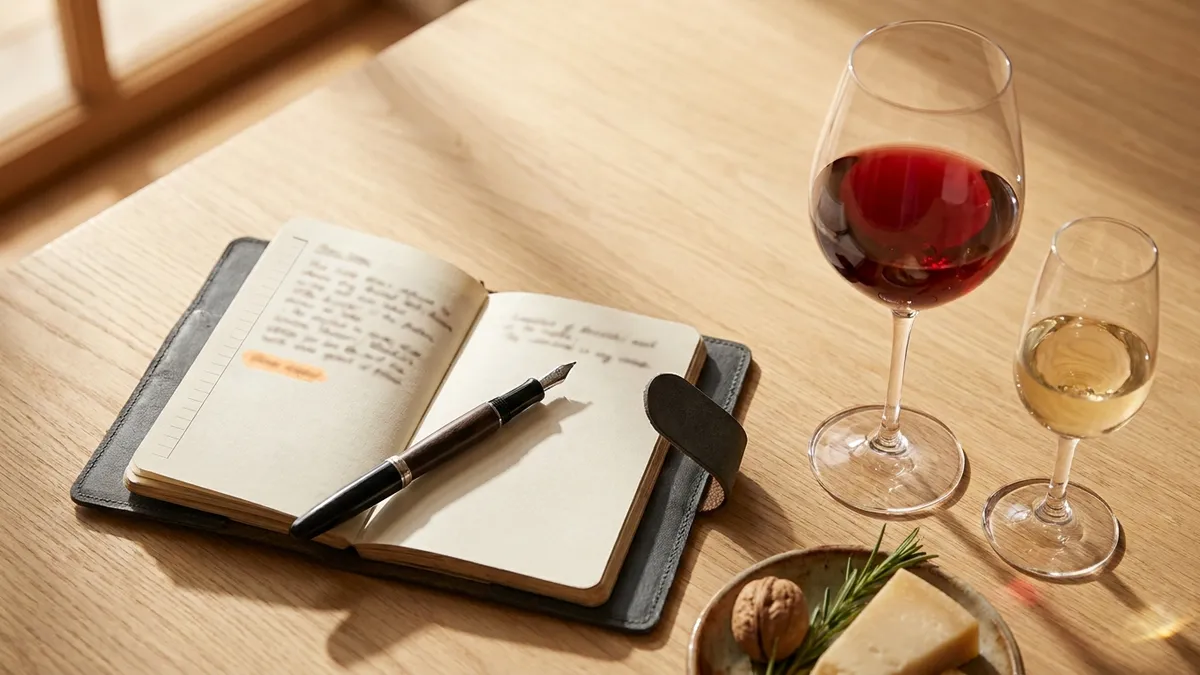
Paper notebooks force slower handwriting, which tends to produce sharper observations. They are useless for search. Finding "that Grenache from two years ago" means flipping through pages.
Digital notes search instantly and travel with you. The trade-off is the phone temptation — notifications pull you out of the tasting. If you go digital, keep the app open and nothing else.
The Sommy app ships with a built-in tasting template that walks through all five sections above, logs your color-intensity-tannin-body ratings as numbers, and lets you filter past entries by style and score. You trade some flexibility for consistency, which is a fair deal for most beginners.
Mistakes That Make Notes Worthless
A few patterns turn a twenty-minute habit into filler:
- Writing in tasting jargon you do not actually understand. If you write "a whisper of minerality" because you saw it on a back label, the note is useless to future-you. Plain language wins.
- Skipping the context. Tasting notes without dates, food, or mood are hard to interpret later. Thirty seconds of context rescues ten minutes of tasting.
- Writing ten aromas when you only perceived three. Padding dilutes the record. Three specific aromas you honestly caught are worth more than ten you invented.
- Rating the label, not the wine. If you already know the producer is famous, your note will skew. Blind yourself when you can. Our how to describe wine guide covers a few easy ways to strip out label bias.
- Not reviewing. Notes you write and never re-read teach you nothing. Schedule the review.
The Minimum Viable Template
If the five-section version feels too long, here is a three-line fallback that still beats nothing:
- What it is and when — one line
- What stood out — one line (nose or palate, whichever you remember)
- Would buy again? — yes, no, maybe, with a reason
Three lines, two minutes per bottle. Run this for a month. You will naturally start wanting more detail, and that is the moment to switch to the full template. Do not force the long version on yourself before the short version has become a habit.
FAQ
How long should a wine tasting note be?
Aim for three to six short lines per section, eight to fifteen lines total. Anything longer and you stop finishing entries. Anything shorter and you lose the pattern-recognition benefit. Consistency at a moderate length beats perfection at a long length every time.
Do I need to use fancy wine vocabulary?
No. Plain language is almost always better for beginners and mid-level tasters. If you can smell raspberry, write "raspberry," not "red fruit aromatics with a hint of bramble." Jargon feels impressive but tends to be less specific than the kitchen word it replaces.
Should I taste blind when writing notes?
For training the palate, yes. For pleasure at a dinner party, no. Blind tasting strips out bias from the label and the price, which trains recognition faster. Everyday tasting with full context is still valuable and builds comfort, not accuracy.
How often should I review old notes?
Once a month is a good rhythm. Re-read the last ten to fifteen entries. You will catch patterns a single-entry review never reveals — grapes you consistently like, regions that disappoint, preferences that have drifted.
What should I do if I can't identify the aromas?
Write what you can — even one honest word is better than fake specificity. Beginners often smell "dark fruit" before they can tell blackberry from blueberry, and that is fine. Over a few months, the resolution improves. The wine aroma wheel is a helpful reference to expand your vocabulary without inventing things you did not smell.
Is a rating score useful in my notes?
A score is optional and mostly useful when comparing wines of the same style. If you use one, keep it simple — a 1 to 5 scale tells you almost everything a 100-point scale does with far less decision fatigue. Scores are most valuable as filters when you re-read old notes.
Should I write notes on every wine I drink?
No. Notes on wines you care about produce useful data. Notes on every single sip produce burnout. A reasonable cadence is one written entry per wine you would want to remember — maybe two or three bottles a week. The rest can pass unrecorded without losing anything meaningful.
The Bottom Line
A wine tasting notes template is a memory prosthesis. It captures what fades in an hour, turns a taste into data, and makes patterns visible that would otherwise vanish. Use five short sections, write in plain language, and re-read the entries monthly. Consistency matters more than detail — a small honest note every week beats a long one every three months.
Ready for a template that fills itself in? Sommy's built-in tasting journal guides you through the same five sections in under ten minutes, logs the structure ratings as numbers, and lets you search past entries by style or score.
Frequently Asked Questions
How long should a wine tasting note be?
Aim for three to six short lines per section and eight to fifteen lines total. Anything longer and you stop finishing entries, which kills the habit. Anything shorter and you lose the pattern-recognition benefit when you review old notes. Consistency at a moderate length beats perfection at a long length every single time.
Do I need to use fancy wine vocabulary?
No. Plain language is almost always better for beginners and mid-level tasters. If you can smell raspberry, write raspberry — not red fruit aromatics with a hint of bramble. Jargon feels impressive but tends to be less specific than the kitchen word it replaces, and future-you will not remember what you meant.
Should I taste blind when writing notes?
For training the palate, yes. For pleasure at a dinner party, no. Blind tasting strips bias from the label and price, which trains recognition faster. Everyday tasting with full context is still valuable and builds comfort with the routine, but accuracy improves fastest when the label is hidden.
How often should I review old notes?
Once a month is a good rhythm. Re-read the last ten to fifteen entries in one sitting. You will catch patterns a single-entry review never reveals — grapes you consistently like, regions that disappoint, preferences that have drifted. The review is half the value of writing notes in the first place.
What should I do if I cannot identify the aromas?
Write what you can — even one honest word beats fake specificity. Beginners often smell dark fruit before they can tell blackberry from blueberry, and that is fine. Over a few months the resolution improves. Writing vague but honest impressions trains recall faster than inventing precise descriptors you did not actually perceive.
Is a rating score useful in my notes?
A score is optional and mostly useful when comparing wines of the same style. If you use one, keep it simple — a one-to-five scale tells you almost everything a hundred-point scale does with far less decision fatigue. Scores matter most as filters when you re-read old notes and want to find winners.
Should I write notes on every wine I drink?
No. Notes on wines you care about produce useful data. Notes on every single sip produce burnout. A reasonable cadence is one written entry per wine you actually want to remember — maybe two or three bottles a week. The rest can pass unrecorded without losing anything meaningful to your training.
Paper notebook or digital app for notes?
Both work. Paper forces slower handwriting, which tends to produce sharper observations, but paper is useless for search. Digital notes search instantly and travel with you, but the phone tempts you out of the tasting. Pick the one you will actually keep doing — that is the only criterion that matters.
Sommy Team
LinkedInFounder & Wine Educator
The Sommy Team is building the world's most approachable wine education app, helping beginners develop real tasting skills through structured courses and AI-guided practice.