How to Taste Wine Like a Sommelier: The 6-Step Method
By the Sommy Team — AI-assisted, human-edited.
Updated Apr 28, 2026
Contents (17)
- TLDR
- The Six-Step Method, in One Paragraph
- What Separates a Pro from an Enthusiast
- Step 1: Sight
- Step 2: Swirl
- Step 3: Smell
- Step 4: Sip
- Step 5: Structure
- Step 6: Conclusion
- A Sommelier's Note vs. an Amateur's: Same Wine, Two Notes
- The Sommelier Deduction Grid
- Palate Management Across a Flight
- What to Expect: Months 1, 3, and 6 of Daily Practice
- How to Train the Method at Home
- Common Pitfalls
- The Short Version
- The Bottom Line
TL;DR
Sommeliers do not taste more elegantly than you — they taste more systematically. Every glass runs through the same six-step sequence: sight, swirl, smell, sip, structure, conclusion. When tasting blind, a deductive grid layers on top, narrowing origin by climate, grape, region, and vintage. Copy the procedure first and the palate catches up within a few months of daily practice.
TLDR
Sommeliers do not taste wine more elegantly than you. They taste it more systematically. A trained pro runs every glass through the same six-step sequence — sight, swirl, smell, sip, structure, conclusion — and commits the result to a note before the next pour. Copy the sequence and the rest is practice, not talent.
The Six-Step Method, in One Paragraph
A sommelier tastes every wine through six systematic steps, always in the same order: (1) Sight — color, intensity, clarity, rim. (2) Swirl — three to five rotations to release aromas. (3) Smell — two passes, broad category then three specific aromas. (4) Sip — small mouthful, slurp to aerate, roll across the tongue. (5) Structure — rate sweetness, acidity, tannin, body, and alcohol on a 1-to-5 scale. (6) Conclusion — quality, readiness, and origin. Each step takes roughly two minutes. The full procedure runs in about twelve minutes per glass and becomes instinct within three months of daily practice.
What Separates a Pro from an Enthusiast
Put a Master Sommelier and a committed amateur in front of the same blind wine. The amateur leads with instinct: "This smells like Pinot. I think it's Oregon." The pro leads with process. They look, swirl, smell in two passes, sip, structure-check, and only then — after a full minute of procedure — allow themselves a conclusion. (If you are fuzzy on the title itself, our guide to what a sommelier is covers the role and the certification ladder that produces one.)
The difference is not that the pro is smelling things the amateur cannot. The nose is roughly the same. The difference is order. The pro's sequence filters guesswork out and forces evidence in. The amateur's instinct skips half the evidence and arrives at an answer that sounds confident but is easier to get wrong.
To taste wine like a sommelier, you copy the procedure first. The palate catches up after a few months of consistent practice. This guide walks through the full six-step method professionals use, plus the deduction logic they layer on top when tasting blind.
Step 1: Sight
The first look is longer than amateurs realize. A pro can pick up three or four early hints from the glass alone.
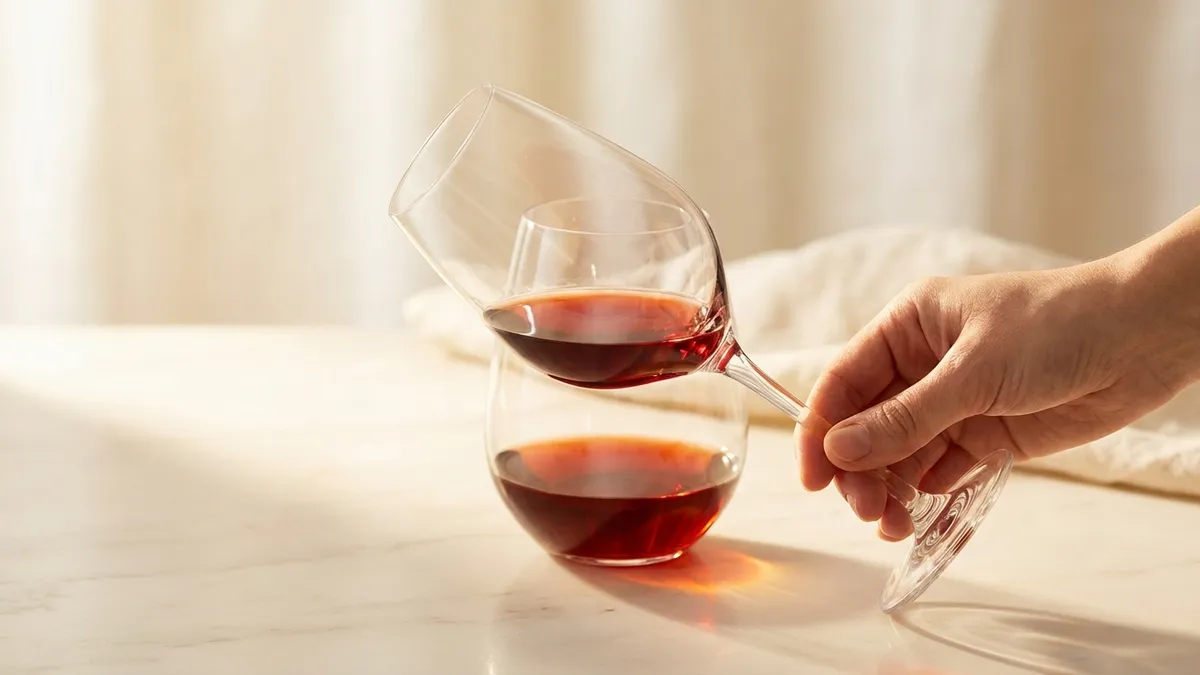
Hold the glass at a 45-degree angle against a white background — a napkin, a piece of paper, the tablecloth. Look down into the liquid and at the meniscus where the wine meets the edge.
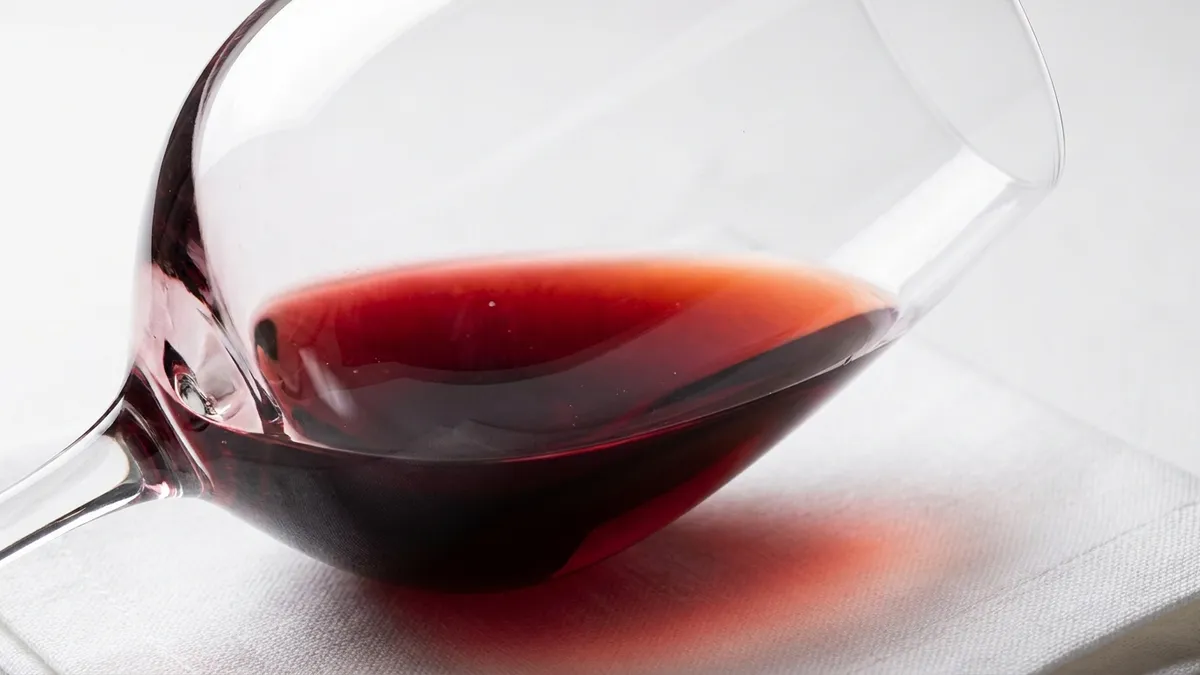
Note four things:
- Color — specific name (ruby, garnet, straw-gold, amber, salmon)
- Intensity — pale, medium, or deep
- Clarity — brilliant, clear, hazy, slightly cloudy
- Rim — purple rim (young red), brick or orange rim (aged red), greenish rim (young white), gold rim (mature white)
Color is a surprisingly good predictor. A pale ruby with an orange rim on a Pinot Noir suggests a wine with age. A deep inky purple on a Cabernet-looking wine suggests youth. A brilliantly clear white with a greenish tinge suggests a cool climate. None of these are certainties — they are early hypotheses the rest of the sequence will test.
Step 2: Swirl
Pros swirl once, deliberately, with the base on the table. Three to five full rotations. Then they stop and smell.
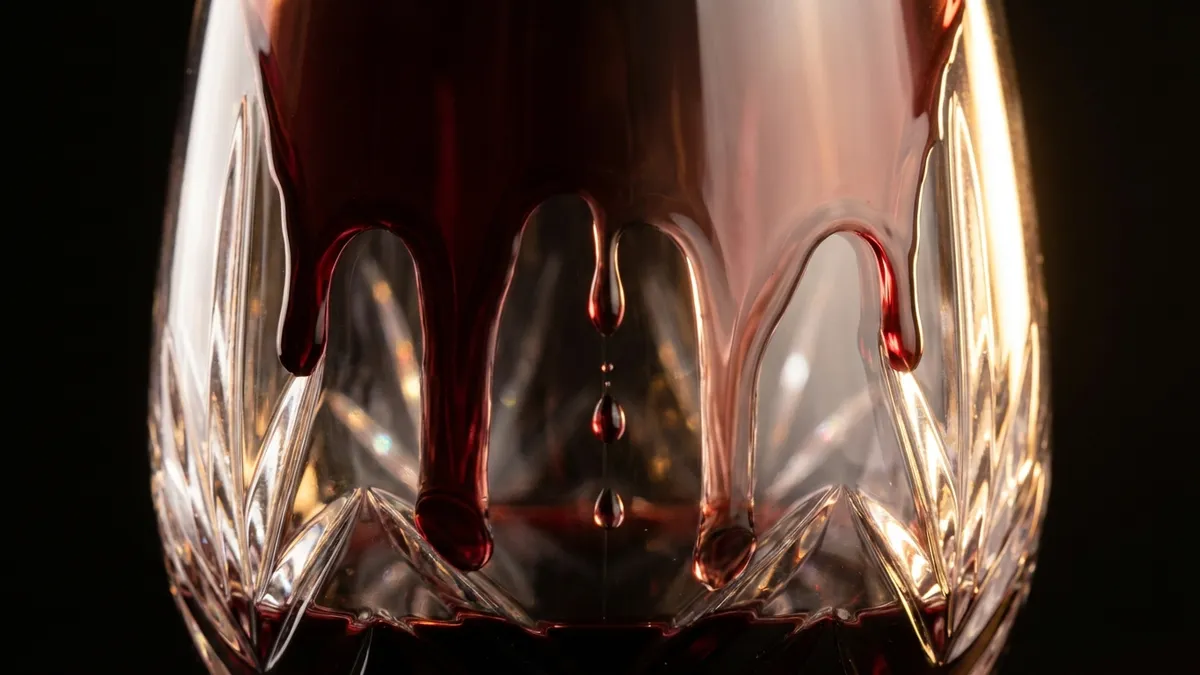
The swirl has two jobs: first, to agitate aromatic compounds into the air above the wine (which is where most aromas actually are), and second, to observe the legs or tears that form on the interior wall of the glass. Legs correlate roughly with alcohol and body — not perfectly, but usefully.
Heavy, slow legs suggest higher alcohol and body. Thin, fast legs suggest a lighter wine.
A beginner mistake is to swirl too long or too vigorously. Over-swirled wine loses volatile compounds before the nose gets them. One good swirl, then sniff.
Step 3: Smell
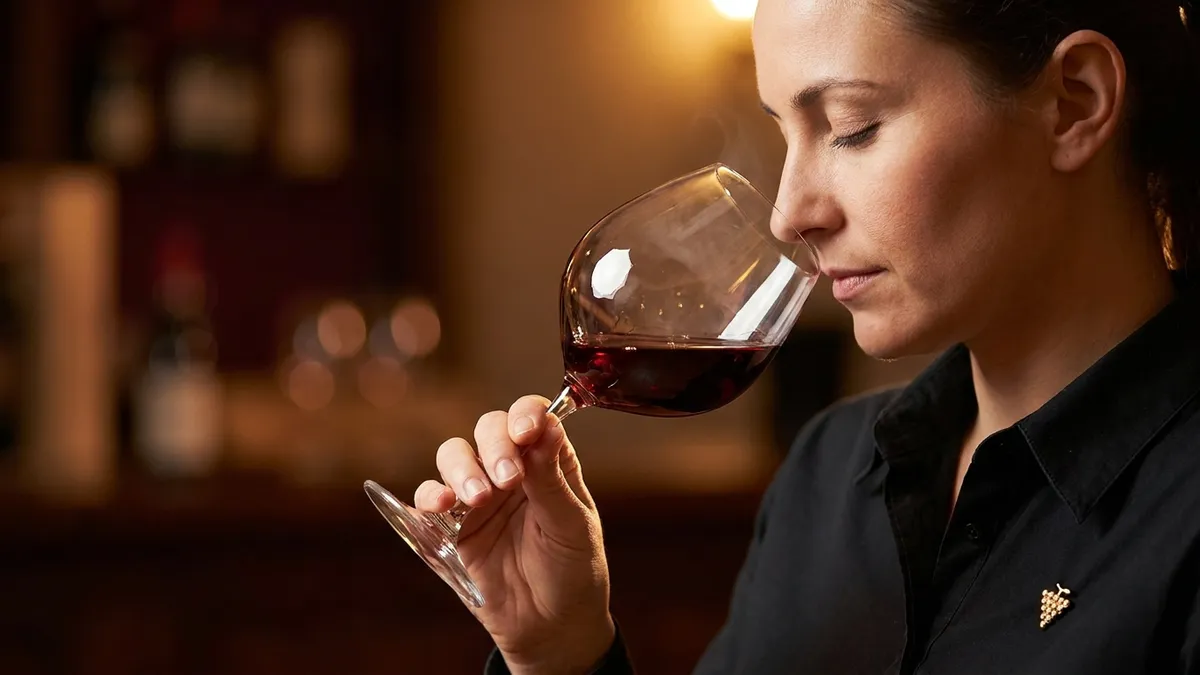
This is where pros spend the most time. Ten to twenty seconds on the nose is normal. A good sommelier is running a structured search through several categories at once.
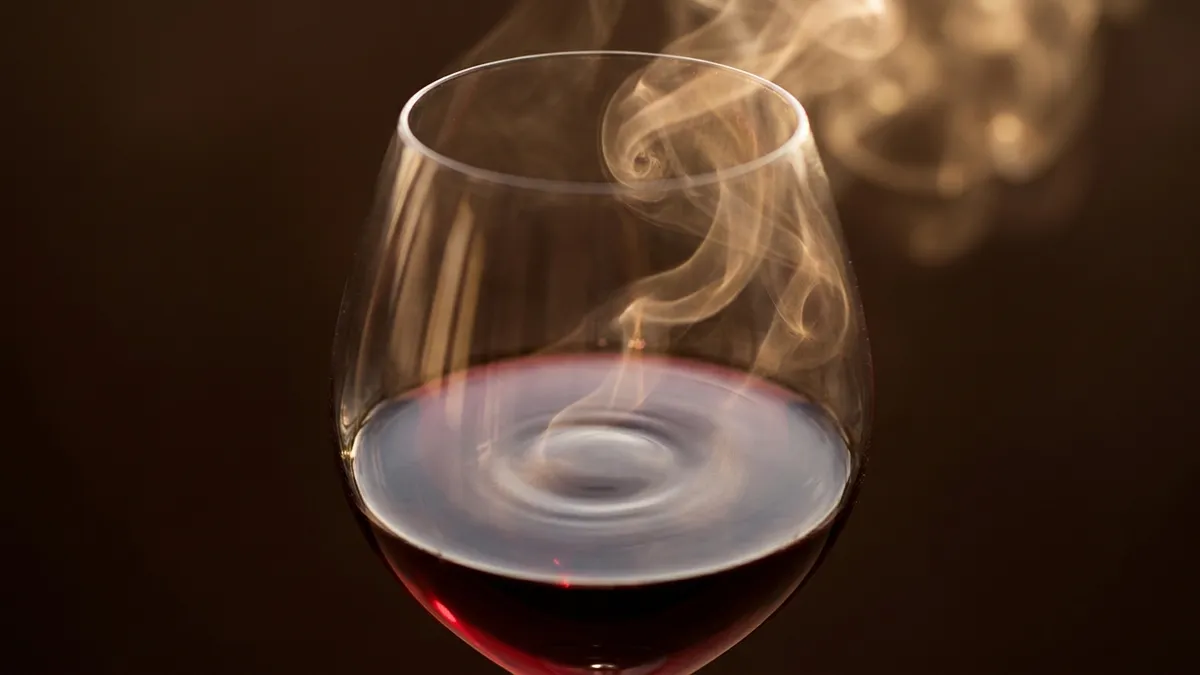
A pro does two separate passes:
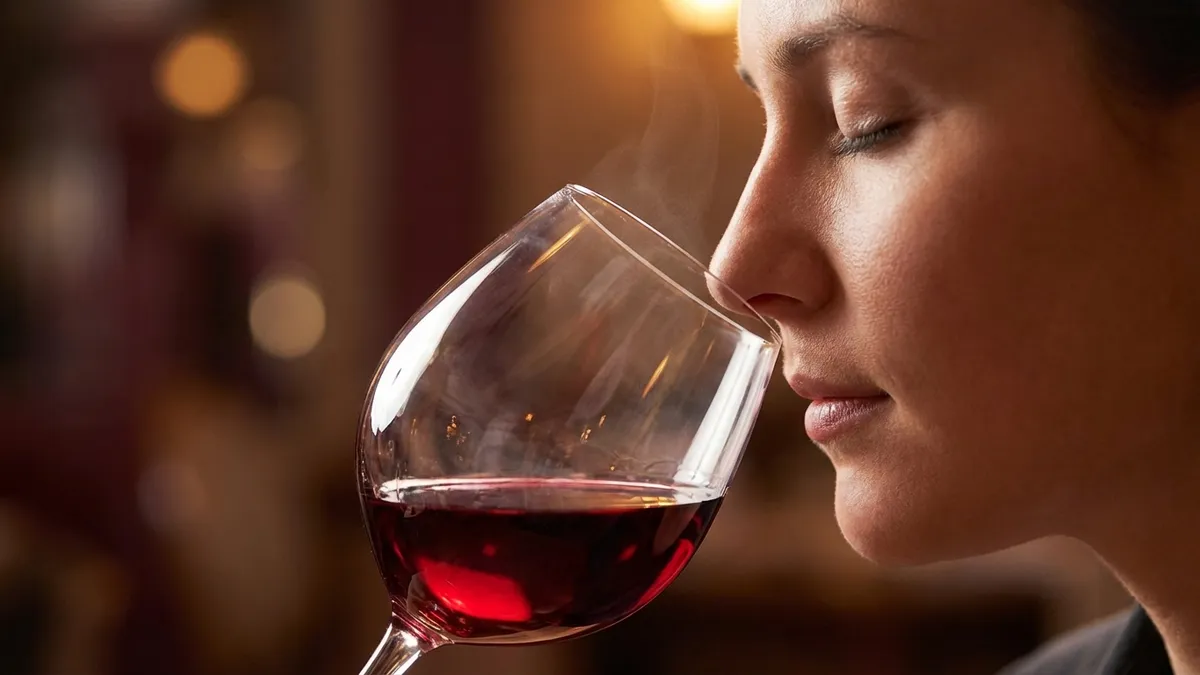
First pass — broad recognition. Lower the nose into the bowl, take two short inhales of 1 to 2 seconds each. Pause. Name a category: fruit-dominant, earth-dominant, oak-dominant, floral-dominant. One word.
Second pass — specific identification. After a 10-second pause to avoid smell fatigue, go back in. This time, search for three specific aromas inside the category. Red cherry. Violet. Wet leaves. Three is a good cap — more than three and you are usually inventing.
Pros also listen for what is missing. A Pinot Noir without earth is unusual. A Sauvignon Blanc without herbal notes is unusual. The absence of an expected aroma is information too.
Our how to smell wine guide has the full nose-in-glass technique, including how to avoid over-sniffing. The primary, secondary, and tertiary aromas breakdown explains where each aroma category comes from in the wine's lifecycle.
Step 4: Sip
The sip itself is small and deliberate — about half a teaspoon, enough to coat the whole tongue. Beginners often sip too big, which floods the palate with alcohol and deadens everything else.
A pro does the following in a roughly 5-second window:
- Draw a small sip between the teeth.
- Pull a thin stream of air through the wine — the classic sommelier slurp. This aerates the wine on the tongue, lifting aromas to the retronasal receptors behind the palate. The slurp looks silly. It works.
- Roll the wine across the tongue — front, middle, back, sides. Each zone catches different structural cues.
- Swallow or spit after 3 to 5 seconds. Holding wine longer does not reveal more.
Spitting is standard at any session with more than three wines. Alcohol in the bloodstream degrades palate accuracy within two or three swallows. Every serious tasting has a bucket. The mechanics of how aroma actually reaches the brain — the retronasal smell pathway — is why the slurp matters and why holding the wine in your mouth for a few extra seconds is worth the effort.
Step 5: Structure
This is the step that separates pros from enthusiasts more than any other. A pro is not just noting flavors. They are measuring the wine's structural skeleton and converting it into data.
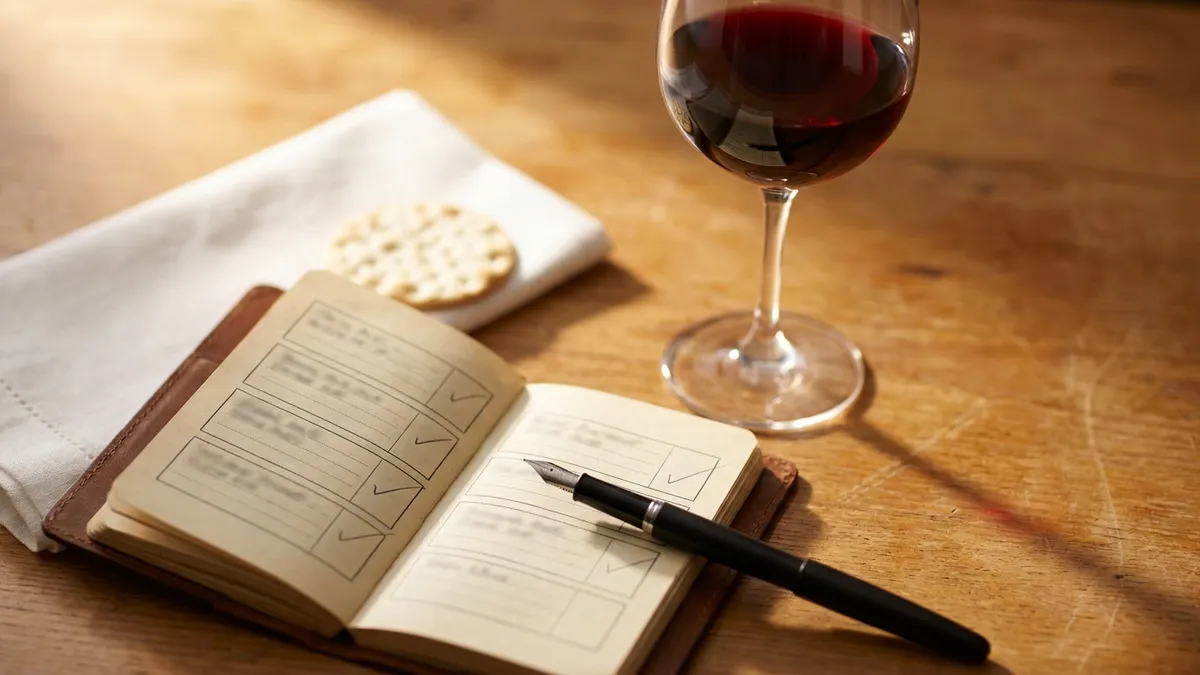
Five structural variables, each rated on a simple 1-to-5 or low/medium/high scale:
- Sweetness — dry, off-dry, medium sweet, sweet
- Acidity — how much your mouth waters after swallowing
- Tannin — the drying, gripping sensation (reds only); low / medium / high, and also soft / firm / grippy
- Body — how the wine weighs in your mouth; light / medium / full
- Alcohol — warmth that travels from the tongue to the back of the throat; low / medium / high, sometimes specifically hot
A pro then adds two perception notes:
- Flavor intensity — how prominent the flavors are (light, medium, pronounced)
- Finish — short, medium, long; pleasant or abrupt
The structure read is the most diagnostic step for blind tasting. A wine with high acidity, high tannin, moderate alcohol, medium body, and a long finish is coming from a specific family of grape-and-climate combinations — and you do not need to name the flavors to start narrowing it down. Our wine finish meaning and understanding tannins, acidity, and body guides break down each structural variable with calibration exercises you can run at home.
Step 6: Conclusion
Finally, after sight, swirl, smell, sip, and structure, a pro lets themselves draw a conclusion. Not before.
The conclusion has three parts:
- Quality assessment — faulty, acceptable, good, very good, outstanding
- Readiness — too young, drink now, peak, past peak
- Origin guess (if blind) — country, region, grape, vintage range, winemaking style
Only the first is mandatory. The other two are optional depending on whether the tasting is blind or informed.
The conclusion is written in a notebook or entered in a tasting log immediately. Waiting ten minutes to write the note is how memory becomes unreliable. The Sommy app's tasting flow captures each step as a separate field, so the conclusion automatically references the structure and nose notes rather than relying on memory.
A Sommelier's Note vs. an Amateur's: Same Wine, Two Notes
The cleanest way to see why the procedure matters is to look at how the same glass produces two completely different notes.
Amateur: "Smells like cherries. Tastes good. A bit dry."
Sommelier: "Pale ruby, garnet rim, brilliant clarity. Medium intensity nose: red cherry, violet, wet leaves, faint baking spice. Medium-plus acidity, low-medium tannin, medium body, moderate alcohol. Long, savoury finish. Cool-climate Pinot Noir, four to six years old. Old World — likely Burgundy, possibly Côte de Beaune."
Both tasters drank the same wine. The first description is a feeling. The second is a structured set of observations another taster could match against the bottle without ever seeing it. The difference is method, not vocabulary. Once you run every glass through the six-step procedure, your notes start looking more like the second one within three months of daily practice.
The amateur note is not wrong. It is simply not portable — nobody else can compare it to anything, and you cannot compare it to your own notes from last month. The sommelier note can be matched against twenty other Pinot Noirs in your log, sorted by structure, and used to recognize a style at the next blind tasting.
The Sommelier Deduction Grid
When tasting blind, the pro layers a deductive grid on top of the six steps. This is where the "calling the wine" magic happens. It is not magic — it is a decision tree trained over thousands of tastings.
The grid runs like this, in order:
Is it old-world or new-world?
Old-world wines tend to have higher acidity, lower alcohol, more restrained fruit, more earth and herbs. New-world wines tend to have riper fruit, higher alcohol, more oak, more sweetness of fruit impression. This binary call narrows hundreds of possibilities to dozens.
What climate?
Cool, moderate, or warm. Cool-climate wines have sharper acidity, lower alcohol, more green and herbal notes. Warm-climate wines have softer acidity, higher alcohol, riper fruit.
What grape (or grape family)?
Aromatic clues combined with structure often narrow this to two or three candidates. High tannin and dark fruit points to Cabernet, Syrah, or Nebbiolo. Low tannin and red fruit points to Pinot Noir, Gamay, or Grenache.
What region?
Once the grape and climate are locked, regions narrow quickly. Cool-climate Pinot Noir is Burgundy, Oregon, or parts of New Zealand. Warm Pinot Noir is Central Otago or Russian River.
What vintage range?
A wine's tertiary character tells you roughly how old it is. Fresh primary fruit = 1 to 3 years. Integrated oak and early tertiary = 4 to 7 years. Heavy tertiary with softened tannin = 10-plus years.
Each level narrows the tree by roughly half. By the time you are at vintage range, a trained pro has often landed within a few correct calls.
Our blind wine tasting tips guide walks through a full deductive tasting in more detail, and how to describe wine covers the vocabulary you'll lean on when writing the conclusion.
Palate Management Across a Flight
A single glass is one thing. A sommelier exam or a professional tasting involves 12 to 40 wines in a session, and palate management becomes half the skill.
Pros observe a set of rules across a flight:
- Water between every wine — still, not sparkling. Sparkling sensitizes the tongue.
- Neutral bread or unsalted crackers as a palate cleanser.
- Spit every wine in a formal tasting.
- Rest 5 to 10 minutes at the halfway point of any flight larger than 10 wines.
- Taste light before heavy, dry before sweet, white before red — unless the tasting is specifically designed to compare across that boundary.
- Avoid coffee, toothpaste, and strong food for at least an hour before.
These rules are not performative. Each one counters a specific measurable effect on the palate that has been studied in the wine science literature.
What to Expect: Months 1, 3, and 6 of Daily Practice
The most common question after "how do I taste like a sommelier" is "how long until I can." Honest answer: longer than a weekend, shorter than people fear. Here is what a realistic curve looks like for someone running the six-step procedure on one wine a day, five minutes each.
Week 1 — awkward
The procedure feels mechanical. You forget steps. You skip back to add the swirl after you already smelled. Your notes look like a checklist with one-word answers. This is normal and not a sign you should quit. The mechanical phase is the price of admission.
Month 1 — faster
You can run all six steps in under two minutes without prompting. You start picking up cues you missed in week one — a slight orange rim on a Sangiovese, a herbal note on a Sauvignon Blanc, the difference between medium-plus and medium tannin. Old-world versus new-world is still a coin flip but you are starting to feel the difference rather than guess it.
Month 3 — pattern recognition
You can call old-world versus new-world correctly about 70 percent of the time. Your structural reads are stable enough that two notes from the same wine, written a week apart, look broadly similar. Your notes start including the why behind a structural reading, not just the score — "high acidity for the body, suggesting cool climate" rather than just "acidity 4/5."
Month 6 — comfortable
The procedure has become subconscious. You only consciously run all six steps for wines you are actively studying. The deductive grid is starting to narrow grape and region with reasonable accuracy on cleanly classical examples — a textbook Sauvignon Blanc or Cabernet Sauvignon will trip the recognition reliably; tricky outliers still surprise you.
Sommelier note: the curve is not linear. Most students hit a frustrating plateau between month two and month three where progress feels stalled. Push through. The plateau is the brain consolidating; the leap to month-three pattern recognition usually happens inside a single week.
How to Train the Method at Home
You do not need a credential program to practice. Three habits turn the six-step procedure into instinct within 6 to 12 weeks:
Habit 1 — a daily 5-minute tasting
One wine, every day, run through all six steps. Five minutes. Write one-line notes for each step. Skip only if you are sick, traveling, or hosting a dinner party.
Habit 2 — a weekly two-wine comparison
Once a week, taste two wines of the same grape side by side. Run both through the six-step procedure. Compare structure readings. This is the single fastest accelerator of structural fluency.
Our develop your wine palate guide has a 30-day starter plan that combines these two habits, and common wine tasting mistakes covers the bad habits that creep in if you practice without feedback.
Habit 3 — a monthly blind pour
Once a month, have someone pour you a wine blind. Run the full six-step method and the deduction grid. Write a conclusion. Then reveal and compare.
Blind tasting is the uncomfortable but irreplaceable exercise. Most beginners avoid it because they do not want to be wrong. Pros embrace it for the same reason — being wrong in a structured way is how recall gets stronger.
Sommelier note: Write the conclusion before the reveal. If you peek first, the whole exercise collapses into confirmation bias and you learn nothing.
Common Pitfalls
Even trained beginners frequently make six mistakes:
- Rushing through sight. Five seconds of real looking produces more information than most amateurs realize. Do not skip it.
- Leading with flavor, not structure. "I taste raspberry" is less useful than "this has high acidity and low tannin." Flavor names come easily; structure reads train the real muscle.
- Writing notes that do not separate steps. A paragraph of impressions is harder to compare across wines than a structured six-section note.
- Skipping the deduction grid. Naming flavors without placing them on the old-world/new-world, climate, and age axes leaves most of the information on the table.
- Treating the method as performance. The six-step process is a tool for better tasting, not a ritual to perform in front of guests. Streamline it for casual evenings and run the full version only when you are actively studying.
- Tasting only what you already like. A palate trained exclusively on one style will recognize that style and almost nothing else. Build deliberate variety into the weekly two-wine comparison — pair an Old World wine with a New World counterpart of the same grape, or compare two grapes of similar structure across regions.
The Short Version
If all you remember is a mnemonic:
S-S-S-S-S-C — Sight, Swirl, Smell, Sip, Structure, Conclusion.
Six steps, ten to twelve minutes per serious glass, done in the same order every time. That is the method, stripped to the bone. Everything else in this guide is detail.
The Bottom Line
Tasting wine like a sommelier is a procedure, not a gift. Sight, swirl, smell, sip, structure, conclusion — six steps, ten to twelve minutes per glass, done in the same order every time. Add the deduction grid when tasting blind. Practice for five minutes a day and the method becomes instinct within three months.
Want the procedure captured for you? Sommy walks through each of the six steps with prompts, structures the palate rating as a 1-to-5 scale, and saves the conclusion next to a full searchable history of every wine you have ever tasted.
Frequently Asked Questions
How long does it take to learn to taste wine like a sommelier?
Most dedicated students reach solid amateur fluency in six to twelve weeks of daily five-minute practice. Professional-level recognition of specific regions and styles takes two to five years of focused work. The six-step method itself is learnable in a single afternoon — the palate catches up over months as the procedure becomes instinct rather than conscious checklist.
Do I need to spit every wine when tasting?
For serious multi-wine tastings, yes. Alcohol crosses the bloodstream fast and degrades perception within two or three swallows. For single-bottle casual drinking, spitting is optional. Any tasting with more than three wines benefits from spitting, and any tasting with more than eight requires it to keep accuracy. Every serious professional tasting has a bucket in reach.
Is the sommelier slurp actually necessary?
It genuinely helps. Pulling a thin stream of air through the wine on your tongue lifts aromatic compounds to the retronasal receptors behind the palate, which is where much of the actual flavor perception happens. It also looks silly in public, so most pros slurp loudly only in professional contexts and modulate down to a gentle aeration in front of guests.
Can I skip the structure step if I do not like rating wines?
You can, but you will be leaving half the skill on the table. Structure — acidity, tannin, body, sweetness, alcohol — is the single most diagnostic data in blind tasting, and it is the hardest to rebuild from memory if you do not capture it in the moment. A simple 1-to-5 scale takes about ten seconds and is worth it.
Should I taste blind at home?
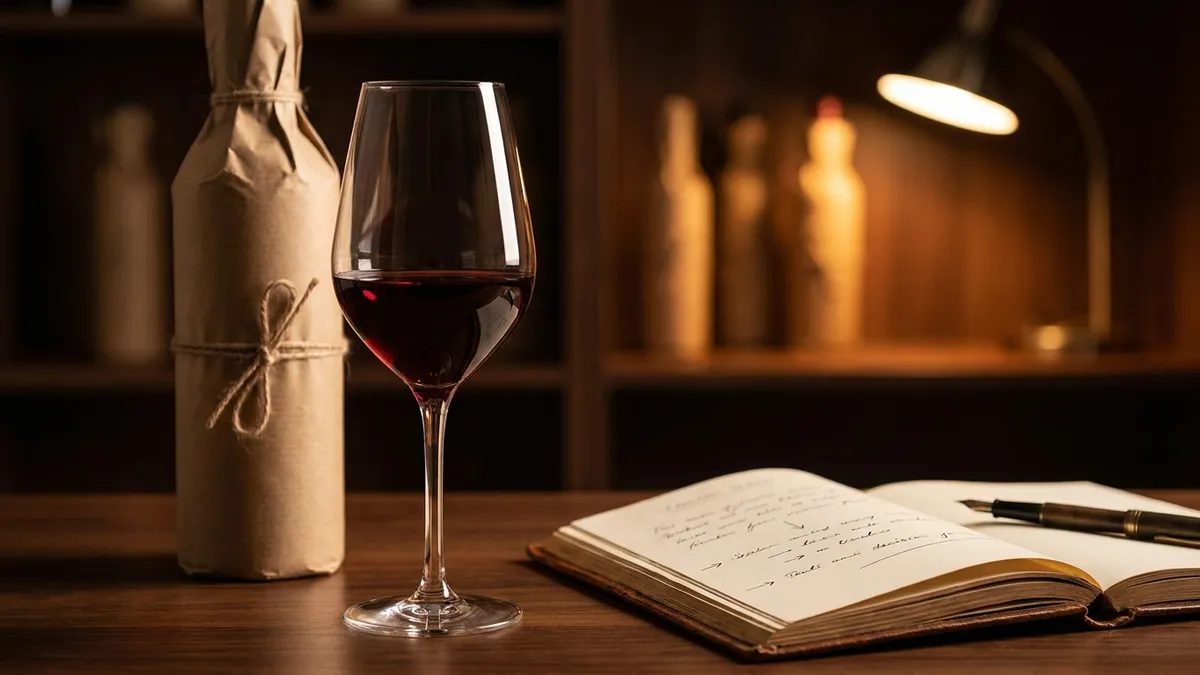
Yes, at least occasionally. A wrapped bottle or an opaque decanter is enough. Blind tasting strips out label and price bias and accelerates pattern recognition dramatically compared to always-labeled drinking. Write your full conclusion before the reveal — peeking first collapses the whole exercise into confirmation bias, and you learn almost nothing from the tasting.
How many wines should I taste per training session?
For serious training, two to four wines side by side is the sweet spot. Beyond six wines, palate fatigue starts measurably cutting into accuracy. Professional exam sessions cap at six wines in twenty-five minutes for exactly this reason. At home, a weekly two-wine side-by-side comparison is the single fastest accelerator of structural fluency across a few months.
Does the shape of the glass really matter that much?
Yes. A narrow tumbler or a shallow coupe hides most of the aromas a wine has to offer. A tulip-shaped stemmed glass is the single most useful piece of equipment a home taster can own, and one all-purpose shape handles about ninety-five percent of wines. Hold it by the stem, not the bowl, to avoid warming the wine.
What order should I follow when tasting blind?
Run the six steps — sight, swirl, smell, sip, structure, conclusion — in that fixed order, then apply the deductive grid. Decide old-world versus new-world first, then climate, then grape family, then region, then vintage range. Each level cuts the possibilities roughly in half. Writing a conclusion before the reveal is non-negotiable for the exercise to be useful.
Sommy Team
LinkedInFounder & Wine Educator
The Sommy Team is building the world's most approachable wine education app, helping beginners develop real tasting skills through structured courses and AI-guided practice.