Retronasal Smell: The Secret to Tasting More Flavors in Wine

By the Sommy Team — AI-assisted, human-edited.
Updated Apr 17, 2026
Contents (11)
TL;DR
Most of what you call flavor in wine is actually smell. Retronasal smell travels from your mouth up through the back of the throat to your olfactory receptors. The tongue only handles five basic tastes; everything else is the nose working from behind. Understanding retronasal smell explains the sommelier slurp and doubles the flavor in every glass.
TLDR
Most of what you call "flavor" in wine is actually smell — specifically, retronasal smell, which travels from your mouth up through the back of the throat to your olfactory receptors. The tongue only handles five basic tastes. Everything else is the nose, working from behind. Understanding retronasal smell explains the sommelier slurp, why pinched nostrils erase flavor, and how to taste more of every wine you open.
The Counter-Intuitive Truth About Flavor
Close your eyes, pinch your nose, and take a sip of red wine. Swallow. Open your eyes. Release your nose.
The wine you just tasted had almost no flavor. You felt wetness on your tongue. You felt acidity, tannin, maybe a hint of sweetness. But the cherry, the oak, the tobacco, the earth? Gone. All gone.
Now sip the same wine with your nose unpinched. The flavors flood back.
What you just proved is that your tongue barely contributes to flavor. Flavor is overwhelmingly the work of smell — and specifically, a form of smell that happens inside your mouth, traveling backward through the throat to your olfactory receptors at the top of the nasal cavity. This is retronasal smell wine experience: smelling wine from behind the nose rather than through the nostrils.
Understanding this is the single shift that most accelerates a beginner palate. Once you know where flavor actually lives, you can train the organ that produces it instead of wasting time on the tongue.
Two Types of Smell
Smell happens in two directions:
Orthonasal (through the nostrils)
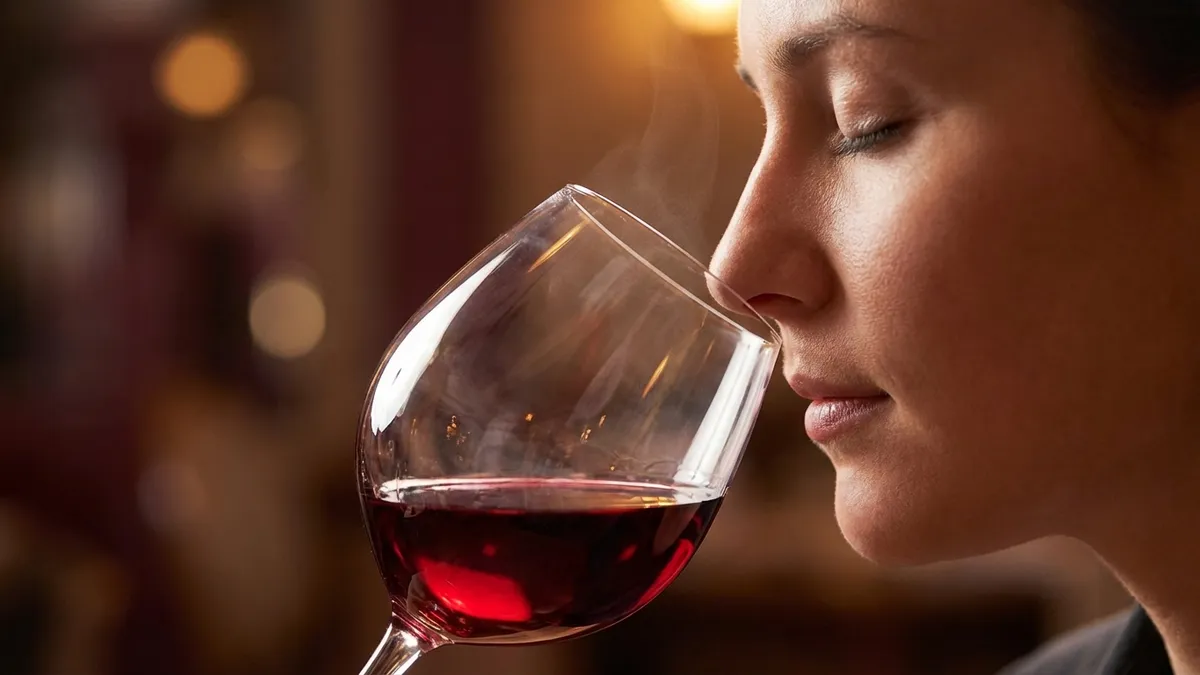
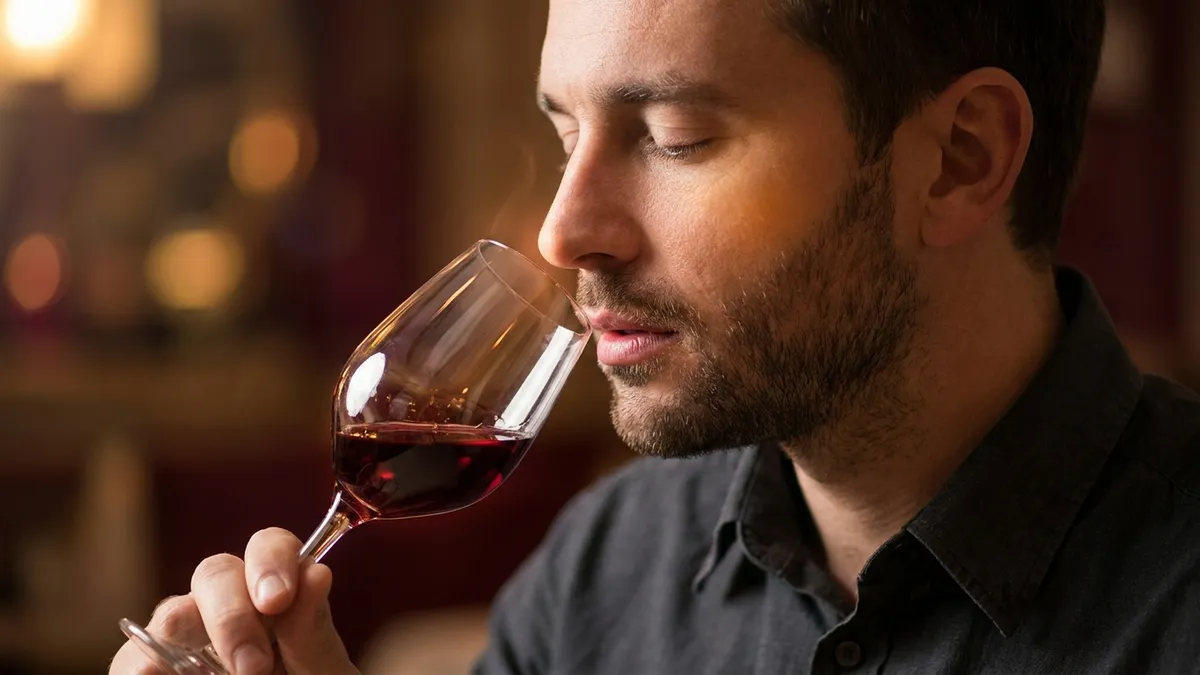
The traditional idea of smell. You lean forward, inhale through your nose, and aromas travel up from the outside world to your olfactory receptors. This is what happens when you smell a wine in the glass before sipping.
Retronasal (through the throat)
Aromas travel from inside your mouth up through the back of the throat and into the nasal cavity from below. Volatile compounds released when you sip, chew, or swallow rise through the soft palate and hit the same olfactory receptors. This is what happens when you taste wine — and most food.
Both directions activate the same smell receptors. But the two experiences feel different. A cup of coffee smells one way from the pot and another way after you sip. The compound is the same; the path is different.
For wine, retronasal smell delivers roughly 70 to 80 percent of what you call "flavor." The tongue handles the rest (acidity, sweetness, bitterness, saltiness, umami). The nose — approached from behind — does everything else.
Why It Matters for Tasting
This has four practical consequences.
1. Nose-smelling and tasting are different experiences
An orthonasal nose tells you one set of things. A retronasal taste can tell you others. Professional tasters often notice aromas on the palate that were invisible on the nose. Our primary, secondary, and tertiary aromas in wine explained guide discusses why certain compounds show differently across the two paths.
2. The sommelier slurp is not a performance
Drawing air through a sip in the mouth aerates the wine on the tongue, releasing volatile compounds and sending them up the retronasal pathway. The slurp looks theatrical but is one of the most scientifically grounded techniques in professional tasting.
3. A cold you cannot smell through is a cold you cannot taste through
When your sinuses are blocked, retronasal smell stops working. You can still feel acidity and sweetness, but the flavors you call cherry or vanilla disappear. This is the single best proof that flavor is mostly smell.
4. Some wines are nose-heavy, others palate-heavy
A complex wine often has a disagreement between orthonasal nose and retronasal palate. The nose might show oak and tobacco; the palate might reveal black olive and cured meat. The mismatch is a mark of complexity. Our wine complexity explained guide covers this directly.
The Mechanics of Retronasal Smell
When you take a sip, three things happen in sequence:
- Volatile compounds are released from the wine as it warms on the tongue and contacts saliva.
- Air flows through the mouth — either as you exhale naturally, as you actively inhale through the wine, or as you chew and swallow.
- The airflow carries compounds up through the nasopharynx (the junction where the throat meets the nasal cavity) to the olfactory epithelium at the top of the nasal cavity.
The olfactory epithelium is a small patch of tissue with millions of receptor neurons. It does not distinguish between compounds arriving from above (through the nostrils) or from below (through the throat). It only distinguishes between compounds.
Your brain, however, does distinguish. Retronasal and orthonasal signals arrive with different context, different temperature profiles, and different pairings with tactile and taste information from the mouth. This produces the strong subjective difference between "smelling" and "tasting" even when the same receptors are responsible.
How to Use Retronasal Smell Deliberately
A trained taster has three techniques that put retronasal smell to work.
1. The sommelier slurp (aerated sip)
Take a small sip — about half a teaspoon. Without swallowing, part your lips slightly and draw a thin stream of air through the wine on your tongue. You will make a soft slurping sound.
The incoming air dissolves volatile compounds off the wine on your tongue and carries them backward to your olfactory receptors. The effect is dramatic — aromas that were subtle or absent on the nose often come alive after a slurp.
A beginner mistake is to slurp too aggressively, which splashes wine. Keep the draw thin and controlled. A 2- to 3-second aerated hold is enough.
2. The warm mouth hold
Hold a sip in your mouth for 3 to 5 seconds before swallowing. Body heat warms the wine slightly, which releases more volatile compounds. Exhale gently through your nose while the wine is still in your mouth — this pushes the volatile compounds up the retronasal pathway.
This is a quieter technique than the slurp and works well in social settings where a loud slurp feels awkward. The flavors you notice after this slow hold are often richer and more layered than the ones that show on the first sip.
3. The post-swallow exhale
After swallowing, exhale gently through your nose. The residual volatile compounds still floating in your nasopharynx make one more pass over the olfactory receptors on their way out. This is the retronasal source of the "finish" — the set of flavors that show up after the wine is gone.
A long, complex finish is a retronasal phenomenon. Our wine finish meaning guide has more on how to evaluate the finish specifically.
Sommelier note: The most diagnostic part of the retronasal experience is the second or third breath after swallowing. Stay still, exhale gently, and the finish keeps delivering flavors for 10 to 30 seconds.
Common Mistakes That Waste Retronasal Smell
Several habits quietly cut off the retronasal pathway.
Pinching the nose or breathing through the mouth while tasting
Blocks airflow through the nasopharynx. If you are congested, you will taste wine as if it were water with tannin.
Swallowing too fast
The fastest way to skip retronasal smell. A sip that is in-and-gone gives the aromatic compounds no time to volatilize and no airflow to carry them upward. Slow the sip down and the flavor arrives.
Tasting wine too cold
Cold wine volatilizes fewer compounds. A refrigerator-cold white gives retronasal smell almost nothing to work with. Warm the wine in your mouth for a few seconds before swallowing — body heat helps.
Drinking with food that overwhelms the palate
Strong food saturates the retronasal pathway with its own compounds, masking the wine. This is fine for casual drinking, but for serious tasting, the food should be plain and neutral.
Missing the exhale
If you always exhale through the nose while the wine is in your mouth, you are already using retronasal smell. If you hold your breath through the sip and only breathe after swallowing, you are missing half the experience. Conscious exhaling while tasting doubles the flavor information.
Why Orthonasal Smell Still Matters
Retronasal smell is most of the flavor experience, but orthonasal smell (nose in the glass) is not wasted effort. It does three important jobs:
Faster screening
Orthonasal smell delivers aroma information faster than retronasal, because the compounds travel a shorter distance. You can evaluate a wine's nose in 3 seconds. Retronasal evaluation takes 20 to 30 seconds including the finish.
Primes expectation
The brain loads aroma expectations before the wine hits the mouth. These expectations subtly guide which compounds you register on the palate. This is why serious tasters smell before sipping — the nose primes the palate.
Shows different compounds at different concentrations
Some volatile compounds are dominant orthonasally but recede on the palate. Others are subtle on the nose and become pronounced retronasally. A complete taste uses both paths.
Our how to smell wine guide covers the orthonasal technique specifically. Together with the retronasal techniques in this article, the two form the full sensory picture.
How to Train Retronasal Perception
Three exercises accelerate retronasal skill.
1. The closed-nose sip
Pinch your nose. Sip a familiar wine. Taste it with closed nose for 3 seconds. Release the nose while the wine is still in your mouth. Notice what suddenly arrives. This exercise dramatizes the arrival of retronasal smell in a way no amount of reading can match.
Do this once a week for a month. You will stop taking retronasal flavor for granted and start noticing it consciously on every sip.
2. The slurp calibration
Pour two small glasses of the same wine. Sip the first without slurping — just swallow. Sip the second with a deliberate 2-second slurp. Write the aromas from each.
The difference shows which aromas retronasal smell is specifically delivering. After a few rounds, the slurp becomes intuitive rather than awkward.
3. The finish pause
After swallowing, close your eyes and pause. For 30 seconds, notice what arrives on each exhalation. Do not sip anything else.
Most beginners have never paid deliberate attention to the retronasal finish. Doing so even once shows how much information is still streaming after the wine is gone. Our develop your wine palate guide builds this into a daily 5-minute drill.
The Sommy app's tasting flow prompts you to note aromas at three points — orthonasally, on the palate, and on the finish — so retronasal smell gets its own dedicated line in every tasting. Over time, you can see which aromas typically show where and build a personal map of your own retronasal sensitivity.
FAQ
Is retronasal smell the same as taste?
Not exactly. Taste is the tongue — sweet, sour, salty, bitter, umami. Retronasal smell is the nose picking up aromas from inside the mouth. When we say "flavor" in everyday language, we usually mean a combination of both — the tongue's tastes plus the retronasal aromas fused into a single perception.
Why does food taste bland when I have a cold?
Because retronasal smell is blocked. Your tongue still works, so you can feel sugar, salt, and acid, but the 70 to 80 percent of flavor that comes from retronasal smell is cut off. Once the congestion clears, flavors return.
Is the sommelier slurp really necessary?
It genuinely helps by aerating the wine on the tongue and lifting volatile compounds to the retronasal pathway. In professional settings, it is standard. In social settings, the slower mouth-hold-and-exhale technique produces similar benefits without the noise.
Can I train retronasal smell the way I train orthonasal?
Yes. Both types of smell share the same receptors and both improve with deliberate attention. The techniques differ — orthonasal training is about smelling specific reference aromas, retronasal training is about paying attention to the finish and the aromas that arrive during and after a sip. Running both in parallel produces the fastest gains.
Do all flavors arrive retronasally?
Most do, but not all. Some very volatile compounds arrive on the nose long before the sip. Others — especially heavier, less volatile molecules — show up mostly on the palate. Complex wines show different compounds on each path, which is why using both produces the fullest picture.
Does chewing wine help?
A small amount of controlled movement — rolling the wine across the tongue — does help by increasing surface area and releasing more compounds. Aggressive chewing is counterproductive; it floods the palate with alcohol and deadens everything. Gentle movement for 3 to 5 seconds is the right amount.
Why do some wines have a long finish and others a short one?
Long finishes are wines whose retronasal aromas linger in the nasopharynx and continue to arrive with each exhalation long after swallowing. Short finishes are wines whose compounds clear quickly. Finish length is one of the clearest quality markers and is almost entirely a retronasal phenomenon.
The Bottom Line
Retronasal smell is how you actually taste wine. The tongue handles five basic tastes; everything else you call flavor is your nose, working from behind. Using the sommelier slurp, slowing the sip, and paying attention to the post-swallow exhale unlocks flavors you have been missing. Train retronasal smell deliberately — through closed-nose sips, slurp calibration, and finish-focused pauses — and the depth of flavor in every bottle you open roughly doubles.
Want a tasting flow that trains retronasal smell by design? Sommy prompts you to note aromas on the nose, on the palate, and on the finish as three distinct fields, so the full path from orthonasal to retronasal becomes something you record and review rather than something you leave on the table.
Frequently Asked Questions
What is retronasal smell?
Retronasal smell is the perception of aromas that travel from inside your mouth, up through the back of the throat, into the nasal cavity from below. Volatile compounds released when you sip, chew, or swallow rise through the soft palate and reach the same olfactory receptors you use when smelling something through your nostrils.
Is retronasal smell the same as taste?
Not exactly. Taste is handled by the tongue and covers sweet, sour, salty, bitter, and umami. Retronasal smell is your nose picking up aromas from inside the mouth. When people say flavor in everyday language, they usually mean a combination of the tongue's basic tastes plus the retronasal aromas fused together into a single perception.
Why does food taste bland when I have a cold?
Because retronasal smell is blocked by congestion. Your tongue still works, so you can still feel sugar, salt, and acidity, but roughly seventy to eighty percent of what you call flavor comes from retronasal smell. With that pathway cut off, wine and food lose most of their character. Once the sinuses clear, the flavors return.
What is the sommelier slurp and why does it help?
The sommelier slurp is drawing a thin stream of air through a sip of wine held on the tongue. The incoming air lifts volatile compounds off the wine and carries them backward to the olfactory receptors through the retronasal pathway. It looks theatrical but is one of the most scientifically grounded techniques in professional tasting.
Can I use retronasal smell without slurping in public?
Yes. The quieter alternative is to hold a small sip in your mouth for three to five seconds, let body heat warm the wine, and exhale gently through your nose while the wine is still on your tongue. This pushes volatile compounds up the same retronasal pathway without making any noise, and works well at a dinner table.
Can retronasal smell be trained?
Yes. Both orthonasal and retronasal smell share the same receptors and both improve with deliberate attention. Effective exercises include the closed-nose sip that dramatizes the moment retronasal smell arrives, slurp calibration between sipped and slurped versions of the same wine, and a thirty-second finish pause that trains attention on post-swallow exhalations.
Why do some wines have a long finish and others a short one?
Long finishes are wines whose retronasal aromas linger in the nasopharynx and continue to arrive with each exhalation long after swallowing. Short finishes are wines whose compounds clear quickly. Finish length is one of the clearest quality markers in wine evaluation and is almost entirely a retronasal phenomenon rather than a tongue-driven one.
Sommy Team
LinkedInFounder & Wine Educator
The Sommy Team is building the world's most approachable wine education app, helping beginners develop real tasting skills through structured courses and AI-guided practice.