Does Wine Glass Shape Affect Taste? The Science

By the Sommy Team — AI-assisted, human-edited.
Updated Apr 28, 2026
Contents (11)
- What Wine Glass Shape Actually Does
- Answer: Does Wine Glass Shape Affect Taste?
- The Bowl: Where Aromas Live
- The Rim: Where the Wine Lands on Your Tongue
- The Stem: Function Over Decoration
- Material and Thickness
- What the Marketing Claims Get Wrong
- A Practical Buying Pyramid
- How Glass Shape Fits Into Real Tasting
- Practical Tips for Glass Care
- The Honest Bottom Line on Glass Shape
TL;DR
Wine glass shape affects how a wine smells and where it lands on the tongue, so it shifts perception of aromas, acidity, and alcohol. The effect is real but modest. One quality universal glass beats a tumbler by a wide margin and covers most styles. Specialty shapes earn their place only after you have the basics.
What Wine Glass Shape Actually Does
If you have ever wondered whether wine glass shape really affects taste, the short answer is yes — but not for the reasons most marketing campaigns claim. The same Cabernet poured into a tumbler, a Bordeaux glass, and a flute genuinely smells and tastes different in each. The mechanism is physical and measurable, not mystical. Bowl size, rim diameter, taper, stem length, and even thickness of the glass each nudge how aromas reach your nose and how the liquid first meets your tongue.
What matters is keeping the effect in perspective. A great glass cannot save a flat wine, and a mediocre glass cannot ruin a great one. The effect is a refinement — somewhere between five and twenty percent of the perceived difference between two wines, depending on style — not a transformation. That is enough to matter at the dinner table, and small enough that obsessing over twelve specialty shapes is mostly status spending.
This guide walks through what each part of the glass does, what the science actually says about brand-specific claims, and a practical buying pyramid that takes you from one good glass to a serious cellar setup without spending a small fortune along the way.
Answer: Does Wine Glass Shape Affect Taste?
Yes. The effect comes from three physical mechanisms working together. Bowl size controls how much air sits above the wine — the headspace where volatile aromatic compounds collect after swirling. Rim diameter controls where the wine lands on your tongue, which subtly reshapes perception of acidity, sweetness, and tannin. Taper concentrates aromatic vapor into a narrow column right where your nose sits.
The effect is real and shows up in blind tasting panels. It is also smaller than the grape-specific marketing claims suggest. One well-designed universal glass beats a tumbler by a wide margin, and a tumbler beats no glass at all. Beyond that, returns diminish quickly.
The Bowl: Where Aromas Live
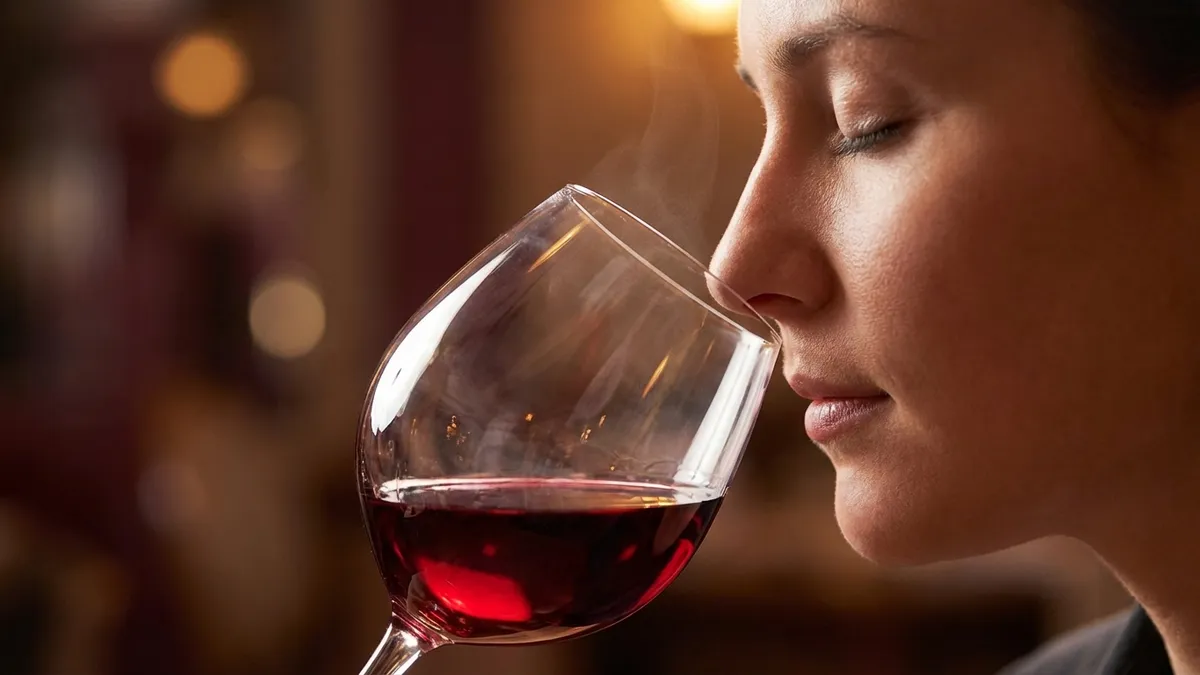
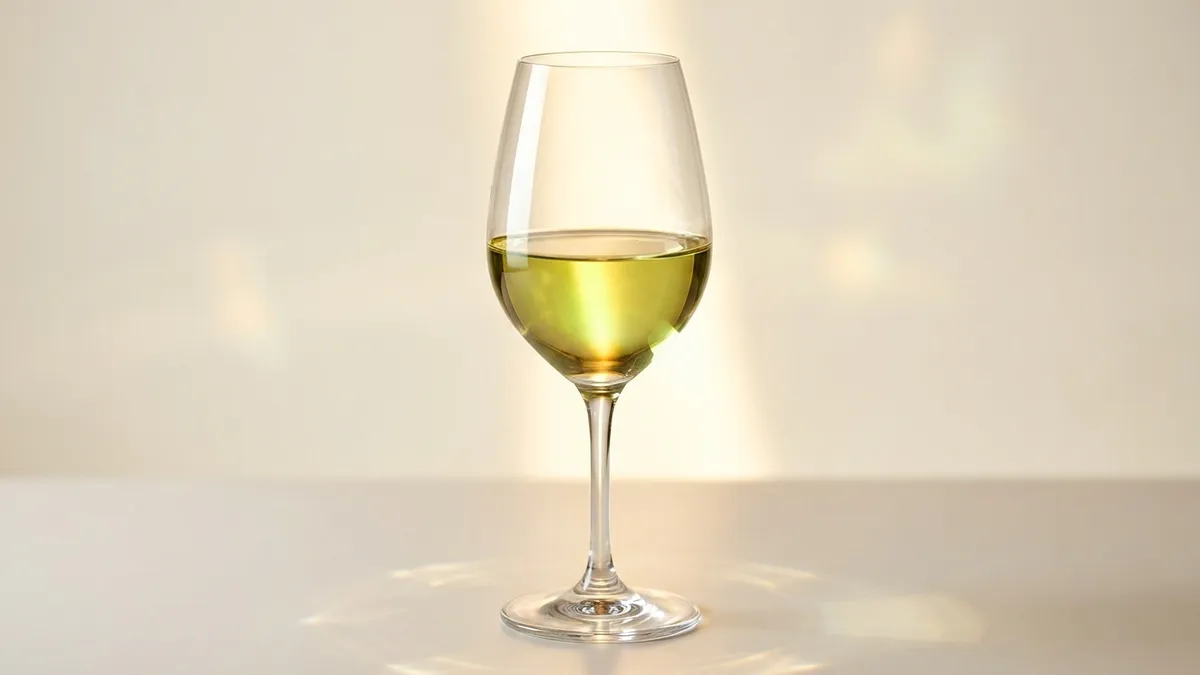
The bowl of a wine glass is not just a container for the liquid. It is an aroma chamber. After you swirl, volatile compounds evaporate from the thin film of wine climbing the inside of the glass and collect in the air above the liquid. The shape of the bowl determines how those compounds behave on their way to your nose.
Bowl Size and Headspace Volume
A larger bowl provides more headspace volume — more air for aromatic vapor to occupy before it escapes. For young, tannic, alcohol-heavy reds, a generous bowl gives oxygen room to soften harsh edges and lets the sharpest alcohol vapor rise and dissipate before you sniff. This is why Bordeaux glasses are tall with a moderately wide bowl, and Burgundy glasses are even wider — sometimes called fishbowls — to give delicate Pinot Noir aromatics maximum surface area to develop.
For aromatic whites, a smaller bowl is often better. Less headspace concentrates the more delicate floral and citrus compounds without letting them disperse too thinly. An overly large glass for a Riesling can flatten its perfume by giving the aromas too much room to spread out before they reach your nose. Our guide on how to smell wine explains why aromatic concentration matters more than volume for fragile wines.
The Tapered Rim
Most quality wine glasses narrow at the rim. This shape — wider in the middle, narrower at the top — funnels the aromatic vapor into a focused column right where your nose enters the glass. A straight-sided tumbler lets the same vapor disperse outward and sideways, so most of it never reaches your olfactory receptors at all.
The tulip shape is not decorative. It is an aroma delivery system, and it explains why even a basic stemmed wine glass dramatically out-performs a juice glass on the same wine.
The Rim: Where the Wine Lands on Your Tongue
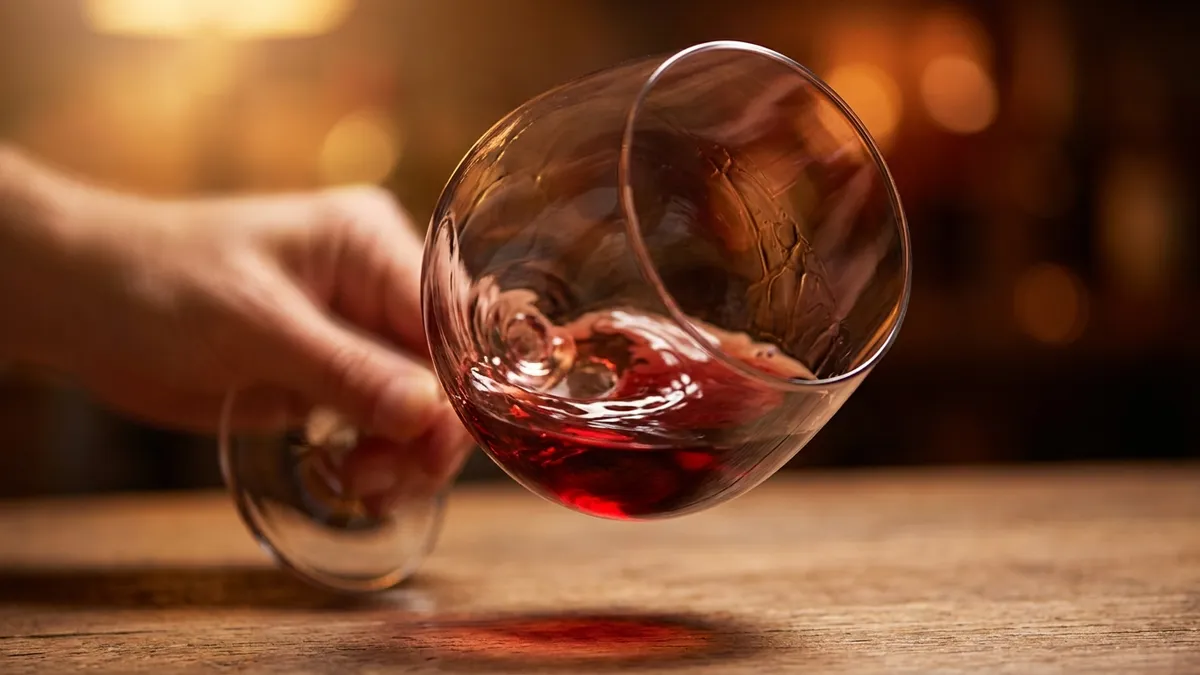
The width of the rim does something subtler than the bowl. It changes the angle at which you tilt the glass to drink, and that angle determines where the wine first touches your tongue.
Tongue Zones — A Useful Simplification
The classic "tongue map" — sweet at the tip, sour on the sides, bitter at the back — has been scientifically debunked as a strict map. All taste receptors detect all five basic tastes, regardless of location. But sensitivity does vary slightly across the tongue, and where the wine first lands genuinely affects which sensations register first and most strongly.
A wide-rimmed glass like a Burgundy bowl tips wine across the front of the mouth in a broad sheet. That tends to emphasise fruit and softness. A narrow-rimmed glass like a Bordeaux directs wine in a more focused stream toward the middle and back of the tongue, which tends to emphasise structure — tannin grip and acidity. For a high-tannin red like a young Cabernet Sauvignon, a Bordeaux shape softens the edges. For a delicate Pinot Noir, a Burgundy shape lets the aromatics shine without overwhelming the wine's lighter structure.
Why Flutes Limit Aroma
A traditional Champagne flute has a very narrow rim — designed to preserve carbon dioxide and showcase the rising bubble column. The trade-off is that the narrow rim also limits how much aroma reaches your nose. Serious sparkling wine drinkers increasingly prefer a tulip-shaped sparkling glass, which preserves the bubbles reasonably well while giving the wine room to express itself aromatically.
If you only drink Champagne at toasts and cared mostly about the visual, a flute is fine. If you want to taste the wine — and serious sparkling wines reward smelling — a tulip outperforms a flute every time. Our guide on Champagne, Prosecco, and Cava covers when each style is worth the upgrade in glassware.

The Stem: Function Over Decoration
A stem is not just elegant. It is functional, and the function matters more for tasting than for looks.
Temperature Control
Holding a glass by the bowl transfers body heat — roughly 37 degrees Celsius — directly to the wine through the glass. White wine served at 8 to 12 degrees climbs out of its ideal serving range within minutes of warm hand contact. The stem keeps your hand off the bowl entirely, so the wine stays at the temperature you served it. For temperature-sensitive styles like crisp Sauvignon Blanc or rosé, this is genuinely useful.
Stemless glasses are not wrong. They are dishwasher-friendly, harder to knock over, and look modern. They also warm wine faster. For casual everyday drinking, the trade is fine. For serious tasting, the stem wins.
Swirling Leverage
Holding the stem near the base gives you a long lever to rotate the bowl. Try swirling a stemless glass and you immediately feel the difference — the motion is awkward, the bowl wants to wobble, and splashing risk goes up. The stem makes swirling effortless, which means you actually do it, which means you actually smell the wine properly. Function and ritual reinforce each other.
Material and Thickness
Most premium glasses are made of crystal — historically lead crystal, now usually lead-free titanium-fortified crystal. Cheaper glasses are soda-lime glass, which is thicker, heavier, and more durable.
Why Thinness Matters
A thin lip on the glass changes how the wine arrives at your mouth. Thicker glass forces a slight tipping motion and creates a small ridge between liquid and lip. Thin crystal disappears against the mouth and lets the wine flow smoothly onto the tongue. Some tasters find the difference dramatic; others barely notice. Blind comparisons consistently show thin lips score higher for perceived elegance, which suggests the difference is real even if subtle.
Lead Crystal vs Lead-Free
Old-school lead crystal contained 24 to 32 percent lead oxide, which gave the glass its weight, brilliance, and cutting quality. Modern food-safe regulations have largely replaced lead with titanium or barium. The result is similar in optics and durability, without the leaching concern from holding wine for long periods. Modern lead-free crystal is the sensible default — beautiful, dishwasher-stable, and genuinely improves the drinking experience versus standard glass.
You do not need crystal to taste wine well. You do need a clear, thin-rimmed, properly shaped bowl. Pay for thinness and shape before you pay for prestige.
What the Marketing Claims Get Wrong
The grape-variety-specific glassware industry — championed most famously by Riedel, with serious counter-arguments from Schott Zwiesel and others — claims that each grape needs its own bowl shape to express its true character. The claims are partly true and partly oversold.
What Holds Up
Bowl size and rim diameter do measurably change perception. A blind comparison between a wide Burgundy bowl and a narrow Bordeaux glass on the same Pinot Noir consistently produces different tasting notes from professional panels. The effect is reproducible.
What Does Not Hold Up
The claim that there is a uniquely correct glass for each grape variety is not supported by independent peer-reviewed research. A 2020 study and several earlier academic comparisons found that most tasters could distinguish "broad" from "narrow" glass categories, but could not reliably identify which specific brand-specific glass was designed for which grape. The category effect is real. The product-level differentiation between, say, a Riedel Cabernet glass and a Riedel Merlot glass is mostly within the noise floor of perception.
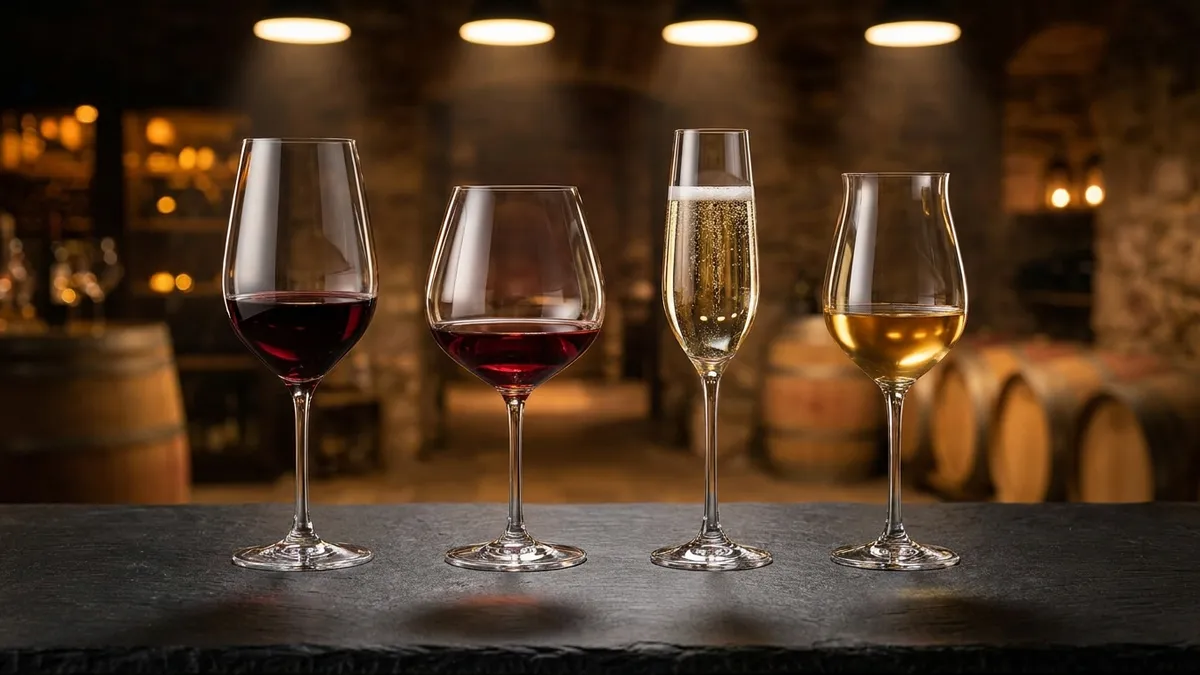
The honest summary: invest in a few well-designed broad categories — universal, Bordeaux, Burgundy, sparkling tulip — and skip the variety-specific upgrades. Your money is better spent on better wine.
A Practical Buying Pyramid
Most homes never need more than three or four glass shapes. Build up in this order.
Tier 1: One Universal Glass
A mid-priced universal tasting glass — sometimes labelled all-purpose, ISO-style, or simply universal — is the foundation. Buy six. Look for a clear, thin-rimmed bowl that holds about 400 to 600 millilitres, tapers at the rim, and sits on a stem at least three inches tall. This single shape covers reds, whites, rosés, and even casual sparkling wine well enough that most drinkers never need anything else. The Sommy app's tasting practice exercises work seamlessly with a single universal glass — the technique matters more than the glassware.
Tier 2: Add a Sparkling Tulip
If you drink Champagne, Prosecco, or Cava more than once a month, the second purchase is a sparkling tulip — wider than a flute, narrower than a white-wine glass, with enough space to smell properly while preserving bubbles. This single addition transforms how serious sparkling wine performs at home.
Tier 3: Split into Red and White
Once your universal set is established, split into a Bordeaux-style glass for structured reds and a smaller white-wine glass for crisp whites and aromatic styles. Six of each is plenty unless you host frequently. Our guide on the wine serving temperature chart pairs naturally with this stage — temperature and glass shape together do most of the heavy lifting in serving wine well.
Tier 4: Specialty Shapes (Optional)
A wide Burgundy bowl for delicate Pinot Noir and aged reds is the only specialty shape worth strong consideration. Beyond that — varietal-specific glasses for Riesling, Sauternes, or fortified wines — it is collectible territory rather than a tasting necessity.
How Glass Shape Fits Into Real Tasting
Even the best glass cannot replace technique. Pour about a third full to leave headspace for aromas. Hold the stem to keep the wine cool. Swirl in small circles with the glass on the table. Bring the bowl to your nose and take short, gentle sniffs rather than one deep inhale. Sip with intention. The glass amplifies what you do — it does not do the work for you.
For beginners, the single biggest upgrade is moving from a tumbler to any properly shaped wine glass. The second biggest is learning the how to taste wine sequence so the glass earns its keep. After that, glass-shape obsession produces diminishing returns for years. The fundamentals translate across glassware, which is the point: technique compounds; glassware does not.
Practical Tips for Glass Care
Once you own quality glasses, treat them like the tools they are.
- Hand-wash without detergent. Soap residue lingers and dulls aromas. Hot water and a soft cloth are usually enough.
- Air dry upside-down on a soft surface, except sparkling flutes, where a quick towel wipe leaves the fibres that start the bubbles.
- Store right-side-up if you can. Storing rim-down can trap stale air and impart faint cabinet odours to the next pour.
- Polish with a microfibre cloth before serving. A dust-free glass shows the wine's colour clearly.
- Replace chipped glasses immediately. A chip changes the rim profile and creates a real safety hazard.
The Honest Bottom Line on Glass Shape
Wine glass shape affects taste enough to matter and not enough to obsess over. The biggest single jump is from a tumbler to any decent wine glass. The second is from one universal shape to two — adding a sparkling tulip if bubbles are part of your life. Everything beyond that is a refinement, sometimes worth the spend, often not.
The science holds: bowl, rim, taper, stem, and thickness each nudge perception in measurable ways. The marketing oversells: no specific brand-specific shape will unlock a wine that good technique cannot already reach. Spend the saved money on better wine, more practice, or a solid course. For more on what to actually look for once the glassware is sorted, our guide on common wine tasting mistakes covers the next-most-common missteps after glass choice. And the homepage at Sommy walks you through structured tasting practice that turns every bottle into a learning opportunity.
Pour a third of the way up. Hold the stem. Swirl, smell, sip. The glass helps. The technique decides.
Frequently Asked Questions
Does wine glass shape really change how wine tastes?
Yes, but the effect is smaller than marketing suggests. Bowl size changes how much aromatic vapor builds in the headspace. Rim diameter changes where the wine first lands on your tongue, which slightly shifts perception of acidity, sweetness, and tannin. Tapered rims concentrate aromas. The change is real and measurable in blind tests, but it is a refinement, not a transformation.
Do I need different wine glasses for red and white wine?
Not strictly. A good universal glass — sometimes called an all-purpose tasting glass — handles both red and white competently. If you drink wine often and want to upgrade, add a Burgundy-style bowl for delicate reds and a smaller white-wine glass for crisp whites. Most homes never need more than two shapes plus a sparkling flute or tulip.
Why does Champagne use a flute instead of a regular wine glass?
A narrow flute preserves the bubbles by limiting surface area and slowing carbon dioxide loss. The trade-off is that flutes also limit aroma release, so professional tasters increasingly prefer a tulip-shaped glass for serious sparkling wine — wider than a flute, narrower than a white-wine glass, with enough space to smell properly while still keeping the wine fizzy.
Does the stem actually matter or is it just for looks?
It matters. The stem keeps your hand off the bowl, which prevents body heat from warming the wine. It also gives you leverage to swirl cleanly. Stemless glasses are not wrong — they are easier to wash and harder to knock over — but they warm wine faster and limit swirling control. For tasting, stemmed wins. For casual drinking, stemless is fine.
Is expensive crystal glassware worth the money?
Crystal is thinner and feels more elegant on the lip than thick glass, which some tasters find genuinely improves the experience. Lead-free crystal also etches less under repeated dishwashing. The aroma effect from crystal versus glass is debatable in blind tests. A mid-priced crystal universal glass is a sensible upgrade. Top-shelf hand-blown stemware is a luxury, not a tasting necessity.
How full should I fill a wine glass?
About one-third of the way up the bowl. The empty space above the wine — the headspace — is where aromatic vapor concentrates after swirling. Filling the glass higher reduces that headspace, gives you no room to swirl, and warms the wine faster. A small pour in a big glass tastes better than a large pour in the same glass.
Can a bad glass actually ruin a good wine?
Yes, especially for delicate or aromatic wines. A water tumbler or a narrow shot-style glass scatters aromatics sideways, makes swirling impossible, and warms the wine through hand contact. Drinking a complex Pinot Noir from a juice glass strips out most of the aromatic information that makes the wine interesting. The wine still tastes okay — just dramatically less of it.
What is the single best wine glass to buy first?
A mid-priced universal tasting glass — sometimes labelled all-purpose, ISO-style, or simply universal. Look for a clear bowl that holds about 400 to 600 millilitres, tapers gently at the rim, and sits on a stem at least three inches tall. Buy six. This single shape covers reds, whites, rosés, and even casual sparkling wine well enough that most drinkers never need anything else.
Sommy Team
LinkedInFounder & Wine Educator
The Sommy Team is building the world's most approachable wine education app, helping beginners develop real tasting skills through structured courses and AI-guided practice.