Wine Tasting Vocabulary: 50 Words You Actually Need

By the Sommy Team — AI-assisted, human-edited.
Updated Apr 28, 2026
Contents (10)
- Why a Wine Tasting Vocabulary Cheat Sheet Beats a Wine Dictionary
- The Wine Tasting Vocabulary in 30 Seconds: Categories and Common Traps
- Sight: Wine Tasting Vocabulary for What You See in the Glass
- Smell and Aroma: Vocabulary for the Nose
- Palate Structure: The Four Building Blocks Every Wine Has
- Flavor Profile: Specific Words for What You Taste
- Finish and Conclusions: Vocabulary for What Lingers
- Winemaking: Vocabulary That Explains Why a Wine Tastes the Way It Does
- Faults: Vocabulary for When a Wine Is Broken
- How to Use This Wine Tasting Vocabulary in Real Life
TL;DR
This wine tasting vocabulary cheat sheet covers 50 essential terms grouped into seven categories — sight, smell, palate structure, flavor, finish, winemaking, and faults. Each entry has a plain-language definition and a usage example, so the words are ready to deploy on your next glass without sounding rehearsed or pretentious in front of anyone.
Why a Wine Tasting Vocabulary Cheat Sheet Beats a Wine Dictionary
The first time someone hands you a wine list with words like minerally, unctuous, or grippy, the gap between what your mouth detects and what your mouth can say feels enormous. Most beginners try to close that gap by reading a wine encyclopedia, get overwhelmed by 800 entries, and quietly give up. The truth is that a working wine tasting vocabulary sits at around 50 words. Master those, and you can describe almost any glass with confidence. Hearing the words in use helps them stick, which is what the best wine podcasts for beginners offer on a commute.
This is a cheat sheet, not a textbook. The 50 terms below are grouped into seven categories so the words are easy to find when you actually need them. Each entry has a one or two sentence plain-language definition and a short usage example you can adapt to your own notes. Read it once, then keep it open the next time you pour something new — that is when the words start to stick.
For technique that pairs with the vocabulary, see the companion guide on how to describe wine. This cheat sheet gives you the words. That guide shows you the order to use them in.
The Wine Tasting Vocabulary in 30 Seconds: Categories and Common Traps
The 50 terms below sit in seven groups: sight, smell and aroma, palate structure, flavor profile, finish and conclusions, winemaking, and faults. Sight and smell describe what you observe before you swallow. Palate structure measures the four building blocks of every wine — sweetness, acidity, tannin, and body. Flavor and finish describe what you actually taste and what stays behind. Winemaking and faults explain why a wine is the way it is, or why it is broken.
A few traps worth flagging up front. Legs do not measure quality. Dry does not mean tannic — it means low sugar. Body is not the same as alcohol. Oaky is not the same as buttery. Mineral is a sensation, not a literal mineral. Get those five right and you already sound less like a tourist than most people at the table.
Sight: Wine Tasting Vocabulary for What You See in the Glass
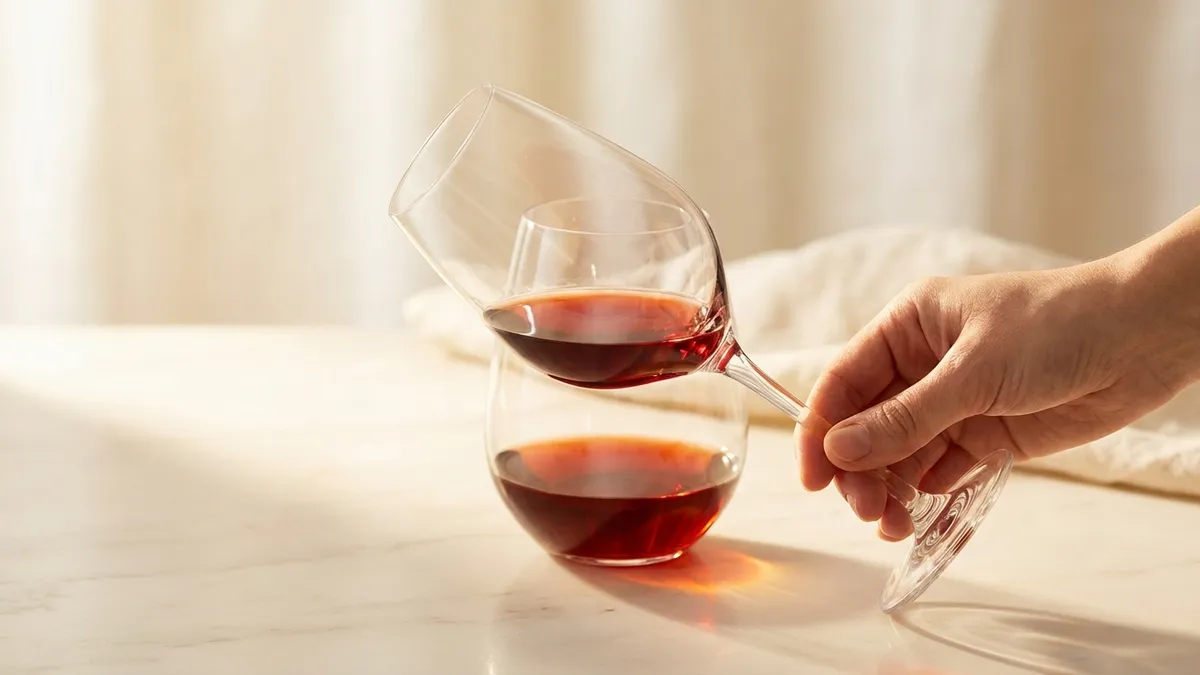
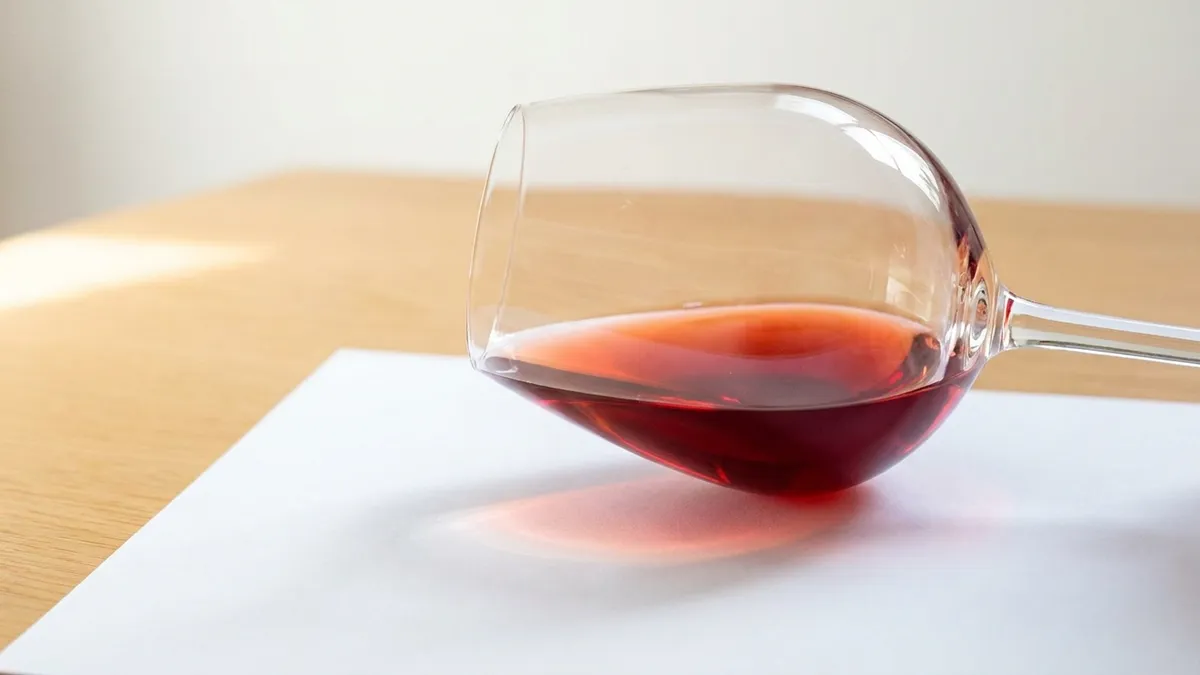
Tilt the glass at 45 degrees over a white surface and start here. Sight terms are the easiest to get right because they are literal.
Hue. The actual color of the wine — lemon, gold, salmon, ruby, garnet, brick, tawny. "This Pinot Noir is a pale ruby with a slight orange tint."
Intensity. How saturated the color is, on a pale to deep scale. "Medium intensity, more like a stained glass than ink."
Rim. The thin band at the edge of the wine where the color fades. Purple rims signal youth in reds; orange rims signal age. "A bright purple rim suggests this Malbec is recently bottled."
Clarity. Whether the wine is brilliant, clear, or hazy. Some natural and unfiltered wines are intentionally cloudy. "The wine is clear with no obvious haze."
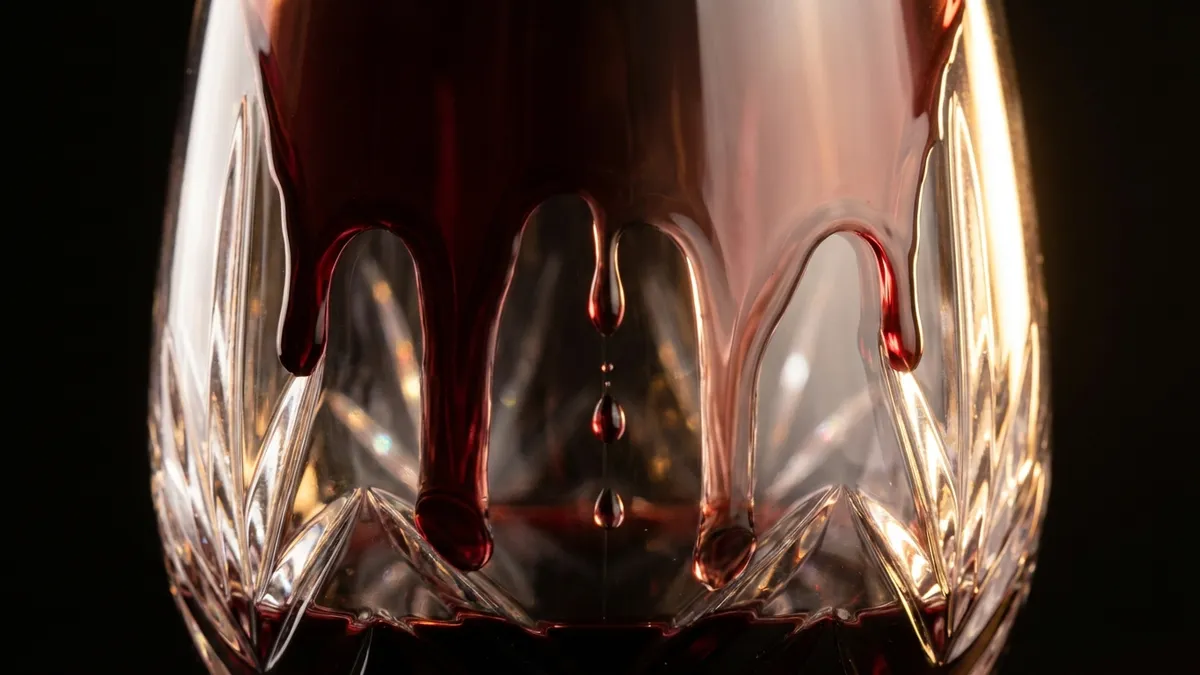
Legs (or tears). Streaks running down the inside of the glass after swirling. They reflect alcohol and viscosity, not quality. "Slow, thick legs hint at higher alcohol."
Meniscus. The curve where the wine meets the glass. The technical term for what most drinkers casually call the rim.
Sediment. Solid particles that settle in older red wines or unfiltered bottles. Harmless, sometimes a sign of age. "A little sediment at the bottom — pour gently."
For the deeper version of these visual cues, the guide to wine color meaning breaks down what each hue is telling you.
Smell and Aroma: Vocabulary for the Nose
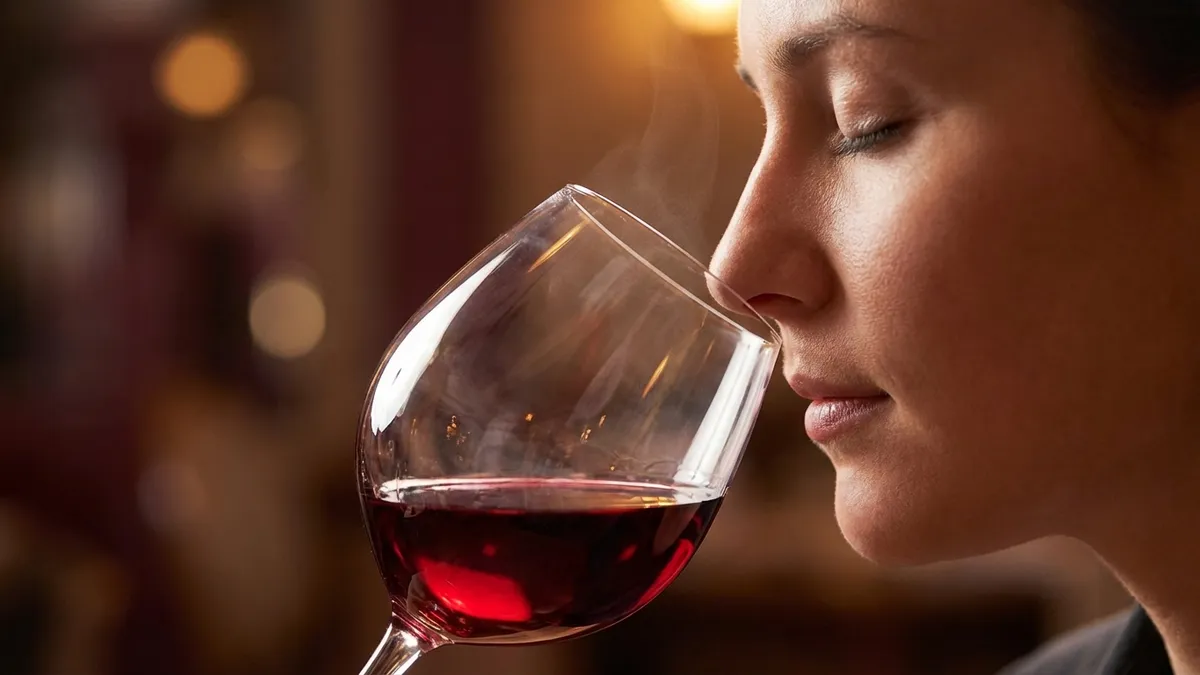
Most of what you call flavor is actually aroma. Spend more time on this section than on any other.
Aroma. A smell that comes from the grape itself or from fermentation. Generally used for younger wines. "Bright aromas of red cherry and rose petal."
Bouquet. The smell that develops with bottle age — leather, tobacco, dried fruit, forest floor. Reserved for older wines. "A complex bouquet of cigar box and dried herbs."
Primary aromas. Smells from the grape — fruit, flowers, herbs. See primary, secondary, and tertiary aromas for the full breakdown.
Secondary aromas. Smells from fermentation — yeast, bread, butter, cream.
Tertiary aromas. Smells from aging — leather, mushroom, dried fig, walnut.
Fruit-forward. A wine where ripe fruit dominates the nose. "This Zinfandel is fruit-forward, almost jammy."
Earthy. Smells of soil, mushroom, forest floor, wet stone. "A classic earthy nose typical of a cool-vintage Burgundy."
Floral. Flower aromas — violet, rose, elderflower, orange blossom. "Lifted floral notes of violet and lavender."
Herbaceous. Green notes — fresh herbs, grass, bell pepper. Sometimes called green. "A herbaceous edge of crushed mint."
Oxidized. Bruised apple, sherry, nutty notes from intentional or accidental air exposure. "Slightly oxidized — that nutty character is on purpose here."
Reductive. The opposite of oxidized — a struck-match or burnt-rubber note from low oxygen. Often blows off after a swirl.
Volatile (or VA). A vinegary, nail-polish edge from too much volatile acidity. Small amounts add lift; too much is a fault.
The full visual vocabulary lives in the wine aroma wheel guide, which sorts hundreds of specific descriptors into broad families you can move through from general to specific.
Palate Structure: The Four Building Blocks Every Wine Has
These are the four words that do the heaviest lifting in any tasting note. Get fluent in them and you can describe any wine on Earth in two sentences.
Sweetness. The level of residual sugar after fermentation, measured on a scale from bone dry to dessert sweet. "Off-dry, with a touch of sugar to balance the acidity."
Dry. Very little residual sugar — under about 4 grams per liter. Not the same as tannic. "A bone dry Albariño with no perceptible sweetness."
Acidity. The tart, mouth-watering sensation along the sides of your tongue. High-acid wines feel zippy and bright. "High acidity gives this Riesling its electric edge."
Tannin. The drying, gripping sensation in red wines, mostly from grape skins and oak. "Firm, chalky tannins that grip the gums."
Body. The perceived weight and texture of the wine in your mouth — light, medium, or full. Not the same as alcohol. "Medium-bodied, somewhere between water and cream."
Alcohol. The percentage of ethanol, sensed as warmth in the mouth and throat. Above about 14 percent it can feel hot. "Noticeable warmth on the back palate at 14.5 percent."
Mouthfeel. The overall texture — silky, velvety, grainy, oily, austere. "A silky mouthfeel that coats without weighing down."
Balance. The harmony among sweetness, acidity, tannin, alcohol, and body. The single most important quality marker. "All four pillars in balance — nothing sticks out."
Structure. The overall framework of acidity and tannin that holds the wine up. "A structured red with the acid and tannin to age."
Complexity. How many distinct things are happening in the glass. Simple wines have one or two notes. Complex wines reveal new ones with each sip. "A complex bouquet that keeps unfolding."
The full structural picture is in the guide on understanding tannins, acidity, and body — the three pillars beginners confuse most.
Flavor Profile: Specific Words for What You Taste
These are descriptors for what is actually in your mouth. Pair them with the structural words above and your tasting notes start to sound real.
Crisp. Bright, clean, refreshing — usually a high-acid white. "A crisp Sauvignon Blanc with grapefruit zing." To tell crisp from tart in your own glass, see what crisp means in wine.
Round. Soft, smooth, with no sharp edges. Often a sign of malolactic fermentation in whites. "Round and creamy on the palate."
Jammy. Cooked, ripe fruit character — strawberry jam, blackberry preserves. "Jammy black fruit suggests a warm vintage."
Oaky. Vanilla, toast, coconut, smoke, or cedar from oak aging. "A noticeable oaky frame of vanilla and toast."
Buttery. Creamy, rich, popcorn-like notes that come from malolactic fermentation, not oak. "Buttery on the palate, classic California Chardonnay."
Toasty. Bread-crust, biscuit notes from oak or yeast. "Toasty oak rounds out the finish."
Spicy. Black pepper, clove, cinnamon, anise. Some grapes are naturally spicy. "Black pepper spice on the back end, classic Syrah."
Smoky. Charred, bonfire, ember-like notes — often from oak or volcanic soil. "A faint smoky note hovers over the fruit."
Mineral. Stony, saline, chalky, flinty sensations. A debated term but useful when used carefully. "Distinct flinty minerality on the nose."
Savory. Salty, brothy, umami notes — soy, mushroom, cured meat. "A savory undertone of olive and tapenade."
Finish and Conclusions: Vocabulary for What Lingers
The finish is where beginners stop too early. These words help you describe the last act of a tasting.
Finish. What you taste after you swallow, including how long it lasts. "A long finish that holds for nearly twenty seconds."
Length. How many seconds the finish lingers. Short, medium, long. "Medium length, fading after about ten seconds."
Linger. The continued presence of flavors after swallowing. "Notes of dark cherry linger on the palate."
Hot. A sensation of alcohol burn on the finish, usually from over-fourteen-percent wines. "Slightly hot on the back end."
Austere. Lean, restrained, holding back its fruit. Not a flaw — a style. "Austere and tightly wound, needs another five years."
Elegant. Lightly built but precise, with no rough edges. "An elegant Pinot Noir with no excess."
For more on this final stage, see wine finish meaning and the guide to wine balance — both deal with how a wine resolves after the swallow.
Winemaking: Vocabulary That Explains Why a Wine Tastes the Way It Does
These terms come up constantly on labels and in conversation. A few well-placed winemaking words make any tasting note feel grounded.
Vintage. The year the grapes were picked. Vintage variation can be huge. "The 2019 vintage was warm and ripe."
Old vines (vieilles vignes). Vines typically over thirty years old, valued for concentrated, low-yield fruit.
Malolactic fermentation. A secondary fermentation that converts sharp malic acid into softer lactic acid, adding creaminess. Common in reds and many oaked whites.
Lees. Spent yeast cells left after fermentation. Aging on the lees adds texture and bready notes.
Sulfites. Sulfur dioxide added or naturally produced as a preservative. Almost all wines contain some.
Filtered or unfiltered. Whether the wine has been polished clear or left slightly hazy and textured.
Single varietal. A wine made from one grape variety. The opposite of a blend.
Blend. A wine combining two or more grape varieties for balance. Bordeaux and Châteauneuf-du-Pape are classic examples.
Skin contact. Time the juice spends with the grape skins, which extracts color, tannin, and flavor. Long skin contact on white grapes makes orange wine.
The Sommy app walks through each of these production choices in the foundations course, so the next time a label mentions malolactic or unfiltered, the words are already loaded.
Faults: Vocabulary for When a Wine Is Broken
Recognizing faults is a confidence builder — it tells you a wine is wrong, not that you are wrong.
Corked (TCA). A musty, wet-cardboard, damp-basement smell from a contaminated cork. Affects roughly 1 to 3 percent of cork-sealed bottles. "Definitely corked — that wet-newspaper note is unmistakable."
Oxidized (as a fault). Premature aging from too much oxygen — flat, brown, sherry-like. Different from intentional oxidative styles like sherry itself.
Reduced. Struck-match, rotten-egg, or burnt-rubber notes from low oxygen during winemaking. Often resolves with vigorous swirling or decanting.
Brettanomyces (brett). A wild yeast that produces barnyard, band-aid, or sweaty-leather smells. A trace can add complexity; a lot is a flaw.
Vinegar (high VA). A sharp, acetic, nail-polish character from acetic-acid bacteria. A small amount lifts; a large amount ruins.
A separate guide goes deep on the most common one — see how to tell if wine is corked for the symptoms in detail.
How to Use This Wine Tasting Vocabulary in Real Life
A cheat sheet is only useful if you actually deploy it. The pattern that works:
- Pick five terms from a single category before you open a bottle.
- Pour, smell, and taste — and try to apply each of the five out loud.
- Note which ones felt accurate and which felt forced.
- Next bottle, swap in five new terms.
After about ten bottles, the words stop feeling like vocabulary and start feeling like observations. That is the goal — vocabulary that does not announce itself.
For active practice, the Sommy app at sommy.wine runs through structured tasting sessions that prompt you with the exact same vocabulary, score your guesses, and build the muscle of reaching for the right word. Pair the cheat sheet with a few real glasses and the 50 terms become second nature within a month.
If you want a deeper structural understanding of any term, the related deep dives across the blog cover tannins, acidity, body, legs, minerality, oak, and dry wines — each one expanding a single line on this cheat sheet into a full guide. Bookmark the page, keep it close on your next pour, and stop trying to memorize a wine encyclopedia.
Frequently Asked Questions
How many wine tasting terms do you actually need to know?
About 50 covers everything a confident drinker uses in real conversation. Roughly 15 describe sight and smell, 10 cover palate structure like tannin and acidity, 10 name flavors and finish, and the rest deal with winemaking and faults. Beyond that, the marginal gain is small — most sommeliers rotate the same core vocabulary.
What is the most commonly misused wine word?
Dry. Many drinkers use dry to mean tannic, astringent, or oaky, but in wine vocabulary dry simply means low residual sugar. A wine can be bone dry and feel soft, or sweet and feel grippy. Confusing dry with tannin or alcohol is the single biggest tasting-note tell that someone is still learning the language.
Is wine vocabulary really useful or just snobbery?
It is genuinely useful. Specific words help you remember wines, compare them, and choose better next time. Saying a wine is high acid and medium body tells you more about whether you will like it than five paragraphs of flowery prose. The vocabulary exists because the sensations are real and worth distinguishing.
Do I need to learn faults too?
Yes — at least the common ones. Cork taint, oxidation, and reduction account for most off bottles you will encounter, and recognizing them protects you from blaming yourself for not liking a wine that is genuinely flawed. Five fault terms in your vocabulary save dozens of confused tasting experiences.
How do I memorize wine vocabulary fast?
Use the words as you taste, not before. Pick five terms from the cheat sheet, taste a bottle, and force yourself to apply each one out loud. Repeat with new terms over a few weeks. Active retrieval against real wine sticks ten times faster than rereading flashcards or watching videos.
What is the difference between body and alcohol?
Body is the perceived weight and texture of wine on your palate — light, medium, or full. Alcohol contributes to body but is not the same thing. A high-alcohol wine often feels fuller, but extract, sugar, and glycerol matter too. Some 13.5 percent reds feel lighter than some 12.5 percent reds. They are related, not identical.
Are wine legs a sign of quality?
No. Wine legs — the streaks that run down the inside of the glass after swirling — only indicate alcohol level and viscosity. They do not measure quality, age, or concentration. A famous Master of Wine experiment confirmed this. Legs are a fun thing to notice, but a flawed wine can have spectacular legs.
What does minerality mean in wine?
Minerality is the sensation of cool, stony, saline, or chalky character on the nose or palate. The word is widely used and widely contested, because wines do not literally contain minerals you can taste. The sensation is real, but the cause is more about acidity, sulfur compounds, and reductive winemaking than the soil itself.
Sommy Team
LinkedInFounder & Wine Educator
The Sommy Team is building the world's most approachable wine education app, helping beginners develop real tasting skills through structured courses and AI-guided practice.