What Does Dry Wine Mean? Sugar Levels and Off-Dry Explained

By the Sommy Team — AI-assisted, human-edited.
Updated Oct 1, 2026
Contents (8)
- How Does a Wine End Up Dry?
- What Does Dry Wine Mean on a Label?
- What Does Dry Wine Taste Like?
- Why Does Dry Wine Make My Mouth Feel Dry?
- What Does Off-Dry Mean?
- Why Can a Wine Taste Drier or Sweeter Than Its Sugar?
- How Can You Tell if a Wine Is Dry Before You Buy?
- How Do You Train Your Palate to Spot Dryness?
TL;DR
Dry wine means wine with little or no sugar left after fermentation, so it does not taste sweet. EU law allows up to 4 grams per litre, or 9 when acidity is high. Off-dry wines keep a little more. The drying feel on your gums is tannin, and on sparkling labels Dry actually means slightly sweet.
Dry wine means wine with little or no sugar left after fermentation, so it does not taste sweet. Under EU wine law, a still wine may be labelled dry with up to 4 grams of sugar per litre, or up to 9 grams when its acidity is high enough to hide them.
The word has nothing to do with the rough, drying feel some reds leave on your gums. That grip is tannin, a separate part of the wine. Most red and white table wines are dry. Off-dry wines keep a little sugar you can just taste, and sweet wines keep a lot.
How Does a Wine End Up Dry?
Yeast eats the sugar in grape juice and turns it into alcohol and carbon dioxide. If fermentation runs until the sugar is gone, the wine is dry. The sugar that survives is called residual sugar (RS), measured in grams per litre (g/L).
A winemaker who wants sweetness stops fermentation early. Chilling the wine, filtering out the yeast or adding grape spirit all leave sugar behind. A little left gives an off-dry wine; a lot gives a sweet one.
What Does Dry Wine Mean on a Label?
On a still wine, Dry, Sec (French), Secco (Italian), Seco (Spanish) and Trocken (German) all mean up to 4 g/L of sugar, or up to 9 g/L when acidity is high. On sparkling wine, Dry means 17 to 32 g/L, which tastes noticeably sweet. The bands below are the legal ones in EU Regulation 2019/33.
| Label word | Wine | Sugar (g/L) | What you taste | Choose it for |
|---|---|---|---|---|
| Dry, Sec, Secco, Seco, Trocken | Still | Up to 4, or up to 9 with high acidity | No sweetness | Any savoury dinner |
| Medium dry, Halbtrocken | Still | Up to 12, or up to 18 with high acidity | A faint, rounded sweetness | Chilli heat, sweet-and-sour dishes |
| Medium | Still | Up to 45 | Clear sweetness | Fruit desserts, salty cheese |
| Sweet | Still | 45 and up | Obvious sugar | Dessert, or as dessert |
| Brut Nature | Sparkling | Under 3 | No sweetness, very tart | Oysters, salty snacks |
| Extra Brut | Sparkling | 0 to 6 | No sweetness | Raw fish, fried food |
| Brut | Sparkling | Under 12 | Dry to most tasters | Aperitif, fried food |
| Extra Dry | Sparkling | 12 to 17 | A touch of sweetness | Brunch, mildly spicy food |
| Dry, Sec | Sparkling | 17 to 32 | Noticeably sweet | Fruit, light desserts |
| Demi-Sec | Sparkling | 32 to 50 | Sweet | Cake, fruit tarts |
| Doux | Sparkling | Over 50 | Very sweet | Dessert |
If a still wine says dry in any language, expect no sweetness. If a sparkling wine says Extra Dry or Dry, expect some, because the sparkling scale starts at Brut and climbs from there. The dosage scale and why it reads backwards are set out in Champagne vs Prosecco vs Cava.
Bone dry has no legal number. Shops and menus use it for the leanest, most tart dry wines.
What Does Dry Wine Taste Like?
Dry wine tastes of fruit, acidity and, in reds, tannin, with no sugary coating left on the tongue. The finish is clean or slightly savoury, and the next bite of food tastes fresh. The fruit flavours stay, because they come from aroma compounds, not from sugar.
A dry Sauvignon Blanc from a cool region is tart and light. It smells of lime and cut grass, because slow ripening keeps the grapes sharp and green-edged. A dry Cabernet Sauvignon is fuller, with blackcurrant and firm tannin that grips the gums.
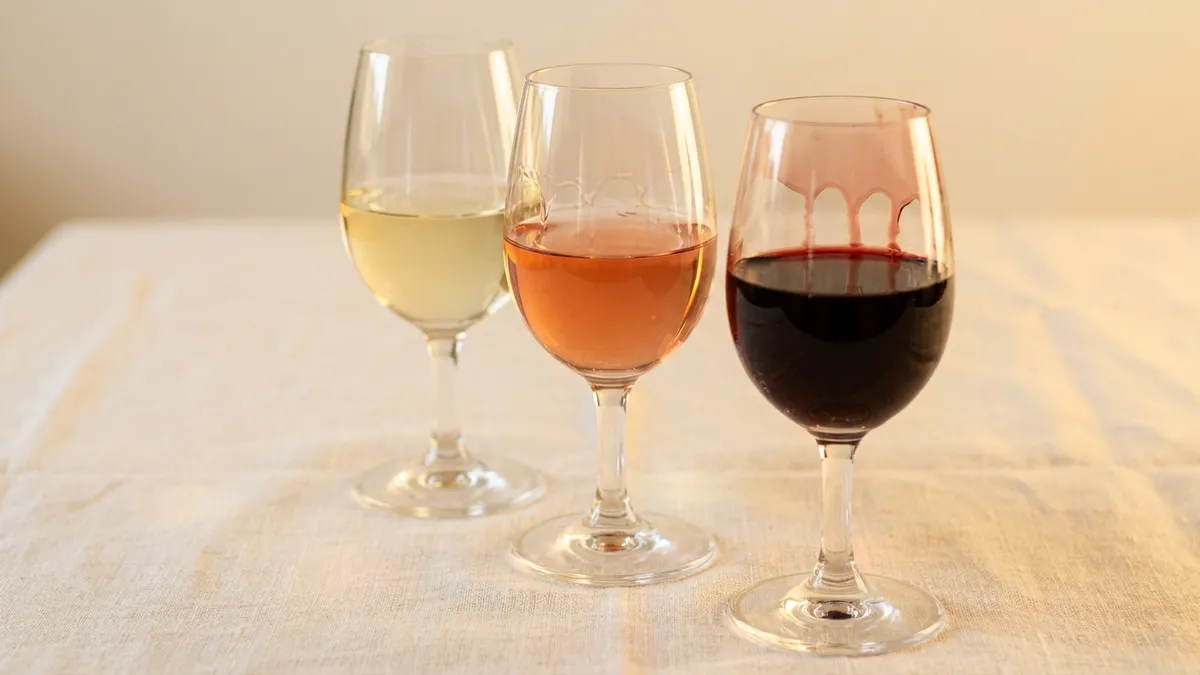
Dry rosé, the usual style in Provence, tastes of fresh strawberry with mouth-watering acidity. Colour is only a hint. Pale rosé is usually dry, while pink wines labelled White Zinfandel or blush are usually off-dry or sweet.
Why Does Dry Wine Make My Mouth Feel Dry?
That rough, gripping feel is tannin (the drying grip on your gums). Tannins come from grape skins, seeds, stems and oak barrels and bind to proteins in saliva. Wine Spectator notes that tannins "can elicit a drying sensation in your cheeks and palate." They change the feel of a wine and leave its sugar untouched.
Sugar and tannin are independent. Port is tannic and sweet. Muscadet has almost no tannin and is dry. Three more sensations often get called dry:
- Astringency: the mouth tightens, as with over-steeped black tea, from tannin and sometimes from very high acidity.
- Oak: barrels add toast, vanilla and a little tannin, so an oaked Chardonnay can feel drier than an unoaked one with the same sugar.
- Alcohol: a 15% red brings heat at the back of the throat, which some drinkers read as dryness.
How tannin grips the palate, and how it differs from acidity and body, is laid out in tannins, acidity and body in wine.
What Does Off-Dry Mean?
Off-dry means a wine with a little sugar left, enough to taste as a soft roundness but not enough to call sweet. It is not a legal term. The closest legal band is the EU's medium dry: up to 12 g/L, or 18 g/L when acidity is high. Wine Spectator sums it up: "there's a bit of leftover sugar."
Off-dry works best in high-acid grapes, where the tartness keeps the sugar from feeling heavy. Riesling labelled Kabinett or Halbtrocken is the classic example. Chenin Blanc from Vouvray labelled Demi-Sec and Gewürztraminer from Alsace are often off-dry too. On sparkling wine, Extra Dry is the off-dry label.
If the food is spicy, choose off-dry. A little sugar softens chilli heat, while a dry wine at 14% or more makes the burn stronger. More matches for heat are in wine with spicy food.
Why Can a Wine Taste Drier or Sweeter Than Its Sugar?
The tongue does not read grams directly. Acidity, tannin, ripe fruit and alcohol all shift how sweet a wine seems, so two wines with the same sugar can taste different. EU law builds this in: a wine with 9 g/L may be labelled dry only when its acidity is at least 7 g/L.
Acidity (the tartness that makes your mouth water) hides sugar. A high-acid Riesling near 9 g/L can taste as dry as a soft, low-acid white with far less sugar.
Tannin works the same way on reds. Wine Folly puts it plainly: "Red wines have tannin, making them taste less sweet than they actually are."
Ripe fruit and alcohol push the other way. Warm-climate Zinfandel tastes of blackberry ripe to the point of jam, because long sunny days push sugar up in the grapes. The brain reads that ripeness, and the warmth of 15% alcohol, as sweetness even in a dry wine. Fruity is a flavour; sweet is sugar. A tasting method for finding real sugar under acid and fruit is in how to detect residual sugar.
How Can You Tell if a Wine Is Dry Before You Buy?
Read the label word first, then the grape. If the label carries a sweetness word, the table above decodes it in seconds. If it carries none, the grape is the next best clue: most wines from the first group below are dry, and the second group needs a look at the back label.
- Almost always dry: Cabernet Sauvignon, Merlot, Nebbiolo, Sangiovese, Tempranillo, Sauvignon Blanc, Pinot Grigio, Albariño
- Check the label: Riesling, Chenin Blanc, Gewürztraminer, Zinfandel, Lambrusco
- Almost always sweet: Moscato d'Asti, Icewine, Sauternes, Port, Tokaji Aszú
If the front label is silent, turn the bottle. Back labels and producers' technical sheets often list residual sugar in g/L. The full ladder from bone dry to dessert sweet, with more label words, is on the wine sweetness scale.
How Do You Train Your Palate to Spot Dryness?
Taste three Rieslings side by side: one labelled Trocken, a Kabinett without Trocken on the label, and a late-harvest dessert Riesling. Focus on the tip of the tongue, where many tasters notice sweetness first, then on the finish. The dry wine ends clean, the off-dry one leaves a soft roundness, and the sweet one coats the tongue.
Separating sugar from tannin, acid and alcohol is the core skill in learning how to taste wine step by step. More label and tasting words live in the wine glossary.
Sommy at sommy.wine pairs bite-sized courses, including Wine 101, with that guided tasting mode. Tonight, check the back label of the bottle you open for a sugar figure, then taste for it on the tip of your tongue.
Sources
- Commission Delegated Regulation (EU) 2019/33, Annex III: sugar content terms for still and sparkling wine
- Wikipedia: Champagne (wine), sweetness and dosage categories
- Wikipedia: Trocken
- Wine Spectator: What is dry wine? Aren't all wines wet?
- Wine Spectator: What is an off-dry wine?
- Wine Folly: Wine sweetness chart
Frequently Asked Questions
What does dry wine mean?
Dry wine means a wine with very little sugar left after fermentation, because yeast has turned almost all the grape sugar into alcohol. Under EU rules a still wine labelled dry holds at most 4 grams of sugar per litre, or 9 grams when its acidity is high. Dry describes sugar only, not texture, tannin or alcohol.
What does off-dry mean in wine?
Off-dry means a wine with a little leftover sugar, enough to taste as a soft roundness but not enough to seem sweet. It is not a legal term. The nearest legal band is EU medium dry, up to 12 grams per litre, or 18 with high acidity. Off-dry Riesling and Chenin Blanc are classic choices with spicy food.
Why does dry wine make my mouth feel dry?
That drying, gripping feel comes from tannin, not from a lack of sugar. Tannins from grape skins, seeds and oak bind to proteins in saliva, so the mouth feels rough after a sip of a young red. Many dry reds are also tannic, which is why the two get confused, but a sweet Port can be very tannic too.
Are all red wines dry?
Most red table wines are dry, but not all. Lambrusco comes in dry and sweeter versions, some inexpensive reds keep a little sugar for a softer taste, and Port and other fortified reds are sweet by design. If the label gives no sweetness word, the back label or the producer's technical sheet often lists the residual sugar in grams per litre.
What does Trocken mean on a German wine label?
Trocken is German for dry. On a still wine it follows the EU dry rule: up to 4 grams of sugar per litre, or up to 9 grams if the sugar exceeds the acidity by no more than 2 grams. Halbtrocken, meaning half-dry, is the next step up and tastes off-dry.
Is Brut Champagne dry?
Yes. Brut is the most common dry style of sparkling wine, with under 12 grams of sugar per litre. Extra Brut and Brut Nature are drier still. The sparkling scale then runs the opposite way to intuition: Extra Dry holds 12 to 17 grams per litre and Dry or Sec 17 to 32, so both taste noticeably sweeter than Brut.
How can beginners learn to taste dryness?
Taste a dry and an off-dry wine of the same grape side by side, such as a Riesling labelled Trocken next to a Kabinett without Trocken on the label. Focus on the tip of the tongue, where many tasters notice sweetness first, then on the finish. A dry wine ends clean and savoury, while an off-dry wine leaves a soft, fruity roundness.
Sommy Team
LinkedInFounder & Wine Educator
The Sommy Team is building the world's most approachable wine education app, helping beginners develop real tasting skills through structured courses and AI-guided practice.