What Is Body in Wine? Light, Medium, and Full Body Explained

By the Sommy Team — AI-assisted, human-edited.
Updated Apr 16, 2026
Contents (7)
TL;DR
Body in wine refers to the weight and texture of the wine in your mouth — how heavy or light it feels. It is determined primarily by alcohol, tannin, residual sugar, and extract. Light-bodied wines feel like skim milk; full-bodied wines feel like whole cream. Understanding body helps you choose wines you enjoy and pair them with food.
What Wine Body Means
When someone describes a wine as "full-bodied" or "light-bodied," they are talking about how the wine feels in your mouth — its weight, its texture, its physical presence. Wine body meaning comes down to a simple sensory question: does the wine feel heavy or light on your palate?
The easiest way to understand body is through a familiar comparison. Think about the difference between drinking skim milk and drinking whole cream. Both are liquids. Both are white. But they feel completely different in your mouth — skim milk is thin and watery, while cream is thick, rich, and coating. Wine exists on the same spectrum, from watery and delicate to heavy and mouth-filling.
Body is not a flavor. You cannot taste "body" the way you taste cherry or vanilla. It is a textural quality — something you feel rather than taste. And once you learn to identify it, body becomes one of the most useful tools for choosing wines you enjoy and matching them with food.
What Creates Body in Wine
Four main factors determine how heavy or light a wine feels.
Alcohol
Alcohol is the single largest contributor to body. Alcohol is denser than water and has a slightly viscous, oily quality that adds weight and a warming sensation to wine. Higher alcohol equals more body — it is nearly a direct relationship.
- Under 11% alcohol — tends to feel light-bodied (Moscato d'Asti, German Riesling Kabinett, Vinho Verde)
- 11-13% alcohol — typically medium-bodied (many Burgundy, Chianti, Sauvignon Blanc)
- 13-14.5% alcohol — medium to full body (many Cabernet Sauvignon, Syrah, oaked Chardonnay)
- 14.5%+ alcohol — full-bodied (Zinfandel, Amarone, Barossa Shiraz)
This is why warm-climate wines tend to be fuller than cool-climate wines — warmer conditions ripen grapes to higher sugar levels, which ferment into more alcohol. For more on how alcohol levels vary by wine type, see our guide on alcohol in wine by type.
Tannin
Tannins — the drying, gripping compounds from grape skins — add structural weight and texture that increases the perception of body. A tannic wine feels firmer and more substantial than a wine without tannin, even at similar alcohol levels.
This is one reason red wines generally feel fuller than whites — the tannin extracted during red wine fermentation adds a layer of substance that white wines (which ferment without skins) lack.
Our article on what tannins are covers this compound in detail, including how to identify and assess tannin levels.
Residual Sugar
Residual sugar — unfermented grape sugar remaining in the wine — adds viscosity and weight. Sweet wines feel heavier and richer than dry wines, partly because of the sugar's physical thickness and partly because sugar adds a coating, syrupy quality to the mouthfeel.
A bone-dry Chablis at 12.5% alcohol feels lighter than an off-dry Riesling at the same alcohol level because the Riesling's residual sugar adds body.
Extract
Extract refers to the non-volatile dissolved solids in wine — the combination of sugars, acids, phenolics, minerals, and other compounds that remain when you evaporate the water and alcohol. Higher extract means more "stuff" in the wine, which translates to more body.
Wines from low-yielding vines (fewer grapes per vine) tend to have higher extract because the available nutrients are concentrated into fewer berries. This is one reason why low-yield, old-vine wines often feel richer and more substantial.
The Body Spectrum: Light to Full
Light-Bodied Wines
Light-bodied wines feel refreshing, crisp, and delicate — they glide across your palate rather than coating it. They typically have lower alcohol, minimal tannin, and bright acidity that adds to the sense of lightness.
Common light-bodied whites:
- Pinot Grigio / Pinot Gris (Italian style)
- Muscadet
- Vinho Verde
- German Riesling (Kabinett)
- Albarino
Common light-bodied reds:
- Gamay (Beaujolais)
- Pinot Noir (Burgundy style)
- Zweigelt
- Frappato
Light-bodied wines are the most versatile food partners because their low weight does not compete with or overpower delicate dishes. They are also the most refreshing in warm weather and the easiest to drink in quantity (lower alcohol means less fatigue).
Medium-Bodied Wines
Medium-bodied wines sit in the comfortable middle — enough weight to feel substantial but not so much that they feel heavy. Most everyday table wines fall into this category, which is why it is the largest and most diverse body class.
Common medium-bodied whites:
- Chardonnay (unoaked or lightly oaked)
- Chenin Blanc
- Viognier
- Gruner Veltliner
- Pinot Gris (Alsatian style)
Common medium-bodied reds:
- Merlot
- Sangiovese (Chianti)
- Tempranillo (Rioja)
- Grenache
- Pinot Noir (New World style)
Medium-bodied wines are the safest choice when you do not know what everyone at the table is eating — they pair reasonably well with most foods and satisfy both lighter and fuller palate preferences.
Full-Bodied Wines
Full-bodied wines feel heavy, rich, and mouth-coating — they have substance and power. They often carry high tannin, high alcohol, or both, and their concentrated flavors demand attention.
Common full-bodied whites:
- Oaked Chardonnay (Napa, white Burgundy Premier/Grand Cru)
- Viognier (warm climate)
- Marsanne / Roussanne blends
Common full-bodied reds:
- Cabernet Sauvignon
- Syrah / Shiraz
- Malbec
- Nebbiolo (Barolo, Barbaresco)
- Petite Sirah
- Zinfandel
Full-bodied wines pair best with rich, heavily flavored foods — grilled steak, braised meats, aged cheeses, and dishes with bold sauces. They overpower delicate preparations, which is why a Cabernet Sauvignon with a light salad is a mismatch.
How to Assess Body When Tasting
The Milk Test
The simplest way to calibrate your body perception is to think about milk:
- Light body = skim milk
- Medium body = whole milk
- Full body = heavy cream
Take a sip of wine, hold it in your mouth for a moment, and ask: does this feel more like skim milk, whole milk, or cream? That intuitive comparison gives you a body assessment that is accurate enough for practical purposes.
The Swirl Test
Swirl the wine in your glass and watch the legs (also called tears) — the streaks of wine that run down the inside of the glass after you stop swirling. Thicker, slower-moving legs indicate higher alcohol and viscosity, which generally correlate with fuller body. Thin, fast-moving legs suggest lighter body.
Legs are an imperfect indicator (sugar and glycerol also affect them), but they provide a useful visual preview before you taste.
The Coating Test
After swallowing a sip, notice how much flavor and sensation remain on your palate. Full-bodied wines leave a lingering coating — you can feel them on your gums and cheeks for several seconds. Light-bodied wines disappear quickly, leaving your mouth feeling clean and fresh.
The Sommy app includes exercises that train you to assess body alongside other structural elements — tannin, acidity, and body form the structural triangle that defines every wine's character. Learning to evaluate all three gives you a complete picture of a wine's architecture.
Why Body Matters
Food Pairing
Body is the first consideration in wine and food pairing. The principle is straightforward: match the body of the wine to the weight of the food.
- Light food + light wine — grilled fish with Muscadet
- Medium food + medium wine — roast chicken with Sangiovese
- Rich food + full wine — braised short ribs with Cabernet Sauvignon
When the weights are mismatched, one overwhelms the other. A light Pinot Grigio next to a beef stew disappears — you taste only the food. A massive Barossa Shiraz alongside a green salad overpowers every flavor on the plate.
Our wine pairing rules and comprehensive food pairing guide cover weight-matching in practical detail with specific examples.
Personal Preference
Understanding body helps you communicate what you like. If every wine you enjoy turns out to be light-bodied, that is useful information — you can ask for "something light and crisp" rather than accepting a random recommendation that might be a full-bodied Shiraz.
Similarly, if you consistently gravitate toward big, powerful reds, knowing that you prefer full body helps you explore new regions and grape varieties within your preferred weight class.
Seasonal Drinking
Body naturally tracks with seasons and occasions. Light-bodied wines feel right in summer — refreshing, thirst-quenching, served cold. Full-bodied wines feel right in winter — warming, substantial, satisfying alongside hearty food. This is not a rule, but it is an instinct that most wine drinkers share.
Common Misconceptions
"Red Wine Is Full-Bodied, White Wine Is Light-Bodied"
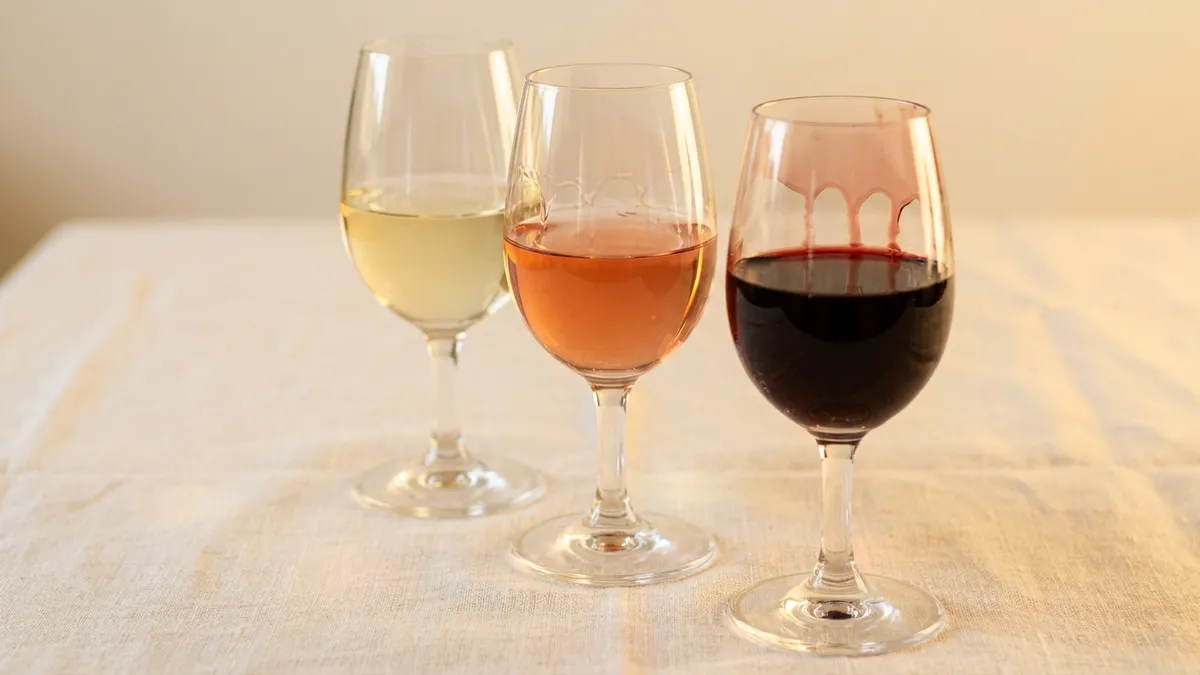
This is roughly true as a generalization but breaks down quickly in practice. Plenty of red wines (Gamay, Pinot Noir, Frappato) are lighter than many white wines (oaked Chardonnay, Viognier, white Rhone blends). Body is determined by what is in the wine — alcohol, tannin, sugar, extract — not by its color.
Our guide to red vs white wine covers the structural differences between the two colors in detail.
"Full-Bodied Means Better Quality"
Body has nothing to do with quality. A perfectly made, gossamer-light Mosel Riesling is no less accomplished than a powerful Napa Cabernet — it is simply a different style. Some of the world's most celebrated and expensive wines (Burgundy Grand Cru, aged Champagne, top Chablis) are medium-bodied at most.
The conflation of body with quality is partly cultural — many wine drinkers equate power with quality, and some critics have historically rewarded bigger wines with higher scores. But the wine world's best tasters and producers recognize that elegance, balance, and restraint are just as difficult to achieve as concentration and power.
"Higher Price Means Fuller Body"
Price and body are unrelated. A ten-dollar Malbec from Argentina is typically fuller-bodied than a fifty-dollar Burgundy. An eight-dollar Vinho Verde is lighter than both. Price reflects factors like production cost, scarcity, brand reputation, and aging potential — not how heavy the wine feels.
Building Your Body Awareness
The fastest way to understand body is to taste wines at opposite ends of the spectrum side by side. Open a light-bodied wine (Muscadet, Vinho Verde, or Beaujolais) and a full-bodied wine (Cabernet Sauvignon, Shiraz, or oaked Chardonnay) at the same time. Taste them alternately and focus on the physical sensation — the weight, the texture, the coating quality.
The difference is immediately obvious, and once you have felt it, you cannot unfeel it. Body awareness becomes automatic, and you start classifying every wine you drink without consciously trying.
Sommelier tip: When tasting for body, close your eyes and focus on the physical weight of the wine on your palate. Ignore the flavors for a moment and ask: is this heavy or light? That single question gives you more useful information than any amount of flavor analysis.
The Sommy app structures this learning through progressive tasting exercises that build body assessment alongside acidity, tannin, and sweetness evaluation. Understanding body is one of the foundational skills in how to taste wine systematically — and it is also one of the easiest to develop, because the physical sensation is intuitive once you know what to look for.
Frequently Asked Questions
What does full-bodied wine mean?
Full-bodied wine feels heavy, rich, and coating in your mouth — similar to the weight of whole milk or cream. It has higher alcohol (typically above 13.5%), often significant tannin, and concentrated flavors. Cabernet Sauvignon, Syrah, Malbec, and oaked Chardonnay are common full-bodied wines.
What does light-bodied wine mean?
Light-bodied wine feels thin, crisp, and refreshing — similar to the weight of water or skim milk. It has lower alcohol (typically under 12%), minimal tannin, and delicate flavors. Pinot Grigio, Muscadet, Riesling Kabinett, and Gamay are common light-bodied wines.
Is Pinot Noir light or full bodied?
Pinot Noir is typically light to medium bodied, though this varies by region. Burgundy Pinot Noir tends toward light-medium body with delicate structure. Oregon and New Zealand versions are medium bodied. Some California and Australian Pinot Noirs can approach medium-full body due to warmer climates and winemaking choices.
Does body mean the wine is better?
No. Body is a stylistic characteristic, not a quality indicator. A light-bodied Chablis and a full-bodied Napa Cabernet can both be excellent wines — they just serve different purposes. Lighter wines tend to be more refreshing and food-friendly; fuller wines tend to be more powerful and satisfying on their own.
How can you tell the body of a wine before tasting it?
Alcohol percentage is the most reliable label indicator — under 12% is typically light, 12-13.5% is medium, above 13.5% is full. Grape variety helps too: Riesling and Pinot Grigio tend light; Merlot and Sangiovese tend medium; Cabernet and Syrah tend full. Climate matters — warm regions produce fuller wines.
Does the color of wine indicate body?
Roughly. Deeper-colored red wines tend to be fuller bodied because the extended skin contact that creates deep color also extracts more tannin and phenolic compounds. But color is an imperfect indicator — Nebbiolo produces pale wines with significant body and tannin, while Gamay can be deep-colored yet light-bodied.
What affects wine body the most?
Alcohol is the single biggest contributor to body — it adds viscosity, weight, and a warming sensation. Tannin adds structure and grip. Residual sugar adds thickness. Extract (dissolved solids from the grapes) adds richness. Oak aging can also increase perceived body through added tannin and flavor compounds.
Sommy Team
LinkedInFounder & Wine Educator
The Sommy Team is building the world's most approachable wine education app, helping beginners develop real tasting skills through structured courses and AI-guided practice.