What Is Terroir? Why the Same Grape Tastes Different Everywhere

By the Sommy Team — AI-assisted, human-edited.
Updated Apr 16, 2026
Contents (6)
TL;DR
Terroir is the complete environment where grapes grow — soil, climate, altitude, aspect, rainfall, and human tradition — that gives wine its sense of place. It explains why the same grape variety produces dramatically different wines in different locations. Terroir is the reason Burgundy Pinot Noir and Oregon Pinot Noir taste like different wines entirely.
What Is Terroir
What is terroir? It is the single most important concept in wine — and the one most likely to make your eyes glaze over when someone tries to explain it. The word is French, it has no clean English translation, and it gets thrown around in ways that range from genuinely illuminating to pretentiously vague.
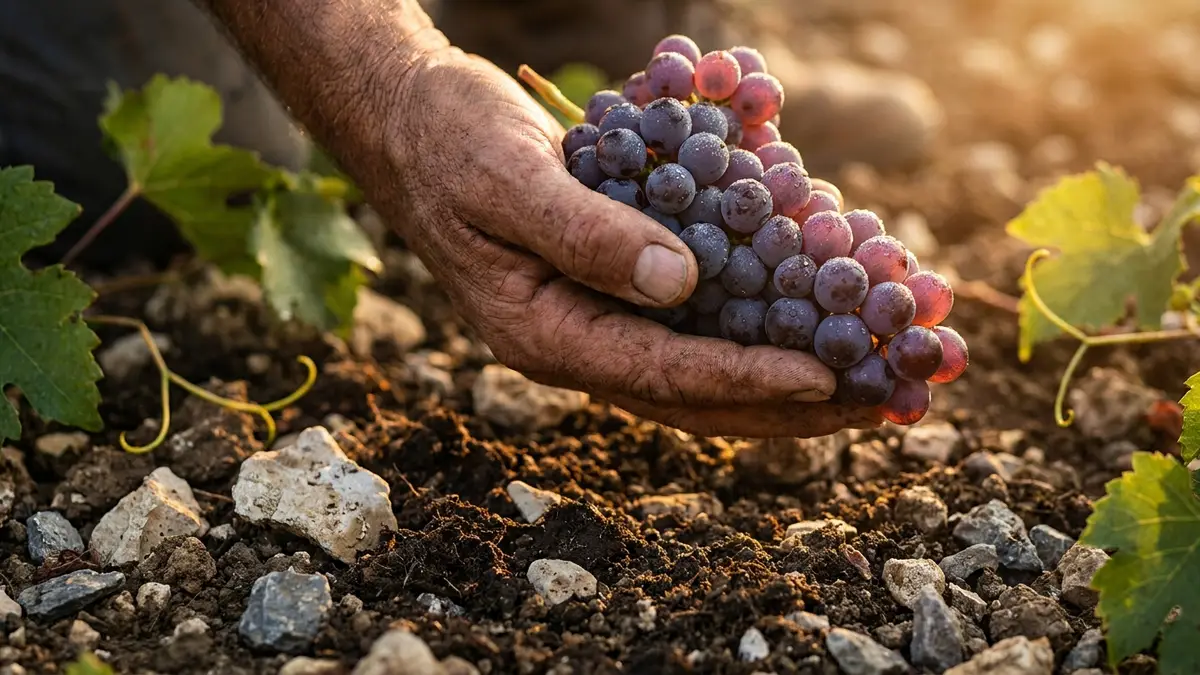
Here is the plain version: terroir is everything about a place that affects how grapes grow and how the resulting wine tastes. The soil the vine roots into. The rain that falls (or does not fall). The angle of the hillside. The temperature at night. The fog that rolls in from the ocean. The traditions that local winemakers have followed for generations. All of it, together, is terroir.
The reason terroir matters is simple and demonstrable: plant the same grape variety in two different places, treat it identically, and you get two different wines. Sometimes dramatically different. Pinot Noir from Burgundy tastes nothing like Pinot Noir from Central Otago in New Zealand. Both are excellent. Both are unmistakably Pinot Noir. But they carry different flavors, different textures, and different personalities — because they grew in different terroirs.
The Components of Terroir
Soil
Soil is the foundation of terroir — literally. Different soil types provide different nutrients, retain different amounts of water, and drain at different rates, all of which affect how the vine grows and what ends up in the grape.
Key soil types in wine:
- Limestone / chalk — well-drained, alkaline; produces wines with bright acidity and a mineral, chalky character (Champagne, Chablis, parts of Burgundy)
- Clay — retains water, rich in nutrients; produces fuller-bodied wines with richer fruit (Pomerol in Bordeaux, parts of Barossa Valley)
- Sand — very well-drained, low nutrients; produces lighter, more aromatic wines (parts of the Médoc, some Barossa old vines)
- Gravel — excellent drainage, reflects heat; produces concentrated, structured wines (Graves in Bordeaux, Chateauneuf-du-Pape's famous galets — large, flat stones)
- Slate — retains and radiates heat; produces wines with pronounced mineral character (Mosel in Germany)
- Volcanic — rich in minerals, good drainage; produces wines with distinctive smoky or mineral notes (Mount Etna in Sicily, Santorini in Greece, parts of the Canary Islands)
The concept of minerality in wine — that stony, chalky, or flinty quality that sommeliers frequently reference — is often attributed to soil type, though scientists debate whether minerals literally transfer from soil to wine or whether the effect is more indirect.
Climate
Climate determines the fundamental ripeness profile of the grapes. Every wine-growing region falls somewhere on a spectrum from cool to warm to hot, and this temperature profile shapes everything from sugar levels to acidity to flavor character.
Cool climate (Burgundy, Champagne, Mosel, Oregon) — shorter growing season, lower sugar levels, higher acidity, lighter body. Flavors tend toward citrus, green apple, red berries, and herbal notes.
Warm climate (Napa Valley, Barossa Valley, Rhône Valley, most of Spain) — longer growing season, higher sugar levels, lower acidity, fuller body. Flavors tend toward ripe stone fruit, dark berries, and spice.
Hot climate (inland Australia, parts of Argentina, southern Spain) — very long growing season, very high sugar, very low acidity. These conditions can make balanced table wine difficult without irrigation and careful vineyard management.
Within these broad categories, microclimate — the specific weather conditions in a single vineyard or even a section of a vineyard — can vary significantly. A vineyard on a south-facing slope gets more sun than one on a north-facing slope, even if they are only meters apart. That gap is why some producers bottle one site alone as a single vineyard wine.
Our guide to French wine regions shows how climate variation within a single country produces an extraordinary range of wine styles — from the chilly sparkling wines of Champagne to the sun-baked reds of the Languedoc.
Altitude
Higher altitude vineyards are cooler (temperature drops roughly 1°F for every 300 feet of elevation), receive more UV radiation, and experience greater day-to-night temperature swings. The measured size of each effect is set out in high altitude wine. This combination produces grapes with thicker skins (more color and tannin), higher acidity, and more intense flavor concentration.
Many of the world's most distinctive wine regions are at significant altitude:
- Mendoza, Argentina — vineyards at 3,000-5,000 feet (900-1,500m), producing concentrated Malbec with bright acidity
- Etna, Sicily — vineyards on the slopes of an active volcano at 1,500-3,000 feet (450-900m)
- Priorat, Spain — steep, terraced vineyards at 600-2,600 feet (200-800m)
- Swartland, South Africa — elevated sites that produce cooler, more elegant wines than the coastal areas below
Aspect (Slope Orientation)
Which direction a hillside faces — its aspect — determines how much direct sunlight the vines receive and when during the day they receive it. In the Northern Hemisphere:
- South-facing slopes get the most sun — warmer, riper, more concentrated wines
- North-facing slopes get the least sun — cooler, more acidic, more restrained wines
- East-facing slopes get morning sun — gentle warmth that promotes even ripening
- West-facing slopes get afternoon sun — intense heat that can stress vines
In Burgundy, the difference between a south-facing Grand Cru vineyard and a north-facing village-level plot can be worth thousands of dollars per bottle — same grape, same soil type, but a dramatically different expression because of how the sun hits the vines.
Water
Rainfall, irrigation, proximity to rivers, lakes, or oceans — all affect vine growth and grape character.
Maritime climates (Bordeaux, coastal California, Margaret River) are moderated by the ocean — fewer temperature extremes, more humidity, and fog that can protect or challenge depending on the timing.
Continental climates (Burgundy, inland Spain, Walla Walla) have hot summers and cold winters with less moderating influence — more dramatic seasons that stress vines and concentrate flavors.
Rivers play a specific role in many classic wine regions. The Mosel River reflects sunlight onto steep vineyard slopes, adding crucial warmth in a marginal climate. The Gironde estuary in Bordeaux moderates temperatures and creates the humid conditions needed for noble rot in Sauternes.
The Human Element
Purists argue about whether human intervention is part of terroir or separate from it. The practical answer: winemaking traditions that have evolved over centuries in a specific place are inseparable from that place's wine character.
Burgundy tastes like Burgundy partly because of the soil and climate, but also because generations of vignerons have developed specific pruning, harvesting, and fermentation techniques suited to their terroir. The concept of typicity — the idea that a wine should taste like it comes from a specific place — is a human judgment, not a geological one.
Terroir in Practice: Same Grape, Different Place
The most visceral way to understand terroir is to taste the same grape variety from different regions. The grape provides a constant; the terroir provides the variable.
Pinot Noir: The Terroir Magnifier
Pinot Noir is famously sensitive to where it grows, which makes it the ultimate demonstration of terroir:
- Burgundy, France — earthy, mushroomy, red cherry, subtle; medium body, high acidity, fine tannin
- Oregon, USA — brighter fruit, cranberry and raspberry, slightly more body; similar acidity to Burgundy but with a New World freshness
- Central Otago, New Zealand — vivid cherry and plum, more concentrated fruit; higher altitude gives electric acidity with riper fruit than Burgundy
- Sonoma Coast, California — darker fruit, more body, less earthiness; ocean influence provides cooling but the California sun adds richness
All four are Pinot Noir. All four are recognizably the same grape. But they taste distinctly different — and a trained taster can identify the region blind. That is terroir.
Chardonnay: From Lean to Lush
Chardonnay is another terroir chameleon:
- Chablis, France — steely, mineral, citrus, zero oak; the chalky Kimmeridgian soil and cool climate produce the leanest expression
- Meursault, France — richer, buttery, stone fruit; similar soil but slightly warmer microclimate plus traditional oak aging
- Napa Valley, USA — tropical fruit, vanilla, full body; warm climate and liberal oak use create an opulent style
- Adelaide Hills, Australia — citrus and stone fruit, moderate body; cool-climate Australian expression with restrained oak
The Sommy app includes comparative tasting exercises that help you identify these regional differences — tasting the same grape from two different terroirs is one of the most effective ways to train your palate and understand what makes each wine region unique.
Terroir and Wine Labels
Old World: Place Over Grape
European wine labels traditionally emphasize terroir over grape variety. A bottle labeled "Chablis" tells you where the wine was made (Chablis, in northern Burgundy) and implies the grape (Chardonnay, the only grape allowed) and style (lean, mineral, unoaked). The assumption is that the place communicates everything you need to know.
This is terroir philosophy in its most extreme form — the belief that where matters more than what.
New World: Grape Over Place
American, Australian, and South American labels traditionally put the grape variety front and center — "Cabernet Sauvignon," "Chardonnay," "Malbec" — with the region as secondary information. This reflects a winemaking culture that prioritizes the grape's character over the specifics of where it was grown.
However, this distinction is blurring. Many New World regions now emphasize place-based identity (Willamette Valley Pinot Noir, Barossa Valley Shiraz, Mendoza Malbec), recognizing that terroir matters there too.
Appellations: Drawing Lines Around Terroir
Appellations are legal boundaries drawn around wine-growing areas that share similar terroir characteristics. The French AOC (Appellation d'Origine Controlée) system, Italy's DOCG/DOC, and Spain's DO all attempt to codify terroir into law — defining which grapes can be grown, how wine must be made, and what can appear on the label.
For more on how appellations work and what they mean on a label, see our guide to what is an appellation.
The Terroir Debate
Does Soil Really Transfer Minerals to Wine?
Wine drinkers frequently describe tasting "minerality" — a flinty, stony, chalky quality that seems to echo the soil the vines grow in. The romantic interpretation is that minerals literally travel from the soil through the vine into the grape and into the wine.
The scientific reality is more complicated. Vines do absorb minerals from the soil, but in quantities too small to taste directly. The mineral character in wine likely comes from other compounds (thiols, sulfides) or from the indirect effects of soil type on vine stress, water availability, and nutrient uptake.
Whether you call it "minerality" or "the indirect expression of soil through vine physiology," the practical result is the same: wines from different soils taste different, and that difference is real and repeatable.
Is Terroir Just Marketing?
Skeptics argue that terroir is a marketing construct — a way for premium regions to justify higher prices by claiming their land is special. Our breakdown of what makes wine expensive looks at that claim from the cost side, including how much a hectare of famous vineyard land actually sells for. There is some truth to this criticism: not every vineyard labeled "terroir-driven" produces distinctively site-specific wine, and the concept can be used to mystify what is ultimately agriculture.
But the evidence for terroir's reality is overwhelming. Blind tasting consistently shows that trained tasters can identify wines from specific regions. Adjacent vineyards with different soils produce measurably different wines from the same grape variety. And centuries of observation in Burgundy, the Mosel, and other classic regions have reliably identified which plots produce the best wine — long before anyone understood the science.
Terroir is real. The question is not whether it exists but how much it matters relative to grape variety and winemaking technique — and the answer depends on the specific wine.
How to Experience Terroir Yourself
The Side-by-Side Tasting
The fastest way to understand terroir is to taste two wines made from the same grape but from different regions. Buy a bottle of Chablis and a bottle of California Chardonnay. Taste them side by side and ask: what is different?
The Chablis will likely be leaner, more citrus-driven, with a stony or chalky quality. The California version will likely be richer, more tropical, with more body and possibly oak influence. Those differences are terroir in action — the same grape expressing two different places.
What to Look For
When tasting for terroir, pay attention to:
- Acidity — cooler terroirs produce higher-acid wines
- Body — warmer terroirs produce fuller-bodied wines
- Fruit profile — cool terroirs favor citrus and red fruit; warm terroirs favor tropical and dark fruit
- Mineral character — wines from chalky, slate, or volcanic soils often carry a distinctive non-fruit quality
- Texture — different soils and climates produce different tannin and mouthfeel profiles
The Sommy app builds these assessment skills through structured exercises that train you to identify acidity, body, and flavor profiles — the exact skills needed to taste terroir. Understanding how to taste wine systematically makes terroir accessible rather than abstract.
Terroir is not a mystical concept reserved for sommeliers and collectors. It is the straightforward observation that where grapes grow shapes how wine tastes. Once you start paying attention — tasting the same grape from different places, noticing how soil and climate create different personalities — terroir becomes one of the most fascinating and rewarding aspects of wine. Every bottle tells you something about the place it came from, if you know how to listen.
Frequently Asked Questions
What does terroir mean in wine?
Terroir is a French term with no exact English translation. It refers to the complete set of environmental factors that influence how grapes grow and how wine tastes in a specific place — soil composition, climate, altitude, slope orientation, rainfall patterns, and local winemaking traditions. It is the reason wines from different places taste different, even when made from the same grape.
Can you taste terroir in wine?
Yes, with practice. Terroir expresses itself through characteristics like minerality (a stony or chalky quality), specific fruit profiles that consistently appear from a region, and structural differences in acidity and body. Tasting the same grape variety from different regions side by side is the most effective way to experience terroir firsthand.
Is terroir the same as climate?
Climate is one component of terroir, but terroir is much broader. It also includes soil type, altitude, slope orientation (aspect), drainage, proximity to water, local flora, and even the microorganisms in the vineyard. Two vineyards with identical climate but different soils will produce different wines — that difference is terroir at work.
Does terroir matter for cheap wine?
Less so. Inexpensive wines are typically blended from large areas, which dilutes any sense of place. Terroir becomes more relevant as wines become more site-specific — single vineyard wines express terroir most clearly. That said, even modestly priced wines from distinctive regions (like Muscadet or Vinho Verde) carry a recognizable regional character.
Why do French wines focus so much on terroir?
France's appellation system (AOC/AOP) is built on the belief that where grapes grow matters more than which grapes they are. French wine labels emphasize place (Burgundy, Bordeaux, Champagne) rather than grape variety. This reflects centuries of observation that specific plots produce consistently distinctive wines — the core insight of terroir.
Is terroir scientifically proven?
Partly. Science has confirmed that soil composition affects vine root systems and nutrient uptake, that climate directly impacts sugar and acid levels in grapes, and that altitude and slope affect temperature and sunlight exposure. The more philosophical aspects of terroir — that a wine can express a sense of place — are harder to measure but widely accepted by producers and tasters.
What is the difference between terroir and appellation?
Terroir is the natural environment itself — the physical reality of soil, climate, and geography. An appellation is a legally defined wine-growing area with regulated production rules. Appellations are human attempts to draw boundaries around distinctive terroirs, but they are administrative constructs that may not perfectly capture natural differences.
Sommy Team
LinkedInFounder & Wine Educator
The Sommy Team is building the world's most approachable wine education app, helping beginners develop real tasting skills through structured courses and AI-guided practice.