How to Detect Residual Sugar in Wine by Taste

By the Sommy Team — AI-assisted, human-edited.
Updated Apr 29, 2026
Contents (13)
- What Residual Sugar Is, in 60 Words
- Why Most Wines Labeled Dry Are Not Actually Dry
- The Residual Sugar Scale, in Real Numbers
- The Front-Tongue Test
- How Acidity Masks Sugar
- The Glycerol Weight Cue
- The Lingering Finish
- Decoding Labels: The Sweetness Vocabulary
- Why Some Reds Taste Off-Dry
- The Off-Dry Trap in "Dry" Pinot Grigio
- A Calibration Exercise You Can Do at Home
- Common Mistakes When Detecting RS
- Why This Skill Pays Off
TL;DR
Residual sugar is the unfermented grape sugar left in wine, measured in grams per liter. Bone-dry sits under 2 g/L, off-dry between 4 and 12, and sweet above 45. To taste it, focus on the front-tip of the tongue, the lingering finish, and glycerol weight. High acidity hides sugar — most so-called dry wines are not actually dry.
What Residual Sugar Is, in 60 Words
Residual sugar (RS) is the unfermented grape sugar left in wine after fermentation, measured in grams per liter. Bone-dry wines sit under 2 g/L (Brut Champagne, classic red Bordeaux). Off-dry runs 4-12 g/L (Pinot Grigio, Riesling Trocken, much commercial Prosecco). Medium-dry is 12-45 g/L. Sweet starts at 45+ g/L (Sauternes, Auslese). To detect RS, sense the front-tip of your tongue first — sweetness lands there. Then check whether the finish lingers sweet and the wine carries glycerol weight. Acidity hides sugar, so a high-acid Riesling at 20 g/L can taste drier than a low-acid Pinot Grigio at 6 g/L.
Why Most Wines Labeled Dry Are Not Actually Dry
If you have ever bought a Pinot Grigio that promised "crisp and dry" and ended up with a slightly fruity, slightly soft mouthfeel that you could not quite place — you were probably tasting residual sugar in wine that the label never mentioned. The legal definition of dry wine in the EU is under 4 g/L of RS (or up to 9 g/L if balanced by acidity). The actual market practice is much looser. A huge portion of commercial whites labeled dry sit between 4 and 12 g/L — technically off-dry by EU law, but printed on the bottle as dry because the perception is balanced enough to feel that way.
This matters because trained tasters can detect RS as low as 2-3 g/L. Most consumers cannot — but the sweetness still affects mouthfeel, finish length, and food pairing. Learning to feel this hidden sugar is one of the most useful palate skills you can build, and it changes how you read every label.
For the broader sweet-vs-dry distinction at a category level, see our sweet vs dry wine guide. This article zooms tighter — onto RS itself, the gram numbers, and the tasting protocol.
The Residual Sugar Scale, in Real Numbers
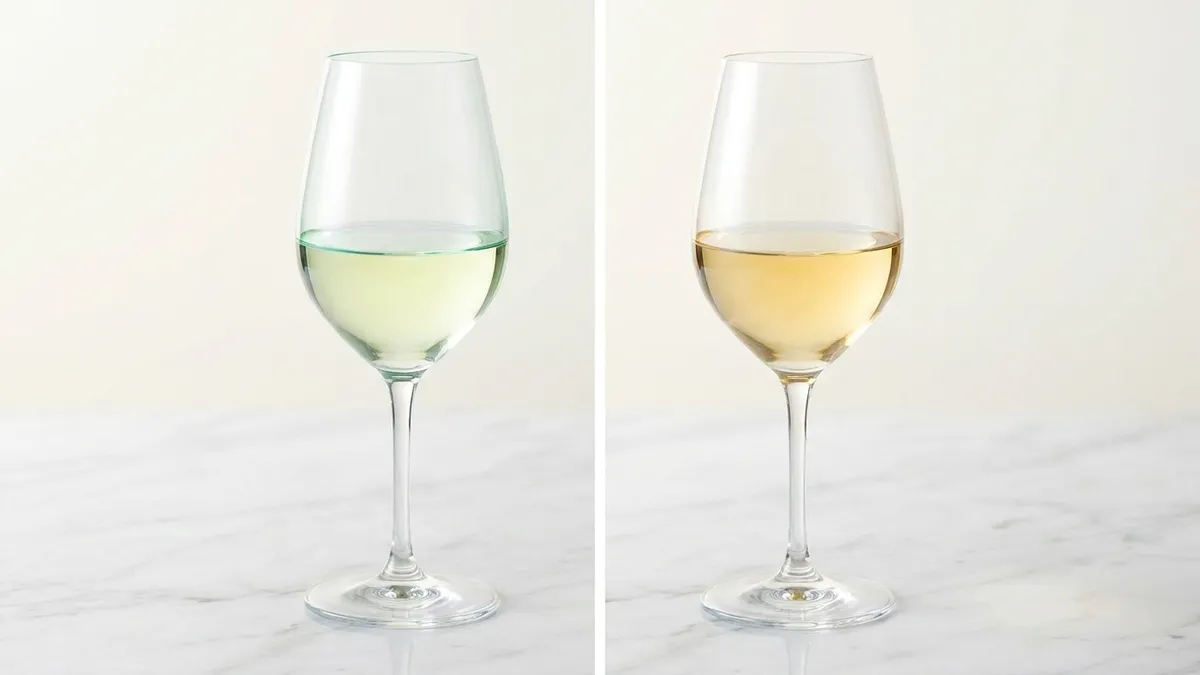
The full RS in wine spectrum is a continuum, but the EU defines four named bands for still wines. Memorize these and you will read labels with much more confidence:
- Bone dry — under 2 g/L (most red Bordeaux, Muscadet, unoaked Chablis, Brut Nature Champagne)
- Dry — 2 to 4 g/L, or up to 9 g/L with high acidity (most red wines, classic dry whites)
- Off-dry — 4 to 12 g/L (much commercial Pinot Grigio, Riesling Trocken at the upper end, many "dry" Prosecco)
- Medium-dry / Demi-Sec — 12 to 45 g/L (Auslese-style Riesling, late-harvest Chenin, many rosé in the New World)
- Sweet — 45 g/L and above (Sauternes, Tokaji Aszú, Beerenauslese, ice wines)
For the parallel sparkling-wine scale and a deeper breakdown of every band with examples, our wine sweetness scale guide covers it in full.
A useful reference number: a can of cola contains about 100 g/L of sugar. Most wines you drink — even the off-dry ones — contain a fraction of that. The reason wine sweetness feels so prominent is not the absolute number but the way RS interacts with acid, alcohol, and aroma to amplify or mute its perception.
The Front-Tongue Test
Sweetness is perceived primarily on the front-tip of the tongue, where the density of sweet-responsive taste receptors is highest. Acid, by contrast, lights up the sides of the tongue. Bitterness lands at the back. This is why the order in which a wine touches your tongue affects which sensations dominate.
To run a clean RS test:
- Take a small sip — about 5 ml, less than a teaspoon
- Let the wine sit on the front of your tongue for two seconds before moving it around
- Note whether you feel a coating, slightly viscous sensation on the tip
- Swallow and breathe out through your nose
- Wait five seconds and check whether sweetness lingers on the tongue or has fully gone
If the sweetness lingers, you are tasting actual RS. If it disappears immediately and only the fruit aromas remain in your nose, the wine is dry but aromatically fruity — a different sensation entirely.
This separation between perceived fruit sweetness and actual residual sugar is the single most useful distinction for any beginner. The Sommy app trains exactly this in its structured palate exercises, with reference wines at known RS levels so you can calibrate your tongue against measurable chemistry.
How Acidity Masks Sugar
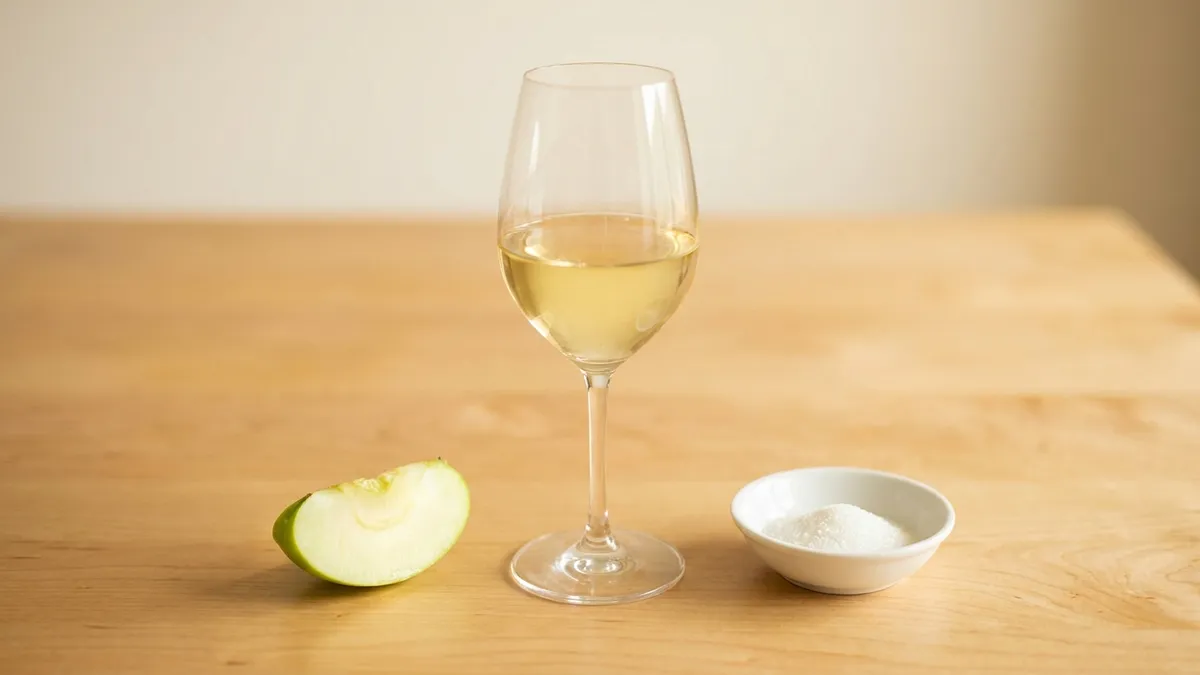
Acidity is the great equalizer in sweet wines. A wine with 20 g/L of RS and 9 g/L of total acidity (TA) can taste drier and more refreshing than a wine with 6 g/L of RS and 4 g/L of TA. The reason is balance: acidity creates a sensation of crispness and salivation that pulls your attention away from the sugar.
This is why German Riesling can carry significant RS without tasting overtly sweet — its naturally high malic acidity counterbalances the sugar. A Mosel Kabinett at 30 g/L of RS feels crisp because the wine often has 8-10 g/L of TA. The same 30 g/L in a low-acid Chardonnay would feel cloying.
The ratio that matters is sometimes called the sugar-to-acid balance. When the numbers are roughly equal, the wine feels balanced. When sugar exceeds acid by 2-3x, the wine feels sweet. When acid exceeds sugar, the wine feels dry — even when there is a notable amount of RS in the bottle.
For more on how acid, tannin, and body interact, see understanding tannins, acidity, and body and our wine balance explained guide. These three properties decide whether a wine reads as sweet, dry, or anything in between.
The Glycerol Weight Cue
Beyond the front-tongue test, a second useful signal is glycerol weight. Glycerol is a natural byproduct of fermentation that adds viscosity and a slightly oily mouthfeel. Wines with significant RS almost always have higher glycerol levels too, because the same conditions that leave sugar behind (low temperature fermentation, stopped yeast, ripe grapes) also produce more glycerol.
To feel glycerol weight:
- Roll the wine across your whole mouth, not just the tongue
- Note whether it coats the inside of your cheeks
- Tilt your head back slightly and feel whether the wine drags or flows freely
A bone-dry wine flows like water. An off-dry wine drags slightly, the way diluted honey would. A sweet wine coats heavily and leaves a slick on the palate even after swallowing. This weight cue is independent of fruit aromas — it tracks actual sugar and glycerol concentration.
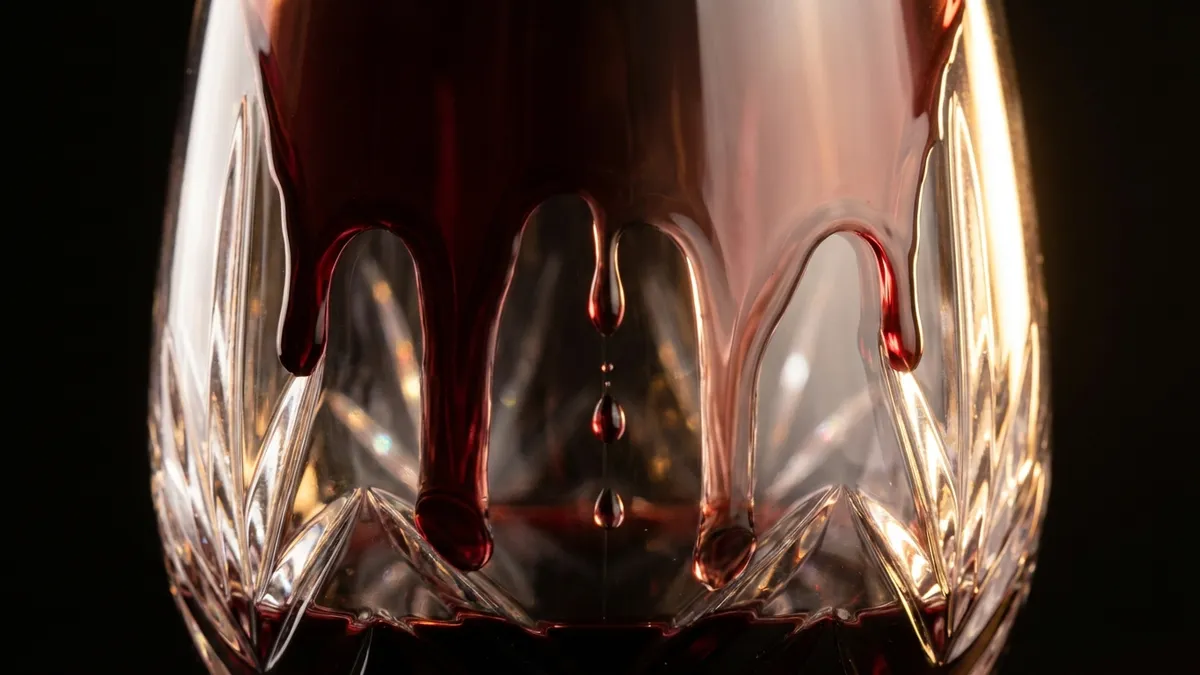
The legs that form on the inside of the glass after swirling are also influenced by glycerol, though they are mostly a function of alcohol. For more on that, see our explainer on wine legs meaning.
The Lingering Finish
The third diagnostic is the finish — what you taste after swallowing. Real residual sugar persists. Aromatic sweetness from fruit notes does not.
Try this comparison. Sip a New Zealand Sauvignon Blanc (typically under 2 g/L of RS but loaded with passion-fruit aromatics). Note the burst of fruit, then count to ten after swallowing. Most of the sweetness sensation is gone — what lingers is acidity, herbaceous green notes, and mineral edge.
Now sip a German Spätlese Riesling (often 30-40 g/L of RS). The fruit aromas may also fade after ten seconds, but a sweet sensation continues to coat the tongue. That coating is the actual sugar.
A clean way to train this contrast: taste two wines side by side that have similar fruit profiles but very different RS levels. The fruit is your control variable; what is left at second 10 is RS. For a fuller breakdown of how aroma versus actual flavor differ, see our guide to wine flavor vs aroma.
Decoding Labels: The Sweetness Vocabulary
The label vocabulary varies by country and confuses almost everyone. Here are the terms that actually map to RS bands:
Still wines:
- Trocken (German) — dry, under 4 g/L (up to 9 with acid)
- Halbtrocken (German) — half-dry, 9-18 g/L
- Sec (French still) — dry, under 4 g/L
- Demi-Sec (French still) — half-dry, 4-12 g/L
- Doux (French) — sweet, 45+ g/L
- Secco (Italian) — dry
- Abboccato (Italian) — off-dry
- Amabile (Italian) — medium-sweet
- Dolce (Italian) — sweet
Sparkling wines (different scale):
- Brut Nature / Brut Zero — 0-3 g/L
- Extra Brut — 0-6 g/L
- Brut — up to 12 g/L
- Extra Sec / Extra Dry — 12-17 g/L (note: sweeter than Brut)
- Sec / Dry — 17-32 g/L (off-dry by still-wine standards)
- Demi-Sec — 32-50 g/L
- Doux — 50+ g/L
The sparkling-wine scale is famously counterintuitive: "Extra Dry" Champagne is sweeter than "Brut," and "Sec" is actually off-dry to medium-sweet. There is no logic — it is historical convention. Memorize it once and move on.
For the full sparkling vocabulary and how the bubble pressure interacts with sweetness perception, our sparkling wine types guide has the deep version.
Why Some Reds Taste Off-Dry
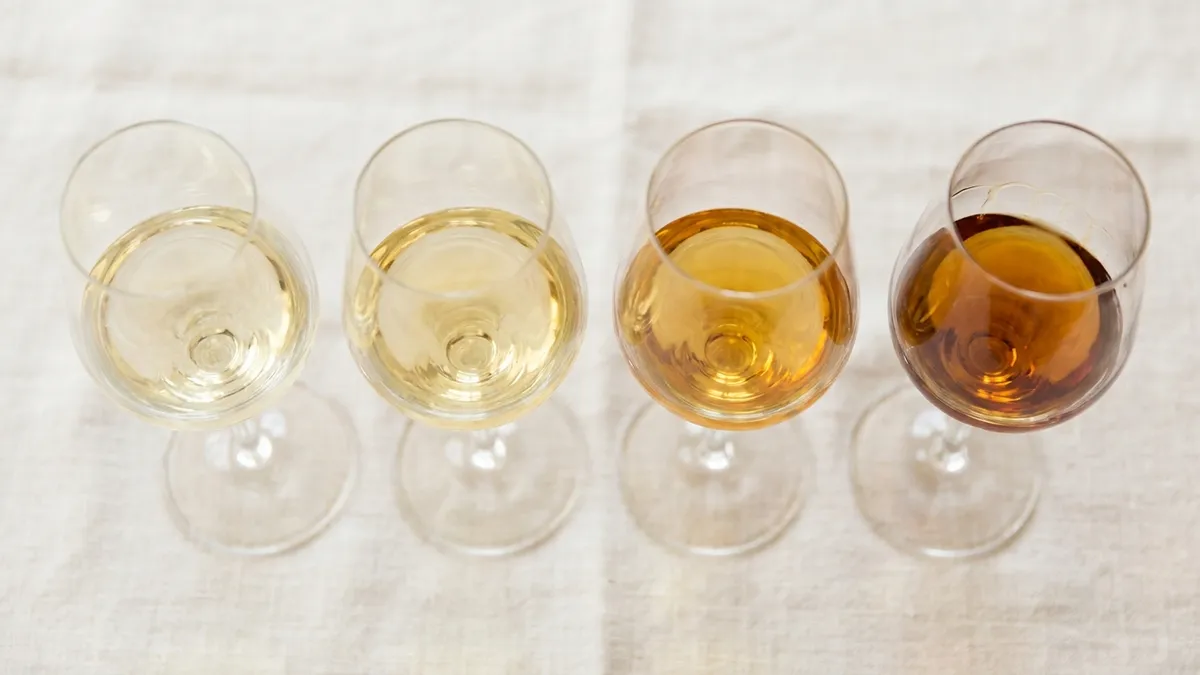
Most red wines are bone-dry by tradition, but a growing share of commercial New World reds carry 5-8 g/L of RS for stylistic reasons. This is sometimes called the "Apothic effect" after the brand that popularized off-dry red blends — but it now extends across many supermarket-tier Cabernet, Zinfandel, and Malbec wines, particularly from California, Australia, and Argentina.
The effect: the wine feels rounder, fruitier, and easier to drink unaccompanied by food. The downside: it pairs poorly with savory dishes (the sugar clashes with salty or fatty food in unflattering ways), and the sweetness can mask faults that a bone-dry red would reveal.
How to spot it: a young red that feels almost juicy or candied on the front-tip of the tongue, rounds off the tannin instead of letting it grip, and finishes with a soft sweet edge. Compare it to a traditional Bordeaux at 2 g/L and the difference is unmistakable.
For more on how the same grape can be made in radically different RS styles, see our Cabernet Sauvignon vs Merlot guide and the deep Malbec wine guide — both grapes are common targets of stylistic sweetening.
The Off-Dry Trap in "Dry" Pinot Grigio
The most-bought white wine in the US is Pinot Grigio, and the average commercial bottle sits at 6-12 g/L of RS — squarely in off-dry territory by EU law. Yet almost every label says dry.
Why? Three reasons:
- The producers calibrate to broad consumer preference, which skews slightly sweet
- The market accepts "dry" as a perceptual term, not a chemical one
- High-volume production tends to round off acidity, which makes the residual sugar more noticeable, so winemakers compensate by stopping fermentation a touch early
If you want a genuinely bone-dry Pinot Grigio, look for bottles from Alto Adige, Friuli, or Trentino in Italy, ideally with "Secco" on the label and an alcohol level of 12.5% or higher. The higher alcohol almost always means fermentation ran to completion.
For a fuller breakdown of style differences within this grape, see our Pinot Grigio vs Pinot Gris guide.
A Calibration Exercise You Can Do at Home
To build real intuition for RS, pour three side-by-side glasses:
- A bone-dry Sauvignon Blanc (Sancerre or a Loire Sauvignon) — your control under 2 g/L
- An off-dry Riesling Kabinett (German, not Trocken) — somewhere around 25-40 g/L
- A Sauternes or late-harvest dessert wine — 100+ g/L
Taste them in order, dry to sweet. Between each, sip water and chew a plain cracker to reset your palate. Focus on:
- Where on the tongue you first feel sweetness
- How long the sweet sensation lingers after swallowing
- The mouthfeel weight — does the wine flow or drag?
- The acid-sugar tension — does the acidity cut through, or does the sugar dominate?
After 20 minutes of this exercise, your palate will have three calibrated reference points. The next time you taste any wine, you can place it on the scale with much more confidence. This kind of structured comparison is also covered in how to compare two wines — a practical method that applies far beyond just sweetness.
Common Mistakes When Detecting RS
A few traps to avoid as you build this skill:
- Confusing fruit aromas with sweetness — ripe peach, mango, and strawberry notes trick the brain even when the wine is bone-dry. Cover your nose for one sip and taste again; what you feel on the tongue is the only sugar that exists
- Tasting cold wine and assuming it is dry — cold temperatures suppress sweetness perception. Let the wine warm to a proper serving temperature before judging
- Ignoring the alcohol cue — a wine at 14%+ ABV almost certainly fermented to dryness. A wine at 9-11% probably has significant RS unless it is a fortified style
- Forgetting that oak fakes sweetness — vanilla, caramel, and butterscotch from new oak trick the palate. A heavily oaked Chardonnay can feel sweet even at 1 g/L of RS
For the broader list of palate-fooling errors, our common wine tasting mistakes guide is a useful follow-up.
Why This Skill Pays Off
Once you can detect RS by taste, three things change. You buy wine more accurately because you can predict what a label means in practice rather than in theory. You pair food more cleanly because the sweet-dry alignment is the single biggest factor in whether a pairing works. And you describe wine to other people in language that matches reality, not perception.
The Sommy app builds this skill into its tasting curriculum from the early lessons, with paired reference wines at known RS levels and structured exercises that train the front-tongue test, the lingering finish, and the acid-balance read. Visit sommy.wine to start practicing with measurable feedback. A few weeks of deliberate calibration is enough to retrain the palate from "I think this is dry" to "this is around 6 g/L, balanced by mid acidity." That precision is what separates a guess from a tasting note.
Sweetness is a sensation. Residual sugar is a number. The whole skill is learning which one your tongue is reporting.
Frequently Asked Questions
What is residual sugar in wine?
Residual sugar, often abbreviated RS, is the natural grape sugar that remains in a finished wine after fermentation has ended. It is measured in grams per liter (g/L). During fermentation, yeast converts grape sugar into alcohol and carbon dioxide. Whatever sugar the yeast does not consume — because fermentation was stopped, slowed, or naturally exhausted — stays in the bottle as RS.
How much residual sugar is in dry wine?
Bone-dry wines contain less than 2 g/L of residual sugar, and the EU legal threshold for the term dry is under 4 g/L (or up to 9 g/L if balanced by high acidity). Most red Bordeaux, Brut Champagne, and classic Italian whites fall here. However, many wines labeled dry actually carry 4 to 12 g/L of RS — technically off-dry — which is enough to be perceived by trained tasters.
Can you taste 4 grams per liter of residual sugar?
Most untrained tasters cannot detect 4 g/L of RS, especially in a high-acid wine. The perception threshold sits around 4 to 5 g/L for the average palate, and acidity can push that threshold higher. Trained tasters and sommeliers can usually detect 2 to 3 g/L by focusing on the front-tip of the tongue and the lingering finish, where sugar coats and lingers while fruit aromas evaporate.
Why does a high-acid wine taste drier than its sugar level suggests?
Acidity stimulates saliva and creates a sensation of crispness that competes with sweetness on the palate. A Mosel Riesling with 20 g/L of RS and sharp malic acidity can taste drier than a low-acid Pinot Grigio with 6 g/L. The chemistry shows the Riesling is much sweeter, but perception responds to balance, not just numbers. This is why winemakers chase acidity in sweet wines — it stops them from feeling cloying.
How do you actually taste residual sugar?
Take a small sip and let the wine sit on the front-tip of your tongue for two seconds. Sweetness lands here first because of taste receptor density. Swallow, then breathe out through your nose and pay attention to whether a sweet sensation lingers on the tongue while the fruit aromas fade. Real RS lingers and coats. Fruity-but-dry wines fade cleanly with no sticky residue.
What does Trocken mean on a German wine label?
Trocken is German for dry and means under 4 g/L of residual sugar (or up to 9 g/L if balanced by high acidity). Halbtrocken means half-dry, between 9 and 18 g/L, which feels off-dry on the palate. Without these terms, many German Rieslings — even at the Kabinett or Spätlese ripeness level — carry significant RS by default. Always look for Trocken or Halbtrocken if sweetness matters.
Why does my dry wine taste sweet?
Several factors create perceived sweetness without actual sugar: ripe fruit aromas, oak-derived vanilla and caramel, glycerol from fermentation, high alcohol (which itself tastes faintly sweet), and low acidity. A bone-dry New Zealand Sauvignon Blanc with 2 g/L of RS often tastes sweet because its tropical fruit aromas trigger sweetness expectations in the brain. Real sweetness coats the tongue; aroma-driven sweetness disappears after swallowing.
Sommy Team
LinkedInFounder & Wine Educator
The Sommy Team is building the world's most approachable wine education app, helping beginners develop real tasting skills through structured courses and AI-guided practice.