Wine Flavor vs Aroma: Understanding the Difference

By the Sommy Team — AI-assisted, human-edited.
Updated Apr 28, 2026
Contents (12)
- TLDR
- Wine Flavor vs Aroma in One Paragraph
- Why the Two Words Get Confused
- Aroma: What You Smell in the Glass
- Flavor: What You Perceive in the Mouth
- The Five Things Your Tongue Actually Reports
- Why a Wine Can Smell Different Than It Tastes
- Aroma vs Flavor in Practice — A Three-Step Pass
- Common Mistakes That Blur the Distinction
- How to Train Aroma and Flavor Separately
- Why the Distinction Matters Beyond Vocabulary
- The Bottom Line
TL;DR
Aroma is what you smell in the glass before sipping. Flavor is what you perceive in the mouth, which is mostly retronasal smell plus the five basic tastes from the tongue. Both use the same olfactory receptors but arrive by different paths. Knowing which is which sharpens every tasting note you write.
TLDR
Aroma is what you smell in the glass before sipping — orthonasal olfaction through the nostrils. Flavor is what you perceive in the mouth, which is mostly retronasal smell plus the five basic tastes from the tongue. Both use the same olfactory receptors but arrive by different paths. Knowing which is which sharpens every tasting note you write.
Wine Flavor vs Aroma in One Paragraph
The shortest version of wine flavor vs aroma: aroma is the smell of the wine through your nostrils, before any liquid touches your tongue. Flavor is the full in-mouth experience, which fuses two signals — retronasal smell rising from the back of the mouth into the nasal cavity, and the five basic tastes detected by the tongue (sweet, sour, salty, bitter, umami). Aroma is sensed at the front door, flavor is sensed inside the house. The same volatile compounds can show on both paths, but the brain processes them differently, which is why a wine can smell of cherry on the nose and reveal cocoa or tobacco on the palate. Both feed the impression you write down as a tasting note.
Why the Two Words Get Confused
In everyday English, "smell" and "taste" feel like opposites. Smell is the nose, taste is the tongue, and the two seem to live in different rooms. Wine writing borrows that same mental model and uses aroma for the nose and flavor for the mouth — which sounds clean until you realize both are mostly the same biological signal arriving at the same receptors.
The receptors that process aroma sit in a small patch at the top of the nasal cavity called the olfactory epithelium. Air-borne compounds reach them in two ways: from outside through the nostrils, or from inside the mouth up through the back of the throat. The first is called orthonasal olfaction, the second retronasal olfaction. Both deliver aromas. Only one of them feels like smelling.
The tongue does its own job in parallel. It detects sweetness, sourness, saltiness, bitterness, and umami — five basic tastes and nothing else. Specific notes like raspberry, leather, or vanilla are never on the tongue. They are aromas. The tongue's contribution to a wine note is structural, not descriptive.
When those two signals fuse in the brain, the experience feels unified — you call it flavor, and you stop noticing that most of it is the nose working from behind. The trick to understanding wine flavor vs aroma is to pull the two signals apart and look at them separately.
Aroma: What You Smell in the Glass
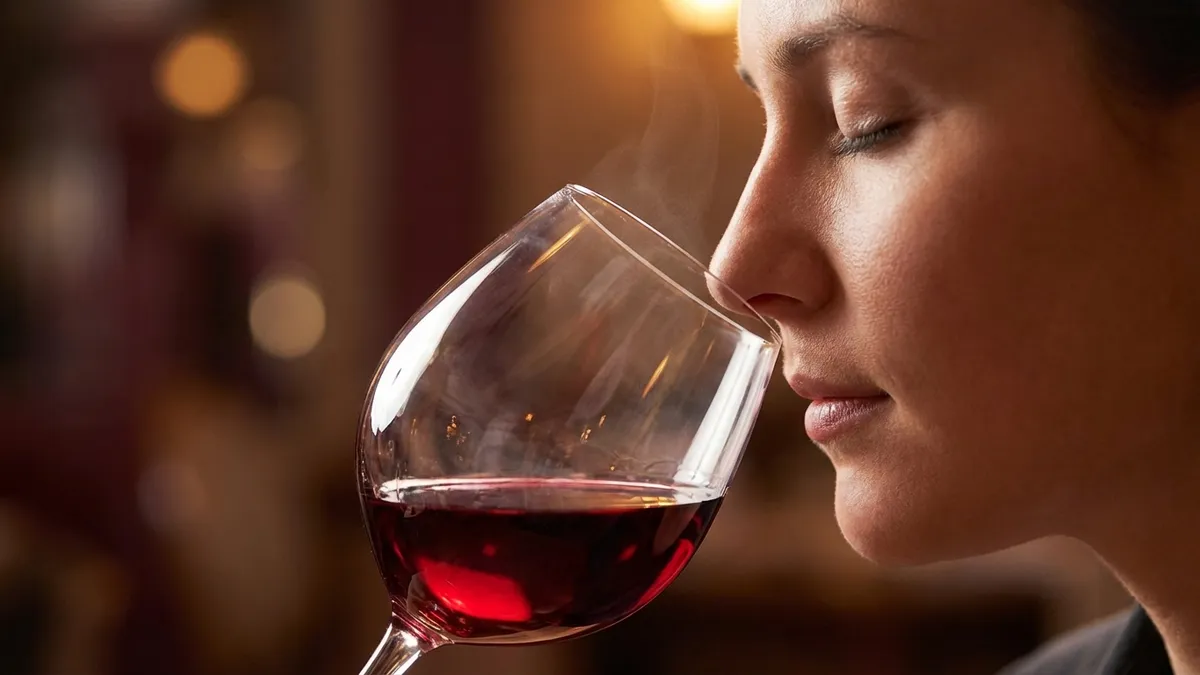
Aroma is the orthonasal layer. Volatile compounds rise out of the wine, leave the glass, enter your nostrils, and meet the olfactory receptors. This is what happens when you swirl, lean in, and sniff before the first sip.
Three things make orthonasal aroma distinctive:
- Speed. It arrives fast. Three short sniffs deliver a usable read in under five seconds.
- Distance. The compounds travel a relatively short, direct path. They are not warmed by the mouth, not diluted by saliva, and not paired with any tactile or taste information.
- Priming. The aroma you read on the nose loads the brain's expectations. The flavors you find on the palate often follow the aromas you read on the nose, simply because expectation guides attention.
Wine aromas are usually grouped into three layers — primary, secondary, and tertiary — based on where in the wine's life cycle they came from. A more detailed walk-through is in the primary, secondary, and tertiary aromas guide, and the technique side is covered in how to smell wine. The point for now: the aroma you read in the glass is one slice of the full sensory picture, and it is the slice the nose handles in isolation.
A common beginner mistake is to assume the aroma in the glass is the whole wine. It is not. It is one signal, sampled before the wine has touched the tongue, before saliva has done any chemistry, and before body heat has warmed the volatiles. The palate often delivers a different reading.
Flavor: What You Perceive in the Mouth
Flavor is the in-mouth reading. It fuses two streams that the brain receives together and labels as a single experience.
Stream 1 — retronasal smell
When wine sits on the tongue, body heat releases more volatile compounds than the glass alone. Saliva interacts with the wine and changes which molecules are airborne. As you exhale or actively draw air through the wine, those compounds travel up the nasopharynx (the junction where the throat meets the nasal cavity) to the same olfactory receptors used for orthonasal aroma. This is retronasal smell, and it is the largest single contributor to what you call flavor.
Stream 2 — taste from the tongue
The tongue is responsible for the five basic tastes, plus tactile sensations like the tannin (the drying, gripping feel from skins and seeds) grip, the alcoholic warmth, the body, and the temperature. Sweetness, sourness, and bitterness are felt across the surface, not in distinct zones — the old "tongue map" is a myth.
The two streams arrive together and the brain does not separate them by default. You sip, and the impression is "blackberry, cocoa, soft tannin, medium acidity" — a sentence that mixes retronasal aromas (blackberry, cocoa) with tongue-driven taste and texture (acidity, tannin) without flagging which is which.
If this is the first time the retronasal idea is landing, the dedicated retronasal smell wine guide goes deeper into the mechanism, the sommelier slurp, and the simple drills that make the difference obvious.
The Five Things Your Tongue Actually Reports
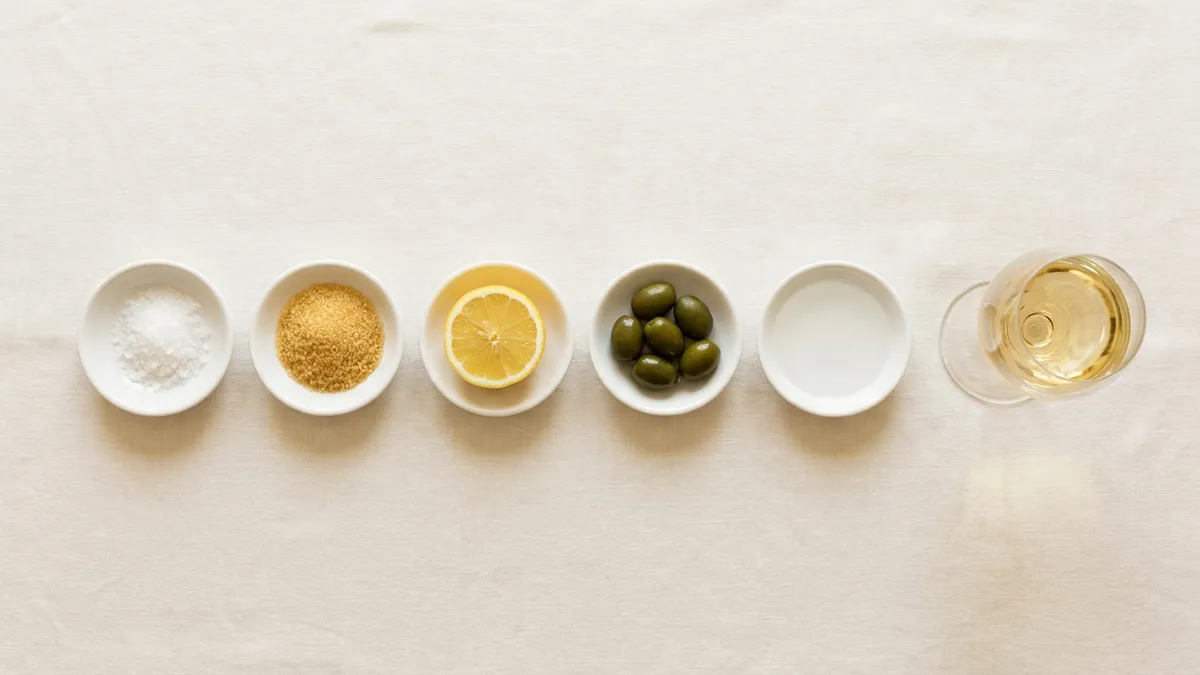
Pulling the tongue's contribution out of the flavor blur is one of the fastest ways to think more clearly about wine. The tongue handles five basic tastes:
- Sweetness — residual sugar across the front and middle of the tongue.
- Sourness — acidity, perceived as a sharp tingle on the sides.
- Bitterness — often from grape pips, oak tannin, or unripe phenolics.
- Saltiness — uncommon in wine, but present in some coastal whites and sherries.
- Umami — savoury depth, more common in aged or oxidative wines.
Plus tactile information that is not strictly taste: body (the weight of the wine in the mouth), tannin (the drying, gripping sensation from skins and oak), alcohol warmth, and temperature.
The deeper guide on understanding tannins, acidity, and body covers the structural side of the palate in detail. The point for the aroma vs flavor question is simple: when you describe a wine as "cherry, leather, cedar," none of that is the tongue. Those are retronasal aromas. The tongue is reporting acidity, tannin, body, and a touch of bitterness in the background.
Why a Wine Can Smell Different Than It Tastes
A wine often shows one thing on the nose and another on the palate. That is not an illusion or a mistake — it is the predictable result of three real differences between the two paths.
Different temperature
A wine sits at glass temperature for orthonasal smelling and rises to roughly body temperature on the tongue. Higher temperature releases heavier volatile compounds. A cooler wine in the glass is dominated by light, top-note aromas (citrus, fresh herbs); the same wine in the warm mouth shows heavier mid and base notes (stone fruit, baking spice, leather).
Different airflow
Orthonasal smell uses incoming air through the nostrils. Retronasal smell uses outgoing air through the nasopharynx. The two air streams sample different fractions of the volatiles, especially when the wine has been agitated by the mouth or aerated by a deliberate slurp.
Different fusion with taste
Retronasal aromas are paired with tongue input. The brain pairs cherry-like aromas with high acidity to read "fresh red fruit." The same cherry-like aromas paired with low acidity and high tannin are read as "stewed black fruit." Orthonasal aroma has none of that pairing, so the reading is more abstract.
The practical takeaway: write notes for the nose and the palate separately. The how to describe wine framework uses three columns — nose, palate, finish — for exactly this reason. Three short lists capture more truth than one fused paragraph.
Aroma vs Flavor in Practice — A Three-Step Pass
Here is a simple sensory pass that respects the difference between aroma and flavor without becoming a 30-minute ritual.
Step 1 — Aroma read
Pour about a third of a glass. Swirl for three seconds. Take two or three short sniffs. Name three specific notes — fruit, floral, spice, oak, earth — and write them down. This is the orthonasal reading.
Step 2 — Flavor read
Take a small sip, about half a teaspoon. Hold it on the mid-tongue for three to five seconds. Exhale gently through the nose while the wine is still in the mouth. Swallow. Write three specific notes for the palate. These are mostly retronasal aromas, fused with taste and texture.
Step 3 — Compare
A wine where the nose says "ripe cherry, vanilla" and the palate says "black cherry, cocoa, soft tannin" is showing complexity. A wine where both lists are identical is simpler, which is not bad, just informationally thinner.
This three-step pass is built directly into the Sommy tasting flow as three discrete fields — nose, palate, finish — so the difference between aroma and flavor stops being abstract and becomes a habit. After 20 or 30 wines, your own pattern emerges: which compounds you reliably find on the nose, which only show on the palate, and where your sensitivity is sharpest.
Common Mistakes That Blur the Distinction
A few habits quietly merge the aroma and flavor channels into one unreliable signal.
Sipping before smelling
Skipping the orthonasal read means you never get a clean aroma baseline. Every reading from then on is contaminated by the wine in your mouth. Always smell before the first sip, even if it takes only three seconds.
Holding your breath through the sip
The retronasal pathway only delivers aroma when air is flowing through the nasopharynx. A held breath while the wine is in the mouth strips out most of the flavor. A gentle exhale through the nose during the hold is what unlocks the retronasal layer.
Tasting wine too cold
A 40°F wine releases very few volatile compounds. The aroma is almost absent on the nose, the palate retronasal layer is muted, and what is left is mostly tongue input — acidity, sweetness, body. The simplest fix is patience. The full wine serving temperature chart covers ranges by style.
Lumping nose and palate into one note
Writing "fruity, oaky, smooth" without separating where each note appeared is fine for casual notes but misses the most useful information. Separating nose, palate, and finish takes ten extra seconds and roughly doubles the value of the note over time.
Ignoring temperature change in the glass
Aroma evolves as the wine warms. The first three sniffs are different from the sniffs at minute fifteen. A complete aroma read is not a single moment, it is a small sequence — first sniff, mid-glass sniff, last sniff.
The common wine tasting mistakes guide covers a wider list of habits that quietly degrade tasting accuracy.
How to Train Aroma and Flavor Separately
Because the two paths use the same receptors but different airflows, training them separately is the fastest way to improve both.
Aroma drills
Build orthonasal vocabulary with reference smells from outside wine. Open the spice rack and name each jar with eyes closed. Walk the produce aisle and name fruits, herbs, and vegetables. The nose only finds words it already has. The develop your wine palate guide turns this into a five-minute daily drill.
Flavor drills
Train retronasal awareness with the closed-nose sip. Pinch the nostrils, sip a familiar wine, hold three seconds, then release the nose while the wine is still in the mouth. The flavor that suddenly arrives is the retronasal layer. Repeat once a week for a month and the layer becomes obvious on every sip.
Side-by-side calibration
Pour the same wine into two glasses. Read the nose on glass one without sipping. Read the palate on glass two by sipping without smelling first. Compare the two notes. The differences show which compounds your nose and palate prioritise — useful diagnostic information about your own sensitivity.
The Sommy app builds these drills into the course progression so the aroma vs flavor distinction is trained as a habit rather than memorised as a fact. A short daily drill produces faster gains than long, occasional sessions.
Why the Distinction Matters Beyond Vocabulary
Sorting aroma from flavor is not pedantic. Three concrete payoffs follow once the two are separated.
Better tasting notes
Notes that distinguish nose, palate, and finish are searchable and comparable. A diary that says "cherry on the nose, black cherry and cocoa on the palate, tobacco on the finish" maps cleanly onto a future bottle. A diary that says "fruity, smooth, nice" does not.
Sharper food pairings
Food interacts mainly with the palate — retronasal flavor and tongue-driven structure. Knowing what your wine delivers on the palate, separate from what it shows on the nose, makes pairings less of a guess. The wine food pairing guide builds on this.
Cleaner conversation about wine
Wine talk gets murky when "smells like" and "tastes like" are used interchangeably. Saying "the nose is dominated by violets, the palate is more about black fruit and graphite" is precise and easy to confirm or disagree with.
The Bottom Line
Aroma is the wine read through the nose before any sip. Flavor is the wine read in the mouth, where retronasal smell does most of the descriptive work and the tongue handles the structural reports — sweetness, sourness, saltiness, bitterness, umami, plus tannin, body, and warmth. The same volatile compounds can show on both paths, but the readings often differ because of temperature, airflow, and the way taste fuses with retronasal smell in the brain. Treat them as two separate channels in every tasting and the precision of every note that follows roughly doubles.
A glass that gets only orthonasal attention is a glass half-tasted. Smell first, sip slowly, exhale through the nose, and write the two columns down. Inside the Sommy tasting flow or on paper, the discipline of separating aroma from flavor is the cheapest upgrade beginner tasters can make.
Frequently Asked Questions
What is the difference between wine flavor and wine aroma?
Aroma is the smell of wine perceived through the nostrils before sipping, also called orthonasal olfaction. Flavor is the in-mouth experience and combines retronasal smell with the five basic tastes the tongue detects. The receptors are largely shared, but the path is different, so the same wine can show different notes on the nose and on the palate.
Is flavor mostly taste or mostly smell?
Flavor is mostly smell. The tongue only detects five tastes — sweet, sour, salty, bitter, and umami. Roughly seventy to eighty percent of what people call flavor comes from retronasal smell, which is aroma reaching the olfactory receptors from inside the mouth. Pinching the nose during a sip strips most flavor out and leaves only the tongue's contribution.
Can a wine smell different than it tastes?
Yes, and it often does. Some volatile compounds are dominant in the glass but recede on the palate. Others are quiet on the nose and become pronounced retronasally once warmed by the mouth. Disagreement between the nose and the palate is a mark of complexity rather than an error, and trained tasters write notes for each path separately.
What does the tongue actually contribute to wine flavor?
The tongue handles five basic tastes plus tactile sensations such as tannin grip, body, alcohol warmth, and temperature. It tells you whether the wine is dry or sweet, how much acidity it has, and how much tannin grips your gums. Specific notes like cherry, vanilla, or leather are not on the tongue at all — those come from retronasal smell.
Why does food taste bland when I have a cold?
Because the retronasal pathway is blocked by congestion. The tongue still works, so sweetness, sourness, and saltiness remain, but the seventy to eighty percent of flavor that comes from retronasal smell is cut off. Wine in particular loses most of its character. When the sinuses clear, the flavors return on the next sip.
Should I write tasting notes for the nose and the palate separately?
Yes. Professional tasting frameworks split notes into nose, palate, and finish for exactly this reason. The nose captures orthonasal aroma, the palate captures retronasal smell plus the tongue's tastes and texture, and the finish records what lingers after swallowing. Three short lists are more useful than one combined paragraph and reveal patterns over time.
Does aroma change after the wine is in the glass for a while?
Yes. Aroma evolves as a wine breathes. Volatile compounds are released gradually, and the balance between top notes, mid notes, and base notes shifts over five to thirty minutes. A young red can smell tightly closed at first and open into ripe fruit and spice after fifteen minutes. The same wine can present a different aroma profile in the first sip and the last.
Sommy Team
LinkedInFounder & Wine Educator
The Sommy Team is building the world's most approachable wine education app, helping beginners develop real tasting skills through structured courses and AI-guided practice.