Off-Dry Wine: A Little Sweet, Not Too Much, Explained

By the Sommy Team — AI-assisted, human-edited.
Updated Oct 9, 2026
Contents (8)
TL;DR
Off-dry wine keeps a little grape sugar you can just taste. It is not a legal term: EU medium dry (German halbtrocken) allows up to 12 g/L, or 18 with high acidity; Vouvray demi-sec 4 to 12. High acidity makes that sugar taste fresh, which is why off-dry Riesling suits spicy food.
Off-dry wine keeps a few grams of grape sugar that you can just taste. Acidity decides whether that sugar reads as fresh or as soft and sweet, so a sharp Riesling with 12 grams per litre can taste drier than a round white with less. The label word changes from country to country, and none of them is called off-dry.
What Is Off-Dry Wine, in One Paragraph?
Off-dry wine is wine with a little leftover grape sugar, enough to taste as a soft sweetness but far short of a dessert wine. Wine Spectator describes it as having "a bit of leftover sugar". That leftover is residual sugar (grape sugar the yeast did not ferment into alcohol), measured in g/L (grams per litre). No law defines off-dry.
EU rules call a wine medium dry up to 12 g/L, or 18 g/L when acidity is high. German halbtrocken is the same rule, usually quoted as 9 to 18 g/L, and Vouvray demi-sec runs 4 to 12 g/L. Semi-dry is another name for the same style. The classic grapes are Riesling and Chenin Blanc, and the classic plate is spicy Thai food.
How Much Sugar Is in Off-Dry Wine?
Roughly 4 to 18 grams per litre, depending on whose scale you read, because off-dry has no legal definition. Each system draws its own lines. They overlap but do not agree, which is why one shop calls a wine off-dry and the next calls it medium.
| Scale | Dry | Off-dry zone | Sweeter steps | What it tells you in the shop |
|---|---|---|---|---|
| EU labelling (still wine) | Dry: up to 4 g/L, or 9 with high acidity | Medium dry: up to 12 g/L, or 18 with high acidity | Medium: up to 45 g/L; Sweet: over 45 g/L | Medium dry on an English-language EU label is the closest legal match to off-dry |
| Germany | Trocken: up to 9 g/L (the EU dry rule) | Halbtrocken: usually quoted as 9 to 18 g/L (the EU medium-dry rule) | Prädikat sweet styles above that | Halbtrocken or feinherb means off-dry; trocken means dry |
| Vouvray (Loire) | Sec: under 4 g/L | Demi-sec: 4 to 12 g/L | Moelleux: 12 to 45 g/L; Doux: over 45 g/L | Demi-sec is the off-dry bottle; moelleux is already sweet |
| Retail rule of thumb | Varies | About 10 to 18 or 10 to 20 g/L | Not defined | Treat any quoted range as a guide, not a rule |
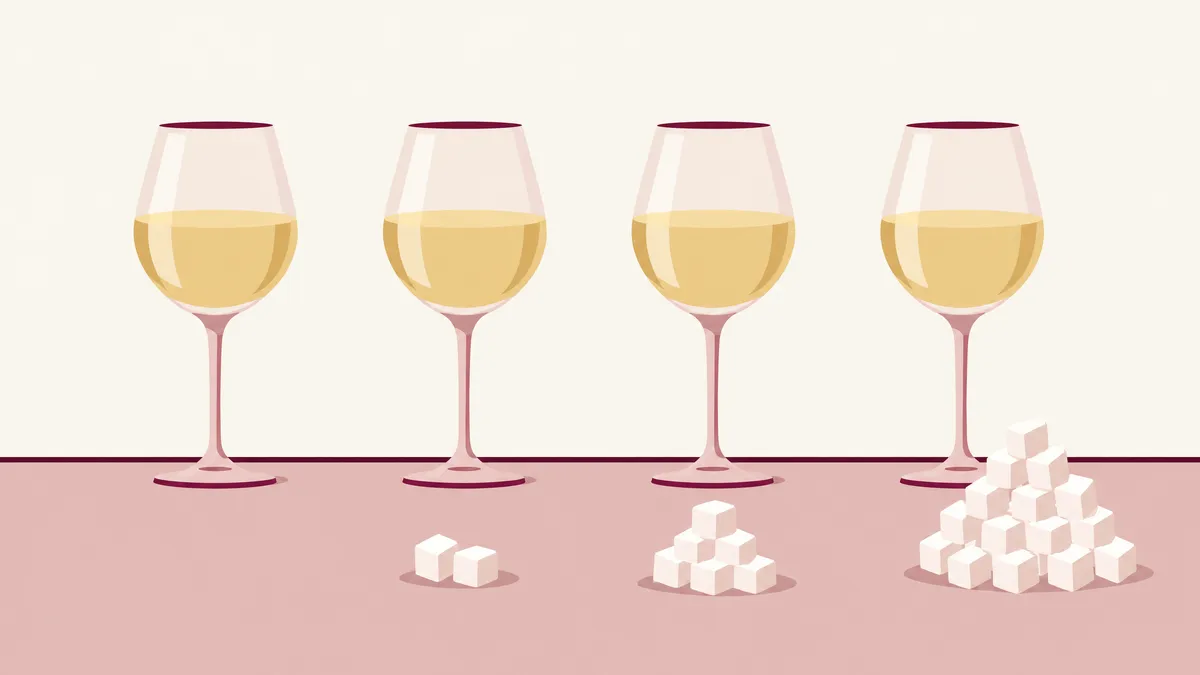
Two things follow from the table. Medium dry, in any EU language, reaches 18 g/L only when acidity is high. And the retail ranges you find online are opinions, since they sit on no law. The full ladder from bone dry to the richest dessert wines is laid out in the wine sweetness scale.
Why Does Some Off-Dry Wine Taste Dry?
Because acidity cancels sweetness on the tongue. Acidity (the tartness that makes your mouth water) pulls against sugar, so a high-acid wine with 12 g/L can taste fresh and barely sweet. Alcohol pushes the other way: it adds a sense of roundness and sweetness. Tannin, the drying grip in red wine, adds bitterness, which shifts the balance away from sweet.
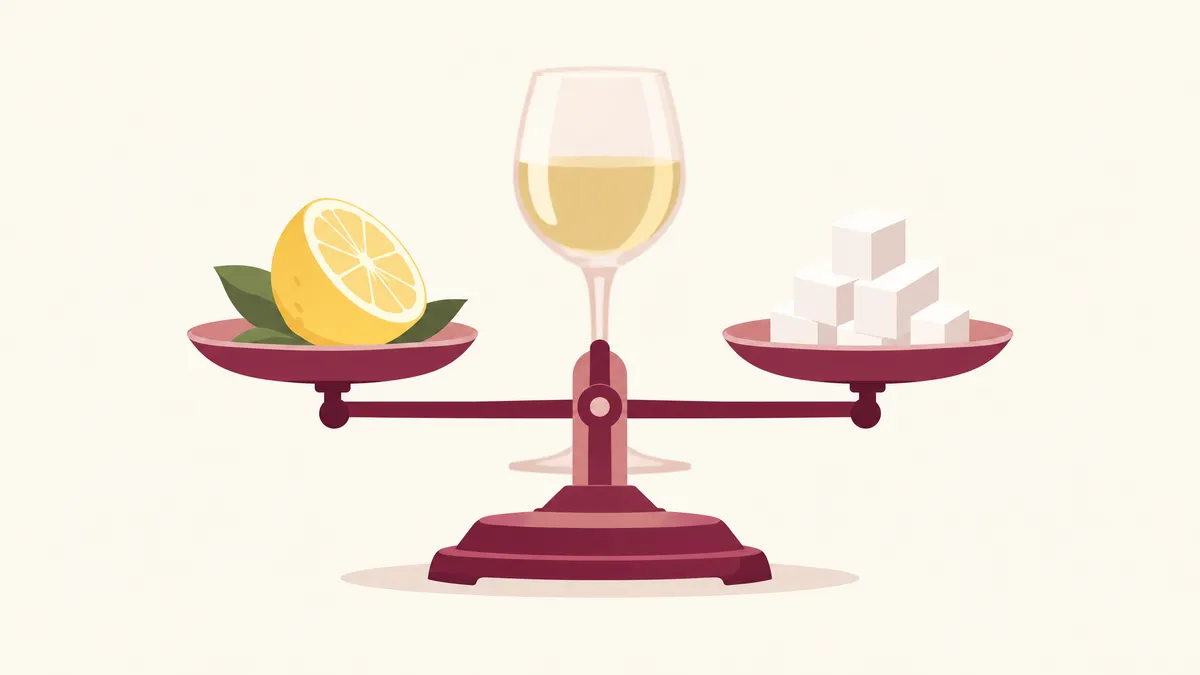
Germany shows the effect clearly. Many halbtrocken wines taste dry to drinkers from other countries, because Riesling grown in a cool climate keeps sharp acidity. The Loire does the same with Chenin Blanc: a producer's Vouvray demi-sec can taste drier than its own sec. The sugar number is real, but the acid decides how loud it is. The mechanism is covered in depth in what is wine acidity.
Tasting for sugar on its own is a skill; the residual sugar tasting guide trains it step by step.
How Do You Spot Off-Dry Wine on a Label?
Look for the sweetness word first, then the grape and the alcohol. Few bottles print the words "off-dry". The signal is a local term such as medium dry or halbtrocken, a high-acid grape like Riesling, and an alcohol figure lower than the dry wines beside it. The local terms:
- Medium dry: the EU's English-language term, up to 12 g/L, or 18 with high acidity.
- Demi-sec: French for half-dry. On still Vouvray it means roughly 4 to 12 g/L.
- Halbtrocken: German for half-dry, usually 9 to 18 g/L.
- Feinherb: an unregulated German word for off-dry, often a touch sweeter than halbtrocken, used mainly on Riesling.
- Semi-dry: the American-English name for the same style.
German labels hold the most common trap. Words like Kabinett, Spätlese and Auslese are Prädikat levels, which set the minimum sugar in the grapes at harvest. Kabinett names ripeness, not sweetness. A Kabinett can be fermented fully dry or left off-dry, so the grape level alone tells you little about the glass.
Alcohol is the backup clue. Fermentation turns sugar into alcohol, so sugar left behind usually means less alcohol than in a dry wine from the same grape. If a German label says trocken, expect dry. If it says halbtrocken or feinherb, expect off-dry. If it shows only a Prädikat word, check the alcohol: a figure well below the dry wines on the same shelf points to leftover sugar. The other parts of the label are decoded in how to read a wine label, and the regions behind German names in German wine regions.
Which Grapes Make Off-Dry Wine?
High-acid white grapes, led by Riesling and Chenin Blanc, plus the aromatic Gewürztraminer. Acid is what lets a winemaker leave sugar in without the wine tasting heavy. The classic examples come from cool places, Germany and the Loire Valley, where grapes hold on to their acidity until harvest.
- Riesling has naturally high acidity and is made dry, off-dry and sweet. In Germany the off-dry versions carry the halbtrocken or feinherb label. Off-dry Riesling smells of green apple and peach, ripe rather than tart because of the sugar. The Riesling guide maps every style.
- Chenin Blanc is the Vouvray grape, where one vineyard can give sec, demi-sec, moelleux and doux. The demi-sec is the off-dry style. More in the Chenin Blanc guide.
- Gewürztraminer grows grapes high in natural sugar, and its wines are usually off-dry, with a strong smell of lychee. In hot climates it lacks the acidity to balance that sugar, so it can taste softer and sweeter than an off-dry Riesling at the same level. The Gewürztraminer guide covers where it keeps its freshness.

Cool, steep river valleys like this keep Riesling tart enough to carry a few grams of sugar. Off-dry rosé and blush wines exist too, but they vary so much between producers that the sweetness word on the back label is the only safe guide.
What Food Goes With Off-Dry Wine?
Spicy, sweet-and-sour and salty food, where a dry wine would taste thin or hot. Wine Spectator singles out off-dry Riesling with Thai and Vietnamese cooking, where chilli, fish sauce, lime and palm sugar often land together in the same bite.
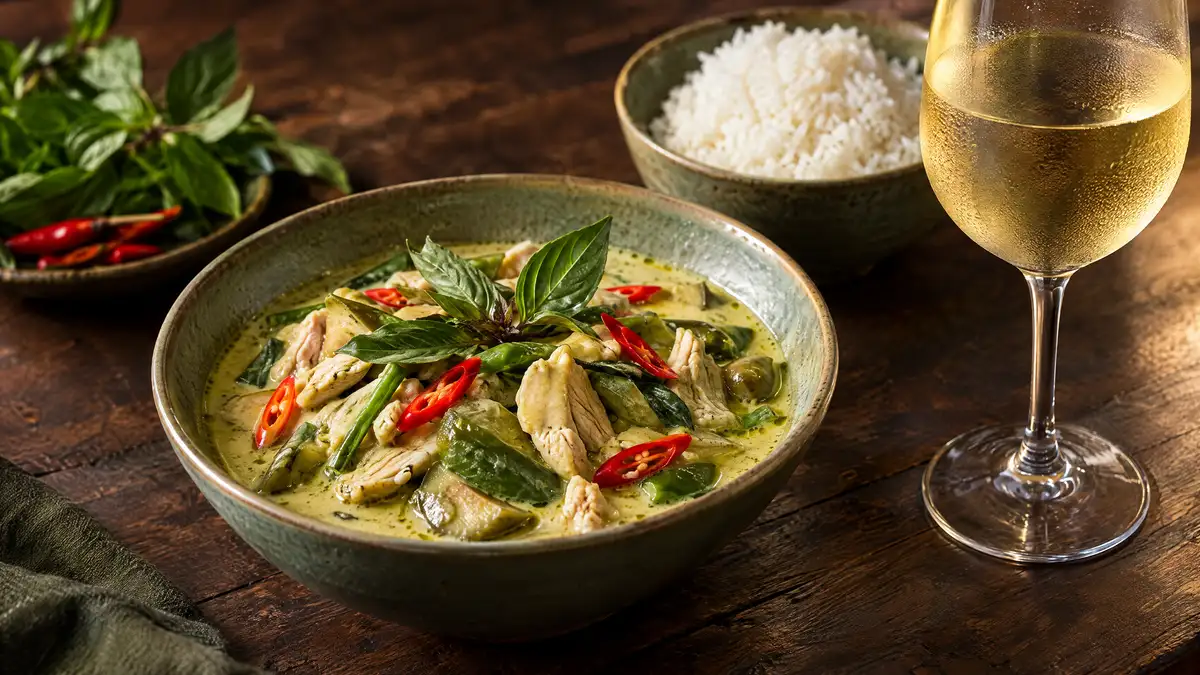
- Chilli heat. A touch of sugar softens the burn of chilli. High alcohol makes it hotter, so the lighter off-dry whites have the edge here.
- Palm sugar and sweet sauces. A wine drier than the dish tastes thin and sour after each bite. Off-dry wine keeps pace with pad thai, teriyaki or sweet chilli dipping sauce.
- Salt and fat. Salty, fatty food makes wine taste softer, while the acidity in Riesling or Chenin cuts through coconut milk, pork belly and duck skin.
- Fruit with meat. Roast pork with apple sauce or ham with a fruit glaze meet the wine's own ripe-fruit taste.
If the dish carries chilli heat or palm sugar, open an off-dry white. If it is sour-led and salty, like a lime-heavy salad, choose a dry, sharp white instead. Dish-by-dish picks are in wine with Thai food, wine with spicy food and wine with Indian food.
Is Off-Dry the Same as Semi-Sweet?
No: semi-dry is the same as off-dry, while semi-sweet leans sweeter. Semi-sweet has no single legal meaning either. On the EU scale the step after medium dry is medium, up to 45 g/L, and anything above 45 g/L counts as sweet.
The opposite end has its own myth. Dry does not mean zero sugar. EU rules let a wine say dry with up to 4 g/L, and a little more when its acidity is high enough to balance the sugar. So the gap between a dry white and an off-dry one can be a few grams. The fine print on the dry side is in what dry wine means, and the bigger picture in sweet vs dry wine.
Should You Buy Off-Dry Wine?
Buy off-dry if dry whites taste sharp to you or you cook a lot of spicy food. Sweet-wine drinkers get a lighter bottle for dinner. Bone-dry drinkers should test one with a curry before ruling it out, because next to chilli the sugar drops into the background.
Start with an off-dry Riesling or a Vouvray demi-sec, since high acidity keeps both fresh. Other styles built on sugar, alcohol and age sit together in the wine styles hub.
The Sommy app also has a bite-sized Wine 101 course that covers sweetness and acidity. Buy a bottle labelled halbtrocken, feinherb or demi-sec tonight, chill it, and taste it beside the spiciest dish on the table.
Sources
- Wikipedia: Sweetness of wine (EU sweetness terms and perception)
- EU Delegated Regulation 2019/33, Annex III Part B (dry, medium dry, medium, sweet)
- Wikipedia: German wine (trocken and halbtrocken sugar levels, Prädikat)
- Wikipedia: Vouvray AOC (sec, demi-sec, moelleux and doux levels)
- Wine Spectator: What is an off-dry wine?
- Wikipedia: Gewürztraminer
Frequently Asked Questions
What does off-dry wine mean?
Off-dry wine has a small amount of grape sugar left after fermentation, enough to taste as a soft, gentle sweetness but nowhere near a dessert wine. Wine Spectator calls it a wine with a bit of leftover sugar. The term has no single legal definition, so labels use local words such as medium dry, demi-sec, halbtrocken or feinherb instead.
How many grams of sugar are in off-dry wine?
Between about 4 and 18 grams per litre, because off-dry is not a legal term and each scale draws its own line. EU labelling calls a wine medium dry up to 12 grams per litre, or 18 when acidity is high; German halbtrocken uses the same rule. Vouvray demi-sec runs 4 to 12. Retail sites often quote 10 to 18 or 10 to 20 grams as a rule of thumb. Above 45 grams per litre, a wine counts as sweet.
Is off-dry wine sweet?
Slightly. Off-dry wine tastes softer and fruitier than a dry wine, but it is far from a dessert wine. Whether you notice the sugar depends mostly on acidity. A high-acid off-dry Riesling can taste almost dry, while a low-acid, high-alcohol white with the same sugar tastes rounder and sweeter.
Is semi-dry the same as off-dry?
Yes. Semi-dry and off-dry are two names for the same style, a wine with a little leftover sugar. In France the word is demi-sec, in Germany halbtrocken or feinherb, and on EU labels in English it is medium dry. Semi-sweet is a step further toward sweet and sits closer to the EU medium category, up to 45 grams per litre.
Is Riesling off-dry?
Some Riesling is off-dry, but not all. Riesling is made dry, off-dry and sweet. On a German label, trocken means dry, while halbtrocken and feinherb mean off-dry. Words like Kabinett or Spätlese describe how ripe the grapes were at harvest, not how sweet the finished wine is, so check the sweetness word or the alcohol.
What food goes with off-dry wine?
Off-dry wine suits food with chilli heat, sweet-and-sour sauces and salty, fatty dishes. A touch of sugar softens the burn of chilli, and high acidity cuts through coconut milk and pork fat. Wine Spectator singles out off-dry Riesling with Thai and Vietnamese food. Sour-led, sharply salty dishes are better with a dry white.
What does halbtrocken mean on a wine label?
Halbtrocken is German for half-dry, the German term for off-dry. It is the German form of EU medium dry: up to 12 grams of residual sugar per litre, or 18 when acidity is high, usually quoted as 9 to 18. Trocken (dry) stays at 9 or below. Many halbtrocken wines still taste dry to drinkers outside Germany, because German grapes, especially Riesling, carry high acidity that balances the sugar.
Sommy Team
LinkedInFounder & Wine Educator
The Sommy Team is building the world's most approachable wine education app, helping beginners develop real tasting skills through structured courses and AI-guided practice.