Wine with Indian Food: Pairing Curry, Tandoori, and Biryani

By the Sommy Team — AI-assisted, human-edited.
Updated Jul 24, 2026
Contents (10)
- Why Wine with Indian Food Is a Puzzle Worth Solving
- What Wine Goes with Indian Food, in One Paragraph
- The Three Things Indian Food Does to Wine
- Off-Dry Aromatic Whites: The Default for Indian Food
- Rosé and Sparkling: The Versatile Middle
- When to Reach for a Red
- An Indian-Dish-to-Wine Cheat Sheet
- North Indian vs South Indian: Why the Region Changes the Wine
- Pairing the Big Dishes, One by One
- Building Your Indian-Takeout Wine Kit
TL;DR
Pairing wine with Indian food means juggling three forces at once — chili heat, aromatic spice, and creamy richness. Off-dry aromatic whites like Riesling and Gewürztraminer are the reliable default: their residual sugar cools the burn while their perfume echoes the garam masala. Dry rosé bridges tandoori, and light, low-tannin reds handle rich lamb curries.
Why Wine with Indian Food Is a Puzzle Worth Solving
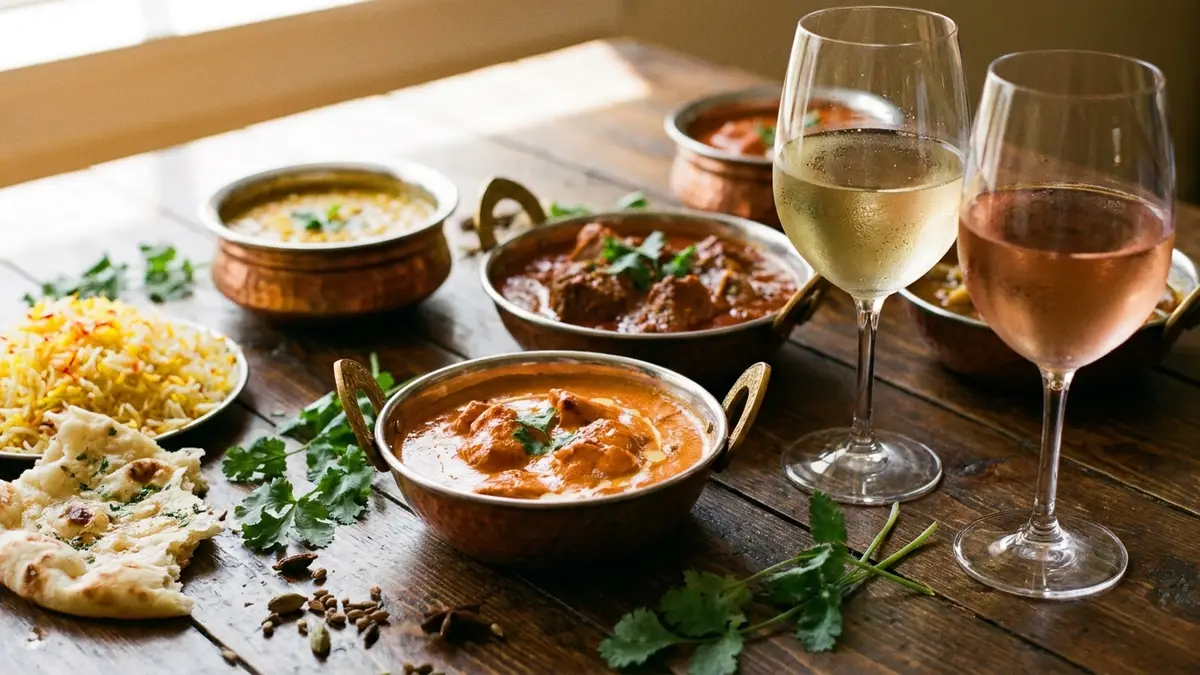
Pairing wine with Indian food is one of the most rewarding challenges at the table — and one of the most misunderstood. Indian cooking is not simply "spicy." A single meal might set a fiery vindaloo beside a mild, creamy korma, a smoky tandoori kebab, a fragrant saffron biryani, and an earthy lentil dal, each seasoned with its own blend of a dozen aromatic spices. That is three separate problems for a wine to solve at once: chili heat, perfumed spice, and richness. This guide breaks down exactly which styles win, which to avoid, and how to match the wine to the dish in front of you.
What Wine Goes with Indian Food, in One Paragraph
For most Indian meals, reach for an off-dry aromatic white — a medium-dry Riesling or a Gewürztraminer — because a little residual sugar cools the chili burn, high acidity cuts through ghee and cream, and the wine's floral, citrus, and spice aromatics mirror the garam masala on the plate. Keep alcohol low, ideally 11 to 12.5 percent, so it does not fan the heat. For creamy, milder dishes like butter chicken or korma, add Viognier or Chenin Blanc. For smoky tandoori and moderate-spice dishes, pour a dry rosé. For rich, meaty curries such as rogan josh, choose a light, fruity, low-tannin red — Grenache, Pinot Noir, or juicy Zinfandel — served slightly cool. Avoid oak, firm tannin, and high alcohol every time.
The Three Things Indian Food Does to Wine
Strip away the mystique and every Indian pairing comes down to managing three forces. Once you can name which one is loudest in a dish, the wine almost chooses itself.
Chili heat
Heat comes from capsaicin, the compound in chilies that triggers the burning sensation. Capsaicin is soluble in fat and alcohol but not in cold water, which is why a high-alcohol wine spreads and intensifies the burn rather than washing it away. Food science backs the fix: a small amount of sweetness measurably lowers the perceived heat on the palate. That is why an off-dry wine feels soothing while a bone-dry, high-proof red feels like pouring fuel on the fire. We cover the underlying mechanics in depth in our guide to pairing wine with spicy food — this article builds on it, dish by dish.
Aromatic spice
Here is where Indian food differs from merely spicy food. Cumin, coriander, cardamom, clove, cinnamon, fenugreek, and turmeric are aromatic rather than hot, and they give the cuisine its perfume. The best pairings do not just survive these aromas — they harmonize with them. Grapes with lifted, floral, spice-tinged aromatics, like Gewürztraminer with its lychee and rose or Riesling with its lime and ginger, echo the food's fragrance instead of fighting it.
Richness
Cream, coconut milk, cashew paste, yogurt, and clarified butter (ghee) give many dishes a coating, luxurious weight. Richness calls for acidity — a crisp, high-acid wine slices through the fat and resets your palate, while a soft, low-acid wine tastes tired beside it. Understanding what wine acidity is explains exactly why the bright wine refreshes and the flabby one falls flat.
Off-Dry Aromatic Whites: The Default for Indian Food
If you remember one category, make it this. Off-dry aromatic whites tick all three boxes — sweetness for heat, acidity for richness, perfume for spice — which is why sommeliers reach for them again and again with Indian menus.
- Riesling — the benchmark. Medium-dry and off-dry styles carry residual sugar to cool the burn, electric acidity to cut ghee and coconut, and lime-and-orchard aromatics that flatter the spice. German Kabinett is a reliable everyday choice. Learn what to look for in the Riesling wine guide.
- Gewürztraminer — intensely perfumed, with lychee, rose, and ginger notes that seem tailor-made for garam masala. Its plush texture and low acidity suit milder, creamier dishes especially well. The Gewürztraminer wine guide explains why it is a classic curry-house wine.
- Chenin Blanc — hugely versatile, with honeyed fruit and firm acidity; off-dry versions bridge heat and richness with ease. See the Chenin Blanc wine guide for the range from bone-dry to lusciously sweet.
- Viognier — full-bodied and floral, with peach and apricot; its weight matches creamy kormas and its perfume matches the spice, though its lower acidity means it prefers milder heat.
The key variable is sweetness, and it helps to know the scale. Our wine sweetness scale shows the difference between dry, off-dry, and medium-dry, so you can pick a Riesling that matches the heat level of your meal rather than guessing from the label.
Rosé and Sparkling: The Versatile Middle
When you want one bottle to cover a shared table of many dishes, look to pink and to bubbles. Both offer flexibility that a single-note wine cannot.
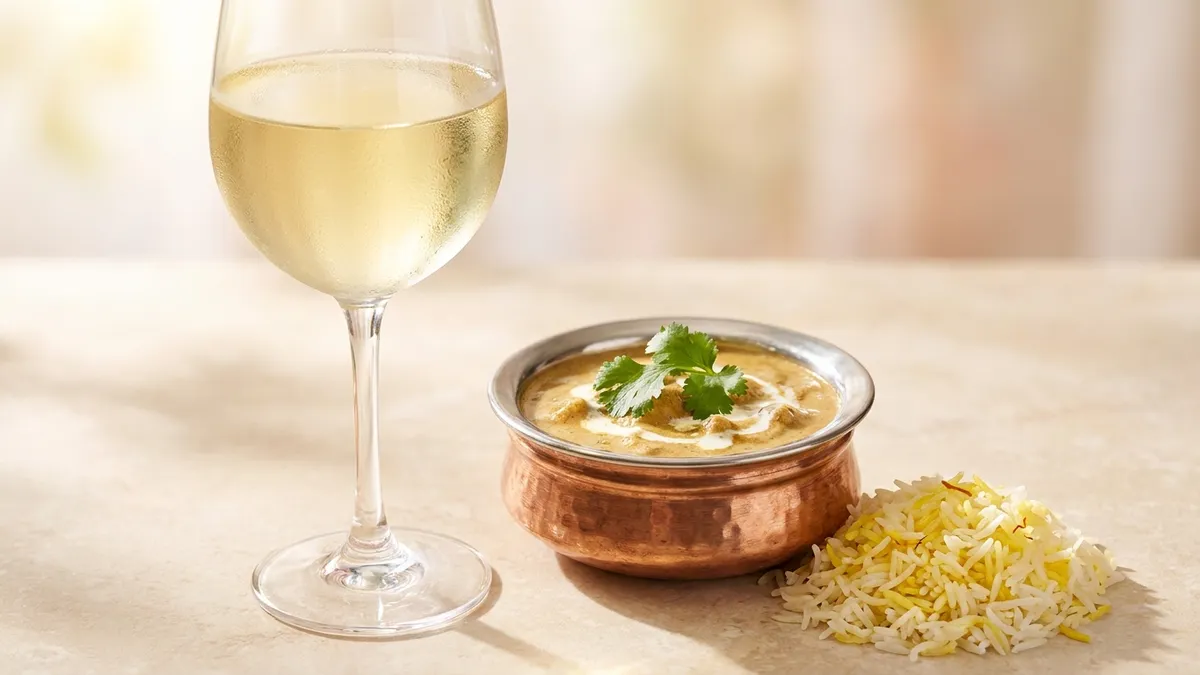
- Dry rosé — an underrated hero with Indian food. A crisp, dry rosé has the acidity of a white with a whisper of red-fruit character that flatters smoky, grilled, and tomato-based dishes. It is the standout match for tandoori chicken and tikka. The rosé wine guide covers how dryness and color shape the style.
- Off-dry rosé — a touch of sweetness pushes it further toward spicier plates while keeping the food-friendly fruit.
- Sparkling wine — the palate-scrubbing bubbles and high acidity make sparkling the best partner for fried, crisp starters like samosas, pakoras, and bhajis. The carbonation lifts the oil off your tongue between bites. For the full family, from Prosecco to Cava to crémant, see the guide to sparkling wine types.
A faintly off-dry sparkling wine is also a clever match for the sweet-sour tang of chaat and chutney-laced snacks — the sweetness meets the tamarind, and the bubbles clean up the rest.
When to Reach for a Red
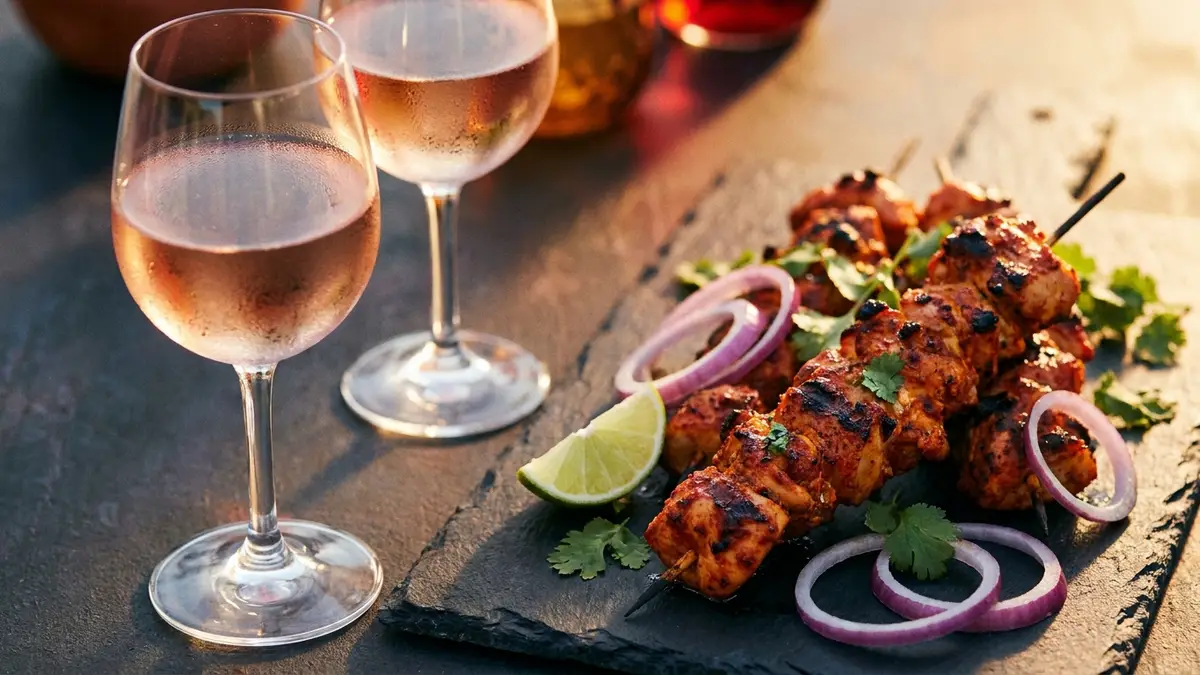
Red wine and curry can absolutely work — the trick is choosing the right kind. The enemy is tannin, the drying, gripping sensation in red wine that turns bitter and metallic against chili heat and makes the burn feel sharper. Our explainer on what tannins are shows why a firm, tannic red is the worst possible choice for a spicy plate.
The reds that succeed are light-bodied, fruit-forward, and low in tannin, ideally served slightly cool to freshen the fruit:
- Grenache — juicy, warm, and soft, with red berry and a gentle spice that suits meaty, moderately spiced curries.
- Pinot Noir — silky and low in tannin, a graceful partner for tandoori meats, keema, and lightly spiced lamb.
- Gamay — the grape of Beaujolais, bright and nearly tannin-free, especially good with a light chill.
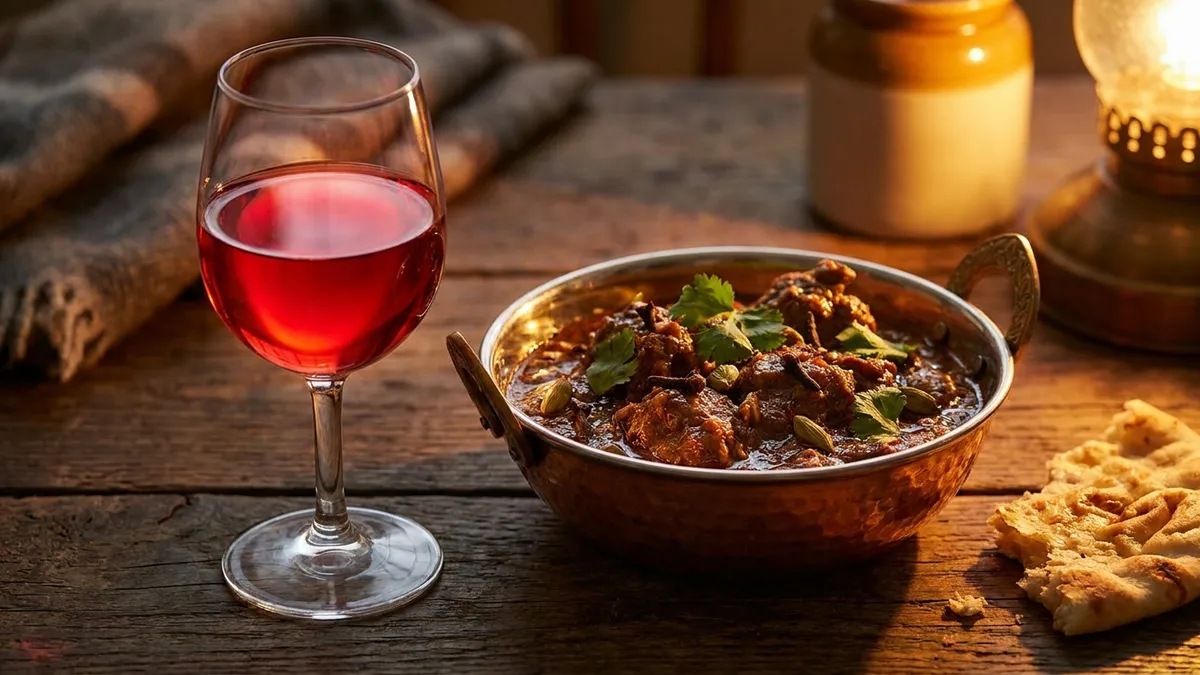
- Zinfandel — bold and jammy but usually soft in tannin, its sweet fruit stands up to rich, robust dishes like rogan josh.
Skip tannic heavyweights such as Cabernet Sauvignon and Syrah with anything spicy — they will taste harsh and hollow. If you want the full framework for how heat, fat, and salt reshape a wine, our broader wine and food pairing guide lays out the principles behind every match here.
An Indian-Dish-to-Wine Cheat Sheet
Different dishes call for different wines. This table maps the most-ordered Indian dishes to a reliable style, from the mildest korma to the fieriest vindaloo.
| Dish | Dominant force | Best wine style |
|---|---|---|
| Butter chicken / korma | Creamy, mild, lightly sweet | Off-dry Riesling, Viognier, Chenin Blanc |
| Tandoori chicken / tikka | Smoky, tangy, moderate spice | Dry rosé, off-dry Riesling, chilled Grenache |
| Biryani (chicken or lamb) | Fragrant, saffron, whole spices | Medium-dry Riesling, Gewürztraminer, dry rosé |
| Vindaloo | Fiery, sour, very hot | Off-dry Riesling with low alcohol, sparkling |
| Rogan josh / lamb curry | Rich, meaty, moderate spice | Grenache, Zinfandel, chilled Pinot Noir |
| Dal / chana masala | Earthy, mild, savory | Grüner Veltliner, dry rosé, light Pinot Noir |
| Saag / palak paneer | Green, herbal, mild | Sauvignon Blanc, off-dry Riesling |
| Samosas / pakoras (fried) | Crisp, oily, spiced | Sparkling wine, Cava, Prosecco |
North Indian vs South Indian: Why the Region Changes the Wine
Indian cuisine is not one tradition but many, and the biggest divide runs north to south. Knowing which style is on the table sharpens the pairing.
North Indian cooking leans on the tandoor oven, wheat breads, dairy, and warming Mughlai spices. Think butter chicken, korma, biryani, rogan josh, and naan — dishes that are often creamy, nutty, and richly spiced but not always fiercely hot. Richness and fragrance dominate here, so off-dry Riesling, Gewürztraminer, Viognier, and dry rosé shine, with light reds stepping in for the meatier plates.
South Indian cooking uses rice, coconut, tamarind, curry leaf, mustard seed, and dried chili, producing brighter, tangier, and frequently hotter dishes — dosas, sambar, rasam, coconut-based fish curries, and chili-forward vegetable dishes. The heat and sourness push you further toward off-dry, low-alcohol whites and sparkling wine, where sweetness and bubbles do the heavy lifting. A crisp Sauvignon Blanc or Grüner Veltliner also flatters the herbal, coconut, and curry-leaf notes.
Pairing the Big Dishes, One by One
Beyond the cheat sheet, a few of the most-loved dishes deserve a closer look.
Butter chicken and korma are the gentle giants — mild, creamy, faintly sweet. Lead with a wine that has a hint of residual sugar and some body: off-dry Riesling, Viognier, or a plush Gewürztraminer. The wine's fruit meets the tomato-and-cream sauce, and its acidity keeps the richness from cloying.
Vindaloo is the fire test. This Goan dish is intensely hot and sharpened with vinegar, so it needs maximum sweetness and minimum alcohol. A medium-dry or even a properly sweet Riesling is the safest bet; a fruity off-dry sparkling wine is the crowd-pleasing alternative. Nothing dry survives here.
Biryani is about fragrance, not fire. Saffron, cardamom, cinnamon, and whole spices call for an aromatic wine that mirrors the perfume — medium-dry Riesling, dry rosé, or Gewürztraminer. For a rich lamb biryani, a lightly chilled Grenache or Pinot Noir bridges the fragrance and the depth.
Dal and vegetarian curries are earthy and savory, and they open the door wider than you might expect. Grüner Veltliner, unoaked whites, and light, bright reds all suit lentils, chickpeas, and paneer. This is the same weight-matching logic that guides pairing beyond Indian food — the sauce and spice matter more than whether the dish contains meat.
Building Your Indian-Takeout Wine Kit
You do not need a cellar to nail Indian pairing — three bottles cover almost any menu. Keep these chilled and ready:
- A medium-dry Riesling — the universal default that handles heat, cream, and spice across the widest range of dishes.
- A dry rosé — for smoky tandoori, tikka, biryani, and anything grilled or tomato-based.
- A light, low-tannin red (Grenache, Pinot Noir, or Gamay) — for rich lamb curries and meaty dishes, served slightly cool.
With those three styles on hand, you can build a pairing for any Indian spread in seconds. The deeper skill — actually tasting why the sweetness cools the chili or the tannin clashes — is what makes it stick, and it is exactly what the Sommy app is built to train. Start with the free how to taste wine framework, then practice on your own glass at sommy.wine until the pairings feel obvious.
The same heat-and-richness framework carries to other spice-driven cuisines, too. If taco night is next, our guide to wine with Mexican food applies the same logic to chile, lime, and smoke.
Indian food rewards a curious palate, and so does wine. Pour something bright with a touch of sweetness, keep the alcohol and tannin low, mind whether heat, fragrance, or cream is leading, and the two will make each other better bite after bite.
Sources
Frequently Asked Questions
What wine goes with Indian food?
Off-dry aromatic white wine is the most reliable choice for Indian food. Riesling and Gewürztraminer lead the field because their slight sweetness cools chili heat, their high acidity refreshes the palate, and their perfumed aromatics echo the spices. For creamier or meatier dishes, a dry rosé or a light, fruity, low-tannin red like Grenache or Pinot Noir also works well.
What wine pairs with butter chicken?
Butter chicken is mild, creamy, and lightly sweet, so it wants a wine with a touch of residual sugar and enough body to match the richness. Off-dry Riesling, Viognier, and Chenin Blanc are excellent. If you prefer red, choose a soft, fruit-forward Grenache with low tannin. Avoid oaky, tannic reds, which turn bitter against the cream and tomato.
Does red wine go with curry?
Some reds work, but only the light, fruity, low-tannin ones. Tannin clashes with chili heat and makes both the wine and the food taste harsher, so skip Cabernet Sauvignon and other big, tannic reds. A chilled Grenache, Pinot Noir, Gamay, or juicy Zinfandel suits richer, meat-based curries like rogan josh far better than a powerful, oaky bottle.
Is Riesling good with Indian food?
Riesling is arguably the single best wine for Indian food. Its high acidity cuts through ghee, cream, and coconut, while off-dry and medium-dry styles carry just enough residual sugar to tame chili heat. Its lime and orchard-fruit aromatics also complement the citrus and spice in the food. Choose German Kabinett or a medium-dry Riesling for the widest range of dishes.
What wine goes with tandoori chicken?
Tandoori chicken is smoky, tangy from its yogurt marinade, and moderately spiced, which makes a dry rosé the standout match. The rosé's red-fruit character flatters the char while its acidity handles the spice. An off-dry Riesling also works, and if you want red, a lightly chilled Grenache or Pinot Noir suits the smoky, grilled flavors without overwhelming them.
What wine pairs with biryani?
Biryani is fragrant rather than fiery — layered with saffron, cardamom, cinnamon, and whole spices — so it suits an aromatic wine that mirrors that perfume. A medium-dry Riesling, a dry rosé, or a Gewürztraminer all echo the spice beautifully. For a meat biryani with more richness, a light, low-tannin red served slightly cool bridges the fragrance and the depth.
Sommy Team
LinkedInFounder & Wine Educator
The Sommy Team is building the world's most approachable wine education app, helping beginners develop real tasting skills through structured courses and AI-guided practice.