Wine with Mexican Food: Tacos, Mole, and Ceviche

By the Sommy Team — AI-assisted, human-edited.
Updated Jul 26, 2026
Contents (10)
- Why Wine with Mexican Food Is Its Own Puzzle
- What Wine Goes with Mexican Food, in One Paragraph
- The Three Signals Every Mexican Dish Sends
- Off-Dry Aromatic Whites: The Heat-Tamers
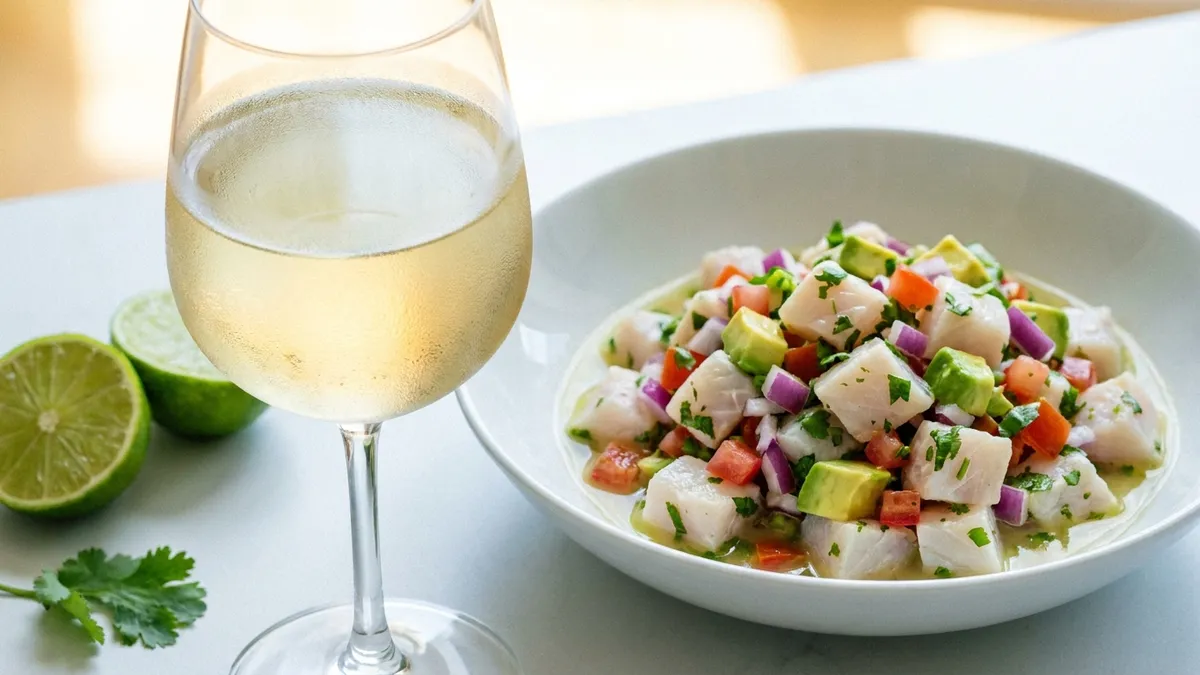
- High-Acid Whites and Rosé: For Lime, Ceviche, and the Coast
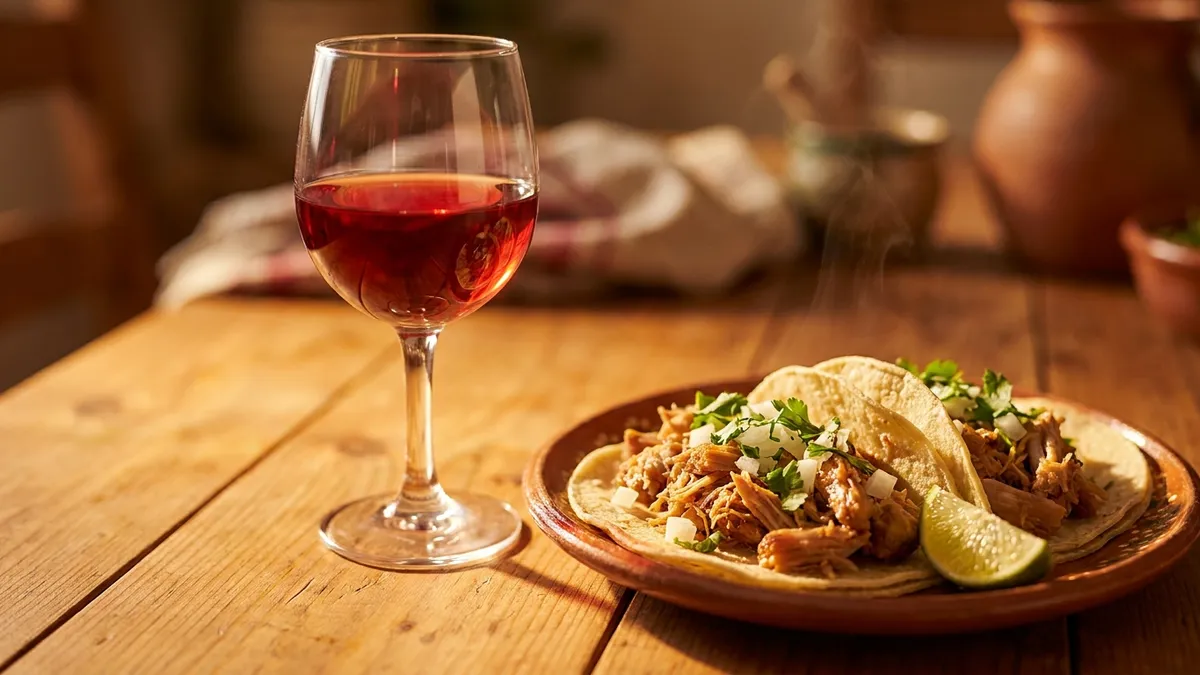
- When to Pour a Red: Carnitas, Al Pastor, and Barbacoa
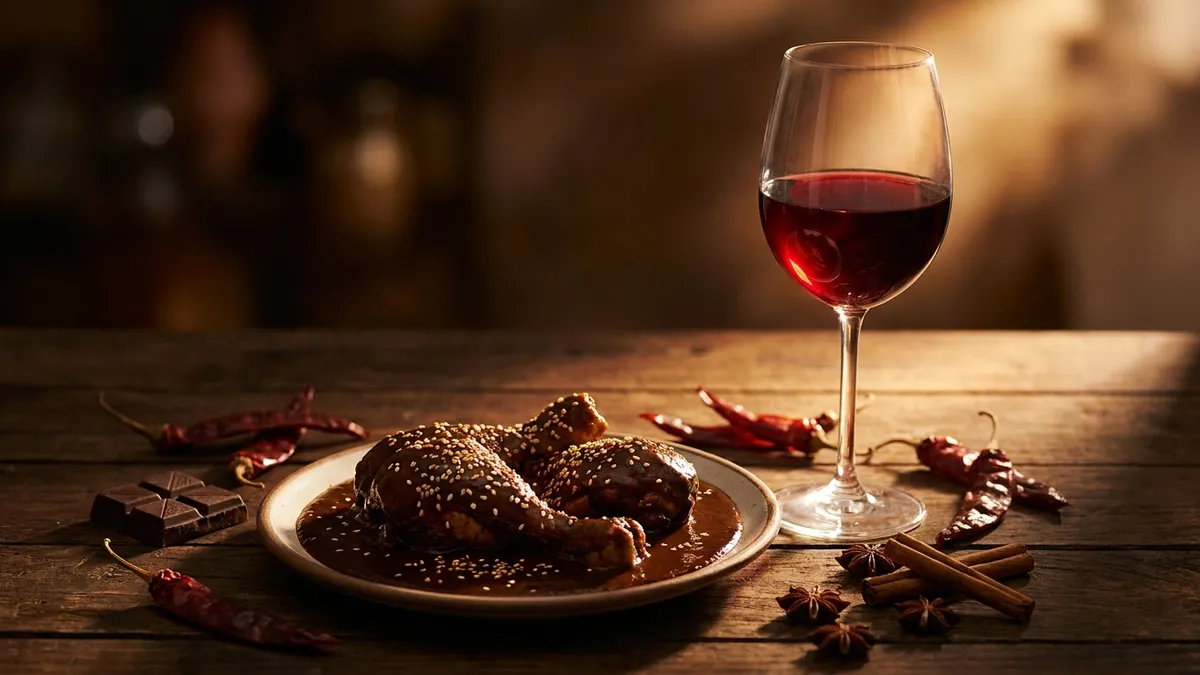
- Mole: The Ultimate Pairing Challenge
- A Mexican-Dish-to-Wine Cheat Sheet
- The Regions on the Plate: Yucatán, Oaxaca, and the Coast
- Building Your Taco-Night Wine Kit
TL;DR
Pairing wine with Mexican food means reading three signals — chile heat, bright lime acidity, and smoky or fatty richness. Off-dry Riesling and dry rosé tame the burn, high-acid whites like Albariño match ceviche and salsa, and juicy low-tannin reds such as Grenache and Tempranillo carry carnitas, al pastor, and mole.
Why Wine with Mexican Food Is Its Own Puzzle
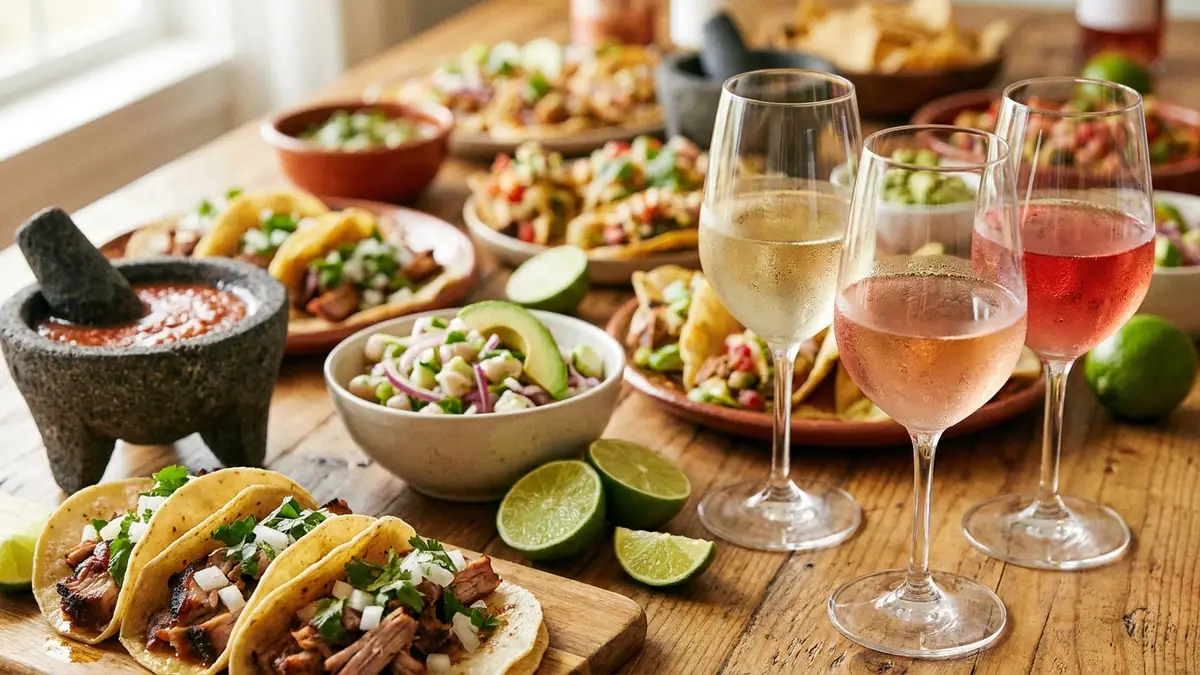
Pairing wine with Mexican food is one of the most rewarding matches at the table, and one of the most misread. The lazy shortcut is "spicy food, so drink beer or a margarita" — but Mexican cooking is far more than heat. A single spread might set a bright lime-soaked ceviche beside smoky carnitas, a fiery habanero salsa, a fragrant Oaxacan mole built on chiles and chocolate, and a stack of nixtamalized corn tortillas. That is three separate jobs for a wine to handle at once: chile heat, sharp lime acidity, and smoky, fatty richness. This guide breaks down exactly which styles win, which to avoid, and how to match the wine to the dish in front of you.
What Wine Goes with Mexican Food, in One Paragraph
For most Mexican meals, reach for an off-dry aromatic white — a medium-dry Riesling — because a little residual sugar cools the chile burn, high acidity cuts the lime and fat, and low alcohol, ideally 11 to 12.5 percent, keeps the heat from spreading. For lime-forward, seafood-driven dishes like ceviche, aguachile, and fish tacos, switch to a bone-dry, high-acid white — Albariño, Verdejo, or Sauvignon Blanc. For smoky, fatty plates such as carnitas, al pastor, carne asada, and barbacoa, pour a light, low-tannin red — Grenache, Zinfandel, Tempranillo, or a chilled Malbec — served slightly cool. Dry rosé and dry sparkling wine cover a mixed table when one bottle has to do everything. Avoid firm tannin, heavy oak, and high alcohol every time.
The Three Signals Every Mexican Dish Sends
Strip away the mystique and every Mexican pairing comes down to reading three signals. Once you can name which one is loudest, the wine follows almost on its own.
Chile heat
Heat comes from capsaicin, the compound in chiles that triggers the burning sensation. According to PubChem, the U.S. National Library of Medicine's chemical database, capsaicin dissolves readily in fat and alcohol but barely in cold water — which is why a high-alcohol wine spreads and intensifies the burn instead of rinsing it away. The classic study by Nasrawi and Pangborn (1990) in Physiology & Behavior found that a chilled sugar solution and cold milk both measurably reduced capsaicin mouth-burn, while a 5 percent ethanol rinse was no more effective than plain water. The lesson for the glass is direct: sweetness and cold soothe chile heat; alcohol does not. That is why an off-dry, well-chilled wine feels calming and a bone-dry, high-proof red feels like pouring fuel on the fire. We cover the mechanics in depth in our guide to pairing wine with spicy food.
Lime and acidity
Here is where Mexican food diverges from merely spicy food. Lime is the cuisine's other backbone — it brightens salsa, guacamole, ceviche, aguachile, tacos, and elote alike, and Yucatecan cooking layers in the sourness of bitter Seville-style oranges. All that acidity demands a wine that meets it. A crisp, high-acid white tastes fresh and lively beside the lime, while a soft, low-acid wine tastes flabby and tired. Understanding what wine acidity is explains exactly why the bright wine keeps pace and the flat one collapses.
Smoke and richness
The third signal is weight — the smoke and fat of grilled and slow-cooked dishes. Carnitas, al pastor, barbacoa, chorizo, and carne asada bring pork fat, char, and rendered richness, while cheese-laden enchiladas, quesadillas, and refried beans add a coating heaviness. Underneath much of it sits masa, corn treated with lime through the ancient process of nixtamalization, which gives tortillas and tamales their earthy, toasty depth. Richness like this calls for two things: acidity to cut through the fat and enough fruit to stand up to the char. That is the same weight-matching logic behind every good pairing, laid out in our broader wine and food pairing guide.
Off-Dry Aromatic Whites: The Heat-Tamers
When chile heat leads, off-dry aromatic whites are the surest hand. A touch of residual sugar soothes the burn, high acidity refreshes the palate, and low alcohol keeps the capsaicin from spreading.
- Riesling — the benchmark for anything spicy. Medium-dry and off-dry styles carry residual sugar to cool the burn, electric acidity to cut fat and lime, and lime-and-orchard aromatics that flatter the food. German Kabinett is a reliable everyday choice. See what to look for in the Riesling wine guide.
- Gewürztraminer — intensely perfumed, with lychee, rose, and ginger; its plush texture suits milder, creamier dishes and its exotic aromatics flatter mole and adobo especially well.
- Chenin Blanc — versatile and honeyed, with firm acidity; off-dry versions bridge heat and richness with ease.
The key variable is sweetness, and it helps to know the scale. Our wine sweetness scale shows the difference between dry, off-dry, and medium-dry, so you can pick a Riesling that matches the heat of your meal rather than guessing from the label. For a plate of chile-heavy enchiladas or a salsa-drenched taco, aim off-dry; for milder dishes, a nearly dry Riesling still works.
High-Acid Whites and Rosé: For Lime, Ceviche, and the Coast
When lime leads — the coastal, seafood side of Mexican cooking — match acid with acid. Bone-dry, high-acid whites echo the citrus instead of fighting it.
- Albariño — the standout for ceviche and aguachile. Its saline, citrus-driven character seems tailor-made for lime, chile, and raw fish. Learn the style in the Albariño wine guide.
- Verdejo — zesty and herbal, with a green, almost grassy lift that suits fish tacos, shrimp, and salsa verde.
- Sauvignon Blanc — bright and pungent, its cut-grass and citrus tones flatter anything with lime, cilantro, and green chile.
- Dry rosé — the great all-rounder for a mixed table, with the acidity of a white and a whisper of red fruit that flatters both grilled meat and tomato-based salsa. See the rosé wine guide for how dryness and color shape the style.
For fried, crisp starters — taquitos, flautas, chips and guacamole — reach for dry sparkling wine. The palate-scrubbing bubbles and high acidity lift the oil off your tongue between bites. For the full family, from Cava to Prosecco to crémant, see the guide to sparkling wine types. Anything ceviche-adjacent also rewards the pairing logic in our wine with seafood guide.
When to Pour a Red: Carnitas, Al Pastor, and Barbacoa
Red wine and Mexican food absolutely work — the trick is choosing the right kind. The enemy is tannin, the drying, gripping sensation in red wine that turns bitter and metallic against chile heat and makes the burn feel sharper. Our explainer on what tannins are shows why a firm, oaky red is the worst possible choice for a spiced plate.
The reds that succeed are light-bodied, fruit-forward, and low in tannin, ideally served slightly cool to freshen the fruit:
- Grenache — juicy, warm, and soft, with red berry and gentle spice that suit al pastor, carnitas, and moderately spiced tacos. See the Grenache wine guide.
- Tempranillo — Spain's savory, cherry-and-leather red is a natural cultural fit for Mexican cooking and handles grilled carne asada and barbacoa with ease. The Tempranillo wine guide covers its range.
- Zinfandel — bold and jammy but usually soft in tannin, its sweet fruit stands up to smoky, robust dishes and chile-heavy mole.
- Malbec — plush and dark-fruited; served slightly chilled, it partners grilled steak tacos and chorizo without turning harsh.
Skip tannic heavyweights such as oaky Cabernet Sauvignon with anything spicy — they will taste hollow and bitter. A light chill on a fruity red, around 55°F, tightens its structure and makes it even friendlier with heat.
Mole: The Ultimate Pairing Challenge
If one dish tests a wine, it is mole — the pride of Oaxaca, a sauce that can layer dried chiles, chocolate, nuts, seeds, dried fruit, and a dozen warm spices into something deep, dark, and faintly sweet. There is no single mole; mole negro, mole poblano, and mole coloradito each shift the balance of chile, chocolate, and spice.
Because mole is simultaneously spicy, savory, bittersweet, and rich, it wants a wine with real fruit, moderate structure, and a savory edge of its own. A ripe Grenache or Zinfandel mirrors the dark-fruit and spice; a Tempranillo matches the earthy, leathery depth. On the white side, an off-dry Riesling or a perfumed Gewürztraminer flatters the chile-and-chocolate sweetness beautifully, cooling the heat while echoing the exotic spice.
The one thing to avoid is firm, oaky tannin — it collides with the chile and drags the whole pairing bitter. Match the fruit and the spice of the mole, not its power, and the sauce and the glass lift each other.
A Mexican-Dish-to-Wine Cheat Sheet
Different dishes send different signals. This table maps the most-loved Mexican dishes to a reliable style, from bright ceviche to smoky barbacoa.
| Dish | Dominant signal | Best wine style |
|---|---|---|
| Ceviche / aguachile | Lime, chile, raw seafood | Albariño, Verdejo, dry sparkling |
| Fish or shrimp tacos | Bright, citrus, light | Sauvignon Blanc, Albariño, dry rosé |
| Carnitas / al pastor tacos | Smoky, fatty, sweet-savory | Grenache, Zinfandel, chilled Tempranillo |
| Carne asada / barbacoa | Grilled, rich, meaty | Tempranillo, Malbec, Grenache |
| Enchiladas (red chile) | Chile-forward, cheesy | Off-dry Riesling, light Zinfandel |
| Mole (poblano or negro) | Chile, chocolate, spice | Grenache, Zinfandel, off-dry Riesling |
| Salsa-heavy / very spicy | Fiery, hot | Off-dry Riesling, off-dry sparkling |
| Chips, guacamole, flautas | Crisp, oily, fried | Dry sparkling, Cava, Sauvignon Blanc |
The Regions on the Plate: Yucatán, Oaxaca, and the Coast
Mexican cuisine is not one tradition but many, and the region on the plate sharpens the pairing.
The coast — Baja, Sinaloa, Nayarit, and Veracruz — lives on lime and seafood: ceviche, aguachile, and fish tacos. Acidity and freshness dominate, so bone-dry, high-acid whites and dry sparkling are the natural partners.
Yucatán leans on the achiote-and-sour-orange marinade of cochinita pibil and the searing, citrusy heat of the habanero. The dishes are tangy, smoky, and bright, which pushes you toward off-dry Riesling for the heat and dry rosé for the smoke.
Oaxaca is the land of mole and of complex, chile-driven cooking — the place to pour a ripe, low-tannin red or a perfumed off-dry white, as above.
The central highlands — Mexico City, Puebla, Jalisco — give us tacos, carnitas, barbacoa, and chiles rellenos, the fatty, smoky heart of the cuisine, where juicy reds and dry rosé shine.
Mexico even makes its own wine, chiefly in Baja's Valle de Guadalupe, where grapes like Tempranillo, Grenache, and Nebbiolo thrive in the warm, dry climate — a fittingly local answer to the question of what to pour. If Indian food is your other weakness, our companion guide to wine with Indian food uses the same heat-and-richness framework for a different spice palette.
Building Your Taco-Night Wine Kit
You do not need a cellar to nail Mexican pairing — three bottles cover almost any spread. Keep these chilled and ready:
- A medium-dry Riesling — the universal default for heat, chile, and mole across the widest range of dishes.
- A crisp, bone-dry white (Albariño, Verdejo, or Sauvignon Blanc) — for ceviche, aguachile, fish tacos, and anything lime-forward.
- A light, low-tannin red (Grenache, Tempranillo, or Zinfandel) — for carnitas, al pastor, barbacoa, and mole, served slightly cool.
With those three styles on hand, you can build a pairing for any Mexican table in seconds. The deeper skill — actually tasting why the sweetness cools the chile or the tannin clashes — is what makes it stick, and it is exactly what the Sommy app is built to train. Start with the free how to taste wine framework, then practice on your own glass at sommy.wine until the pairings feel obvious.
Mexican food rewards a curious palate, and so does wine. Pour something bright with the acidity to match the lime, keep the alcohol and tannin low so the chile stays friendly, mind whether heat, lime, or smoke is leading, and the two will make each other better bite after bite.
Sources
Frequently Asked Questions
What wine goes with Mexican food?
The most reliable choice is an off-dry aromatic white like Riesling or a crisp dry rosé. A touch of residual sugar cools chile heat, high acidity matches the lime and salsa that run through the cuisine, and low alcohol keeps the burn from spreading. For fattier, smokier dishes such as carnitas or al pastor, a light, low-tannin red like Grenache or Tempranillo works beautifully.
What wine pairs with tacos?
It depends on the filling. Fish and shrimp tacos love a high-acid white — Albariño, Verdejo, or Sauvignon Blanc — that echoes the lime and slaw. Carnitas, al pastor, and carne asada want a juicy, low-tannin red such as Grenache, Zinfandel, or a chilled Tempranillo. If the salsa is fiery, shift toward an off-dry Riesling to keep the heat in check.
What wine goes with mole?
Mole is complex — dried chiles, chocolate, nuts, seeds, and warm spices layered into one sauce — so it needs a wine with fruit, moderate tannin, and a savory streak. A ripe Grenache, Zinfandel, or Tempranillo mirrors the dark fruit and spice, while an off-dry Riesling or Gewürztraminer flatters the chile-and-chocolate sweetness. Avoid firm, oaky tannin, which clashes with the chile.
Does red wine go with Mexican food?
Yes, as long as it is light-bodied, fruit-forward, and low in tannin. Tannin turns bitter against chile heat and makes both wine and food taste harsher, so skip big, oaky Cabernet Sauvignon. Choose Grenache, Zinfandel, Tempranillo, or a chilled Malbec instead — they suit carnitas, al pastor, barbacoa, and mole far better than a powerful bottle.
What wine pairs with ceviche and aguachile?
Ceviche and aguachile are all about lime, chile, and fresh seafood, so they want a bone-dry, high-acid white. Albariño is the standout because its salty, citrus-driven character mirrors the dish, but Verdejo, Sauvignon Blanc, and dry sparkling wine all shine. Keep the wine cold and unoaked so its acidity meets the citrus head-on rather than fighting it.
What wine goes with spicy Mexican food?
For genuinely fiery dishes, reach for an off-dry Riesling with low alcohol, around 11 to 12.5 percent. Its residual sugar measurably cools the burn while its acidity refreshes the palate, and serving it well chilled amplifies the soothing effect. A faintly off-dry sparkling wine is the crowd-pleasing alternative. Avoid high-alcohol reds, which spread capsaicin and fan the flames.
Sommy Team
LinkedInFounder & Wine Educator
The Sommy Team is building the world's most approachable wine education app, helping beginners develop real tasting skills through structured courses and AI-guided practice.