Albariño Wine Guide: Spain's Crisp Coastal White

By the Sommy Team — AI-assisted, human-edited.
Updated Apr 29, 2026
Contents (11)
- What Is Albariño Wine, in 90 Words
- A Short History of Albariño
- Where Albariño Grows: The Rías Baixas DO
- Terroir: Why Albariño Tastes Like the Sea
- Tasting Profile: What to Expect in the Glass
- How Albariño Is Made
- Food Pairings: Why Albariño Loves Seafood
- Albariño vs Alvarinho: The Portuguese Connection
- How to Buy and Drink Albariño
- Albariño Beyond Spain and Portugal
- Building Your Albariño Confidence
TL;DR
Albariño is Spain's signature coastal white grape, grown in Rías Baixas in Galicia. Expect pale lemon-green color, zippy acidity, salty minerality, and aromas of white peach, lemon, green apple, and almond skin. Granite soils and Atlantic air shape the style. Drink young, chilled, with seafood — oysters, octopus, anchovies, ceviche.
What Is Albariño Wine, in 90 Words
Albariño is Spain's signature coastal white grape, grown in Rías Baixas — a cool, rainy region on Galicia's Atlantic coast in northwest Spain. The wine is pale lemon-green, high in zippy acidity, with a distinctive saline minerality from the sea air. Expect aromas of white peach, lemon, green apple, grapefruit, and a hint of almond skin. Most bottles land at 12 to 13 percent alcohol on granite and sand soils. Albariño is the natural seafood wine — raw oysters, grilled octopus, anchovies, ceviche, percebes. Drink it young, within one to three years, well chilled.
A Short History of Albariño
Albariño's roots run deep into Galician soil. The grape is believed to have been cultivated in northwest Spain since at least the 12th century, brought into the wider region by Cluniac and Cistercian monks who established monasteries along the pilgrimage route to Santiago de Compostela. The monks planted vineyards to supply wine for the church and for travelers, and Albariño thrived in the cool, wet Atlantic climate where most other grapes struggled to ripen.
For centuries the wine was made for local consumption, hidden behind Spain's more famous reds from Rioja and Ribera del Duero. The modern Albariño story really begins in 1988, when Rías Baixas was officially recognized as a Denominación de Origen (DO) — Spain's appellation system that defines a region's grapes, yields, and production rules. From around 250 hectares planted in the late 1980s, Rías Baixas now has more than 4,000 hectares of vineyards, the vast majority planted to Albariño.
That growth has been driven almost entirely by the wine's quality and its uncanny affinity for the kind of fresh seafood that defines modern coastal cooking around the world.
Where Albariño Grows: The Rías Baixas DO
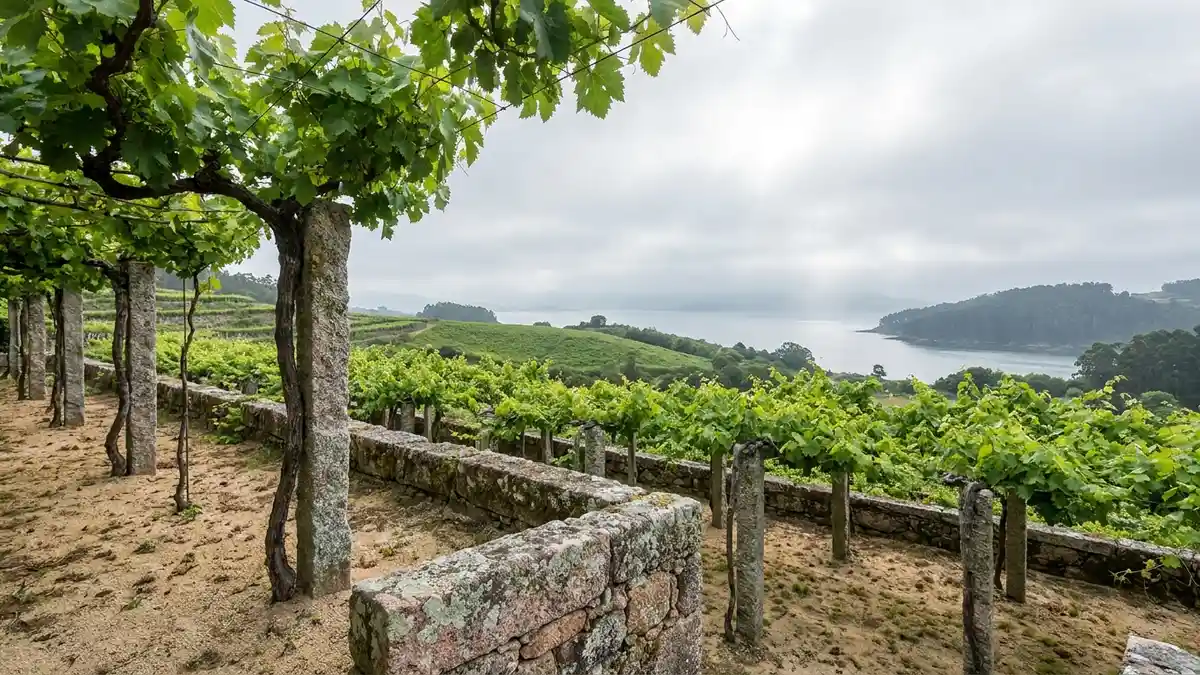
Rías Baixas translates roughly as "lower estuaries" — a reference to the four deep, fjord-like inlets where the Atlantic carves into Galicia's western coast. The region sits in the far northwest corner of Spain, just north of the Portuguese border, in a green, rain-soaked corner of Iberia that looks more like Ireland than the sun-baked Mediterranean Spain most people picture.
The climate here is the opposite of typical Spanish wine country. Annual rainfall regularly exceeds 1,500 millimeters — among the highest of any major wine region in Europe. Summers are mild rather than hot, the Atlantic moderates temperature swings, and the humidity is high. To cope with the damp, growers traditionally trained vines on pergolas (called parras locally) that lift the canopy waist-high or higher off the ground, improving airflow and keeping grapes away from the wet soil.
The Five Sub-Regions
Rías Baixas is divided into five official sub-regions, each with a distinct personality:
- Val do Salnés — the historic heart of the DO and the most famous sub-region. Located right on the coast, the wines show maximum salinity, bright citrus, and a distinct mineral edge. This is the benchmark style.
- Condado do Tea — inland along the Miño River that forms the Portuguese border. Slightly warmer, producing fuller, riper Albariño with more stone fruit and a touch less acidity.
- O Rosal — also along the Miño but closer to the river mouth. Often blends Albariño with Loureira and Treixadura, producing aromatic, floral whites.
- Soutomaior — the smallest sub-region, on granite-heavy soils. Mineral, structured Albariño with good aging potential.
- Ribeira do Ulla — the northernmost and youngest sub-region. Higher elevations, cooler climate, leaner and more linear style.
You will not always see the sub-region listed on the label, but if you see "Val do Salnés" or "O Rosal" mentioned, it is a clue to the style in the bottle.
Terroir: Why Albariño Tastes Like the Sea
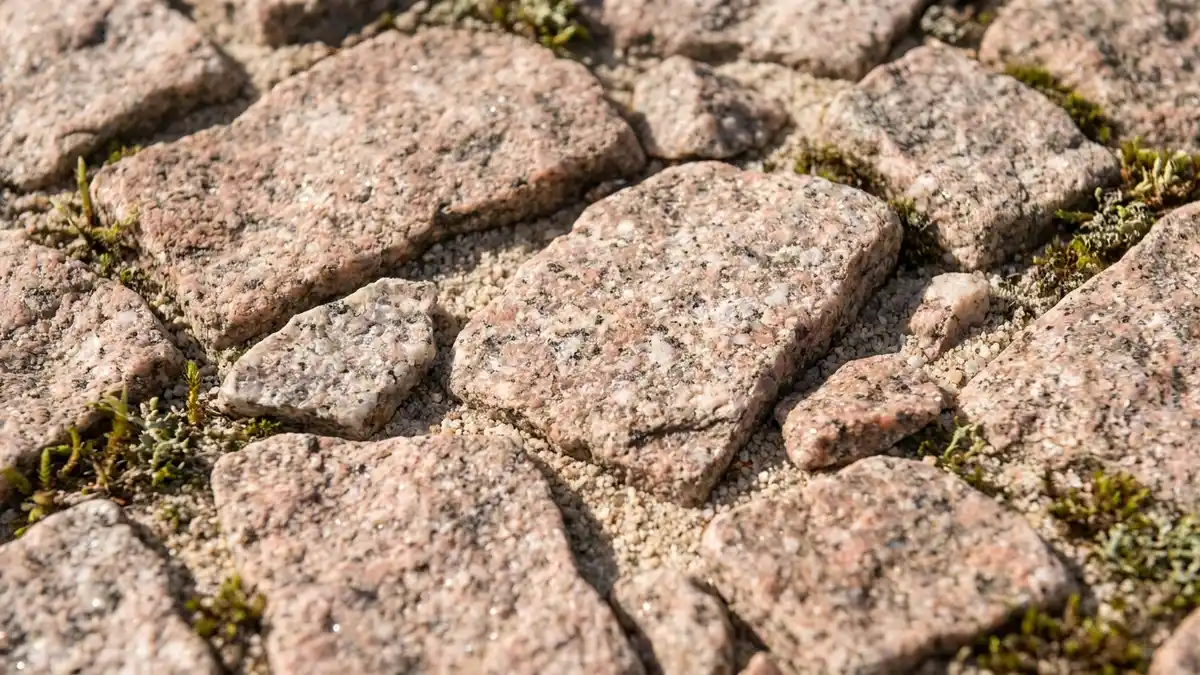
Talk to any winegrower in Rías Baixas and the conversation turns quickly to two things: granite and the Atlantic.
The bedrock of Galicia is granite, often weathered into coarse sand at the surface. This combination drains the relentless rain quickly, prevents waterlogged roots, and forces the vines to dig for nutrients. The result is small berries with concentrated flavor and the mineral, almost stony backbone that defines the best Albariño.
Then there is the ocean. Many of the best vineyards sit within sight of the Atlantic, and the prevailing westerly winds carry sea spray and salt air across the vines. Whether the resulting salinity in the wine is literally absorbed sodium or a sensory impression created by the combination of acid and minerality is a matter of debate among scientists. What is not in debate is that experienced tasters consistently describe Albariño from Val do Salnés as tasting "like the sea." Read more on what that mineral, oceanic character actually is in our deeper what is terroir explainer.
The combination — granite, Atlantic, cool maritime climate, high acid grape — is genuinely unusual. There are very few wine regions in the world that produce a white wine with this specific salty, citrusy, mineral profile. That uniqueness is what has made Albariño one of the most exciting whites in modern wine.
Tasting Profile: What to Expect in the Glass
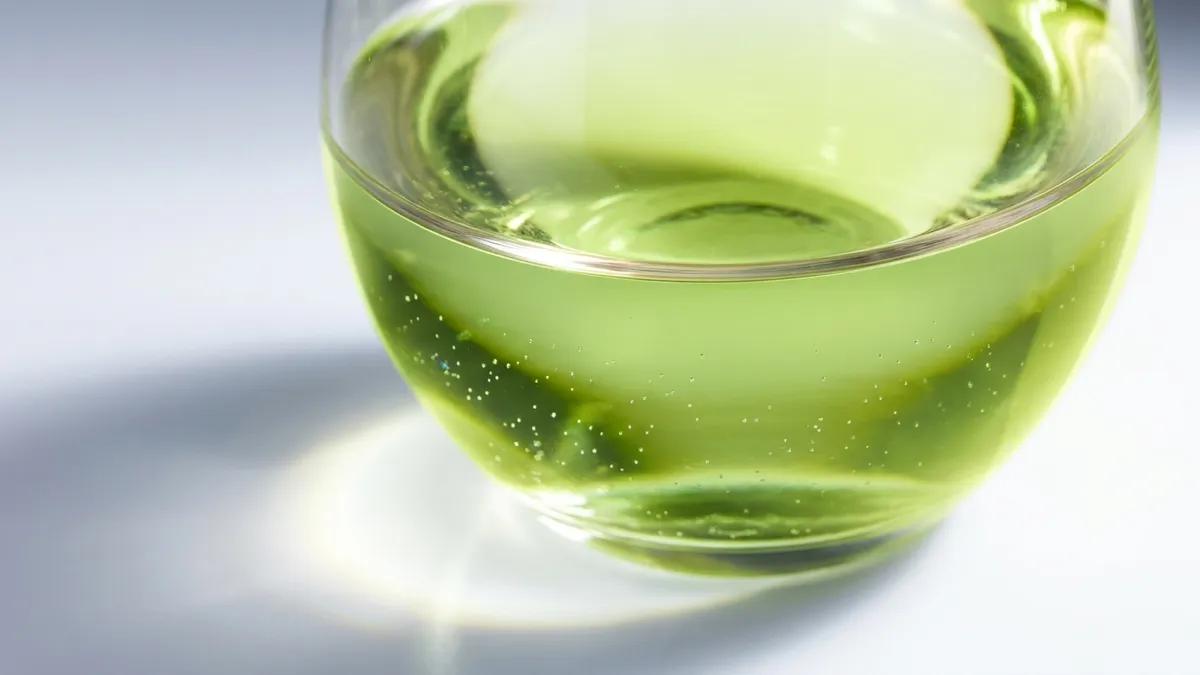
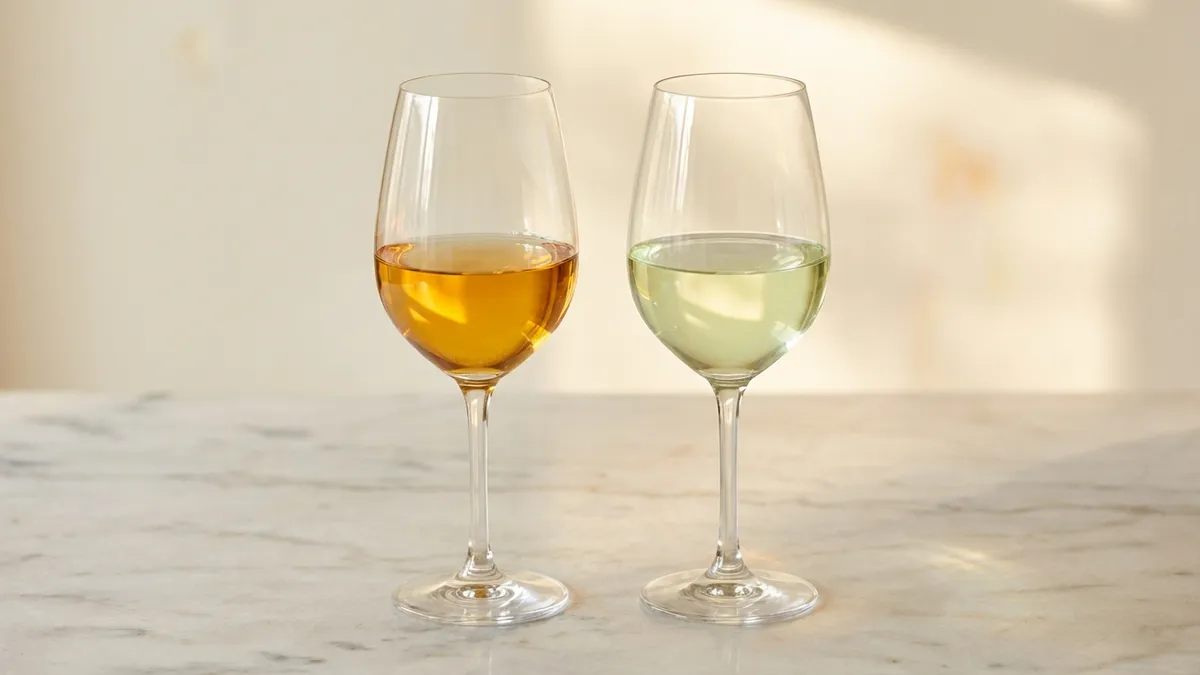
Pour a young Albariño from Val do Salnés into a glass and you should see a pale lemon-green color, often with a slight green tint at the rim. The wine is brilliantly clear — there is nothing hazy, nothing dull. Tilt the glass and look at the legs — Albariño's moderate alcohol means the legs are present but not pronounced.
On the nose, the classic aroma profile breaks down like this:
- Stone fruit: white peach, apricot skin, sometimes nectarine
- Citrus: lemon zest, grapefruit, lime
- Orchard fruit: green apple, sometimes pear
- Floral: white flower, orange blossom in riper examples
- Saline / mineral: sea spray, wet stone, crushed shells
- Subtle: a distinctive bitter almond skin or marzipan note that many tasters consider Albariño's signature
On the palate, the structure is consistent across producers:
- Acidity: high. This is one of the highest-acid white wines in the world, comparable to a good Riesling or a young Chablis-style Chardonnay.
- Body: light to medium. Refreshing rather than rich.
- Alcohol: 12 to 13 percent. Moderate.
- Finish: long, with a saline, almost mouth-watering aftertaste that pulls you back for another sip.
If you are still building your tasting vocabulary, the Sommy app walks you through identifying salinity, citrus character, and stone fruit aromas with side-by-side guided tastings — exactly the skills that bring Albariño into focus.
How Albariño Is Made
Most Albariño is made in a deliberately reductive, fresh style. The grapes are typically hand-harvested from the pergola-trained vines, gently pressed, and fermented at cool temperatures in stainless steel tanks to preserve every bit of citrus, stone fruit, and salinity. There is no oak, no malolactic fermentation, and no extended skin contact in the classic style. The wine is bottled within months of harvest and released to capture the grape at its most vibrant.
The Lees-Aging Tradition
A growing number of quality-focused producers age Albariño on the lees (the spent yeast cells left over after fermentation) for anywhere from a few months to several years. Lees aging adds:
- A creamier, slightly fuller texture
- Subtle bready, brioche-like notes
- More complexity without sacrificing freshness
- A capacity to age for five years or more
These wines often carry "Sobre Lías" on the label and represent some of the most exciting Albariño being made today. They are still far from oaky or buttery — think of it as a delicate amplification rather than a transformation.
Old Vines and Single Vineyards
A small but influential movement is producing single-vineyard Albariño from old vines, often on south-facing granite parcels close to the Atlantic. These wines push back on the idea that Albariño is only for early drinking. They are concentrated, mineral-driven, and capable of a decade in bottle, developing waxy, honeyed notes while keeping their saline grip.
Food Pairings: Why Albariño Loves Seafood
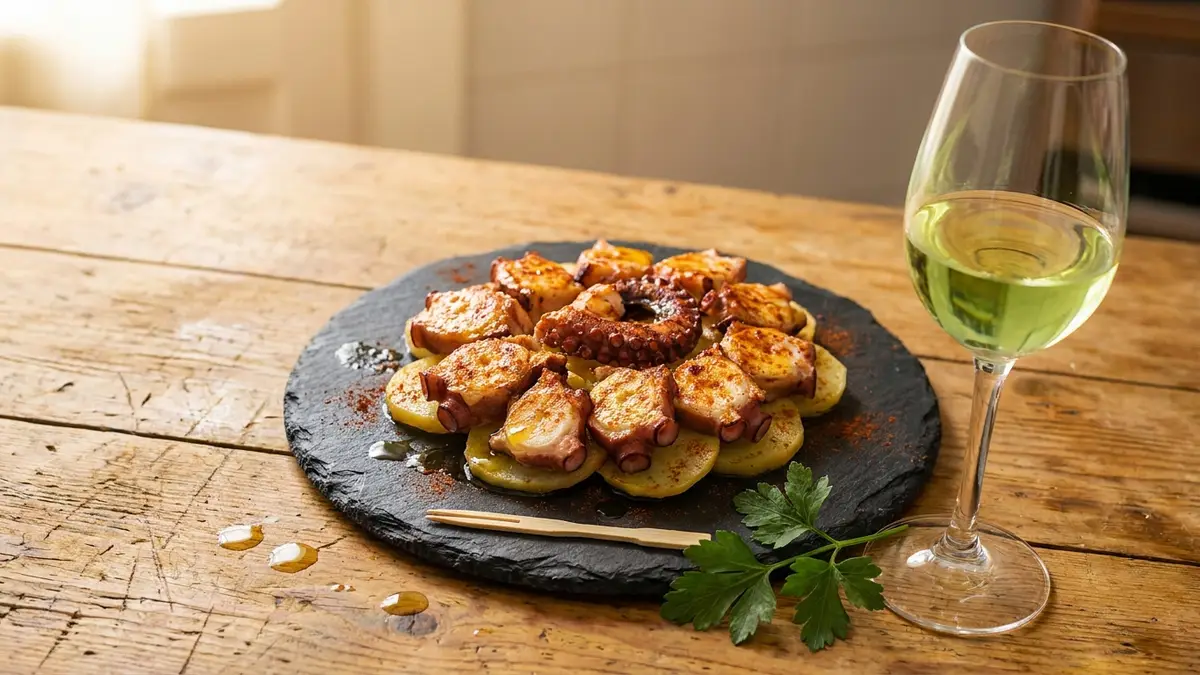
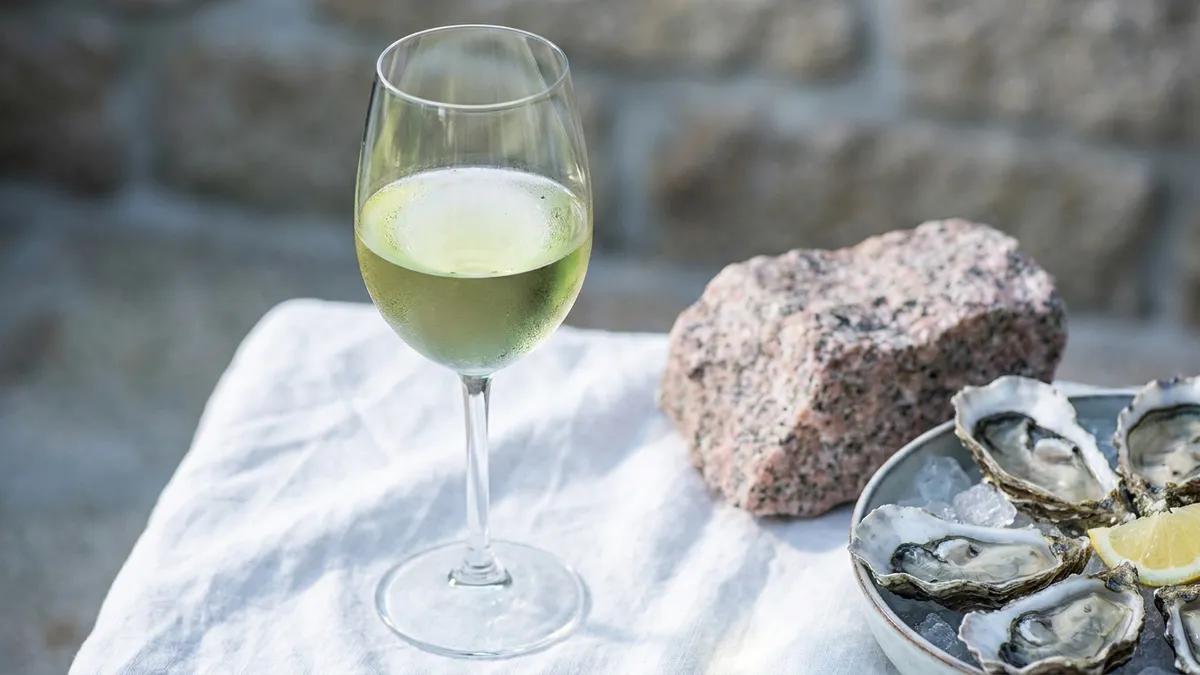
The classic pairing logic — what grows together, goes together — has rarely been more literally true than with Albariño and Galician seafood. The Rías Baixas estuaries are one of the world's great shellfish nurseries, producing oysters, mussels, clams, scallops, and the famously expensive percebes (goose barnacles). The wine evolved to drink with that food.
The pairing science is simple. Albariño's high acid cuts through fat and salt the way a squeeze of lemon does. Its salinity echoes the briny minerality of fresh shellfish. Its low oak and tannin content avoid the tannin-fish clash that ruins so many red-with-fish pairings.
Reliable Pairings
- Raw oysters — the textbook match, alongside Champagne and Muscadet
- Grilled octopus (pulpo a la gallega) — the regional pairing in Galicia
- Anchovies, sardines, and other oily small fish — acid handles the fat
- Steamed clams and mussels — especially when cooked with white wine and garlic
- Ceviche — Albariño's citrus character mirrors the lime in the dish
- White fish with lemon — sole, hake, sea bass
- Sushi and sashimi — light, clean, no oak to clash with raw fish
- Goat cheese — fresh chevre with a young Albariño is a sleeper match
What to Avoid
- Heavy cream sauces — Albariño is too lean
- Steak and red meat — no body to handle the protein
- Sweet desserts — the wine reads bitter against sugar
- Heavily oaked dishes (smoked food, BBQ) — the wine gets lost
For a deeper look at the chemistry behind seafood pairings and which whites match which preparations, see the full wine and seafood pairing guide.
Albariño vs Alvarinho: The Portuguese Connection
Cross the Miño River south from Rías Baixas and you enter Vinho Verde, Portugal's coastal white wine region. The same grape grows here under its Portuguese name, Alvarinho, especially in the Monção e Melgaço sub-region right across the water from O Rosal.
Stylistically, the two are clearly cousins. Alvarinho from Vinho Verde tends to be:
- Slightly fuller bodied than Galician Albariño
- A touch more tropical — passionfruit and pineapple alongside the citrus
- A little higher in alcohol, often pushing 13 to 13.5 percent
- Sometimes blended with Loureiro and Trajadura for added aromatics
A classic Vinho Verde labeled simply as "Vinho Verde" is usually a blend of several local grapes and is often slightly fizzy and lower in alcohol. A Vinho Verde labeled "Alvarinho" or "Monção e Melgaço" is the serious, single-variety expression closest to Spanish Albariño. Our Portuguese wine guide covers the broader Vinho Verde region in more depth.
How to Buy and Drink Albariño
When to Drink
Most Albariño is built for the first one to three years after the vintage. By year four, the bright citrus fades and the wine starts to lose its edge unless it has been made in a more serious, lees-aged style. The rule of thumb: check the vintage on the back label, and if it is more than three years old, only buy if the producer is known for aging Albariño on lees.
Serving Temperature
Serve Albariño cold — between 8 and 10 degrees Celsius (46 to 50 Fahrenheit). Most home fridges run at about 4 degrees, which is too cold and mutes the aromatics. Pull the bottle out 15 minutes before pouring, or chill a room-temperature bottle in an ice-water bath for about 25 minutes.
Glassware
A standard white wine glass with a slightly tapered bowl works beautifully. Avoid oversized red wine glasses, which let the cold dissipate too quickly and dilute the saline character.
How to Read the Label
A few label signals worth knowing:
- Rías Baixas — the DO. Required on any official Albariño from the region.
- Albariño — when 100 percent of the wine is from this grape, the label says so. Otherwise it may be blended (especially in O Rosal).
- Sobre Lías — aged on the lees. Expect more body and complexity.
- Val do Salnés — coastal, classic style.
- Vintage — recent is good. Two years old or less is the sweet spot.
Albariño Beyond Spain and Portugal
Outside Iberia, Albariño plantings are still small but growing. California has a few hundred acres, mostly in cooler regions like Edna Valley, Carneros, and parts of the Central Coast. Oregon's Willamette Valley has experimented with Albariño with promising results — the climate is similar to Galicia. Small plantings exist in Uruguay, New Zealand, and Australia.
These New World examples are interesting but tend to be riper, more tropical, and less saline than Galician originals. The granite soils and Atlantic spray of Rías Baixas remain the benchmark.
The Sommy app includes guided tastings that help you train your palate to spot these regional differences — recognizing the signature Galician salinity is one of those skills that makes Spanish whites click into focus.
Building Your Albariño Confidence
If you want to get to know Albariño properly, the simplest path is a small horizontal tasting:
- A young Albariño from Val do Salnés — the benchmark coastal style.
- A Sobre Lías Albariño from a quality producer — to see what lees aging adds.
- A Portuguese Alvarinho from Monção e Melgaço — to taste the cousin.
Pour them side by side, blind if possible, with a plate of fresh oysters or grilled white fish. The differences become unmistakable: the saline edge of Val do Salnés, the cream and weight of Sobre Lías, the riper, slightly fuller fruit of Alvarinho.
That is the kind of comparative tasting that builds real understanding fast — and it is exactly the structured approach the Sommy app uses across its grape variety courses, from Albariño through Riesling and Chenin Blanc and beyond.
Albariño rewards curiosity. It is one of the world's great food wines, dramatically underpriced for the quality, and it carries the salt and stone of the Atlantic in every glass. Once you have tasted a great one with fresh seafood by the sea, you understand why Galicia has been making this wine for nine centuries.
Frequently Asked Questions
What does Albariño wine taste like?
Albariño tastes crisp, bright, and salty. Expect aromas of white peach, lemon zest, green apple, grapefruit, and a hint of almond skin. The palate is high in acidity, light to medium bodied, with a saline minerality that reflects the Atlantic coastal climate of Rías Baixas. Most examples sit around 12 to 13 percent alcohol.
Where is Albariño from?
Albariño is the signature white grape of Rías Baixas, a small wine region in Galicia in northwest Spain along the Atlantic coast. It is also grown across the border in northern Portugal under the name Alvarinho, especially in the Vinho Verde region. Smaller plantings now exist in California, Oregon, and Uruguay.
Is Albariño a sweet or dry wine?
Albariño is almost always made bone dry. The high natural acidity and citrus character can give an impression of freshness or brightness, but there is no residual sugar in classic Rías Baixas examples. If a producer makes a sweeter style it will be labeled as such, which is uncommon.
What food pairs best with Albariño?
Albariño is built for seafood. The wine's salinity and bright acid make it a natural match for raw oysters, grilled octopus, anchovies, clams, mussels, ceviche, and white fish with lemon. It also handles sushi, goat cheese, and lightly spiced Asian dishes. Avoid heavy cream sauces and red meat.
How long does Albariño age?
Most Albariño is meant to be drunk young, within one to three years of the vintage, while the citrus and saline freshness are at their peak. A small number of producers age Albariño on the lees or in neutral oak to make wines that develop nutty, waxy notes over five to ten years, but these are the exception.
What temperature should you serve Albariño?
Serve Albariño well chilled, between 8 and 10 degrees Celsius (about 46 to 50 Fahrenheit). Too cold and the citrus and stone fruit aromas mute. Too warm and the alcohol pokes through and the wine loses its edge. Pull it from the fridge fifteen minutes before pouring for the sweet spot.
Is Albariño the same as Alvarinho?
Yes — Albariño in Spain and Alvarinho in Portugal are the same grape. The Portuguese version, especially in the Monção e Melgaço sub-region of Vinho Verde, tends to be slightly fuller, more tropical, and a touch more alcoholic than its Galician sibling, but the family resemblance is unmistakable.
Sommy Team
LinkedInFounder & Wine Educator
The Sommy Team is building the world's most approachable wine education app, helping beginners develop real tasting skills through structured courses and AI-guided practice.