Grenache Wine Guide: From Southern Rhône to Priorat

By the Sommy Team — AI-assisted, human-edited.
Updated Apr 29, 2026
Contents (15)
- Grenache Wine — The Mediterranean Sun in a Glass
- Grenache, in 100 Words
- A Short History — Aragón to Avignon
- What Grenache Wine Tastes Like
- Grenache in France — The Rhône Valley and Beyond
- Garnacha in Spain — The Old-Vine Treasure
- Cannonau on Sardinia
- Grenache in the New World
- Why Grenache Loves to Be Blended
- How to Pair Grenache Wine with Food
- Should You Age Grenache?
- Serving Grenache
- Tasting Grenache the Sommy Way
- Garnacha vs Grenache — A Few Useful Nuances
- Where to Start with Grenache
TL;DR
Grenache, called Garnacha in Spain, is a heat-loving red grape with pale ruby color, high alcohol, low tannin, and juicy raspberry, kirsch, and white pepper flavors. It anchors Châteauneuf-du-Pape, Priorat, Sardinia's Cannonau, McLaren Vale GSM blends, and Provence rosé, offering Mediterranean warmth in every glass.
Grenache Wine — The Mediterranean Sun in a Glass
If you have ever sipped a wine that tasted like ripe strawberries warmed by the sun, with a whisper of dried herbs and a long, glowing finish, there is a good chance you were drinking grenache wine. It is one of the world's most planted red grapes, and one of the most quietly important. Grenache rarely shouts — but it is the soul of some of the greatest reds on earth.
The grape goes by different names depending on where you find it. In France it is Grenache. In Spain it is Garnacha. On the Italian island of Sardinia it is Cannonau. Same vine, same DNA, three personalities shaped by climate and tradition.
This guide walks through what grenache wine tastes like, where it grows, how it earns its place in legendary blends, and how to enjoy it at the table.
Grenache, in 100 Words
Grenache (Garnacha in Spain) is a heat-loving red grape grown widely across the Mediterranean. It produces wines with pale ruby color (the skins are thin), high alcohol (often 14.5 to 16%), low tannin, and juicy red fruit — raspberry, strawberry, kirsch — alongside dried herb and white pepper notes. Star regions include Châteauneuf-du-Pape and Côtes-du-Rhône in France, Priorat and Rioja in Spain, Sardinia (where it is called Cannonau), Australia's McLaren Vale, and old-vine sites in California. Grenache also makes outstanding rosé in Tavel and Provence and is the backbone of GSM blends.
A Short History — Aragón to Avignon
Grenache almost certainly originated in the Aragón region of northern Spain, where it has been cultivated since at least the Middle Ages. From there it spread north over the Pyrenees into Roussillon and Languedoc, and east across the Mediterranean to Sardinia (likely carried by the Crown of Aragón during its medieval rule of the island).
By the 14th century, grenache had taken root in the Southern Rhône, where it eventually became the dominant grape of Châteauneuf-du-Pape — the appellation named for the summer palace of the Avignon popes. For the better part of a century, grenache held the title of the world's most-planted red wine grape, only recently surpassed by Cabernet Sauvignon and Merlot.
For more on how grape origins shape wine style, see the noble grapes guide.
What Grenache Wine Tastes Like
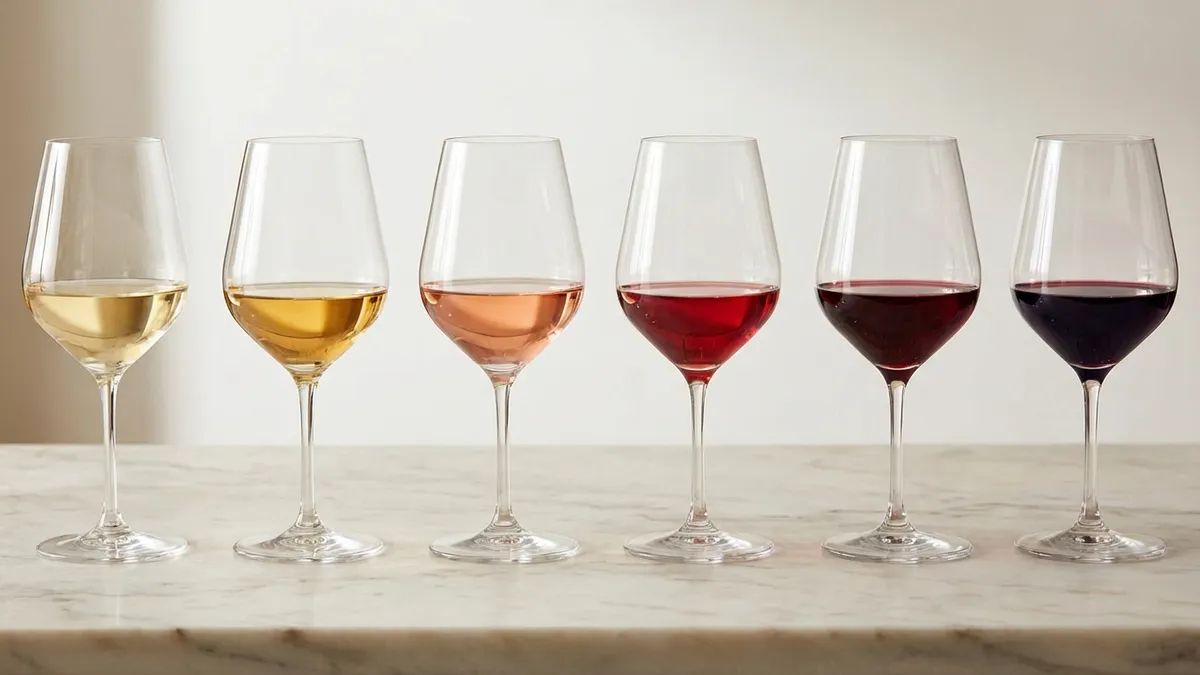
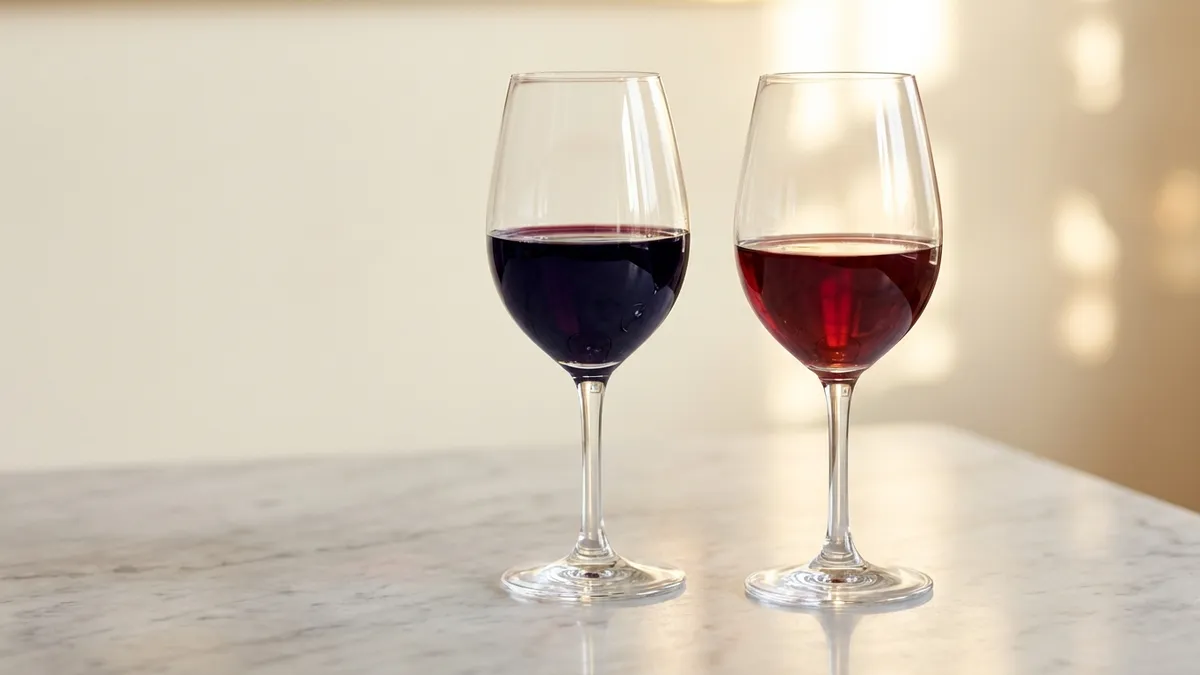
Pour a glass of grenache and the first thing you will notice is the color. It is pale — translucent ruby, sometimes with a slight orange tint, more like a deeper Pinot Noir than a dark Cabernet. This is because grenache has thin skins with relatively low pigment, regardless of how ripe the fruit gets. (See the wine color meaning guide for what color tells you about a wine.)
Aroma Profile
- Red fruit — strawberry, raspberry, red cherry, kirsch (cherry pit liqueur)
- Dried herbs — Provençal garrigue (the wild thyme, rosemary, lavender, and juniper that grow on Mediterranean hillsides)
- Spice — white pepper, cinnamon, clove, often a faint orange-peel lift
- Earth — leather, dried fig, tobacco in older bottlings
Palate Profile
- Body — medium-full, with a warm, almost glycerin-rich texture from the alcohol
- Tannins — soft and ripe, rarely grippy
- Acidity — low to medium
- Alcohol — typically 14.5 to 16%
- Finish — long, fruit-soaked, often with a subtle warming sensation
The high alcohol gives grenache a generous, almost sweet impression even when the wine is fully dry. (For the difference between sweetness and ripe fruit, see sweet vs dry wine.) The combination of pale color, soft tannin, and rich body makes grenache one of the more counterintuitive wines to taste — it looks light and feels full. Practicing this contrast is one of the most useful exercises a beginner can do.
Grenache in France — The Rhône Valley and Beyond
Châteauneuf-du-Pape
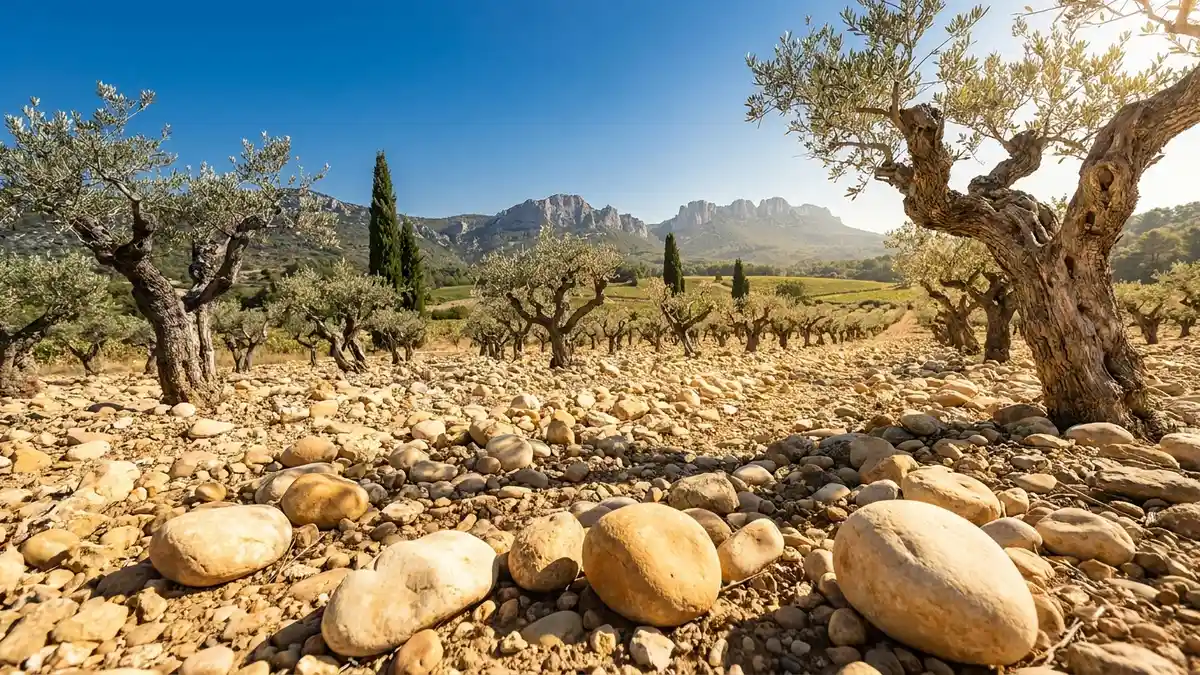
In Châteauneuf-du-Pape, grenache is king. The appellation permits up to 13 grape varieties, but in practice grenache makes up 60 to 80% of most blends, supported by Syrah for color and pepper and Mourvèdre for tannin and savory backbone. The famous galets roulés — large rounded stones that cover the vineyards — soak up the daytime heat and radiate warmth back into the vines at night, encouraging the deep ripeness that grenache loves.
The result is one of the world's great red wines: rich, layered, and built to age for ten to twenty years. (For more on how soil shapes wine, see how soil affects wine taste.)
Côtes-du-Rhône and the Southern Rhône
Beyond Châteauneuf-du-Pape, the broader Côtes-du-Rhône appellation produces grenache-based blends at every price point. Côtes-du-Rhône Villages and named villages like Gigondas, Vacqueyras, and Rasteau offer outstanding value — wines with the same Mediterranean character at a fraction of Châteauneuf prices. These are everyday companions to grilled meat, roast chicken, and herb-rubbed lamb.
Tavel and Provence Rosé
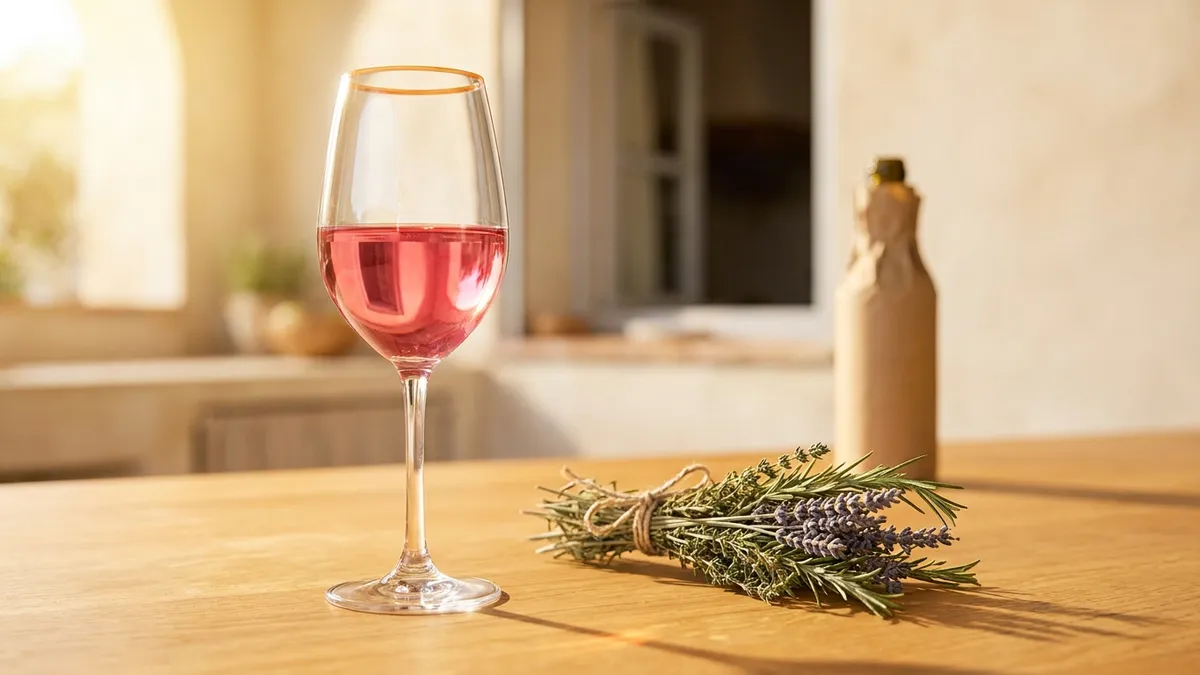
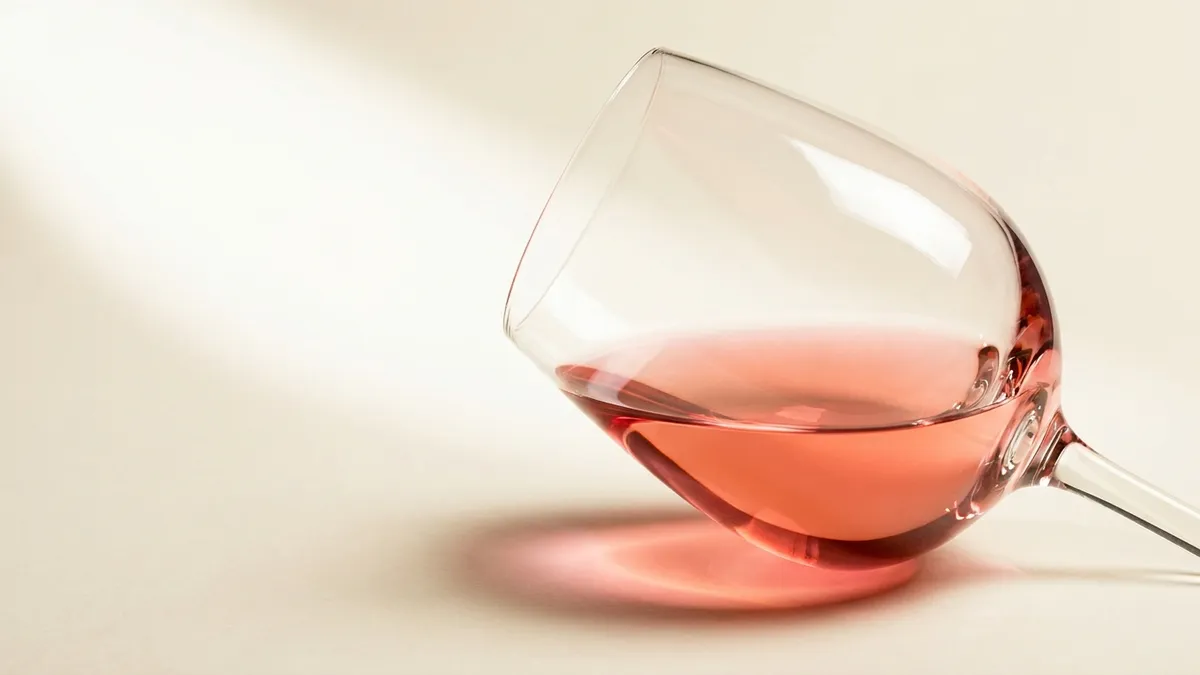
Grenache is also the star of two of the world's finest rosé traditions. Tavel, an appellation in the Southern Rhône, makes only rosé — and unlike most pale Provence rosés, Tavel is a deeper salmon-pink, fuller-bodied, and unusually serious. Provence rosé also relies heavily on grenache, blended with Cinsault and Syrah, producing the pale, dry, herb-and-citrus wines that define summer drinking. Learn more in the rosé wine guide and how to taste rosé.
Languedoc-Roussillon
In the warm vineyards of the deep south, grenache contributes to robust reds and to the vins doux naturels of Maury and Banyuls — fortified sweet wines made by stopping fermentation with grape spirit, leaving rich, port-like wines with chocolate and dried-fruit character.
Garnacha in Spain — The Old-Vine Treasure
Spain has more grenache than any other country, where it is called Garnacha. The grape is grown across the country, but two regions deserve special attention.
Priorat
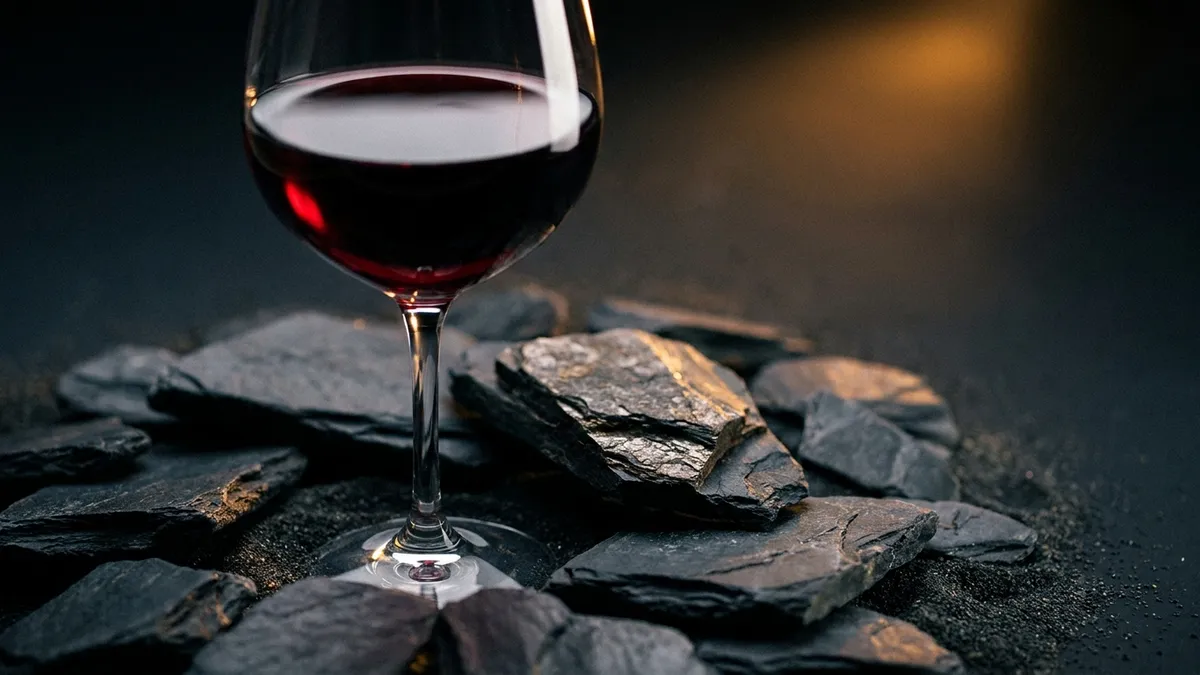
Priorat, in Catalonia, is one of only two Spanish regions to hold DOCa status (the highest classification, alongside Rioja). The region's identity is built on old-vine Garnacha and Cariñena (Carignan) growing on impossibly steep slopes of black slate called llicorella. The vines are often 60 to 100 years old. Yields are tiny. The fruit is intensely concentrated.
The wines that emerge are remarkable: deep, mineral-driven, powerful, with dark fruit, slate-licked minerality, garrigue herbs, and fine-grained tannins. Priorat is one of the few places where grenache shows real density and grip alongside its usual generosity. For the bigger picture, see the Spanish wine regions guide.
Rioja and Aragón
In Rioja, Garnacha plays a supporting role in the classic blend, adding warmth and red-fruit lift to the dominant Tempranillo. (Read more in the Tempranillo guide.) The grape's spiritual home, however, is Aragón — particularly Campo de Borja, Calatayud, and Cariñena, where ancient bush vines on rocky hillsides produce some of the most thrilling value Garnacha in the world. These wines are juicy, fragrant, and extraordinarily well-priced. Their soft tannin also makes them a good base for mulled wine.
Cannonau on Sardinia
On the rugged Italian island of Sardinia, grenache becomes Cannonau. The wines are typically darker, more savory, and a touch more rustic than mainland Italian reds, with notes of black cherry, Mediterranean herbs, and a saline, sun-baked quality.
Cannonau holds an interesting place in wine folklore — Sardinia is one of the world's "Blue Zones," where unusual numbers of residents live past 100, and Cannonau has been cited (perhaps generously) as part of the local longevity equation thanks to its high polyphenol content. Whether or not you take that science to heart, the wines are honest, food-friendly, and a beautiful expression of grenache in a different cultural register.
Grenache in the New World
Australia — McLaren Vale and Barossa Valley
Australia has some of the world's oldest grenache vines, planted in the mid-1800s and still bearing fruit. McLaren Vale and the Barossa Valley produce richly fruited grenache and especially exceptional GSM blends (Grenache, Syrah, Mourvèdre) that combine New World ripeness with Old World structure. (For the Australian context, see the Australian wine guide and Syrah vs Shiraz.)
The Australian style tends toward generous fruit and a slightly higher alcohol register, but the best producers have moved toward earlier picking and lighter extraction, producing wines that feel closer to a refined Côtes-du-Rhône than a fruit bomb.
California
In California, grenache thrives in warm regions like Paso Robles and the Santa Ynez Valley, and most strikingly in old-vine sites scattered across Lodi and the Central Valley — vineyards planted a century ago for jug-wine production and now rediscovered as treasures. These wines tend to combine California sunshine with surprising elegance.
Beyond
Grenache also produces outstanding wines in South Africa, particularly the Swartland, where dry-farmed bush vines produce a refined, herb-inflected style. Smaller plantings exist in Chile, Argentina, Washington State, and Greece.
Why Grenache Loves to Be Blended
Grenache is generous but incomplete. It brings red fruit, alcohol, and warmth in abundance, but lacks the deep color and firm tannic structure that define long-aging reds.
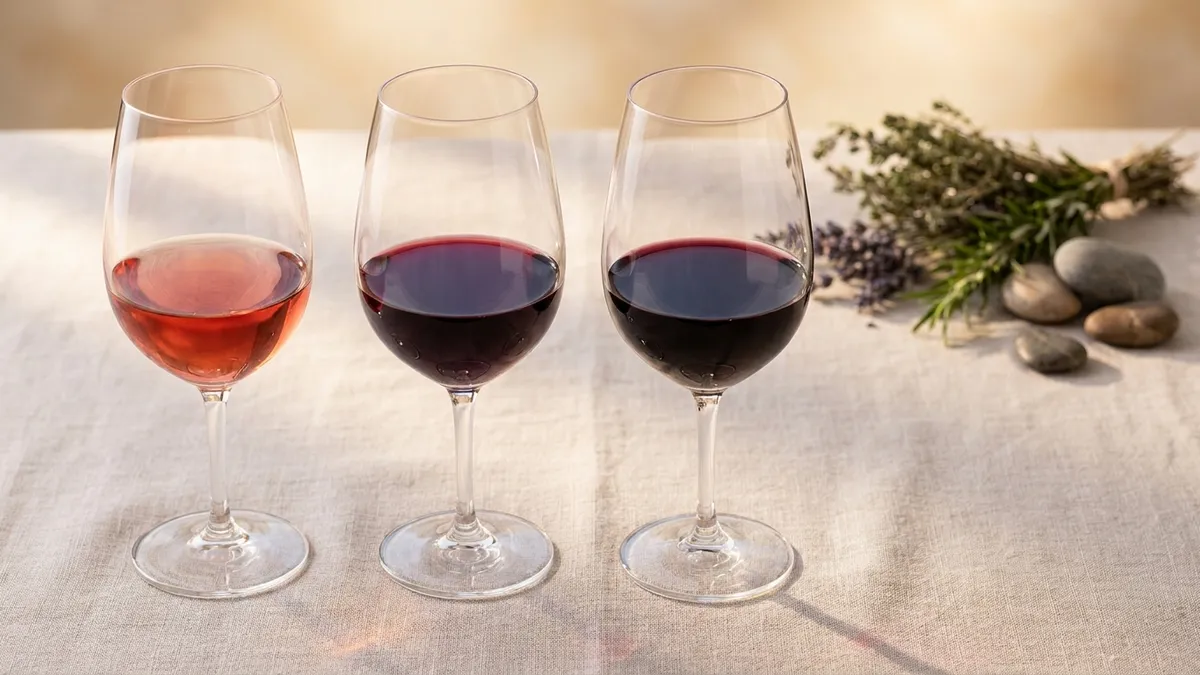
The classic solution is the GSM blend:
- Grenache — red fruit, alcohol, softness, body
- Syrah — deep color, black pepper, tannic structure
- Mourvèdre — dark fruit, savory complexity, additional grip
Together, the three grapes complete each other. GSM is the backbone of Châteauneuf-du-Pape, Côtes-du-Rhône, and many of the best red wines from McLaren Vale, Barossa, Paso Robles, and the Swartland.
In Spain, the equivalent blend pairs Garnacha with Cariñena (Carignan) and sometimes Tempranillo — the same logic, different grapes. The pattern repeats wherever grenache is grown: a generous core needs structural support to age well.
How to Pair Grenache Wine with Food
Grenache is one of the most food-friendly red grapes on earth. Its low tannins, juicy fruit, and Mediterranean herb character make it a natural partner for a wide range of dishes.
Classic Pairings
- Grilled lamb — rosemary, thyme, and garlic echo grenache's herbal lift
- Roast chicken — especially with herbes de Provence or paprika
- Charcuterie — saucisson, jamón, salami, pâté
- Paella — saffron and seafood meet Mediterranean grenache, especially as a dry rosado (see wine with paella)
- Slow-cooked stews — daube, cassoulet, beef stew with red wine
- Hard sheep cheese — Manchego, Pecorino, Ossau-Iraty
- Tomato-based dishes — pasta with sausage and tomato, ratatouille
Less Obvious But Excellent
- Moroccan and North African dishes — tagines, ras el hanout spice, preserved lemon (see the Morocco wine guide for the local wines)
- Smoky barbecue — grenache handles char and spice with ease
- Mushroom dishes — grilled portobellos, truffle pasta, mushroom risotto
For broader pairing principles, see the wine and food pairing guide and the pairing rules cheat sheet.
What to Avoid
Grenache's high alcohol and ripe fruit can overwhelm delicate fish, raw seafood, and very light vegetable dishes. For those, reach for Albariño, Riesling, or another aromatic white.
Should You Age Grenache?
Most grenache is best within five years of the vintage. The exceptions are worth knowing:
- Châteauneuf-du-Pape — top examples can age 10 to 25 years, developing leather, dried fig, and forest-floor notes
- Old-vine Priorat — gains complexity for 10 to 20 years
- Single-vineyard Cannonau — 8 to 15 years for the best sites
- Australian Old Vine grenache — 8 to 12 years for top McLaren Vale and Barossa bottlings
Entry-level Côtes-du-Rhône, Spanish Garnacha, and most rosés should be enjoyed young, while the fruit is bright and the wine is fresh. (Curious about how aging changes wine? See tasting young vs aged wine.)
Serving Grenache
Temperature
Serve red grenache slightly cooler than you might think — 15 to 17°C (59 to 63°F). The high alcohol can taste hot if the wine is too warm, and a short rest in the fridge sharpens the fruit and lifts the herbal notes. For rosé grenache, serve at 8 to 10°C (46 to 50°F). The full breakdown is in the wine serving temperature chart.
Decanting
Young Châteauneuf-du-Pape and Priorat benefit from 30 to 60 minutes of air. The aromatics open up, the alcohol integrates, and the wine becomes noticeably more expressive. Older bottlings need only gentle decanting to separate sediment.
Glassware
A medium-to-large bowl red wine glass works beautifully — the wide opening lets grenache's fragrant red fruit and herbs lift out of the glass. Avoid overly large Burgundy bowls; they can exaggerate the alcohol.
Tasting Grenache the Sommy Way
Grenache is one of the most rewarding grapes for beginners to tackle because it teaches a counterintuitive lesson: color is not a reliable predictor of body. Pour a glass of pale ruby grenache next to a darker Tempranillo or Syrah and you will see how thin the grenache looks. Then taste it — and feel the warm, generous body that the color did not promise.
This is exactly the kind of side-by-side comparison the Sommy app builds into its courses. Guided tasting exercises help you connect what you see, smell, and feel into a single coherent picture, so the next time you pick up a bottle you can predict what you will get.
For more on the structural side of wine — body, tannin, acidity, alcohol — read the tannins, acidity, and body guide and the wine balance explainer.
Garnacha vs Grenache — A Few Useful Nuances
The two names refer to the same grape, but a few generalizations hold:
- French grenache tends to be more restrained, more herbal, and more blend-driven (especially in the Rhône)
- Spanish Garnacha tends to be more fruit-forward and often sees less new oak; old-vine bottlings from Aragón offer extraordinary value
- Italian Cannonau sits between the two, with a savory, sun-baked Mediterranean character all its own
- Australian and Californian grenache lean New World — riper fruit, plusher texture, often blended in GSM style
None of these rules are absolute. Modern Spanish producers can match French elegance, French producers can make ripe and generous wines, and the most exciting bottlings often live in the spaces between traditions.
Where to Start with Grenache
A short tasting plan to build a real sense of the grape:
- A Côtes-du-Rhône — the everyday face of grenache; juicy, herbal, and food-friendly
- A Châteauneuf-du-Pape — the prestige expression; layered, ripe, and structured
- A Spanish Garnacha from Aragón or Priorat — old-vine intensity at remarkable value
- A Sardinian Cannonau — the savory, sun-baked Italian voice
- An Australian or Californian GSM blend — New World ripeness with Old World structure
- A Provence or Tavel rosé — grenache in its pink summer suit
Tasted across a few weeks, this lineup teaches you grenache as a concept — a grape that takes the shape of its place while keeping a recognizable Mediterranean soul.
Whether you sip a $12 Côtes-du-Rhône with a Tuesday-night roast chicken or splurge on a special-occasion Châteauneuf, grenache is one of the most welcoming grapes in wine. Soft, generous, fragrant, and built for sharing — exactly the kind of wine the Mediterranean has always loved.
Frequently Asked Questions
Is grenache the same as garnacha?
Yes. Grenache and Garnacha are the same grape variety. Grenache is the French name used in the Rhône Valley and the rest of France, while Garnacha is the Spanish name used in Rioja, Priorat, and Aragón. Italy calls the same grape Cannonau on Sardinia. The wines differ by region and winemaking, not by genetics.
What does grenache wine taste like?
Grenache wine tastes of ripe red fruit — strawberry, raspberry, kirsch — with notes of dried herbs, white pepper, and orange peel. It has a pale ruby color, soft tannins, low to medium acidity, and a warm, generous mouthfeel. Alcohol often runs 14.5 to 16 percent, giving the wine a rich, almost sweet-fruited impression even when fully dry.
Is grenache a heavy or light wine?
Grenache sits in an unusual middle ground. The color is pale, the tannins are soft, and the texture can feel almost silky like Pinot Noir. But the alcohol is high and the fruit is concentrated, so the wine feels full-bodied and warming on the palate. Old-vine Garnacha from Priorat or aged Châteauneuf-du-Pape can be genuinely powerful.
What food pairs best with grenache?
Grenache pairs beautifully with grilled lamb, roast chicken, charcuterie, paella, slow-cooked stews, and Mediterranean dishes built around tomato, garlic, olive oil, and herbs. Its juicy red fruit and gentle tannins also handle moderately spiced food, hard sheep cheeses, and barbecue. For rosé grenache, think salade niçoise, grilled fish, and summer aperitif spreads.
What is a GSM blend?
GSM stands for Grenache, Syrah, and Mourvèdre — the three classic red grapes of the Southern Rhône. Grenache contributes red fruit, alcohol, and softness. Syrah adds color, pepper, and structure. Mourvèdre brings dark fruit, tannin, and savory complexity. The blend is the backbone of Châteauneuf-du-Pape, Côtes-du-Rhône, and Australian wines from McLaren Vale and Barossa Valley.
Should you age grenache wine?
Most grenache is built to drink within five years of the vintage, while the fruit is fresh and the wine is juicy. Top examples — Châteauneuf-du-Pape, old-vine Priorat, single-vineyard Sardinian Cannonau — can age gracefully for ten to twenty years, developing leather, dried fig, and forest-floor notes. Entry-level Côtes-du-Rhône and Spanish Garnacha are best enjoyed young.
Why is grenache often blended rather than bottled alone?
Grenache is a generous grape but lacks color and tannin on its own. Blending with Syrah adds depth and structure, while Mourvèdre adds tannin and savory backbone. The result is a more complete, age-worthy wine. That said, single-varietal grenache from old-vine sites in Priorat, Sardinia, and Châteauneuf-du-Pape proves the grape can stand alone when the fruit is concentrated enough.
Sommy Team
LinkedInFounder & Wine Educator
The Sommy Team is building the world's most approachable wine education app, helping beginners develop real tasting skills through structured courses and AI-guided practice.