How Soil Type Affects Wine Taste: Limestone, Clay, Slate, and More

By the Sommy Team — AI-assisted, human-edited.
Updated Apr 29, 2026
Contents (14)
- How Soil Affects Wine Taste
- The Six Soil Signatures, in One Paragraph
- How Soil Actually Influences Grapes
- Limestone and Chalk: The High-Acid Signature
- Slate: Wet Stone and Steely Riesling
- Volcanic Soil: Saline and Dark-Mineral
- Granite: Floral Lift and Fine-Grained Tannin
- Clay: Rounded Body and Power
- Gravel and Sand: Drainage and Elegance
- The Myth: Tasting the Soil Directly
- Soil and Climate Together
- How to Taste Soil Differences Yourself
- What Soil Does Not Do
- The Bottom Line
TL;DR
Soil affects wine taste indirectly through drainage, water-holding, mineral availability, and root depth. Six signatures dominate: limestone gives high-acid chiseled wines, slate gives steely Riesling, volcanic gives saline depth, granite gives floral lift, clay gives rounded power, and gravel gives drained elegance. Minerals are not literally tasted — they are sensory cues from plant stress.
How Soil Affects Wine Taste
How does soil affect wine taste? Not the way most people imagine. Vines do not literally pump rock particles up into your glass — the science is clear that minerals dissolve in quantities far below human taste detection. What soil actually does is set the rules for how the vine grows: how much water it can find, how deep its roots go, how much stress it experiences, and how the grapes ripen.
The wine you taste carries the downstream effects of those rules. Limestone produces chiseled, high-acid whites because the vine ripens slowly on alkaline drainage. Slate produces steely Riesling because it stores and radiates heat in a cool climate. Volcanic basalt produces saline reds because its dark mineral profile combines with sharp drainage and altitude. Same grape, different soil, different wine — every single time.
This guide walks through the six soil types that shape the classic wine styles you already know — and what each one actually contributes to the glass.
The Six Soil Signatures, in One Paragraph
Soil affects wine through four mechanisms: drainage, water-holding, mineral availability, and root depth. Six signatures dominate the world's classic regions. Limestone and chalk — Chablis, Champagne, parts of Burgundy — give high acidity, a chiseled finish, and a chalky mineral edge. Slate — Mosel — gives wet stone and steely Riesling. Volcanic basalt and tuff — Etna in Sicily, Santorini in Greece — give saline, smoky, dark-mineral notes. Granite — Beaujolais, Cornas, parts of the Northern Rhône — gives floral lift and fine-grained tannin in reds. Clay — Pomerol in Bordeaux, parts of Chianti — gives rounded body, water retention, and power. Gravel and sand — Médoc, Bandol — give light texture, sharp drainage, and elegance. The minerals you smell are sensory cues from plant stress and acidity, not literal flavor transfer.
How Soil Actually Influences Grapes
Soil shapes wine through four indirect mechanisms.
Drainage
How fast water moves through soil determines how much the vine has to "work" for it. Sharp-draining soils like gravel, slate, and limestone force roots deep in search of moisture, which is associated with concentrated, structured wines. Water-retentive soils like clay do the opposite — they make life easy and tend to produce richer, fuller wines.
Water-holding capacity
Clay holds a lot of water. Sand holds almost none. This becomes critical in dry growing seasons: a vine on clay rides out a drought; a vine on sand may shut down. Mediterranean and warm-climate regions often prize clay for exactly this reason.
Mineral availability
Soil contains nitrogen, potassium, magnesium, calcium, iron, and trace elements the vine absorbs through its roots. These do not transfer to wine in tasteable quantities, but they affect plant physiology — how the vine builds skins, develops sugars, and synthesizes aromatic compounds.
Root depth and microbiome
Deep roots tap stable water tables and bring up trace minerals from rock. The microbial community around the roots — fungi, bacteria, mycorrhizae — also influences nutrient uptake. This invisible biology is part of what tasters label "sense of place."
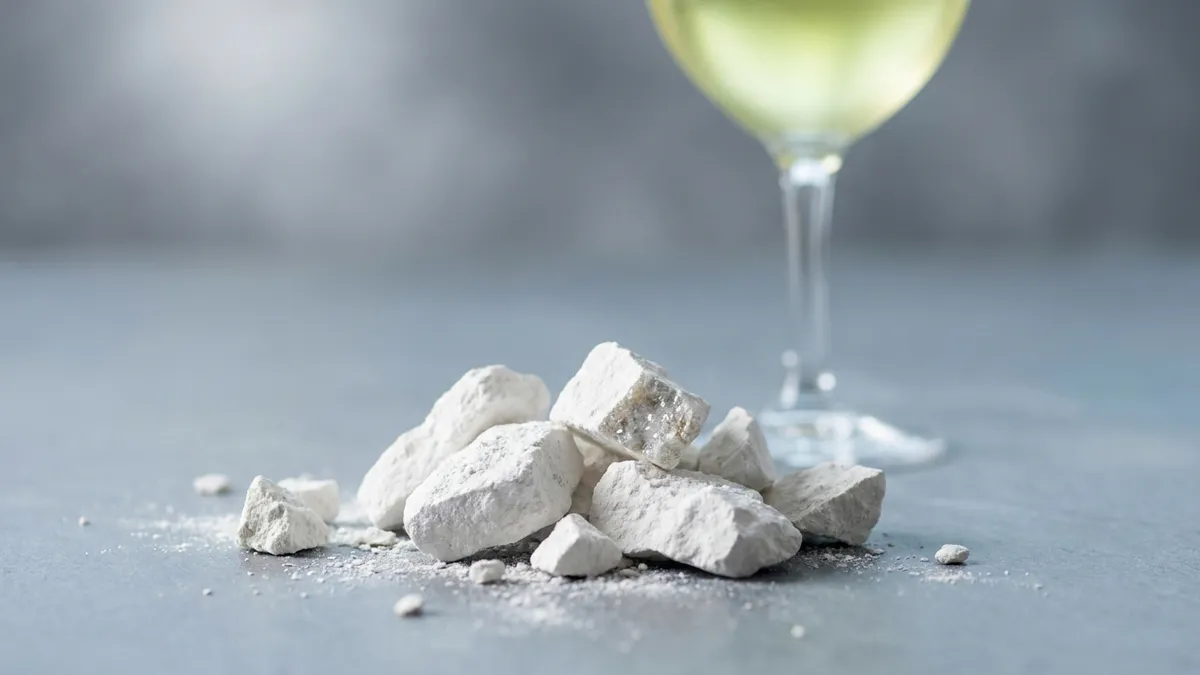
For the broader picture of how soil fits into the wider environment around the vine, see the full guide on what is terroir — soil is one of six components, and it never works in isolation.
Limestone and Chalk: The High-Acid Signature
Limestone is the most celebrated soil in classical European wine. It is alkaline, sharp-draining, and reflective. Vine roots dig into fissures in the bedrock to find water, which forces deep roots and stresses the vine in a productive way. The grapes ripen slowly and retain natural acidity.
The resulting wine signature is distinctive: high acidity, a chiseled, mouth-watering finish, and a chalky mineral edge that tasters describe as wet stone or powdered chalk.
Classic regions
- Chablis — Kimmeridgian limestone with fossilized marine shells produces the textbook chalky, citrus-driven Chardonnay
- Champagne — chalk subsoil under thin topsoil delivers the searing acidity that makes Champagne possible
- Burgundy's Côte d'Or — limestone marl with varying clay content shapes the most precise Pinot Noir and Chardonnay in the world
- Sancerre and Pouilly-Fumé — limestone-and-flint soil produces Sauvignon Blanc with citrus and a sharp flinty edge
This is the mineral signature most tasters mean when they say a wine has "minerality." For the deeper sensory side of that vocabulary, the wine minerality meaning guide breaks down what the term actually describes.
Slate: Wet Stone and Steely Riesling
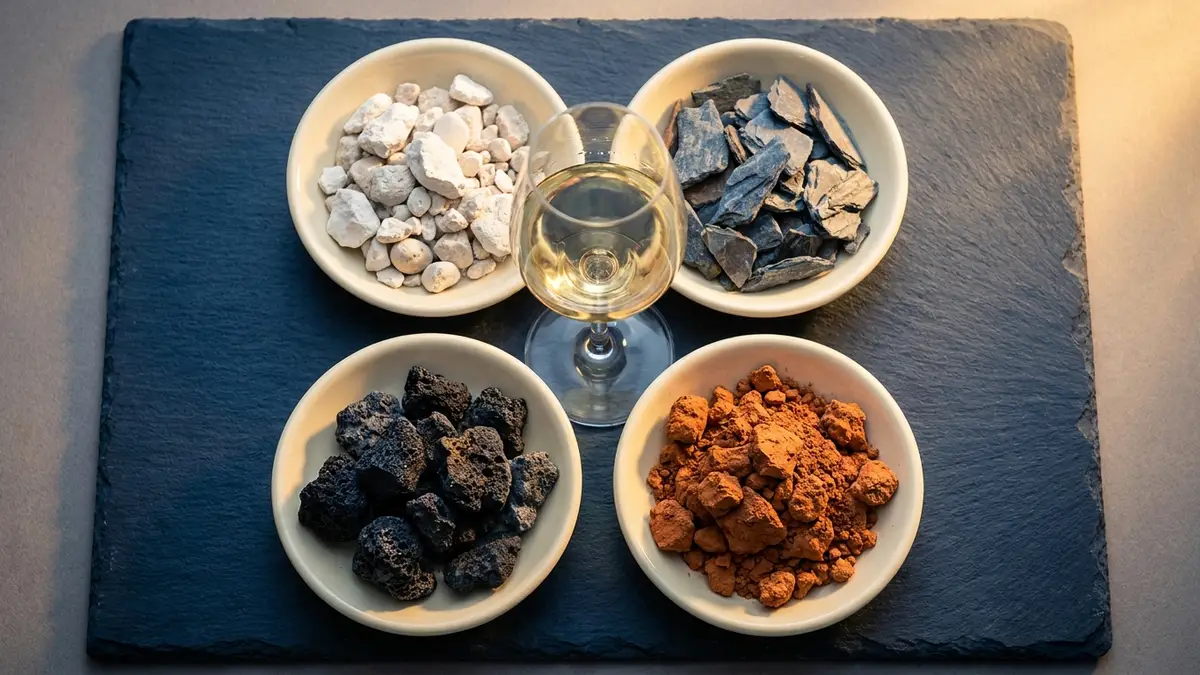
Slate is the soil that built one entire wine style: Mosel Riesling. The Mosel valley in Germany is so cold and northerly that ripening grapes is genuinely hard. Slate solves the problem by absorbing daytime heat and radiating it back to the vines after sunset, extending the ripening window in a marginal climate.
It also drains sharply and forces vine roots deep into rock fissures. The combination produces low-yield, high-acid Riesling with a distinctive wet stone, steely, slightly metallic character that tasters call slate-driven.
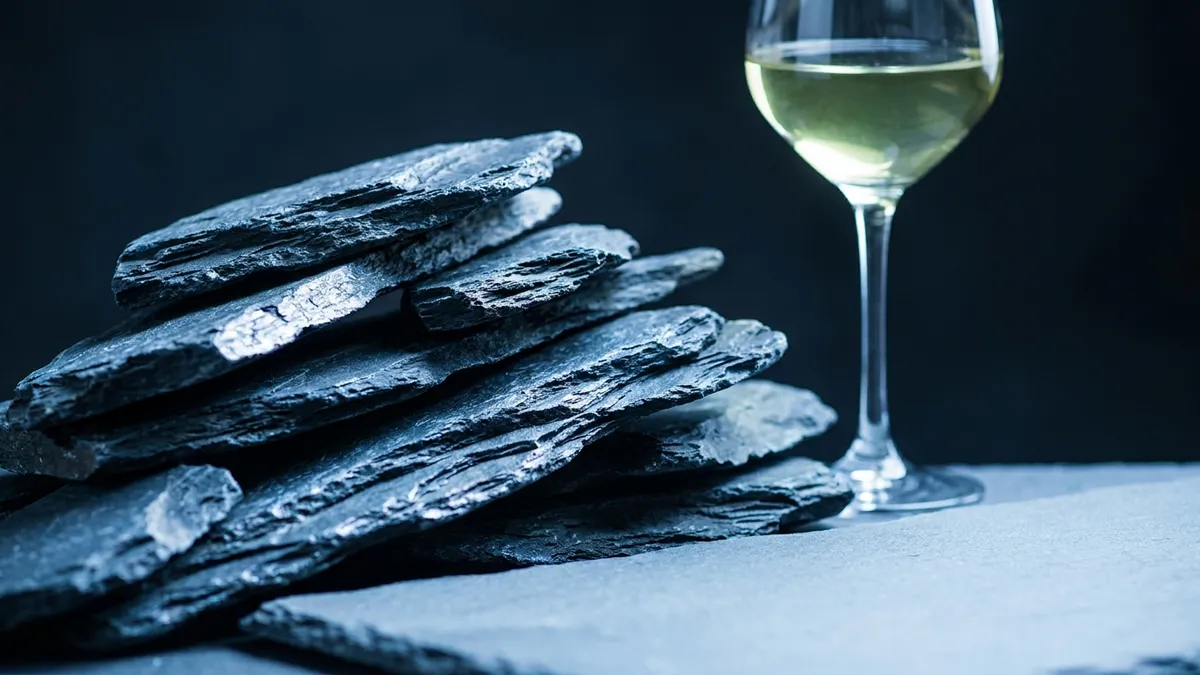
The connection between slate soil and the perception of slate in the wine is one of the most cited examples of terroir. Whether the link is literal mineral transfer or indirect — through low yields, high acidity, and learned association — the perception is consistent across decades of tastings. Drink a Mosel Riesling next to a Riesling from a non-slate region and the difference is immediate.
For the German side of the story specifically, the German wine regions guide covers the regional context in detail.
Volcanic Soil: Saline and Dark-Mineral
Volcanic soils — basalt, tuff, pumice, and ash — are some of the most distinctive in the wine world. They are dark in color (which absorbs heat), mineral-rich, sharply draining, and often found at altitude on the slopes of dormant or active volcanoes. The wine signature is unusual: saline, smoky, dark-mineral, with a savory non-fruit edge that some tasters describe as iodine, ash, or sea spray.
Classic regions
- Mount Etna, Sicily — basalt and lava soils on the slopes of an active volcano produce taut, saline reds and whites with a distinctive smoky-mineral profile
- Santorini, Greece — pure volcanic ash and pumice, no clay at all, produces the steely, saline Assyrtiko that the island is famous for
- Tokaj, Hungary — volcanic loess and tuff underpin the great sweet wines of the region
- Canary Islands, Spain — black volcanic soil and Atlantic winds give the wines a distinctive smoky-saline character
- Dundee Hills, Oregon — red Jory clay weathered from basalt covers about 80% of the hills; see the Willamette Valley sub-AVAs
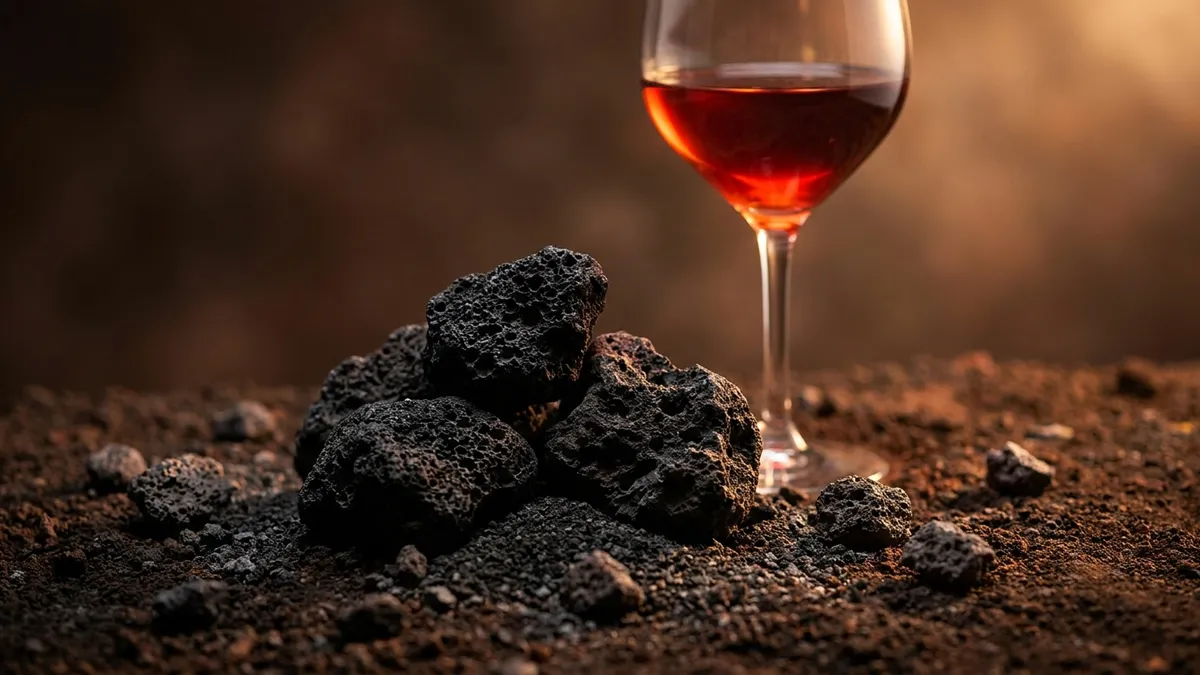
Volcanic wines tend to be lean, structured, and aromatically intense. For the regions, the soil types and what the rock does and does not do, see volcanic wine explained. They are also among the most reliable expressions of soil character — taste a Santorini Assyrtiko once and the saline impression is hard to forget.
Granite: Floral Lift and Fine-Grained Tannin
Granite soils are coarse, well-drained, and often acidic in pH. They warm up quickly in the sun, which helps in cool climates, and they hold heat into the evening. The wine signature is distinctive: floral lift, bright red fruit, fine-grained tannin, and a slightly perfumed quality in reds.
Classic regions
- Beaujolais Cru — Morgon, Moulin-à-Vent, and Fleurie are all granite-driven; the Gamay grape on granite produces some of the most aromatic, age-worthy reds in France
- Cornas (Northern Rhône) — granite slopes give Syrah a perfumed, structured character distinct from the rest of the Rhône Valley
- Dão, Portugal — granite soils underpin elegant Touriga Nacional and Tinta Roriz blends
- Beira (Portugal) and Galicia (Spain) — granite plays a major role in Atlantic-influenced cool-climate reds
Granite is sometimes overlooked compared to limestone or slate, but it is responsible for some of the most distinctive cool-climate reds in Europe. The fine-grained tannin profile is especially notable — granite reds tend to feel polished rather than rustic.
Clay: Rounded Body and Power
Clay is the polar opposite of limestone in many ways. It is water-retentive, nutrient-rich, and slow to drain. Vines on clay do not have to work hard to find water, which produces larger, more vigorous plants and fuller-bodied grapes. The wine signature is rounded, powerful, and full-bodied, with rich fruit and softer acidity than limestone-based wines.
Classic regions
- Pomerol, Bordeaux — blue clay with iron-rich subsoil produces some of the most opulent, plush Merlot in the world
- Saint-Émilion (parts) — clay-limestone blends underpin structured, age-worthy reds
- Chianti Classico (parts) — clay galestro soils give Sangiovese rounder body and rich fruit
- Barossa Valley old-vine plots — clay-rich soils contribute to the dense, concentrated Shiraz the region is known for
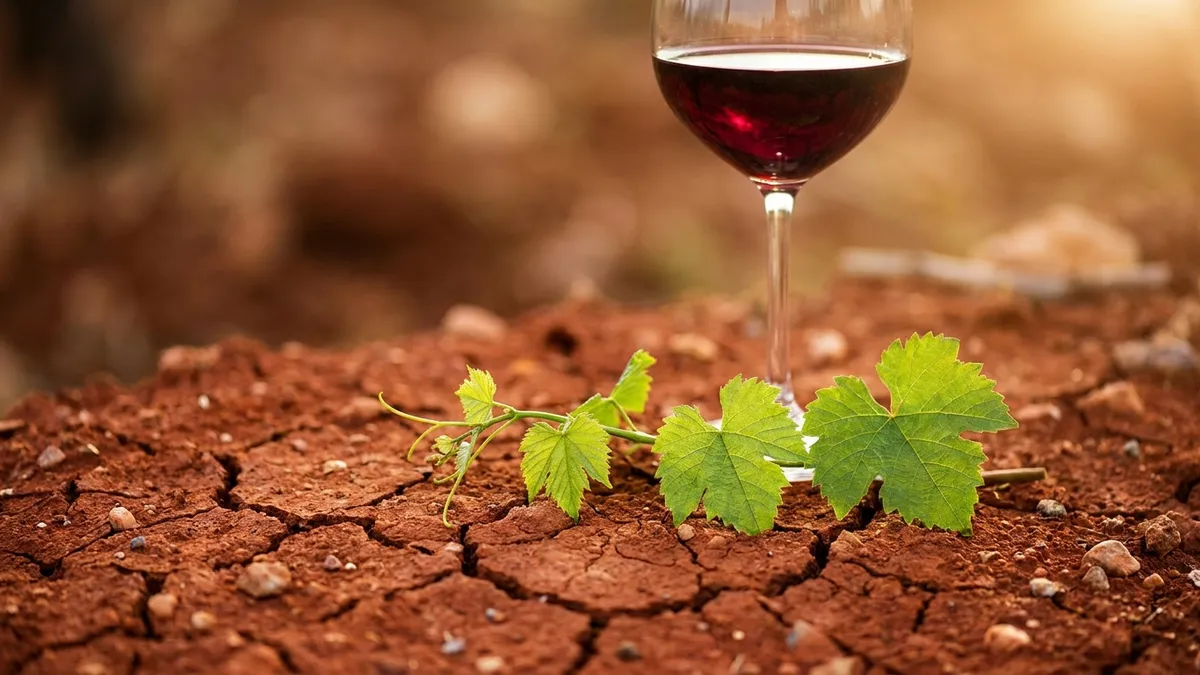
Clay shines in warmer regions where its water retention prevents drought stress. It struggles in cool, wet climates where excess moisture can lead to disease pressure and dilute fruit. The Pomerol-on-Pomerol blue clay is one of the most studied and prized soils in Bordeaux for exactly this reason.
Gravel and Sand: Drainage and Elegance
Gravel and sand are at the opposite extreme from clay. They drain almost immediately, hold very little water, and warm up quickly under the sun. Vines work hard to find moisture, which forces deep roots and small berries. The wine signature is lighter texture, fine tannin, sharp drainage character, and elegant rather than powerful body.
Classic regions
- Médoc, Bordeaux — deep gravel beds reflect heat onto Cabernet Sauvignon vines, producing the structured, age-worthy reds the Left Bank is famous for
- Graves (named for its gravel) — gravel soil shapes both white and red Bordeaux from this appellation
- Bandol, Provence — sand-and-limestone soils give Mourvèdre its characteristic structure
- Châteauneuf-du-Pape — large round galets (heat-reflecting stones) on top of sandy clay produce the warm, concentrated reds the region is known for
In Bordeaux, the difference between Left Bank gravel and Right Bank clay is one of the most repeatedly cited soil contrasts in wine — Left Bank Cabernet Sauvignon tends toward structured elegance, Right Bank Merlot toward plush power. Same country, same climate, different soil, completely different wine personalities.
The Myth: Tasting the Soil Directly
A romantic version of soil-and-wine says you literally taste the rocks. A wine grown on slate tastes of slate. The story is intuitive, but it is not what the science shows.
Vines absorb mineral compounds in tiny quantities, well below human taste detection. A wine aged in a limestone cellar does not absorb limestone. The "wet stone" character in a Chablis is not leaching into the glass from a fossil shell.
So what produces the perception? Likely a combination of indirect effects:
- High acidity correlates with limestone and slate soils and creates the tight, clean finish that maps onto what tasters call mineral
- Sulfur compounds formed during fermentation can produce flint, struck-match, and wet-stone aromas at low concentrations
- Plant stress and microbiome shape the aromatic compounds in the grape, even though the minerals themselves do not transfer
- Learned association — tasters connect "Chablis" to "wet stone" after many tastings; the link becomes automatic
The honest summary: the taste is real, the language ("limestone," "slate," "wet stone") is partly metaphorical, and the soil is doing genuine work — just not the work the metaphor implies. The wine minerality meaning guide breaks down each candidate cause in detail.
Soil and Climate Together
Soil never works alone. The same limestone in a cool climate produces Chablis; in a warm climate it gives a fuller, lower-acid wine. The same clay in a cool wet climate produces disease; in a warm dry climate it produces opulent Merlot.
Three climate factors interact most strongly with soil:
- Temperature — cool climates amplify the high-acid signature of limestone and slate; warm climates amplify clay's body-building effect
- Rainfall — sharp-draining soils excel in wet climates; water-retentive soils excel in dry climates
- Sunshine intensity — dark soils (volcanic, slate) absorb heat for ripening; light soils (chalk, sand) reflect heat onto cool slopes
The climate and wine flavor guide covers the climate side, and the what is terroir guide bundles soil and climate into the broader concept of sense of place.
How to Taste Soil Differences Yourself
The fastest way to learn what soil tastes like is comparative tasting. Pick two wines made from the same grape grown on different soils, taste them side by side, and ask: what is different?
Classic side-by-side comparisons that highlight soil:
- Chablis (limestone) vs. California Chardonnay — limestone's chiseled acidity and chalky finish are unmistakable next to the warmer-climate, fruitier expression
- Mosel Riesling (slate) vs. Alsace Riesling (granite/limestone) — slate gives steely tightness; the Alsace version feels rounder
- Pomerol Merlot (clay) vs. Médoc Cabernet Sauvignon (gravel) — same region, opposite soils; Pomerol feels plush, Médoc feels structured
- Etna Rosso (volcanic) vs. Chianti Sangiovese (clay-limestone) — Etna's saline-smoky edge contrasts with Chianti's red-cherry-and-leather profile
To track these impressions, the Sommy app tasting flow includes mineral, stony, saline, and flinty among its selectable aroma chips, so every soil-driven impression becomes searchable data in your own tasting history.
For running these comparisons at home, the how to compare two wines guide covers glassware, temperature, and order. And the how to describe wine guide builds the broader vocabulary you need to label what you taste.
What Soil Does Not Do
A few common misconceptions worth clearing up:
- Soil does not "give the wine its flavor" by itself — it sets the conditions; grape, climate, and winemaker fill in the rest
- Soil is not a quality marker — limestone-grown wine is not automatically better than clay-grown; they are different styles
- Soil is not destiny — winemaker choices (oak, fermentation, blending) can amplify or mask the soil signature
- Soil cannot rescue a bad climate — even prestigious soil will not produce great wine in a year too cold to ripen
Soil is one powerful input — powerful enough that classical European wine culture is built around it — but it is not the whole story.
The Bottom Line
Soil affects wine taste indirectly, through drainage, water-holding, mineral availability, and root depth. Six signatures dominate: limestone for high-acid chiseled wines, slate for steely Riesling, volcanic for saline depth, granite for floral lift, clay for rounded power, and gravel for drained elegance. The minerals you smell are not literal — they are sensory cues from how the vine grew under stress.
Once you start tasting comparatively, soil becomes one of the most rewarding aspects of wine. Every bottle is an indirect record of where it came from, and the differences between regions stop being abstract geography and become a specific, repeatable taste in the glass.
Sommy's structured tasting flow tracks soil-related characteristics — minerality, body, acidity, finish — across every wine you log, so the patterns from your own tasting history become legible over time, region by region.
Frequently Asked Questions
How does soil actually affect wine taste?
Soil affects taste indirectly, not directly. It controls drainage, how much water the vine roots can access, which trace minerals are available, and how deeply roots can grow. Those factors change vine stress, ripening speed, sugar and acid balance, and skin development. The wine then carries the downstream consequences as differences in acidity, body, fruit profile, and a non-fruit mineral edge.
Can you literally taste minerals from the soil in wine?
No. Vines absorb tiny mineral quantities, far below the threshold of taste. The wet stone, chalk, slate, and saline notes that tasters call mineral come from indirect effects — vine stress, sulfur compounds in fermentation, high acidity, and learned association with specific regions. The perception is real and consistent, even though minerals do not transfer literally from soil to glass.
Which soil makes the highest-acid wines?
Limestone and chalk soils. Their alkaline composition, sharp drainage, and reflective light all favor cool, slow ripening that retains natural grape acidity. Chablis, Champagne, and parts of Burgundy sit on Kimmeridgian limestone for exactly this reason. The classic chiseled, mouth-watering, chalky finish in those wines is the taste signature most reliably linked to limestone-based vineyards.
Why does slate matter so much for Mosel Riesling?
Slate retains daytime heat and radiates it back to the vines after sunset, which is critical in the Mosel's cool, marginal climate. It also drains sharply and forces vine roots deep into rock fissures. The combination produces high-acid, low-yield Riesling with the wet stone and steely character the region is famous for. Without slate, Mosel Riesling would not exist as a style.
What does volcanic soil do to wine?
Volcanic soils — basalt, tuff, pumice, and ash — are mineral-rich, sharply draining, and often dark in color. They produce wines with a distinctive saline, smoky, or dark-mineral character. Etna in Sicily and Santorini in Greece are textbook examples. The wines tend toward lean structure, savory finish, and a non-fruit edge that tasters describe as iodine, ash, or sea spray rather than fruit.
Is clay soil bad for wine?
Not at all. Clay holds water and nutrients, which produces fuller-bodied, rounder, more powerful wines. The classic example is Pomerol in Bordeaux, where Merlot grown on clay yields some of the most opulent, structured wines in the world. Clay shines in warmer regions where its water-retention prevents drought stress. It struggles only in cool, wet climates where excess moisture promotes disease.
Does soil matter more than climate for wine taste?
They are inseparable. Soil sets the structural envelope — drainage, root access, mineral availability — and climate fills it with sun, heat, and water. The same limestone in a cool climate produces Chablis; in a warm climate it produces a fuller-bodied, lower-acid wine. Talking about soil without climate is incomplete, which is why the broader concept of terroir bundles them together.
Sommy Team
LinkedInFounder & Wine Educator
The Sommy Team is building the world's most approachable wine education app, helping beginners develop real tasting skills through structured courses and AI-guided practice.