What Is Minerality in Wine? The Controversial Tasting Term

By the Sommy Team — AI-assisted, human-edited.
Updated Apr 17, 2026
Contents (12)
TL;DR
Minerality is a widely used tasting term for a cluster of non-fruit sensations including wet stone, chalk, flint, slate, and saline notes, most common in high-acid whites from cool climates. The science behind it is contested but the perception is real and trainable. Chablis, Mosel Riesling, Sancerre, and Muscadet are the textbook reference wines.
TLDR
Minerality in wine is one of the most used and least defined tasting terms. It describes a cluster of sensations — wet stone, chalk, flint, saline, steely — that show up most often in high-acid whites from cool climates. The science is contested; the perception is real. Chablis, Mosel Riesling, Sancerre, and Muscadet are the textbook examples. You do not need to resolve the scientific debate to taste it.
Why the Word Is Controversial
Ask five sommeliers what minerality in wine means and you will get five overlapping but different answers. Stone. Chalk. Salt. Slate. Flint. The cool wet smell of a creek. The taste of a wet rock. The feeling of licking a limestone wall.
Every one of those descriptors is used seriously in professional tasting. Every one is also criticized by wine scientists who point out that there are no grape vines or winery pathways that deliver actual rock particles to your glass. A mineral in the chemistry sense is not something you taste. A mineral in the tasting sense is something that clearly exists in perception.
This is the heart of the controversy. The perception is real. The scientific identification of what produces it is still incomplete. Somewhere between those two facts lives the word "minerality," which nearly every serious taster uses and almost no one can define precisely.
The good news: you do not need to resolve the debate to enjoy or identify the character. Most tasters develop a reliable mental category for minerality after tasting 10 to 20 wines that show it clearly. The word gets used as shorthand for that cluster, and it works.
What Tasters Usually Mean
Professional tasting notes use "minerality" to describe a family of related impressions. The most common are:
- Wet stone — the smell and taste of rain on concrete, or wet gravel after a storm
- Chalk — the specific clean, slightly powdery character of calcium-carbonate sediment
- Flint — a sharper, almost smoky note; sometimes called "struck match" at higher intensity
- Slate — a cooler, slightly metallic note, famous in Mosel Riesling
- Saline — a coastal, briny character, slightly salty or iodine-tinged
- Steely — a tight, almost polished metallic impression, common in unoaked Chablis
All of these sit on a specific axis of wine perception: dry, clean, tight, not-fruit-dominated. Minerality is rarely described in a soft, round, fruit-forward wine. It shows up when the fruit pulls back and a non-fruit character steps forward.
Our how to describe wine guide has a broader vocabulary for wines that show these tighter non-fruit profiles.
Where It Shows Up Most Clearly
Some wines are so reliably mineral that they have become the reference points every taster learns from. A short list:
Chablis (Chardonnay from northern Burgundy)
Grown on Kimmeridgian limestone with fossilized marine shells, Chablis is the textbook example of a mineral white. Unoaked or lightly oaked Chablis shows a wet-stone and chalky character that is almost inseparable from the style. A Chardonnay that tastes like Chablis is almost always mineral-driven. A Chardonnay that tastes like butter and vanilla rarely is.
Mosel Riesling
The steep slate vineyards of the Mosel produce Rieslings with a distinctive slate-and-stone character. The wines taste cool, tight, high in acidity, and markedly non-fruit-forward. The connection between slate soil and the perception of slate in the wine is one of the most famous terroir debates, and one of the most immediate sensory experiences in wine.
Sancerre and Pouilly-Fumé (Sauvignon Blanc from the Loire)
Grown on a mix of limestone, flint, and marl, these wines often show a sharp flinty character alongside citrus and herbal primary aromas. The flint can be subtle or so prominent it smells almost smoky.
Muscadet (Melon de Bourgogne)
The most famous saline white in the world. Grown on the Atlantic coast of France, Muscadet has a distinctly salty, coastal impression that shows why coastal wines so often get described as "oceanic" or "briny."
Chenin Blanc from Vouvray and Savennières
A softer mineral profile — often described as wet wool, damp stone, or lanolin — that sits beneath the orchard fruit.
Red wines can show minerality too, though it is less often highlighted: aged Nebbiolo often shows a tar-and-rose profile with an underlying stony character; Pinot Noir from limestone-rich Burgundy often shows a rocky note beneath the red fruit. Our what is terroir guide covers how the underlying climate and soil affect these impressions.
The Science Debate in Plain English
The core scientific argument: you cannot taste minerals the way you taste sugar or acid. Actual stone particles do not dissolve in wine in any meaningful quantity. A wine aged in a limestone cellar does not literally absorb limestone.
So what produces the perception? Several candidates, none fully proven:
Sulfur compounds
Some scientists argue that the "minerality" perception is partly produced by reduced-sulfur compounds formed during fermentation. These compounds smell of struck match, flint, wet stone, and gunsmoke at small concentrations. The hypothesis is that many of the wines tasters call "mineral" are wines with a specific reductive style.
High acidity
Many minerally-described wines are very high in acidity. The tightness, clean finish, and tongue-drying sensation that high acidity produces map closely onto what tasters call "mineral." Some scientists argue that much of what we taste as minerality is simply the interaction of acidity with restrained fruit.
Low fruit expression
A wine with subtle fruit leaves room for other perceptions to register. The same non-fruit sensations in a ripe fruit-dominant wine are overpowered and never get named. In a restrained wine, they move to the foreground. "Mineral" may be partially what we call the empty space that is not filled by fruit.
Associative memory
Tasters learn to link "Chablis" with "wet stone" from the first time a mentor says so. After ten Chablis tastings, the word becomes automatic. Some of what we taste may be culturally learned rather than chemically present.
The honest answer is: all four likely contribute. The perception is real; the causes are multiple; the tidy chemical story that makes minerality a single compound has not been found. That is why the term remains contested.
How to Taste for Minerality
If you want to develop the category in your own palate, three approaches work:
1. Taste textbook-mineral wines side by side with non-mineral examples
A Chablis next to an oaked California Chardonnay. A Muscadet next to a warm-climate Pinot Grigio. A Mosel Riesling next to a Washington State Riesling. The comparison makes the difference immediately obvious.
2. Focus on the finish
Minerality lives mostly on the finish, not the mid-palate. A mineral wine has a tail that feels cool, clean, and slightly drying — the way your mouth feels after chewing a mint. A non-mineral wine has a tail dominated by fruit or oak. Our wine finish meaning guide covers how to evaluate the finish specifically.
3. Smell actual stones
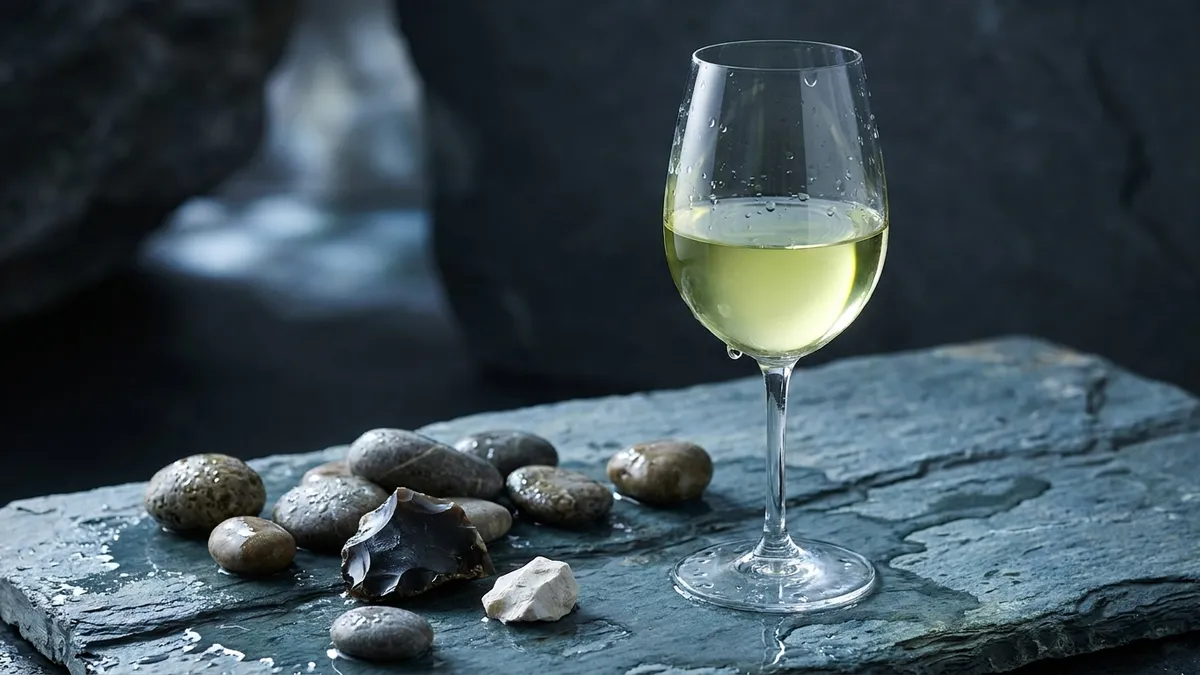
Put a few river pebbles, a piece of slate, and a flint in a bowl. Run water over them. Smell. The ghostly, cool, damp-stone impression is close to what tasters reference when they say "mineral." It is not the wine. It is the reference point your palate uses when the wine reminds you of it.
Sommelier note: Smell stones before tasting if you are training the category deliberately. Most beginners have never smelled a genuinely wet stone with any focus. Five minutes with a bowl of pebbles builds the reference faster than any amount of classroom time.
Minerality and Quality
Is mineral wine higher quality than non-mineral wine? Not automatically. Minerality is a style marker, not a quality marker. Plenty of great wines are fruit-driven, oaky, or rich without a trace of minerality. Plenty of thin, disappointing wines are mineral because nothing else is happening in them.
What is true: minerality tends to correlate with specific style categories that wine enthusiasts value highly — cool-climate whites, high-acid wines, wines of place rather than wines of recipe. It is also disproportionately present in wines that age well, because the structural elements that support minerality (high acidity, restrained fruit, cool climate) are also the elements that support aging.
A wine can be both mineral and high quality. A wine can be mineral and boring. A wine can be rich and fruity and world-class. The category is a description, not a verdict.
Minerality in Red Wine
Reds get described as mineral less often, but the category exists. Classic examples:
- Nebbiolo — aged Barolo and Barbaresco often show a tar-and-stone character
- Pinot Noir from limestone-rich Burgundy — a rocky note under the red fruit
- Cool-climate Syrah — cracked black pepper with a stony undertone, common in Northern Rhône and some cool-site Californian bottlings
- Carménère from Chile — a graphite note in some cool-site examples
In reds, "mineral" is usually more about a savory, stone, or graphite impression than the wet-stone-and-chalk feel of whites. The underlying mechanism is probably similar, but the fruit and tannin tend to reshape the perception.
Common Confusion Points
Beginners mix up minerality with other adjacent concepts. Three recurring traps:
Minerality vs earthiness
A mushroomy, forest-floor, damp-leaves character is earthy, not mineral. Earthy is a tertiary development note often from aging or from reduced fermentation. Mineral is a non-fruit primary or secondary note that is cooler and harder. A fresh Sancerre is mineral; an aged Burgundy is earthy; the two feelings are different.
Minerality vs acidity
High acidity often accompanies minerality, but acidity itself is not minerality. Acidity is a structural element (mouth-watering, tongue-drying). Minerality is an aromatic and flavor impression (wet stone, chalk). A wine can have very high acidity without tasting mineral.
Minerality vs oxidation
Some oxidative wines — certain sherries, jura whites, skin-contact wines — can have a stony or salty quality that feels mineral. This is closer to secondary/tertiary oxidative character than true primary minerality, and it pays to distinguish them when you can.
Our primary, secondary, and tertiary aromas in wine explained guide clarifies how these categories fit together.
Training Exercise
A short exercise to lock in the category:
- Buy three wines: a Chablis, a Mosel Kabinett Riesling, and a Muscadet. The total spend is under $50.
- Taste them on the same evening, in the same glass shape, at the same cool temperature.
- Ignore fruit notes. Focus only on the non-fruit impressions on the finish.
- Write one word for each wine: Chablis might be "chalk," Mosel might be "slate," Muscadet might be "salt."
- A week later, taste a non-mineral white (an oaked California Chardonnay or a ripe Viognier). Note the absence of those non-fruit impressions.
After that exercise, minerality stops being a vague term and becomes a specific mental category you can reach for reliably.
The Sommy app's tasting flow includes "mineral," "stony," "saline," and "flinty" among its selectable aroma chips, so you can tag these impressions alongside fruit notes and track over time which wines you consistently describe this way.
FAQ
Is minerality a real thing or a myth?
The perception is real and consistent across trained tasters. The chemical explanation is contested. "Minerality" is a reliable perceptual category whose underlying causes are still being debated in wine science. You can taste it; no one has fully explained it. Both things are true at once.
Can a red wine be mineral?
Yes, though less often highlighted. Aged Nebbiolo, Pinot Noir from limestone-rich Burgundy, Northern Rhône Syrah, and some cool-climate Cabernet Franc often show a stony or graphite character that tasters describe as mineral.
Is minerality a sign of good terroir?
It is a sign of a particular style of terroir expression, often from cool climates and calcareous or slate soils. Whether that is "good" depends on your stylistic preferences. Mineral wines are prized in classical European wine culture and often less valued in warm-climate fruit-forward wine cultures.
Does oak reduce minerality?
Usually, yes. Heavy oak wrapping tends to overlay the non-fruit impressions that we call mineral. This is why most classic mineral whites — Chablis, Muscadet, Sancerre — are either unoaked or only lightly oaked.
Can I learn to taste minerality as a beginner?
Yes, but it is one of the harder tasting categories because the vocabulary lags the perception. Most beginners can identify wet-stone and chalk character within 4 to 6 weeks of deliberate side-by-side comparison with textbook-mineral wines. Focus on the finish and on low-fruit, high-acid whites.
What's the most mineral wine in the world?
No single answer, but Muscadet Sèvre-et-Maine sur Lie, young Chablis Grand Cru, and Mosel Kabinett Riesling are three of the most frequently cited textbook-mineral wines. Each shows the perception at a very clear intensity.
Why is minerality considered elegant?
Classical European wine culture treats restraint and place-specific character as markers of quality. Mineral wines usually express both — they are not showy, they reflect their geography, and they pair well with food rather than competing with it. That stylistic bundle is what "elegant" often refers to in wine writing.
The Bottom Line
Minerality in wine is a cluster of perceptions — wet stone, chalk, flint, salt, slate — most often found in high-acid whites from cool climates. The science of what exactly produces it is contested; the perception is unambiguous and trainable. Chablis, Mosel Riesling, Sancerre, and Muscadet are the textbook references. A few hours of deliberate side-by-side tasting is usually enough to build a reliable mental category for it.
Want to track minerality across your own tastings? Sommy's aroma selector includes "mineral," "stony," "saline," and "flinty" as dedicated chips, so every mineral impression you catch in a glass becomes searchable data in your own tasting history.
Frequently Asked Questions
Is minerality in wine a real thing or a myth?
The perception is real and consistent across trained tasters. The chemical explanation is still contested. Minerality is a reliable perceptual category whose underlying causes are debated in wine science — candidates include reduced-sulfur compounds, high acidity, low fruit expression, and learned association. You can taste it consistently, no one has fully explained it, and both things are true at once.
What does minerality actually taste like in a wine?
Tasters describe a cluster of related impressions: wet stone like rain on concrete, powdery chalk, smoky flint, cool metallic slate, briny saline, and a polished steely note. All sit on the same axis — dry, clean, tight, and not fruit-dominated. Minerality rarely shows in soft, round, fruit-forward wines. It steps forward when fruit pulls back.
Which wines are the best examples of minerality?
Chablis from northern Burgundy is the textbook example of chalky, wet-stone Chardonnay. Mosel Riesling famously shows slate-and-stone character. Sancerre and Pouilly-Fumé Sauvignon Blanc show flint. Muscadet from France's Atlantic coast is the most famous saline white. All four are reliable reference wines for building the category in your palate.
Can a red wine be mineral?
Yes, though less often highlighted. Aged Nebbiolo often shows a tar-and-stone character. Pinot Noir from limestone-rich Burgundy carries a rocky note under the red fruit. Cool-climate Syrah from the Northern Rhône shows cracked black pepper with a stony undertone. In reds, minerality tends toward savory, graphite, and stone impressions rather than the wet-stone-and-chalk feel of whites.
How is minerality different from earthiness?
Earthy describes mushroom, forest-floor, and damp-leaves character, usually from aging or reductive fermentation. Mineral describes cooler, harder, non-fruit notes like wet stone and chalk that show up in younger wines. A fresh Sancerre is mineral. An aged Burgundy is earthy. The sensations overlap in vocabulary but land on different parts of the palate.
Does oak aging reduce minerality?
Usually, yes. Heavy oak wrapping tends to overlay the non-fruit impressions that tasters call mineral. This is why most classic mineral whites — Chablis, Muscadet, Sancerre — are either unoaked or only lightly oaked. A Chardonnay that tastes like butter and vanilla rarely shows minerality, while an unoaked Chablis from the same grape almost always does.
How can a beginner learn to taste minerality?
Taste textbook-mineral wines side by side with non-mineral examples — Chablis next to oaked California Chardonnay, Muscadet next to warm-climate Pinot Grigio. Focus on the finish rather than the mid-palate, since minerality lives mostly there. Smell actual wet river stones, slate, and flint to build a real-world reference. Most beginners recognize the category within four to six weeks.
Is a mineral wine always higher quality?
No. Minerality is a style marker, not a quality marker. Plenty of great wines are fruit-driven or oaky without any mineral character. Plenty of thin wines are mineral only because nothing else is happening in them. Minerality does correlate with cool-climate, age-worthy wines, but the category describes a style and is not a universal verdict on quality.
Sommy Team
LinkedInFounder & Wine Educator
The Sommy Team is building the world's most approachable wine education app, helping beginners develop real tasting skills through structured courses and AI-guided practice.