What Is Acidity in Wine and Why Does It Matter?

By the Sommy Team — AI-assisted, human-edited.
Updated Apr 16, 2026
Contents (8)
TL;DR
Acidity is the tart, mouth-watering quality that makes wine taste fresh and lively. It comes from natural grape acids — primarily tartaric, malic, and citric. Cool-climate wines have higher acidity; warm-climate wines have lower. High acidity makes wine feel crisp and food-friendly. Low acidity makes wine feel soft and round. Acidity is the counterbalance to sweetness, alcohol, and richness.
What Acidity in Wine Actually Is
Acidity in wine is the tart, sour, mouth-watering quality that makes wine taste fresh, bright, and alive. It is the zing that lifts a glass of Sauvignon Blanc, the crispness that defines a great Champagne, and the backbone that keeps a rich Burgundy from tasting heavy and monotonous.
Without acidity, wine would taste flat and dull — like grape juice that has been left out too long. With too much acidity, wine tastes sharp, harsh, and unpleasantly sour. The best wines find a balance where acidity provides freshness and energy without dominating the other flavors.
Acidity is one of the three structural pillars of wine — alongside tannin and body — that define how a wine feels in your mouth rather than what it tastes like. Understanding acidity transforms how you choose wine, pair it with food, and describe what you experience. It is also one of the easiest structural elements to learn to identify, because the sensation is intuitive: acidity makes your mouth water.
The Science: Where Wine Acidity Comes From
Natural Grape Acids
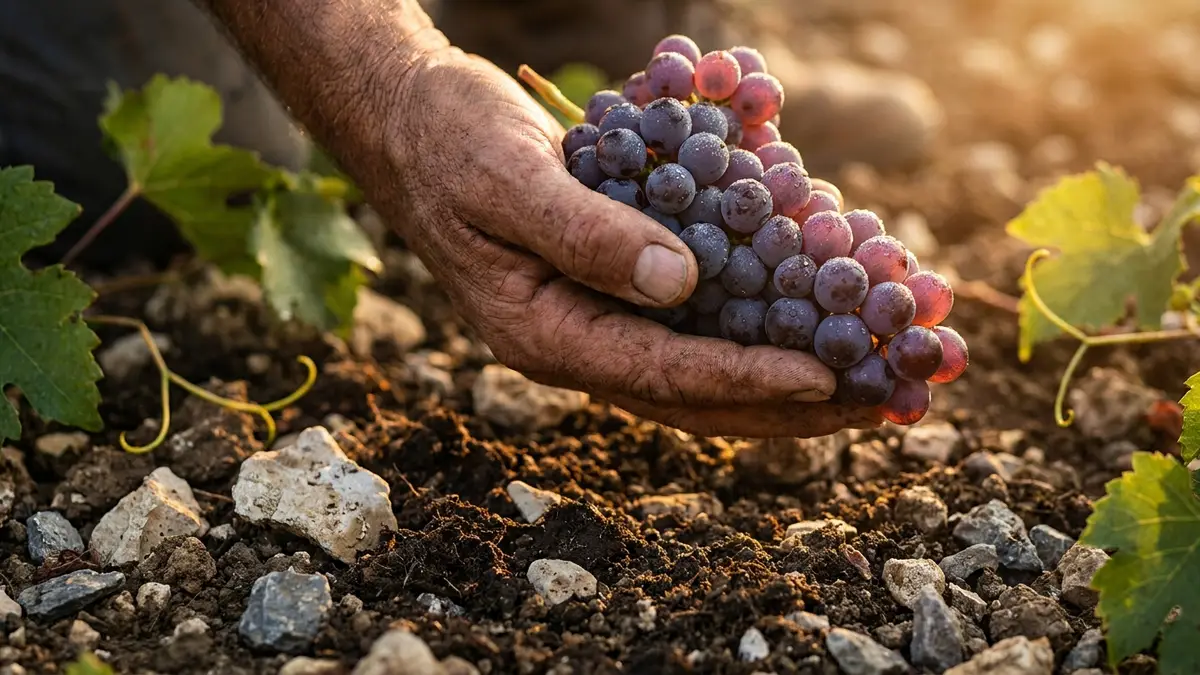
Grapes contain several natural organic acids that carry over into wine:
- Tartaric acid — the dominant acid in wine and the one most responsible for wine's crisp character; unique to grapes (not found in most other fruits)
- Malic acid — the same acid found in green apples; contributes a sharp, tart quality; converted to softer lactic acid during malolactic fermentation
- Citric acid — present in small amounts; contributes bright, citrus-like freshness
- Lactic acid — produced during malolactic fermentation (a secondary fermentation where bacteria convert sharp malic acid to softer lactic acid); rounder and creamier than malic acid
Climate's Role
Climate is the single biggest factor determining a wine's acidity level. As grapes ripen in warm conditions, their acid content decreases — the grape metabolizes its acids as fuel for growth. In cool conditions, this metabolism slows, and more acid is preserved.
This is why:
- Cool-climate wines (Champagne, Mosel, Oregon) — higher acidity, tarter, more refreshing
- Warm-climate wines (Napa Valley, Barossa, southern Spain) — lower acidity, rounder, softer
The same grape variety grown in different climates will show dramatically different acidity levels. A Chardonnay from Chablis (cool northern Burgundy) has electric, mouth-watering acidity. A Chardonnay from warm inland California can feel soft and almost flat by comparison.
Winemaker Adjustments
Winemakers have tools to adjust acidity:
- Acidification — adding tartaric acid to wine in warm climates where natural acidity is too low (common in Australia, California)
- Deacidification — reducing acidity in very cool climates where it is too high (rare, but used in some German and English wines)
- Malolactic fermentation (MLF) — converting sharp malic acid to softer lactic acid; softens and rounds the wine's acid profile
Most red wines undergo MLF, which is why reds generally taste softer and less tart than whites. Many whites skip MLF to preserve their crisp, sharp acidity — this is why unoaked Chardonnay (Chablis) tastes so much crisper than oaked Chardonnay, which typically undergoes MLF.
How to Identify Acidity When Tasting
Acidity is the most physically intuitive structural element in wine. Your body gives you an unmistakable signal.
The Mouth-Watering Test
After taking a sip of wine, pay attention to your salivation. High-acid wines make your mouth water — your salivary glands respond to the tartness by producing more saliva, just as they would if you bit into a lemon. Low-acid wines do not trigger this response.
The intensity of the mouth-watering sensation tells you the acidity level:
- High acidity — strong salivation, tingling on the sides of your tongue and inner cheeks; the wine feels "racy" or "zippy"
- Medium acidity — moderate salivation; the wine feels balanced and fresh without being tart
- Low acidity — minimal salivation; the wine feels soft, round, and potentially "flabby" if other elements do not compensate
The Lemon Comparison
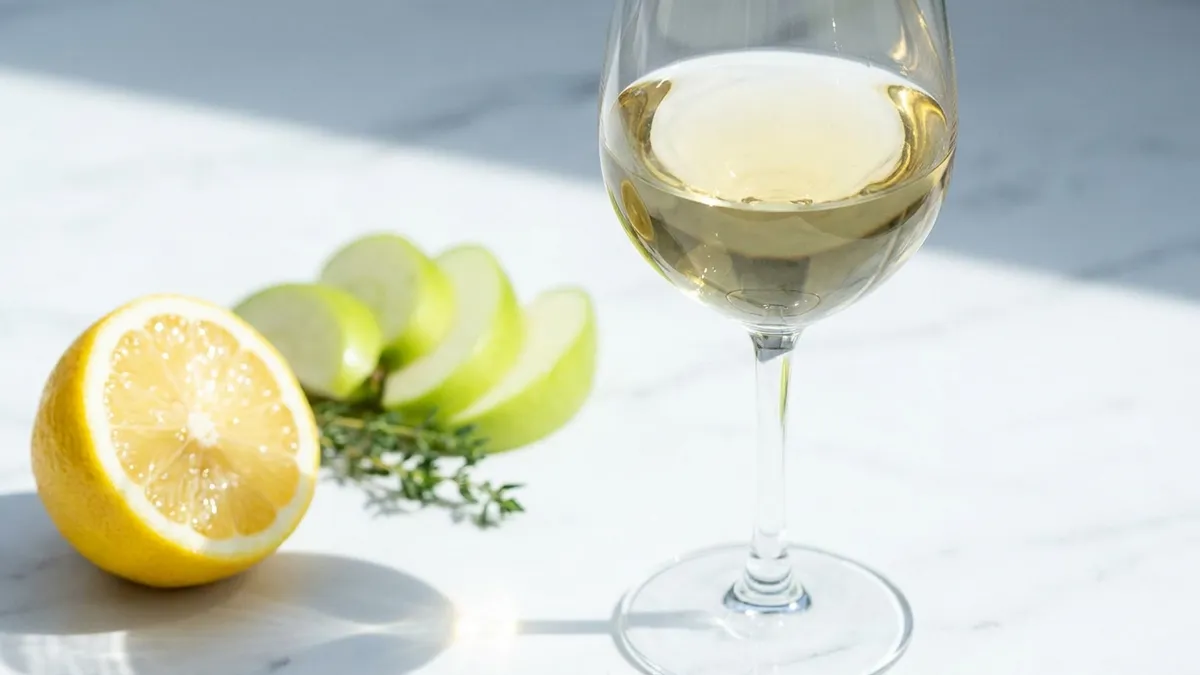
If you need a calibration reference, squeeze some lemon juice into water and taste it. That sour, mouth-watering, face-puckering sensation is acidity at its most extreme. Wine acidity is the same sensation, dialed back to varying degrees depending on the wine.
Where You Feel It
Acidity is perceived primarily on the sides of the tongue and the insides of the cheeks. This is different from tannin (felt on the gums and upper palate) and sweetness (felt on the front and tip of the tongue). Paying attention to where in your mouth you feel the sensation helps you distinguish acidity from other structural elements.
The Sommy app includes specific exercises that train you to calibrate your acidity perception — learning to distinguish high from medium from low acid across different wine styles.
For a comprehensive guide to how acidity interacts with tannin and body, our structural analysis guide covers the complete picture.
Acidity Levels by Wine Type
High-Acidity Whites
- Riesling — especially from Germany and Alsace; electric acidity that balances sweetness
- Sauvignon Blanc — particularly New Zealand and Loire Valley; sharp, citrus-driven acid
- Chablis / unoaked Chardonnay — mineral, lean, with bracing acidity
- Muscadet — bone-dry with saline, citrus acidity
- Champagne and sparkling wine — high acidity is essential for sparkling wine's freshness
- Albarino — bright, saline acidity from Spain's Atlantic coast
Medium-Acidity Whites
- Oaked Chardonnay — MLF softens the acidity; rounder and creamier
- Pinot Gris / Pinot Grigio — moderate acidity, especially in the Alsatian style
- Chenin Blanc — naturally high acid, but can range widely by style
- Gewurztraminer — naturally lower acid than most whites; rich and aromatic
High-Acidity Reds
- Pinot Noir — bright, red-fruit acidity, especially from Burgundy and Oregon
- Sangiovese — the grape behind Chianti; cherry-tart acidity
- Nebbiolo — high acidity combined with high tannin; the backbone of Barolo
- Barbera — one of the most acidic red grapes; juicy and vibrant
- Gamay — crunchy, fresh acidity that makes Beaujolais so food-friendly
Lower-Acidity Reds
- Merlot — softer, rounder, with moderate-to-low acidity
- Malbec — plush and smooth with gentle acidity
- Grenache — warm, ripe fruit with moderate acidity
- Zinfandel — ripe and jammy with lower acid in warm-climate expressions
Why Acidity Matters
Food Pairing
Acidity is the single most important structural element for food pairing — more important than tannin, body, or sweetness. Here is why:
Acidity cuts richness. A high-acid wine acts like a squeeze of lemon on your palate, cutting through fat, cream, butter, and oil. This is why:
- Champagne pairs with fried food — the bubbles and acid scrub the oil away
- Chablis pairs with buttered lobster — the acid cuts through the drawn butter
- Chianti pairs with tomato-based pasta — the wine's acidity matches the tomato's tartness
- Sauvignon Blanc pairs with goat cheese — the acid slices through the creaminess
Low acidity + rich food = fatigue. Without acidity to refresh your palate, rich food starts to taste monotonous and heavy. A full-bodied, low-acid red next to a creamy dish can feel cloying — both the wine and the food coat your mouth with nowhere to go.
Our wine and food pairing guide and wine pairing rules cover acidity's role in pairing in practical detail.
Balance and Quality
Acidity is the element that prevents wine from tasting heavy, sweet, or one-dimensional. It is the counterbalance to:
- Sweetness — acidity prevents sweet wines from tasting cloying (this is why great Riesling can carry significant sugar without tasting syrupy)
- Alcohol — acidity prevents high-alcohol wines from tasting hot and heavy
- Body — acidity prevents full-bodied wines from tasting lumbering
A wine with perfect balance integrates all its elements so that no single one dominates. Acidity is usually the element that provides this integration — the thread that ties everything together.
Aging Potential
Acidity is one of the key factors that determine whether a wine can age gracefully. Wines with high acidity age better because:
- Acid acts as a natural preservative, slowing oxidation
- The tartness that feels sharp in young wine softens and integrates over time
- High-acid wines retain their freshness and vibrancy as other elements evolve
This is why the world's longest-lived wines — top Burgundy, great Riesling, Champagne, Barolo — all have notably high acidity. A wine with low acidity may taste pleasant young but tends to fall apart more quickly as it ages, becoming flabby and dull.
Refreshment
At the most basic level, acidity is what makes wine refreshing. It is the reason a glass of cold Sauvignon Blanc on a hot day feels as refreshing as lemonade, while a heavy, low-acid Shiraz in the same conditions feels tiring. Acidity stimulates your palate, wakes up your taste buds, and creates the "one more sip" impulse that makes wine so pleasurable to drink.
Acidity vs. Other Structural Elements
Understanding how acidity relates to tannin and body helps you describe wine more precisely.
| Element | Sensation | Where you feel it | Caused by |
|---|---|---|---|
| Acidity | Tart, mouth-watering, sour | Sides of tongue, inner cheeks | Natural grape acids |
| Tannin | Dry, gripping, astringent | Gums, upper palate, cheeks | Grape skins, seeds, oak |
| Body | Heavy or light weight | Whole mouth (texture) | Alcohol, tannin, sugar, extract |
These three elements work together. A great wine balances them:
- High acid + high tannin + full body = Barolo (structured, age-worthy, demanding)
- High acid + low tannin + light body = Beaujolais (fresh, fruity, easy-drinking)
- Low acid + high tannin + full body = warm-climate Cabernet (powerful but potentially tiring)
- High acid + no tannin + light body = Chablis (crisp, mineral, refreshing)
Our guide to tannins, acidity, and body covers this structural interaction in depth.
Common Acidity Vocabulary
When describing acidity, sommeliers and critics use specific terms:
- Crisp — clean, refreshing acidity; a compliment (see what crisp means in wine)
- Bright — lively, energetic acidity; the wine feels vibrant
- Racy — pronounced acidity that drives the wine forward; often used for Riesling
- Tart — noticeably sour; can be positive (intentional freshness) or negative (unripe grapes)
- Sharp — excessive acidity that feels aggressive; usually negative
- Flat — insufficient acidity; the wine feels lifeless
- Flabby — very low acidity in a full-bodied wine; the wine feels heavy and dull
Sommelier tip: When someone says a wine tastes "refreshing," they almost always mean it has good acidity. When they say it tastes "heavy" or "boring," it often means the acidity is too low. Acidity is the invisible quality that determines whether a wine invites another sip or makes you put the glass down.
Building Your Acidity Awareness
The fastest way to understand acidity is to taste two wines at opposite ends of the spectrum back to back. Pour a glass of Chablis or New Zealand Sauvignon Blanc (high acid) and a glass of warm-climate oaked Chardonnay or Viognier (lower acid). Taste them alternately and focus on the mouth-watering sensation.
The high-acid wine will make your mouth flood with saliva. The low-acid wine will feel comparatively soft and still. That contrast is everything you need to know about acidity — once you have felt it clearly, you can identify it in every wine you taste going forward.
The Sommy app structures this learning through progressive tasting exercises that build acidity assessment alongside tannin, body, and sweetness evaluation. Detecting acidity accurately is one of the first skills taught in how to taste wine because it is the most intuitive structural element — your salivary glands give you an objective, measurable signal that does not require training to notice, just awareness to interpret.
Frequently Asked Questions
What does acidity taste like in wine?
Acidity creates a tart, sour, mouth-watering sensation — similar to biting into a green apple or squeezing lemon juice on your tongue. It makes your mouth water, your cheeks tingle, and your palate feel refreshed. In wine, you feel it most on the sides of your tongue and the insides of your cheeks.
Is acidity good or bad in wine?
Acidity is essential to good wine. Without enough acidity, wine tastes flat, heavy, and dull — like fruit juice left in the sun. Too much acidity makes wine taste sharp and unpleasant. The goal is balance — enough acid to keep the wine lively and fresh without making it taste sour.
Which wines are highest in acidity?
Cool-climate whites tend to have the highest acidity: Riesling, Sauvignon Blanc, Chablis (unoaked Chardonnay), Muscadet, and Champagne. Among reds, Pinot Noir, Sangiovese (Chianti), Nebbiolo (Barolo), and Barbera are notably high-acid varieties. Climate matters as much as grape — the same variety from a cool region will be more acidic than from a warm one.
What causes acidity in wine?
Acidity comes from natural organic acids in the grape — primarily tartaric acid, malic acid, and citric acid. These acids accumulate during grape development and decrease as grapes ripen in warm conditions. Cool climates preserve more acid because the grapes do not get warm enough to metabolize it all. Winemakers can also adjust acidity by adding tartaric acid or allowing malolactic fermentation.
What is the difference between acidity and tannin?
Acidity and tannin are both structural elements but produce completely different sensations. Acidity is a sour, mouth-watering quality felt on the sides of the tongue. Tannin is a dry, gripping sensation felt on the gums and cheeks. Acidity makes your mouth water; tannin dries your mouth out. They are complementary — great red wines balance both.
Why does acidity matter for food pairing?
Acidity acts as a palate cleanser — it cuts through fat, richness, and cream, refreshing your mouth between bites. This is why a crisp Sauvignon Blanc works with goat cheese (acid cuts richness) and why Champagne pairs with fried food (bubbles plus acid cut oil). Low-acid wines feel heavy with rich food because there is nothing to reset your palate.
Does wine acidity decrease with age?
Perceived acidity decreases slightly as wine ages because the harsh, sharp edges of young acid soften over time. The actual acid content drops minimally, but the wine's other components — tannin polymerization, flavor development — evolve to integrate with the acidity more harmoniously, making the wine taste smoother and more balanced.
Sommy Team
LinkedInFounder & Wine Educator
The Sommy Team is building the world's most approachable wine education app, helping beginners develop real tasting skills through structured courses and AI-guided practice.