Wine with Ethiopian Food: Injera, Berbere, and Doro Wat

By the Sommy Team — AI-assisted, human-edited.
Updated Sep 24, 2026
Contents (11)
- What Wine Goes with Ethiopian Food, in One Paragraph
- Why Is Ethiopian Food Tricky to Pair with Wine?
- Which Wine Goes with Each Ethiopian Dish?
- What Wine Goes with Doro Wat and Other Berbere Stews?
- What Wine Goes with Kitfo?
- What Wine Goes with Shiro, Gomen and Fasting Platters?
- Should You Chill Red Wine for Ethiopian Food?
- Which Wines Should You Avoid with Ethiopian Food?
- Is Tej Ethiopian Wine?
- Does Ethiopia Make Grape Wine?
- How Should You Order Wine with Ethiopian Food Tonight?
TL;DR
Wine with Ethiopian food works when you choose for the berbere heat and the sour injera rather than the meat. Off-dry Riesling suits red wats, fizzy off-dry Lambrusco suits kitfo, and drier whites or chilled Gamay suit shiro and greens. Avoid tannic reds and anything near 15% alcohol.
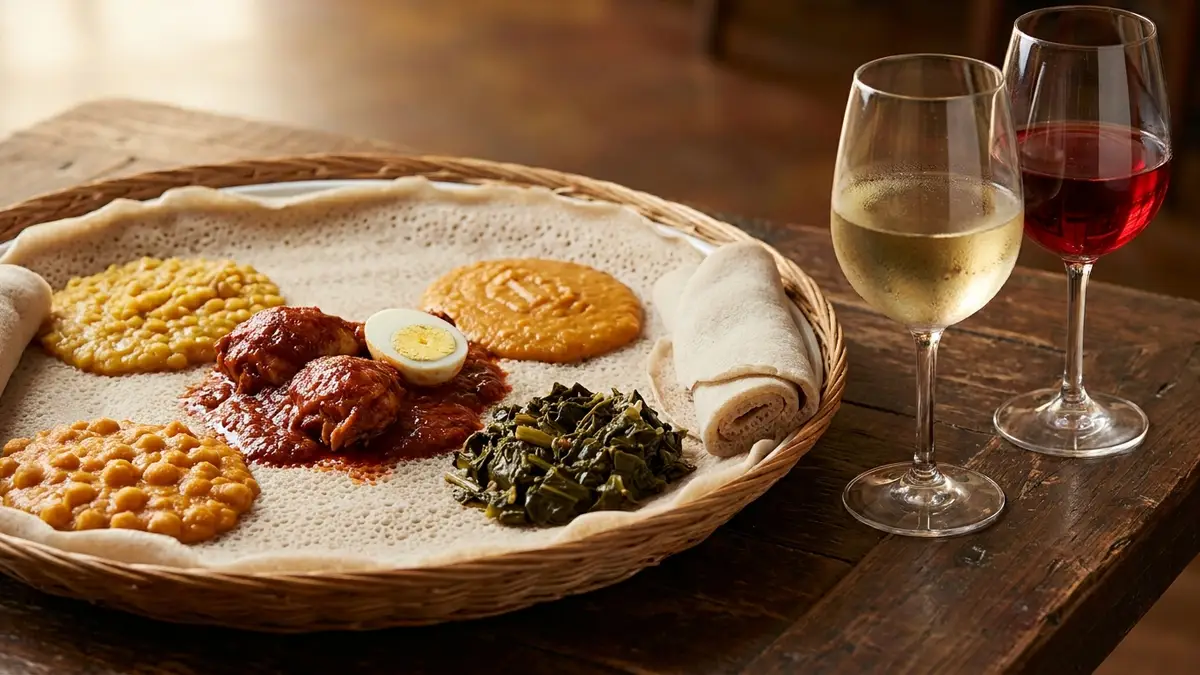
Wine with Ethiopian food works when the chili and the sour bread choose the bottle. The meat matters far less. The berbere in the stews, the spiced butter that carries it, and the tang of injera all punish tannin and high alcohol. So the glass that works is light, low in alcohol, a little sweet or fizzy, and cool.
What Wine Goes with Ethiopian Food, in One Paragraph
For a mixed platter, order an off-dry Riesling (off-dry means a little sugar you can taste) at 12.5% alcohol or less. Its sweetness eases the berbere burn, its high acidity (the tartness that makes your mouth water) keeps pace with sour injera, and it has no tannin to turn bitter against chili.
With kitfo, switch to a chilled, lightly sparkling off-dry Lambrusco. With the milder shiro and gomen, a dry white or a Gamay chilled to about 13°C works. Skip big reds such as Cabernet Sauvignon and ripe Zinfandel, which can pass 15% alcohol and make every bite hotter. If a plate is red, go sweeter. If it is yellow or green, you can drink drier.
Why Is Ethiopian Food Tricky to Pair with Wine?
Three things on the platter work against wine at once: chili heat from berbere, spiced butter in the stews, and the sour tang of injera. Each one alone is manageable. Together they rule out the heavy, oaky reds many people reach for with a meat stew.
Berbere is the red spice blend at the base of Ethiopian and Eritrean cooking. It is far more than chili: a typical mix also carries coriander, garlic, ginger, fenugreek, nigella and korarima, a cardamom-like pod. The chili is the part that fights wine. Salt and chili heat both make alcohol feel hotter, so a strong wine fans the burn. If a wine smells hot on its own, it will taste hotter beside berbere. Chili also makes tannin (the drying grip on your gums) taste harsher and more bitter.
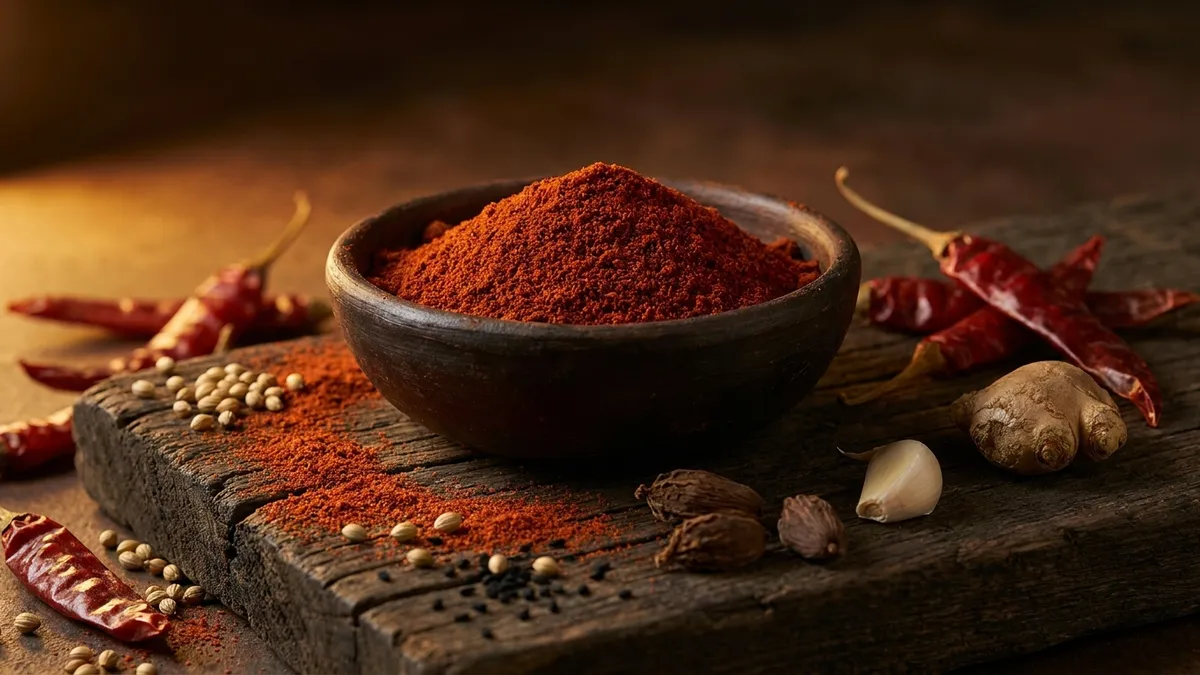
The stews, called wat or wot, are enriched with niter kibbeh, a clarified butter infused with ginger, garlic and other spices. That fat coats the mouth and wants acidity to cut through it.
Then there is injera, the spongy flatbread that serves as plate, spoon and side dish. It is made from teff, a tiny grain of which Ethiopia grew more than 90% of the world's supply in 2016. The batter ferments for 24 to 72 hours, and its pH drops below 5.8 along the way, which is why injera tastes sour. A low-acid wine tastes flat and flabby next to it. Sugar is the one tool that pushes back on the chili, because sweetness balances heat and softens the burning feeling.
Which Wine Goes with Each Ethiopian Dish?
Pick by the loudest thing on the plate, which is chili for the red wats, raw-beef fat and hotter spice for kitfo, and earthy legumes for shiro. The shared rule is short. If the stew is red, go off-dry. If it is yellow or green, you can drink dry.
| Dish | Loudest thing on the plate | Order this | Why it works |
|---|---|---|---|
| Doro wat (chicken) | Berbere heat, spiced butter | Off-dry Riesling, 12.5% or less | Sugar eases the burn, acid cuts the butter |
| Key wat (red beef stew) | Berbere heat, beef richness | Off-dry Gewürztraminer or chilled Gamay | Low tannin stays sweet-fruited beside chili |
| Kitfo (raw minced beef) | Mitmita heat, raw-beef fat | Chilled Lambrusco amabile | Bubbles and acid cut fat, fruit sweetness eases heat |
| Shiro (chickpea stew) | Earthy, mild, creamy | Dry Riesling or chilled Gamay | Mild heat lets a dry wine work |
| Gomen (collard greens) | Green, garlicky, mild | Dry, unoaked white | Acid matches greens, no tannin to clash |
| Mixed fasting platter | Legumes, greens, some berbere | Off-dry Riesling | One bottle covers mild and hot |
The pattern follows the logic in our guide to wine with spicy food: the hotter the dish, the sweeter and lighter the wine. The broader rules of weight, acid and fat are in the wine and food pairing guide.
What Wine Goes with Doro Wat and Other Berbere Stews?
Off-dry Riesling is the safest bottle for doro wat, with off-dry Gewürztraminer and a chilled Gamay as the alternatives. Doro wat is a berbere-spiced chicken stew, and it is the national dish of Ethiopia. It takes about 10 hours to prepare properly, so it tends to appear on special occasions.
Riesling handles it because it pairs a little residual sugar (grape sugar left after fermentation) with high acidity. The sugar takes the edge off the chili. The acid cuts the niter kibbeh and holds up against the injera. Riesling is one of the few wines regularly paired with strongly spiced Thai and Chinese food, and berbere asks for the same things. On a German label, Kabinett or Spätlese usually means off-dry. If the label says trocken or dry and the wat is hot, pick another bottle. Our Riesling wine guide explains how to read those words.
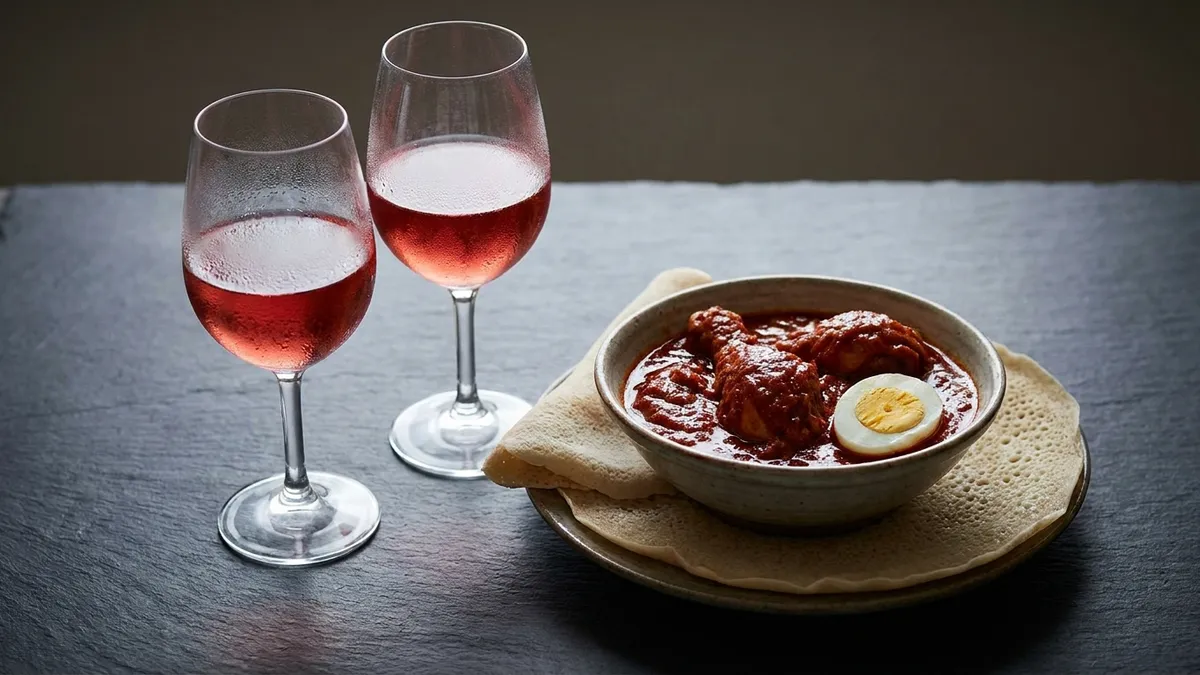
Gewürztraminer is usually made off-dry because the grape builds high natural sugar. Its acidity is lower than Riesling's, so it suits beef-based key wat better than the sourest injera. The Gewürztraminer wine guide covers its lychee and rose aromas. For a red with key wat, reach for the chilled Gamay covered below.
What Wine Goes with Kitfo?
Kitfo wants a lightly sparkling, off-dry red such as Lambrusco amabile, served cold. The dish comes from the Gurage people. It is minced raw beef marinated in niter kibbeh and mitmita, a separate spice powder from berbere made of ground birdseye chili, cardamom, cloves and salt. The raw beef and butter bring plenty of fat to the plate.
Lambrusco is an Italian red made frizzante, meaning lightly sparkling. It comes in three sweetness levels: secco (dry), amabile (off-dry to sweet) and dolce (very sweet). It has high acidity and berry flavours, and in its home region it goes with fatty cured meats and fried dough. With kitfo, the bubbles and acid scrub the butter from your tongue. The fruit sweetness of an amabile softens the mitmita.
If the kitchen serves the kitfo lightly cooked and mildly spiced, a secco Lambrusco works. If it comes raw and heavily spiced, choose amabile. Chill the bottle hard, as cold as a white.
What Wine Goes with Shiro, Gomen and Fasting Platters?
The milder vegan dishes let you drink drier: a dry Riesling, an unoaked white or a chilled light red. Shiro is a creamy, earthy chickpea stew. Gomen is collard greens cooked with garlic. Many platters, especially the vegan fasting combinations, mix these with only one or two berbere dishes.
With little chili in play, tannin and alcohol matter less, and acidity matters more. A dry Riesling or another crisp, unoaked white matches the green, garlicky edge of gomen. The earthy weight of shiro takes a light red well, because Gamay has too little tannin to taste dusty beside legumes.
If the platter is all vegan dishes with only one red stew, a single off-dry Riesling covers everything. If there is no berbere dish at all, a dry white is the better choice. Plant-based diners can check how a bottle was fined in our explainer on vegan wine.
Should You Chill Red Wine for Ethiopian Food?
Yes, chill any red you pour with Ethiopian food, to about 11 to 14°C for light Gamay. Cooler wine tastes less alcoholic and fresher, which is what berbere heat needs. A red at room temperature shows its alcohol first, and that alcohol is the part chili makes worse.
Gamay, the grape of Beaujolais, is a natural fit. Beaujolais is a fruity wine without much tannin, and Gamay has naturally high acidity. The traditional serving temperatures step up with weight: Beaujolais Nouveau at about 11°C, Beaujolais-Villages at 13 to 14°C, and the named cru villages at 16 to 17°C. With a hot wat, drink even the cru toward the cool end. The Gamay wine guide explains why the grape stays so light, and the wine serving temperature chart covers every other style.
The same effect explains why temperature changes flavour at all, covered in how temperature affects wine taste.
Which Wines Should You Avoid with Ethiopian Food?
Avoid high-tannin reds and anything over about 14.5% alcohol. Doro wat and kitfo are meat dishes, so the old red-with-meat habit points to Cabernet Sauvignon, Syrah or Malbec. The deciding factor is the spice, not the protein. Against berbere, those grapes' tannin tastes bitter and their alcohol makes the chili hotter.
Ripe Zinfandel is a clear example. Its grapes carry so much sugar that the finished wine can pass 15% alcohol, and alcohol amplifies chili heat. If the label says 15%, save the bottle for another night. Our guide to alcohol in wine by type shows which styles run hot, and what tannins are explains the drying grip.
No wine puts out chili burn the way cold milk can, where casein and water help carry the capsaicin away. The right wine avoids adding fuel.
Is Tej Ethiopian Wine?
No: tej is honey wine, made from honey, water and a shrub called gesho, with no grapes in it. It belongs to the mead family, not to grape wine. The basic ratio is about one part honey to five parts water, with gesho added for flavour.
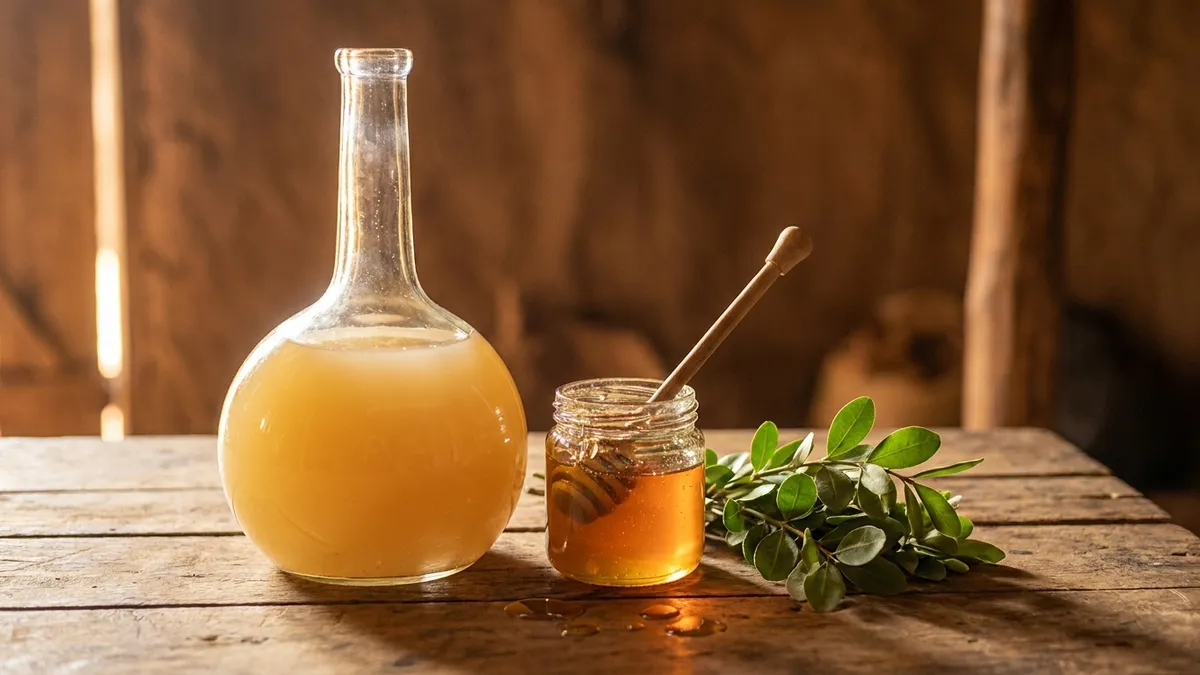
Strength varies widely. Most tej lands between 7 and 11% alcohol, but samples have been measured as low as 2.7% and as high as 21.7%. Tej is considered the national drink of Ethiopia and is poured at Christmas, New Year, Easter and weddings. Excavations at the ancient Aksumite site of Beta Samati found signs of wine drinking that suggest tej has existed for centuries, and it is believed to be among the oldest alcoholic drinks. In the 1500s the Portuguese priest Francisco Álvares called this "wine of honey" the best of all.
If a tej tastes sweet, drink it with the hottest wat, because its honey sweetness does the job of an off-dry wine. If it tastes dry and strong, treat it like a high-alcohol wine and pair it with the milder dishes. Cold beer is also a fine choice with the hottest stews, since it is low in alcohol and has almost no tannin.
Does Ethiopia Make Grape Wine?
Yes. Ethiopian grape wine goes back more than 1,600 years, and it is still made today in the Rift Valley. Stone inscriptions left by King Ezana in the 4th century refer to wine. Production can be traced to the early centuries of the first millennium AD, in the Aksumite kingdom.
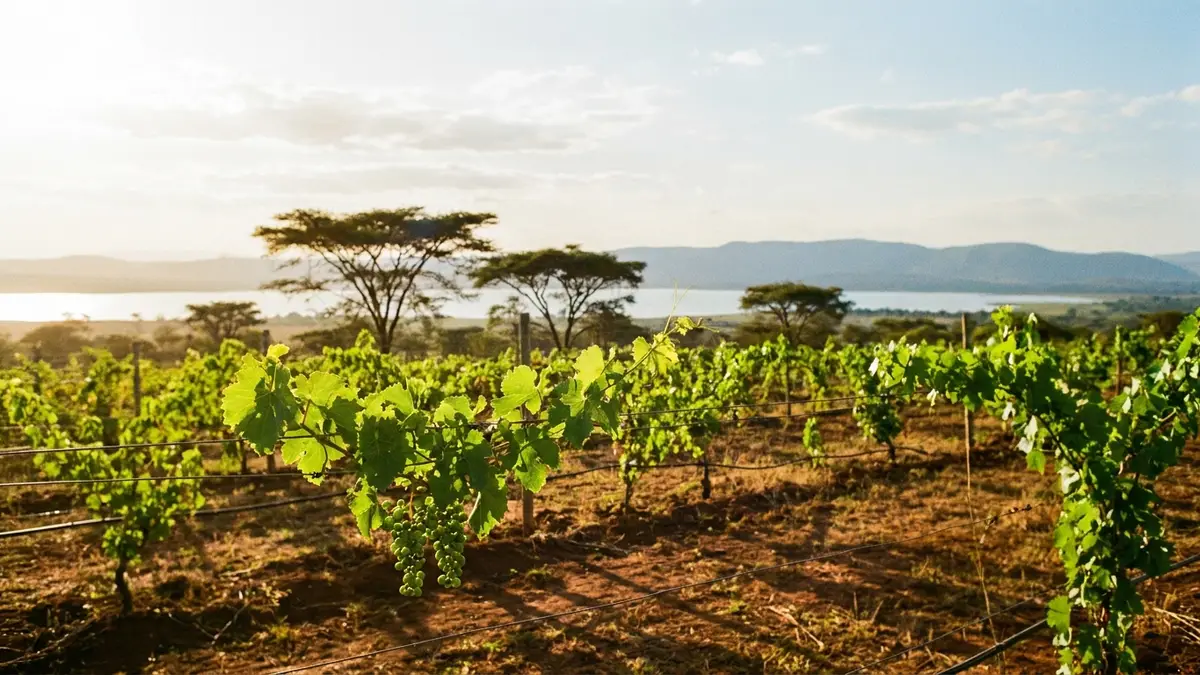
The modern industry has two main players. One domestic winery, founded in 1956, was producing about 10 million bottles a year by 2014. A French-run estate began operations in 2014 on 120 hectares near Lake Ziway in the Rift Valley. The region averages about 25°C with roughly 650 mm of rain a year. That warmth allows two grape harvests a year. So an Ethiopian bottle on a restaurant list is grape wine, not tej. Check its alcohol and tannin against the rules above before ordering it with a hot wat.
How Should You Order Wine with Ethiopian Food Tonight?
Order one red stew, one yellow or green dish, and a bottle of off-dry Riesling at 12.5% or less. Taste the wine after a bite of plain injera, then after a bite of doro wat. If the burn grows after a sip, ask for a bottle with less alcohol or more sweetness.
Sommy's bite-sized courses teach how sugar, acid and tannin change with food, and the AI-guided tasting mode lets you photograph the label and save your tasting notes. Start at sommy.wine, browse the food pairing hub, then order the Riesling and a plate of doro wat tonight.
Sources
Frequently Asked Questions
What wine goes with Ethiopian food?
An off-dry Riesling is the safest single bottle. Its touch of sweetness eases the berbere burn, its acidity stands up to the sour injera, and it has no tannin to turn bitter. A chilled Gamay covers the table if you want red, and a lightly sparkling off-dry Lambrusco is the best match for kitfo. Keep alcohol at or below about 12.5%.
What wine goes with doro wat?
Doro wat, the berbere-spiced chicken stew that is Ethiopia's national dish, goes best with an off-dry Riesling or an off-dry Gewürztraminer. The residual sugar softens the chili heat, and the acidity handles the spiced butter and the sour injera. For a red, choose a light Gamay from Beaujolais served cool, not a big Cabernet or Zinfandel.
Is Ethiopian food too spicy for wine?
No, but it rules out some wines. Chili heat makes high alcohol burn harder and makes tannin taste bitter, so big oaky reds struggle. Wines with a little sweetness, low alcohol, fizz or no tannin work well, and the milder vegan dishes such as shiro and gomen accept dry whites and light reds without trouble.
Is tej a wine?
Tej is Ethiopia's honey wine, closer to mead than to grape wine. It is fermented from honey and water, roughly one part honey to five parts water, and flavoured with gesho, a local shrub. Most tej sits around 7 to 11% alcohol, but individual samples have been measured anywhere from 2.7% to 21.7%, so strength varies a lot.
What wine goes with kitfo?
Kitfo is minced raw beef dressed with mitmita, a hotter chili blend than berbere, and spiced clarified butter. A chilled, lightly sparkling Lambrusco in the amabile (off-dry) style fits it best: the bubbles and acidity cut the fat, the fruit sweetness eases the chili, and the tannin stays low. An off-dry Riesling is the white alternative.
Does Ethiopia make grape wine?
Yes. Grape wine in Ethiopia goes back to at least the 4th century, when King Ezana's stone inscriptions mention it. Today one domestic winery founded in 1956 made about 10 million bottles a year by 2014, and a French-run 120-hectare estate near Lake Ziway in the Rift Valley opened in 2014, where the warm climate allows two harvests a year.
Sommy Team
LinkedInFounder & Wine Educator
The Sommy Team is building the world's most approachable wine education app, helping beginners develop real tasting skills through structured courses and AI-guided practice.