How Temperature Affects Wine Taste: A Tasting Experiment
By the Sommy Team — AI-assisted, human-edited.
Updated Apr 28, 2026
Contents (11)
- TLDR
- What Happens When Temperature Affects Wine Taste
- Why a Few Degrees Changes Everything
- The Three-Temperature Experiment
- Sauvignon Blanc at Three Temperatures
- Cabernet Sauvignon at Three Temperatures
- Patterns You Will Always Notice
- Translating the Experiment Into Real Life
- Building Temperature Awareness Into Your Tasting
- A Few Things to Watch For
- Why This One Skill Pays Off Forever
TL;DR
Temperature changes how wine tastes more than the bottle itself. Cold mutes aromas and sweetness while sharpening acid, tannin, and bitterness. Warmth amplifies aromas, sweetness, and alcohol while softening tannin. Whites belong at 8-12°C, light reds 12-15°C, full reds 15-18°C, sparkling 6-8°C. Pour the same wine at three temperatures and the difference is undeniable.
TLDR
Temperature changes how wine tastes more than the bottle itself. Cold mutes aromas and sweetness while sharpening acid, tannin, and bitterness. Warmth amplifies aromas, sweetness, and alcohol while softening tannin. Whites belong at 8-12°C, light reds 12-15°C, full reds 15-18°C, sparkling 6-8°C. Pour the same wine at three temperatures and the difference is undeniable.
What Happens When Temperature Affects Wine Taste
The way temperature affects wine taste comes down to two physical facts: aromatic compounds evaporate faster when warm, and your taste buds register sweetness, acid, and bitterness differently at different temperatures. Cold wine feels leaner because aromas stay locked in the liquid and your tongue under-reads sweetness, leaving acid and tannin in the spotlight. Warm wine feels rounder and fuller because volatiles rush into the air above the glass and your perception of sugar climbs, while tannin feels softer. The serving ranges that sommeliers use are not arbitrary numbers — they are the windows where each style of wine sits in balance. Whites belong at 8-12°C, light reds at 12-15°C, full reds at 15-18°C, sparkling wines at 6-8°C.
Why a Few Degrees Changes Everything
Wine is a solution of water, alcohol, acid, sugar, tannin, and several hundred aromatic molecules. Each of those components reacts to temperature on its own curve, and only a narrow window keeps them in the proportions the winemaker intended.
Aromatic Compounds and Volatility
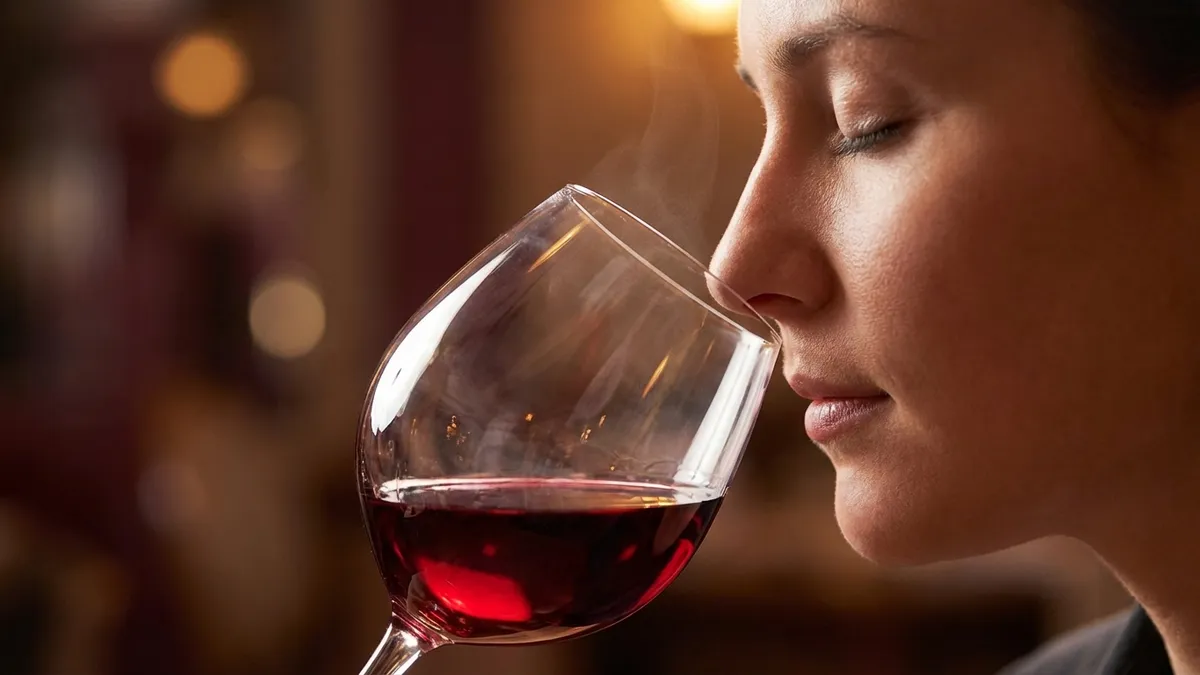
Roughly 80 percent of what you experience as flavor is actually smell — a point covered in detail in our guide to how to smell wine. Aroma molecules need to leave the liquid and enter the air above the glass before your nose can register them. That movement is governed by volatility — the tendency of a molecule to evaporate. Volatility increases with temperature, so a warmer glass releases more aroma into the air and a colder glass releases less.
The effect is not subtle. A Sauvignon Blanc at 4°C smells almost neutral. The same wine at 10°C smells loudly of grapefruit, gooseberry, and cut grass. Nothing in the bottle changed — the aroma molecules simply got the energy they needed to escape.
Taste Bud Sensitivity
Your taste buds are not equally sensitive at all temperatures. Sweetness perception peaks around 20-30°C, which is why hot chocolate tastes sweeter than ice cream made from the same recipe. Acid and bitterness, by contrast, register strongly across a wide range — they barely soften with cold.
The implication for wine is direct. Chill a slightly off-dry Riesling and the sugar recedes while the acid stays sharp, so the wine reads as crisp and balanced. Warm the same Riesling and the sweetness pushes forward, so the wine reads as cloying. Same liquid, different math.
Viscosity and Mouthfeel
Cold liquids are slightly more viscous than warm ones. That subtle thickness affects how wine coats the mouth, how long flavors linger, and how astringency reads on the gums. Warm wine feels thinner and more flowing; cold wine feels denser and more structured. Neither is right or wrong — but each style has a window where the texture matches the wine's intent.
The Three-Temperature Experiment
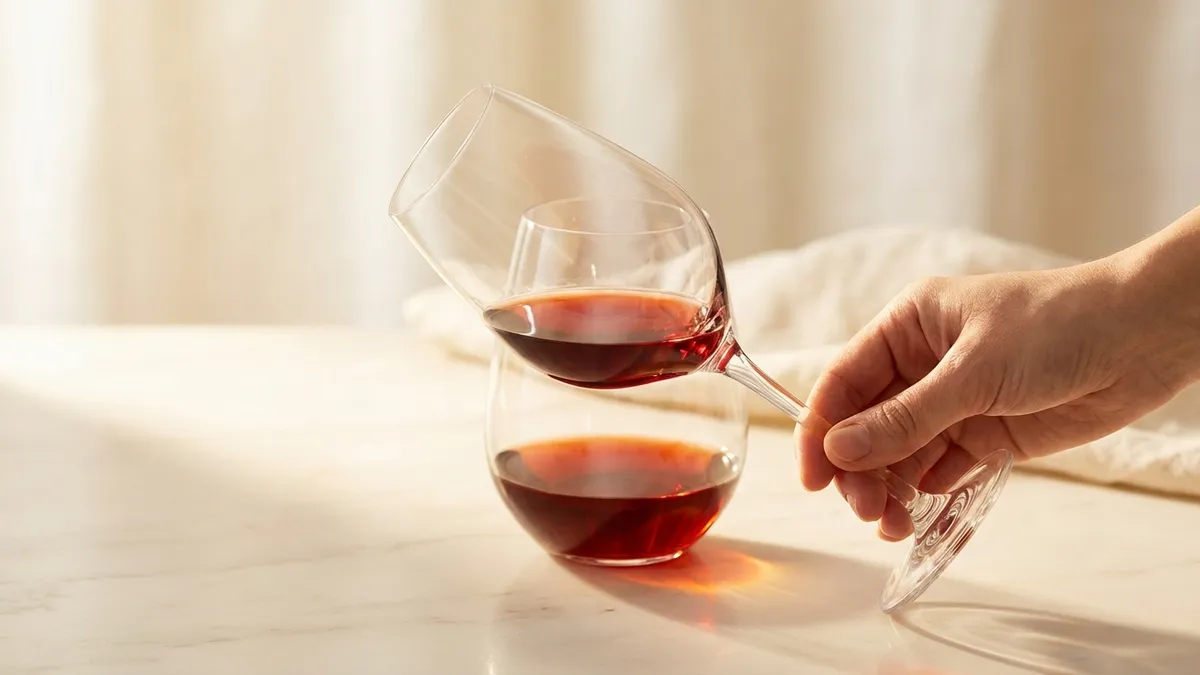
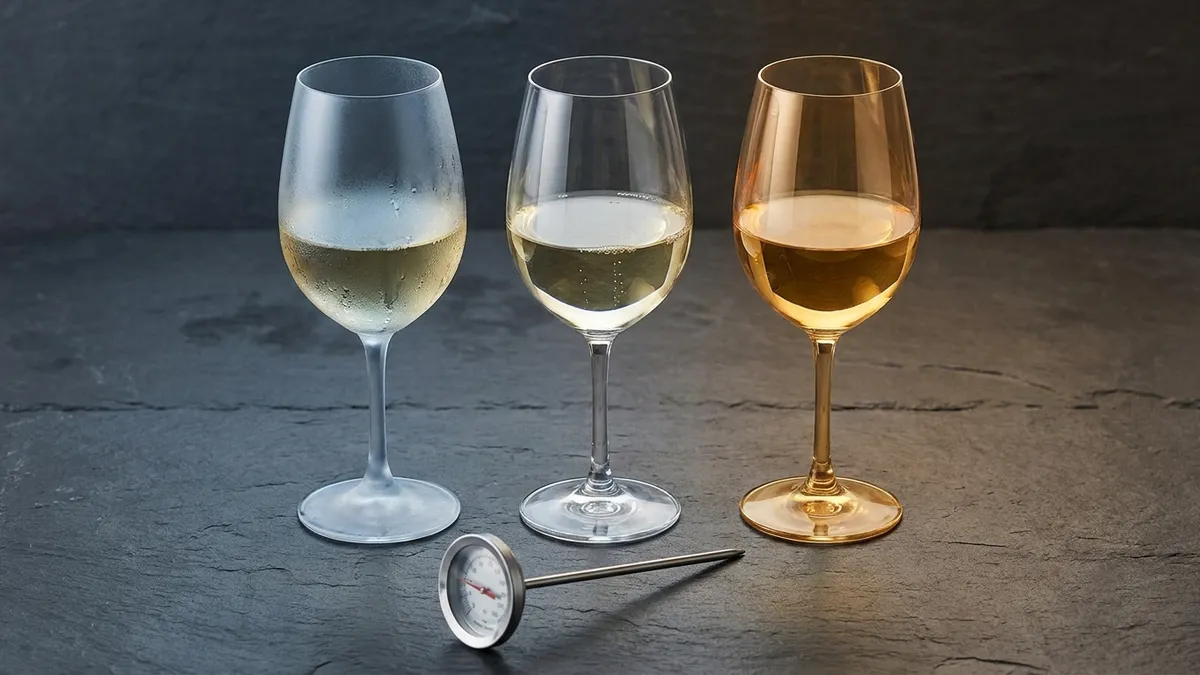
The fastest way to feel all of this in practice is to taste the same wine at three temperatures, side by side. One bottle, three glasses, thirty minutes. Pick a Sauvignon Blanc for the white test and a Cabernet Sauvignon for the red test — both have enough aromatic intensity and structure to show the differences clearly.
Setting Up the Experiment
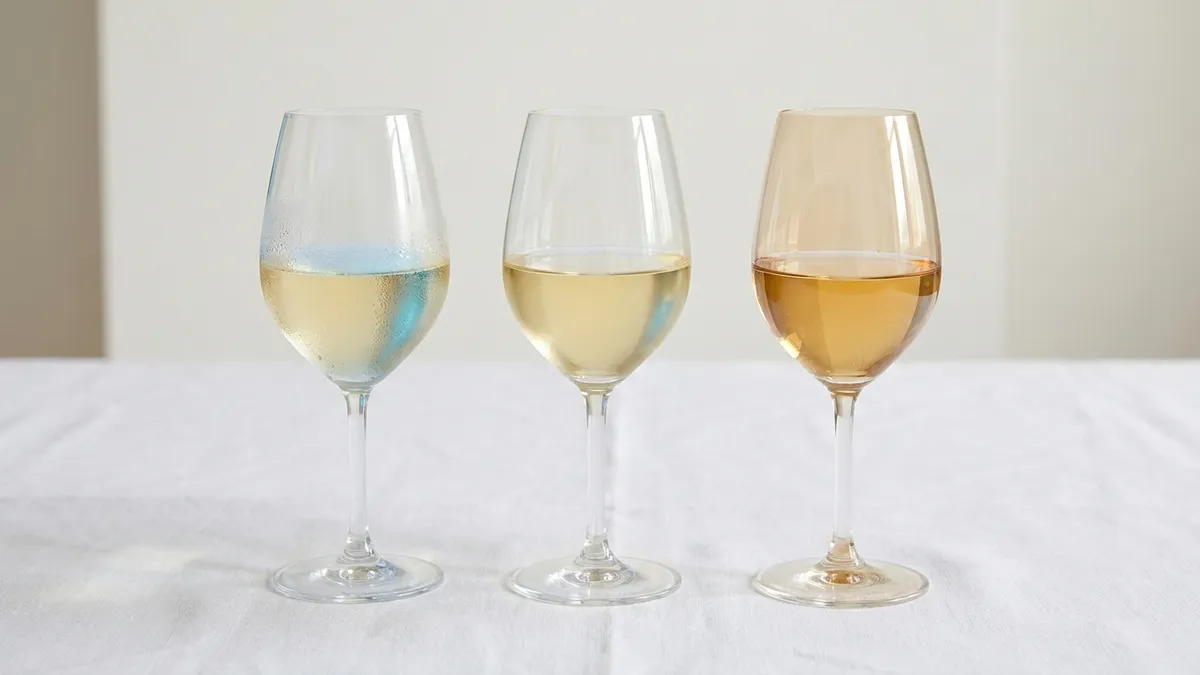
Pour three small glasses from the same bottle. Cover them with cling film or a small plate to slow evaporation. Then:
- Glass 1 (Cold): Place in the fridge for 90 minutes. Target around 4°C — straight fridge temperature.
- Glass 2 (Ideal): Place in the fridge for 20 minutes if it is a white, or pull a room-temperature bottle into the fridge for 20 minutes if it is a red. Target the style's sweet spot — 10°C for the Sauvignon Blanc, 16°C for the Cabernet.
- Glass 3 (Warm): Leave on a warm counter, around 22°C — modern indoor "room temperature."
Taste in order: cold first, ideal second, warm last. Take notes between each. The full range of the experiment, from coldest to warmest, is only about 18°C — but it covers everything that goes wrong at home.
Sauvignon Blanc at Three Temperatures
A Sauvignon Blanc carries grapefruit, passionfruit, gooseberry, green pepper, and a sharp slice of acidity. It is a textbook white for this experiment because it is loud enough to show what gets muted and what gets exaggerated.
Glass 1: Fridge-Cold (4°C)
The first thing you notice is what is missing. Lean down to the rim and the glass smells almost neutral — a faint hint of citrus and not much else. The aroma molecules are still trapped in the liquid because they do not have the energy to evaporate.
On the palate, the wine tastes lean, sharp, and one-dimensional. Acid is the loudest signal because cold sharpens its bite while suppressing the sweetness that normally rounds it off. The fruit that should fill the middle is silent. Many beginners assume this is what Sauvignon Blanc is supposed to taste like, because the fridge is the default storage. It is not — this is the wine in its quietest, most muffled state.
Glass 2: Ideal (10°C)
Warm the glass by 6°C and the wine wakes up. Grapefruit, gooseberry, and a herbal green note rise out of the rim. The acid is still bright but no longer dominant — there is enough fruit and texture to balance it. The finish lingers for several seconds rather than disappearing.
This is where the winemaker intended the wine to land. Every component has space to show. The acid feels refreshing rather than sharp, the aromatics are loud, and the wine has a sense of shape. If you have only ever drunk Sauvignon Blanc straight from the fridge, this glass is a small revelation.
Glass 3: Counter-Warm (22°C)
Now the balance tips the other way. Aromas are even more amplified, but they start to take on a slightly tropical, almost candied character — passionfruit and pineapple push past grapefruit. That sounds appealing on paper, but it comes with a cost.
The acid now feels softer than it should, and the alcohol pokes through. The wine starts to taste flabby — fruit-forward but lacking the freshness that defines the style. The finish is shorter and slightly hot. This is what a Sauvignon Blanc tastes like at a summer picnic when the bottle has been sitting in the sun too long.
Cabernet Sauvignon at Three Temperatures
Cabernet is the textbook red for this experiment. High tannin, dark fruit, often 13.5-14.5% alcohol, and enough structure to reveal every effect of temperature on a red.
Glass 1: Fridge-Cold (10°C)
Pulled from the fridge, a Cabernet smells closed — a faint whiff of dark fruit, a hint of green herbs, and not much else. The aromatic complexity is still locked in the liquid.
The first sip is the surprise. The tannin grips hard, almost bitter, and the wine tastes thin, sour, and astringent. There is no fruit cushion, no warmth, no roundness. This is exactly the scenario behind the saying "this wine is too tannic" — but the wine is fine. The temperature is wrong. Many beginners write off perfectly good young reds at this stage. For more on the bigger pattern, see our guide to common wine tasting mistakes.
Glass 2: Ideal (16°C)
Move the glass to a cool room and let it warm 6°C. The wine transforms. Aromas of blackcurrant, blackberry, cedar, tobacco, and a touch of vanilla rise out of the rim. The tannin is still firm but no longer aggressive — it feels structured rather than punishing.
The fruit fills the middle of the palate. The alcohol stays in the background, supporting the wine rather than dominating it. The finish is long and savory. This is the window where Cabernet shows what it is — a structured, age-worthy red with a clear sense of place. To go deeper on the structural elements at play, read our understanding tannins, acidity, and body primer.
Glass 3: Counter-Warm (22°C)
Push the wine another 6°C and the balance breaks. Aromas are louder still, but the fruit takes on a stewed, jammy character — more cooked plum than fresh blackcurrant. Alcohol pushes forward on the nose, almost burning at the rim.
On the palate, the wine feels heavy, syrupy, and tiring. Tannin softens to the point of vanishing, which sounds pleasant but actually leaves the wine without backbone. Sweetness perception climbs — even a fully dry Cabernet starts to taste vaguely sweet because your taste buds register more sugar at 22°C. The finish is short and hot. This is the bottle most people pour at home in winter, and it is the wine at its worst.
Patterns You Will Always Notice
Run the experiment with two or three different wines and the same patterns repeat every time, regardless of style.
What Cold Does
- Mutes aromas. Volatiles stay trapped in the liquid.
- Suppresses sweetness perception. Even off-dry wines taste drier.
- Sharpens acid. Without sweetness to balance, acid stands out.
- Hardens tannin. Astringency reads as drying and slightly bitter.
- Tightens texture. The wine feels denser and more structured.
What Warmth Does
- Amplifies aromas. More molecules evaporate into the air above the glass.
- Pushes sweetness forward. Taste buds register more sugar at higher temps.
- Softens acid. Acid feels less prominent against more sweetness and fruit.
- Softens tannin. Astringency feels more integrated and less drying.
- Releases alcohol. Ethanol volatilizes faster and dominates the nose.
The skill of serving wine at the right temperature is mostly about matching these effects to the style. Aromatic whites need just enough warmth to release their fruit, but not so much that acid collapses. Full reds need enough warmth to soften tannin and release aromatics, but not so much that alcohol takes over. The window is narrow, and that is why this matters.
Translating the Experiment Into Real Life
Once you have felt the difference, the practical fix is simple. Almost every home pour is too cold for whites and too warm for reds, and a 15-20 minute correction in either direction lands the wine in its window.
For whites, pull the bottle out of the fridge 15-20 minutes before pouring. For reds, put the bottle in the fridge for 15-20 minutes before pouring. This is the well-known 20/20 rule, and our wine serving temperature chart breaks down the exact targets by style. Short on time? See how to chill wine fast.
If you want a quick reference for which wine sits where, here is the short list in Celsius:
- Sparkling wines: 6-8°C
- Light aromatic whites (Sauvignon Blanc, Pinot Grigio, Albariño): 8-10°C
- Full-bodied whites (oaked Chardonnay, Viognier): 10-12°C
- Rosé: 9-11°C
- Light reds (Pinot Noir, Gamay): 12-15°C
- Medium reds (Sangiovese, Merlot, Grenache): 14-16°C
- Full reds (Cabernet Sauvignon, Syrah, Malbec, Nebbiolo): 15-18°C
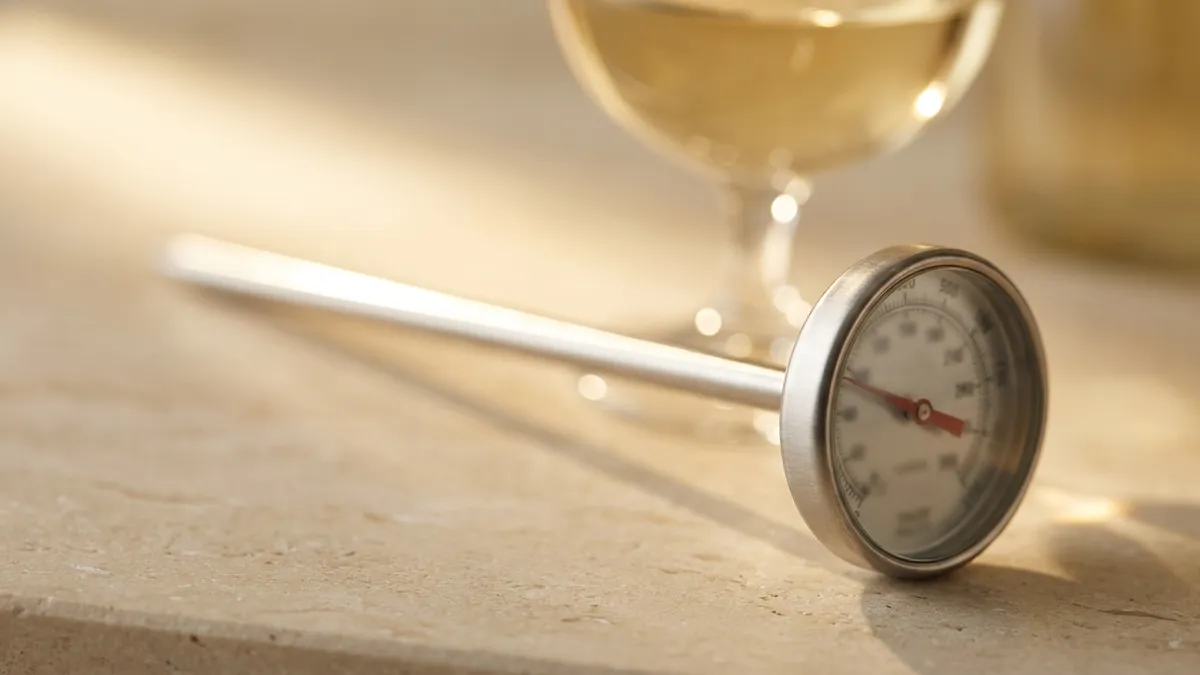
A cheap probe thermometer — the same one you use for steak — closes the gap between guessing and knowing. Dip the probe in the glass for ten seconds before the first sip and the number tells you whether to wait or pour.
Building Temperature Awareness Into Your Tasting
The point of running this experiment once is not to memorize numbers — it is to teach your palate to recognize when a wine is out of its window. After two or three repetitions, you will start noticing the symptoms automatically: that familiar muted nose on a too-cold white, the alcohol burn on a too-warm red, the bitter edge on a chilled tannic wine.
The Sommy app builds this kind of pattern recognition into the practice loop. Structured tasting sessions prompt you to log the temperature, the aromas you noticed, and the structural sensations on the palate, and the AI guide flags when something looks off — including when a wine is likely out of its serving window. The reflex of "is this wine at its best right now?" becomes automatic rather than something you have to think about.
The same skill carries over to other small adjustments — picking the right glass, swirling for the right number of seconds, pacing your tasting before palate fatigue kicks in. Once you start running these comparisons deliberately, every bottle becomes a small training session for your palate. To learn the broader tasting framework that this experiment plugs into, read our pillar guide on how to taste wine.
A Few Things to Watch For
Three small notes keep the experiment honest.
First, the wine itself changes as the open bottle ages over thirty minutes. The first pour and the last pour from the same bottle are not chemically identical — oxygen has been working on the wine in the glass. Pour all three samples within a few minutes of each other to keep the comparison fair.
Second, the glass shape matters. Use the same shape for all three pours so you are isolating temperature alone. A tulip glass works for almost every wine.
Third, your own palate fatigues quickly. Take a two-minute break between glasses, sip plain water, and bite a neutral cracker if you have one. The wines need to be the variable, not your tongue.
For a structured framework that pairs sensory awareness with deliberate practice, visit sommy.wine. The first few courses build temperature awareness directly into the lesson sequence, and the AI tasting feedback flags when your notes hint at a wine being served outside its window.
Why This One Skill Pays Off Forever
Most beginners assume that getting better at wine means buying more expensive bottles, learning more grape names, or memorizing more regions. None of that helps if the wine is poured at the wrong temperature, because you will be tasting a distorted version of every bottle. Temperature is the single biggest performance variable between the bottle and your glass, and almost no one talks about it.
Run the three-temperature experiment once and the lesson sticks. The same bottle that tasted thin and sour at fridge temperature, balanced and aromatic at the right temperature, and flabby and hot in a warm room is one bottle. Three glasses. One lesson. Now every wine you open carries that lesson with it.
Frequently Asked Questions
How does temperature affect wine taste?
Temperature changes the volatility of aromatic compounds and the way your taste buds register sweetness, acid, and bitterness. Cold suppresses aromas and sweetness while making acid and tannin feel sharper. Warmth releases aromas and softens tannin but pushes alcohol and sweetness forward. The same bottle can taste lean and bitter at 4°C and flabby and hot at 22°C — but balanced in between.
What is the best temperature to serve white wine?
Most dry whites taste best between 8°C and 12°C. Light aromatic whites like Sauvignon Blanc and Pinot Grigio sit at the cooler end, around 8-10°C, where citrus and floral notes stay crisp. Fuller oaked whites need 10-12°C to show their texture. Straight from a 4°C fridge, almost every white tastes muted and one-note. Pull it out 15-20 minutes before pouring.
What is the best temperature to serve red wine?
Light reds like Pinot Noir and Gamay shine at 12-15°C, slightly cool to the touch. Medium reds sit at 14-16°C. Full-bodied reds like Cabernet Sauvignon, Syrah, and Malbec want 15-18°C. The old phrase 'room temperature' came from 18th-century cellars at about 16°C, not modern centrally heated homes at 22°C. Today, almost every red needs a brief chill before pouring.
Why does cold wine taste more bitter or sour?
Two reasons. First, cold dulls your taste buds' sensitivity to sweetness, so the acid and tannin stand out more by contrast. Second, cold thickens the wine slightly and traps aromatic compounds in the liquid, removing the fruit perception that normally balances structure. The wine has not changed chemically — your perception of it has shifted because temperature changed which signals reach your brain first.
Why does warm wine smell more alcoholic?
Heat increases the volatility of ethanol, meaning more alcohol molecules evaporate into the air above the glass. At 22°C a 14% Cabernet smells almost fiery on the nose, while the same wine at 16°C smells like blackberry and cedar with the alcohol receding into the background. This is why over-warmed reds feel hot and tiring to drink — the alcohol is shouting over everything else.
Does serving temperature really change tannin?
Yes, dramatically. Tannins feel harder, drier, and more aggressive when wine is cold, and softer and more integrated when wine is warm. A young Cabernet poured straight from a 10°C cellar can taste punishingly tannic, then settle into balance after 15 minutes on the counter. The tannin molecules have not changed — but cold sharpens the astringent sensation, while warmth lets the fruit catch up.
Why is sparkling wine served so cold?
Sparkling wines belong between 6°C and 8°C for two reasons. Cold keeps carbon dioxide dissolved in the liquid, so bubbles stay fine and persistent rather than foaming over. Cold also tightens the perception of sweetness, which matters because most sparkling wines have a touch of dosage sugar. Warm sparkling tastes flabby, foams aggressively when poured, and loses its mousse within minutes.
How can I run a temperature tasting experiment at home?
Open one bottle and pour three small glasses. Put the first in the fridge for 90 minutes, the second in the fridge for 20 minutes, and leave the third on a warm counter. Taste in cold, ideal, warm order. Note the aromas, the apparent sweetness, the bite of acid or tannin, and where the alcohol shows up. The same wine will feel like three different drinks — that is the lesson.
Sommy Team
LinkedInFounder & Wine Educator
The Sommy Team is building the world's most approachable wine education app, helping beginners develop real tasting skills through structured courses and AI-guided practice.