What Is Vegan Wine? Why Not All Wine Is Plant-Based

By the Sommy Team — AI-assisted, human-edited.
Updated Jul 24, 2026
Contents (9)
- What Is Vegan Wine?
- Why Isn't All Wine Vegan? The Fining Problem
- The Animal-Derived Fining Agents to Know
- The Vegan Fining Alternatives
- Are Unfined and Unfiltered Wines Vegan?
- How to Tell If a Wine Is Vegan
- Does Vegan Wine Taste Different?
- Vegan vs Organic vs Natural vs Biodynamic
- How to Shop for Vegan Wine as a Beginner
TL;DR
Vegan wine is made without any animal-derived products. Most wine looks plant-based, but many bottles are clarified with fining agents like isinglass from fish, gelatin, egg white, or milk casein. Vegan winemakers instead use bentonite clay, pea protein, or leave the wine unfined, so nothing animal touches the glass.
Wine is made from grapes, so it seems like it should be vegan by default. For a surprising number of bottles, it is not. The gap has nothing to do with the fruit and everything to do with a clarifying step called fining, where winemakers have long reached for animal products to polish a cloudy young wine clear. Vegan wine is simply wine made without any of those animal inputs. This guide explains what makes a wine vegan, which animal agents hide in conventional bottles, the plant and mineral alternatives, and how to spot a vegan wine on a crowded shelf.
What Is Vegan Wine?
Vegan wine is wine produced without any animal-derived product at any stage, from vineyard to bottle. In practice, the only place animals usually enter winemaking is fining — the step that clears haze out of young wine. Conventional fining agents include isinglass from fish, gelatin from animal collagen, casein from milk, and albumin from egg whites. A vegan winemaker swaps those for mineral or plant-based agents such as bentonite clay, pea protein, or activated charcoal, or leaves the wine unfined altogether. Everything else — the grapes, yeast, and the wine itself — is already plant-based.
Why Isn't All Wine Vegan? The Fining Problem
Freshly fermented wine is rarely bright. It carries a suspension of proteins, spent yeast cells, grape fragments, and tannin that can leave it cloudy, and sometimes coarse or bitter. Winemakers can wait for these particles to settle, but that is slow and incomplete, so most reach for fining instead.
Fining works by adding a substance that carries an opposite electrical charge to the haze particles. The agent binds to them, clumps together, and sinks, taking the cloudiness with it. The winemaker then racks the clear wine off the sediment and usually filters it before bottling. The fining agent itself is removed — it does not stay in the finished wine in any meaningful amount.
Here is the catch. The most effective and traditional fining agents happen to come from animals. Egg whites clarify red wine beautifully, isinglass brightens white wine, and gelatin softens harsh tannin. Because these materials were used in the process, a wine fined with them is not vegan — even though only trace residues, if any, remain in the glass. That is why a drink pressed entirely from fruit can still fail a vegan standard.
The Animal-Derived Fining Agents to Know
If you have ever wondered what could possibly be non-vegan about grape juice, this is the list. Four animal-derived agents dominate, plus one that depends on its source and one that history has retired.
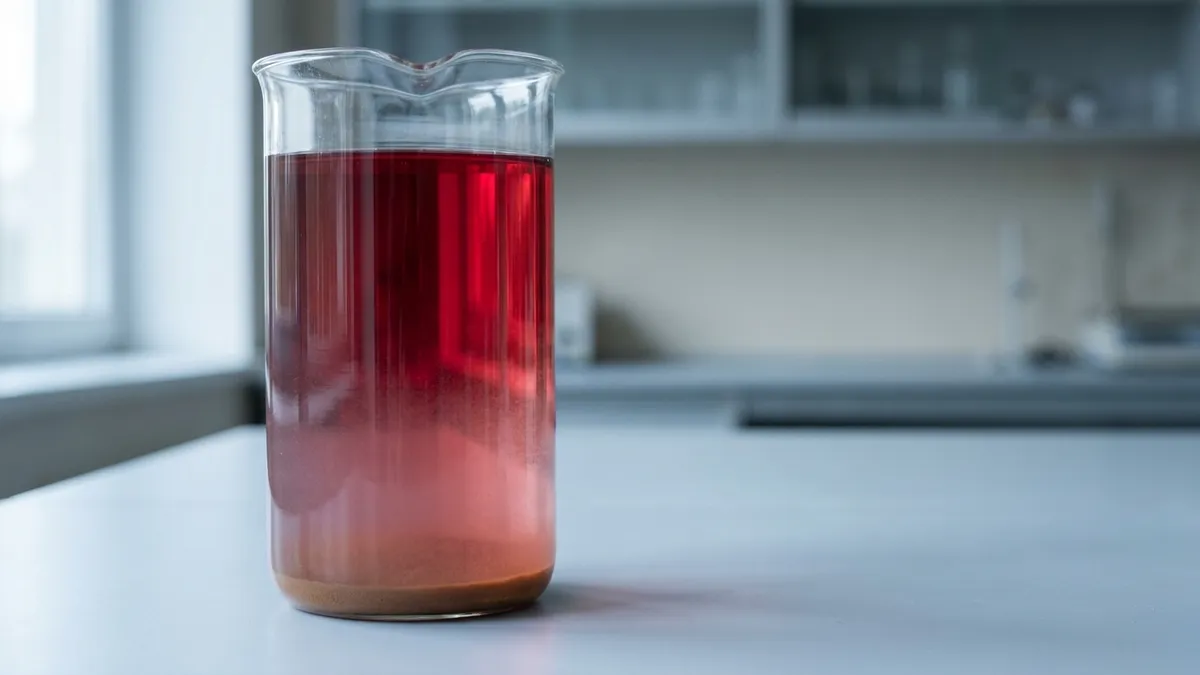
- Isinglass — a form of collagen from fish swim bladders, prized for making white and sparkling wine exceptionally bright. It is the most common reason a crisp white is not vegan.
- Gelatin — collagen extracted from pig or cattle skin and bones. It is a strong tannin remover, used on reds and whites to reduce bitterness and astringency.
- Albumin (egg white) — the classic fining agent for red wine, a technique with deep roots in Bordeaux. A few egg whites per barrel gently smooth tannin without stripping too much color or fruit.
- Casein — a milk protein, often as potassium caseinate, used mainly on white wine to remove browning and lighten color.
- Chitosan — this one is a genuine "it depends." Chitosan can be derived from fungus, which is vegan, or from the shells of crustaceans, which is not. The label rarely says which.
- Dried blood — animal blood was a traditional red-wine fining agent, but it has been banned across the European Union for decades on food-safety grounds and is no longer used in modern winemaking.
Because these agents are process aids rather than ingredients, they were long invisible to drinkers. That changed for allergen safety: under EU Regulation 1169/2011 and its implementing rules, wines that use egg- or milk-based fining must declare "contains egg" or "contains milk" if residues are detectable above 0.25 mg/L. That mandatory line is a useful, if indirect, clue that animal fining was involved.
The Vegan Fining Alternatives
The good news for winemakers who want a vegan bottle is that excellent non-animal fining agents exist, and most producers who care can clarify a wine just as well without touching an animal product.
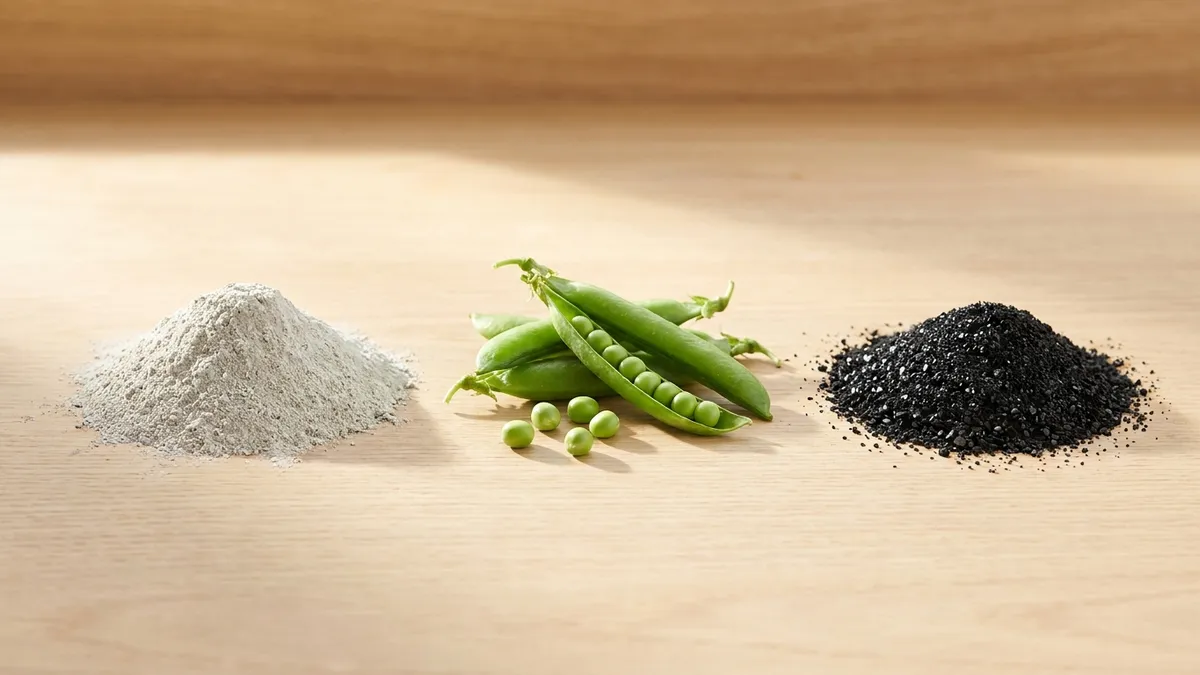
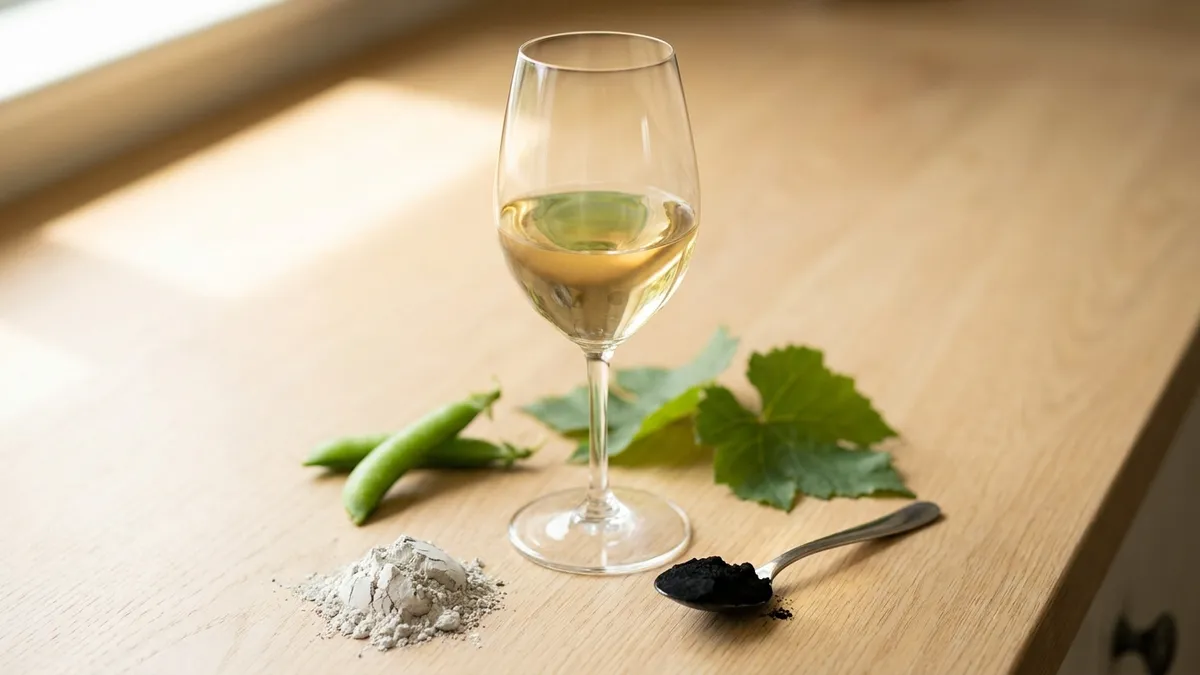
- Bentonite — a fine volcanic clay (montmorillonite) that carries a negative charge and pulls out protein haze. It is the workhorse of vegan white-wine fining.
- Pea and potato protein — plant proteins that mimic what gelatin does, softening tannin and clarifying reds and whites. They have become the go-to gelatin replacement.
- Activated charcoal (carbon) — used in small amounts to strip unwanted color or off-odors.
- PVPP (polyvinylpolypyrrolidone) — a synthetic polymer that removes bitterness and browning, then filters out cleanly.
- Silica gel (kieselsol) and kaolin — mineral agents often paired with plant proteins to speed settling.
The OIV International Code of Oenological Practices — the reference book of permitted winemaking techniques — lists all of these among the accepted fining agents, so a vegan winemaker is not improvising. They are choosing from the same approved toolkit, minus the animal-derived entries.
| Fining agent | What it comes from | Typically used on | Vegan? |
|---|---|---|---|
| Isinglass | Fish swim bladders | White and sparkling, for brightness | No |
| Gelatin | Pig or cattle collagen | Red and white, softens tannin | No |
| Albumin | Egg whites | Red wine, a Bordeaux tradition | No |
| Casein | Milk protein | White wine, removes browning | No |
| Chitosan | Fungus (vegan) or shellfish (not) | Clarifying and stabilizing | Depends |
| Bentonite | Volcanic clay | White wine, protein haze | Yes |
| Pea or potato protein | Plants | Red and white, replaces gelatin | Yes |
| Activated charcoal | Carbon | Color and off-odor removal | Yes |
Are Unfined and Unfiltered Wines Vegan?
There is a simple shortcut to a vegan bottle: skip fining entirely. A wine labeled unfined was never treated with any clarifying agent, animal or otherwise, which makes it vegan by default. Many are also unfiltered, meaning no filter was passed through the wine before bottling either.
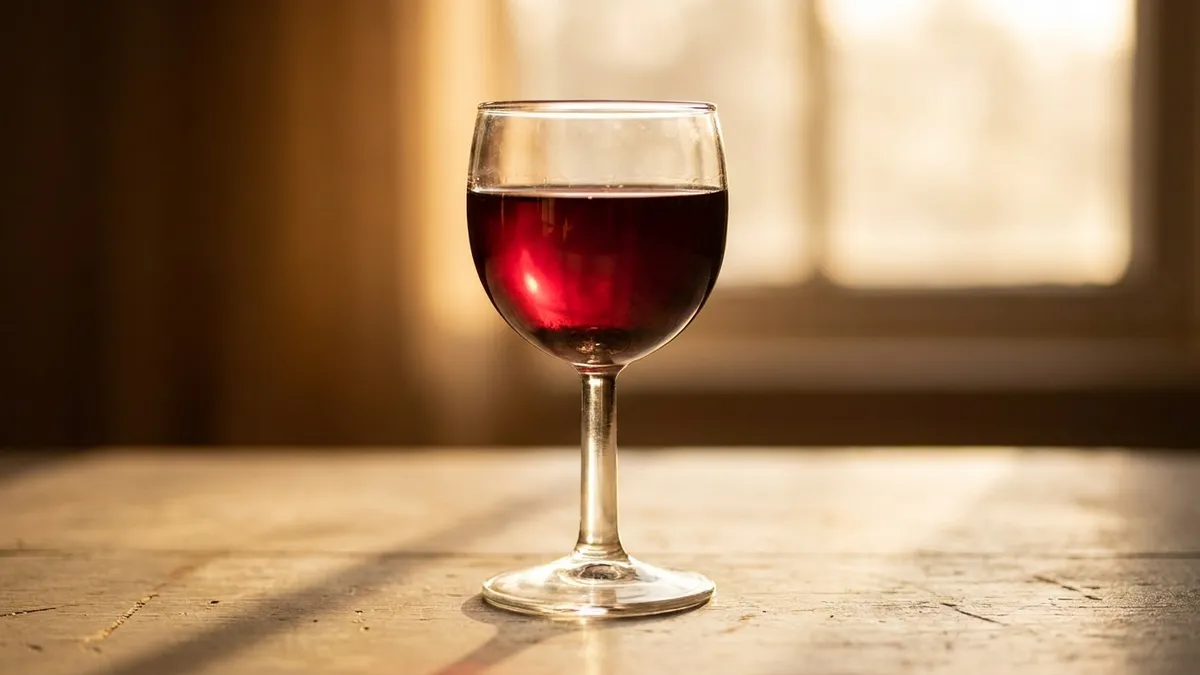
The trade-off is cosmetic. Unfined wines can look slightly less brilliant, may throw a little sediment, and occasionally show a faint haze — none of which affects safety or, in most cases, flavor. Some drinkers even prefer the extra texture and aromatic detail that fining can shave away. This is the same hands-off philosophy behind natural wine, which is usually unfined and therefore usually vegan, though "natural" carries no legal guarantee. If you enjoy that style, an unfined bottle is an easy, reliable vegan choice.
How to Tell If a Wine Is Vegan
Fining agents rarely appear in an ingredient list, so spotting a vegan wine takes a little label literacy. Four reliable signals, in order of certainty:
- A certification logo. The Vegan Society sunflower, the V-Label, and BeVeg are independent marks that verify no animal product was used. A logo is your strongest guarantee.
- A plain-language claim. Many producers simply print "suitable for vegans" or "vegan-friendly" on the back label. Trustworthy, if less rigorous than certification.
- "Unfined" in the tasting notes. As above, unfined wine is vegan by default even without a vegan badge.
- A database or a question. The crowd-sourced Barnivore directory catalogs thousands of wines, beers, and spirits by brand. When in doubt, a good wine shop can usually tell you or check with the importer.
Reading these cues is really just an extension of general label fluency. Our guide to how to read a wine label walks through the rest of the back-label shorthand, from sulfites declarations to the allergen lines that hint at egg or milk fining.
Does Vegan Wine Taste Different?
This is the question most drinkers actually care about, and the honest answer is reassuring: no, not in any way you could reliably pick out. A vegan and a non-vegan version of the same grape, region, and vintage are essentially indistinguishable. Fining removes a small amount of protein and tannin, so a heavily fined wine can feel a touch softer and a well-made unfined wine a touch more textured — but those are subtle shades, not a flavor gap.
Everything that genuinely shapes a wine's character — the grape variety, the terroir it grew in, ripeness, oak, and the winemaker's hand — sits far upstream of the fining choice. If you want to train yourself to tell those things apart, that is exactly what structured practice is for.
Vegan vs Organic vs Natural vs Biodynamic
These four labels get jumbled together on shelves and menus, but they answer different questions. Only vegan is specifically about what went into making the wine. The others describe how the grapes were farmed or how hands-off the cellar was — and none of them guarantees the absence of animal fining.
| Label | What it tells you | Rules out animal fining? | Certified? |
|---|---|---|---|
| Vegan | No animal products used at any stage | Yes — that is the whole point | Sometimes (Vegan Society, V-Label, BeVeg) |
| Organic | Grapes grown without synthetic chemicals | No — animal fining is still allowed | Yes (USDA, EU leaf) |
| Natural | Minimal cellar intervention, few additives | Usually, because it is often unfined | No legal definition |
| Biodynamic | Stricter organic farming plus a philosophy | No — it is a farming standard | Yes (Demeter, Biodyvin) |
The practical takeaway: an organic wine can absolutely be fined with egg white, and a biodynamic estate might use isinglass. If being vegan is your priority, the farming badges are not a substitute — you still need a vegan claim, a certification, or an unfined bottle.
How to Shop for Vegan Wine as a Beginner
You do not need to memorize a chemistry set to drink vegan. A few simple habits cover almost every situation.
- Start with the logo. Train your eye to spot the Vegan Society sunflower or V-Label on the back. Once you know the marks, they jump out.
- Lean on unfined and natural styles. They are vegan by default and easy to find in shops that stock them.
- Keep Barnivore handy. A quick brand search settles most doubts before you buy.
- Ask, and reward the shops that know. Merchants who can answer the vegan question tend to be the ones worth returning to.
- Follow the grape you love. Vegan versions exist for nearly every style, so you rarely have to compromise on what you actually want to drink.
Learning to read these signals is part of the same journey as developing your palate and getting comfortable with how to taste wine in the first place. The more fluent you become, the less any single label intimidates you. Vegan wine is not a niche or a compromise — it is most of what is already in your glass, minus one old-fashioned clarifying trick. Explore the full range of styles, from crisp whites to structured reds, over at Sommy, and let curiosity, not marketing, lead the way.
Sources
- Commission Implementing Regulation (EU) No 579/2012 — labelling of egg and milk fining agents in wine — EUR-Lex, European Union, 2012
- International Code of Oenological Practices — permitted fining agents — International Organisation of Vine and Wine (OIV)
- The Vegan Trademark and vegan food and drink standards — The Vegan Society
Frequently Asked Questions
What is vegan wine, exactly?
Vegan wine is wine made without any animal-derived products at any stage. The key difference from regular wine is fining, the clarifying step. Vegan producers replace animal fining agents such as isinglass, gelatin, egg white, and casein with mineral or plant options like bentonite clay and pea protein, or skip fining entirely.
Why isn't all wine vegan if it is made from grapes?
Because of fining. Young wine is often cloudy with proteins, yeast, and tiny particles, and winemakers add a fining agent that binds to the haze and drags it out. Traditional agents come from animals — fish bladders, animal collagen, milk, and eggs. The agent is filtered out before bottling, but its animal origin makes the wine non-vegan.
What animal products are used to make wine?
The four most common are isinglass, a collagen from fish swim bladders; gelatin, made from pig or cattle collagen; casein, a milk protein; and albumin from egg whites, traditionally used on red wine. Chitosan can come from either fungus or shellfish. Dried animal blood was used historically but is now banned across the European Union.
How can I tell if a wine is vegan?
Look for a certification logo such as the Vegan Society sunflower, V-Label, or BeVeg on the back label. Some producers state 'suitable for vegans' or 'unfined' in the notes. If the label is silent, the crowd-sourced Barnivore database lists thousands of wines by brand, or you can ask the shop directly.
Does vegan wine taste different from regular wine?
Not in any reliable way. Fining removes a small amount of protein and tannin, so heavily fined wines can taste marginally softer, while unfined vegan wines may show a touch more texture and a faint haze. The grape, region, and producer shape flavor far more than whether an animal or mineral agent did the clarifying.
Are organic and natural wines automatically vegan?
Not automatically. Organic and biodynamic rules govern how the grapes are farmed, not which fining agent is used, so an organic wine can still be fined with egg white or gelatin. Natural wine is usually unfined, which makes most natural bottles vegan in practice, but there is no legal guarantee — check for a vegan claim to be sure.
Sommy Team
LinkedInFounder & Wine Educator
The Sommy Team is building the world's most approachable wine education app, helping beginners develop real tasting skills through structured courses and AI-guided practice.