Wine Additives List: What Is Really in Your Wine Glass

By the Sommy Team — AI-assisted, human-edited.
Updated Oct 1, 2026
Contents (8)
- What Is on the Wine Additives List, in One Paragraph?
- Which Additives Stay in the Glass and Which Are Removed?
- Why Are Sulfites Added to Wine?
- What Are Fining Agents, and Is Your Wine Vegan?
- Why Would a Winemaker Add Sugar, Acid or Colour?
- How Can You Tell What Is in a Bottle?
- Does Natural or Organic Wine Mean No Additives?
- What Do US Rules Actually Allow?
TL;DR
Wine law allows dozens of additives, but most are processing aids such as bentonite clay or egg white that are removed before bottling. What stays is short: sulfites, sugar, tartaric acid, tannin, oak and grape concentrate. A US label usually names only sulfites above 10 ppm; EU labels also flag egg and milk.
The wine additives list looks alarming in a federal rulebook, but most of it never reaches your glass. The materials that clear and stabilise wine are pulled out before bottling. What stays is a short list: sulfites, sugar, acid, tannin, oak and grape concentrate. The label, in most countries, names only the first.
What Is on the Wine Additives List, in One Paragraph?
A wine additives list is the set of materials a winemaker may legally use, and in the US it runs to dozens of entries in one federal table. Each entry is allowed for a stated job and many carry a cap, such as 300 mg/L of sorbic acid or 200 mg/L of the preservative DMDC. The list splits in two. Processing aids (materials used during making and then removed) clear haze: bentonite clay, egg white, gelatin, isinglass. Additions that stay change keeping, taste or colour: sulfur dioxide, sugar, tartaric acid, tannin, oak and concentrate. In practice, a US label declares only sulfites above 10 parts per million.
Which Additives Stay in the Glass and Which Are Removed?
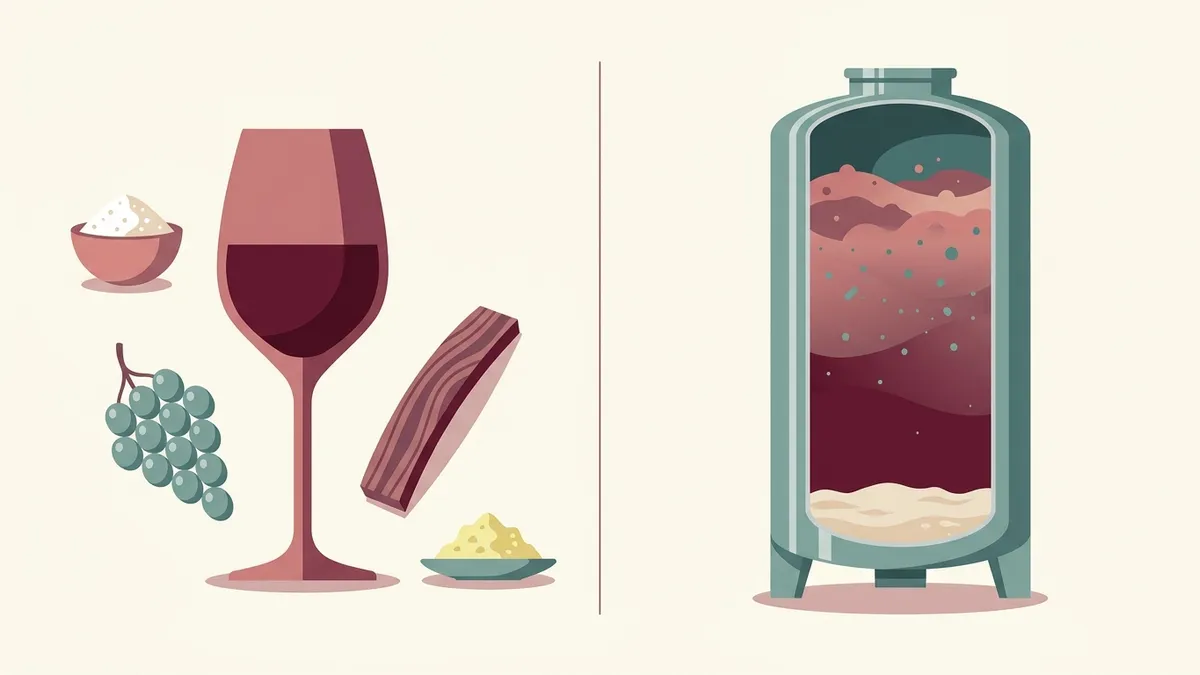
Split the list in two: things that stay in the finished wine, and processing aids that are taken out before bottling. Clay and egg white settle to the bottom of the tank and are racked or filtered off, so a long legal list is not a long ingredient list.
If a material's job is clarity, it leaves the wine. If its job is taste, colour or keeping, it stays.
| Additive | Why it is used | Stays in the glass? | What the label tells you |
|---|---|---|---|
| Sulfur dioxide (sulfites) | Stops oxidation and spoilage microbes | Yes | "Contains sulfites" above 10 ppm (US, and the EU since 2005) |
| Sugar (chaptalization) | Raises alcohol in cool, unripe years | Turned into alcohol | Nothing; a cool region at 12.5 to 13% is the only hint |
| Tartaric acid | Freshens wine from very ripe grapes | Yes | Nothing; common in warm regions |
| Tannin powder | Adds grip and helps colour hold | Yes | Nothing |
| Oak chips or staves | Vanilla and toast without barrels | Flavour stays | Nothing; low price plus strong vanilla is the clue |
| Grape concentrate | Deeper colour, rounder fruit | Yes | Nothing; it counts as grape |
| Sorbic acid, DMDC | Stops refermentation in sweet wines | Sorbic stays; DMDC breaks down | Nothing |
| Bentonite clay | Removes protein haze in whites | No, settles out | Nothing; vegan-friendly |
| Egg white, casein, gelatin, isinglass | Softens tannin, clears haze | No, settles out | EU labels must name egg or milk; look for "vegan" or "unfined" |
Why Are Sulfites Added to Wine?
Sulfur dioxide (a preserving gas, sold to winemakers as powder, liquid or a burning wick) is added to stop wine from oxidising and to keep unwanted yeast and bacteria from spoiling it. Its salts and forms in wine are called sulfites. Without them, most wine browns and turns vinegary far sooner.
Not every wine gets the same dose. White wines generally carry more sulfites than reds, and sweet wines more than dry ones. A red has its own tannin to slow oxidation, while a sweet wine has sugar that yeast would happily restart on.
The label line dates from the 1980s. In the US, wines bottled after mid-1987 must say "contains sulfites" above 10 parts per million, and the EU brought in an equivalent rule in November 2005. The line gives no figure, so a wine at 12 ppm and one at 150 ppm carry the same words. The full story of sulfites, including how much a typical glass holds, is in the sulfites in wine guide.
Sweet wines sometimes get two backup preservatives. Sorbic acid stops yeast from refermenting sugar in the bottle, and US rules cap it at 300 mg/L in the finished wine. DMDC (dimethyl dicarbonate) kills microbes at bottling and is capped at a cumulative 200 mg/L.
What Are Fining Agents, and Is Your Wine Vegan?
Fining is stirring a material into wine so it grabs haze-causing particles, which then settle out and are removed. Traditional agents are egg white, milk, and isinglass (a collagen from fish bladders). Modern cellars also use bentonite clay, gelatin, casein (milk protein), PVPP (a synthetic powder) and activated carbon.
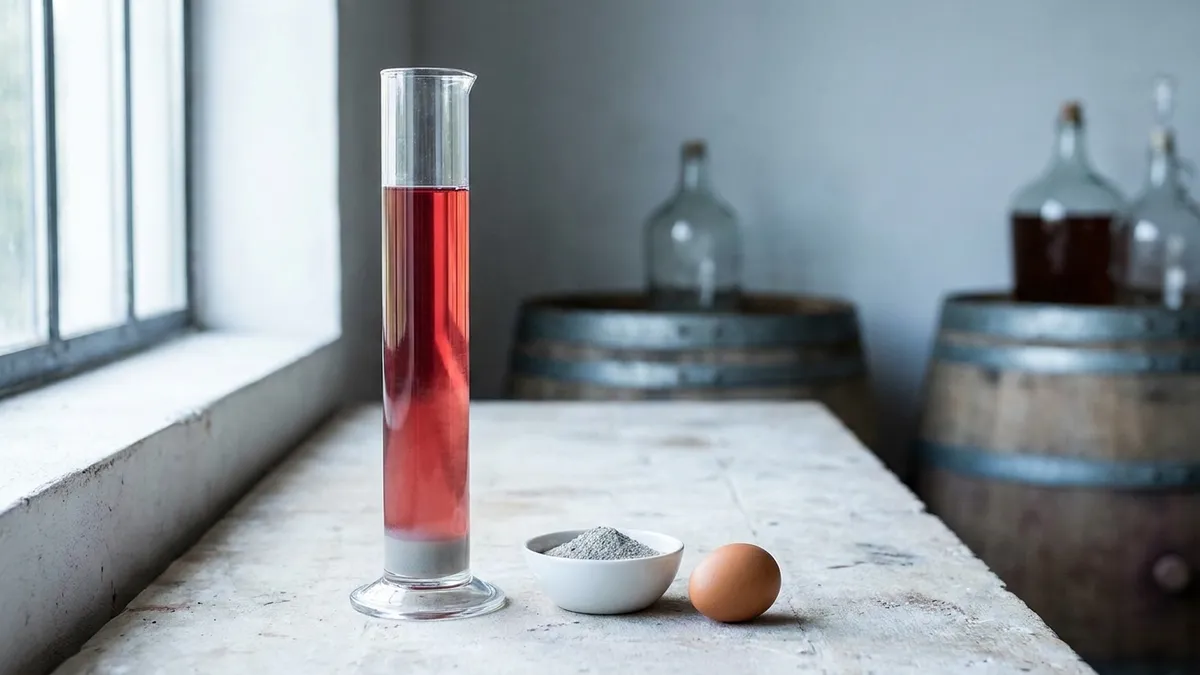
Each agent targets something different. Egg white softens harsh tannin in red wine. Bentonite pulls out the proteins that would otherwise turn a white cloudy in a warm car. Activated carbon strips off-colours and off-smells, which is why it is used sparingly.
Fining agents leave with the sediment, but they still decide whether a wine is vegan. Few labels say either way, unless the producer chooses to. Two places force some disclosure. EU labels must declare egg and milk fining since 30 June 2012, and Australia and New Zealand have required an allergen warning for egg and milk fining since 2002.
If you avoid animal products, buy wines marked "vegan" or "unfined". If an EU label names egg or milk, those were used to fine it. The full fining picture for plant-based drinkers is in vegan wine explained.
Why Would a Winemaker Add Sugar, Acid or Colour?
To fix what the harvest gave them: too little ripeness, too little acid, or too little colour. Cool years leave grapes short of sugar, hot years leave them short of acid, and pale grapes make pale reds. These are the additions you can taste.
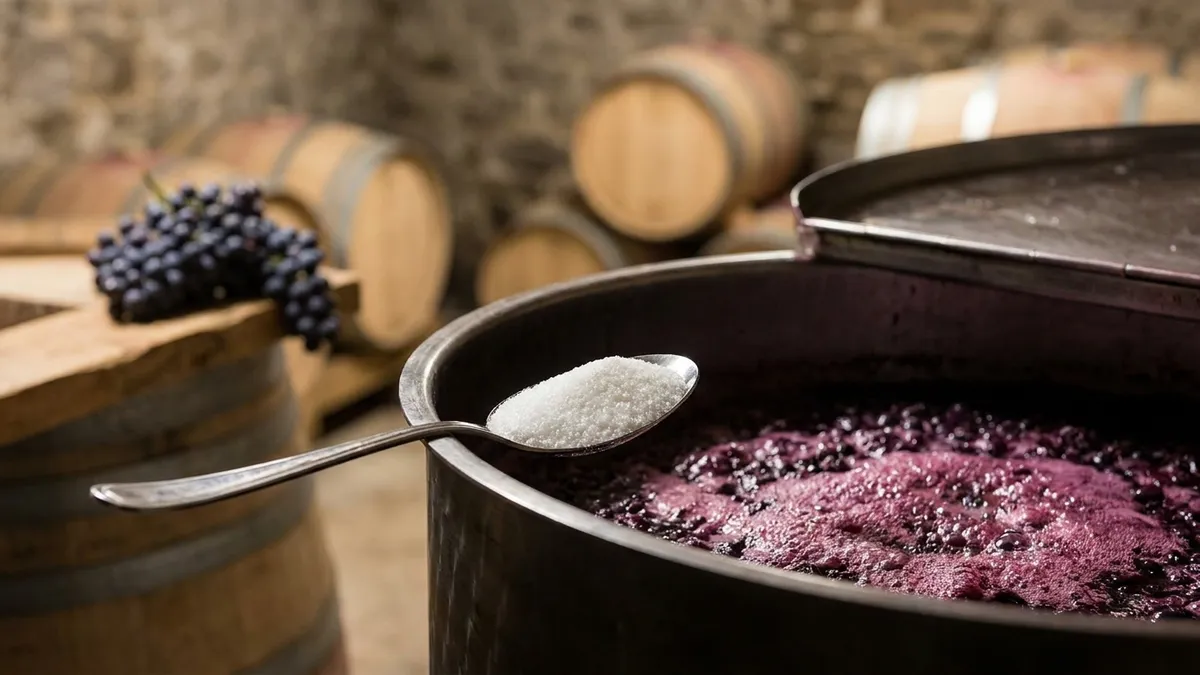
Sugar for alcohol
Chaptalization is adding sugar to grape juice before or during fermentation so the yeast can turn it into more alcohol. The wine still finishes dry (no sugar you can taste). In the coolest EU zone, sugar can raise alcohol by up to 3%. The warmest zone allows 1.5%, and Italy, Greece, Spain, Portugal, Cyprus and parts of southern France allow no added sugar, only grape concentrate.
If a wine comes from a cool northern region and reads 12.5 to 13% in a cold vintage, sugar may have helped. If it comes from Spain or Italy, sugar did not, though grape concentrate may have. The difference between dry and sweet is mapped in sweet vs dry wine.
Acid for freshness
Warm regions have the opposite problem. Very ripe grapes carry lots of sugar and little acid, so winemakers practise acidification (adding tartaric acid, the grape's own main acid, to the juice). It restores the tartness that makes your mouth water. Why that tartness matters is laid out in what is wine acidity.
Colour, grip and oak
Grape concentrate is grape juice boiled down to a syrup. The best-known version, Mega Purple, is made from Rubired, a grape with red flesh as well as red skins, and is about 68% sugar. A small dose darkens a pale red and rounds out its fruit. It counts as grape, so a US label never mentions it.
Tannin (the drying grip on your gums) also comes in powder form, added to firm up structure and help colour hold. Oak flavour can come from chips or staves soaked in the wine instead of barrels. The vanilla and toast they add are described in oak flavours in wine tasting.
How Can You Tell What Is in a Bottle?
Mostly you cannot, because a US wine label does not have to list ingredients. The sulfite line is usually the only additive it names. Everything else is inferred from a handful of label words, from the region, which sets what is legal, and from the price.
A few rules turn the back label into a guide:
- "Contains sulfites": sulfur dioxide passed 10 ppm. If the line is missing on a US bottle, the wine is under that level.
- "Unfined": no fining agents were used, so no egg, milk or clay.
- "Vegan": no animal-derived fining.
- A QR code on a European back label: newer EU bottles often link to an ingredient list there.
- Cool region, cheap price, strong vanilla: oak chips are likely.
If you want the fewest additions, buy an unfined organic wine from a warm region, where sugar is banned. What else the back label holds is decoded in the wine back label guide, and the front in how to read a wine label.
Does Natural or Organic Wine Mean No Additives?
No. Organic and natural wines use fewer additives, but none of them is free of sulfites. Sulfites occur naturally in all wines to some extent, because the yeast makes a little during fermentation. A bottle marked "no added sulfites" still contains some, just less than most.
Organic wine is made from organically grown grapes, and the rules also limit which additives may be used and how much sulfur dioxide is allowed. The differences from conventional wine are set out in organic vs conventional wine.
Natural wine has no legal definition in most countries. The aim is to add nothing beyond, at most, a small dose of sulfites at bottling, with no fining, filtering, added sugar or acid. Without those tools, natural wines can be cloudier and more varied from bottle to bottle, as natural wine explained describes. Biodynamic wine adds a farming calendar on top of organic rules, covered in biodynamic wine explained.
What Do US Rules Actually Allow?
The US permits a material if it fits good commercial practice and does not change the wine's basic character. The federal rule bans any substance foreign to wine that changes its character. So a US wine can be cleared, preserved and adjusted, while fruit or spice flavouring takes it out of the plain wine category.
The limits are specific. Copper sulfate, used to remove the rotten-egg smell of hydrogen sulfide, may be added at no more than 6 mg/L, and the finished wine may hold at most 0.5 mg/L of copper. A wine that still smells of rotten eggs in the glass may be one where that fix was skipped or fell short.
Wines shaped by how they are made, from orange to natural, sit together in the wine styles hub. The Sommy app adds bite-sized courses, starting with Wine 101. Pour a glass tonight, turn the bottle around and check its back label for three words: sulfites, egg and milk.
Sources
Frequently Asked Questions
What additives are allowed in wine?
In the US, federal rules list dozens of materials, from bentonite clay and egg white to sulfur dioxide, sorbic acid, tartaric acid, tannin, oak and copper sulfate. Each is allowed only for a stated purpose and often with a limit, such as 300 mg/L of sorbic acid. Most entries are processing aids that clear or stabilise the wine and are removed before bottling.
Why does wine not have an ingredient list?
In the US, wine labels are not required to list ingredients. The label must say 'contains sulfites' when sulfur dioxide passes 10 parts per million, and that is usually the only additive named. EU labels must also declare egg or milk used for fining, and many newer European bottles carry a QR code that leads to a full ingredient list.
What is Mega Purple in wine?
Mega Purple is a grape juice concentrate made from Rubired, a grape with red flesh as well as red skins. It is about 68% sugar and very deeply coloured, so a small dose darkens a red and makes it taste rounder and fruitier. It is made from grapes, so it does not have to appear on a US label.
Is wine vegan?
Not always. Many wines are fined with egg white, milk protein (casein), gelatin or isinglass, a fish-bladder product. These grab haze particles and are removed, but they still count as animal products used in making the wine. Labels rarely say either way, so look for the word vegan or unfined, or a clay-based fining such as bentonite.
Does organic or natural wine contain additives?
Usually fewer, rarely none. Organic rules limit what may be added and how much sulfur dioxide is allowed, and natural winemakers aim to add little or nothing beyond a small dose of sulfites. But sulfites occur naturally in all wine, so even a wine with nothing added still contains some.
What is chaptalization?
Chaptalization is adding sugar to grape juice before or during fermentation so the yeast can turn it into more alcohol. It does not make the wine sweet. In the coolest EU vineyards it can raise alcohol by up to 3%, while Italy, Spain, Portugal, Greece and Cyprus do not allow it at all.
Sommy Team
LinkedInFounder & Wine Educator
The Sommy Team is building the world's most approachable wine education app, helping beginners develop real tasting skills through structured courses and AI-guided practice.