Wine Back Label Information: What Each Line Tells You

By the Sommy Team — AI-assisted, human-edited.
Updated Sep 25, 2026
Contents (10)
- Wine Back Label Information, in One Paragraph
- What Is Required on a Wine Back Label?
- What Does "Produced and Bottled By" Mean Compared With "Bottled By"?
- How Exact Is the Alcohol Percentage on the Label?
- Why Does the Back Label Say "Contains Sulfites"?
- Is "Organic" the Same as "Made With Organic Grapes"?
- Do "Reserve," "Old Vine" and "Handcrafted" Mean Anything?
- What Do the Vintage Year and Grape Name Promise?
- What Do the Government Warning and Bottle Size Tell You?
- How Do You Read a Back Label in 15 Seconds?
TL;DR
A wine back label mixes legally defined lines with unregulated marketing words. In the US, the alcohol figure may sit 1.5 points off for wines at 14% or under, Contains Sulfites starts at 10 ppm, Produced by means 75% fermented on site, and Reserve, Old Vine and Handcrafted have no legal meaning.
A wine's back label mixes two kinds of line: facts the law defines and checks, and words nobody checks at all. The wine back label information worth reading is the first kind. "Produced and bottled by", the alcohol figure and "Organic" each carry a legal promise with a number behind it. "Reserve" and "Old Vine" carry none.
Wine Back Label Information, in One Paragraph
A US wine label must state the alcohol content (or, at 14% or under, 'table wine'), the net contents, and the bottler's name and address. It must also carry the Government Warning, the country of origin on imports, and a sulfite statement once total sulfur dioxide reaches 10 ppm (parts per million). Some optional phrases are tightly defined. "Produced by" means the named winery fermented at least 75% of the wine. "Estate bottled" means it grew every grape in one named area, and "Organic" means no added sulfites. "Reserve", "Old Vine" and "Handcrafted" have no legal meaning. If a phrase is not in that defined group, read it as advertising.
What Is Required on a Wine Back Label?
In the United States, beyond the brand name and wine type, the law requires six plain facts somewhere on the bottle. They are the alcohol content, net contents, the bottler's name and address, the Government Warning, a sulfite statement at 10 ppm or more, and the country of origin on imports. Everything else on the back is optional.
The law does not recognise "front" and "back" as categories. It cares about the brand label and a set of mandatory items, and producers may split those items across whichever panels they like. That is why the alcohol figure sits on the front of one bottle and on the back of the next. For the five things a front label usually carries, see how to read a wine label.
ABV (alcohol by volume, the percentage of the liquid that is alcohol) is the one number nearly every label shows; only a wine at 14% or under labeled "table wine" may leave it off. The optional lines split into two groups. Some are defined in federal rules, down to a percentage. Others are free for anyone to print. If the middle column below gives a rule, the phrase's promise is fixed by law; if it says there is none, treat the phrase as copy.
| Phrase on the label | What US rules require | What to do with it |
|---|---|---|
| Produced and bottled by | Named winery fermented at least 75% of the wine at that address | Trust it as the winery's own wine |
| Estate bottled | Grapes all grown by the winery in one named area, made there in one continuous process | Treat it as the strictest producer claim |
| Cellared, Vinted or Prepared by | Winery gave the wine cellar treatment at that address | Assume the wine was bought in and finished there |
| Bottled by | Names who filled the bottle and where | Look elsewhere on the label for who made it |
| 13.5% alcohol | Real figure may sit 1.5 points either side | Read it as a range, 12% to 14% |
| Contains Sulfites | Total sulfur dioxide is 10 ppm or more | Expect it on almost every wine |
| Organic | No added sulfites | Choose it if you want no added sulfites |
| Made with organic grapes | Organic grapes, sulfites up to 100 ppm total | Treat it as organic farming, conventional cellar |
| Reserve, Old Vine, Handcrafted | No legal definition | Ignore it and judge the producer line |
What Does "Produced and Bottled By" Mean Compared With "Bottled By"?
"Produced and bottled by" means the named winery fermented at least 75% of the wine at the stated address. "Bottled by" only tells you who filled the bottle and where. The producer line is the most useful sentence on the back label, because each wording makes a different legal promise.
From strongest to weakest, the US wordings run like this:
- "Estate bottled": the winery grew every grape and made the wine start to finish in one place.
- "Produced by" or "Made by": the winery fermented at least 75% of the wine at the address given.
- "Blended by": the winery mixed the wine with other wines of the same class and type at that address.
- "Cellared", "Vinted" or "Prepared by": the winery gave the wine cellar treatment (blending, filtering or aging in the cellar) at that address.
- "Bottled by" or "Packed by": the name and address of whoever filled the bottle.
"Estate bottled" has four conditions. The wine must carry the name of an AVA (American Viticultural Area, a legally mapped US grape-growing region such as Napa Valley). The winery must sit inside that AVA. It must have grown all the grapes on land it owns or controls there, and "controls" means a lease of at least three years. And it must have crushed, fermented, aged and bottled the wine in one continuous process.
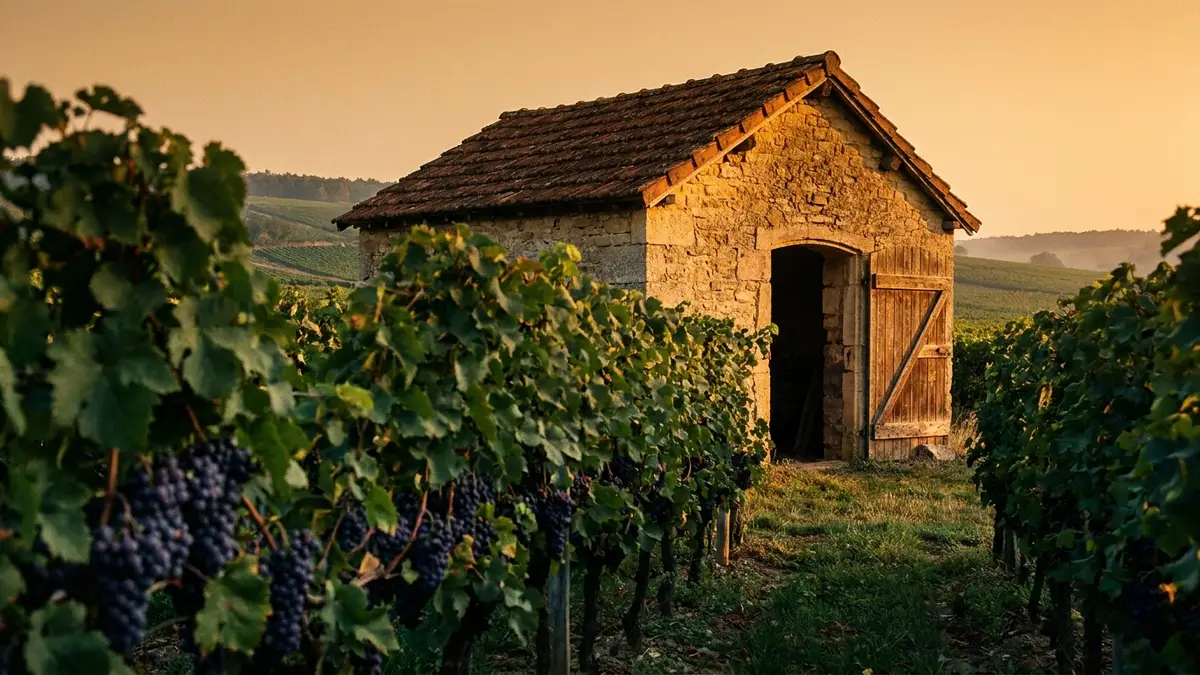
If the label says "Produced and bottled by" or "Estate bottled", the named winery made the wine. If it says only "Bottled by" or "Cellared by", the wine was most likely bought in bulk and finished there. Neither is a fault. Plenty of good-value wine is bought and blended.
How Exact Is the Alcohol Percentage on the Label?
Close, but not exact. A US wine at 14% alcohol or under may legally sit 1.5 percentage points either side of the printed figure, and a wine above 14% may sit 1 point either side. A label reading 13.5% could hold anything from 12% to 14%.
The tolerance has one hard edge: the real figure cannot cross the 14% line in either direction. That line splits two tax classes, so a wine printed at 13.5% cannot actually be 14.5%. Some producers print a range instead, such as "12% to 14%". A range may span no more than 3 points for wines at 14% or under, or 2 points above it, and it gets no extra tolerance.
The number still matters in the glass. Higher alcohol feels like warmth on the back of the throat and adds weight on the tongue, which is why a 15% Zinfandel feels heavier than an 11% Riesling. Our guide to alcohol in wine by type maps which styles land where.
If you want a lighter glass, pick a bottle printed at 12.5% or less. Even with the full tolerance it stays at or under 14%. For more options at the low end, see low-alcohol wines.
Why Does the Back Label Say "Contains Sulfites"?
Because the wine holds 10 parts per million or more of total sulfur dioxide, the level at which US law requires the statement. Almost every wine crosses that line. The phrase is a threshold notice. It is not a warning that the level is high.
Sulfites are sulfur compounds, measured as sulfur dioxide, that protect wine from oxygen and spoilage microbes. Yeast make a small amount on their own while they turn grape sugar into alcohol, so even a wine with nothing added can reach the 10 ppm mark. Most winemakers add a little more at crushing or bottling to keep the wine fresh.
The label says nothing about the actual amount. US rules cap total sulfur dioxide in finished wine at 350 ppm, and a wine at 30 ppm prints exactly the same two words as a wine far higher. Dry reds generally need less added sulfite than sweet whites, because tannin also protects against oxygen and sugar gives microbes food.
If a bottle has no sulfite line at all, check for the word "Organic" before assuming anything special about it. Our full guide to sulfites in wine covers who reacts to them and how that compares with dried fruit.
Is "Organic" the Same as "Made With Organic Grapes"?
No. A US wine labeled "organic" cannot have added sulfites, while "made with organic grapes" allows sulfites up to 100 ppm total. Both use organically farmed grapes, so the difference between the two labels lies in what the winery adds in the cellar.
"Made with organic grapes" is a common label, because a small sulfite addition makes wine far easier to keep stable in the bottle and on the shelf. A wine labeled plain "organic" relies on careful cellar hygiene and is often best drunk young.
If no added sulfites matters to you, look for the word "organic" on its own. If organic farming is what matters, either label works. The difference between organic, biodynamic and conventional farming is laid out in organic vs conventional wine. "Natural" is a third word, with no legal definition in the US; natural wine explained covers what it usually means.
Do "Reserve," "Old Vine" and "Handcrafted" Mean Anything?
Not legally. "Reserve", "Old Vine", "Handcrafted" and "Small batch" have no legal definition in US wine rules. They are copywriting, not a grade, so any winery can print them on any wine at any price. No regulator checks those words against the wine in the bottle.
"Old Vine" shows the problem best. With no minimum age, the vines behind the phrase have ranged from about 15 years to more than 115. "Reserve" is just as loose. One winery uses it for its best barrels, and the next puts it on its cheapest line to make it sound special. A few European regions do set aging rules for their own local terms, but those rules belong to the region and its own label words, and a US back label follows none of them.
If "Reserve" is the only quality word on the bottle, judge it by the producer line and the place name instead. Medal stickers deserve the same scepticism, and wine label awards and medals explains how they are handed out. For how price tracks quality, see wine price vs quality.
What Do the Vintage Year and Grape Name Promise?
A vintage (the harvest year) on a US label means at least 85% of the wine came from that year, or at least 95% when the label names an AVA. A grape name means at least 75% of the wine is that grape. The rest can be anything legal.
So a bottle labeled "California Cabernet Sauvignon" can hold up to a quarter of another grape, and up to 15% of the wine can come from a different harvest. A wine labeled with a smaller AVA such as Napa Valley gets less room on the year. Wines made from native American grapes, such as Concord, need only 51% of the named grape, with a statement on the label when the share is under 75%. Single varietal vs blend explains why winemakers use that leftover quarter.
A missing year is not a red flag. Many sparkling and fortified wines are blended across harvests on purpose, as vintage vs non-vintage wine explains.
European labels lean on place instead. A PDO (Protected Designation of Origin) requires every grape to come from the named region, where the wine is also made. A PGI (Protected Geographical Indication) requires only 85% of the grapes from there, so it is the looser of the two. What is an appellation sets out how those place names work.
What Do the Government Warning and Bottle Size Tell You?
The warning is fixed federal wording about pregnancy and driving, and the bottle size must be one of a fixed legal list of metric volumes, such as 750 ml, 375 ml and 1.5 L. Neither line changes from one wine to the next, so both are quick to skip.
The Government Warning is a two-part statement that must appear on every US alcoholic drink. The first part cites the Surgeon General on avoiding alcohol during pregnancy because of the risk of birth defects. The second says alcohol impairs your ability to drive a car or operate machinery. It must sit on the brand label or a back or side label, set apart from all other information, which is why it often looks boxed off in capital letters.
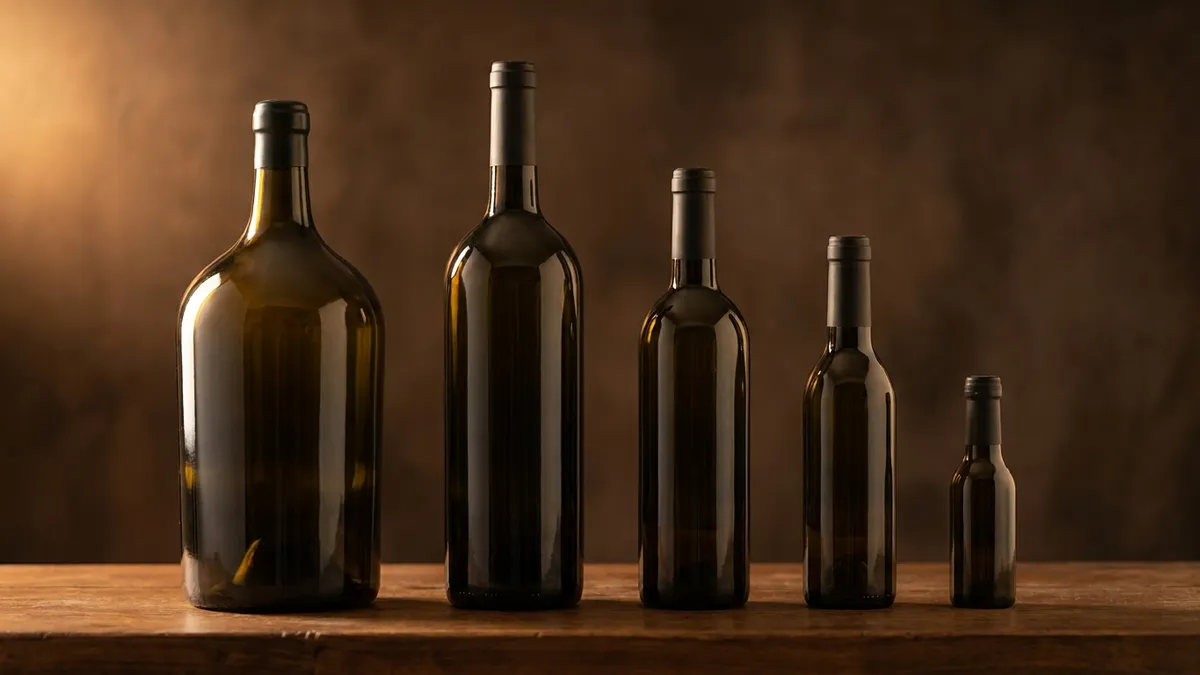
Net contents follow the standards of fill, the list of bottle sizes US law allows. It runs from 3 L down to 50 ml and includes the standard 750 ml bottle, the 375 ml half bottle and the 1.5 L magnum. A 375 ml half bottle holds half the wine of a standard bottle, which makes it useful for a solo dinner. How many glasses in a bottle turns each size into pours.
How Do You Read a Back Label in 15 Seconds?
Read three lines in order: who produced the wine, the alcohol figure, and any defined word such as "Estate bottled" or "Organic". Skip the tasting notes, the warning and anything in the Reserve family. If all three checks come up empty, the bottle may still be good, but the label has promised you nothing.
- Find the producer line. "Produced" or "Estate" means the winery made it; "Bottled" or "Cellared" means it was bought in.
- Read the alcohol figure as a range. Add and subtract 1.5 points at 14% or under.
- Look for a defined word. "Estate bottled", "Organic", a named AVA or a vintage year each carry a legal promise.
- Discount the rest. Tasting notes and quality words are copy. Your own notes are more reliable.
For the rest of the shop, the wine shop guide covers aisles and staff, and the beginner's buying hub collects every buying guide in one place.
The label tells you what the law checked, and the glass tells you the rest. In the Sommy app you photograph a label and are walked through look, smell and taste, with bite-sized courses on Wine 101, France, Italy, Spain and California. Tonight, turn the open bottle around, read the producer line and the alcohol figure, then pour a glass and taste whether the warmth matches the number.
Sources
- 27 CFR Part 4: Labeling and Advertising of Wine (Cornell LII)
- 27 CFR 4.36: Alcoholic content statements (Cornell LII)
- 27 CFR 16.21: Mandatory label information, Government Warning (Cornell LII)
- 7 CFR 205.605: National Organic Program, sulfur dioxide in wine (Cornell LII)
- Wine Folly: How to Read a Wine Label
Frequently Asked Questions
What information is required on a wine back label?
In the United States the law requires alcohol content (a wine at 14% or under may say 'table wine' instead), net contents, the bottler's name and address, the Government Warning, a sulfite statement once total sulfur dioxide reaches 10 ppm, and the country of origin on imports. The law does not say which panel carries each item, so a producer can split them between front and back. Anything else on the back label, such as tasting notes, is optional.
What does 'produced and bottled by' mean on a wine label?
It means the winery named on the label fermented at least 75% of the wine at the address given. That is a stronger promise than plain 'Bottled by', which only names who filled the bottle. 'Cellared', 'Vinted' or 'Prepared by' mean the winery gave the wine cellar treatment, such as blending or aging, after buying it in. 'Estate bottled' is the strictest phrase of all.
How accurate is the alcohol percentage on a wine label?
Close, but not exact. Under US rules a wine at 14% or under may be 1.5 percentage points either side of the printed figure, and a wine above 14% may be 1 point either side. So a label reading 13.5% could legally hold anything from 12% to 14%. The label cannot cross the 14% line in either direction, because that line changes the wine's tax class.
Why does my wine say 'Contains Sulfites'?
Because it contains 10 parts per million or more of total sulfur dioxide, the point at which US law requires the statement. Yeast produce some sulfites on their own during fermentation, and most winemakers add a little more to protect the wine, so almost every bottle crosses that line. The phrase is a threshold notice. It says nothing about whether the level is high or low.
Does 'Reserve' on a wine label mean anything?
Not in US wine law. 'Reserve', 'Old Vine', 'Handcrafted' and 'Small batch' have no legal definition, so any winery can print them on any wine. Some producers use Reserve for their best barrels and some for their cheapest. A few European regions do set their own aging rules for local terms, but on a US back label the word is marketing copy.
Is organic wine free of sulfites?
Wine labeled 'organic' in the US cannot have added sulfites, though yeast still make a small natural amount during fermentation, so it is rarely completely sulfite free. 'Made with organic grapes' is a different, looser label: the grapes are organic, and the winery may add sulfites as long as the total stays at or under 100 ppm.
What does 'estate bottled' mean?
In the US it means the winery sits inside a named American Viticultural Area, grew every grape on land it owns or controls there, and crushed, fermented, aged and bottled the wine in one continuous process. 'Controls' means a lease of at least three years. It is the most demanding producer phrase a US back label can carry.
Sommy Team
LinkedInFounder & Wine Educator
The Sommy Team is building the world's most approachable wine education app, helping beginners develop real tasting skills through structured courses and AI-guided practice.