Wine Shop Guide: How to Buy Wine You'll Actually Like

By the Sommy Team — AI-assisted, human-edited.
Updated Jul 24, 2026
Contents (11)
- This Wine Shop Guide, in 90 Seconds
- Why a Wall of Bottles Feels Overwhelming
- How Wine Shops Are Actually Organized
- The Four Questions That Get You the Right Bottle
- Talk to the Shop Staff Like You Belong There
- Decode the Price Tiers Without Overpaying
- Read the Shelf Tag and the Label Like a Pro
- Screw Cap or Cork — What the Closure Really Tells You
- Build a Mixed Six-Pack Every Visit
- After You Buy: Getting It Home and Poured Right
- How Sommy Helps You Shop With Confidence
TL;DR
A wine shop is not random — bottles are grouped by country, then region, then grape, then price. Learn that map, describe one wine you liked and one you didn't to the staff, read the shelf tag for critic and vintage, and you can walk out with a bottle you will actually enjoy.
Walking into a wine shop for the first time can feel like being handed a menu in a language you do not read. Hundreds of bottles, dozens of countries, unfamiliar grapes, and prices that swing from six dollars to six hundred with no obvious reason. Most people cope by grabbing something with a nice label and hoping for the best.
This wine shop guide exists to replace that guesswork with a simple, repeatable method. A wine shop is not a random pile of bottles — it is an organized map, and once you can read the map, you can find a wine you will genuinely enjoy in about five minutes, at a price you chose on purpose.
You do not need to memorize producers or vintages. You need four things: a sense of how the shelves are arranged, one sentence for the staff, a grip on the price tiers, and the ability to read a shelf tag. That is the whole skill, and this guide covers each piece.
This Wine Shop Guide, in 90 Seconds
A wine shop guide comes down to reading four things in order. First, the layout: bottles are grouped by country, then region, then grape, then price, so the room is a map, not a maze. Second, the staff: hand them one sentence naming a style you liked, a style you didn't, and a budget. Third, price: the everyday value band is roughly twelve to twenty-five dollars, and paying more mostly buys prestige and age potential. Fourth, the shelf tag: a score means something only when a critic, publication, and vintage sit beside it. Anchor on a grape and region you already know — a crisp Sauvignon Blanc, a plush Malbec — and you can shop any wine shop in the world with confidence.
Why a Wall of Bottles Feels Overwhelming
The intimidation is real, and it has a real cause. According to Wine Grapes, the definitive 2012 survey by Jancis Robinson, Julia Harding, and Jose Vouillamoz, there are 1,368 grape varieties in commercial wine production around the world. Layer on hundreds of regions, dozens of styles, and decades of vintages, and no shelf could ever feel simple.
Here is the reassuring part: a typical shop leans heavily on a small core of international varieties (the widely planted grapes like Cabernet Sauvignon, Chardonnay, Merlot, and Sauvignon Blanc that appear on shelves everywhere). A couple of dozen grapes account for most of what you will meet. Learn those and the rest becomes a pleasant bonus rather than a barrier.
That is exactly the profile of what our course research calls the curious beginner — the largest slice of the wine-learning audience, who wants practical, real-world skills like buying and pairing rather than exam-level theory. Shopping is the first practical skill worth building, and it pays off every single week.
How Wine Shops Are Actually Organized
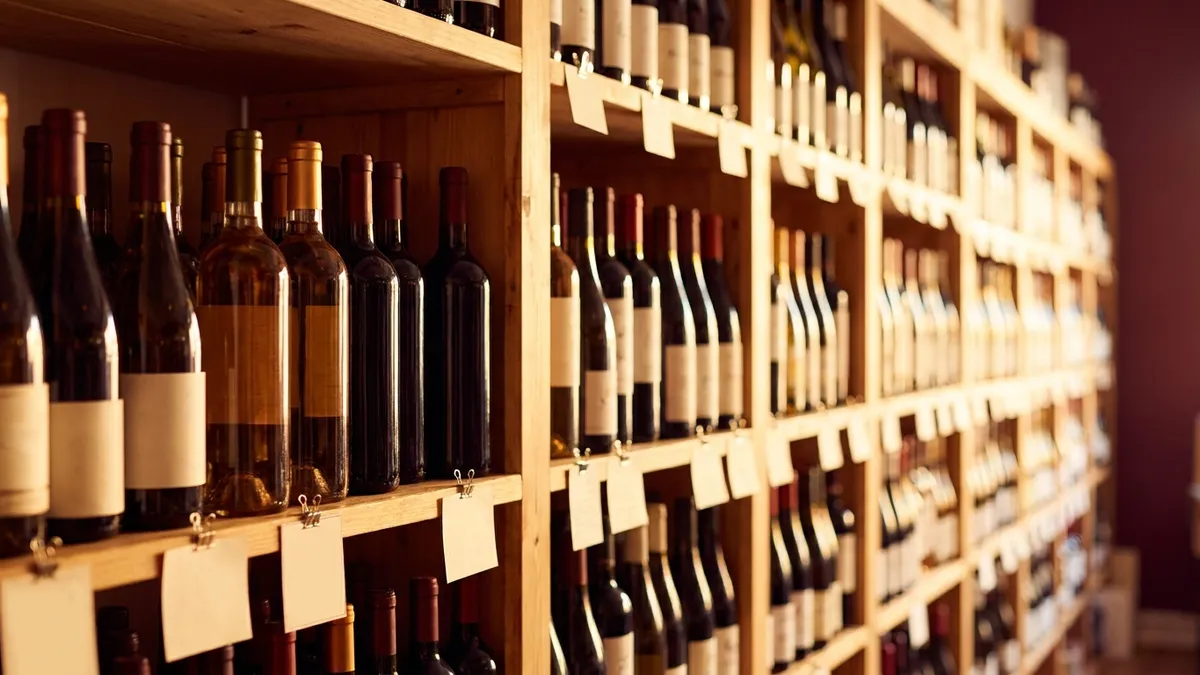
Almost every wine shop follows the same underlying logic, whether it is a corner store or a specialist cellar. The bottles are grouped by country, then by region inside that country, then loosely by grape and price. A French section resolves into Bordeaux, Burgundy, the Rhone, and the Loire. An Italian section sorts into Tuscany, Piedmont, and Veneto.
This matters because region tells you more than brand does. A wine's region is a promise about style — a Marlborough Sauvignon Blanc will taste bright and herbaceous no matter who bottled it, and a Mosel Riesling will be light and zesty across the board. If you know the difference between Old World and New World wine, you already know that a European section leans toward earthier, structured styles while a New World section leans toward riper fruit.
Grape knowledge is the other half of the map. A quick grounding in the noble grapes — the handful of varieties that dominate fine wine — lets you predict a bottle's character before you have read a single tasting note. Region plus grape is the coordinate system of the entire shop.
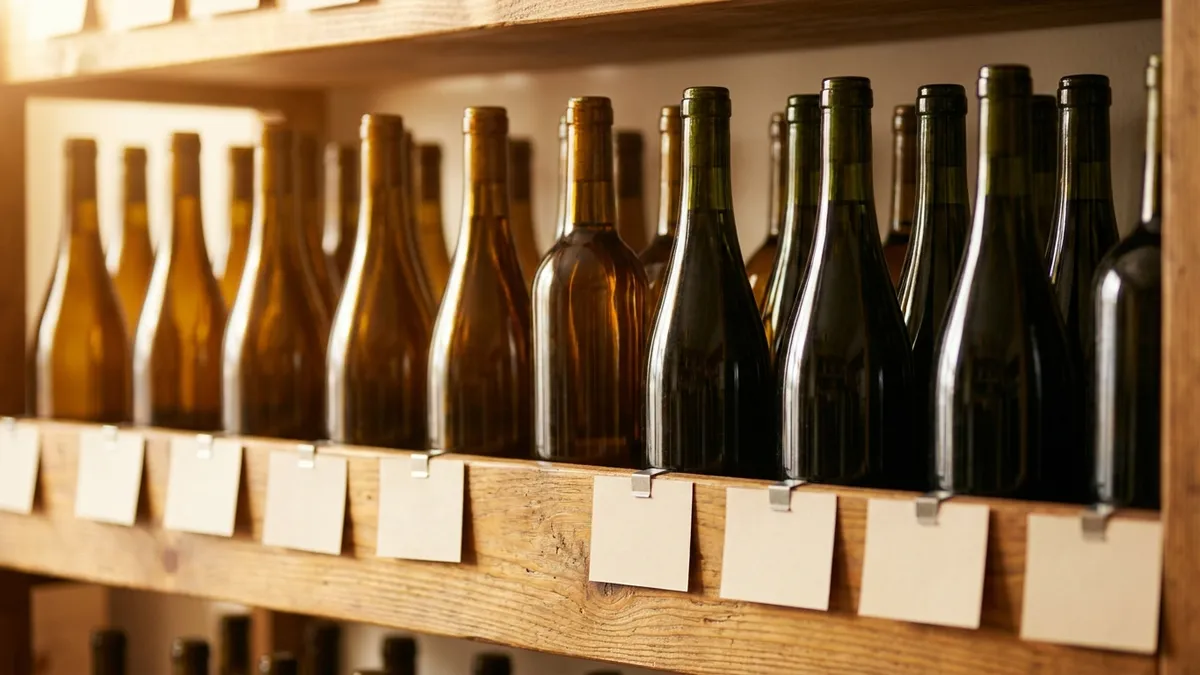
One piece of shop furniture deserves its own definition. A shelf-talker is the small printed card clipped to the shelf beneath a bottle, usually quoting a critic score or a short tasting note. It is a marketing tool as much as a guide, so read it for the critic, publication, and vintage — not just the number.
The Four Questions That Get You the Right Bottle
Once you can read the room, buying well comes down to a short internal checklist. Run these four steps every visit and you will rarely leave with a bottle you regret.
Start from a style you already know
Anchor on a grape and region you have enjoyed before — a Marlborough Sauvignon Blanc, a Mendoza Malbec, a Provence rose. This gives you a fixed reference point and gives the staff something concrete to work from. If you are still building that reference list, our guide to the best wine for beginners gives you ten reliable style anchors.
Set your price band out loud
Decide your range before you browse and say it plainly — "twelve to twenty dollars." Naming a number keeps you out of the two traps of wine shopping: overpaying for a label that impressed you, and under-buying into thin, industrial bottles.
Describe one wine you liked and one you didn't
This is the single most powerful sentence in the shop. "I loved a juicy Argentine Malbec, but I found a big Cabernet too drying" tells a staff member your tolerance for tannin, body, and fruit in one breath. Naming a bad experience is often more useful than naming a good one.
Read the shelf tag before you commit
Check any score tag for its critic, publication, and vintage, then confirm the grape and region match the style you came in for. If the tag is a bare number with no source, treat it as decoration and buy on the region-and-grape logic instead.
Talk to the Shop Staff Like You Belong There
The biggest missed opportunity in any wine shop is the person standing behind the counter. In a good independent shop, the staff have tasted much of the inventory, and their entire job is to match a bottle to a person. They are not judging you — they want you to come back happy.
The trick is to give them signal, not to perform expertise. Skip the vague "something nice, maybe red" and hand them the three-part sentence: a style you enjoyed, a style you didn't, and a budget. That is the same principle that makes ordering wine easy in a restaurant — our guide on how to order wine at a restaurant uses the exact same describe-your-palate approach with a sommelier.
Decode the Price Tiers Without Overpaying
Price is where most beginners feel the most anxious, and it is genuinely the easiest thing to master. Wine value does not rise in a straight line with price — the quality curve is steep at the bottom and flattens out fast. Here is how the tiers actually break down for everyday buying.
| Price band | What you're getting | Best for |
|---|---|---|
| Under $10 | Mostly large-scale industrial wine; correct but simple, little sense of place | Cooking, big parties, mixers |
| $12–$25 | The value sweet spot; real regional character from serious producers | Everyday drinking and learning your palate |
| $25–$50 | More nuance, single-region focus, some age potential | Dinners, gifts, exploring a style you love |
| $50+ | Prestige, scarcity, and cellar potential; diminishing returns for a new palate | Special occasions and collecting |
The practical takeaway: spend where the curve is steepest. A fifteen-dollar bottle from a respected region often delivers most of the pleasure of a forty-dollar one, and it is a better teacher because you will buy more of them. If chasing value is your priority, our guide to finding good wine under $20 goes deep on stretching every dollar.
Read the Shelf Tag and the Label Like a Pro
Two pieces of paper decide most impulse buys: the shelf tag and the back label. Both are designed to sell, so read them with a little skepticism.
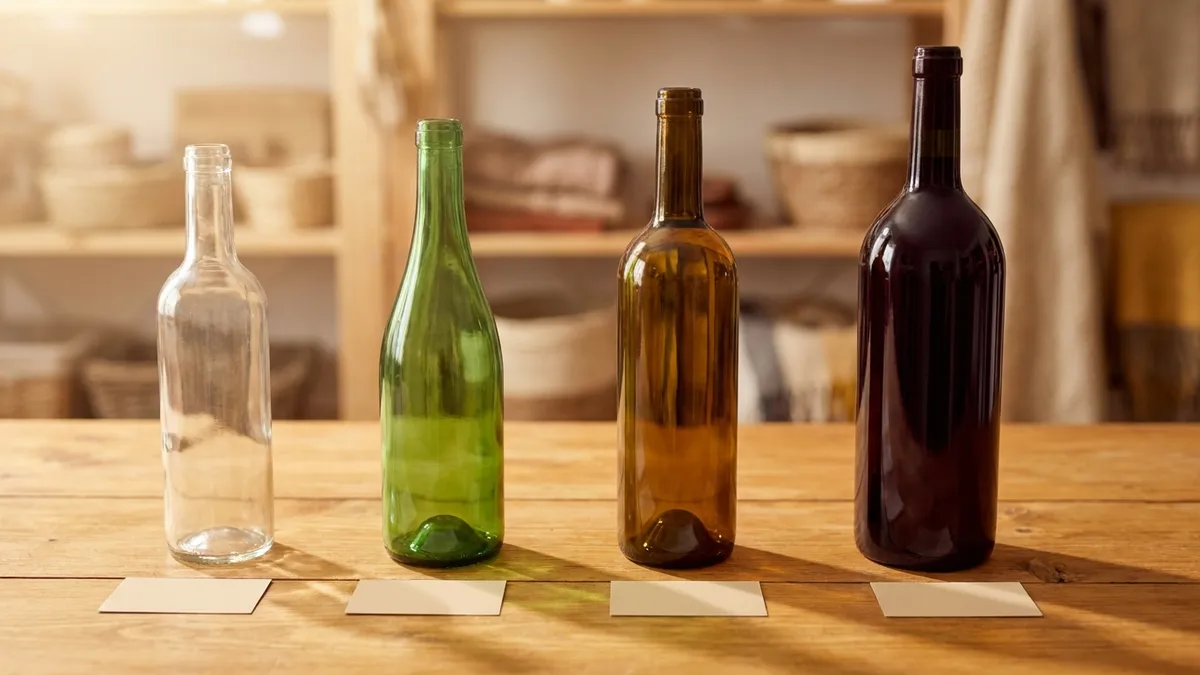
A shelf-tag score is only meaningful with four facts attached — the critic, the publication, the vintage reviewed, and the year of the review. Scores also carry over: a 92-point tag from three vintages ago may sit under a bottle that is a completely different wine now. Our full breakdown of what wine ratings actually mean shows how to use scores as a filter without being fooled by inflated numbers.
The label itself is your other source of truth, and it hides real information behind the marketing. Region, grape, vintage, and alcohol level all tell you how the wine will taste. If label terms like "reserve," "estate," or an unfamiliar appellation throw you, our guide on how to read a wine label decodes the words that matter and the ones that are pure decoration.
Screw Cap or Cork — What the Closure Really Tells You
One myth costs beginners good bottles every day: the belief that a screw cap means cheap wine. It does not. A screw cap seals out oxygen and cork taint and locks in fresh fruit aromas, which is precisely what crisp whites and aromatic wines want. More than 90 percent of New Zealand wine is now bottled under screw cap, per New Zealand Winegrowers, including many of the country's best bottles.
Closure is a style and quality-control decision, not a status symbol. Ageworthy reds still tend to use cork because a slow, tiny oxygen exchange helps them develop, while wines meant to be drunk young and fresh are often better under screw cap. Our comparison of screw cap versus cork walks through why each closure exists and what it signals.
Build a Mixed Six-Pack Every Visit
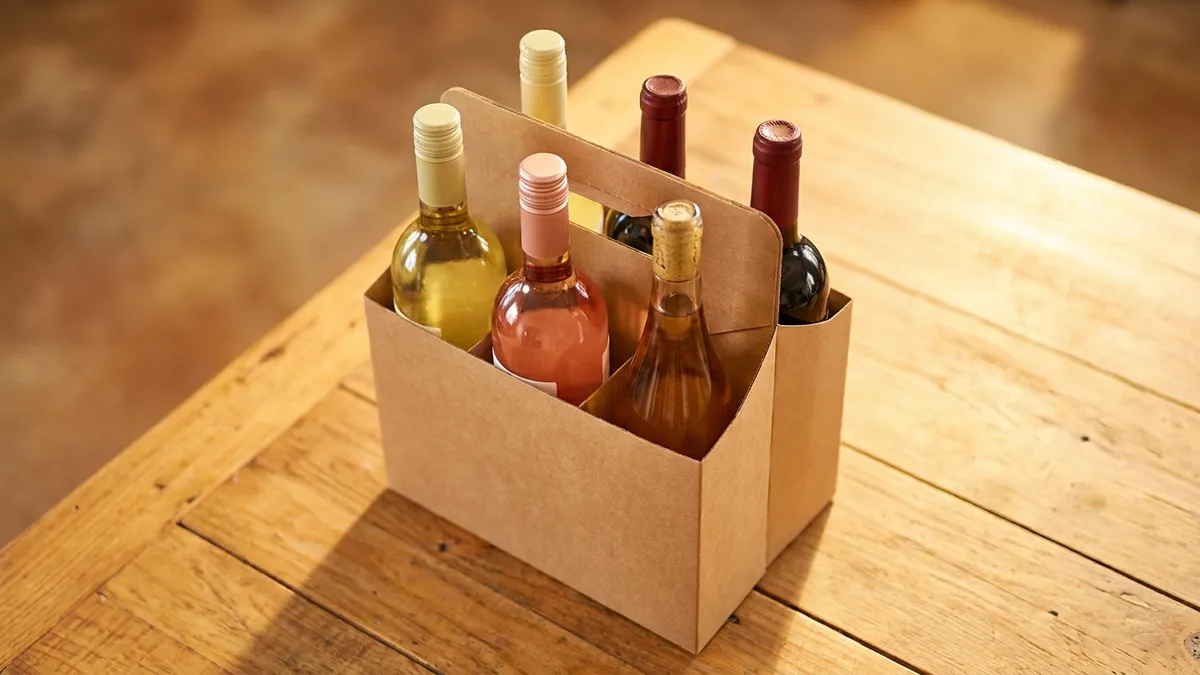
The best habit a beginner can build in a wine shop is buying a mixed half-case instead of a single bottle. Many shops give a discount on six, and a spread of styles turns every week into a mini tasting course. Aim for range across the two axes that shape flavor: color and weight.
- Two bright whites — something zesty like Sauvignon Blanc, plus something rounder like an unoaked Chardonnay.
- One rose or one aromatic white — a dry Provence-style rose or an off-dry Riesling to test your sweetness tolerance.
- Two easygoing reds — a light, chillable red and a plusher one like Malbec.
- One wildcard — a grape or region you have never tried, chosen with the staff's help.
Buying this way builds your palate faster than any single purchase, because you taste styles side by side. If you are unsure how the colors differ in structure, our explainer on red versus white wine covers why tannin and body behave so differently across the two.
After You Buy: Getting It Home and Poured Right
The last mile matters more than most people think. A great bottle served warm or straight from a hot car will taste flat and alcoholic, undoing everything you did well at the shop.
Store what you are not drinking soon somewhere cool, dark, and stable rather than on top of the fridge or in a sunny kitchen — our guide to storing wine at home covers the simple version for people without a cellar. And before you pour, give the wine a few minutes to reach the right temperature; the wine serving temperature chart shows where each style tastes its best.
How Sommy Helps You Shop With Confidence
Reading a shelf, describing your palate, and predicting a bottle's style from its region and grape are learnable skills, and they compound fast. The Sommy app is built around exactly this kind of practical, confidence-first learning — the structured tasting flow teaches you to recognize acidity, tannin, body, and fruit, which is the vocabulary that makes a wine shop legible.
Every bottle you log gets the same structured treatment of appearance, aroma, palate, and finish, so after a handful of sessions you start to hear a wine's style in your head just from its shelf position. That is the muscle that turns a five-minute shop into a good decision instead of a gamble. To keep building the buying skills specifically, browse the whole pillar of beginner buying guides, where every piece is built around shopping with intent.
Visit sommy.wine to start training the palate that makes every wine shop feel like your own. The wall of bottles never gets smaller — but your ability to read it does, and that is the only thing that has to change.
Sources
- Wine Grapes: A Complete Guide to 1,368 Vine Varieties — Robinson, Harding & Vouillamoz, Allen Lane / Penguin, 2012
- Global wine production and consumption statistics — International Organisation of Vine and Wine (OIV), 2024
- New Zealand wine and screwcap adoption — New Zealand Winegrowers, 2024
- Systematic Approach to Tasting — Wine & Spirit Education Trust (WSET), 2023
Frequently Asked Questions
How is a wine shop organized?
Most wine shops are laid out by country first, then by region within that country, then loosely by grape and price. A French section gives way to Bordeaux, Burgundy, and the Rhone; a shelf of New Zealand whites clusters around Sauvignon Blanc. Once you spot the pattern, the wall of bottles turns into a readable map instead of a blur.
What should I say to wine shop staff?
Give them three things: a style you have enjoyed, a style you have not, and a price range. One sentence like 'I liked a Mendoza Malbec, I found Cabernet too drying, and I want to spend around fifteen dollars' tells a staff member everything they need. Naming a bad experience is often more useful than naming a good one.
How much should I spend on a bottle of wine?
For everyday drinking, twelve to twenty-five dollars is the value sweet spot in most markets. Below about ten dollars, wine tends to come from large industrial production with little character. Above thirty dollars, you start paying for vintage, region, and prestige that are harder to read without practice. Spend where the quality curve is steepest, not where the price is highest.
Are screw-cap wines lower quality than corked wines?
No. Screw caps protect wine from cork taint and preserve fresh fruit aromas, which is exactly what crisp whites and aromatic wines need. More than 90 percent of New Zealand wine is now bottled under screw cap, including many excellent bottles. Closure is a packaging and style decision, not a quality signal, so never reject a wine for having a twist top.
Should I buy wine at a supermarket or an independent shop?
Both work, but an independent wine shop gives a beginner more. The staff usually taste the inventory and can point you toward styles that match your palate, which a supermarket aisle cannot. Supermarkets win on price and convenience for wines you already know. When you are still learning, the guidance from a good independent shop is worth the small premium.
How do I read a shelf-talker score tag?
Look for four pieces of information: the critic, the publication, the vintage reviewed, and the year of the review. A tag that shows a bare number with no source is marketing, not a verdict. Scores also carry over between vintages, so a 92-point tag may belong to a wine that is no longer on the shelf. Treat the tag as one filter, not the decision.
Sommy Team
LinkedInFounder & Wine Educator
The Sommy Team is building the world's most approachable wine education app, helping beginners develop real tasting skills through structured courses and AI-guided practice.