Old World vs New World Wine: What Is the Difference?

By the Sommy Team — AI-assisted, human-edited.
Updated Apr 29, 2026
Contents (11)
- The Most Useful Frame in Wine
- Old World vs New World Wine, in 90 Seconds
- Where the Lines Are Drawn
- Why the Two Styles Diverge
- Labels: Place vs Grape
- How the Difference Shows Up by Grape
- Where the Lines Are Blurring
- Pairing With Food
- Aging and Value
- A Side-by-Side Tasting You Can Try
- Building the Frame Into Your Palate
TL;DR
Old world vs new world wine is a shorthand for two stylistic schools. Old World means traditional European countries — France, Italy, Spain, Germany — and tends toward leaner, lower-alcohol, savory wines labeled by region. New World means everywhere else, with riper fruit, higher alcohol, more obvious oak, and labels that lead with grape variety.
The Most Useful Frame in Wine
Stand in front of a wine shelf for the first time and the labels look like a code with no key. Some bottles say Cabernet Sauvignon in big letters. Others say Saint-Émilion or Chianti Classico with no grape mentioned at all. The countries on the back labels span six continents.
The single most useful filter for making sense of all that variety is old world vs new world wine. Old World means traditional European wine-producing countries — France, Italy, Spain, Germany, Portugal, Austria, Greece, Hungary. New World means everywhere else — the United States, Australia, Argentina, Chile, South Africa, New Zealand, Canada, even China. The terms describe geography, but they also imply two distinct stylistic traditions that show up reliably in the glass.
This guide walks through what the labels actually mean, where the stylistic differences come from, how they show up across specific grape varieties, and where the lines are blurring. By the end, you will know what to expect from any bottle the moment you read its origin.
Old World vs New World Wine, in 90 Seconds
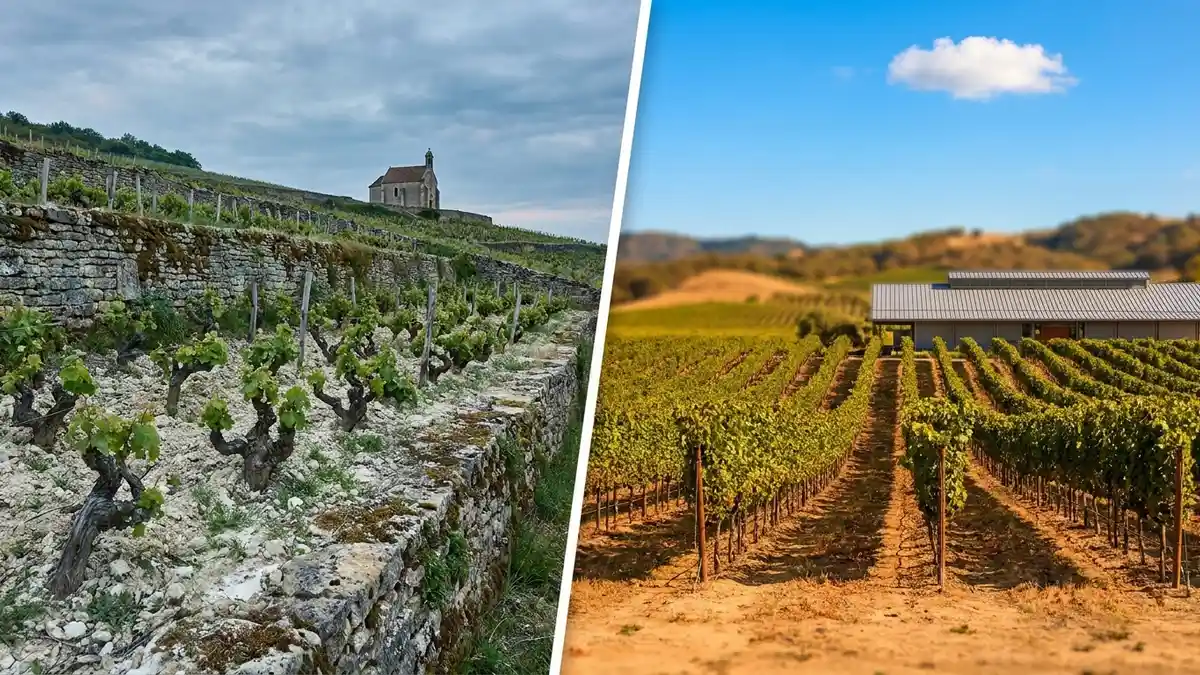
Old World wines come from European countries with thousands of years of winemaking tradition. They tend to be cooler-climate driven, with lower alcohol (12 to 13.5 percent for most reds), higher acidity, leaner fruit, more savory and earthy undertones, and labels that lead with the region rather than the grape.
New World wines come from everywhere else — chiefly the Americas, Australia, South Africa, and New Zealand. They tend to be warmer-climate driven, with higher alcohol (13.5 to 15 percent for most reds), softer acidity, riper and bolder fruit, more obvious oak, and labels that lead with the grape variety.
The difference is real but no longer absolute. Cool sites in the New World make wines that feel structurally Old World. Warm sites in the Old World make wines that feel New World. Treat the framework as a useful starting hint, not a hard rule.
Where the Lines Are Drawn
The Old World category is geographic and cultural. It refers to countries where wine has been made continuously for at least a thousand years and where the relationship between vineyard and bottle is shaped by long tradition, regional law, and the concept of terroir (the environment where grapes grow — soil, climate, altitude, and human history).
The list is short and consistent across every wine textbook.
- France — Bordeaux, Burgundy, Champagne, Rhone, Loire, Alsace
- Italy — Tuscany, Piedmont, Veneto, Sicily
- Spain — Rioja, Ribera del Duero, Priorat, Rias Baixas
- Germany — Mosel, Rheingau, Pfalz
- Portugal — Douro, Alentejo, Vinho Verde
- Austria, Greece, Hungary — Wachau, Santorini, Tokaj, and more
The New World category is the rest of the wine-producing globe. These are countries where serious wine industries took shape in the 19th or 20th century, often planted by European immigrants who brought cuttings with them.
- United States — California, Oregon, Washington
- Australia — Barossa, Margaret River, Tasmania
- New Zealand — Marlborough, Central Otago
- Argentina, Chile — Mendoza, Maipo, Casablanca
- South Africa, Canada, China — Stellenbosch, Niagara, Ningxia
For more on the geography, our French wine regions and Australian wine guide take a closer look at one country from each side of the divide.
Why the Two Styles Diverge
Climate explains most of the gap. The Old World sits at higher latitudes than most of the New World. Bordeaux is at the same latitude as Maine. Mosel sits as far north as the southern tip of Newfoundland. Even Sicily is cooler in summer than Mendoza or the Barossa.
Cooler average temperatures mean grapes ripen slowly. Slow ripening accumulates less sugar in the berry, which ferments into less alcohol. It also preserves more natural acidity. The result is a wine that tastes leaner, fresher, and more savory — flavors of red cherry rather than baked plum, lemon rather than ripe pineapple, dried herbs rather than coconut and vanilla.
Warmer New World climates flip every one of those vectors. More sun and more heat produce riper grapes with more sugar, which ferments into higher alcohol. The acid drops as the grape ripens, leaving a wine that feels softer and rounder. Fruit flavors push toward the riper end of the spectrum — black cherry, blackberry jam, mango, dried fig.
Tradition and winemaking philosophy reinforce the climate gap. Old World producers historically worked with lower-extraction techniques, older oak barrels, and longer aging in cellar. New World producers, free of centuries of regional rules, embraced higher extraction, new oak, and bolder fruit expression. The chemistry and the philosophy push the same direction.
For a deeper look at the structural cues that separate the two in a glass, our guide on how to develop your wine palate walks through the calibration exercises that make the difference second nature.
Labels: Place vs Grape
The labeling philosophy is one of the most visible differences between the two worlds. It also explains why Old World wine feels harder to learn at first.
Old World labels lead with the region. A bottle marked Sancerre tells you the wine comes from a specific village in the Loire and is made from Sauvignon Blanc — the grape is implied by the appellation. A bottle marked Barolo tells you the wine is Nebbiolo from a particular zone in Piedmont. A bottle marked Chianti Classico tells you the wine is Sangiovese from the heart of Tuscany. The grape is rarely printed because the place is the brand.
New World labels lead with the grape. A bottle marked Napa Cabernet Sauvignon tells you the grape first and the place second. A bottle marked Marlborough Sauvignon Blanc does the same. A bottle marked Mendoza Malbec follows the same logic. The grape variety is the headline because it is the easier shortcut for someone shopping by flavor profile.
This is why beginners often find New World wines more approachable to start. You learn ten grape names and you can navigate any New World shelf. To navigate an Old World shelf, you have to learn what each region grows. Our guide on how to read a wine label breaks down the cues on both sides of the divide.
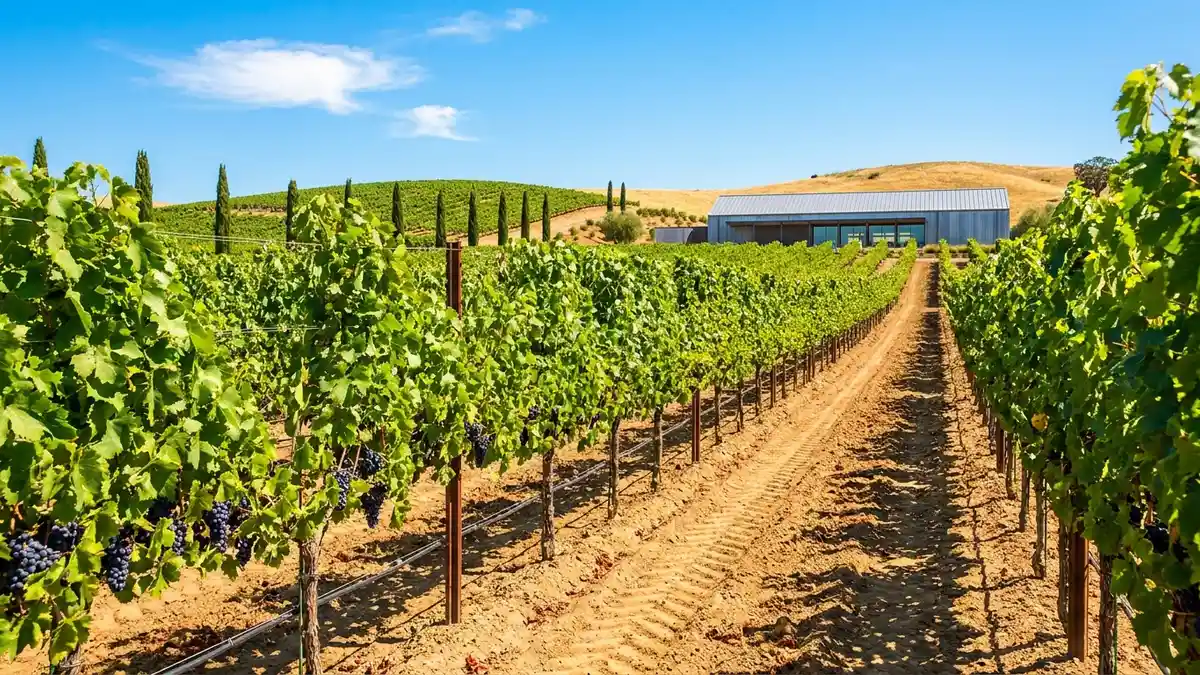
How the Difference Shows Up by Grape
The clearest way to understand the stylistic gap is to look at the same grape grown in each world. Five comparisons cover most of what you will see in a wine shop.
Pinot Noir
In Burgundy, Pinot Noir tends toward earthy, mineral, and restrained — red cherry, mushroom, forest floor, tea leaf, and a thin, transparent ruby color. Alcohol sits around 12.5 to 13.5 percent. Acidity is high. The wine feels delicate, savory, and built for patient drinking.
In Oregon's Willamette Valley or California's Sonoma Coast, Pinot Noir tends toward riper black cherry, raspberry compote, baking spice, and a more obvious oak signature. Alcohol often pushes 14 percent. Body feels rounder. The wine is more immediately generous on the first sip.
For more on how the grape behaves across regions, see our full Pinot Noir guide.
Cabernet Sauvignon
In Bordeaux's Left Bank, Cabernet Sauvignon is structured, herbal, and gravelly — blackcurrant, cedar, graphite, dried tobacco, with firm tannin and noticeable acidity. Alcohol typically sits around 13 to 13.5 percent. The wine demands food and rewards aging.
In Napa Valley, Cabernet Sauvignon pushes toward jammy blackberry, cassis liqueur, vanilla oak, mocha, and softer tannin that drinks well young. Alcohol often reaches 14.5 to 15 percent. The wine tastes generous and full on release.
The structural side-by-side between these two grape styles mirrors the broader Cabernet Sauvignon vs Merlot comparison — same grape, different stylistic schools. For a deeper dive into the Bordeaux blend that pioneered the Old World template, our Bordeaux blend grapes guide walks through the components.
Chardonnay
In Chablis, Chardonnay is steely, mineral, and unoaked — green apple, lemon zest, wet stone, oyster shell. The wine is bone dry, high in acid, and bracingly fresh. Alcohol typically lands at 12.5 to 13 percent.
In Napa or Sonoma, Chardonnay often shows creamy butter, vanilla, toasted oak, ripe pineapple, and a fuller, rounder body. Alcohol can reach 14 percent or more. The two wines come from the same grape but read as different beverages.
The contrast is one of the cleanest illustrations of the Old World vs New World gap. Our Chardonnay vs Sauvignon Blanc guide breaks down why Chardonnay flexes so dramatically with winemaking.
Riesling
In Germany's Mosel, Riesling is famously low in alcohol (often 8 to 10 percent), off-dry to dry, with floral notes, lime zest, and a piercing acid line that keeps the wine fresh even when there is a touch of residual sugar.
In Australia's Eden or Clare Valley, Riesling tends to be bone dry, more citrus-forward (lime cordial, kaffir lime leaf), with higher alcohol (around 12 percent) and a steely, mineral finish that is austere rather than floral.
Nebbiolo and Beyond
The pattern repeats across every grape. Italian Nebbiolo from Piedmont is a textbook Old World wine — pale, savory, tannic, and complex. Our Nebbiolo wine guide covers it in detail. Argentine Malbec is a textbook New World wine — deep purple, ripe blackberry, soft tannin, and lush. Our Argentina wine guide walks through the country's signature grape.
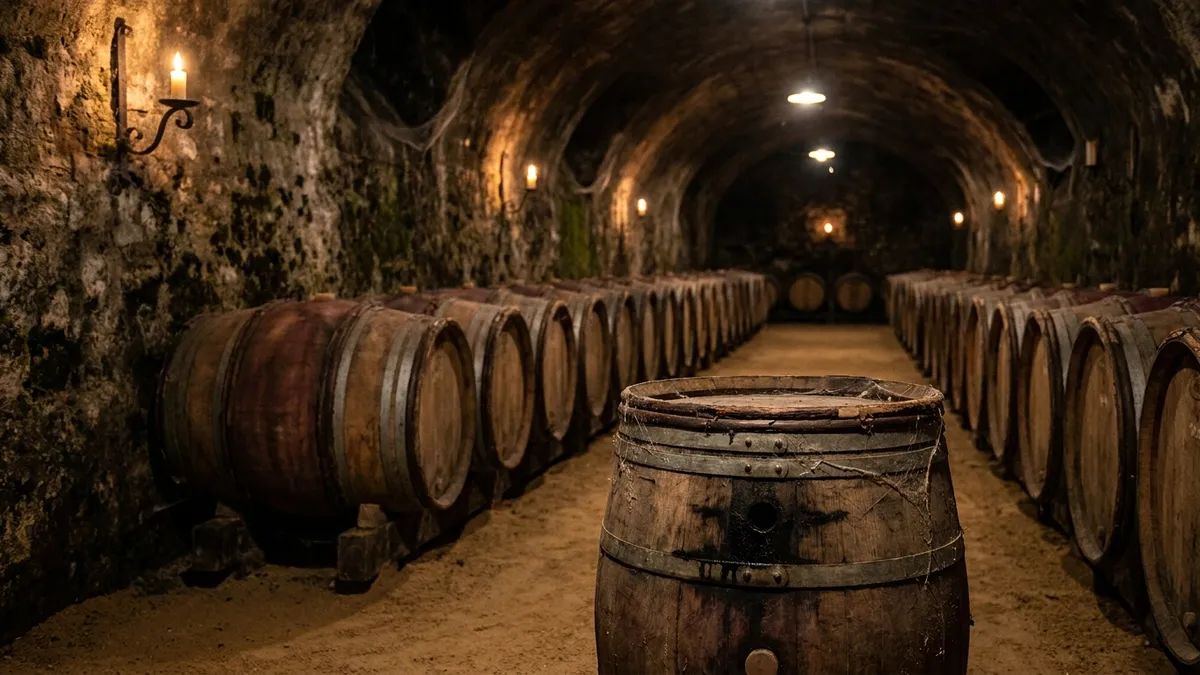
Where the Lines Are Blurring
The framework is real, but the dividing line is no longer sharp. Three forces have been collapsing the gap for the past two decades.
Cool-climate New World sites make wines that feel Old World. Sonoma Coast Pinot Noir, Marlborough Sauvignon Blanc, Tasmanian sparkling wine, Oregon Chardonnay, and the Uco Valley high-altitude reds all share the leaner, more savory profile traditionally associated with Europe. The grapes are New World by passport but Old World by structure.
Warmer Old World corners make wines that feel New World. Southern Spain, southern Italy, southern Rhone, and parts of Sicily produce ripe, full-bodied wines with bold fruit and softer acid. The Super Tuscan movement in particular embraced international varieties (Cabernet, Merlot) and New World winemaking techniques while staying technically Old World by geography.
Ancient regions rebuilding as new ones complicate the framework further. Israel has grown wine since antiquity, but its modern industry was effectively re-founded in the 1980s around international grapes, imported clones, and New World vineyard technology. Our Israeli wine guide shows a country that is Old World by history and New World by practice — a reminder that geography is only ever a starting hint.
Climate change is collapsing the distinction further. Burgundy summers are warmer than they were thirty years ago. Mosel Riesling now ripens reliably to higher alcohol than in past decades. Tasmanian wine is becoming a serious cool-climate alternative as Australian mainland sites get hotter. The map is moving.
The takeaway — the framework is still useful as a first guess, but a wine's hemisphere matters less every year than the specific climate of its specific vineyard and the philosophy of its specific producer.
Pairing With Food
Old World wines were grown alongside the regional cuisines they accompany. Sangiovese matured beside tomato-based pasta sauces. Chianti is built to handle the acidity of tomato. Loire Sauvignon Blanc evolved alongside goat cheese and oysters. Mosel Riesling was paired with pork and onions. The food and the wine share local DNA.
That history is why Old World wines often shine brightest at the table. Higher acid cuts richness. Lower alcohol leaves room for food flavors to register. Savory undertones harmonize with herbs and fermented ingredients. The wines were calibrated for meals, not for sipping alone.
New World wines are often built to drink without food. Riper fruit, softer acid, and more upfront oak make them satisfying on their own. They still pair beautifully with the right dishes — New World Cabernet with grilled steak is one of the great matches — but they tend to require less context to enjoy.
A practical heuristic — if you are planning a meal around wine, an Old World option is often the safer bet. If you are pouring a glass while you cook, a New World option is often more immediately rewarding.
Aging and Value
Old World wines have historically been associated with longer aging. The combination of higher acid, firmer tannin, and tradition of cellar maturation gives many Old World classics — top Bordeaux, Barolo, Hermitage, Rioja Gran Reserva, German Riesling — the structural backbone to evolve gracefully for two decades or more.
New World wines were originally pitched as drink-now alternatives. That has shifted. The best Napa Cabernets, Oregon Pinots, Australian Shiraz, and South African Bordeaux blends now compete with Old World benchmarks at every aging level. The myth that New World wine cannot last is no longer accurate.
Value is another moving target. At the entry level, New World wines often offer more obvious flavor for the dollar — bigger fruit, more polish, more immediate satisfaction. At the fine-wine level, Old World wines often command higher prices because of scarcity, classification systems, and centuries of brand equity. At the high-quality middle range, the value gap is small and shrinking.
A Side-by-Side Tasting You Can Try
The single best way to understand this comparison is to taste the same grape from each world in the same session. Pick one of these classic pairings and pour both into identical glasses.
- Burgundy Pinot Noir vs Oregon Pinot Noir
- Chablis Chardonnay vs Napa Chardonnay
- Bordeaux Cabernet Sauvignon vs Napa Cabernet Sauvignon
- Mosel Riesling vs Eden Valley Riesling
Smell each wine first without looking at the labels. Note which one feels leaner and more savory and which one feels riper and rounder. Take a sip and pay attention to the alcohol heat at the back of the throat, the acidity on the sides of the tongue, and the fruit character on the front of the palate. The structural gap will be obvious within a few minutes.
The Sommy app builds these structured side-by-side comparisons into its tasting courses, walking you through what to look for at each step with real-time guidance.
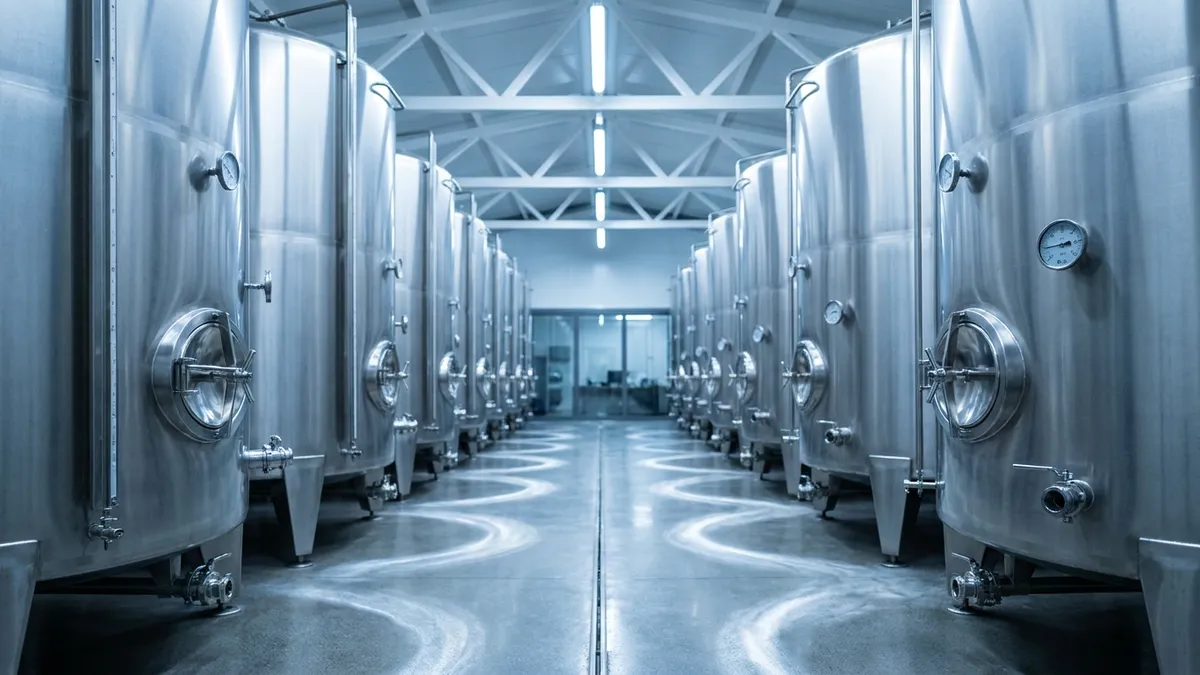
Building the Frame Into Your Palate
Old World vs New World is the most useful first filter you can apply to any unfamiliar wine. Once you internalize the cues — alcohol, acid, fruit ripeness, oak, savory undertones — you can predict roughly what is coming before the first sip lands.
The frame is also a launchpad for everything else. Once you can place a wine in the Old World or New World camp, the next layer of detail — region, grape variety, vintage, producer style — starts to make sense. The Sommy app's beginners-buying course track is built around exactly this kind of structural thinking, helping you read a label and predict a flavor before you spend a dollar.
For a complete approach to learning grape varieties and regional styles together, visit sommy.wine to start working through the structured tastings that turn the Old World vs New World framework into instinct.
Frequently Asked Questions
What is the difference between Old World and New World wine?
Old World refers to traditional European wine-producing countries — France, Italy, Spain, Germany, Portugal, Austria, Greece, and Hungary — where wine has been made for thousands of years. New World refers to everywhere else that took up wine seriously much later — the United States, Australia, Argentina, Chile, South Africa, New Zealand, Canada, and China. The terms also imply distinct stylistic tendencies, though those lines blur every year.
Are New World wines sweeter than Old World wines?
Both styles produce mostly dry wines, but New World wines often taste sweeter because riper fruit reads as sweetness on the palate. Warmer growing seasons accumulate more sugar in the grape, which ferments into higher alcohol and leaves bolder, candied fruit flavors. The wine itself contains very little residual sugar — the perceived sweetness comes from fruit ripeness, not sugar.
Why do Old World wines have lower alcohol?
Cooler average temperatures across most of Europe mean grapes ripen slowly and accumulate less sugar before harvest. Less sugar at harvest means less alcohol after fermentation. Old World reds typically sit between 12 and 13.5 percent alcohol, while New World counterparts often land at 13.5 to 15 percent. Climate is the primary driver, with picking decisions adding the rest.
Is Old World wine better than New World wine?
Neither is better. They are different stylistic schools shaped by different climates, traditions, and philosophies. Old World wines tend to favor restraint, food friendliness, and a sense of place. New World wines tend to favor fruit clarity, varietal expression, and immediate drinkability. Both schools produce some of the greatest wines in the world.
Why do Old World wines name regions instead of grapes?
European wine law puts place above variety. A label that says Sancerre means Sauvignon Blanc from a specific French village. A label that says Chianti means Sangiovese from a specific Tuscan area. The grape is implied by the appellation. New World labels lead with the grape because those regions are younger and varietal identity is the simpler shortcut for newer drinkers.
Which should a beginner start with — Old World or New World wine?
Most beginners find New World wines easier to enjoy first. Riper fruit, softer acidity, and more obvious oak make them more immediately approachable without needing context or food. Old World wines often shine brightest with a meal and reward more attention. Once your palate is comfortable with both, the choice becomes about mood and food rather than skill level.
Do New World wines age as long as Old World wines?
The best examples from both worlds age beautifully for decades. Historically, Old World wines were associated with longer aging because of higher acid and firmer tannins, but top New World producers now make wines that compete on every level. For everyday wines, both worlds make plenty of bottles meant to be drunk within a few years of release.
What is a good way to taste the difference yourself?
Pick the same grape from each world and taste them side by side. A classic exercise pairs a Burgundy Pinot Noir with an Oregon Pinot Noir, or a Chablis Chardonnay with a Napa Chardonnay. Pour both into identical glasses, smell them blind, and note which feels leaner and savory and which feels riper and rounder. The structural gap is unmistakable once you see it.
Sommy Team
LinkedInFounder & Wine Educator
The Sommy Team is building the world's most approachable wine education app, helping beginners develop real tasting skills through structured courses and AI-guided practice.