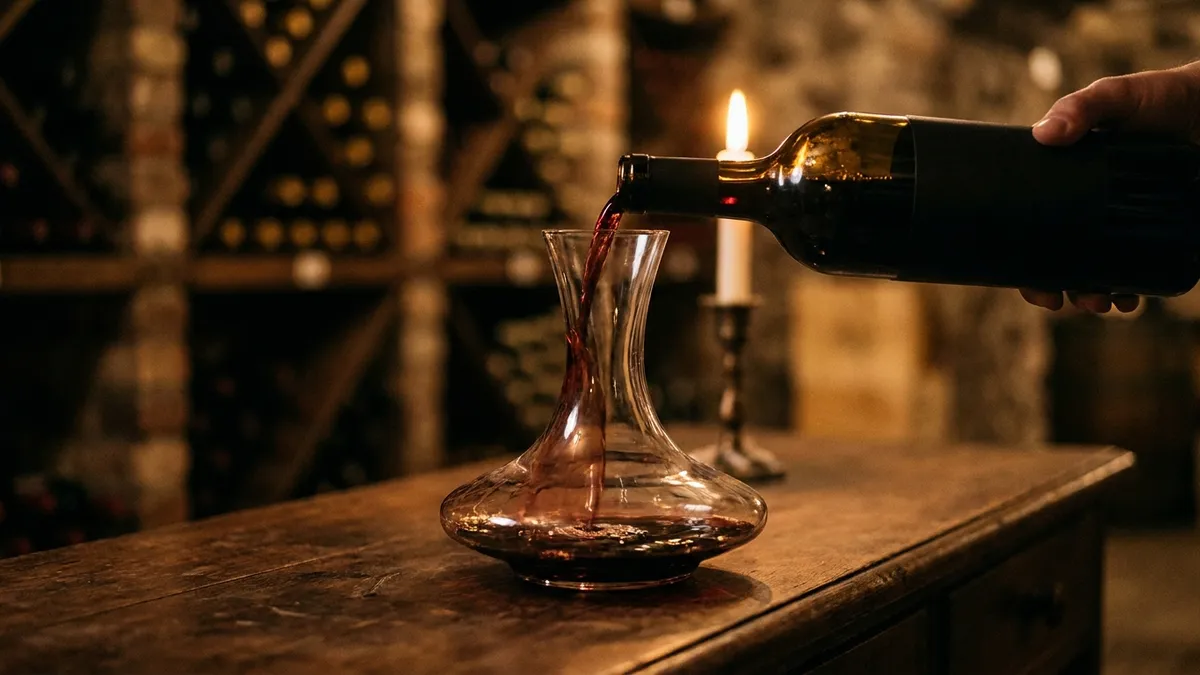
Screw Cap vs Cork: Does the Closure Affect Wine Quality?

By the Sommy Team — AI-assisted, human-edited.
Updated Apr 29, 2026
Contents (9)
- The Closure Debate Most Wine Drinkers Get Wrong
- Screw Cap vs Cork, in 90 Seconds
- The Cast of Closures: What Actually Seals Your Wine
- The 1990s TCA Crisis: Why Screw Caps Took Off
- Aging Under Cork vs Screw Cap: The Real Science
- Cost, Convenience, and the Ceremony Question
- How to Read a Closure at the Wine Shop
- The Crumbly-Cork Confusion (and Other Closure Myths)
- So, Which Closure Should You Care About?
TL;DR
Screw cap vs cork wine is less of a quality contest than most snobs make it. Cork allows slow oxygen exchange that helps long-term aging but risks TCA taint at one to four percent. Screw caps eliminate cork taint and excel at fresh whites and sparkling-base wines. Both work — the wine matters more than the closure.
The Closure Debate Most Wine Drinkers Get Wrong
Walk into any wine shop and you can watch the scene play out. Someone picks up a bottle, spots a screw cap, and quietly puts it back. The screw cap vs cork wine debate is wrapped in so much tradition and snobbery that most people never get to the real question: does the closure affect what is in your glass?
The honest answer is yes, but probably not in the way you have been told. Closures matter for technical reasons — oxygen exchange, fault rates, aging trajectories — not for status. A screw cap is not "cheap." A cork is not automatically "premium." Each closure has a job it does well and a job it does badly.
This guide walks through every major closure used in modern wine, what the research actually shows about aging, the truth about TCA cork taint, and how to read a closure intelligently in the wine aisle.

Screw Cap vs Cork, in 90 Seconds
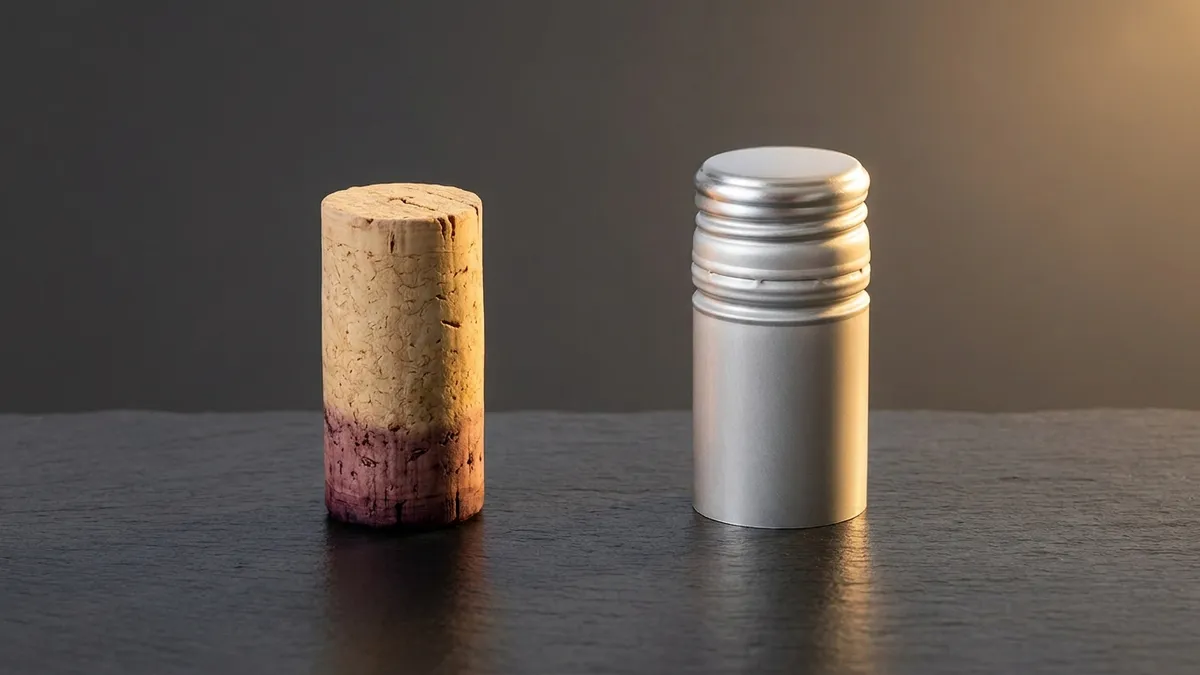
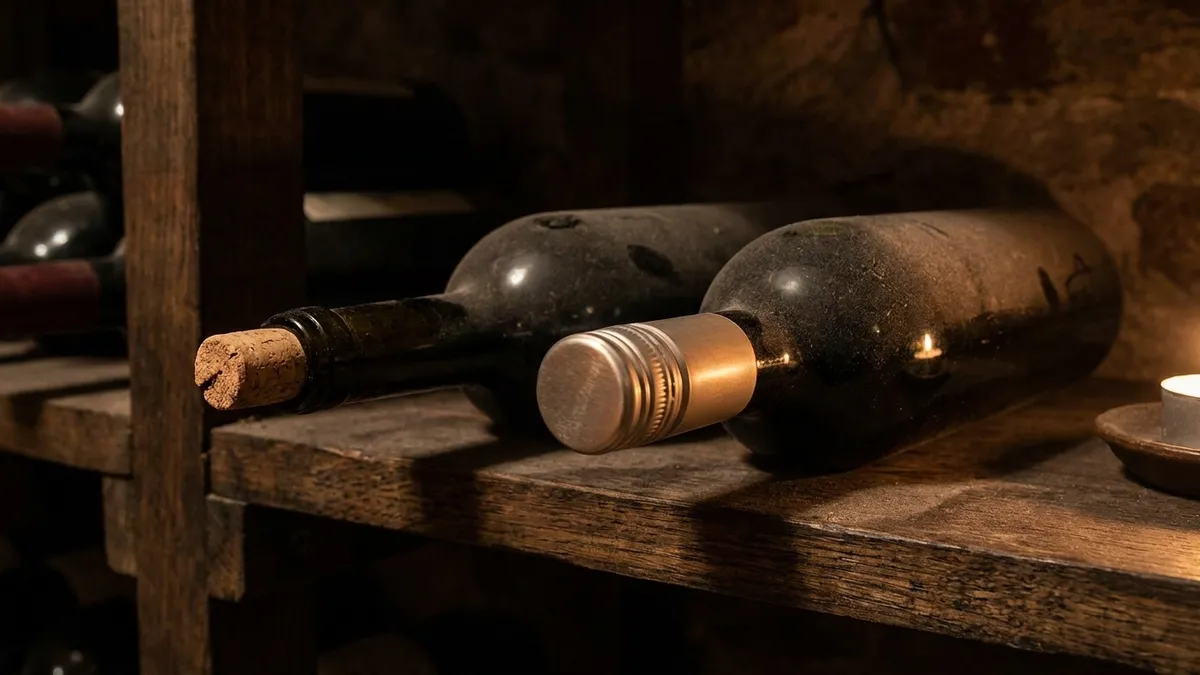
Here is the short version of the screw cap vs cork wine question. Natural cork — the bark of Quercus suber, mostly grown in Portugal and Spain — has sealed wine bottles for over 300 years. It allows a tiny amount of oxygen to enter the bottle each year, which helps long-aging reds develop tertiary aromas. Its weakness is cork taint, a musty fault caused by a compound called TCA, affecting roughly one to four percent of cork-sealed bottles today. Screw caps, technically called Stelvin closures, are aluminum caps with a tin or polymer liner. They effectively eliminate TCA, deliver consistent oxygen control, and excel at preserving fresh whites and sparkling-base wines. Both work. Neither is universally better. The closure is a tool, and good winemakers pick the right tool for the wine they made.
The Cast of Closures: What Actually Seals Your Wine
There are five closures you will meet on shelves, and each interacts with the wine inside differently.
Natural Cork
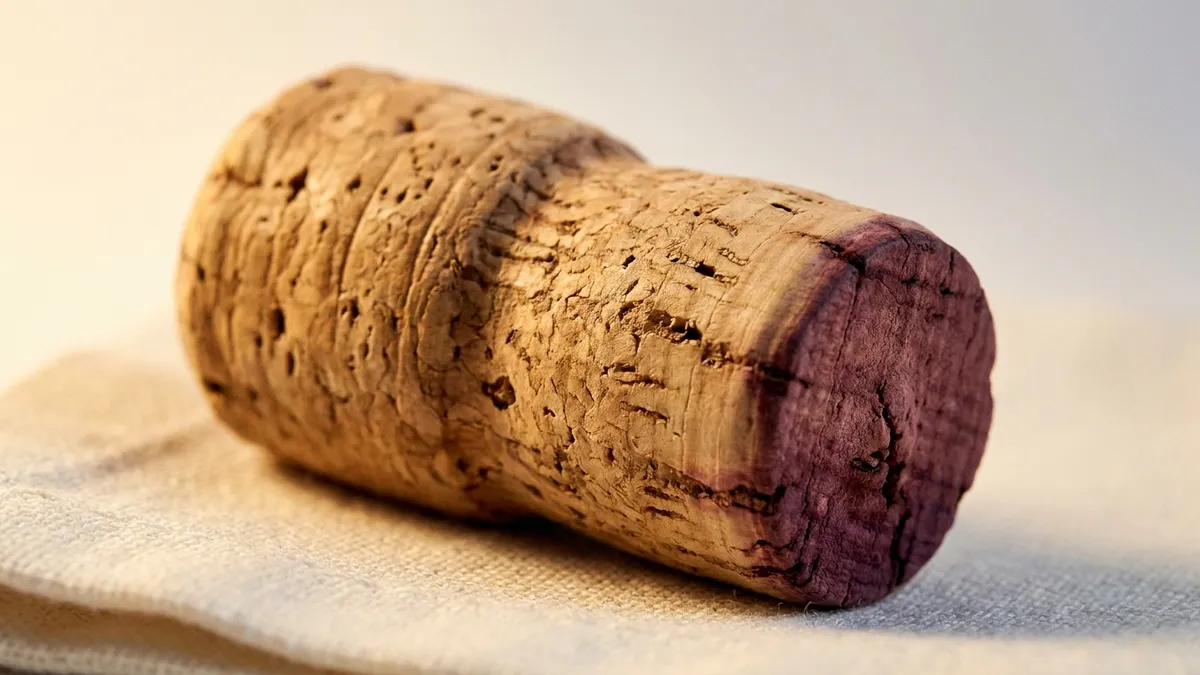
A natural cork is a punched cylinder of bark from the cork oak tree. Portugal alone produces around half of the world's cork, with Spain a distant second. The material is light, elastic, microporous, and resistant to most decay — a good natural cork can hold a seal for 50 years, provided storage humidity stays high enough to keep it from drying out, which our guide to wine cellar temperature and humidity covers in detail.
The defining feature of natural cork is micro-oxygen exchange. About 0.1 milligrams of oxygen passes through a cork into the bottle each year. That tiny dose lets a serious red evolve over a decade — softening tannins, building complexity, developing the leather, mushroom, and dried-fruit notes of a mature bottle.
The defining flaw is bottle variation. Two bottles of the same wine, sealed with two different corks, age slightly differently. For age-worthy reds this is part of the romance. For wines meant to taste consistent, it is a problem.
Synthetic Cork
Synthetic corks are plastic or polymer cylinders shaped to look and feel like cork. They are cheap, completely free of TCA, and uniform in quality. Their weakness is oxygen permeability — most synthetic corks let far more oxygen through than natural cork, so the wine has a short shelf life of one to two years before it tires.
Synthetic corks make sense on bright, fruit-driven wines nobody plans to age. They are common on supermarket reds and whites under €15. If you see a brightly colored plastic plug under the foil, drink the bottle within a year.
Screw Cap (Stelvin)
The modern screw cap is technically a Stelvin closure — an aluminum cap fitted with a thin liner, either a Saran-tin laminate or a Saranex polymer, that touches the wine and forms the seal.
The cap is rigid; the liner does the work. Saran-tin liners are essentially airtight, blocking nearly all oxygen and preserving freshness. Saranex liners are slightly more permeable, allowing a small amount of oxygen ingress, which suits slow-aging reds. Winemakers pick the liner deliberately.
Stelvin was developed in the 1960s, ignored for 30 years, then rapidly adopted by Australia and New Zealand starting in the late 1990s. One landmark was July 2000, when a group of Clare Valley riesling producers bottled part of their wine under screw cap. Today it accounts for over 90 percent of bottles in those countries.
Diam (Technical Cork)
Diam is a recent innovation that solves the TCA problem without abandoning cork. Natural cork is pulverized, treated with supercritical CO2 to extract TCA molecules, then reassembled with food-grade microspheres into uniform cylinders. The result looks, feels, and breathes like cork — but with consistent oxygen rates and almost zero taint risk.
Diam is now used on a huge share of fine wine, including many top Burgundy producers. Diam 5, Diam 10, and Diam 30 correspond to the years the closure is engineered to perform. For age-worthy wines without bottle variation, it has become the practical choice.
Glass Stopper (Vino-Lok)
The glass stopper, sold under the brand Vino-Lok, is a niche premium closure used on some high-end German and Austrian wines. Functionally it performs similarly to a tight screw cap, with near-zero oxygen ingress. The cost is high and the supply chain is complicated, so adoption is limited — but it wins buyers who want a closure that signals "premium" without using cork.
The 1990s TCA Crisis: Why Screw Caps Took Off
Cork taint has existed for as long as cork closures have existed, and the chemistry behind it, how TCA actually forms and why it fools your nose, explains why the fault took so long to fix. For most of that history it was a quiet annoyance — a percentage of bottles that smelled musty, often blamed on the wine itself.
In the 1990s, that changed. High-profile blind tastings documented cork taint at rates between five and ten percent of bottles. A 2005 study at Wine Spectator's Napa tasting facility found seven percent of 2,800 bottles affected. Restaurant sommeliers were seeing one in every twelve to twenty bottles come back as corked.
The Australian and New Zealand wine industries — dependent on exports of fresh, fruit-forward whites — could not afford that fault rate. Sauvignon Blanc and Riesling rely on aromatic intensity, and TCA destroys aromatics. So the southern-hemisphere producers ran their own tests, concluded the screw cap protected fresh wines better, and switched in a coordinated push between 2001 and 2005.
The cork industry responded with a quality overhaul: chlorine bleaching was replaced with peroxide cleaning, individual corks are now scanned for TCA by gas chromatography, and many producers steam-treat corks before bottling. Industry groups now report taint rates between 0.7 and four percent — down by more than half from the 2000s peak.
If you ever suspect a bottle is showing cork taint, our guide to how to tell if wine is corked walks through the exact musty-cardboard smell to look for and how to send a bottle back at a restaurant without feeling awkward.
Aging Under Cork vs Screw Cap: The Real Science
This is where the closure debate gets technically interesting. Wine aging is essentially a slow chemical conversation between the wine and tiny amounts of oxygen. Too much oxygen and the wine oxidizes — bruised apples, sherry notes, brown color. Too little oxygen and the wine reduces — struck matches, burnt rubber, sulfur. The closure controls how that conversation unfolds.
Cork: A Slow, Variable Trickle
A natural cork lets roughly 0.1 milligrams of oxygen into the bottle each year. That number is an average — actual ingress varies by 10 to 20 percent from cork to cork on the same wine. For age-worthy reds that range works in the wine's favor: tertiary aromas develop, tannins integrate, and the wine acquires the savory, leather-and-mushroom character of a mature bottle. For more on how aged wines actually taste different, see tasting young vs aged wine.
The downside is consistency. Two bottles bought together can drink differently a decade later, a spread explained in our guide to bottle variation.
Screw Cap: A Steady Whisper of Oxygen
Saran-tin liners pass roughly 0.001 milligrams of oxygen per year — about 100 times less than cork. Saranex liners pass slightly more, closer to cork but still much tighter and more uniform. Screw cap aging is slower and more consistent.
Australia has the longest body of evidence on this. Long-term tracking of Cabernet Sauvignon and Riesling under screw cap, going back to the early 2000s, shows wines aging beautifully over 15 to 20 years — often more uniformly than cork-sealed counterparts. Riesling especially thrives under screw cap, retaining its lime-blossom freshness for decades while developing the petrol and honey notes of mature bottles.
The new science says: screw cap can absolutely age wine. It just ages it more slowly and more evenly. The cork bottle will likely peak first; the screw-cap bottle will peak with less variation across the case.
Reduction: The One Real Risk Under Screw Cap
The tradeoff for that tighter seal is reduction — sulfur-driven aromas that smell like struck matches, burnt rubber, or in extreme cases, onions. Reduction happens when wine ages without enough oxygen to keep sulfur compounds in check. A tight Saran-tin liner is the perfect environment for it, especially in reds with high sulfur potential.
Mild reduction is fixable. A vigorous swirl in the glass or a quick decant exposes the wine to air and most struck-match notes disappear within minutes. Some drinkers prize a hint of reduction — it can read as flinty or steely, a stylistic choice in regions like the Loire. Severe reduction is genuinely unpleasant and harder to blow off.
This is why winemakers choose the liner deliberately: Saran-tin for fresh whites and sparkling-base wines, Saranex for reds that benefit from a little breathing room.
Cost, Convenience, and the Ceremony Question
A high-quality natural cork runs from €0.30 to over €2.00 per cork. Diam closures sit in a similar range. A screw cap costs roughly €0.10 to €0.30 per unit. On a €10 bottle, the closure can represent 5 to 20 percent of production cost, and wineries pass the difference along. That is part of why screw caps dominate entry-level and mid-tier wines while fine producers stick with cork or Diam.
If you are picnicking, traveling, or opening a bottle without a corkscrew, the screw cap is unbeatable. It also reseals perfectly — half a bottle of Sauvignon Blanc resealed under screw cap and refrigerated stays good for two or three days, while a cork bottle starts losing freshness within 24 hours. For everyday drinking, that convenience matters more than most snobs admit. If your bottle has a cork, the guide on how to reseal a wine bottle shows how to keep it fresh for tomorrow. The Sommy app's serving and storage learning track covers how to keep an opened bottle drinkable regardless of closure.
There is one thing a screw cap will never do — replace the ritual of pulling a cork. The hiss of foil, the twist of the corkscrew, the quiet pop. Our guide to the types of corkscrews matches each tool to the cork it suits. Cork still wins the dinner-party theater. That said, some of the most exciting modern producers — Riesling specialists, Sauvignon Blanc icons, natural-wine pioneers — bottle their best work under screw cap because they value the contents over the ceremony.
How to Read a Closure at the Wine Shop
When you stand in front of a wall of wine, the closure tells you something useful about the producer's intent.
- Screw cap on a fresh white — Sauvignon Blanc, Riesling, Pinot Grigio, Albariño — is almost always a signal of confidence, not cost-cutting. Many are world-class. Our breakdown of Chardonnay vs Sauvignon Blanc explains why aromatic whites benefit so much from a tight seal.
- Screw cap on an entry-level red is usually about freshness too. Fine for Tuesday night.
- Natural cork on a serious red — Bordeaux, Burgundy, Barolo, Brunello — remains fine for cellaring. Accept the small TCA risk and learn to recognize the fault.
- Diam cork on a fine wine is a quiet sign of a producer who cares about tradition and consistency. Increasingly common in Bordeaux and Burgundy.
- Synthetic cork says drink it now. The wine is not meant to age.
- Glass stopper is a marketing decision more than a technical one. Functionally similar to a screw cap.
If you are buying a wine to lay down for a decade, choose cork or Diam. If you are buying for this season, the screw cap is often the smarter call. The Sommy app's structured tasting practice helps you build the reflexes to evaluate either one fairly.
The Crumbly-Cork Confusion (and Other Closure Myths)
A few persistent myths trip up wine drinkers, and a clean understanding of closures clears them up.
A wet cork is not a bad sign. The bottom of every cork-sealed bottle has been resting in liquid for years. That is normal. What is concerning is a cork dry on the wine side — a signal of a bad seal. For which closures need to lie down and which can stand, see storing wine horizontal vs vertical.
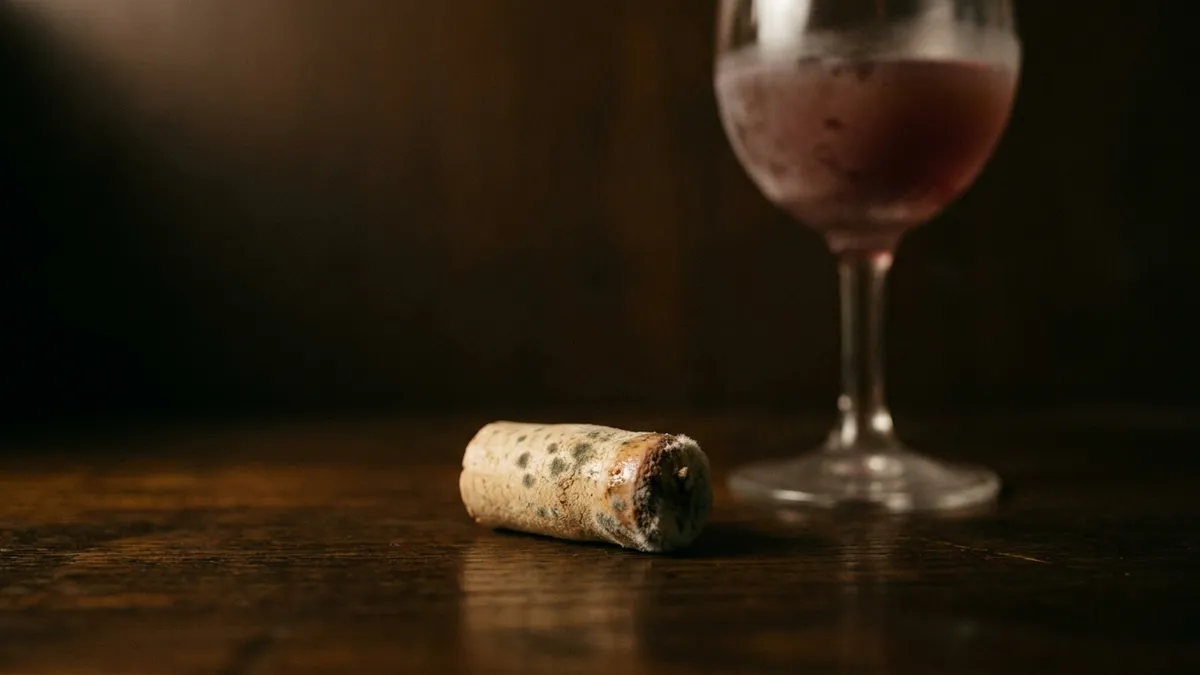
A crumbly cork is not corked wine. Cork condition tells you about storage; cork taint tells you about smell. The two are unrelated. The only reliable test is to smell what is in the glass. Our guide to common wine tasting mistakes covers how to evaluate a wine before passing judgment.
A screw cap can technically be "corked," but barely. TCA can come from sources other than the cork — contaminated cellar wood, wooden pallets, storage rooms. Day to day, screw-cap wines are essentially TCA-free.
Old wine under screw cap is not a contradiction. Riesling at 20 years under screw cap is a known pleasure, and Australian Cabernet at 15 to 20 years under Stelvin is a documented fact. The closure does not predict the lifespan; the wine does. For more on aged wine character, see how to identify wine faults by smell and develop your wine palate.
So, Which Closure Should You Care About?
The honest verdict is that the screw cap vs cork wine question matters less than wine culture pretends. Both closures work. Both have evolved. Each has specific strengths, and good winemakers pick deliberately based on the style they made.
For fresh whites, sparkling-base wines, and most reds under €30 meant for early drinking, screw cap is the safer and often better choice. For age-worthy reds destined for a cellar, natural cork or Diam is the traditional and still-valid answer. The bottle variation under cork is part of the romance for some drinkers and a frustration for others. The same logic extends beyond closures to the container itself, which is why canned wine suits fresh, drink-young styles and not cellar wines.
Stop letting the closure shape what you buy. Pick the wine you want, accept the small TCA risk that comes with cork, learn to spot the fault when it appears, and trust that a screw cap is not an insult to the contents. The Sommy app builds tasting reflexes through structured aroma training and AI-guided practice, so you can evaluate any wine — under any closure — on its own terms. Visit sommy.wine to start training your palate to recognize what is actually in the glass.
Frequently Asked Questions
Does a screw cap mean the wine is cheap?
No. That stigma is roughly 20 years out of date. Australia and New Zealand bottle over 90 percent of their wine under screw cap, including some of their most expensive Rieslings, Sauvignon Blancs, and even age-worthy reds. Premium European producers are increasingly using screw caps for fresh whites where freshness matters more than tradition.
Can wine age under a screw cap?
Yes. Long-term studies in Australia tracking screw-capped Cabernet and Riesling over 15 to 20 years show the wines age beautifully — often more consistently than cork-sealed bottles. The rate is slower than under cork because oxygen ingress is much lower, so the wine ages longer but more evenly.
What is TCA and why does it matter for cork wine?
TCA, or 2,4,6-trichloroanisole, is a compound formed when natural cork meets certain fungi and chlorine residues. It causes the musty, wet-cardboard smell of corked wine. Industry estimates put current cork taint rates at one to four percent of cork-sealed bottles, down from five to ten percent before the 2010s reform.
What is the difference between Saran and Saranex screw cap liners?
Saran-tin liners are essentially airtight — almost zero oxygen passes through, which protects fresh whites and sparkling-base wines. Saranex liners allow a tiny amount of oxygen through, which suits slow-aging reds. Wineries pick the liner deliberately based on the style they want.
What is Diam cork and is it really cork?
Diam is a technical closure made from pulverized natural cork bonded with food-grade microspheres. The cork material is treated with supercritical CO2 to remove TCA before reassembly. It is genuine cork by content but engineered to eliminate taint and oxygen variability — increasingly common in fine wine.
Why do some screw-capped wines smell like struck matches?
That is reduction, a sulfur-related fault that happens when wine ages without enough oxygen. Tight Saran-tin liners can create a near-anaerobic environment, especially in reds with high reducing potential. Reduction is usually fixable by vigorous swirling or a quick decant — it is not the closure failing, it is the wine adjusting to air.
Which wines should I look for under cork versus screw cap?
Under screw cap: Sauvignon Blanc, Riesling, Pinot Grigio, light reds meant for early drinking, and almost any wine designed to taste fresh. Under cork or Diam: age-worthy reds, traditional Bordeaux and Burgundy, fine Italian reds, and wines you plan to cellar for ten or more years.
Is a wet or crumbly cork a sign of bad wine?
No. A wet cork is normal — that side has been touching the wine for years. A crumbly cork is a sign of age or storage, but the wine inside can still be perfect. Cork condition is not the same as wine condition. The only reliable test is to smell and taste the wine itself.
Sommy Team
LinkedInFounder & Wine Educator
The Sommy Team is building the world's most approachable wine education app, helping beginners develop real tasting skills through structured courses and AI-guided practice.