How to Decant Wine: When, Why, and How Long

By the Sommy Team — AI-assisted, human-edited.
Updated Apr 29, 2026
Contents (13)
- TLDR
- How to Decant Wine, in 90 Seconds
- The Two Real Reasons to Decant Wine
- Reason One: Aeration for Young Tannic Wines
- Reason Two: Sediment Separation for Old Fragile Wines
- Decant Times by Style
- When Not to Decant
- Decanter Shape Matters
- Cheap Pour-Through Aerators
- The Double Decant Technique Pros Use
- The Cellar-to-Glass Temperature Step
- Build the Habit With Side-by-Side Practice
- The Practical Takeaway
TL;DR
Learning how to decant wine well comes down to two questions: is the wine young and tannic, or old and fragile. Young Cabernet, Syrah, and Nebbiolo soften over 60 to 120 minutes of air. Old Bordeaux and Barolo need a quick 10 to 30 minute pour to leave sediment behind, then drink fast.
TLDR
Learning how to decant wine well comes down to two questions: is the wine young and tannic, or old and fragile. Young Cabernet, Syrah, and Nebbiolo soften over 60 to 120 minutes of air. Old Bordeaux and Barolo need a quick 10 to 30 minute pour to leave sediment behind, then drink fast.
How to Decant Wine, in 90 Seconds
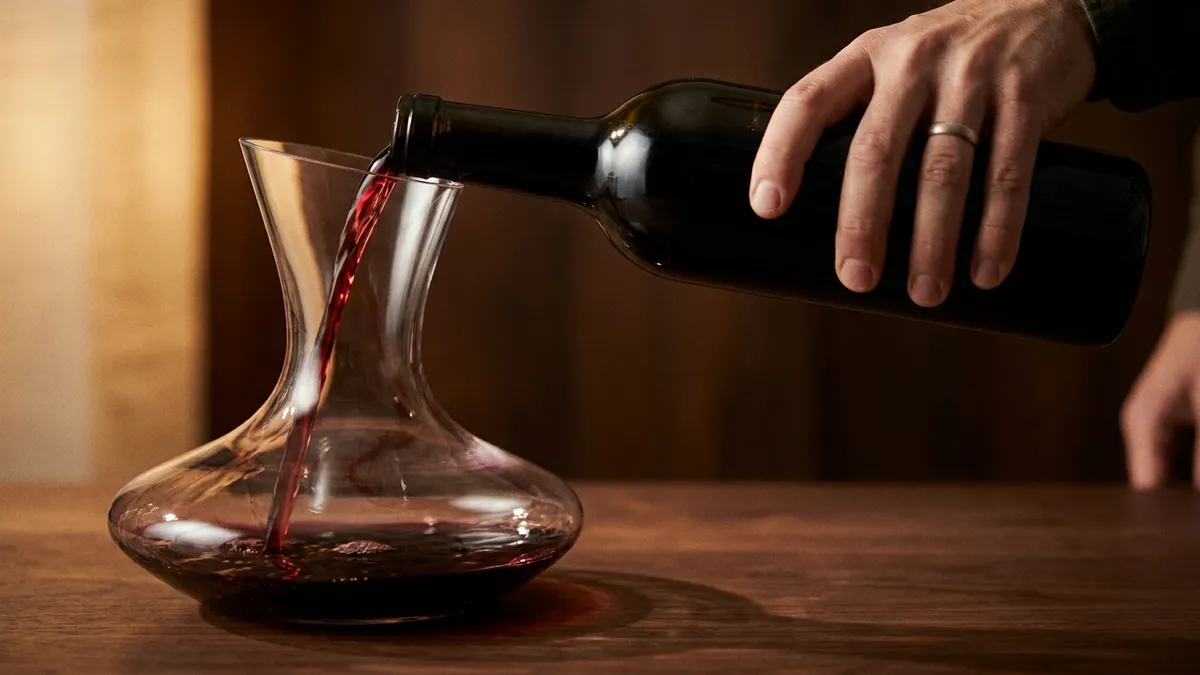
If you only need the rule, here it is. To decant wine, pour it slowly from the bottle into a wider open vessel — a decanter or a clean glass carafe — to expose the wine to air, separate it from sediment, or both. If the term itself is new to you, our plain-language explainer on what decanting is covers the definition before you get to the timings below. Bold young reds like Cabernet Sauvignon, Syrah, Malbec, and Tannat want 60 to 120 minutes in the decanter to soften their tannin. Young Bordeaux blends and Nebbiolo (the grape behind Barolo) want 45 to 90 minutes. Aged Bordeaux 10 to 20 years old wants a shorter 20 to 45 minute pour. Aged Burgundy and old Barolo over 15 years want only 15 to 30 minutes — long enough to remove sediment, short enough to preserve fragile aromas. Full-bodied oaked whites benefit from 15 to 30 minutes. Sparkling wine is never decanted.
The Two Real Reasons to Decant Wine
There are exactly two evidence-based reasons to decant a bottle. Everything else is ritual or theatre.
The first reason is aeration — exposing the wine to oxygen so the tannin and aromatics evolve in the glass faster than they would on their own. This applies almost exclusively to young, structured red wines under ten years old.
The second reason is sediment separation — pouring the clear wine off the solid particles that have settled in older bottles. This applies to fully mature reds, traditional Barolo and Bordeaux, vintage Port, and any unfiltered red over a decade old.
These two goals pull in different directions. Aeration wants more time and turbulence. Sediment separation wants minimal time and zero agitation. Knowing which goal you are after is the entire art of decanting.
Reason One: Aeration for Young Tannic Wines
Young red wines often taste tight on opening. The fruit is muted, the tannin scours the gums, and the alcohol pokes through. Oxygen fixes a lot of that.
Tannins are the drying, gripping compounds that come from grape skins, seeds, and oak barrels. In a sealed bottle, tannin sits in long, aggressive polymer chains. Exposed to air, those chains slowly break down and reorganize into shorter, smoother structures. The palate registers that as a softer, less astringent grip.
The wines that gain the most from aeration share a profile: under ten years old, high tannin, dense fruit, often higher alcohol. Think young Cabernet Sauvignon, young Syrah, Malbec, Tannat, Aglianico, Petit Verdot, and structured young Nebbiolo from Barolo or Barbaresco.
If you want a deeper look at the chemistry behind why air matters, our companion piece on does decanting change wine flavor walks through the mechanisms in detail. This guide focuses on the practical "when and how long" decisions instead.
The Aeration Myth, Busted
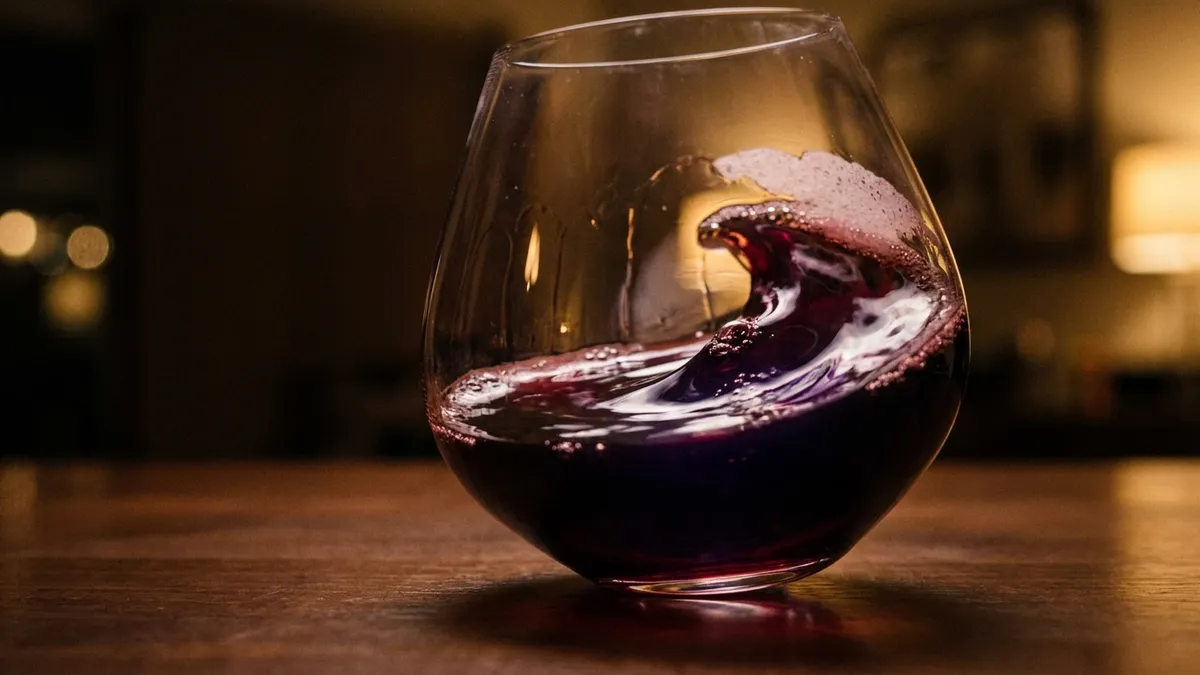
Here is the part most decanting guides get wrong. Most everyday wines under $25 do not change meaningfully in the first 30 minutes of air. They are made in a fruit-forward style, with soft tannin, designed to drink on release. Decanting a $12 weeknight Merlot for an hour does almost nothing the glass swirl does not already do.
The wines that genuinely transform are higher-tannin, higher-structure bottles in their first decade. A young Napa Cabernet, a young Northern Rhône Syrah, a tight young Barolo, a young Tannat from Uruguay or Madiran — these wines are built for the cellar and almost rude to drink at release. Two hours of air can change the experience entirely.
A practical 30-minute home test settles this fast. Pour two glasses of the same young Cabernet. Set one on the counter, decant the other for 30 minutes, then taste them side by side. The decanted glass will feel rounder, more open, and less aggressive on the gums. The countertop glass will still taste tight. That is what tannin doing its slow oxygen reaction looks like in real time. Side-by-side comparison is also one of the fastest ways to develop your wine palate.
Reason Two: Sediment Separation for Old Fragile Wines
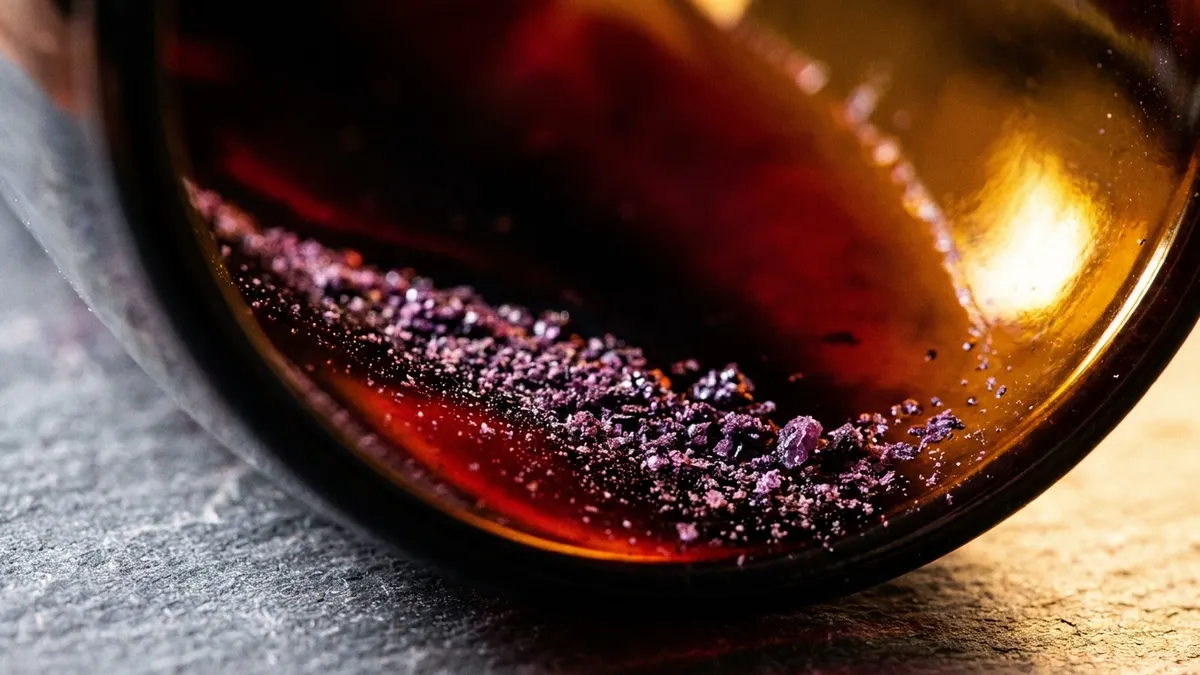
Old red wines throw sediment — solid particles of precipitated tannin, color pigments, and tartrate crystals that drop out of the liquid over years in bottle. Sediment is harmless but gritty in the mouth and aesthetically distracting in the glass.
Wines that commonly throw heavy sediment include traditional Bordeaux above ten years old, Barolo and Barbaresco, vintage Port, traditional Rioja Gran Reserva, aged Brunello, and most unfiltered red wines over a decade old. The structural difference between bold young reds — see the contrast in our Cabernet Sauvignon vs Merlot guide — and aged collector reds is what determines whether you decant for air or for sediment.
The technique here is the opposite of aeration decanting. You want minimal turbulence, minimal time, maximum care.
The Candle Trick
The pre-modern way to spot sediment as you pour is still the best way. Stand the bottle upright for at least 24 hours before service so sediment falls to the base. Then, with the cork pulled, place a small candle or a bright phone flashlight directly behind the neck of the bottle as you pour.
Watch the wine flow past the light. For most of the bottle the stream looks clear and bright. Then, somewhere between two-thirds and three-quarters poured, you will see the first cloudy ribbon of sediment lift off the base and start moving toward the shoulder of the bottle. That is your stop signal. Lift the bottle, set it aside, and accept that the last 50 ml is sacrificed. The clear wine is now in the decanter.
Drink It Fast
Old wines are fragile. The same oxygen that softens a young Cabernet over two hours can flatten a 25-year-old Burgundy in 20 minutes. The aromas you are protecting — leather, dried cherry, forest floor, dried mushroom, truffle — are tertiary aromas that develop slowly in bottle and dissipate fast in air.
Once an old wine is decanted, drink it within 30 minutes. The decanter is a separation tool here, not an aging tool.
Decant Times by Style
Use these as a baseline. Taste every 15 to 20 minutes once decanted and stop when the wine feels open and balanced rather than tight or tired.
- Bold young reds (Cabernet Sauvignon, Syrah, Malbec, Tannat, Petite Sirah): 60 to 120 minutes
- Young Bordeaux blends and young Nebbiolo: 45 to 90 minutes
- Aged Bordeaux (10 to 20 years): 20 to 45 minutes
- Aged Barolo and Barbaresco (15+ years): 20 to 45 minutes
- Aged Burgundy and aged Pinot Noir (15+ years): 15 to 30 minutes only — and watch closely
- Full-bodied oaked whites (white Burgundy, top Chardonnay, Hermitage Blanc): 15 to 30 minutes
- Reductive whites that smell of struck match on opening: 15 to 30 minutes
- Vintage Port: 30 to 60 minutes for sediment, drink within an hour
- Sparkling wine: never
The pattern is clear. Wines under ten years old generally want more air. Wines over fifteen years old want less. The middle decade is judgment territory — taste and decide.
When Not to Decant
Some bottles are actively harmed by decanting. The list is short but important.
Aged delicate Pinot Noir and aged Burgundy over 15 years. Pinot Noir's signature aromas — rose petal, raspberry, sous-bois, mushroom — sit on top of a thin structural frame. Twenty minutes of air can deflate the bouquet entirely. A short, careful pour to remove sediment is fine. A two-hour decant is destructive.
Most aromatic whites and crisp unoaked whites under five years old. These wines live on freshness. Decanting bleeds off the citrus, herb, and floral top notes within 30 minutes and replaces them with a duller, flatter profile.
Sparkling wine, always. Pouring kills the carbon dioxide that creates the bubbles. The mousse is integral to how Champagne, Cava, Prosecco, and pet-nat actually taste. A flat sparkling wine reads as thin and sweet, regardless of base wine quality.
Anything you plan to drink in under 15 minutes. Decanting needs time to work. If the bottle is opening as guests arrive, swirl the glass aggressively instead. That replicates the smallest, fastest version of what a decanter does.
Decanter Shape Matters
The shape of the vessel changes how fast the wine aerates, because it changes how much surface area is exposed to air.
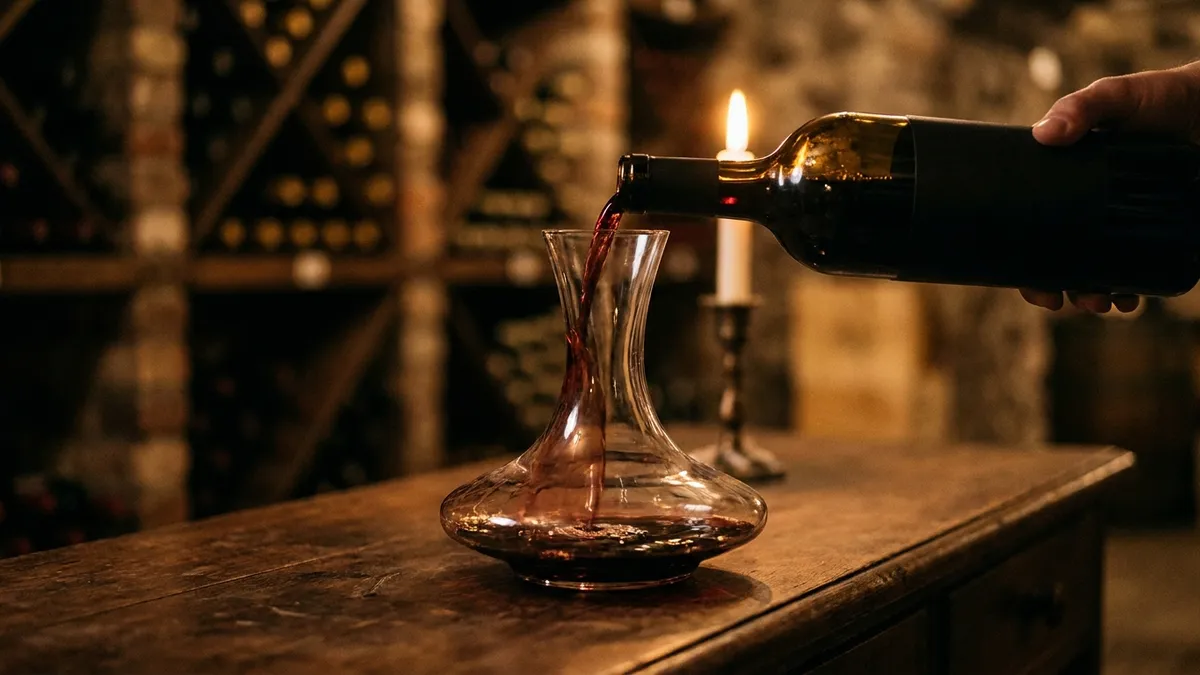
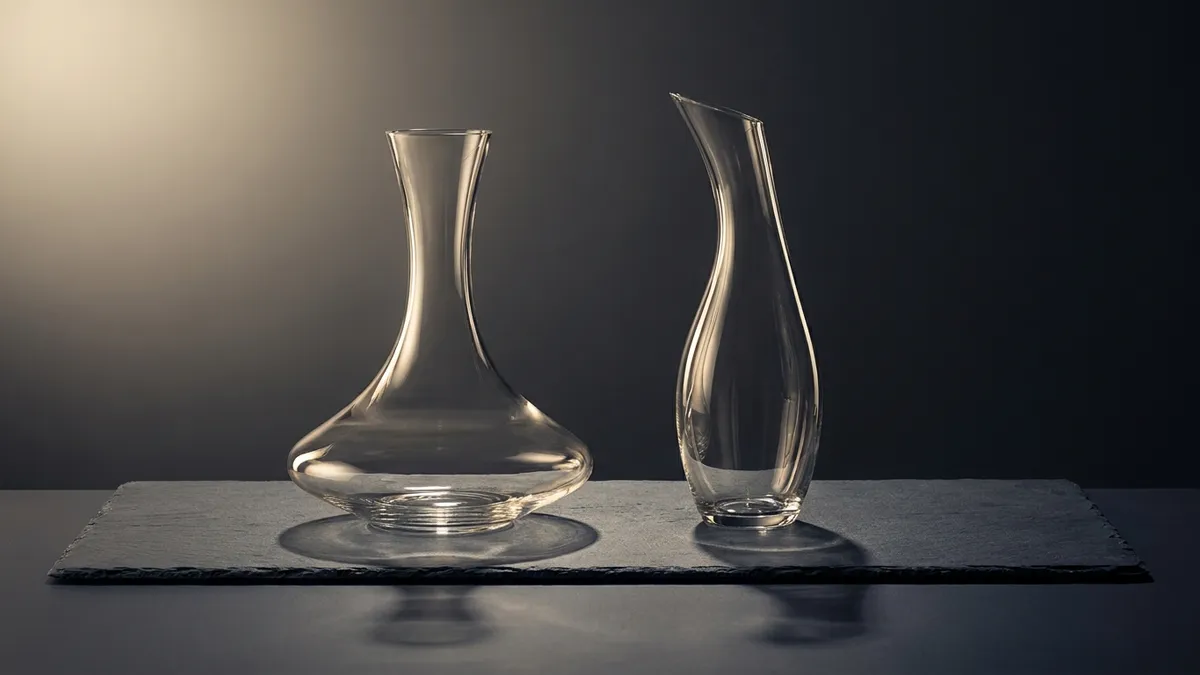
A wide-bottomed decanter maximizes surface area. The wine forms a thin pool with a large face exposed to oxygen, which speeds up aeration. This is the right shape for tight young reds that need help opening up.
A narrow-necked decanter — sometimes called a Port duck or a sediment decanter — limits oxygen exposure. The wine sits in a tall column with a small face. This is the right shape for older wines that need sediment removed but should not be aerated aggressively.
A plain glass carafe sits in the middle and works fine for everyday drinking. The shape is a refinement, not a requirement. A clean glass jug pours wine just as well as a $400 hand-blown crystal decanter, even if it does not photograph as nicely. Whichever you use, our guide to how to clean a wine decanter keeps it free of the red ring that sets overnight.
Cheap Pour-Through Aerators
Vinturi-style pour-through aerators screw onto the bottle neck (or sit in a stand) and pull air into the wine as it passes through. They replicate roughly 30 to 60 minutes of decanting in about five seconds.
For tight young reds on a weeknight, they work. The aeration is real, and tasters can usually identify the more open glass in a blind comparison. They are a useful tool for casual drinking when you do not want to wait two hours.
For fragile old wines, they are a bad fit. The aggressive turbulence strips delicate aromatics that took decades to develop. A 20-year-old Barolo deserves the slow careful pour, not the gadget. Match the tool to the bottle. For a full breakdown of the types worth owning and which wines each one helps, see our wine aerator guide.
The Double Decant Technique Pros Use
Restaurant sommeliers often use a technique called the double decant for older bottles, especially when the table will appreciate seeing the original label.
The steps are simple. Pour the wine slowly into the decanter as usual, leaving sediment behind. Rinse the original bottle with cold water and shake it dry — never warm or hot water, which can shock any cork residue and add off flavors. Then pour the decanted wine back into the clean bottle.
The wine gets two transfers worth of aeration in about three minutes. The original bottle goes back to the table, looking appropriately dignified, and the sediment stays behind in the kitchen. For an older Bordeaux or Barolo that needs a short aeration plus sediment separation, the double decant is the elegant solution.
The Cellar-to-Glass Temperature Step
Decanting is only one variable in serving wine well. Temperature is the other. A perfectly decanted Cabernet served at 74°F still tastes hot and flabby because the alcohol dominates. A decanted aged Burgundy served at 50°F still tastes muted because the bouquet cannot escape the glass.
The rough order of operations for a bold red is: cellar (around 55°F) → cool counter (gradually warming) → decanter (warming and aerating together) → glass (final tasting temperature). For full-bodied reds that means landing around 60 to 65°F by the time you pour. Our wine serving temperature chart covers the exact ranges for every style and the no-thermometer rule that gets you there.
For a deeper dive into the full pour-and-taste sequence professionals follow, see how to taste wine like a sommelier. Decanting is one chapter inside that broader workflow.
Build the Habit With Side-by-Side Practice
The fastest way to internalize when decanting helps and when it does not is to do it deliberately, one bottle at a time, and pay attention.
Open a bold young red. Pour two glasses. Decant the rest. Taste both glasses every 30 minutes for two hours. Note what changes. Then do the same with a softer Pinot Noir, where the changes will be subtler — or actively negative — over the same window. Two evenings of structured comparison teach more about decanting than any guide can.
The Sommy app builds these kinds of structured side-by-side practice exercises directly into its tasting courses, so the calibration happens automatically rather than through trial and error. Each tasting prompt walks through the appearance, aroma, and palate of the wine in front of you, with feedback on how serving variables — temperature, glass, decant time — change what you are sensing.
For a broader curriculum on how serving and storage decisions shape what ends up in your glass, the Sommy serving and storage learning path walks beginners through temperature, glassware, decanting, and storage in sequence.
The Practical Takeaway
Most home wine drinkers either decant nothing, or decant everything by reflex. Both are wrong. The right reflex is to ask two questions before reaching for the decanter.
Is this a young, tannic, structured red that will benefit from one to two hours of air? Then decant it, in a wide-bottomed vessel, and check it every 30 minutes.
Is this an older bottle with visible or expected sediment? Then decant it briefly, with a candle behind the neck, and drink it within 30 minutes.
If neither answer is yes, leave the bottle alone. Pour, swirl, taste. That is enough for almost every wine you will open this week.
Want to keep building the small habits that turn a casual drinker into a confident one? Start with the structured tasting courses at sommy.wine — short, hands-on lessons that train palate, vocabulary, and serving instincts together, one glass at a time.
Frequently Asked Questions
How long should you decant wine?
Decant times depend on the wine. Bold young reds like Cabernet Sauvignon, Syrah, and Tannat want 60 to 120 minutes. Young Bordeaux and Nebbiolo need 45 to 90 minutes. Aged Bordeaux above ten years wants 20 to 45 minutes. Aged Burgundy and old Barolo only need 15 to 30 minutes. Full-bodied whites and vintage Port need just 15 to 30 minutes.
When should you not decant wine?
Skip decanting for delicate aged Pinot Noir or Burgundy over 15 years old, where oxygen can flatten the bouquet within minutes. Skip it for most crisp whites under five years old, since the freshness fades fast. Never decant sparkling wine — pouring kills the bubbles. And do not bother decanting if you plan to drink the bottle in under 15 minutes.
What is the candle trick for decanting old wine?
The candle trick is the practical way to spot sediment as you pour. Stand the bottle upright for a day so sediment settles, then place a small candle or bright phone flashlight behind the neck of the bottle as you pour. Watch the wine move past the light. The moment the first cloudy ribbon of sediment reaches the bottle shoulder, stop pouring. The clear wine is now in the decanter.
Does decanter shape matter?
Yes, more than most beginners realize. A wide-bottomed decanter exposes a large surface area to oxygen and aerates fast — ideal for tight young reds. A narrow-necked decanter (sometimes called a Port duck) limits oxygen and is better for fragile aged wines that just need sediment removed. For everyday drinking a plain glass carafe is fine. The shape is a refinement, not a requirement.
Are cheap pour-through aerators any good?
Vinturi-style pour-through aerators do work for young, tightly wound reds. They pull air into the wine as it passes through and replicate roughly 30 to 60 minutes of decanting in five seconds. They are useful for casual weeknight drinking. They are bad for fragile old wines, where the aggressive turbulence can strip aromatics that took decades to develop. Match the tool to the bottle.
What is the double decant technique?
Double decanting means pouring the wine into the decanter, rinsing the original bottle with a splash of cold water, and then pouring the wine back into the clean bottle. The wine gets the aeration boost from the first transfer plus a second exposure during the pour back. It also lets you serve from the original bottle at the table, which is a nicer presentation for older wines than a generic carafe.
Can you decant a wine you plan to drink right away?
Probably not worth it. Most wines under $25 do not change meaningfully in the first 30 minutes of air, and many need an hour or more to show a real difference. If you are pouring within 15 minutes of opening, just swirl the glass aggressively. That replicates the bottom 10 percent of what decanting does and takes ten seconds.
Should white wine ever be decanted?
Sometimes. Full-bodied oaked whites like white Burgundy or top Chardonnay can gain texture and aromatic complexity from a 15 to 30 minute decant. Reductive whites that smell of struck match on opening also benefit from a brief decant to blow off sulfur compounds. Aromatic whites, sparkling wines, and most everyday whites should stay in the bottle.
Sommy Team
LinkedInFounder & Wine Educator
The Sommy Team is building the world's most approachable wine education app, helping beginners develop real tasting skills through structured courses and AI-guided practice.