How to Store Wine at Home Without a Cellar

By the Sommy Team — AI-assisted, human-edited.
Updated Apr 29, 2026
Contents (15)
- TLDR
- How to Store Wine at Home, in 90 Seconds
- The Five Enemies of Wine Are Not "Old Age"
- What Ideal Wine Storage Actually Looks Like
- Stability Beats Perfection: The Single Most Misunderstood Rule
- The No-Cellar Setup: An Apartment-Friendly Guide
- Spots to Avoid Even Short-Term
- Cork Orientation: Lay Flat, With a Few Exceptions
- Why Humidity Matters More Than People Think
- The Fridge Question: When the Kitchen Fridge Is Acceptable
- Drink-Soon vs Hold: A Reality Check
- A 24-Hour At-Home Storage Audit
- Cheap Upgrades That Move the Needle
- When a Wine Fridge Is Actually Worth It
- Sommy's Storage Discipline Becomes Tasting Discipline
TL;DR
To store wine at home without a cellar, find the coolest, darkest, most stable spot in the house — usually an interior closet — and keep bottles between 12-14°C (54-57°F), 60-70% humidity, on their sides, away from light, heat sources, and vibration. Stability matters more than perfection, and most wine under $30 is meant to drink within two years anyway.
TLDR
To store wine at home without a cellar, find the coolest, darkest, most stable spot in the house — usually an interior closet — and keep bottles between 12-14°C (54-57°F), 60-70% humidity, on their sides, away from light, heat sources, and vibration. Stability matters more than perfection, and most wine under $30 is meant to drink within two years anyway.
How to Store Wine at Home, in 90 Seconds
Here is how to store wine at home without overthinking it. Find the coolest, darkest, most stable spot you have — usually an interior closet on a wall that does not face the sun. Aim for 12-14°C (54-57°F), but treat any range between 10°C and 18°C (50-65°F) as workable so long as it does not swing more than a few degrees in a day. Hold humidity around 60-70% so corks stay supple. Lay bottles on their sides if they have natural cork, keep light off them, and stay away from anything that vibrates or radiates heat — fridges, ovens, dishwashers, radiators, exterior walls. Most everyday wine is built to drink within one to two years anyway, so a sensible spot beats a perfect one nearly every time.
The Five Enemies of Wine Are Not "Old Age"
Wine does not go bad because it gets old. It goes bad because it gets mistreated. There are five enemies that quietly damage every bottle you own, and they are working on your wine the moment it leaves the shop.
The first is heat. Wine ages roughly twice as fast for every 10°C jump in average storage temperature, one of several wine storage mistakes that do damage faster than most people expect. A bottle held at 25°C for a year is closer in age to one held three years at 15°C. Sustained exposure above 24°C starts cooking the wine — flattening fruit, dulling aromas, and leaving stewed, prune-like notes.
The second is light. Ultraviolet rays break down aromatic compounds in a fault sommeliers call lightstrike — wet-cardboard and cooked-onion notes that show up within weeks of constant exposure. Clear and pale-tinted bottles are most vulnerable, but no bottle is fully UV-proof. The guide to lightstruck wine shows how much light each glass colour blocks.
The third is vibration. Steady micro-shaking from a fridge motor, a dishwasher, or a laundry shelf disturbs the slow chemistry that lets wine integrate over time. Tannins fail to soften, sediment refuses to settle, and aromatics tire faster.
The fourth is oxygen. Once a cork dries out, it shrinks and lets air in. Slow oxidation strips fruit, browns the colour, and leaves the wine flat. The fifth is temperature swings — and the swings matter more than the absolute temperature, which we will get to in a moment.
What Ideal Wine Storage Actually Looks Like
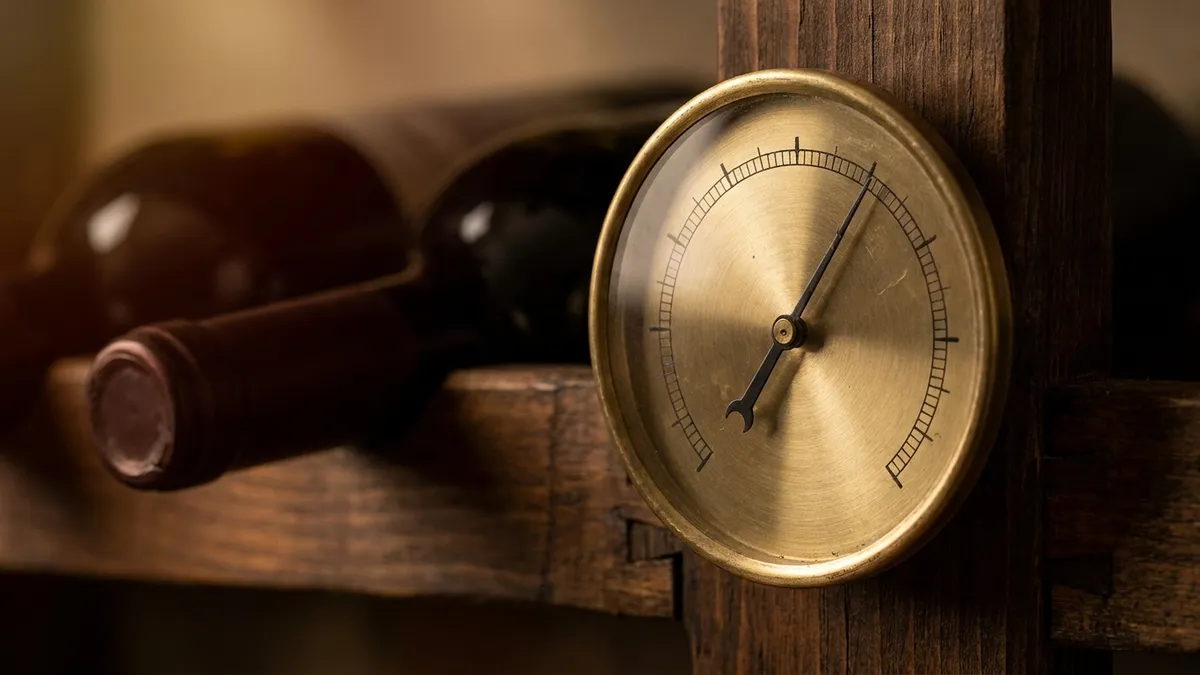
The textbook answer is simple. Cellar professionals target 12-14°C (54-57°F), 60-70% relative humidity, near-total darkness, no vibration, and bottles laying horizontal. Those four numbers cover everything a wine needs to age gracefully or simply hold its shape until you open it. Our deeper look at wine cellar temperature and humidity walks through where those ranges come from and why the experts don't all quote the same number.
Temperature in that window keeps fermentation by-products quiet and lets the slow polymerisation of tannin and pigment do its job. Humidity in that range keeps corks plump enough to seal without going so damp that labels mould.
Darkness protects aromatic molecules from photochemical breakdown. Stillness lets sediment settle and chemistry happen at its own pace. Horizontal orientation keeps natural corks in contact with wine, so they do not dry, shrink, and let oxygen creep in.
Almost no home meets all four conditions perfectly — and that is fine. Storage is a hierarchy of harms, not a pass-fail test. Get the cool, dark, still, stable basics right and your bottles will be in good shape long before any aging window matters.
Stability Beats Perfection: The Single Most Misunderstood Rule
If you remember one principle, make it this. A steady 18°C is better than a fluctuating 12-22°C. Wine tolerates temperatures slightly outside the ideal window much better than it tolerates a temperature that keeps moving.
The reason is physical. Each temperature swing causes the liquid inside the bottle to expand and contract, which gently pumps air past the cork. Over months, that breathing oxidises the wine far faster than a steady, slightly-too-warm room ever would.
This is why the top of the fridge — which can swing 8°C in a single hour as the compressor cycles — is one of the worst storage spots in a home. It is not the average temperature that does the damage. It is the rhythm.
The practical takeaway: walk through your home with a small thermometer over 24 hours and find the spot that barely moves. That is your storage zone, even if it is not the coldest spot you have.
The No-Cellar Setup: An Apartment-Friendly Guide
You almost certainly have a usable storage spot already. The trick is knowing where to look. For every option ranked by how long it can hold a bottle, see our guide to wine cellar alternatives.
The Interior Closet
The single best option in most homes is an interior closet — one that shares walls with other heated rooms rather than the outside of the building. Interior walls hold a steadier temperature year-round, and a closed door keeps light and air movement to a minimum.
Pick a closet that is not next to the kitchen, not over a heating duct, and not against a sunny wall. A bedroom or hallway closet on a north-facing interior corner is usually the calmest spot you have.
Under the Bed and Inside a Wardrobe
If a closet is full, under the bed in a cool bedroom can work surprisingly well. The floor is the coolest surface in any room, and the bed acts as a light shield. A flat wine rack or even a sturdy cardboard divider keeps bottles horizontal.
Inside a wardrobe on an interior wall, behind clothes that block light, is another quiet zone. Avoid wardrobes built into outside walls or near windows — those will cycle hard with the seasons.
A Pantry Shelf in a Cool Room
A pantry in a hallway or utility area, well away from the oven and dishwasher, often has the right combination of darkness, low traffic, and moderate temperature. Lower shelves are cooler than upper ones because heat rises. Place wine on the bottom shelf, lying flat, and you are most of the way there.
Spots to Avoid Even Short-Term
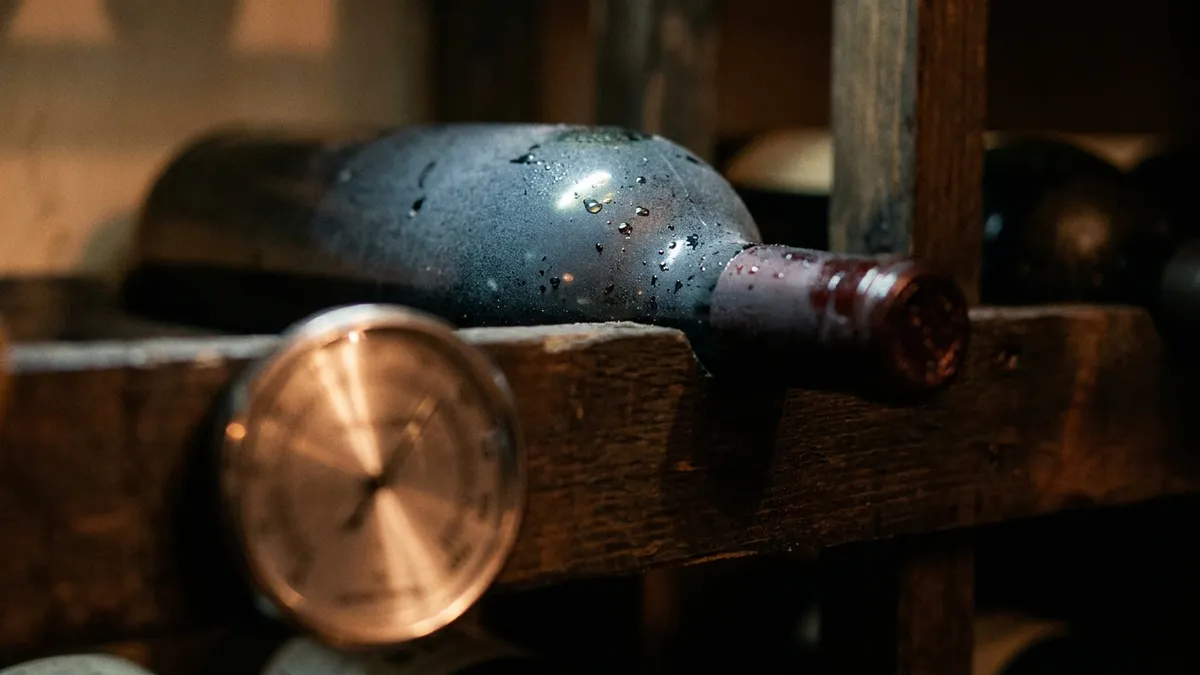
Some spots in a typical home are quietly hostile to wine. They look harmless but cause real damage in weeks, not years.
- Top of the fridge. Heat from the motor, vibration from the compressor, and rapid temperature cycling — three enemies in one location.
- Kitchen counter. Cooking heat, light from windows, appliance vibration, and ambient temperatures that swing ten degrees during dinner prep.
- Garage or shed. Extreme seasonal swings destroy wine within a year. Insulation does not fix this.
- Sunny windowsill. UV light is the fastest way to ruin a bottle. Even winter sun can lightstrike a wine in days.
- Above a radiator or heating vent. Sustained heat denatures aromatics and pushes corks as the wine expands.
- Laundry room. Vibration from the washer, dryer heat, and humidity swings that turn corks soggy.
If your only space is one of these, drink those bottles within a few months and store anything you want to keep longer somewhere quieter.
Cork Orientation: Lay Flat, With a Few Exceptions
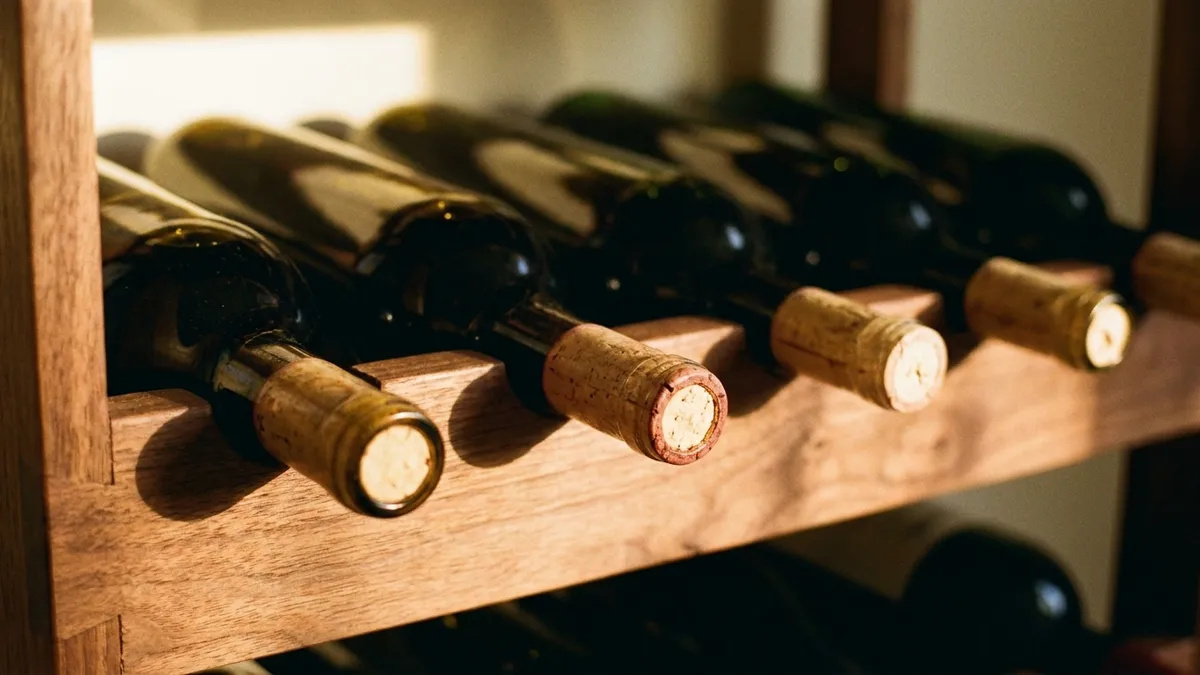
The classic rule — lay wine on its side — exists for one reason. Natural cork needs to stay in contact with the wine to remain swollen and airtight. A vertical bottle leaves the cork exposed to dry air, which shrinks it within months and lets oxygen seep in. The result is premature oxidation, often called bottle aging gone wrong.
There are a few exceptions worth knowing, and the lab research on whether to store wine horizontal or vertical shows the angle matters less than temperature.
Screw-cap bottles can be stored in any orientation. The seal is mechanical and does not depend on moisture.
Sparkling wine is the controversial one. The cork is already wet on the underside thanks to the bubbles' constant pressure. Short-term upright storage (a few months) is fine, but for long-term holding, horizontal is the safer call to keep the cork fully saturated. For background on the styles themselves, see our champagne vs prosecco vs cava guide.
Fortified wines like Port and Madeira are typically stored upright because the high alcohol can degrade the cork over years of contact. Once you open them, they last for weeks regardless. Our pinot noir guide covers another delicate-cork style worth keeping flat.
Why Humidity Matters More Than People Think
Most home guides skim past humidity, but it carries real weight in any storage setup. The target range is 60-70% relative humidity, and the consequences of straying from it show up faster than people expect.
Below 50% the cork dries from the outside in, shrinks, and lets oxygen past. The first sign is seepage — sticky residue on the lip of the bottle and stained labels. Once seepage starts, oxidation has already begun.
Above 80% the opposite problem appears. Mould thrives on damp labels and corks, and while it does not always touch the wine itself, it makes resale and gifting impossible and signals a storage environment that may also be too warm.
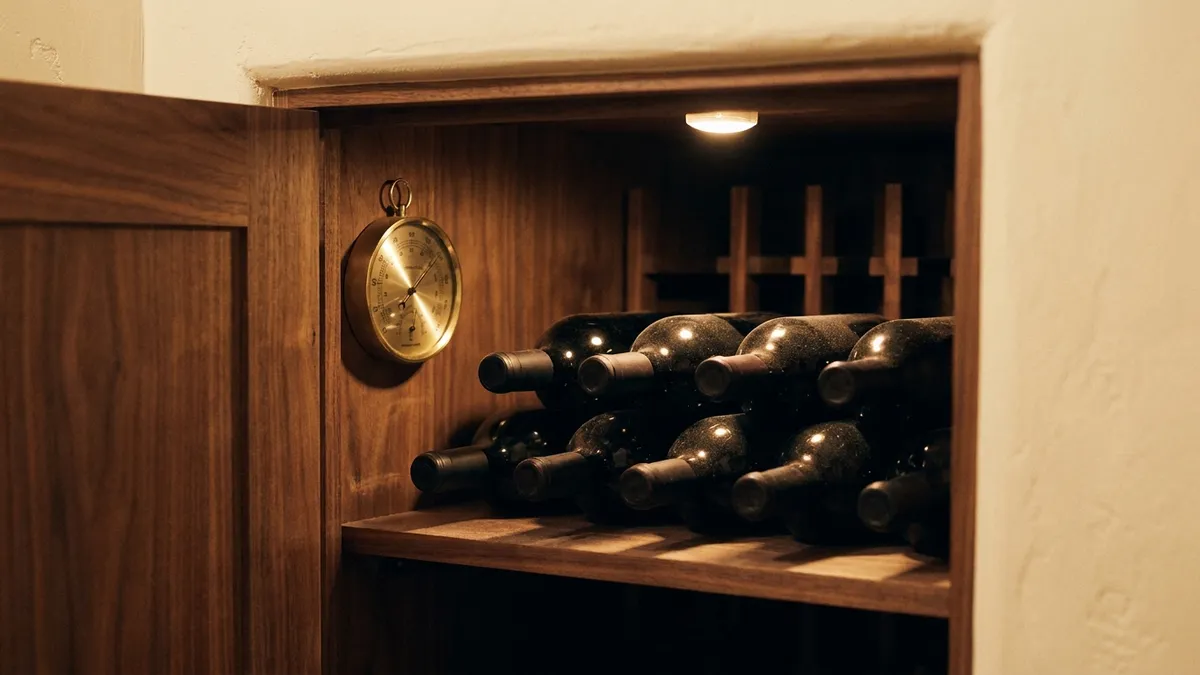
Most homes sit between 30% and 60% humidity, particularly in winter when central heating dries the air. A small dish of water or a damp sponge inside a closed storage space will lift a dry zone into the safe range. A cheap digital thermometer-hygrometer for around $15 tells you exactly where you stand and is the single most useful piece of storage gear most home drinkers can buy.
The Fridge Question: When the Kitchen Fridge Is Acceptable
A regular kitchen fridge runs at roughly 4°C (39°F) with low humidity and constant low-level vibration. None of that is good for long-term wine storage.
For short-term, however — a week or two for whites and rosés you plan to drink soon — the fridge is perfectly fine. The cold is uniform, light is excluded, and two weeks is too short for cork dryness to matter.
Where the fridge fails is at the months-and-up timescale. Bottles held vertical for half a year in a dry, vibrating environment lose freshness, gain a tired cardboard note, and start to seep. If you want a wine ready to pour at serving temperature on demand, our wine serving temperature chart explains the better strategy: store bottles in a stable cool spot, then move them to the fridge a few hours before drinking. That gives you both proper storage and the right serving condition without compromising either.
Drink-Soon vs Hold: A Reality Check
A common worry for new collectors is "am I storing this wrong?" The honest answer is that for most wine, it does not matter very much. About 90% of wine sold under $30 is built to drink within one to two years of release.
The wines that genuinely benefit from long-term storage are a much smaller list. Top Bordeaux, Barolo, Brunello di Montalcino, vintage Port, fine Burgundy, dry Riesling, and Hermitage can develop for decades when conditions are right. Our piece on tasting young vs aged wine explores how those flavour shifts feel in the glass.
For everyday bottles, "good enough" storage really is good enough. To check whether a bottle is worth holding at all, see which wines age well. Save the cellar concern for the bottles that have somewhere to go.
A 24-Hour At-Home Storage Audit
The fastest way to choose the right storage spot is also the cheapest. Buy a digital thermometer-hygrometer, place it in three or four candidate locations across your home, and read the highs and lows over a full day.
Look for the location with the smallest temperature range rather than the lowest average. A closet that swings between 17°C and 19°C beats a windowsill that swings between 12°C and 26°C, even though the windowsill is cooler at night. Also note humidity — if it stays under 40%, plan to add a small water dish.
Once you find the winner, install a cheap horizontal wine rack — a $20 wooden tray works fine — and you have a functioning home cellar. The wine rack guide compares rack types and materials if you want more than a tray. The whole process takes under thirty minutes of active effort.
If you want to deepen the rest of your wine knowledge while you build the habit, the Sommy app walks beginners through tasting, serving, and storage skills together. Storage is part of the same craft — the bottle on your shelf and the glass in your hand are the two ends of the same chain.
Cheap Upgrades That Move the Needle
You do not need a wine fridge to improve a home setup. A handful of small fixes cover most of the gap between "it works" and "genuinely good."
- A digital thermometer-hygrometer ($15) so you actually know what your storage zone is doing.
- Insulating wrap on the closet door to dampen temperature swings from the rest of the room.
- A blackout cloth over open shelving — UV protection without rebuilding the room.
- A horizontal wine rack — wood, metal, or repurposed shoe shelves — to keep cork in contact with wine.
- A small water dish or damp sponge in dry spaces to lift humidity into the 60-70% range.
Total spend: under $50. That covers most home setups holding fewer than 24 bottles. For tasting practice while you collect, our guides to develop your wine palate and how to taste wine like a sommelier are good companions.
When a Wine Fridge Is Actually Worth It
A wine fridge becomes worth the investment when one of three things is true: you hold 12 or more bottles for two or more years, your home routinely exceeds 24°C in summer, or you store age-worthy wines like top Cabernet Sauvignon or Merlot. Our Cabernet Sauvignon vs Merlot comparison covers which styles within those grapes are actually built to age.
Below that threshold, the math tips toward a good closet plus a few cheap upgrades. A 28-bottle dual-zone unit starts around $400 and adds $30-50 a year in electricity. Unless your collection justifies it, you are paying for stability you already have for free in the right closet.
If you do go that route, look for low-vibration compressors, dual zones if you store reds and whites together, and UV-resistant glass.
Sommy's Storage Discipline Becomes Tasting Discipline
Storage is the prequel to tasting. Every bottle you open is a snapshot of how it has been treated since it left the winery, and your storage habits decide whether that snapshot is sharp or blurry. Once a bottle is open the rules change — for keeping a half-finished bottle fresh, our guide to wine preservation tools compares vacuum pumps, inert gas, and argon systems. Visit sommy.wine or explore the serving and storage learning hub to keep building these habits across every glass you pour.
Frequently Asked Questions
What is the ideal temperature to store wine at home?
The ideal storage temperature is 12-14°C (54-57°F), but stability matters more than the exact number. A steady 18°C is far better than a spot that swings between 12°C and 22°C across the day. Avoid anything that crosses 24°C regularly, and keep the bottle out of any place that drops below 5°C for long periods.
Do I need a wine fridge to store wine at home?
No, not unless you regularly hold 12 or more bottles for two or more years. For everyday drinking, an interior closet on a wall away from outside heat, kitchens, and direct sun does the job for less than $20 in shelving. A wine fridge becomes worth it once collection size and aging timelines justify the cost.
Should wine bottles be stored on their side or upright?
Bottles with natural cork should be stored on their sides so the wine stays in contact with the cork. A dry cork shrinks, lets in oxygen, and ruins the wine within months. Screw-cap bottles can be stored in any orientation. Sparkling wine is debated — short-term upright is fine, long-term horizontal is the safer call.
Is the top of the fridge a good place to store wine?
No. The top of the fridge is one of the worst spots in a home. The motor radiates heat, the surface vibrates constantly, and the temperature swings every time the compressor cycles. Wine stored there ages quickly and unevenly. Move bottles to an interior closet or pantry on a cool wall instead.
How long can I store wine at home without proper storage?
Most everyday wine — anything under about $30 a bottle — is built to drink within one to two years of release. With reasonable storage (cool, dark, stable, lying down), you have roughly that window before quality starts to drift. Age-worthy wines like top Bordeaux, Barolo, Brunello, vintage Port, and fine Riesling need real cellar conditions to develop properly.
What is the right humidity for wine storage?
Aim for 60-70% relative humidity. Below 50% the cork dries out and lets in oxygen, causing seepage and oxidation. Above 80% you risk mold on labels and corks. Most homes sit between 30% and 60%, so a small water dish or a damp sponge near the bottles can nudge a dry storage space into the right range.
Does light really damage wine?
Yes. Ultraviolet and even visible light break down aromatic compounds in wine, a fault sommeliers call lightstrike. The damage is permanent and creates wet-cardboard, cooked-onion notes within weeks of constant exposure. Dark green and brown bottles offer some protection, but a sunny windowsill or kitchen counter under bright light still ages a wine prematurely.
Why is vibration bad for stored wine?
Constant low-level vibration disturbs the slow chemical reactions that let wine evolve gracefully. Sediment gets stirred back into suspension, tannins integrate poorly, and aromatic compounds break down faster. The fridge top, dishwasher cabinet, and laundry-room shelf are common offenders. A still spot on a stable shelf protects flavor over time.
Sommy Team
LinkedInFounder & Wine Educator
The Sommy Team is building the world's most approachable wine education app, helping beginners develop real tasting skills through structured courses and AI-guided practice.