Wine Glass Guide: Does the Shape Really Matter?

By the Sommy Team — AI-assisted, human-edited.
Updated Apr 29, 2026
Contents (9)
- Why Wine Glass Types Matter More Than You Think — and Less Than Marketers Claim
- Wine Glass Types, in 90 Seconds
- What the Research Actually Says
- The Five Glasses That Cover Almost Everything
- Crystal vs Glass: What Actually Differs
- Pour Levels and Why They Look Stingy
- Care: Make Them Last
- A Sensible Buy-First Sequence
- What to Take Away
TL;DR
Glass shape changes how wine smells and feels more than how it tastes. A wide bowl concentrates aromas, a narrow rim funnels them to your nose, and a thin rim lets the wine flow cleanly. Five wine glass types cover almost everything: Bordeaux, Burgundy, an all-purpose white tulip, a sparkling tulip, and a stemless universal.
Why Wine Glass Types Matter More Than You Think — and Less Than Marketers Claim
Walk into any decent wine shop and you will see entire walls dedicated to glassware. Bordeaux glasses, Burgundy glasses, Riesling glasses, Champagne flutes, dessert wine glasses, glasses shaped like tulips and shaped like fishbowls. The marketing is loud, the prices climb fast, and the implication is clear: get the wrong wine glass types for your wine and you are missing the point of every bottle you open.
The truth is more interesting and more useful. Glass shape genuinely changes how wine smells, feels, and is perceived — but not in the precise, varietal-specific way many brands claim. The science supports a few broad categories, mostly disagrees with the rest, and points toward a small set of glasses that handle almost everything.
This guide walks through what shape actually does, where the research stands, the five glasses most homes really need, and a sensible buy-first sequence. The goal is to spend less, drink better, and stop worrying about whether the glass is wrong.
Wine Glass Types, in 90 Seconds
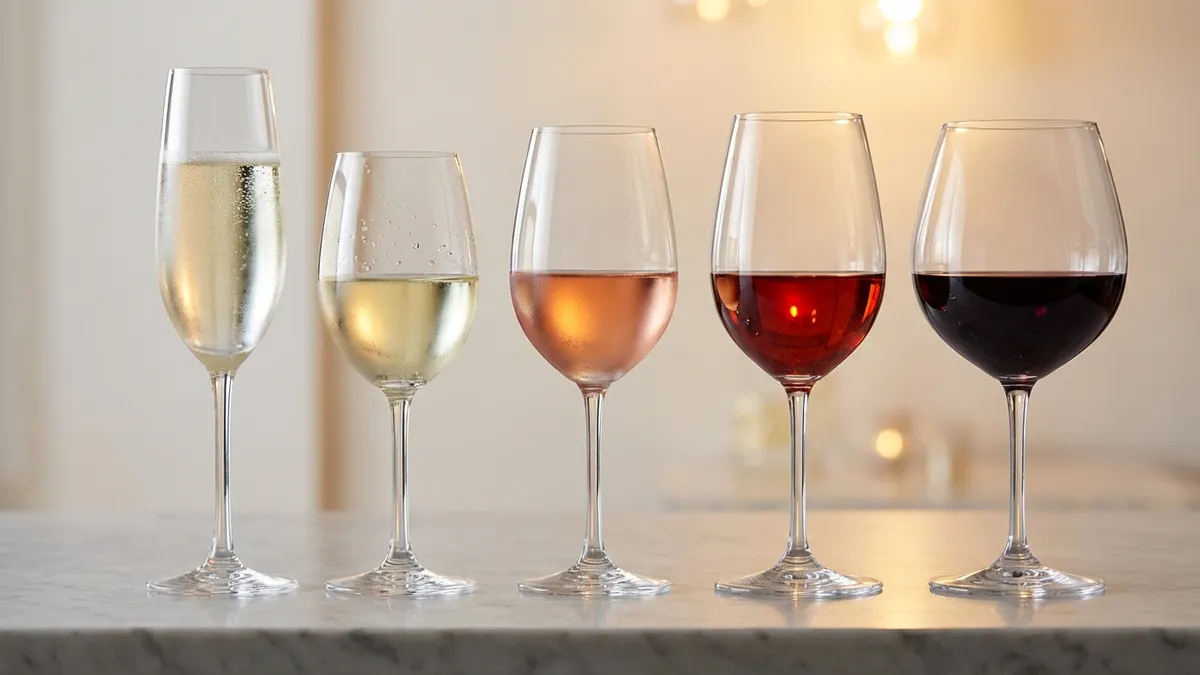
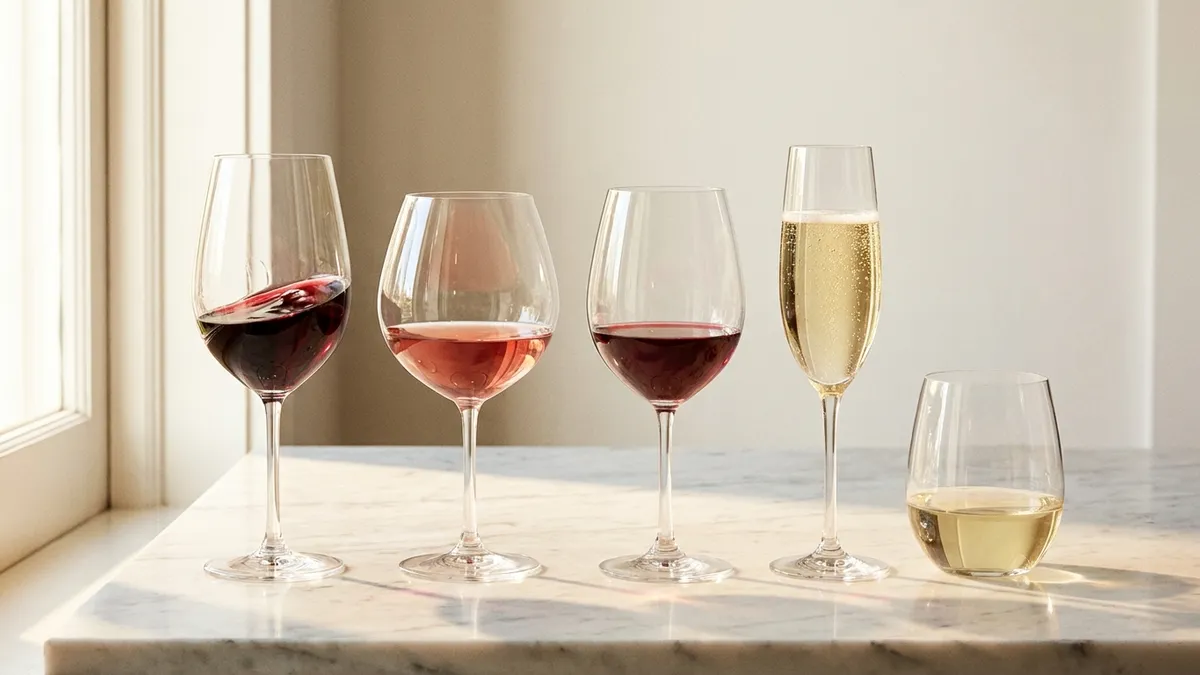
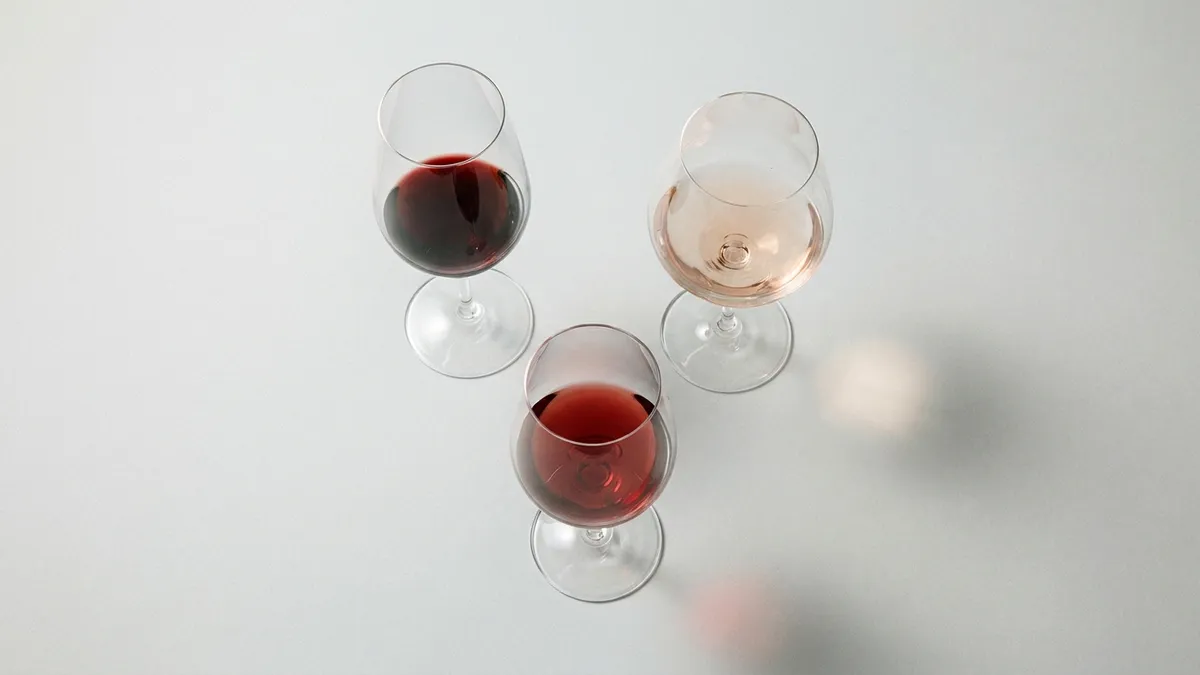
The wine glass types worth knowing fall into five categories. Bordeaux glasses are tall and narrow with about 22 ounces of capacity, built for bold reds like Cabernet Sauvignon, Merlot, and Syrah — the narrow rim directs wine to the back of the palate and softens tannin. Burgundy glasses are wider and rounder at around 24 ounces, capturing the volatile aromatics of Pinot Noir, Nebbiolo, and Sangiovese. White wine tulips at 14 to 16 ounces preserve cool temperatures and concentrate floral and fruit aromas. Sparkling tulips sit between a flute and a white wine glass — keeping bubbles while letting bouquet open up. Stemless universals handle everyday casual drinking. Five shapes cover roughly 95 percent of real-world situations.
What the Research Actually Says
Riedel, founded in 1756, popularised the idea that each grape needs a specific glass. Their research lineage — running glass-tasting trials with sommeliers and showing perceived flavor differences — shaped how the entire premium glassware market markets itself. Their conclusions are not nothing. Tasters do consistently report different perceptions in different glasses.
The counter-evidence is also worth knowing. Frédéric Brochet's 2001 work in Bordeaux showed how strongly visual and contextual cues shape wine perception, even when the wine is identical. Robert Hodgson's wine-judging studies showed expert tasters give the same wine wildly different scores depending on tasting conditions. These do not disprove glass-shape effects — they put them in context. The glass is one variable among many, and expectation does heavy lifting.
The most defensible read of the evidence: glass shape genuinely changes aroma delivery and where the wine first lands on the tongue. Whether that produces a "better" wine is partly real chemistry and partly the very human placebo of a beautiful glass meeting a serious wine.
The Five Glasses That Cover Almost Everything
1. Bordeaux Glass — for Bold, Tannic Reds
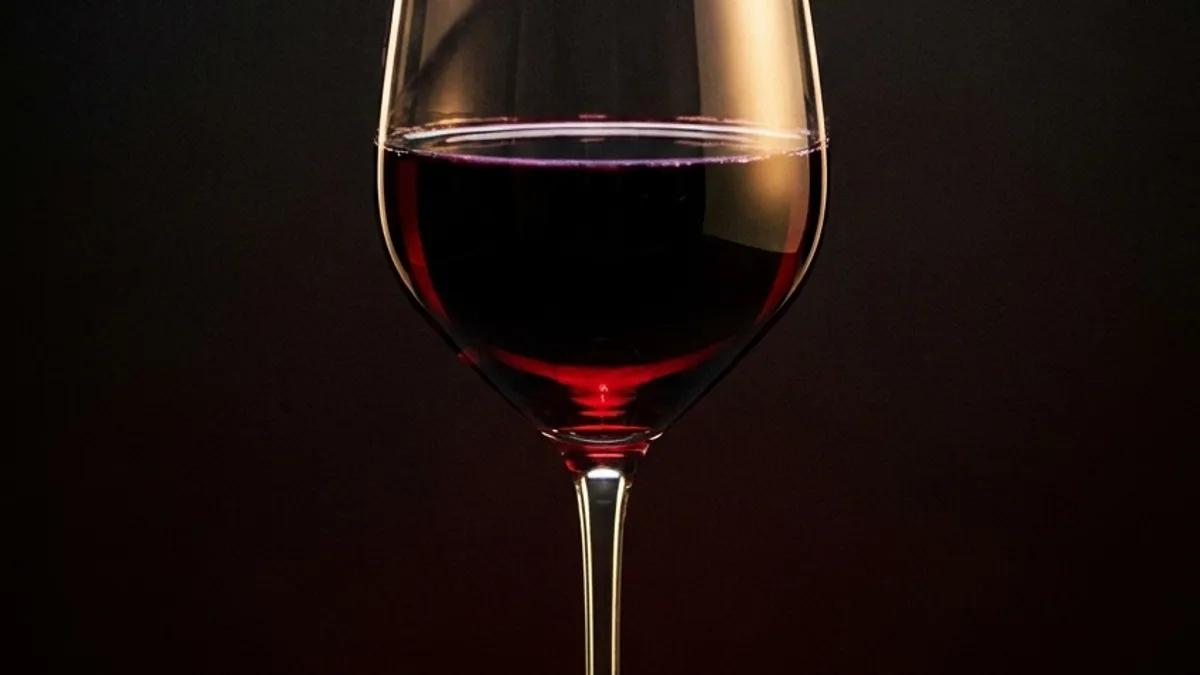
The Bordeaux glass is the workhorse for full-bodied reds. It stands tall — typically 9 to 10 inches — with a relatively narrow bowl that holds about 22 ounces total when filled to capacity. The shape directs wine onto the back and middle of the tongue, where tannin sensation is less aggressive and fruit registers more cleanly.
Use it for Cabernet Sauvignon, Merlot, Syrah, Malbec, Bordeaux blends, and most New World reds with firm structure. The tall walls give the wine room to breathe without losing aromatic intensity. For a deeper look at how palate chemistry works, our guide on how to taste wine like a sommelier breaks down where each sensation registers and why glass shape matters there.
2. Burgundy Glass — for Aromatic Reds
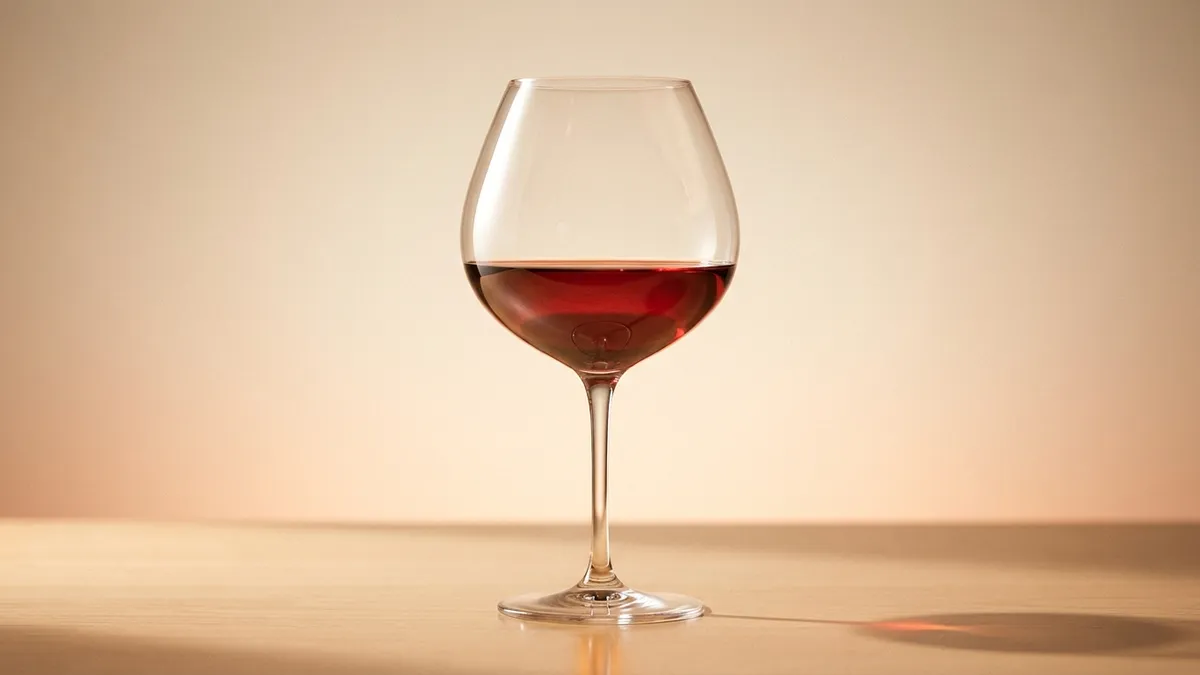
The Burgundy glass is the show-off of the category. Wider than the Bordeaux at about 24 ounces, with a generous bowl that narrows sharply at the rim, it traps volatile aromatic compounds in the headspace and funnels them to the nose.
This shape was designed for wines whose magic is aromatic rather than structural. Pinot Noir is the obvious example — its delicate red-cherry, rose, and earthy aromas need the room to release. Nebbiolo (the grape behind Barolo and Barbaresco), Sangiovese, and many older red wines also benefit. The glass invites slow, contemplative sipping rather than a quick gulp. Pair it with the swirling technique in our how to swirl wine guide and the aromatic payoff multiplies.
The tradeoff: Burgundy glasses are awkward at a crowded table, harder to wash, and easy to chip. They reward attention.
3. All-Purpose White Wine Tulip — for Whites and Rosés
Most homes do not need separate Riesling, Chardonnay, and Sauvignon Blanc glasses. A medium tulip — roughly 14 to 16 ounces, with a shorter bowl than red wine glasses — handles every white reasonably well.
The smaller capacity matters because whites are served cold (typically 45–55°F) and white wine warms quickly in larger bowls. Less wine in the glass at one time means each pour stays cool and aromatic longer. For more on temperature, the wine serving temperature chart covers exact ranges by style.
Use the tulip for everything from crisp Sauvignon Blanc through fuller-bodied Chardonnay and aromatic Riesling. For perspective on how grape variety changes what to expect from each glass, our comparison of Chardonnay vs Sauvignon Blanc is a useful starting point.
4. Sparkling Tulip — Better Than a Classic Flute
The classic narrow Champagne flute preserves bubbles for the longest possible time, which is great for very young, simple sparkling wines. The problem: it strangles the aromatic bouquet. For grower Champagne, vintage sparkling, and aged bubblies, the flute hides everything interesting about the wine.
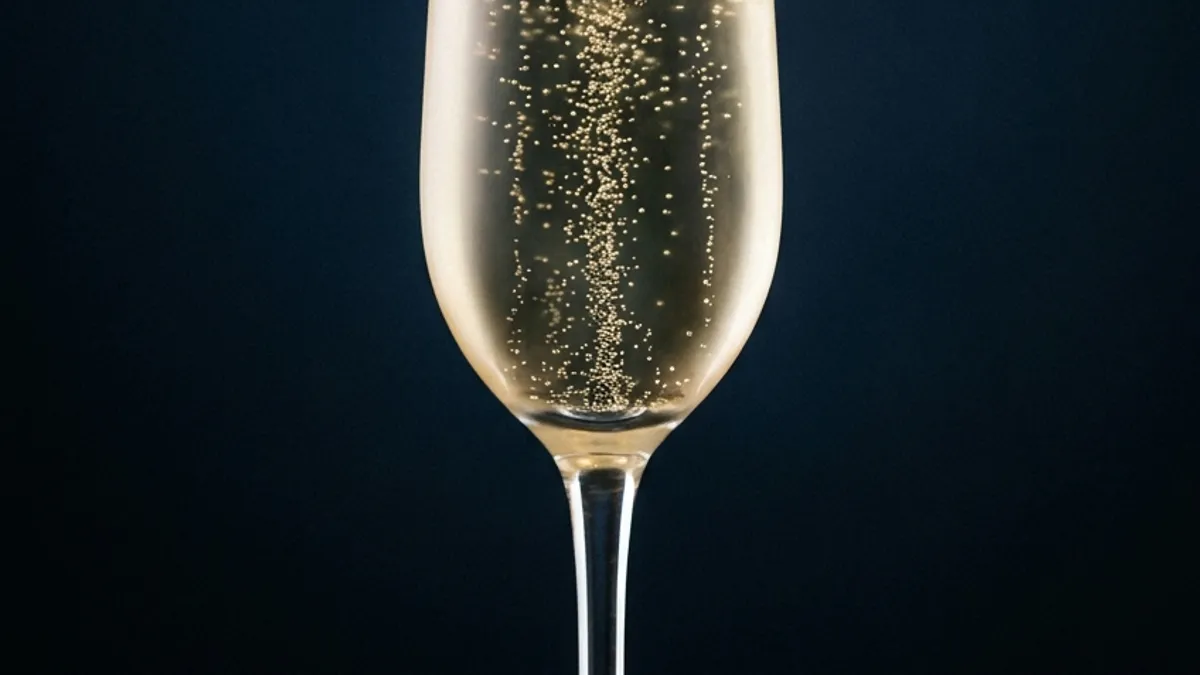
The coupe — the wide, shallow saucer associated with movie scenes from the 1920s — is even worse for bubbles, which dissipate within a few minutes. The tulip is the modern compromise. Narrower than a white wine glass but distinctly wider than a flute, it preserves enough bubbles for a normal drinking pace while letting the bouquet open up.
Most working sommeliers now serve serious sparkling wine in tulips rather than flutes. The full breakdown of styles lives in our Champagne vs Prosecco vs Cava guide — different sparkling wines have different aromatic priorities, and the tulip handles all of them gracefully.
5. Stemless Universal — for Everyday Casual
The stemless glass is honest about what most drinking actually looks like. A weeknight pour with dinner. A glass on the patio. A small gathering where stems would mean broken glass and tense hosts. A stemless universal — roughly the shape of a slightly tall tumbler with a tulip narrowing — handles 95 percent of everyday drinking.
The tradeoffs are real. Holding the bowl warms the wine, which matters more for whites than reds. The fingertip grip that keeps a stemless pour cool longer is in how to hold a wine glass. The shape is less optimized than a varietal-specific glass. But the durability, the dishwasher tolerance, and the absence of social pressure are worth the small loss in aromatic intensity for casual pours.
If you can only afford one set of wine glasses, a quality stemless universal is a defensible choice. If you can afford two, get a stemmed all-purpose alongside it for evenings that warrant the upgrade.

Crystal vs Glass: What Actually Differs
Crystal feels different in the hand and on the lip, and the differences are mostly real. Lead-free crystal (which is what virtually all modern crystal is — lead crystal has been phased out for safety reasons in Europe and the US) contains barium and zinc oxides that allow the glass to be blown thinner without losing strength.
A thinner rim means less material between the wine and your lip. The wine flows onto the tongue rather than tipping over a thick barrier. Tasters describe this as "cleaner" or "more direct," and the perception is consistent enough to matter.
Brands like Riedel and Zalto sit at the top of the crystal market. They are universal references rather than required purchases — many quality machine-blown options at one-third the price deliver 80 percent of the experience. The decision is about how much marginal improvement is worth to you, not about whether crystal is "better."
Pour Levels and Why They Look Stingy
Restaurant pours that look small are usually correct, and how many glasses are in a bottle of wine shows how each pour size divides the bottle. Wine glasses are designed to be underfilled, with the empty space above the wine functioning as the aromatic concentration zone.
- Red wine: about one-third full — the wine should sit roughly at the widest point of the bowl
- White wine: about one-half full — slightly more is acceptable since whites are served cold and benefit from less surface area
- Sparkling wine: about half to two-thirds full — you are not swirling, so headspace matters less
This sequence pairs with the technique covered in our how to taste wine guide, and how much wine to pour covers tasting pours and top-ups. Filling glasses to the rim for show is one of the fastest ways to undermine the entire purpose of having shaped glassware. Where each glass stands at a dinner place, and how many to set, is covered in setting a wine table.
Care: Make Them Last
Good wine glasses do not have to be expensive, but bad care kills cheap and expensive glasses equally fast. A few rules cover almost everything.
Handwash crystal and any thin-rimmed glassware. The thermal shock and mechanical agitation of a dishwasher rounds rims, etches surfaces, and snaps stems. Warm water, no soap or a tiny amount of unscented dish soap, and a gentle hand are enough.
Polish with a microfiber cloth while the glass is still slightly warm. Spots and streaks form when water dries on the glass — drying immediately prevents the issue.
Store stem-up. Hanging glasses upside-down from a rack stresses the rim, where the glass is most fragile. A stem-up storage box or a high cabinet shelf protects them best.
Buy a few extras. Even careful drinkers break glasses. Buying a set of six and accepting that two will not survive five years of use is more realistic than treating each glass as irreplaceable.
A Sensible Buy-First Sequence
If you are starting from nothing, here is the order that delivers the most utility per dollar:
- Six matching all-purpose tulips — the workhorse for whites, reds, and rosés in any casual setting
- Four sparkling tulips — cheap, durable, and lifts every Champagne and Prosecco moment
- Four Burgundy glasses — once you start drinking serious Pinot Noir or Nebbiolo, the difference is real
- Four Bordeaux glasses — for Cabernet, Bordeaux blends, and big Syrah
- A nice crystal pair — for special bottles when the experience matters more than the cost
Skip the variety-specific glasses unless you genuinely drink one grape constantly enough that the marginal improvement matters. Most home drinkers will hit the ceiling of "this glass works wonderfully" at step three.
The Sommy app builds the same kind of practical, no-snobbery thinking into the rest of wine learning — what to taste for, how to recognize structural elements, and how to develop a vocabulary that holds up at any dinner table. Glassware is the easy part. The harder skill is knowing what you are looking for once the wine reaches your nose. The full curriculum lives at sommy.wine, and our serving and storage hub collects everything from glassware to temperature to decanting in one place.
What to Take Away
Wine glass types matter, but not in the way premium glassware brands often imply. Shape changes aromatic delivery and where the wine first hits the tongue. It does not change the chemistry of the wine itself. The five-glass setup — Bordeaux, Burgundy, white tulip, sparkling tulip, and stemless universal — covers nearly every real-world situation, and a thin-rimmed crystal upgrade is a quality-of-experience choice rather than a flavor unlock.
What separates a good wine experience from a great one is rarely the glass. It is the attention. A focused, deliberate sip from a half-decent glass beats a distracted pour from the most expensive crystal money can buy. The glass is the frame. The wine and your attention are the painting.
Frequently Asked Questions
Does the shape of a wine glass really change the taste?
It changes perception more than chemistry. Independent research shows the chemical composition of wine does not measurably change between glass shapes. What changes is aroma delivery and where the wine first hits your tongue. A wide-bowled Burgundy glass concentrates volatile aromas before they reach your nose. A narrow Bordeaux glass directs flow to the back of the palate, softening tannin perception. The wine is the same — the experience is not.
What are the main wine glass types I should know?
Five cover almost every situation. A Bordeaux glass for bold reds like Cabernet Sauvignon, Merlot, and Syrah. A Burgundy glass for aromatic reds like Pinot Noir, Nebbiolo, and Sangiovese. An all-purpose white wine tulip for whites and rosés. A sparkling tulip for Champagne and other bubbly. And a stemless universal glass for casual everyday pours. That covers about 95 percent of what most home drinkers need.
What is the difference between a Bordeaux and a Burgundy glass?
A Bordeaux glass is tall and narrow with a high bowl that holds about 22 ounces, designed for full-bodied reds with firm tannins. A Burgundy glass is wider with a much larger bowl — about 24 ounces — and a narrow rim that traps delicate aromatics. Bordeaux glasses suit Cabernet, Merlot, and Syrah. Burgundy glasses suit Pinot Noir, Nebbiolo, and Sangiovese. The shape is matched to what each wine wants to show.
Are crystal wine glasses really better than regular glass?
Crystal glasses are usually thinner-rimmed and lighter, which improves how the wine flows onto the tongue. Modern crystal is lead-free, since lead crystal has mostly been phased out for safety reasons. Crystal also feels more delicate in the hand and looks more elegant. The actual aromatic difference between thin crystal and good machine-blown glass is small — it is mostly a quality-of-experience upgrade, not a flavor upgrade.
Should you use a flute, a coupe, or a tulip for Champagne?
A tulip is the best general choice. The classic flute preserves bubbles longest but constrains aromas, which matters for grower Champagne and aged sparkling wines. The coupe is sentimental but loses bubbles within minutes. A tulip — narrower than a white wine glass but wider than a flute — keeps bubbles reasonably long while letting aromatics open up. Most modern sommeliers serve serious sparkling wine in a tulip rather than a flute.
Are stemless wine glasses bad for wine?
Not bad, but with tradeoffs. The stem is functional — it gives you something to hold without warming the wine with your hand. Stemless glasses warm faster, which matters more for whites than reds. They also do not look as elegant on a dinner table. For everyday casual drinking, picnics, and pool decks, stemless is great. For serious tasting or hosting, use stemmed.
How full should you fill a wine glass?
About one-third full for still red and white wines — never to the rim. Empty space above the wine is where aromatics collect after swirling, so filling too high erases the whole point of the bowl shape. Sparkling wines can go about half to two-thirds full since you do not swirl them. Restaurant pours that look stingy are actually correct.
Do I need different wine glasses for every grape variety?
Almost certainly not. Some glassware brands sell shapes for individual grapes — Riesling, Syrah, Champagne extra brut, and so on. The science behind these specific shapes is thin and most working sommeliers do not use them at home. Five shapes covering body, aromatic intensity, and bubbles handles the real-world differences. Anything beyond that is enthusiast territory.
Sommy Team
LinkedInFounder & Wine Educator
The Sommy Team is building the world's most approachable wine education app, helping beginners develop real tasting skills through structured courses and AI-guided practice.