Does Decanting Actually Change How Wine Tastes?

By the Sommy Team — AI-assisted, human-edited.
Updated Apr 29, 2026
Contents (12)
- TLDR
- Does Decanting Change Wine Flavor, in 100 Words
- What Decanting Actually Does to Wine
- When to Decant
- When Not to Decant
- How to Decant — The Splash-Pour Versus the Slow Pour
- Decanter Shape — Does It Actually Matter
- How to Tell If a Wine Needs More or Less Decanting
- Common Decanting Mistakes
- How Decanting Fits Into a Tasting Flow
- The Science in One Paragraph
- The Bottom Line
TL;DR
Decanting changes wine flavor through three measurable mechanisms: oxygen softens tannin and burns off reduction, agitation lifts aromatic compounds, and pouring leaves sediment behind. Young tannic reds gain the most over one to three hours. Mature reds need ten minutes at most. Whites rarely benefit, and sparkling wines should never be decanted under any circumstance.
TLDR
Decanting changes wine flavor through three measurable mechanisms: oxygen softens tannin and burns off reduction, agitation lifts aromatic compounds, and pouring leaves sediment behind. Young tannic reds gain the most over one to three hours. Mature reds need ten minutes at most. Whites rarely benefit, and sparkling wines should never be decanted under any circumstance.
Does Decanting Change Wine Flavor, in 100 Words
Yes, measurably. Decanting transfers wine from bottle to a wider vessel, exposing the liquid to oxygen and disturbing dissolved compounds. Three things happen. Oxygen reacts with tannin to soften the gripping sensation, and it dissipates volatile sulfides that cause reductive aromas. Agitation liberates aromatic molecules that were locked in the liquid, lifting fruit and floral notes to the nose. Pouring slowly leaves sediment in the bottle, removing gritty texture. The effect is dramatic on tight young reds, modest on mid-aged reds, risky on mature reds over twenty years, and largely unnecessary on whites and sparkling wines.
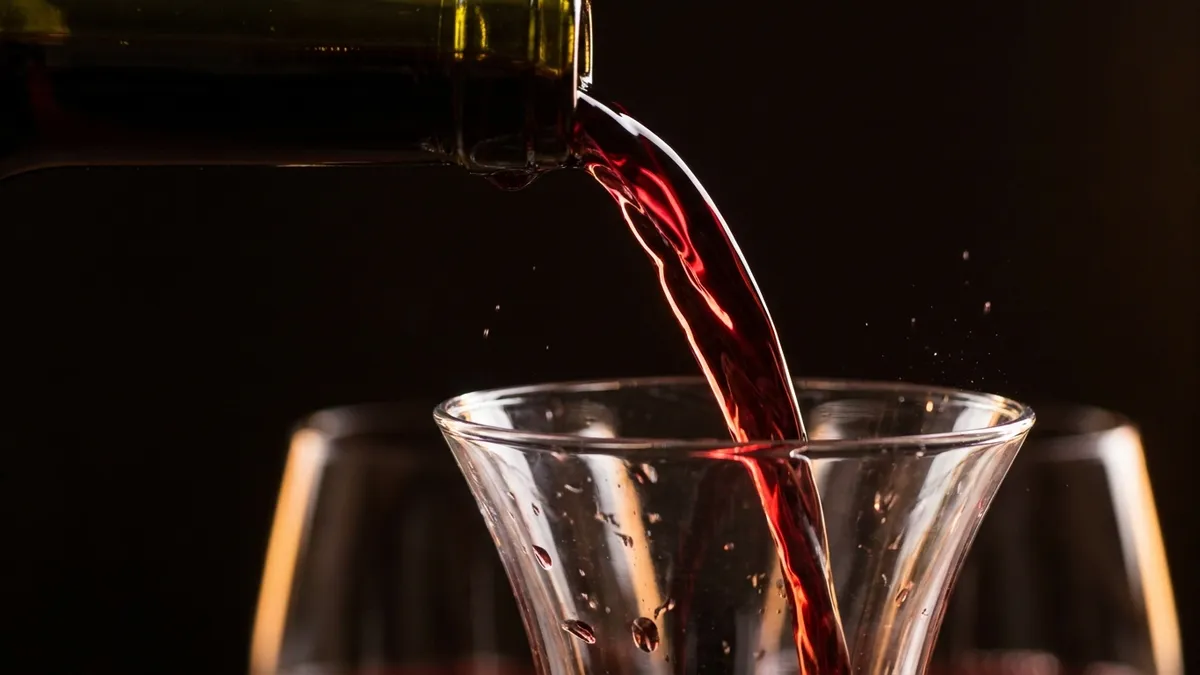
What Decanting Actually Does to Wine
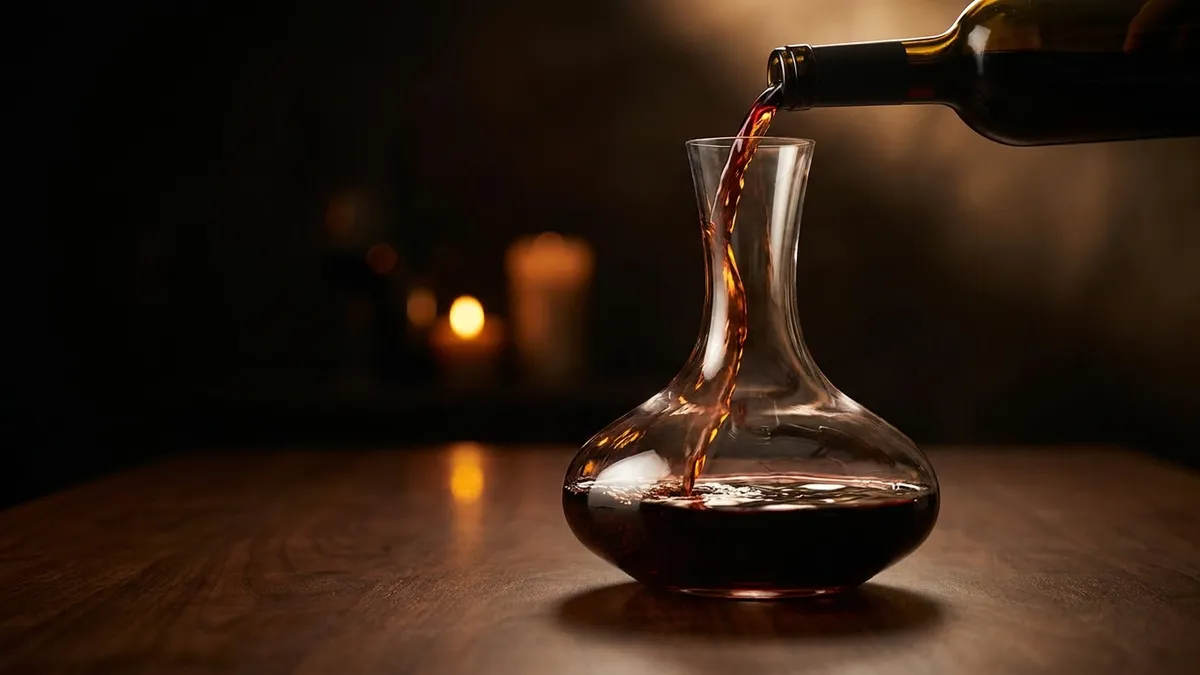
Decanting is the act of transferring wine from its bottle into a wider, open vessel — usually called a decanter or carafe — to expose the wine to air and to separate it from sediment. It is one of the oldest wine service traditions, and unlike many wine rituals it has real chemistry behind it. For a beginner-friendly breakdown of what decanting is and how it differs from aeration, start with our glossary explainer.
Three independent mechanisms drive the flavor change.
Oxygen Reacts With Tannin
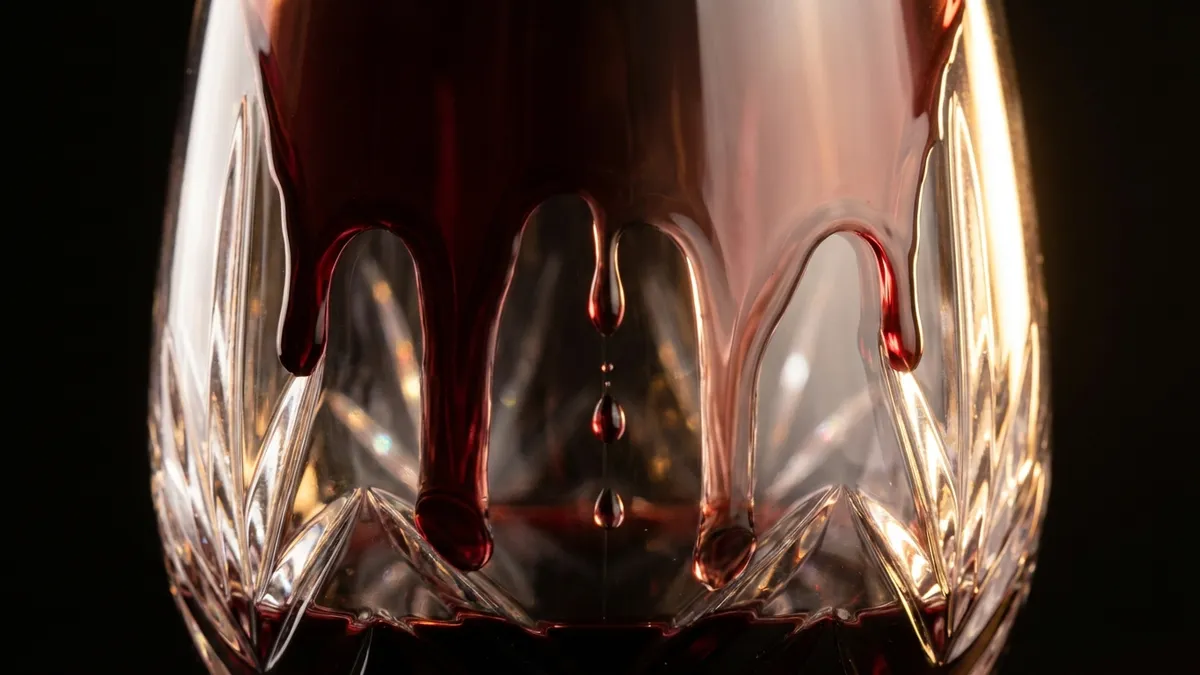
Tannins are the drying, gripping compounds in red wine that come from grape skins, seeds, and oak. In a sealed bottle they sit in long polymer chains. Exposed to oxygen, those chains slowly break down and reorganize, which the palate registers as a softer, less aggressive grip.
This is why a young Bordeaux that scours the gums on first pour can feel velvety after two hours in a decanter. The tannin molecules are still there — they are just shaped differently.
Volatile Aromatics Lift
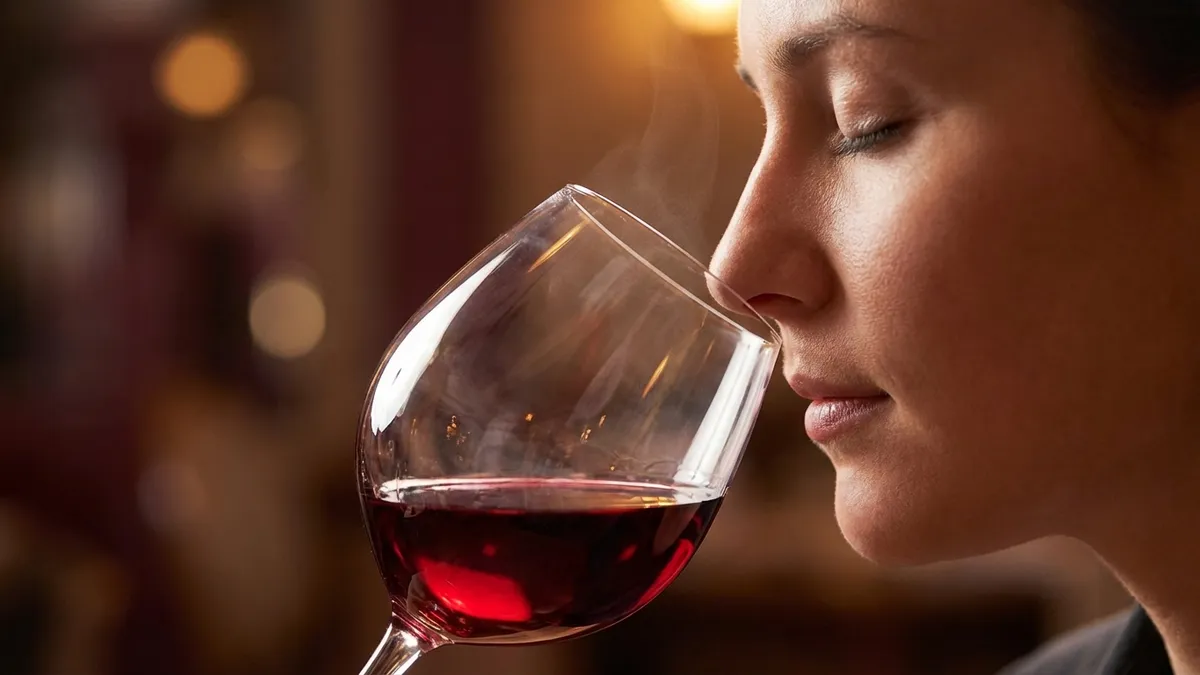
Wine contains hundreds of volatile aromatic compounds — molecules that evaporate at room temperature and carry the smells we recognize as fruit, spice, earth, and oak. In an unopened bottle these compounds are partly trapped in the liquid.
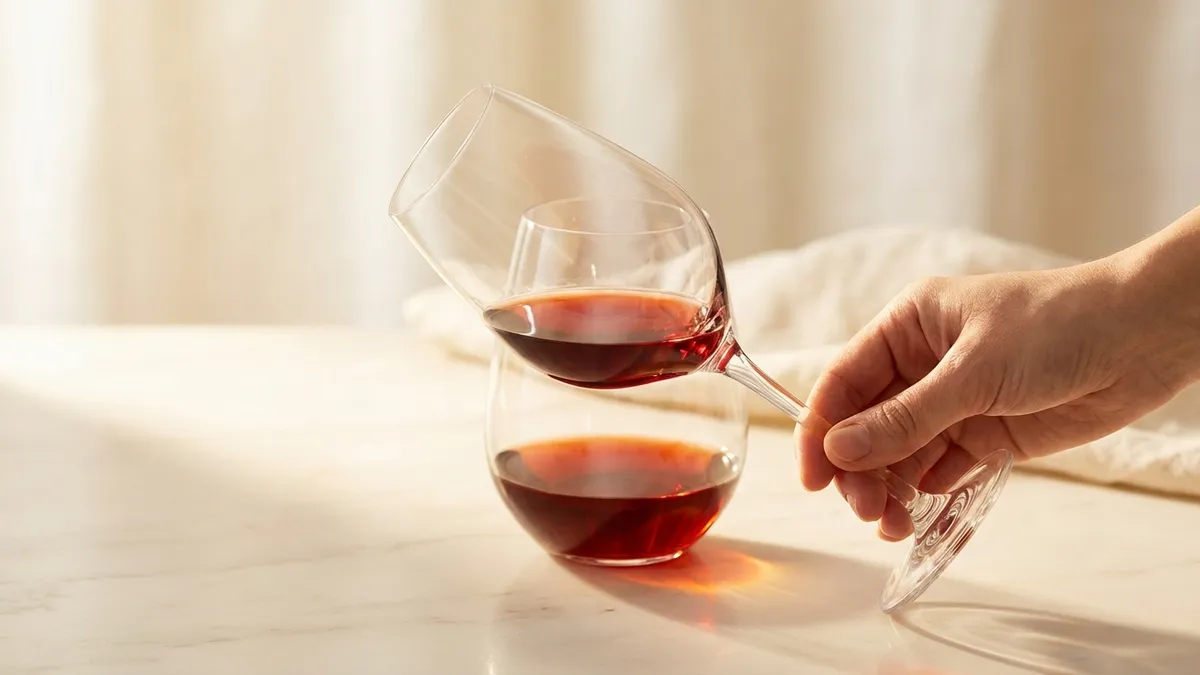
Pouring the wine into a decanter creates surface area and turbulence. Aromatic molecules escape into the headspace, where the nose can find them. A swirled glass does the same thing on a small scale; a decanter does it for the whole bottle.
Our how to swirl wine guide covers the in-glass version of the same physics. Decanting is essentially swirling at full-bottle scale and over a longer time horizon.
Reduction Burns Off
Some wines are bottled with low oxygen and sealed under screwcap, which can leave reductive aromas — the smell of struck match, burnt rubber, or boiled cabbage. These come from volatile sulfur compounds that need air to dissipate.
A thirty-minute decant typically blows reduction off entirely. The wine that smelled flinty and unpleasant on opening reads as clean and aromatic an hour later. This is the single most useful intervention decanting offers, and it works on whites as well as reds.
Sediment Separates
Older red wines develop sediment — solid particles of precipitated tannin, color pigments, and tartrate crystals. Sediment is harmless but gritty in the mouth and aesthetically distracting.
Pouring slowly into a decanter, with a light source behind the bottle neck, leaves the sediment in the bottle. The clear wine ends up in the decanter. This is the original purpose of decanting — pre-dating any modern interest in aeration.
When to Decant
The right decant time depends on what the wine needs. Use this as a baseline and adjust by tasting.
Young, Tannic Reds — One to Three Hours
The biggest win for decanting. Young Cabernet Sauvignon, Syrah, Nebbiolo, Aglianico, Tannat, and structured Bordeaux blends can transform from tight and astringent to expressive and balanced over two hours of air.
Look for wines under ten years old with high tannin and dense fruit. The fruit needs to be there to start with — decanting cannot create concentration the wine never had. Our wine balance explained guide covers how tannin and fruit need to push against each other in proportion.
Mid-Aged Reds — Thirty to Sixty Minutes
Wines between ten and twenty years old usually need a shorter decant. Tannin has already softened in bottle, so the aeration goal is mostly aromatic release and gentle smoothing of any remaining grip. Decant for thirty to sixty minutes, taste every fifteen, and stop when the wine feels open.
Mature Reds — Five to Ten Minutes Only
Wines over twenty years old are at the edge of their lives. The tannin is fully resolved, the fruit has thinned, and the most distinctive aromas — leather, dried mushroom, dried cherry, forest floor — are fragile tertiary aromas that fade rapidly with extra oxygen.
Decant only to remove sediment, then drink within ten to twenty minutes. Five minutes in a narrow-necked decanter is often all you need. Pour straight back into the glass. Anything longer risks losing the wine entirely.
Our tasting young vs aged wine guide goes deeper on how aromatic profiles shift with time and what to expect from older bottles.
Reductive Wines of Any Age — Fifteen to Thirty Minutes
If a wine smells of struck match, rubber, or wet cardboard on opening — and the cork itself is sound — decant aggressively for fifteen to thirty minutes. Reduction is volatile and burns off quickly.
This is one of the few cases where a brief decant helps white wines too. A tight, reductive young Chardonnay or Riesling can come alive after fifteen minutes in a carafe.
Sediment-Laden Reds of Any Age — Slow Pour Only
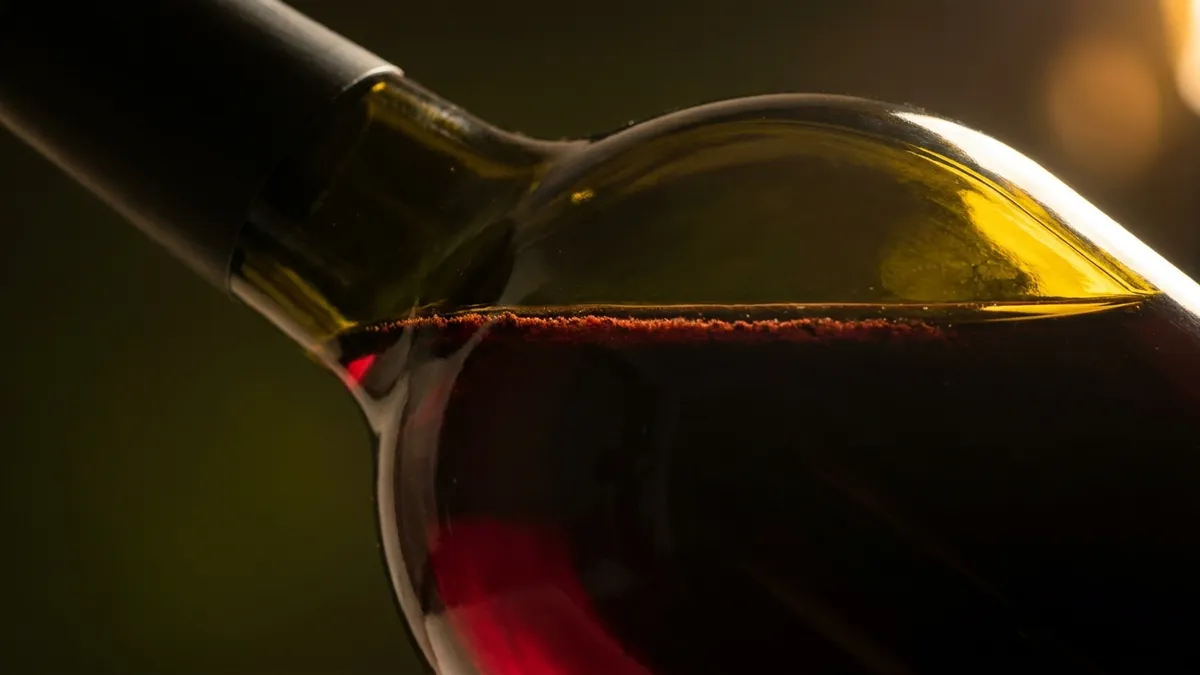
Some wines throw heavy sediment regardless of age. Stand the bottle upright for at least an hour before opening so the sediment settles to the base. Pour slowly with a light source behind the bottle neck. Stop when you see the first dark particles slide toward the rim.
When Not to Decant
Decanting is not free. Done wrong, it strips delicate aromas, dulls fresh wines, and ruins the texture of sparkling wines.
Sparkling Wines — Never
Champagne, Cava, Prosecco, English sparkling, pet-nat, Crémant, and any other bubbly wine should never be decanted. The carbon dioxide that creates the mousse — the persistent stream of fine bubbles — is what carries aromatics to the nose and gives sparkling wine its textural backbone.
Decant a Champagne and you destroy the mousse within minutes. The base wine left behind is usually thin, slightly sweet, and forgettable. Even the best Champagne tastes ordinary without its bubbles.
For everything you need on bubbly, our how to taste sparkling wine guide covers service and tasting in detail.
Light, Aromatic Whites
Riesling, Sauvignon Blanc, Albariño, Vinho Verde, and other delicate aromatic whites are built around freshness. Their volatile aromatics are precisely the compounds that vanish first with extended air exposure. A decanted Riesling at thirty minutes smells noticeably duller than the same wine straight from the bottle.
The exception is reduction. If the wine smells of struck match on opening, a brief decant rescues it.
Crisp, Unoaked Whites and Rosés
Pinot Grigio, unoaked Chardonnay, Picpoul, dry Provence rosé — these wines are designed for immediate drinking. Decanting strips the freshness without adding anything. Drink them cold and within an hour of opening.
Very Light Reds
Lighter reds like Beaujolais Nouveau, simple Pinot Noir, or Gamay rarely benefit from more than a few minutes of air. Their charm lies in fresh red fruit, which fades quickly. A glass-and-swirl approach is enough.
How to Decant — The Splash-Pour Versus the Slow Pour
Two distinct decanting techniques exist for opposite purposes.
The Splash-Pour for Aggressive Aeration
When you want maximum oxygen contact in minimum time, splash-pour. Hold the wine bottle twelve to eighteen inches above the decanter rim and pour with intentional turbulence. The wine should hit the inside walls of the decanter and fall in a foamy stream.
This works well for:
- Tight, reductive young reds
- Wines you opened too late and need to drink in an hour
- Stubbornly closed young Cabernet, Syrah, or Nebbiolo
Skip the splash-pour for anything over fifteen years old. The aggressive turbulence will accelerate the loss of fragile aromatics.
The Slow Pour for Sediment and Mature Wine
For older wines or any bottle with visible sediment, pour slowly and steadily, keeping the bottle as horizontal as possible while emptying it. A candle, phone flashlight, or low lamp behind the bottle neck makes it easy to see the moment sediment starts moving toward the rim. Stop when you see the first dark particles, even if half a glass is left in the bottle.
This is the original purpose of decanting, and the technique that gave the practice its name centuries before anyone talked about aeration.
Decanter Shape — Does It Actually Matter
The classic wide-bottomed crystal decanter is designed for surface area. A standard 750ml bottle of wine spreads into a thin layer at the base of a wide decanter, exposing a much larger area to oxygen than a narrow vessel would. This accelerates aeration — useful for young tannic reds.
A tall, narrow decanter exposes far less surface area. The wine aerates slowly and gently, which suits mature wines that need sediment separation without aggressive oxygen contact.
For everyday use, a clean glass jug, a tall pitcher, or even an empty wine bottle works fine. The shape is a refinement, not a requirement. The act of pouring is the load-bearing step; the vessel is downstream. If you would rather skip a vessel altogether, a pour-through wine aerator forces the same oxygen into the wine in a single pour — handy for young tannic reds on a weeknight.
How to Tell If a Wine Needs More or Less Decanting
The single most useful skill in decanting is tasting at intervals. Pour a small reference glass when you first decant, then taste the wine in the decanter every fifteen to thirty minutes.
You are looking for these signals:
- Tannin is still scouring the gums after thirty minutes — keep going, the wine wants more air
- Fruit feels muted compared to the reference glass — keep going, aromatics are still locked
- Wine smells of struck match or rubber — keep going, reduction is still burning off
- Fruit has lifted and tannin feels integrated — stop, the wine is open
- Fruit feels thinner than the reference glass — stop immediately, you are oxidizing the wine
- Aromas of cardboard, vinegar, or sherry start appearing — too late, the wine is past its peak
Building this kind of structured judgment takes repetition. The Sommy app's tasting flow lets you log the same wine at multiple time points so you can see how acidity, tannin, fruit, and finish actually shift over the decanting window.
Common Decanting Mistakes
Decanting Old Wine for an Hour
The single most expensive decanting mistake. A forty-year-old Burgundy decanted for an hour can lose the entire bouquet. Mature wines need minutes, not hours. When in doubt, decant only to separate sediment and drink immediately.
Not Decanting Young, Closed Wines
The opposite mistake. A tight young Barolo opened and poured straight into a glass can read as harsh, dusty, and one-dimensional. The wine is not bad — it is closed. Two hours in a decanter often reveals a different wine entirely.
Decanting Sparkling Wine
Treats the bubbles as decoration rather than structure. Without the mousse, even excellent base wines collapse into something flat and uninteresting.
Treating Decanting as a Quality Signal
Decanting is a tool, not a status move. A wine that benefits from decanting is not better or worse than one that does not. Some of the world's most prized wines need decanting; some need none. Pick the technique to suit the wine.
Our common wine tasting mistakes guide covers other rituals worth keeping versus skipping.
How Decanting Fits Into a Tasting Flow
A full tasting sequence uses decanting as preparation, not as the main event:
- Inspect the bottle for sediment and condition
- Stand the bottle upright if sediment is present (one hour minimum)
- Open the bottle and taste a reference sip
- Decant according to the wine's age and structure
- Taste at intervals to track how the wine changes
- Pour into glasses when the wine reaches its peak
For the full step-by-step tasting methodology, our how to taste wine guide walks through every stage from glass to finish.
Sommelier note: When uncertain, decant less rather than more. You can always give a wine more air, but you cannot un-oxidize a bottle that has been over-decanted. Caution costs less than over-correction.
The Science in One Paragraph
The chemistry behind decanting is well-studied. Oxygen exposure converts tannin polymers into shorter, less astringent forms through slow polymerization and oxidation reactions. Volatile sulfur compounds responsible for reduction are oxidized into less odorous species — primarily disulfides and sulfonates. Aromatic esters and terpenes that were partly bound to ethanol-water clusters in the liquid are liberated into the headspace by agitation. At the same time, prolonged oxygen exposure produces acetaldehyde, the compound responsible for sherry-like oxidation, which becomes detectable after several hours and dominant within a day. Decanting is a balance between desirable transformations early in the curve and undesirable oxidation later in the curve. Knowing where on the curve to stop is the entire skill.
The Bottom Line
Decanting changes wine flavor through three independent and measurable mechanisms — tannin softening, aromatic liberation, and sediment removal. Young tannic reds gain the most. Mid-aged reds gain modestly. Mature reds need only minutes. Whites rarely benefit. Sparkling wines should never be decanted.
The goal of decanting is not to perform service — it is to give the wine a chance to show its best version. A wine that needs three hours to open will reward the patience. A wine that needs none is wasted by the ritual. Read the wine, taste at intervals, and stop when the wine tells you it is open.
The Sommy app's structured tasting flow logs the same wine across multiple time points, so you can see exactly how acidity, tannin, fruit, and finish shift across a decanting window — turning a guess into a pattern you recognize the next time.
Frequently Asked Questions
Does decanting actually change how wine tastes?
Yes, in three measurable ways. Oxygen exposure softens harsh tannin and dissipates reductive sulfur compounds, making the wine smoother and cleaner. Agitation during the pour liberates volatile aromatic molecules, lifting fruit and floral notes. Pouring slowly leaves sediment in the bottle, removing gritty texture. Tasters can consistently tell decanted from non-decanted wines in blind comparison when the wine is young and structured.
How long should you decant a young red wine?
One to three hours for tight, tannic young reds like young Cabernet Sauvignon, Syrah, Nebbiolo, or vintage Bordeaux. Tannin softens slowly with oxygen, and a thirty-minute decant often is not enough for wines in their first decade. Taste every thirty minutes once you start. Stop decanting when the fruit feels lifted and the tannin no longer scours the gums. Two hours is a safe default for most structured young reds.
Should you decant old wine?
Only briefly, and only to remove sediment. Mature wines over twenty years old have already integrated their tannin and developed delicate tertiary aromas of leather, mushroom, and dried fruit. Extended oxygen exposure burns off those fragile aromatics within minutes. Pour slowly into a decanter to leave sediment behind, then drink within ten to twenty minutes. Anything longer risks losing the wine entirely to oxidation.
Can you decant white wine?
Most white wines do not benefit from decanting and can lose freshness within thirty minutes. The exceptions are reductive whites that smell of struck match or rubber on opening — a brief decant of fifteen to thirty minutes will blow off the sulfur compounds. Rich, oak-aged whites like top white Burgundy can also gain texture from a short decant. Aromatic whites and crisp unoaked styles should stay in the bottle.
Should sparkling wine ever be decanted?
No. Decanting destroys the carbon dioxide that creates the bubbles, and bubbles are integral to how sparkling wine tastes. The mousse carries aromatic compounds to the nose and creates the textural backbone of Champagne, Cava, Prosecco, and pet-nat. A flat sparkling wine reads as thin, sweet, and unbalanced regardless of base wine quality. Pour sparkling directly from the bottle into the glass.
What is the splash-pour technique?
Splash-pouring is deliberately rough decanting that pours wine into the decanter from twelve to eighteen inches above the rim, splashing the liquid against the inside walls. The aggressive turbulence dissolves more oxygen quickly than a gentle pour. Use it for tight, reductive, or stubbornly closed young reds when you want to accelerate aeration in a single hour rather than waiting four. Skip it for any wine over fifteen years old.
Does the shape of the decanter matter?
Yes, mostly through surface area. A wide-bottomed decanter exposes more wine to oxygen, accelerating aeration — useful for young tannic reds. A tall narrow decanter exposes less surface area and aerates more slowly, which suits older wines that need sediment separation without aggressive oxygen exposure. A simple glass carafe or even a clean jug works fine for most everyday decanting; the shape is a refinement, not a requirement.
Sommy Team
LinkedInFounder & Wine Educator
The Sommy Team is building the world's most approachable wine education app, helping beginners develop real tasting skills through structured courses and AI-guided practice.