How to Taste Sparkling Wine: Bubbles, Mousse, and More

By the Sommy Team — AI-assisted, human-edited.
Updated Apr 29, 2026
Contents (10)
- Why Sparkling Wine Needs Its Own Tasting Method
- How to Taste Sparkling Wine, in 100 Words
- Step 1 — Read the Bead Before You Smell
- Step 2 — Smell, but Do Not Swirl
- Step 3 — The Mousse, the Most Underrated Step
- Step 4 — Read the Dosage on Your Palate
- Step 5 — Acidity and Length, the Final Two Anchors
- How the Style Changes the Tasting
- Practical Setup for Tasting at Home
- Building the Habit
TL;DR
Tasting sparkling wine adds four checks on top of standard tasting: bubble bead size and persistence, mousse texture on the palate, autolytic notes from lees aging, and dosage sweetness. Serve at 6 to 8 degrees Celsius in a tulip glass, and let acidity and finish length anchor every judgment you make.
Why Sparkling Wine Needs Its Own Tasting Method
Sparkling wine looks simple from the outside — pour, clink, sip — but it carries layers of information that still wines do not. The bubbles tell you about the production method. The foam tells you about texture. The yeasty aromas tell you how long the wine aged on its spent yeast. Once you know how to taste sparkling wine with intent, every bottle becomes a small story about how it was made.
This guide builds on the tasting framework from how to taste wine and adapts it for fizz. If you want a broader survey of styles before going deeper, our sparkling wine types guide covers the categories, while Champagne vs. Prosecco vs. Cava compares the three most common bottles you will see. This article is purely about technique — how to read what the wine is telling you.
How to Taste Sparkling Wine, in 100 Words
Pour into a tulip-shaped glass at 6 to 8 degrees Celsius. First, study the bead — the rising bubble columns. Fine pinprick beads in long persistent trails signal traditional method (Champagne, Cava). Larger, faster-fading bubbles point to tank method (Prosecco). Smell before swirling, since swirling kills bubbles. Sniff for fruit plus autolytic aromas — brioche, toast, almond. Take a small sip and feel the mousse, the foam texture on your tongue. Judge sweetness from the dosage scale (Brut is dry). Finish on acidity and length. That is the full sparkling wine tasting method, condensed.
Step 1 — Read the Bead Before You Smell
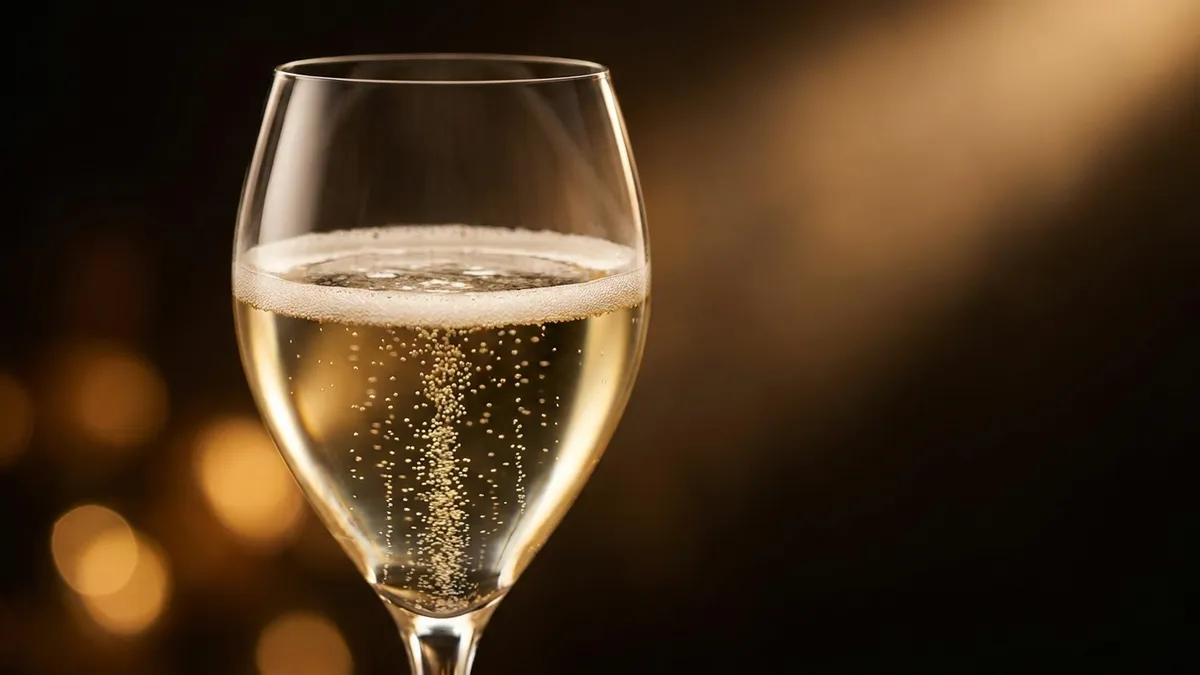
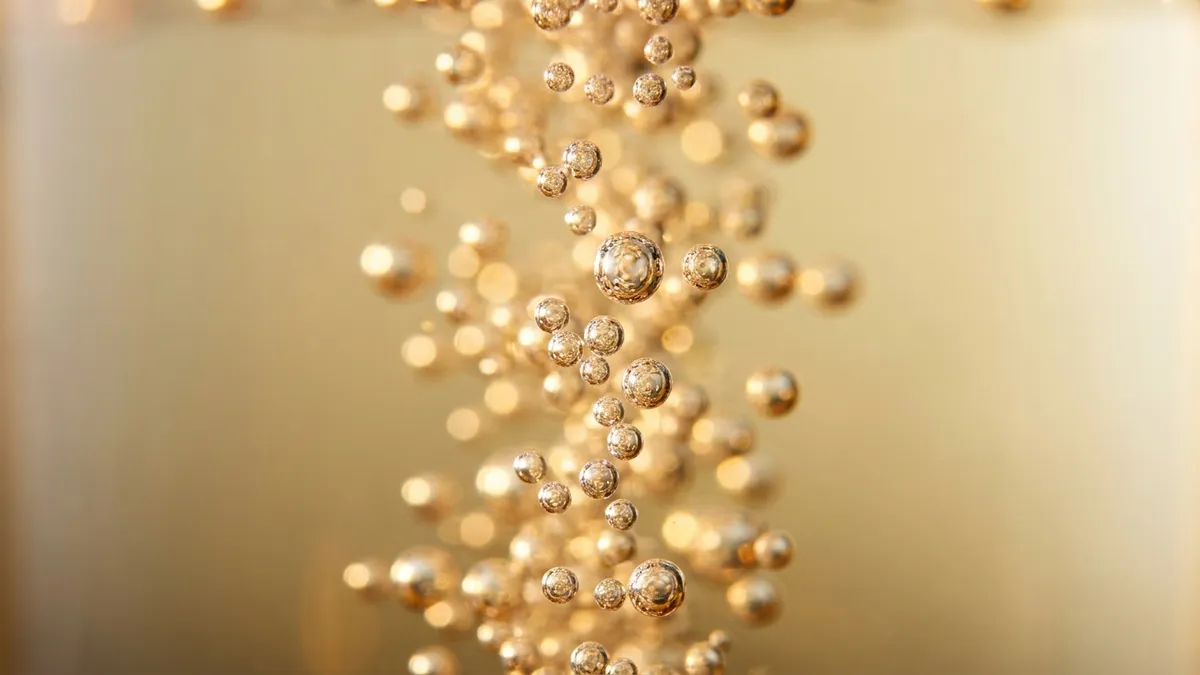
The first thing to assess is the bead — the visible columns of bubbles rising from the bottom of the glass. This is where the production method announces itself before the wine touches your nose.
What to look for
- Bubble size — fine pinprick bubbles point to traditional method (second fermentation in the bottle, slow CO2 integration). Larger, more aggressive bubbles point to tank method or short aging.
- Persistence — high-quality fizz keeps producing bead trails for several minutes after pouring. Cheap sparkling wine goes flat in under a minute.
- Number of trails — multiple steady columns suggest a clean glass and well-integrated CO2. Erratic or sparse bubbling can come from glass detergent residue or low-quality wine.
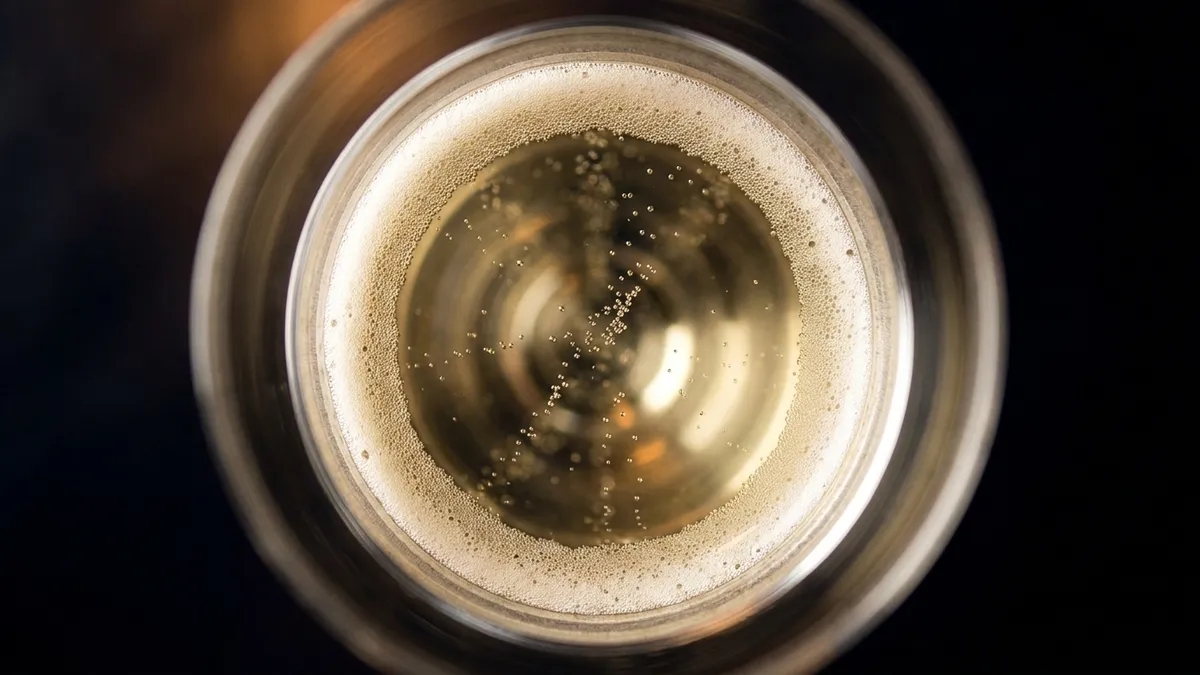
- Crown or collar — the ring of foam that hugs the rim of the glass after pouring. A persistent crown signals well-made wine.
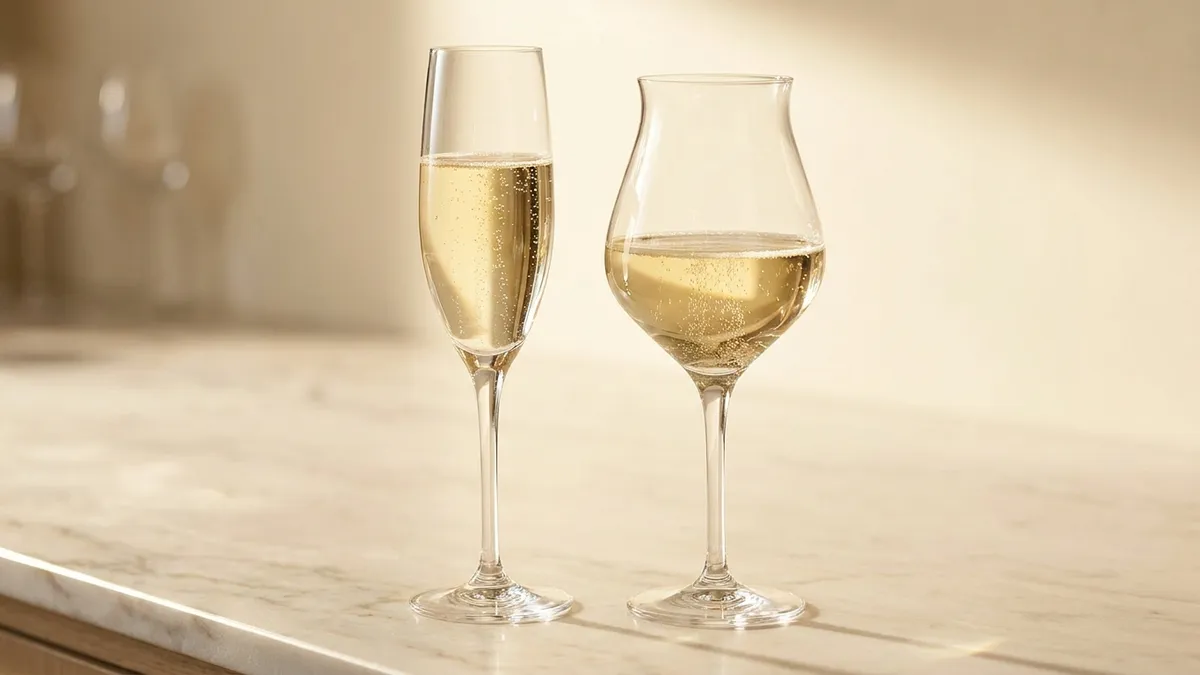
A clean tulip glass with a slight etch at the bottom helps the bubbles rise in a tidy column. Champagne flutes look pretty, but the narrow opening hides the aroma. For serious tasting, choose the tulip. A gentle opening keeps more gas in the wine, so open sparkling wine with a hiss before you pour.
Step 2 — Smell, but Do Not Swirl
Here is where sparkling wine departs from still wine etiquette. With a still wine, you swirl to release aromatics. With sparkling wine, swirling agitates the CO2 and accelerates bubble loss. You lose the texture you came for.
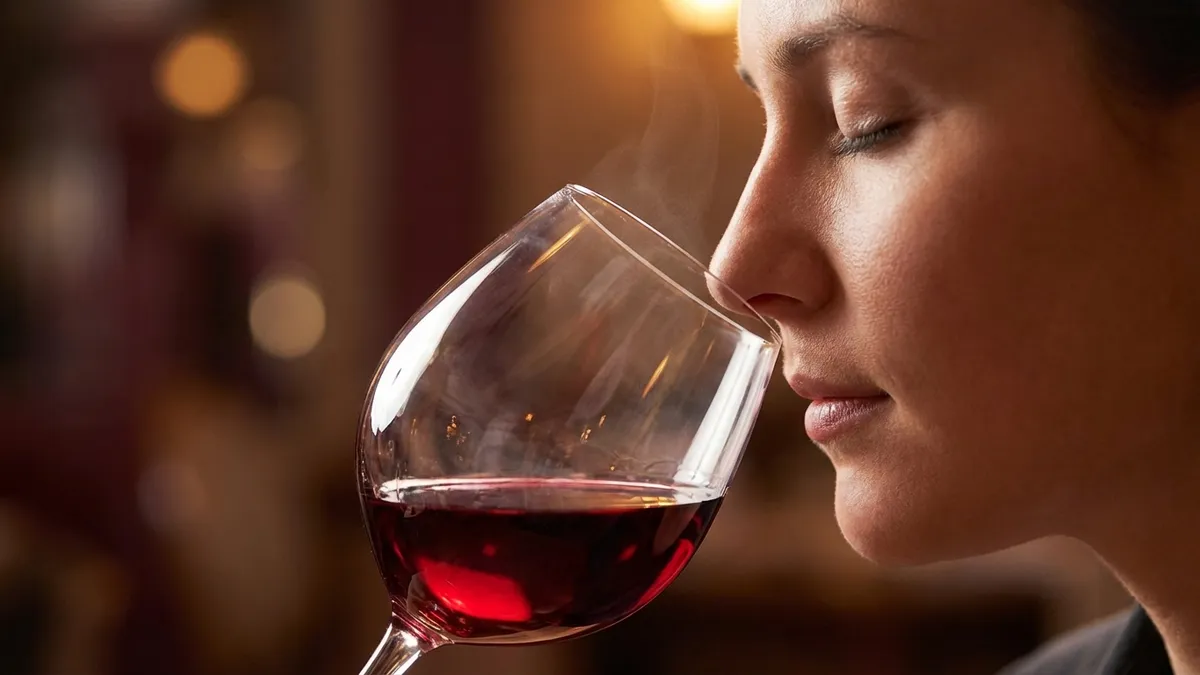
Instead, lean over the glass and breathe in steadily. The bubbles do the work for you — as they break at the surface, they fling aroma compounds straight to your nose. You will smell more by staying still.
What to look for in the aroma is split into two layers:
Primary fruit aromas
- Pinot Noir-based bubbles — red apple, strawberry, cherry skin
- Chardonnay-based bubbles — green apple, lemon, white peach, chalk
- Glera (Prosecco) — pear, white peach, melon, honeysuckle
- Macabeo / Xarel-lo (Cava) — quince, citrus pith, herbs, almond
- Chenin Blanc (Crémant de Loire) — yellow apple, honey, beeswax
For a deeper map of where these aromas come from, see our breakdown of primary, secondary, and tertiary aromas.
Autolytic aromas — the lees signature
Autolysis is the slow breakdown of dead yeast cells after the second fermentation. The compounds released during this breakdown create the unmistakable bready, biscuity, brioche, and toasted-almond aromas of traditional method wines.
- Short lees aging (under 12 months) — light yeasty hint, sometimes barely detectable
- 15 to 36 months — clear brioche, toast, fresh bread crust
- 5+ years — toasted almond, nougat, hazelnut, sometimes truffle and butterscotch
If you smell strong autolytic notes, you are looking at Champagne, vintage Cava (Reserva or Gran Reserva), Crémant, Franciacorta, English sparkling, or premium Cap Classique. Prosecco rarely shows autolysis because tank method wines do not age on lees long enough.
Step 3 — The Mousse, the Most Underrated Step
Take a small sip — about half what you would normally drink. Let it sit on your tongue for two seconds before swallowing. The texture you feel is the mousse — the foam that the bubbles create on your palate.
The mousse is the most overlooked dimension of sparkling wine tasting and the one that separates novices from experienced tasters.
Mousse vocabulary
- Creamy / silky — fine bubbles, well integrated, softened by lees aging. The signature of premium traditional method wines.
- Frothy — bubbles that whip up like cappuccino foam on the tongue. Often pleasant in young Cava and Crémant.
- Prickly / sharp — coarse bubbles that feel like static on the tongue. Common in young, cheaply made tank method wines.
- Soft / gentle — lower pressure, used deliberately in Pet-Nat, Frizzante styles, and Crémant Saten. Not a flaw — a stylistic choice.
- Aggressive — too much pressure for the wine's structure, can dominate the fruit. A mark of a poorly balanced wine.
A creamy, integrated mousse is one of the most reliable signals of genuine quality in sparkling wine. The Sommy app's tasting practice walks you through what to feel for, with audio cues that prompt the mousse-check on every sparkling session.
Step 4 — Read the Dosage on Your Palate
After the mousse, your tongue moves to the dosage check — sweetness. Almost all traditional method sparkling wine has a small addition of sugared wine after disgorgement to balance the high acidity. The label tells you the category, but a trained palate can confirm it.
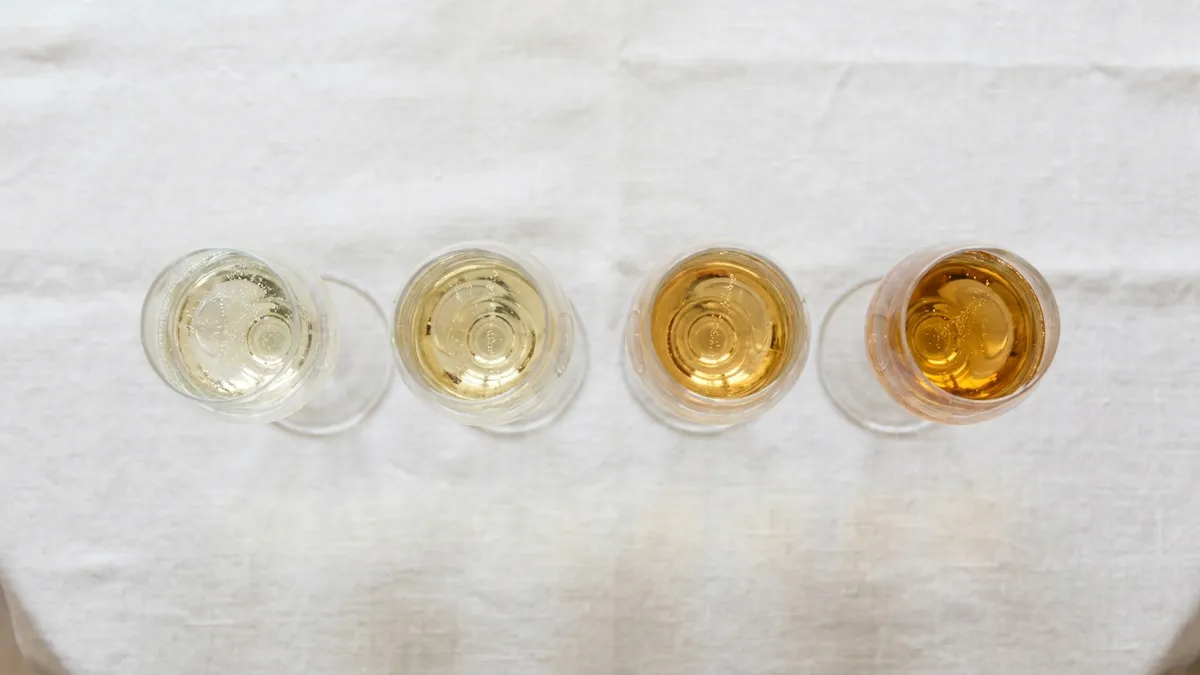
The official dosage scale, from driest to sweetest:
- Brut Nature / Zero Dosage — under 3 g/L. Bone-dry, sometimes austere. The acid stands fully exposed.
- Extra Brut — under 6 g/L. Very dry, lean.
- Brut — under 12 g/L. Dry, but with a hint of roundness. The most common style by far.
- Extra Dry / Extra Sec — 12 to 17 g/L. Slightly off-dry. Confusingly, sweeter than Brut.
- Sec — 17 to 32 g/L. Medium sweet.
- Demi-Sec — 32 to 50 g/L. Clearly sweet, dessert-friendly.
- Doux — over 50 g/L. Rare today, very sweet.
Your tongue's tip senses sweetness first. Pair that read with the wine's acidity — a Brut Champagne with high acid feels drier than a Brut Prosecco with the same sugar level. Sweetness perception is always relative, which is why our sweet vs. dry wine guide is useful background reading.
Step 5 — Acidity and Length, the Final Two Anchors
Strip the bubbles away and a great sparkling wine should still be a great wine. That is what the last two checks are for.
Acidity
Acidity is what makes sparkling wine refreshing. Cold-climate base wines from Champagne, England, and Tasmania have ringing acidity — the kind that makes your jaw tingle and your mouth water. Warmer-climate base wines from Cava country or southern Australia are softer.
Without bracing acidity, sparkling wine tastes flabby. The bubbles cannot save it. Our what is wine acidity explainer goes deeper on the structural role of acid.
Length / finish
After you swallow, count how long the flavor lingers. Cheap sparkling wine fades in two seconds. Vintage Champagne can echo for 30 seconds, with the autolytic and citrus notes evolving as they fade. Length is one of the most reliable proxies for quality across all wine, and especially in sparkling.
A more thorough framework lives in our wine finish meaning deep dive.
How the Style Changes the Tasting
Different sparkling wine categories ask for different mental models. The same five-step method applies, but the expected answers shift.
Champagne (traditional method)
- Bead — fine, persistent
- Aroma — primary fruit (apple, citrus, red berry depending on grape) plus heavy autolysis (brioche, toast, almond)
- Mousse — creamy, integrated
- Dosage — usually Brut, increasingly Extra Brut and Brut Nature
- Acidity — high, often searing
- Finish — long, often layered
Prosecco (tank method)
- Bead — larger, less persistent than Champagne
- Aroma — bright primary fruit (pear, peach, melon, white flowers); minimal autolysis
- Mousse — frothy, lighter, sometimes prickly
- Dosage — often Extra Dry (slightly off-dry), increasingly Brut
- Acidity — moderate
- Finish — short to medium, fruit-focused
Cava (traditional method, Spanish grapes)
- Bead — fine, similar to Champagne
- Aroma — citrus, quince, herbs, almond, gentler autolysis than Champagne; Gran Reserva shows deep toast and nuts
- Mousse — fine, sometimes earthier on the palate than Champagne
- Dosage — most commonly Brut
- Acidity — moderate to high
- Finish — medium to long, often with a slightly savory edge
Crémant (French traditional method, outside Champagne)
- Bead — fine, often slightly less aggressive than Champagne (especially Crémant Saten or Crémant d'Alsace)
- Aroma — varies by region — apple and chalk in Alsace, honey and citrus in the Loire, Chardonnay-driven in Bourgogne
- Mousse — soft and creamy
- Dosage — typically Brut
- Finish — surprisingly long for the price
Pet-Nat (ancestral method)
- Bead — gentle, sometimes barely sparkling, often hazy
- Aroma — funky, cidery, yeasty, fruit-forward, occasionally wild
- Mousse — soft, low pressure
- Dosage — none (no disgorgement)
- Finish — variable
English sparkling wine
The chalky soils of southern England match Champagne's geology, and the cooler climate produces racing acidity. Expect Champagne-style traditional method profiles with even brighter green-apple and citrus character. Long lees aging is becoming the norm.
Practical Setup for Tasting at Home
Get the mechanics right and the rest is easier.
- Temperature — 6 to 8 degrees Celsius. Too cold (under 5 degrees) flattens aroma. Too warm (above 10 degrees) loses the bubble crispness, and a serving temperature chart for every style shows how long the bottle needs in ice water.
- Glass shape — tulip first, white wine glass second, flute third. Flutes are pretty but trap aroma.
- Glass cleanliness — rinse with water only between sparkling pours. Detergent residue kills bubbles instantly.
- Pour size — about a third of the glass. Leave room for aroma to gather.
- Open carefully — twist the bottle, not the cork. A soft hiss, not a pop. Loud pops waste pressure.
Common slip-ups are covered in our common wine tasting mistakes guide — over-chilling, swirling sparkling wine, and using dirty flutes lead the list.
Sommelier tip — pour a Prosecco and a Brut Champagne side by side. Within one minute, the differences in bead, aroma, and mousse become obvious. This single comparison teaches more about sparkling wine technique than any reading does.
Building the Habit
Sparkling wine rewards a disciplined approach. The bead, the mousse, the autolysis check, the dosage read, the acid-length anchor — five quick passes that take about 90 seconds and reveal what is actually in the bottle. Run them on every glass and the categories start to separate themselves.
The Sommy app builds these checks into its sparkling tasting flows, with prompts for bubble persistence and mousse texture that you would not see in a generic tasting tool. Pair it with the broader frameworks in our wine tasting vocabulary cheat sheet and you can describe a sparkling wine with the same precision as any still wine.
For the bigger picture of where each style fits in the sparkling family — and which ones to seek out next — keep Sommy close as a reference. Bubbles are not a celebration genre alone; they are one of the most technically rich corners of wine, and they reward the tasters who slow down to read them.
Frequently Asked Questions
How do you taste sparkling wine the right way?
Start with the bead — the rising bubble trails. Note their size, count, and persistence. Smell for autolytic aromas like brioche and toasted bread before swirling, since swirling kills bubbles. Take a small sip and feel the mousse, the foamy texture on your tongue. Then assess sweetness, acidity, and finish length the same way you would any wine.
What does mousse mean in sparkling wine?
Mousse is the foam and texture the bubbles create on your palate, distinct from the visible bead in the glass. A creamy, fine, integrated mousse signals long lees aging and traditional method production. A coarse, prickly, aggressive mousse usually points to younger tank-method wines or wines with too much pressure for their structure.
What temperature should sparkling wine be served at?
Serve sparkling wine at 6 to 8 degrees Celsius — colder than still whites. Cold temperatures keep CO2 dissolved and bubbles fine. Too cold, however, mutes aroma and flattens the autolytic complexity of traditional method wines. For aged vintage Champagne, let it warm to 9 or 10 degrees in the glass to show its toasty, nutty layers.
What is autolysis in sparkling wine?
Autolysis is the slow breakdown of dead yeast cells (lees) after the second fermentation. As the cells decompose, they release compounds that produce bready, biscuity, brioche, and toasted-almond aromas. Traditional method sparklers like Champagne, Cava, and Crémant develop strong autolytic character with extended lees aging. Tank method wines like Prosecco have minimal autolysis and stay fruit-driven.
What does Brut mean on a Champagne label?
Brut is a sweetness category, set by the dosage — the small amount of sugar added after disgorgement. Brut means under 12 grams of sugar per liter and tastes dry. Extra Brut is under 6 g/L, Brut Nature under 3 g/L, Extra Dry is 12 to 17 g/L (slightly off-dry), Sec is 17 to 32 g/L, and Demi-Sec is sweet.
Why does sparkling wine taste different from a flute versus a tulip glass?
Flutes preserve the bead column and look elegant, but their narrow bowl traps aroma. A tulip glass — wider in the bowl, tapered at the rim — concentrates the autolytic and fruit aromas while still giving the bubbles a center column to rise through. For serious tasting, a tulip or even a white wine glass beats a flute on aroma every time.
How do you tell if sparkling wine is high quality?
Look for fine, persistent bead trails that keep rising for minutes, not seconds. Feel for a creamy, integrated mousse rather than a coarse, prickly fizz. Smell for layered aromas — fruit plus autolytic notes like brioche or toasted nuts. The finish should be long, with crisp acidity rather than a sharp or bitter cutoff. Cheap fizz fades fast on every dimension.
Sommy Team
LinkedInFounder & Wine Educator
The Sommy Team is building the world's most approachable wine education app, helping beginners develop real tasting skills through structured courses and AI-guided practice.