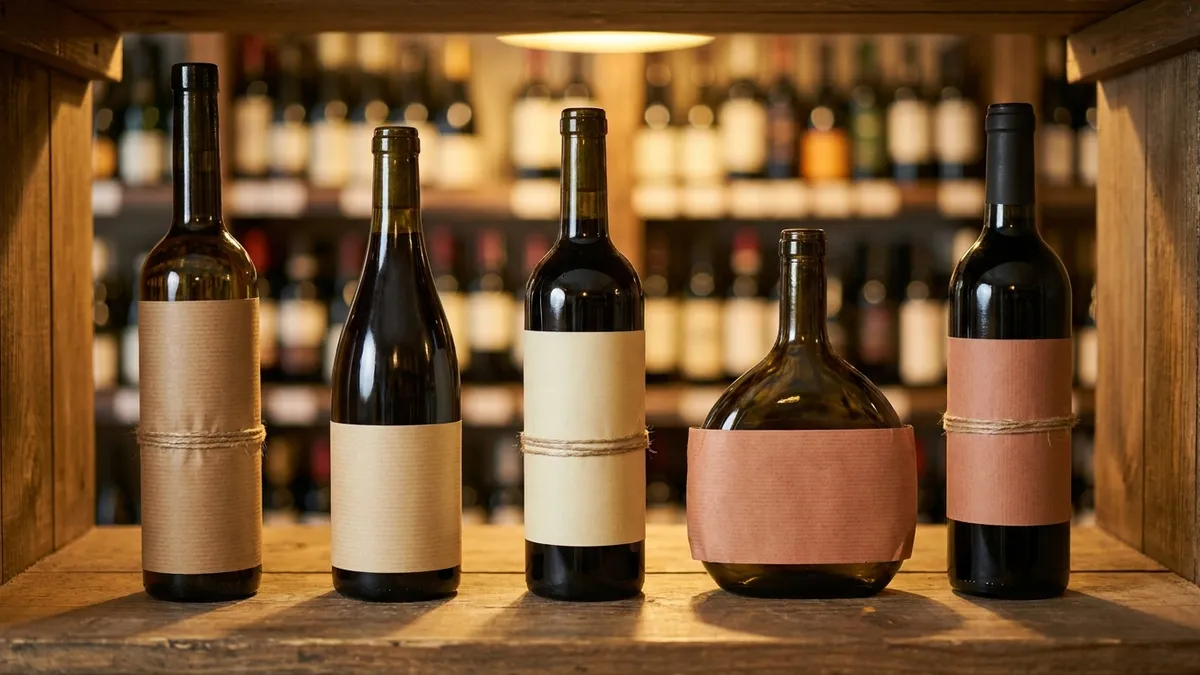
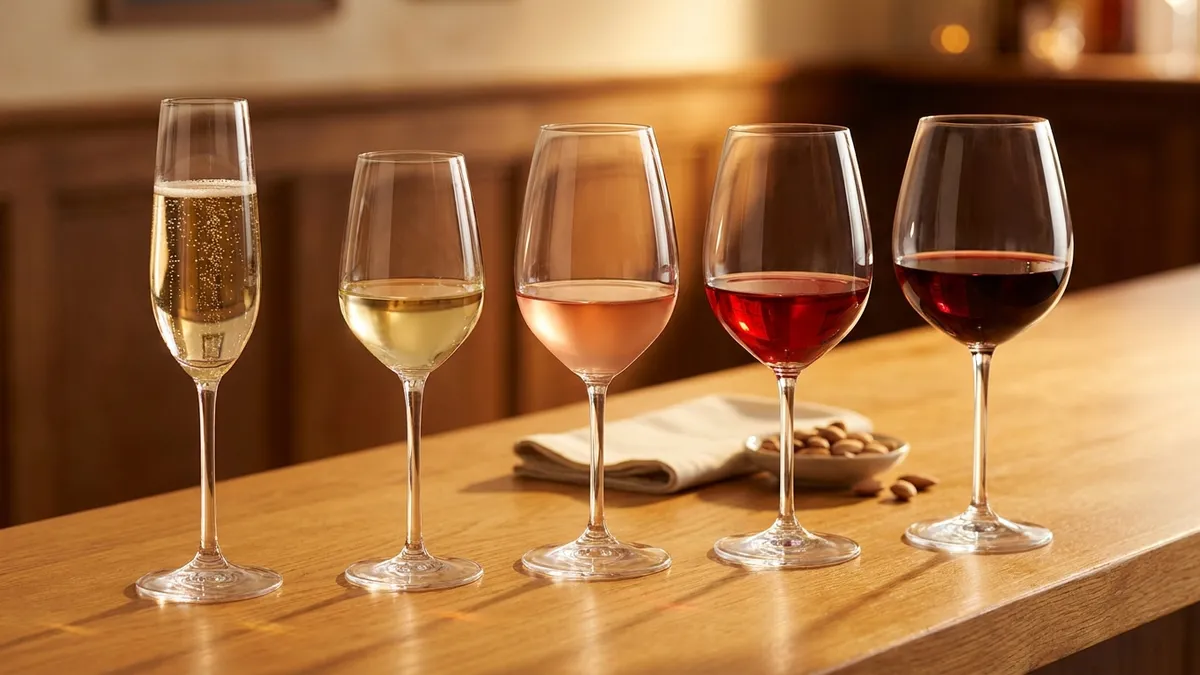
How to Choose a Wine: Pick by Occasion, Food and Taste

By the Sommy Team — AI-assisted, human-edited.
Updated Oct 23, 2026
Contents (9)
- How to Choose a Wine, in One Paragraph
- Which Wine Should You Pick?
- Step 1: What Is the Occasion?
- Step 2: What Is on the Plate?
- Step 3: What Do You Already Like?
- Step 4: How Much Should You Spend?
- Should You Choose by Grape, Region or Label?
- Is "Red With Red Meat" Still a Rule?
- How Do You Know You Picked Well?
TL;DR
Choose a wine in a fixed order: occasion, food, taste, budget. Match the wine's weight to the dish and its sauce, bring acidity to rich or tart food, keep alcohol and tannin low for chilli, and pour dessert wines sweeter than the dessert. Set the budget last, as a filter on wines that already fit.
Knowing how to choose a wine means asking four questions in a fixed order: what is the occasion, what is on the plate, what do you already like, and how much will you spend. Each answer shrinks the shelf for the next one. The plate settles most choices on its own.
How to Choose a Wine, in One Paragraph
Start with the occasion: it decides whether there is food, who is drinking and how much risk you can take. If there is food, read the plate next. Match the wine's body (its weight in your mouth, like skimmed versus whole milk) to the dish's strongest flavour, which is often the sauce. Rich, salty or creamy food wants a mouth-watering wine, chilli wants low alcohol and a touch of sugar, and dessert wants a wine sweeter than itself. Then place a wine you enjoyed on five taste scales and keep the settings the food allows. Set the budget last, so it chooses among wines that already fit.
Which Wine Should You Pick?
Pick by the strongest thing on the plate, and if there is no food, start from the first row. Acidity is the tartness that makes your mouth water. Tannin is the drying grip on your gums; it comes from grape skins, seeds and oak, so red wine carries most of it.
| If the plate is | Pick a wine that is | Why it works |
|---|---|---|
| Empty: drinks with no food | Low in tannin: a white, a rosé or a light red | With no protein to bind, tannin dries the mouth |
| Light: salad, poached white fish | Light-bodied | A heavy wine overwhelms a delicate dish |
| Rich, creamy, fried or salty | High in acidity: a crisp white or a dry sparkling | Acidity cuts through fat and salt |
| Tart: tomato, vinaigrette, lemon | At least as tart as the dish | A wine less tart than the food tastes flat and dull |
| Red meat, hard cheese or charred meat | A red with firm tannin and fuller body | Tannin binds to protein and fat and feels softer |
| Oily fish | A crisp white or a rosé | Reds often carry more iron, which brings out a fishy taste |
| Chilli-hot | Low in alcohol and tannin, with a touch of sweetness (off-dry) | Sugar eases the burn; chilli makes alcohol hotter and tannin harsher |
| Dessert | Sweeter than the dessert | A drier wine tastes tart and thin next to sugar |

Quick check
One question on what you just read
You are pouring wine with a sweet dessert. Which kind should you pick?
Tap an answer to see how you did.
Step 1: What Is the Occasion?
The occasion decides three things before you look at a bottle: whether there is food, who is drinking, and how much risk you can take. A weeknight dinner for two has room for an experiment. A table of guests whose tastes you do not know is safer with two different styles, so nobody is stuck.
- If there is no food, skip step 2.
- If the bottle is a gift, step 3 is about the person receiving it; the wine gift guide covers what to ask.
- If the meal has several courses, choose a wine per course with wine pairing for a dinner party.
One occasion catches people out: the toast at the cake. A dry (brut) sparkling wine tastes tart and thin against sweet cake, so pour it before dessert, or buy a sweet sparkling for the cake itself.
Step 2: What Is on the Plate?
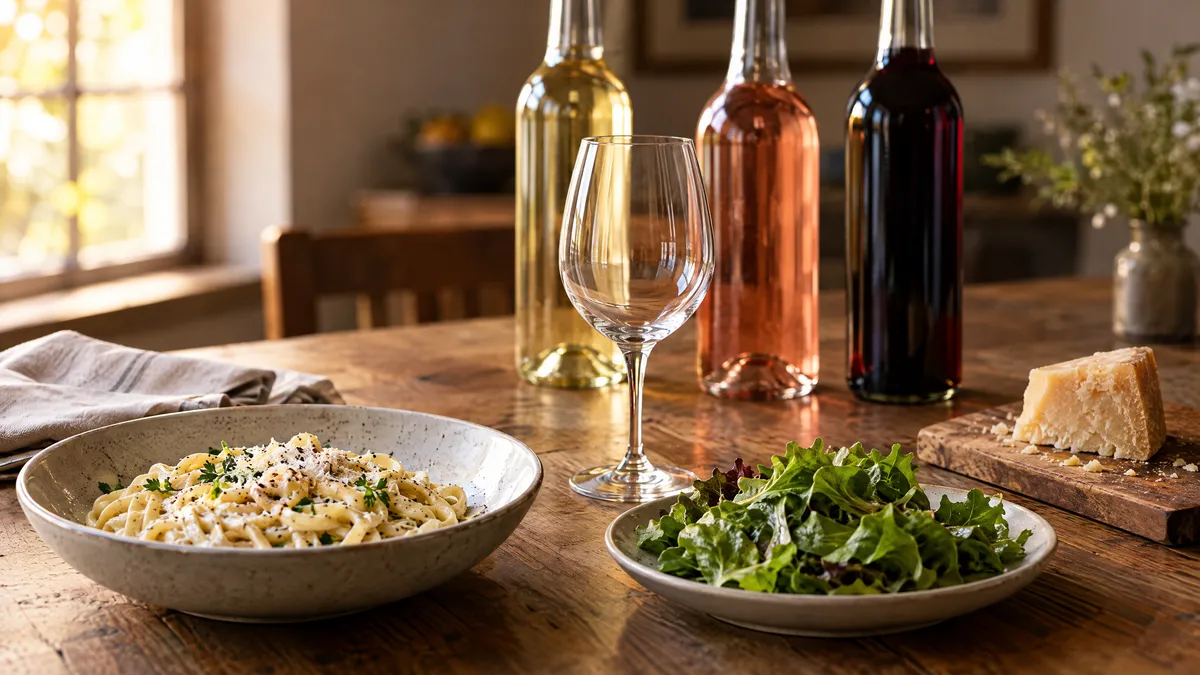
Find the strongest flavour on the plate and match the wine to it. Often that is the sauce, not the meat or fish. Poached white fish suits a light white wine, while the same fish under a heavy cream sauce can take a fuller-bodied white or a light red.
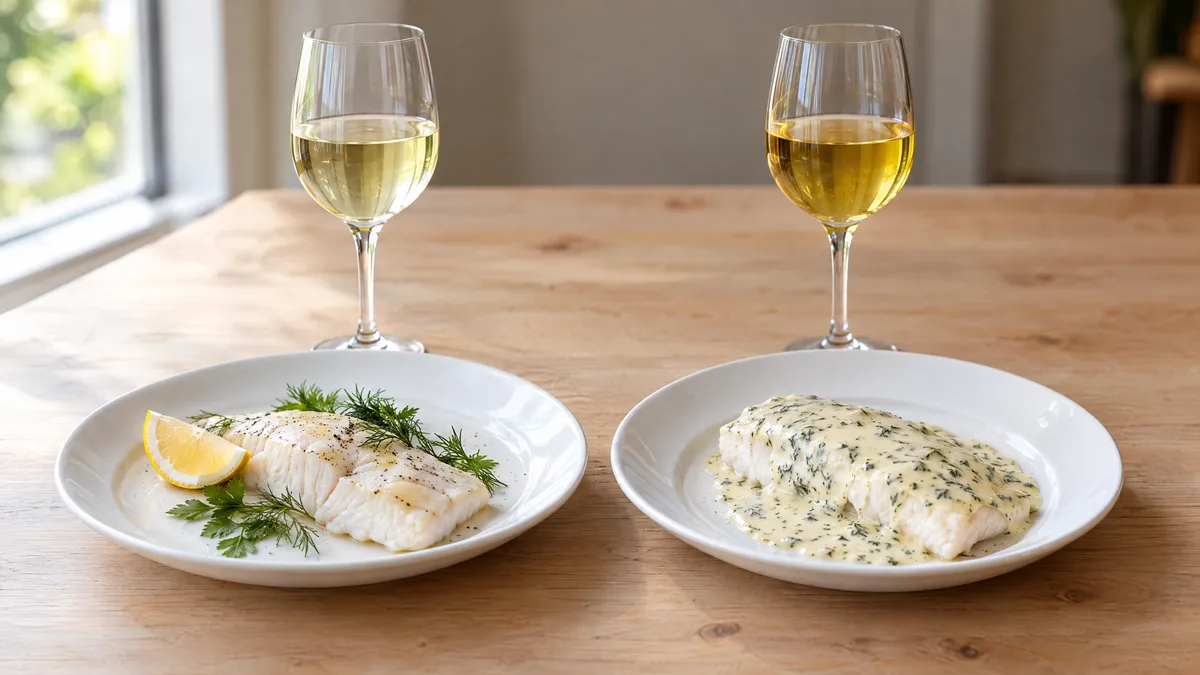
Weight comes first. Alcohol is the main source of a wine's body, so the alcohol strength printed on the label is a quick weight check.
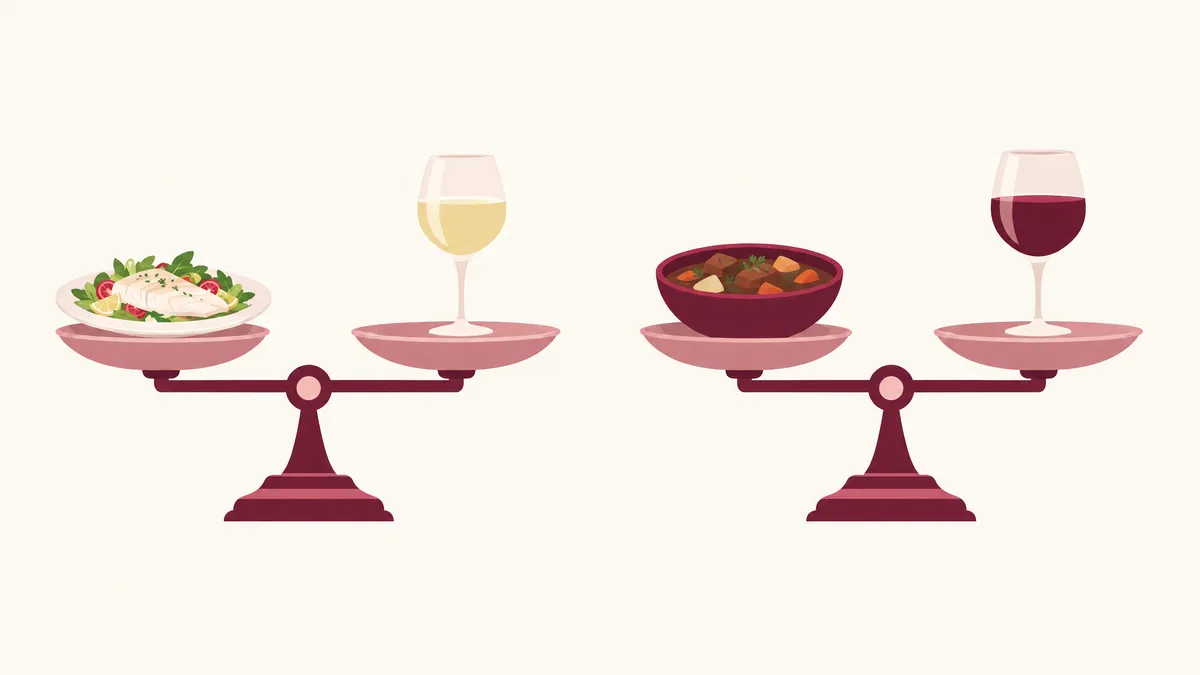
If a dish fits two rows of the table, such as a creamy curry with chilli, follow the chilli row. Chilli makes alcohol burn hotter and tannin taste harsher, and wine with spicy food goes dish by dish.
Step 3: What Do You Already Like?
Your own taste breaks the ties the food leaves. Think of the last wine you wanted a second glass of and place it on five scales: sweetness, acidity, tannin, alcohol and body. They are the first five palate scales on the WSET Level 2 tasting sheet.
Dry means no sugar you can taste, and fruity is not the same as sweet: a dry white can smell of ripe peach. The sweetness scale runs dry, off-dry, medium, sweet, and what dry wine means decodes the label words.
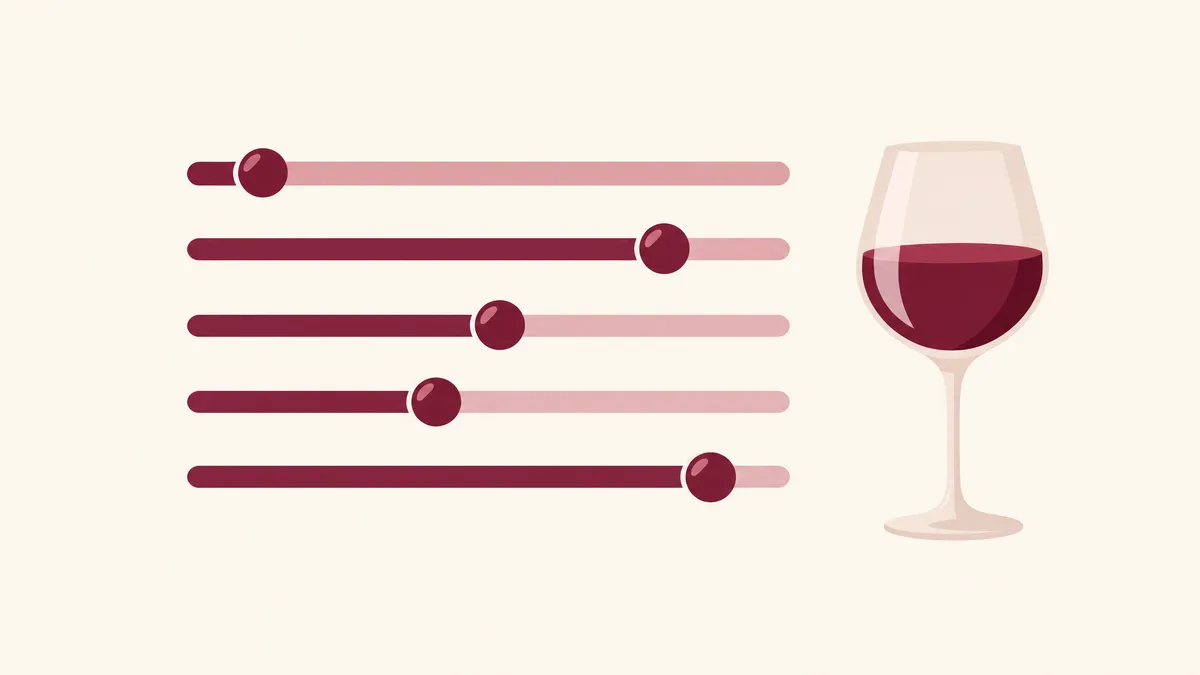
- If a red dried your mouth, that was tannin: pick a lower-tannin red or a white.
- If a white tasted sharp, that was acidity: pick a softer style, unless the food is rich or tart.
- If a wine felt hot in the throat, that was alcohol: pick one with a lower strength on the label.
- If a wine felt thin, it was light-bodied: pick a fuller one, usually higher in alcohol.
Sommy's Wine 101 course has short lessons on sweetness, acidity, tannin, alcohol and body. If there is no last wine to place yet, start from the styles in best wine for beginners.
Step 4: How Much Should You Spend?
Set a range before you look, and use it only to choose among wines that passed the first three steps. Price cannot fix a style mismatch: an expensive, tannic red still tastes harsh beside a chilli-hot curry. Wine price vs quality looks at what extra money buys.
If two wines fit, buy the cheaper one and put the difference toward a second style to compare. If nothing in your range fits, give up a taste preference before you give up the food match; the wine budget guide lists where to save.
In a shop, give the staff all four answers in one sentence: dinner for six, a creamy chicken dish, we like dry whites, and this is our range. The wine shop guide covers the rest of the visit.
Should You Choose by Grape, Region or Label?
Use the grape or region only to find the style the first three steps asked for. In the US, a wine labelled with one grape usually needs at least 75% of it, all grown in the place the label names. Other countries set their own minimums.
If the label names a grape you know, expect that grape's style, with up to a quarter of something else in most US bottles. Many European labels name only the place; how to read a wine label decodes both kinds. A label naming several grapes is a blend, explained in single varietal vs blend.
Is "Red With Red Meat" Still a Rule?
Only as a rough guide to weight. The old line put heavy red wine with heavy meat and light white wine with light fish. Modern styles cross that line: an oaky Chardonnay from a warm region can carry more body than a light Pinot Noir.
So read the body, not the colour. If the dish is heavy and a guest drinks only white, choose a full-bodied white; if the dish is light and they want red, choose a light, low-tannin red. Wine pairing rules lists which old rules still hold.
How Do You Know You Picked Well?
Taste the wine alone, then with a bite of the dish, then alone again. If the food made it taste thinner, harsher or hotter, the table names the row you missed. If it tasted the same or better, write the dish and the wine down together for next time.
More buying guides sit in the beginners and buying hub, and Sommy has bite-sized courses from Wine 101 to France, Italy, Spain and California. Write the dish's strongest flavour on your shopping list tonight, find its row in the table, then buy one bottle that fits it.
Sources
- Wikipedia: Wine and food pairing
- Wine & Spirit Education Trust: WSET Level 2 Systematic Approach to Tasting Wine (Issue 2, 2023)
- Cornell Law School LII: 27 CFR 4.23, Varietal (grape type) labeling
- Tamura et al. (2009), Iron is an essential cause of fishy aftertaste formation in wine and seafood pairing, Journal of Agricultural and Food Chemistry
Frequently Asked Questions
How do I choose a wine if I know nothing about wine?
Answer four questions in order: what is the occasion, what is on the plate, what did you last enjoy, and how much will you spend. The plate does most of the work. Match the wine's weight to the dish, bring acidity to rich food, and keep alcohol and tannin low for chilli. Then pick the style you like best within your budget.
How do I choose a wine to go with food?
Find the strongest flavour on the plate, which is often the sauce rather than the meat. Match the wine's body to that flavour's weight. Then adjust: high acidity for creamy, fried or salty food, firm tannin for red meat and hard cheese, low alcohol and a touch of sweetness for chilli, and a dessert wine sweeter than the dessert.
Should I pick a dry or a sweet wine?
Pick dry for most savoury meals. Dry means no sugar you can taste, even when the wine smells of ripe fruit. Pick an off-dry wine, with a light touch of sugar, for chilli-hot dishes, because sweetness eases the burn. With dessert, pick a wine sweeter than the dish, or the wine will taste tart and thin.
How do I choose between red, white and rosé?
Choose by the weight and the protein on the plate. Red wine carries tannin from grape skins, and tannin feels softer with protein and fat, so tannic reds suit red meat and hard cheese. With no food or with chilli, a white, a rosé or a light red with little tannin is the easier pick. Some full-bodied whites outweigh light reds.
Should I choose a wine by grape or by region?
Use either one to find the style your food and taste call for. A grape name is the easier start: in the US, a wine labelled with one grape usually needs at least 75% of that grape. Many European wines name only the place, so learn which grapes a few regions grow, or check the back label for the grape.
Is 'red wine with red meat' still a rule?
It is a rough guide to weight and nothing more. Heavy red wine used to meet heavy meat, and light white wine met light fish. Modern styles cross over: an oaky Chardonnay from a warm region can carry more body than a light Pinot Noir. Match the body of the wine to the dish and its sauce, and the colour follows.
Does a more expensive wine mean a better choice?
Price cannot fix a style mismatch. An expensive, tannic red still tastes harsh beside a chilli-hot curry, and a costly dry sparkling still tastes tart with wedding cake. Decide the style first from the occasion, the food and your taste. Then set a range and choose among the wines that fit; if two fit, the cheaper one is the better buy.
Sommy Team
LinkedInFounder & Wine Educator
The Sommy Team is building the world's most approachable wine education app, helping beginners develop real tasting skills through structured courses and AI-guided practice.