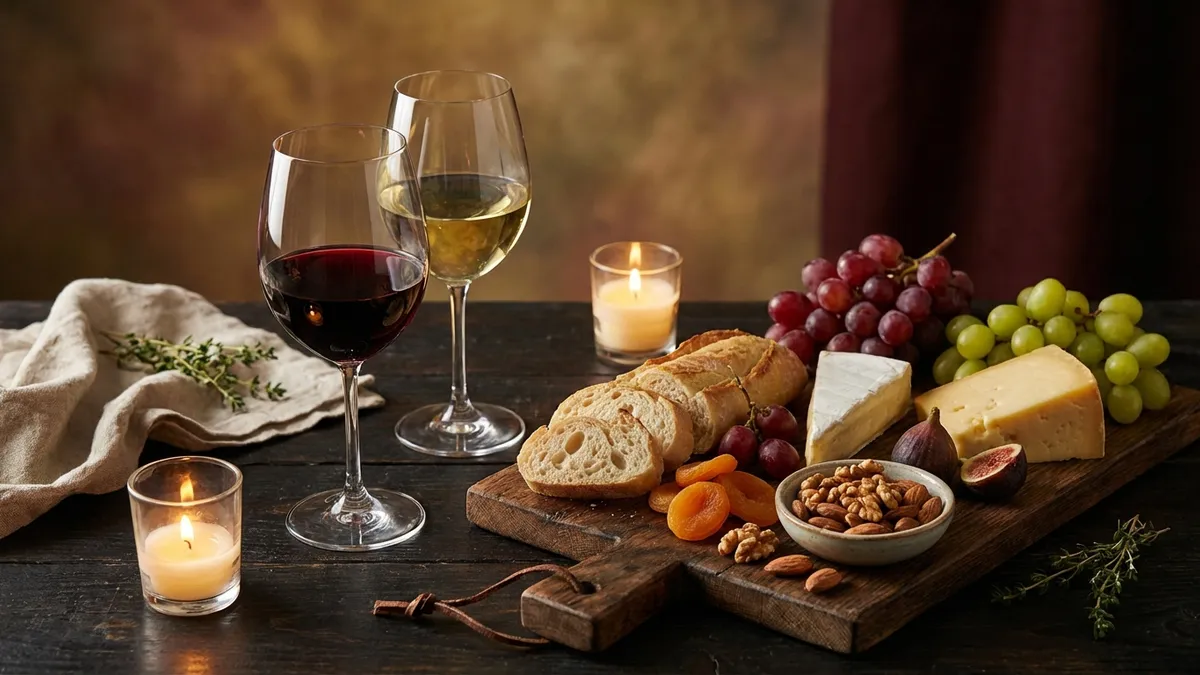
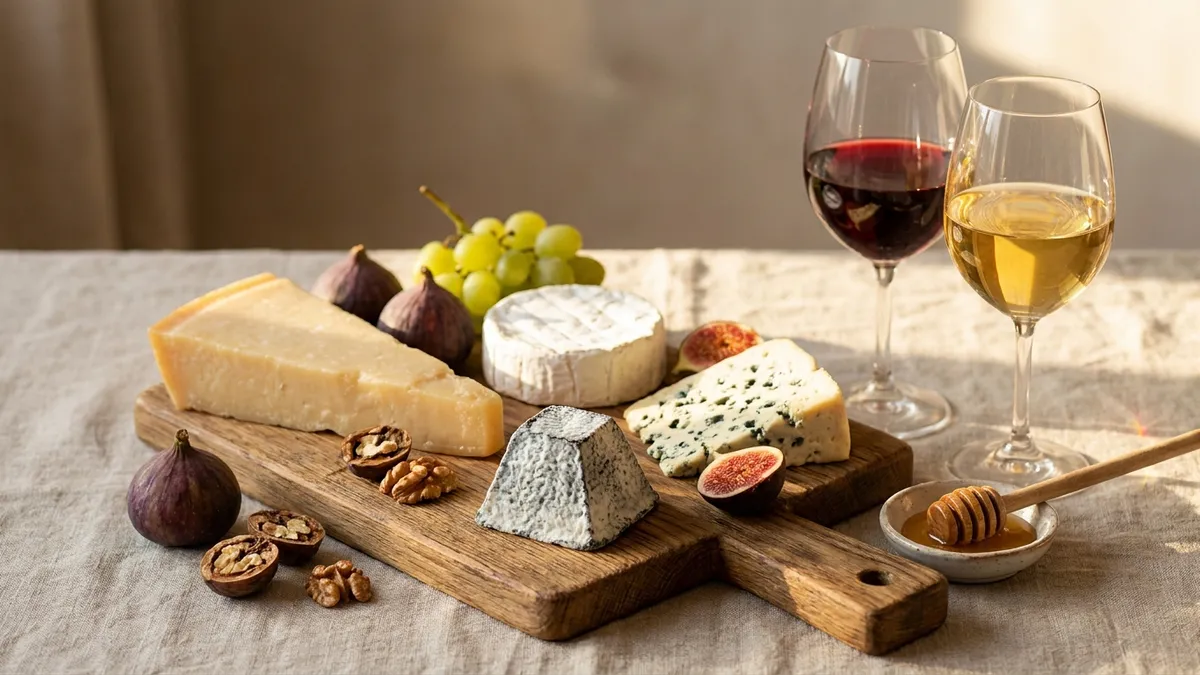
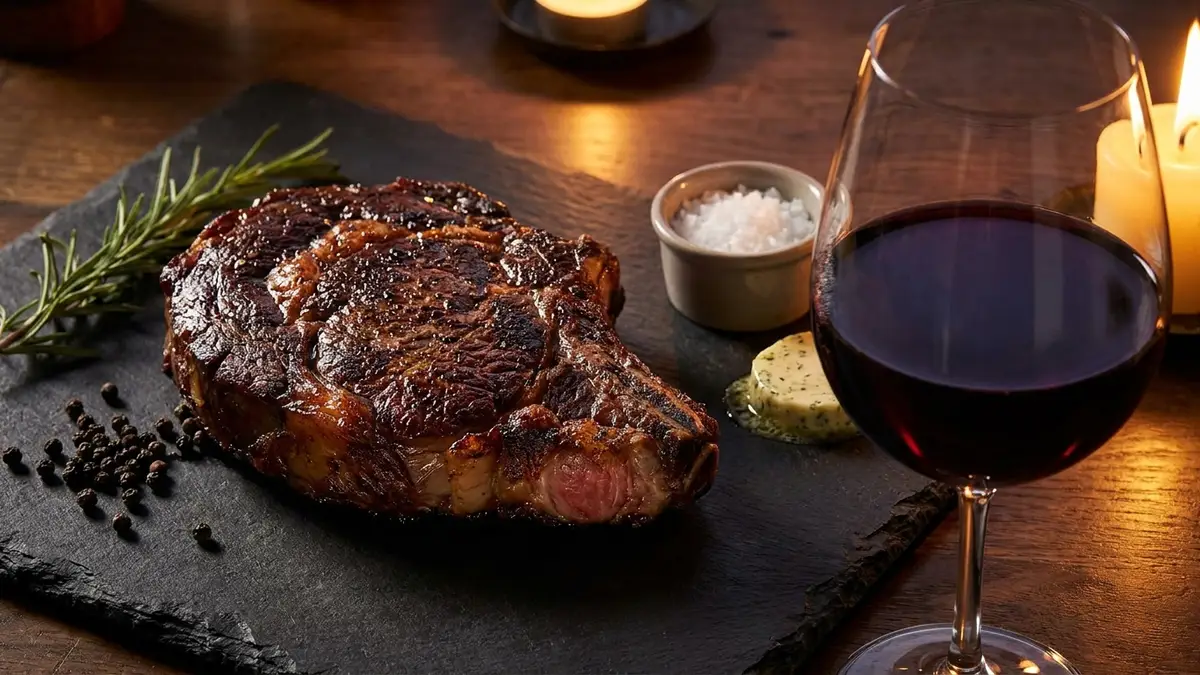
Wine Pairing for a Dinner Party: Plan the Whole Menu

By the Sommy Team — AI-assisted, human-edited.
Updated Oct 1, 2026
Contents (10)
- Wine Pairing for a Dinner Party, in One Paragraph
- Do You Choose the Wine or the Menu First?
- How Many Wines Does a Dinner Party Need?
- How Do You Match a Wine to Each Course?
- In What Order Should You Pour the Wines?
- How Much Wine Should You Buy per Guest?
- What Temperature Should Each Wine Be Served At?
- What Do You Pour With Spicy or Vegetarian Dishes?
- Can You Serve Just One Wine All Night?
- What Does a Four-Course Plan Look Like?
TL;DR
Plan dinner party wine by sorting the menu into light, rich and sweet dishes. Most four-course dinners need two or three wines, poured lightest to heaviest and dry to sweet. Buy about three-quarters of a bottle per guest for three hours, serve whites at 3 to 12°C and reds at 12 to 20°C.
Wine pairing for a dinner party works best when you plan by weight. Sort the menu into light, rich and sweet dishes and give each group one wine. Four courses then need two or three wines. Pour them lightest to heaviest, and buy about three-quarters of a bottle per guest.
Wine Pairing for a Dinner Party, in One Paragraph
Fix the menu first, then mark each dish light, rich or sweet. Give each group one wine. A dry sparkling wine or crisp white covers nibbles and starters, a fuller white or a red covers the main and cheese. If dessert is barely sweet, skip the sweet wine. Pour from lightest to heaviest and from dry to sweet. A 750 ml bottle gives five glasses of 150 ml, so three-quarters of a bottle per guest covers a three-hour dinner: six bottles for eight people, plus one spare. Serve sparkling and light whites at 3 to 7°C and full-bodied reds at 15 to 20°C.
Do You Choose the Wine or the Menu First?
Choose the menu first. A dish sets the weight, the acidity and the sweetness on the plate, and those decide the wine. Wine is also the easier half to change: a shop has dozens of crisp whites, but a roast cannot become a fish course the day before.
There is one exception. If a guest is bringing a special bottle, or you want to open one you have been saving, build the main course around it. If the menu is fixed, the wine follows the menu. If the bottle is fixed, cook a main course of the same weight and fit the other courses around that.
Write each course down with its sauce and main seasoning beside its name. "Chicken" says little; "chicken in a lemon and caper sauce" tells you the wine needs to be tart.
How Many Wines Does a Dinner Party Need?
Two or three wines cover most dinner parties, one for each weight group on the menu rather than one per course. Body (a wine's weight in the mouth, like skimmed milk against whole milk) should rise with the food, so neighbouring courses of similar weight can share a bottle.
Sort every dish into one of three groups. Light means raw, steamed, poached or dressed with citrus: canapés, salads, shellfish, white fish. Rich means roasted, braised, creamy or cheesy: red meat, stews, cream sauces, aged cheese. Sweet means anything sweeter than bread: tarts, cakes, fruit puddings. If two neighbouring courses share a group, they share a wine.
| Course on the plate | Weight group | Wine style | Host move |
|---|---|---|---|
| Nibbles, canapés, salty snacks | Light | Dry sparkling (Brut) or crisp unoaked white | Pour as guests arrive; keep the bottle in ice |
| Salad, shellfish, white fish, citrus starter | Light | Same crisp white, or dry rosé | Top up the first wine instead of opening a new one |
| Chicken, pork, creamy pasta, mushroom dishes | Medium | Fuller white (oaked Chardonnay) or light red (Pinot Noir) | Open it as you plate; decide by the sauce |
| Roast beef, lamb, braises, aged cheese | Rich | Medium to full red (Syrah, Cabernet Sauvignon) | Open early; keep pouring it with the cheese |
| Fruit tart, cake, crème brûlée | Sweet | Sweet wine at least as sweet as the dish | Small glasses; skip it if dessert is barely sweet |
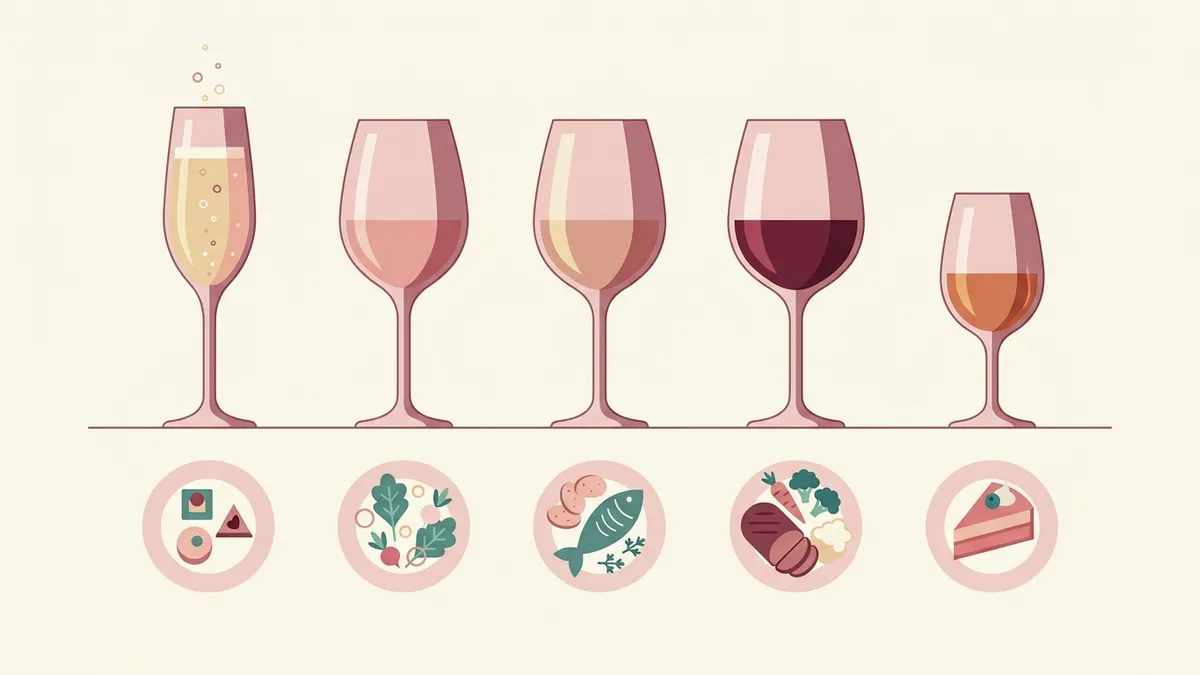
A typical four-course dinner collapses like this: starter and fish course share the crisp white, the main and the cheese share the red, and dessert takes a small sweet pour. That is three wines. Drop the dessert wine and serve coffee instead, and it is two.
How Do You Match a Wine to Each Course?
Match four things on the plate: weight, acid, sweetness and fat. Weight comes first; the other three decide between two wines of the right weight. The general principles are set out in the wine and food pairing guide and the wine pairing rules.
- Weight. Light dishes take light wines and rich dishes take full ones. A heavy red flattens a delicate starter, and a thin white tastes watery beside a braise.
- Acid. Acidity is the tartness that makes your mouth water. If the sauce is tart (lemon, vinegar, tomato), the wine must be at least as tart, or it tastes flat.
- Sweetness. If the dessert is sweeter than the wine, the wine tastes sour and thin. Pick a sweet wine that is sweeter than the plate.
- Fat and protein. Tannin is the drying grip on your gums, strongest in reds such as Cabernet Sauvignon. Fat and protein soften it, so tannic reds belong with red meat and hard cheese.
Pair to the sauce, not the protein. Chicken in cream wants a fuller white; the same chicken in a tomato and olive sauce wants a tart red such as Sangiovese. The sauce changes the dish's weight and acidity more than the meat does. The understanding tannins, acidity and body explainer shows how to feel each one in the glass.
In What Order Should You Pour the Wines?
Pour from lightest to heaviest and from dry to sweet, with sparkling at the start. Wine Spectator's advice is to "go from lightest to heaviest and from dry to sweet". Food Republic adds that whites and rosés come before reds, and dry wines before sweet ones.
The reasons are physical. Tannin coats the mouth, so a delicate wine poured after a tannic red tastes thin. Sweet wines are fuller and take over the palate, so a dry wine after them tastes sour. A sweet sparkling wine is the exception: it can go first or last.
Weight beats colour. If the white is oaked and full and the red is light, pour the red first. The full course-by-course sequence, including port and sherry, is in wine serving order at dinner, and the same logic for flights is in the wine tasting order chart.
How Much Wine Should You Buy per Guest?
Buy three-quarters of a bottle per guest for a three-hour sit-down dinner, then add one spare bottle. A 750 ml bottle holds five glasses of 150 ml, so three-quarters of a bottle is nearly four glasses each over the evening. The numbers below are Sommy's planning figures, built from that pour arithmetic.
| Evening | Bottles per guest | Glasses each at 150 ml | Buy this when |
|---|---|---|---|
| Short, quiet dinner (2 hours) | 1/2 | About 2.5 | Weeknight, early start, several guests driving |
| Standard sit-down dinner (3 hours) | 3/4 | About 3.75 | Most dinner parties; the safe default |
| Long or lively dinner (4+ hours) | 1 | 5 | Long aperitif, many courses, late finish |
Some wedding and event guides quote a bottle or more per person. Those figures are built for long receptions, so they overbuy for a dinner at home. If the evening starts with a long aperitif or runs past four hours, plan a bottle per guest.
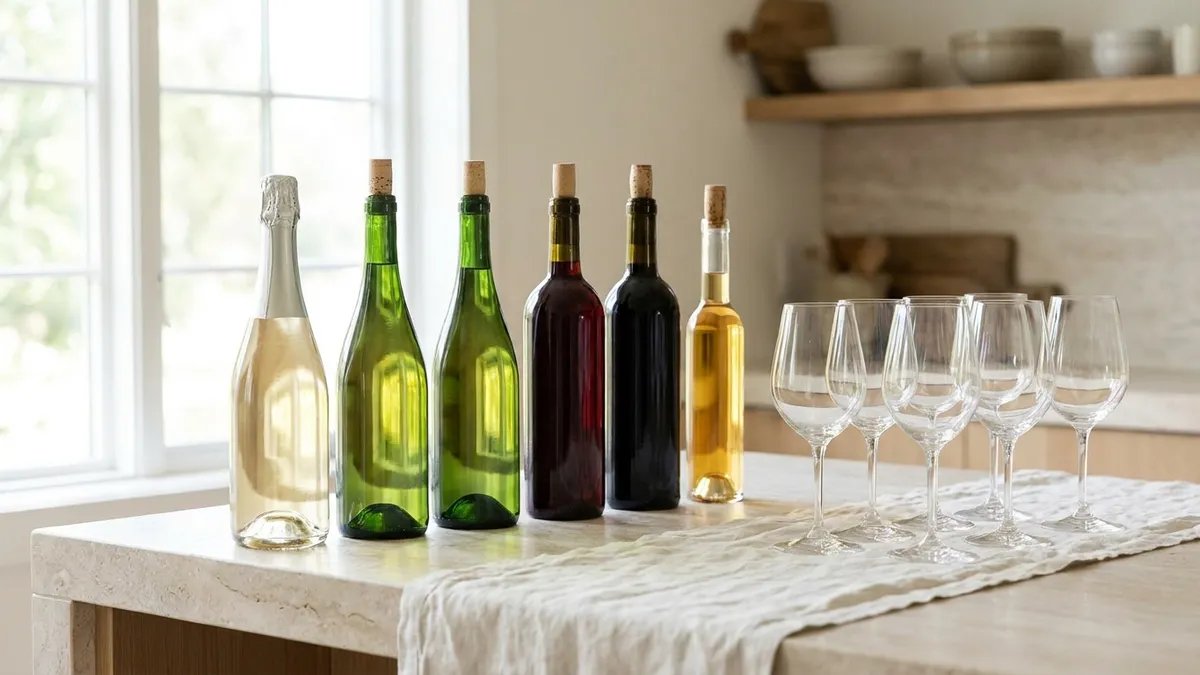
Split the total across the wines by the time each one is in the glass. The main-course wine gets the most, because it is poured longest. Sweet wine is poured small, so one 750 ml bottle gives eight guests a glass of about 90 ml each. A 150 ml glass of 12% wine is one US standard drink, about 14 grams of alcohol, and a bottle at 12% holds 9 UK units. Put water on the table from the start and refill it with every course. The glasses per bottle guide has the counts for every pour size.
What Temperature Should Each Wine Be Served At?
Serve sparkling and light whites coldest, at 3 to 7°C, and full-bodied reds warmest, at 15 to 20°C. The old advice to serve reds at room temperature dates from cooler rooms; a heated dining room leaves a red soft and alcoholic. Wine Folly's ranges:
- Sparkling and light whites: 3 to 7°C (38 to 45°F), ice cold.
- Rosé and full whites: 7 to 12°C (44 to 55°F), fridge cold.
- Light and medium reds: 12 to 15°C (55 to 60°F), cool.
- Full-bodied reds: 15 to 20°C (60 to 68°F), slightly cool.
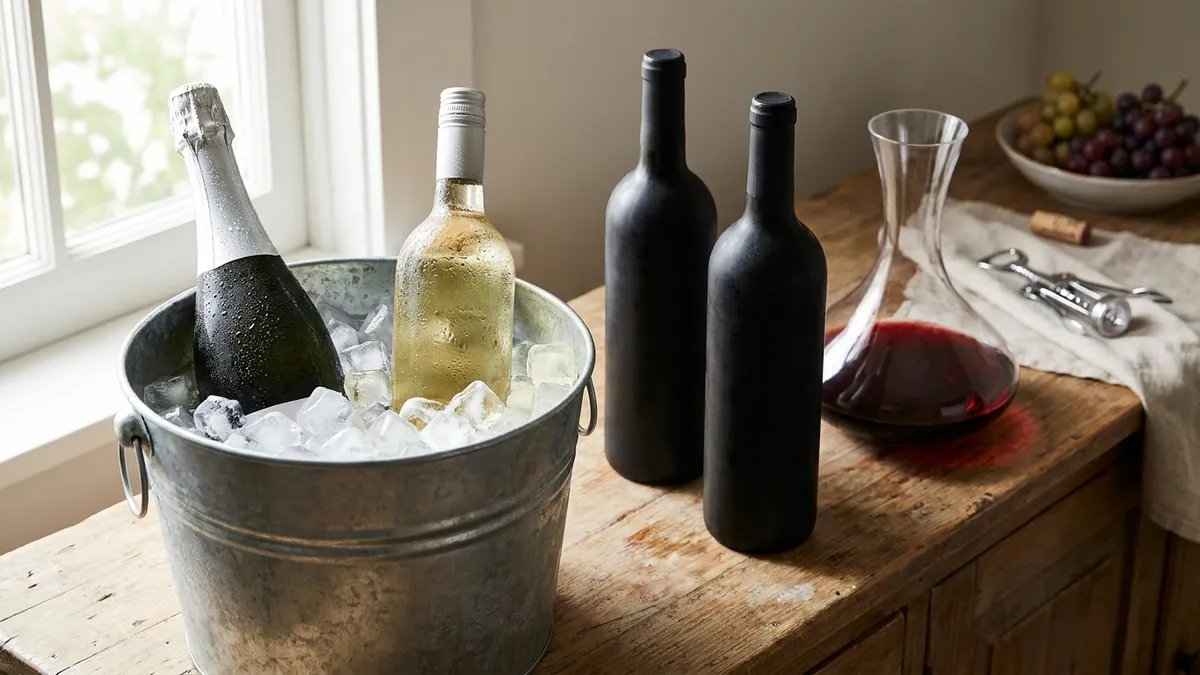
Plan the cold before the guests. Fridge space runs out, so the sparkling and the first white go in the fridge in the morning, and the rest wait in an ice bucket with water. If a red feels warm or tastes boozy, put it in the fridge while guests arrive and take it out when you plate the starter. The wine serving temperature chart covers more styles, and how to chill wine fast rescues a forgotten bottle.
What Do You Pour With Spicy or Vegetarian Dishes?
With chilli heat, pour a white with a touch of sweetness and moderate alcohol, and keep tannic reds away. Heat makes alcohol burn harder and tannin feel rougher, while a little sugar calms it. Off-dry means slightly sweet; off-dry Riesling or Chenin Blanc is the usual pick.
If a hot main course needs a red, choose a light, juicy, low-tannin one and serve it cool. The wine with spicy food guide covers curries, chilli and Sichuan dishes.
Vegetarian menus follow the same weight groups. A green salad or grilled vegetables are light; a mushroom risotto, a lentil stew or a cheese-baked dish is rich. Mushrooms, lentils and roasted roots carry a light red such as Pinot Noir. Creamy, cheesy dishes want a fuller white. The wine with vegetarian food guide matches dish by dish.
If guests at one table eat different mains, pick the wine for the lighter dish. A light red or a full white handles a vegetable main and a meat main; a tannic red overpowers the vegetables.
Can You Serve Just One Wine All Night?
Yes, if it has high acidity, low tannin and moderate alcohol. Those three traits let one wine handle salty nibbles, fish, chicken, pork and cheese without clashing. Three styles do the job: dry sparkling wine, dry rosé, and a chilled light red such as Pinot Noir or Gamay.
If the menu moves from fish to roast meat, choose the chilled light red. If it stays light, with seafood, salads and chicken, choose sparkling or rosé. One wine means one style to buy, one temperature to hit and one glass per place. Only a sweet dessert defeats it: serve that with coffee, or open a small bottle of sweet wine just for that course.
What Does a Four-Course Plan Look Like?
Eight guests and four courses need three wines and seven bottles: six for drinking at three-quarters of a bottle each, plus one spare. The sample menu: canapés, a fennel and citrus salad, roast lamb with rosemary, and a fruit tart.
- Canapés and salad (light): dry sparkling wine, 2 bottles. Its acidity matches the citrus.
- Lamb, then cheese (rich): Syrah or a Rioja, 3 bottles. Its tannin meets the fat in the lamb.
- Fruit tart (sweet): one bottle of a sweet wine such as late-harvest Riesling or Sauternes, poured small. The dessert wine guide lists the styles.
- Spare: one extra bottle of the red, the wine most likely to run out.
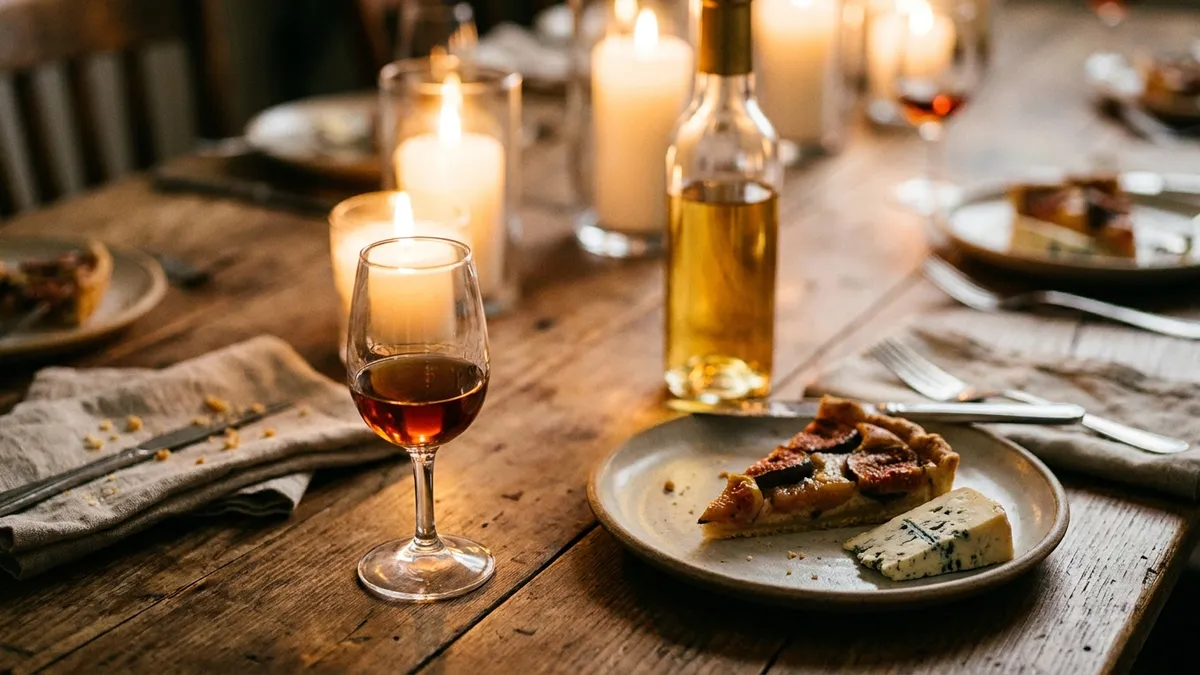
Open the red before guests sit, chill the sparkling and the sweet wine in the morning, and set two glasses per place. For more of the food side, the food pairing hub gathers every pairing guide.
Sommy's bite-sized courses at sommy.wine teach weight, acidity and tannin one lesson at a time. Tonight, write your menu down and mark each dish light, rich or sweet. Then buy one wine per group, three-quarters of a bottle per guest, and chill the whites.
Sources
Frequently Asked Questions
How many bottles of wine do I need for a dinner party?
Plan on three-quarters of a bottle per guest for a three-hour sit-down dinner, then add one spare. A 750 ml bottle pours five glasses of 150 ml, so that is nearly four glasses each. Eight guests need six bottles. Drop to half a bottle each for a short, quiet meal and rise to a full bottle for a long, lively evening.
How many different wines should I serve at a dinner party?
Two or three. Sort the courses into light, rich and sweet, and give each group one wine. A starter and a fish course can share a crisp white, a main and a cheese course can share a red, and dessert gets a sweet wine if you serve one. More wines mean more open bottles, not better pairings.
Should white wine always be served before red at dinner?
Usually, because most whites are lighter than most reds. The rule underneath is lightest to heaviest. A light, chilled red such as Beaujolais can come before a rich, oaked Chardonnay. Pour by weight first and colour second, and keep any sweet wine for the end, since sweetness makes a dry wine poured after it taste sour.
Can I serve one wine for the whole dinner?
Yes, if it has high acidity, low tannin and moderate alcohol. Dry sparkling wine, dry rosé and a chilled light red such as Pinot Noir or Gamay all handle starters, fish, chicken and pork without clashing. One wine keeps buying and chilling simple. Only a sweet dessert defeats it, so serve that with coffee or a separate small pour.
What temperature should wine be at for a dinner party?
Sparkling and light whites go coldest, at 3 to 7°C. Rosé and full whites sit at 7 to 12°C. Light reds are best at 12 to 15°C and full-bodied reds at 15 to 20°C, a little cooler than a heated dining room. Take whites out of the fridge as guests sit down, and give warm reds a short spell in the fridge.
What wine goes with spicy food at a dinner party?
Choose a white with high acidity, moderate alcohol and a little sweetness, such as an off-dry Riesling. Chilli heat makes alcohol burn harder and makes tannin feel rougher, so big, oaky, high-alcohol reds clash. If the main course carries heat and you want a red, pick a light, juicy, low-tannin one and serve it cool.
Sommy Team
LinkedInFounder & Wine Educator
The Sommy Team is building the world's most approachable wine education app, helping beginners develop real tasting skills through structured courses and AI-guided practice.