How to Chill Wine Fast: 5 Methods That Actually Work

By the Sommy Team — AI-assisted, human-edited.
Updated Sep 24, 2026
Contents (11)
- How to Chill Wine Fast, in One Paragraph
- Which Method Chills Wine Fastest?
- Why Does Salted Ice Water Work Best?
- Is a Plain Ice Bucket Good Enough?
- Does the Wet Towel Trick Really Work?
- Is It Safe to Put Wine in the Freezer?
- Should Sparkling Wine Be Chilled Differently?
- How Cold Should Each Wine Get?
- How Do You Cool a Glass That Is Already Poured?
- What If You Have No Ice at All?
- Chill One Bottle Two Ways Tonight
TL;DR
The fastest way to chill wine is a bath of ice, water and salt, because water conducts heat about 23 times better than air and salt drops the bath below 0°C. Plain ice water comes next, then a wet towel in the freezer. Set a timer for any freezer chill, and give sparkling wine half an hour in ice water.
Water conducts heat about 23 times better than air. So the answer to how to chill wine fast is one move: surround the bottle with icy water. A bath of ice, water and salt beats the freezer, even though the freezer is colder.
How to Chill Wine Fast, in One Paragraph
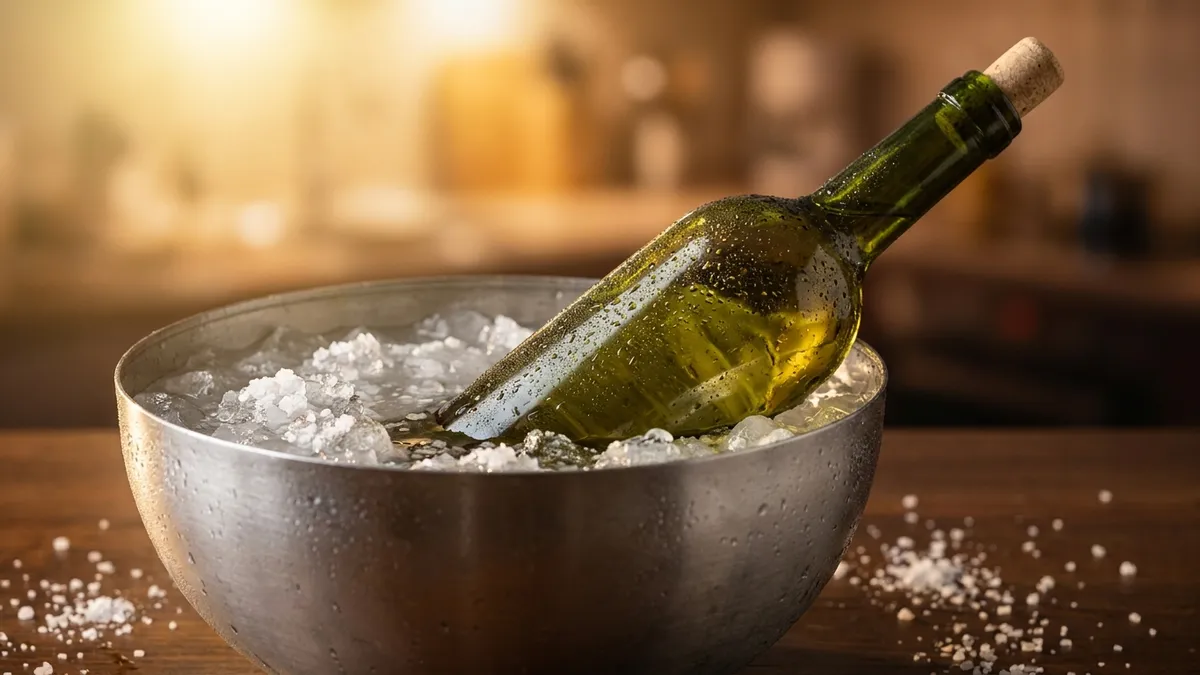
To chill wine fast, fill a bucket with roughly equal parts ice and cold water, stir in a generous handful of salt, and sink the bottle up to its neck. Turn it now and then. Salt lets the bath drop below 0°C, so this beats every other home method. Second best is the same bucket without salt. Third is a bottle wrapped in a wet towel in the freezer, where evaporation helps the cold air. A bare bottle in the freezer comes fourth, and the fridge is slowest. Sparkling wine gets the ice-water bucket for about half an hour, the standard Champagne method.
Which Method Chills Wine Fastest?
Salted ice water is fastest, then plain ice water, then a wet towel in the freezer, then a bare bottle in the freezer, and the fridge is slowest. The ranking follows what touches the glass: more water against the bottle means faster cooling.
Still air, even very cold air, pulls heat out slowly, and that is the one surprise in this topic. People assume the freezer wins because it is the coldest place in the kitchen. The freezer does hold colder air, but air is a poor carrier of heat, so the bottle sits in a thin blanket of its own warmth.
| Method | What pulls the heat out | Speed | Main risk | Use it when |
|---|---|---|---|---|
| Ice, water and salt | Water below 0°C touching all the glass | Fastest | Salty drips on the label | Guests arrive in minutes |
| Ice and water, no salt | Water at about 0°C | Fast, steady | Almost none | Sparkling wine, or a bottle that stays cold all evening |
| Wet towel in the freezer | Cold air plus evaporation from the towel | Medium | Forgetting it | You have no ice |
| Bare bottle in the freezer | Very cold, still air | Slow | Frozen wine, pushed cork, cracked glass | You can set a timer and stay nearby |
| Fridge | Cool, still air | Slowest | None | You are planning hours ahead |
The rule for choosing: if guests arrive within the hour, use salted ice water; if dinner is tomorrow, use the fridge and skip the fuss. For how each style should taste once it is cold, the wine serving temperature chart has the targets by grape.
Why Does Salted Ice Water Work Best?
Salted ice water works best because water touches every part of the glass and carries heat far better than air, and salt makes that water colder than plain ice water can get. Together they pull heat out of a bottle faster than any freezer shelf.
The first effect is thermal conductivity (how quickly a material passes heat through itself). Liquid water measures about 0.61 in the standard units. Still air measures about 0.026. That is a gap of roughly 23 times, which is why a cold swim chills you far faster than standing in cold air at the same temperature.
The second effect comes from the salt. Dissolved salt lowers the freezing point of water, so a salted bath, called a brine, can stay liquid below 0°C. In theory a salt solution can reach about minus 21°C. A kitchen bucket stays well above that, because the ice melts and the room keeps adding warmth. Even a few degrees below zero steepens the gap between wine and bath, and a steeper gap moves heat faster.
To build one, fill a bucket or deep pot with ice and cold water in roughly equal parts. Stir in a big handful of table salt until it dissolves. Push the bottle down until the water covers its shoulders. If the level stops short of the shoulders, add water rather than more ice, since water is what does the work.
Is a Plain Ice Bucket Good Enough?
Only if it holds water as well as ice. A bucket of loose ice cubes touches the bottle at a handful of points and leaves air in every gap. That trapped air insulates the glass, so the wine cools slowly until you pour in water.
This is odd at first, because ice itself conducts heat well. At the melting point, ice measures about 2.18 in the same units as water's 0.56, roughly four times higher. The trouble is contact. A round bottle pressed into lumpy cubes touches them at a few spots, and the rest of the glass faces air. Pour water into the bucket and every gap fills with liquid that touches the bottle all the way round.
Plain ice water, without salt, sits at about 0°C and stays there as long as ice is left. That makes it the second fastest method and the steadiest.
If the bucket holds only ice, pour in cold water up to the same level before the bottle goes in. If the ice has all melted by the second pour, add a fresh scoop so the water stays near zero. For keeping an open bottle fresh after the party, see how long wine lasts after opening.
Does the Wet Towel Trick Really Work?
Mostly, yes. A bottle wrapped in a soaked towel is widely reported to chill faster in the freezer than a bare bottle, most likely because water evaporating from the cloth draws heat out of the glass beneath it. It still trails a bucket of ice water, so save it for nights with no ice.
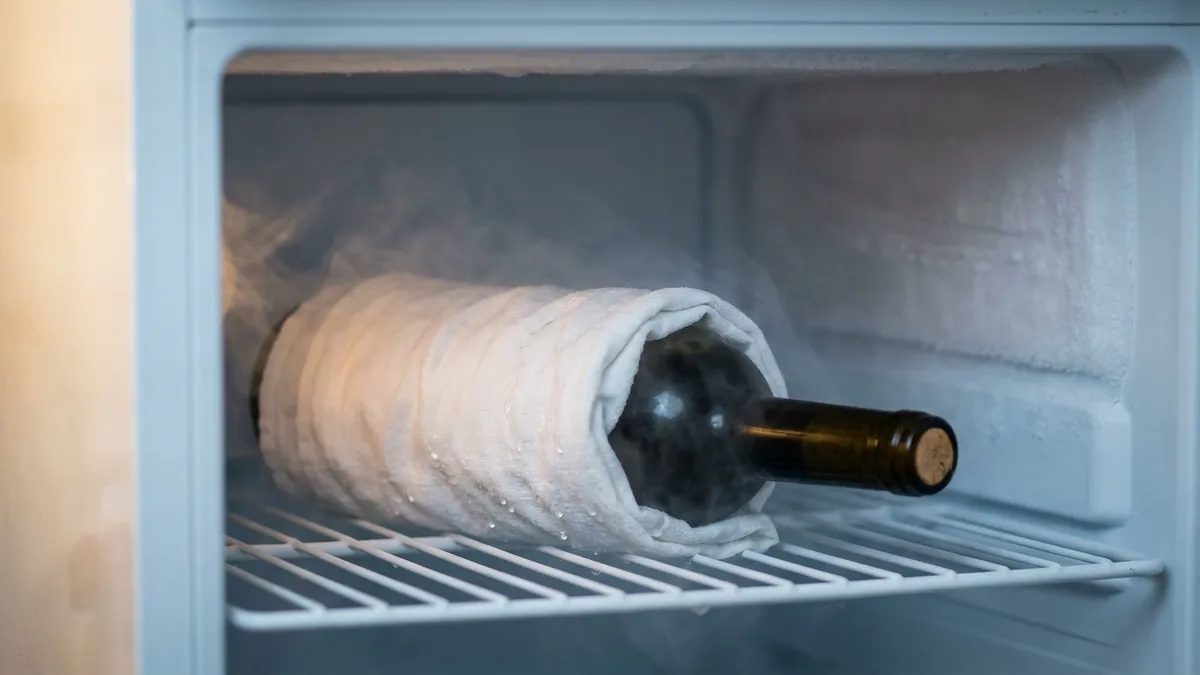
This is evaporative cooling (heat lost as water turns to vapour). It is the same reason wet skin feels cold in a breeze. Turning liquid water into vapour takes a large amount of energy, and the water takes that energy from whatever it touches. Here it touches the bottle.
Soak a tea towel or a few sheets of paper towel under the cold tap. Wring it out just enough that it stops dripping, then wrap it snugly around the body of the bottle. Lay the bottle flat on a freezer shelf.
Use this method when you have no ice and no time. If the towel starts to stiffen with frost, the bottle is ready to check. Take it out, unwrap it, and pour a small taste.
Is It Safe to Put Wine in the Freezer?
Yes, for a short chill that you are timing. The danger is the bottle you forget. Wine is mostly water, and water expands by about 9% as it freezes, which can push the cork up the neck or crack the glass.
That expansion has to go somewhere. A cork or screw cap can creep up the neck and let air in. If the closure holds, the glass itself can give. Alcohol freezes at a much lower temperature than water. So wine turns to slush before it turns solid, but a home freezer left long enough will still freeze most of it.
A bare bottle in the freezer is slower than salted ice water for the conductivity reason above: the air around it is very cold but carries heat poorly.
If you put a bottle in the freezer, set a phone timer before the door closes and check it every ten minutes. If a forgotten bottle has turned to slush, stand it upright in the fridge to thaw slowly, and check that the cork has not moved. Sparkling wine carries the most risk here. The bottle is already under pressure, so it belongs in ice water instead. For more on corks and caps, see screw cap vs cork.
Should Sparkling Wine Be Chilled Differently?
Yes. Sparkling wine is best chilled in a bucket of ice and water for about half an hour before opening. That is the standard way to serve Champagne. The cold also leaves the wine less gassy, so the cork comes out without a spill.
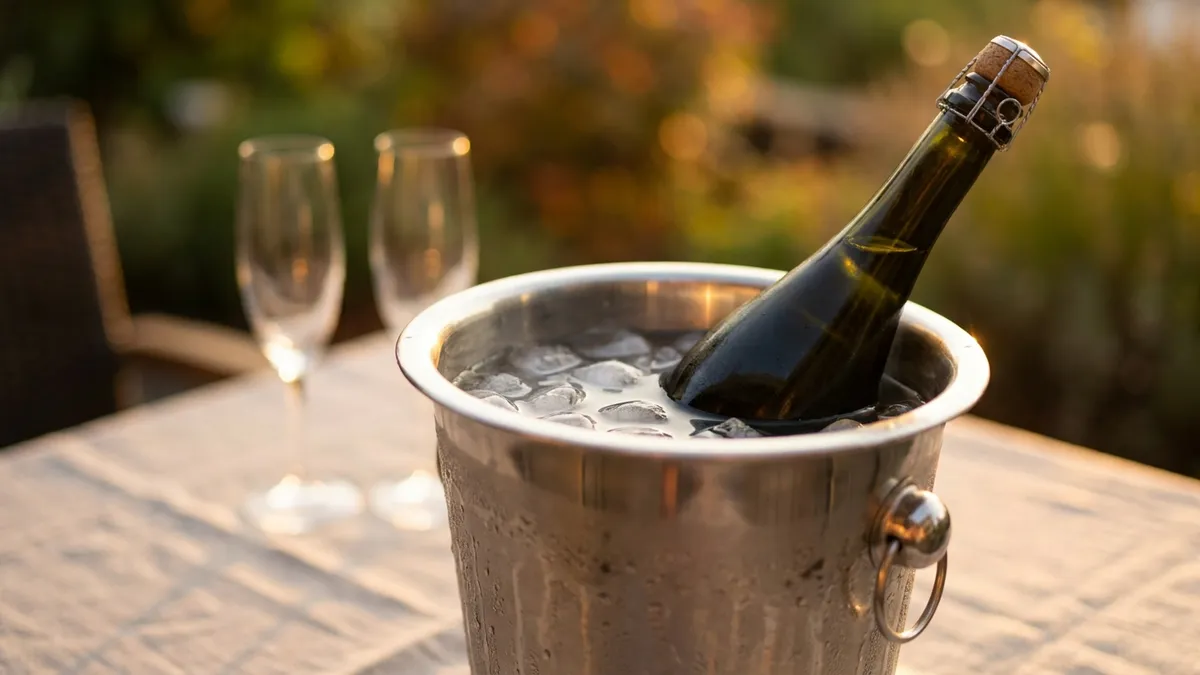
Champagne is always served cold, at an ideal 7 to 9°C. Warm sparkling wine holds its bubbles poorly. At around 18°C the carbonation escapes quickly, which is why a warm bottle foams out of the neck the moment the cork lifts. Champagne buckets are often larger than standard wine buckets for this reason: the bigger bottle needs more ice and water around it.
Salt works here too if you are short of time, but keep the handling gentle. Turn the bottle slowly rather than spinning it hard. Leave it upright in the bath for a few minutes before you open it, so the wine settles.
If the cork pushes hard against your palm as you ease it out, the wine may still be too warm: close your grip and give it more time in the ice water. The guide to opening a wine bottle covers the safe way to ease out a sparkling cork, and how to taste sparkling wine covers what to look for once it is in the glass.
How Cold Should Each Wine Get?
Sparkling and sweet wines taste best at 6 to 10°C, and light reds at 10 to 12°C. Fuller dry whites want 12 to 16°C. Tannic reds (the ones with a drying grip on your gums) want 15 to 18°C. Stop chilling once a bottle reaches the top of its range.
The reason to stop in time is aroma. Warmth lets the scented compounds in wine lift out of the glass, and cold holds them down. Cold also makes the palate more sensitive to tannin and bitterness. A red served too cold tastes hard and drying. A white served too cold smells of very little and tastes of little beyond acidity (the tartness that makes your mouth water).
That is also why fast chilling suits reds as well as whites. A light red such as Gamay from Beaujolais wants a real chill, and the Beaujolais guide explains why that grape is so good cool. A fuller red from a warm kitchen needs only a short dip to reach the top of its range. Rosé belongs in the coldest range, with sparkling and sweet wines; see the rosé wine guide for its styles.
If a red tastes hard and drying, it is too cold: cup the bowl and wait a few minutes. If a white smells of almost nothing, let the glass sit before judging it. The how temperature affects wine taste explainer shows the same wine at three temperatures side by side.
How Do You Cool a Glass That Is Already Poured?
Put the bottle back in the ice bath between pours, and keep ice cubes out of the glass. Melting ice waters the wine down, which thins its flavour and blunts its acidity. For a single warm glass, frozen grapes do the job without the water.
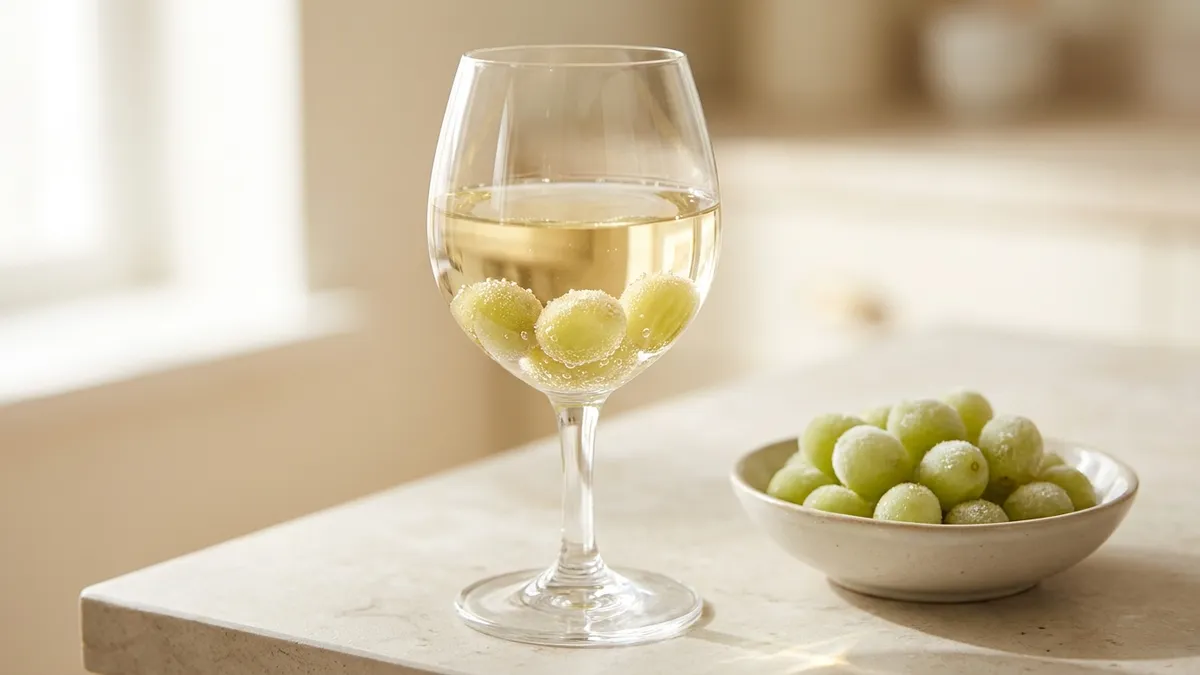
Frozen grapes are the common kitchen fix. Wash a small bunch of seedless grapes, pat them dry, and freeze them on a plate ahead of time. Drop two or three into a glass that has turned warm. They cool the wine without adding water, and you can eat them at the end.
Smaller pours help too. A small pour is finished before it warms, and the rest of the bottle stays cold in the bath. Hold the glass by the stem rather than the bowl, so your hand does not warm the wine; the wine glass guide explains why stems exist at all.
If the glass is warm, return the bottle to the bath rather than reaching for ice.
What If You Have No Ice at All?
Use water anyway. Fill a sink or a deep pot with the coldest tap water you have and sink the bottle in it. Cold tap water still pulls heat from the glass far faster than the air in a fridge does.
Swap the water for fresh cold water once it feels warm. Then move the bottle to the fridge, or wrap it in a wet towel and put it in the freezer with a timer set. For a party where ice is short, plan the fridge space a day ahead. The wine tasting party guide covers how many bottles to chill. The serving and storage hub collects the rest of the practical detail.
Chill One Bottle Two Ways Tonight
Pick an inexpensive dry white, such as a Sauvignon Blanc or a Pinot Grigio. Chill it in salted ice water, then pour two small glasses. Taste one straight away and leave the other on the table for ten minutes.
The cold glass will taste sharper and smell of less. The warmer one will show more fruit. To log the comparison, the Sommy app at sommy.wine walks you through each glass and keeps your notes. Chill one bottle in salted ice water tonight, then pour two glasses and taste them side by side.
Sources
- Wikipedia: Wine (serving temperatures and temperature effects on aroma and tannin)
- Wikipedia: Champagne (serving temperature and ice-bucket chilling)
- Wikipedia: Thermal conductivity (values for water, air and ice)
- Wikipedia: Freezing-point depression (salt and water)
- Wikipedia: Water (expansion on freezing)
Frequently Asked Questions
What is the fastest way to chill wine?
A bucket of ice, water and salt is the fastest safe method. Water conducts heat about 23 times better than air, so it beats the colder air of a freezer. Salt lowers the freezing point of the bath, so the water can drop below 0°C. Sink the bottle to its neck and turn it now and then to keep fresh cold water against the glass.
Is it safe to put wine in the freezer to chill it?
Yes, for a short chill you are watching. Set a timer before you close the freezer door. Wine is mostly water, and water expands by about 9% as it freezes, so a forgotten bottle can push out its cork or crack the glass. Sparkling wine is the one to be most careful with, since the bottle is already under pressure.
Does adding salt to ice water really chill wine faster?
Yes. Salt dissolved in water lowers its freezing point, so a salted ice bath can sit below 0°C while staying liquid. In a lab, salt water can reach about minus 21°C, though a home bucket stays well above that. The colder the bath around the glass, the faster heat leaves the wine, so a handful of salt makes a real difference.
How do you chill wine without ice?
Fill a sink or pot with the coldest tap water you have and sink the bottle in it, then move it to the fridge. Water pulls heat from glass far faster than air, so even cool tap water starts the job well. A wet towel wrapped around the bottle in the freezer is the other option, as long as you set a timer.
Can you put ice cubes in wine?
You can, but melting ice waters the wine down, which thins its flavour and blunts its acidity. Frozen grapes are a better fix for a glass that has turned warm: they cool the wine without adding water. For a whole bottle, return it to an ice-water bath between pours instead of adding ice to each glass.
Should you chill red wine?
Yes, most reds are served cooler than a warm room. Light reds such as Beaujolais show best at 10 to 12°C, and fuller, tannic reds at 15 to 18°C. A short spell in ice water or the fridge brings a warm red into range. Stop before it gets too cold, because chill makes tannin feel harder and hides aroma.
Sommy Team
LinkedInFounder & Wine Educator
The Sommy Team is building the world's most approachable wine education app, helping beginners develop real tasting skills through structured courses and AI-guided practice.