Wine Thermometer Guide: Measure the Glass, Not the Bottle

By the Sommy Team — AI-assisted, human-edited.
Updated Oct 1, 2026
Contents (9)
- How to Use a Wine Thermometer, in One Paragraph
- Do You Actually Need a Wine Thermometer?
- Which Type of Wine Thermometer Should You Use?
- Should You Measure the Bottle or the Glass?
- Can You Use an Infrared or Kitchen Thermometer?
- What Reading Are You Aiming For?
- What Do You Do With the Reading?
- How Do You Check Wine Temperature Without a Thermometer?
- Why Does Wine Warm Up in the Glass?
TL;DR
A probe or instant-read thermometer dipped in a freshly poured glass gives the real serving temperature. A strap on the bottle reads through glass and gives an estimate. Infrared guns read the glass surface. Aim for 14 to 19 °C for reds and 6 to 12 °C for whites, then chill or rest the wine to close the gap.
A wine thermometer tells you the truth only if it reads the wine you are about to drink. A probe dipped into a freshly poured glass gives the real number. A strap wrapped around the bottle gives an estimate through the glass wall. An infrared gun reads the outside of the bottle and nothing else. Measure in the glass, compare with the range for the style, and fix the gap with ice water or a few minutes on the counter.
How to Use a Wine Thermometer, in One Paragraph
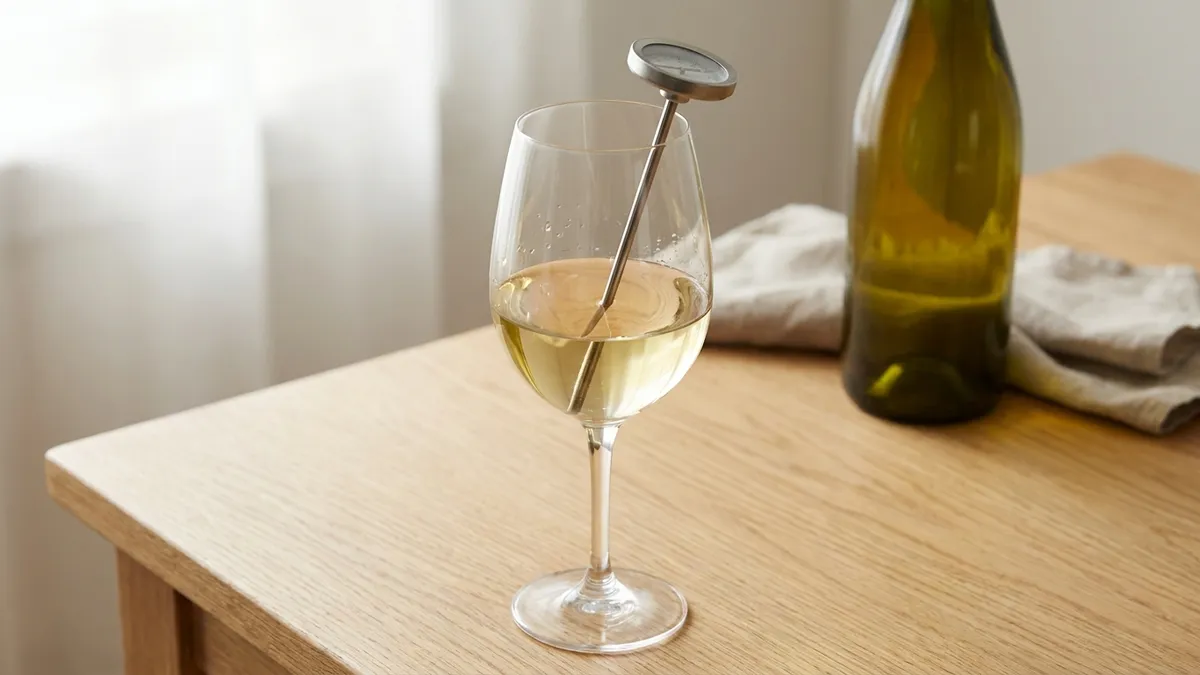
Pour a small glass, dip a clean probe (a thin metal stem that sits in the liquid) into it, and wait a few seconds until the number holds. Compare it with the target: about 14 to 19 °C (57 to 66 °F) for reds and 6 to 12 °C (43 to 54 °F) for whites. Too warm: sink the bottle in iced water for a few minutes. Too cold: leave it on the counter or cup the bowl. On an unopened bottle, a strap thermometer gives a workable estimate.
Do You Actually Need a Wine Thermometer?
Most people do not need one: fridge times and a hand on the bottle get everyday wine close enough. A thermometer pays off in three cases: reds kept on a shelf in a warm flat, guests who need each wine right, or learning what 10 °C and 16 °C feel like.
If you only drink straight from the fridge, use the time rules further down and skip the gadget. If you keep reds at room temperature or pour for others, buy a cheap strap thermometer: a casual drinker needs nothing more. If you want to taste how temperature changes a wine, use a probe, because it reads the glass. The guide to how temperature affects wine taste explains what each few degrees does to aroma, acidity and tannin.
Which Type of Wine Thermometer Should You Use?
Use a probe or instant-read thermometer when the bottle is open and you want the true number, and a strap when the bottle is still sealed. The strap thermometer (a band or sticker that wraps around the bottle) is the cheapest and most common. Digital strap versions with a small screen cost little more and are easier to read.
| Type | Where it reads | Accuracy | Cost | Use it when |
|---|---|---|---|---|
| Probe (dip-in) | The wine itself, in the bottle neck or the glass | Highest | Low to mid | The bottle is open and you want the real serving number |
| Instant-read kitchen thermometer | The wine itself | High, if washed and held still | Mid, often already in the drawer | You own one for cooking and want to skip a new gadget |
| Strap or stick-on band | The outside of the bottle, through the glass | Estimate; lags after chilling | Low | The bottle is closed, in the fridge or on the rack |
| Digital strap | The outside of the bottle | Estimate, easier to read | Low | You want a strap with a clear screen |
| Infrared gun | The outer glass surface only | Rough guide | Mid | You want a quick scan of a whole rack, not a serving number |
| No thermometer | Your hand and the clock | Within a few degrees | Free | Everyday bottles straight from the fridge |
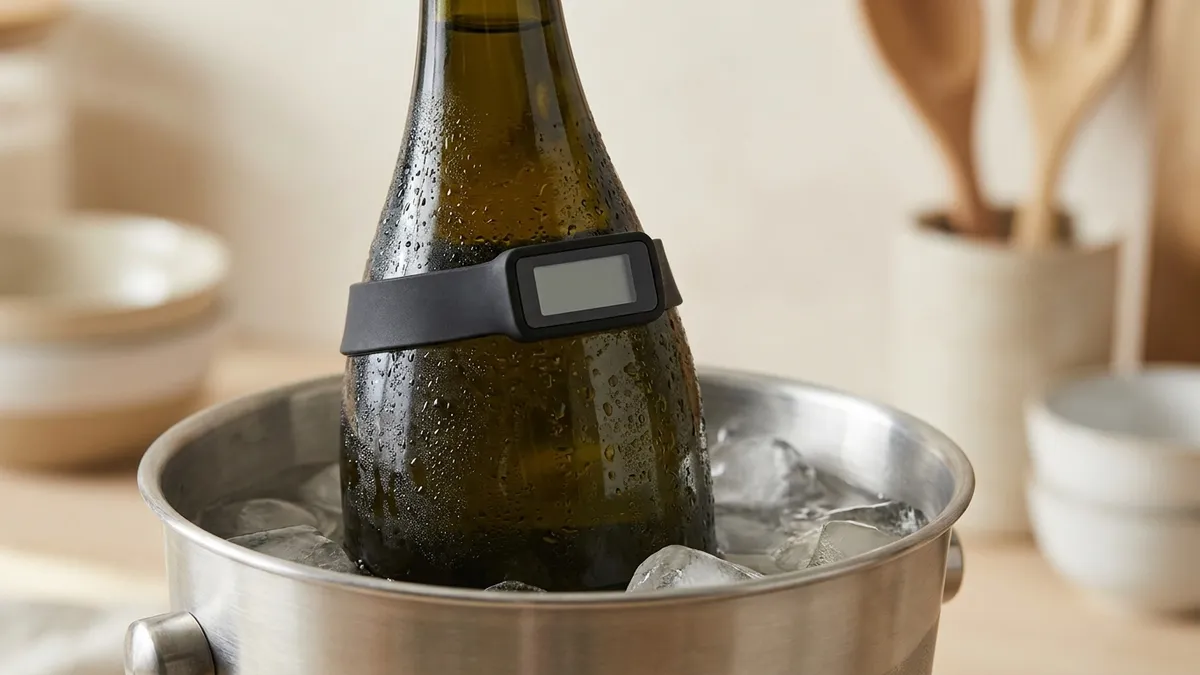
A probe needs an open bottle, which is its only real drawback. Dip it at least a few centimetres into the wine and keep your fingers off the stem, since body heat travels along the metal.
Should You Measure the Bottle or the Glass?
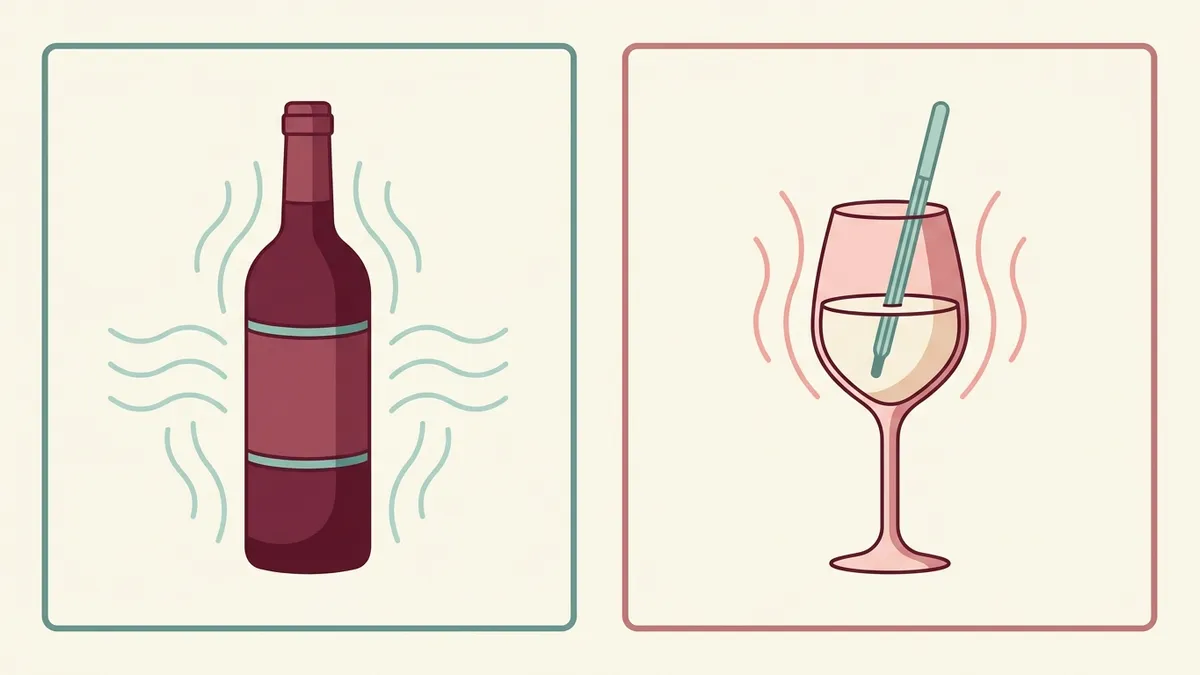
Measure the glass if you can, because that is the wine you taste. The bottle and the glass drift apart as soon as you pour. A full bottle holds its cold well. A glass holds a small amount of wine, surrounded by room air and often a warm hand.
A strap reading is the temperature of the bottle's glass wall, not of the wine inside. After an hour in the fridge, the outer glass and the wine agree closely. Straight out of an ice bucket, the wall changes faster than the liquid, so the strap misreads until the two settle. Over a label, the paper insulates the sensor and the reading slows down further.
If you need one number, take it in the glass right after pouring. On a sealed bottle, put the strap on a bare patch of glass, wait two minutes, and keep your hand off it.
Can You Use an Infrared or Kitchen Thermometer?
A clean instant-read kitchen thermometer (a probe that settles in seconds) works well; an infrared gun reads the outside of the bottle, not the wine. Dip the probe into an open bottle or stir it through a poured glass. Wash it first so it carries no garlic or meat smell into the wine.
An infrared thermometer measures the heat a surface gives off. Point it at a bottle and it reports the outer glass. Shiny and reflective surfaces read less reliably, and condensation on a cold bottle adds another layer between the sensor and the wine. Use it to sweep a rack or a fridge shelf for a rough comparison. Never use it to decide that a red is ready to pour.
What Reading Are You Aiming For?
Reds sit between 14 and 19 °C (57 to 66 °F) and whites between 6 and 12 °C (43 to 54 °F), with lighter styles at the cool end. Anchor points: Pinot Noir 16 °C, Cabernet Sauvignon 17 °C, Chardonnay 10 °C, Sauvignon Blanc or Riesling 9 °C.
Above 20 °C (68 °F), reds can start to smell of alcohol more than fruit.
"Room temperature" is the trap. The phrase dates from cooler houses, and a centrally heated room is often warmer than any red wants. The full list by style, from sparkling to fortified, sits in the wine serving temperature chart, and the serving temperature cheat sheet puts it on one page.
What Do You Do With the Reading?
Too warm, chill it in iced water for a few minutes; too cold, wait or cup the glass. The size of the gap decides the method, because a small gap closes on its own while a big one needs ice or your hands. Match the reading to the fix:
- 2 to 3 °C too warm: put the bottle in the fridge door for 15 to 20 minutes, or serve it and let the first glass be the warm one.
- More than 3 °C too warm: sink the bottle up to its neck in a bucket of ice and water. A bath like this is a 10 to 15 minute job, and salt in the water speeds it up. The guide to chilling wine fast compares every method.
- A few degrees too cold: leave the bottle on the counter and pour smaller glasses, since a small pour warms faster.
- Far too cold for a red: cup the bowl of the glass in both hands, or stand the bottle in lukewarm water. The guide to warming up red wine gives the safe methods.
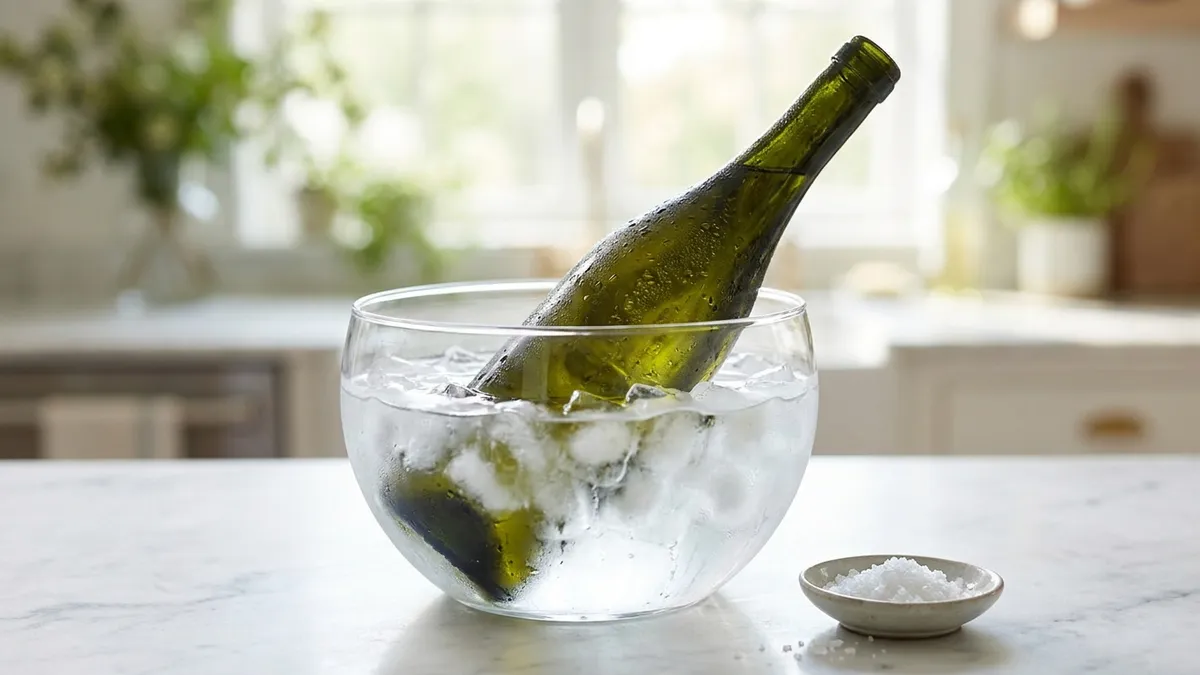
Skip the freezer unless you set a timer. A forgotten bottle can crack or push out its cork as the wine freezes and expands. Twenty to thirty minutes is the safer limit, and the ice bath is faster anyway.
How Do You Check Wine Temperature Without a Thermometer?
Use the clock: about 90 minutes in the fridge takes a bottle from 21 °C to 10 °C (70 to 50 °F). That is white-wine range. If a white comes home warm at 5 pm, it is ready at 6:30. Lying the bottle down helps only a little, cutting the time to around 80 minutes.
For reds, work backwards. If a red has been in a warm room, it goes into the fridge for a short spell before serving to drop a few degrees. A red from a cool cellar or a wine fridge comes out a little before you pour. The wine cellar temperature guide covers storage temperatures, which run cooler than serving.
Then use touch. A white should feel cold against the inside of your wrist. A red should feel cool, like a glass of tap water, never warm. After a few weeks of checking your guess against a probe, your hand learns to guess closer.
Why Does Wine Warm Up in the Glass?
A glass holds a small volume of wine with a large surface exposed to room air, so it gains heat much faster than the bottle. A hand on the bowl adds body heat directly. Thin glass passes that heat through quickly.
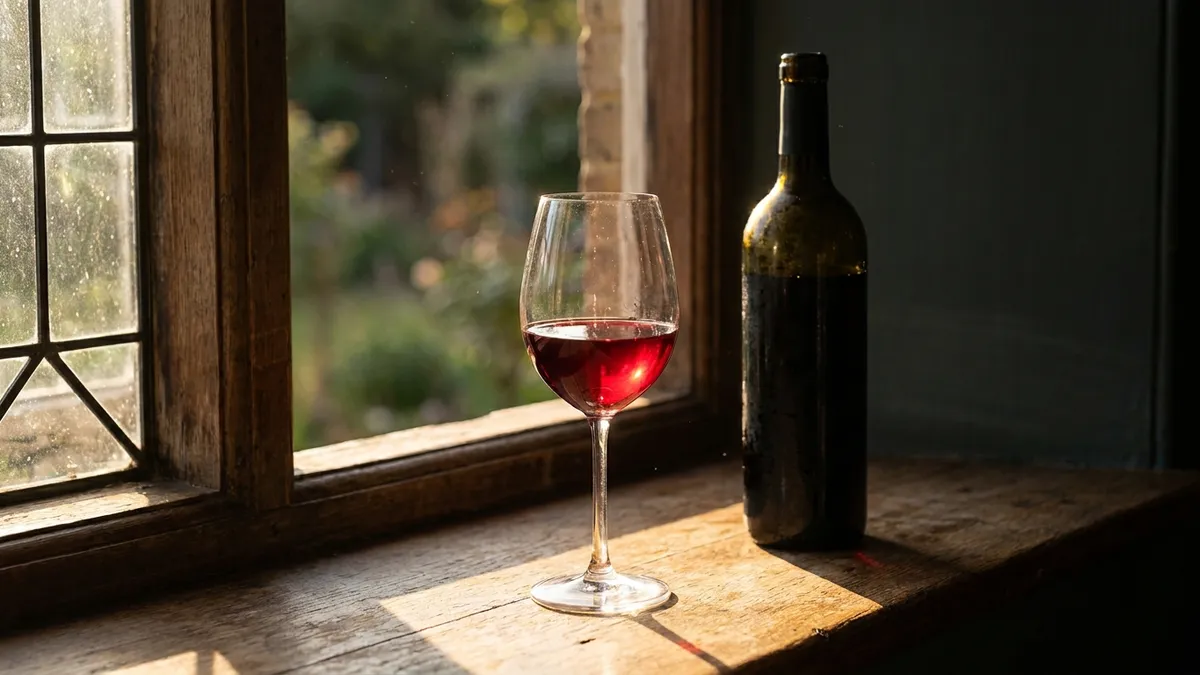
If the room is warm, serve every wine a degree or two below its target, because it climbs in the glass within minutes. Hold stemmed glasses by the stem; the wine glass guide explains how shape and stem change what you smell. Pour smaller amounts and top up, so each sip stays close to the number you aimed for.
More on serving and keeping wine sits in the serving and storage hub, including how to store wine at home. The Sommy app at sommy.wine has a bite-sized Wine 101 course and an AI-guided tasting mode that logs every glass. Tonight: pour a glass, probe it straight away and again 15 minutes later, and taste the wine at both readings.
Sources
Frequently Asked Questions
Do you need a wine thermometer?
Most home drinkers do not. Fridge time rules and a hand on the bottle get you close enough for everyday wine. A thermometer earns its place if you keep reds in a warm flat, serve guests often, or want to learn what 10 °C and 16 °C actually feel like. A cheap strap model covers casual use.
Where do you put a wine thermometer, in the bottle or the glass?
In the glass if you want the number that matches what you taste. A clean probe dipped into a freshly poured glass reads the wine itself. A strap thermometer wraps around the outside of the bottle and reads through the glass wall, so treat its number as an estimate, and take it on a bare patch rather than over the label.
Are strap-on bottle thermometers accurate?
They are accurate enough for a casual check but not exact. A strap reads the outside of the bottle, so it lags behind the wine when the bottle has just come out of the fridge or an ice bucket. Give it a couple of minutes to settle, keep your hand off it, and read it as a rough guide rather than a precise number.
Can you use an infrared thermometer on a wine bottle?
Only as a rough guide. An infrared thermometer measures the heat given off by a surface, so on a bottle it reads the outer glass, not the wine inside. Shiny or reflective surfaces also read less reliably. For a true number, use a probe in an open bottle or in a poured glass.
Can I use a kitchen or meat thermometer for wine?
Yes. A clean instant-read kitchen thermometer works well: you can probe an open bottle or stir it through a poured glass. Wash and dry the probe first so it carries no food smell, and hold it in the wine for a few seconds until the number stops moving. Avoid oven probes with slow, coarse dials.
How do you check wine temperature without a thermometer?
Use time and touch. A bottle takes about an hour and a half in the fridge to drop from 21 °C to 10 °C, so use that to time whites. Pull reds from a warm room into the fridge for a short spell before serving. A bottle that feels cool, not cold, against your cheek or wrist is close to red-wine range.
What temperature should red wine be served at?
Roughly 14 to 19 °C (57 to 66 °F), depending on the style. Lighter reds such as Pinot Noir sit around 16 °C and fuller reds such as Cabernet Sauvignon around 17 °C. A centrally heated room is often warmer than that, so most reds kept in the living room benefit from a short chill before serving.
Sommy Team
LinkedInFounder & Wine Educator
The Sommy Team is building the world's most approachable wine education app, helping beginners develop real tasting skills through structured courses and AI-guided practice.