Wine Cellar Temperature and Humidity: The Ideal Range

By the Sommy Team — AI-assisted, human-edited.
Updated Sep 24, 2026
Contents (10)
- Wine Cellar Temperature and Humidity, in Under 100 Words
- What Is the Ideal Temperature for a Wine Cellar?
- What Humidity Level Does Wine Actually Need?
- Why Do Temperature and Humidity Matter More Than People Think?
- What Happens If Your Cellar Gets Too Hot or Too Cold?
- What Happens If the Air Is Too Dry or Too Humid?
- Do You Need to Store Wine on Its Side?
- Can You Store Wine Safely Without a Cellar or Wine Fridge?
- Does Light or Vibration Matter as Much as Temperature and Humidity?
- How Do You Set Up a Home Space That's Good Enough?
TL;DR
The ideal wine cellar temperature and humidity sit around 55°F (13°C) and 50-70% relative humidity, though named sources range from 45-65°F and 50-80% humidity. Stability matters more than hitting an exact number. Heat speeds up the same chemistry that makes wine taste stewed, and dry air shrinks corks until oxygen gets in.
Wine cellar temperature and humidity advice online is oddly inconsistent. One retailer says 55°F and 60% humidity is the scientific ideal. Another says 70% humidity is correct. A third gives a 50 to 80% "safe range" and calls it a day. That leaves two open points: which number to build your storage around, and what missing it costs.
Nearly every named, citable source lands between 50°F and 65°F (Wine Spectator stretches down to 45°F), and, where they state one, between 50% and 80% humidity. No single number is scientifically proven. There is a workable range, and each source picked its point inside it for its own reason.
Wine Cellar Temperature and Humidity, in Under 100 Words
Aim for roughly 55°F (13°C) and 50-70% relative humidity, and treat 50-65°F and 50-80% as the working range, since sources disagree that precisely. Stability matters more than exact precision: a steady room a few degrees off the ideal beats one that swings up and down daily. Humidity's job is narrower: keep natural corks moist enough that they do not shrink and let oxygen in. If your storage stays below roughly 75-77°F (24-25°C), it sits under the sustained-heat threshold where damage starts.
What Is the Ideal Temperature for a Wine Cellar?
Roughly 50-65°F (10-18°C), with 55°F (13°C) as the number most sources converge on. WineFolly puts the ideal at 55-59°F. Wine Spectator gives a wider 45-65°F, noting 55°F is "often considered optimal." Stag's Leap Wine Cellars lands at 55-60°F. None of these disagree in any way that changes what you should do at home.
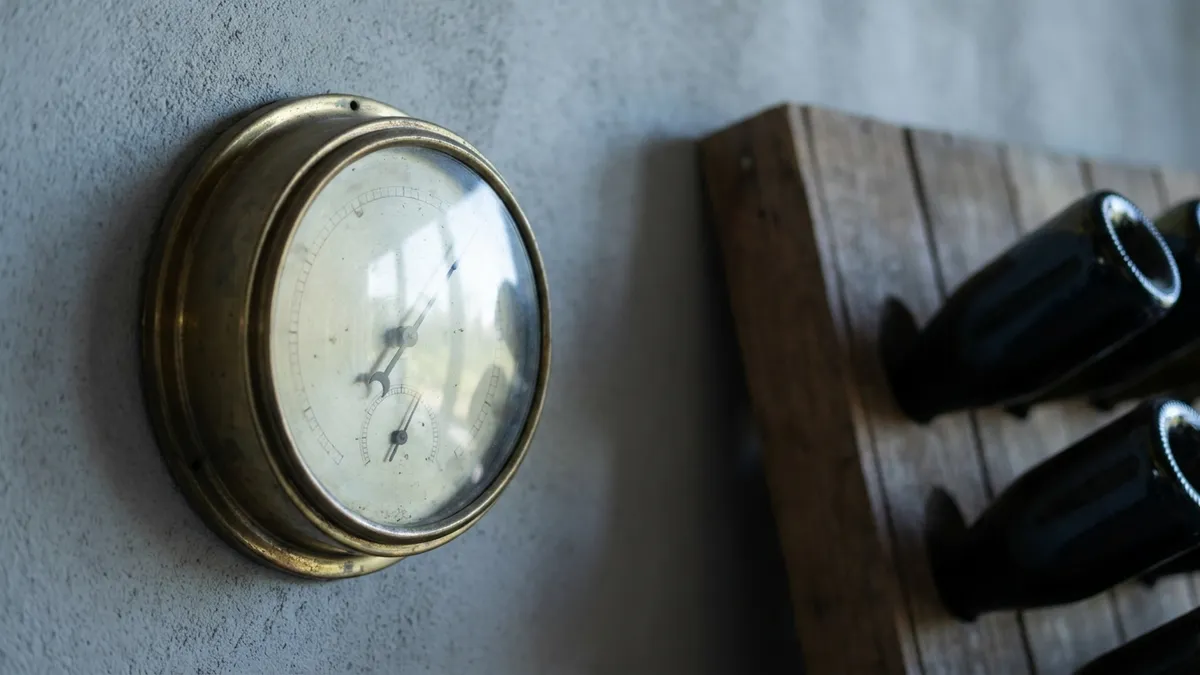
Named wine writers spread out slightly wider once you look past the retailers. According to Wikipedia's page on wine storage, Jancis Robinson favours 50-59°F (10-15°C), Tom Stevenson recommends closer to 52°F (11°C), and Karen MacNeil suggests around 55°F (13°C). Every one of those figures still sits inside the 45-65°F band the other sources give. If your storage spot holds steady anywhere in that range, you are not missing anything meaningful by not hitting one precise degree.
What Humidity Level Does Wine Actually Need?
Somewhere between 50% and 80% relative humidity, with most sources treating 60-70% as the sweet spot. WineFolly cites 55-75%. Wine Spectator and Stag's Leap Wine Cellars both give a "safe range" of 50-80%, each naming 70% as their stated ideal. Sources disagree more here than on temperature, because humidity's only job is protecting the cork.
Below roughly 50%, a natural cork can dry out over months, shrink slightly in the neck, and let air seep past it. Above 80% for long periods, the bigger risk is cosmetic: mould on labels and on the outside of the cork, rather than damage to the liquid inside the bottle. A target of 50-70% covers the meaningful risk on both sides without chasing a number nobody can fully agree on.
Why Do Temperature and Humidity Matter More Than People Think?
Because both act on the same chemistry for as long as a bottle sits in storage, at ordinary temperatures as well as extreme ones. Heat speeds up the oxidation and esterification reactions that slowly change a wine's flavour. Dry air attacks the cork, the one physical barrier that slows oxygen from reaching the wine.
How heat speeds up aging
Heat's effect follows a rough Arrhenius-style rule: reaction rates roughly double for each meaningful jump in temperature. Wikipedia's wine storage page cites a doubling every 18°F (10°C), while other summaries of the same general chemistry use an 8°C figure instead. The two numbers disagree, so read "doubling" as a rough direction: warmer storage reliably ages wine faster, at no single agreed rate.
WineFolly attributes a related finding to researcher Dr. Fulvio Mattivi. Wines kept in a room-temperature closet lost colour, and the compounds that shield wine from oxygen, about four times faster than cellar-stored wines. Read that figure the same way, as a direction rather than a precise multiplier.
How dry air breaks the seal
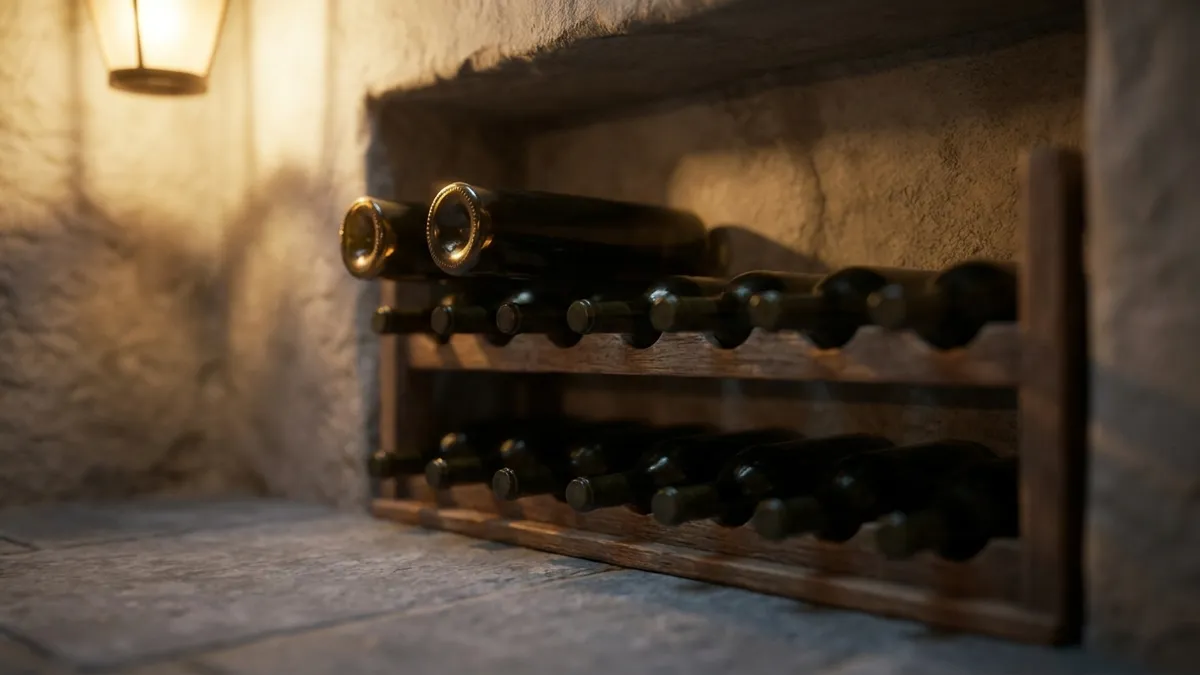
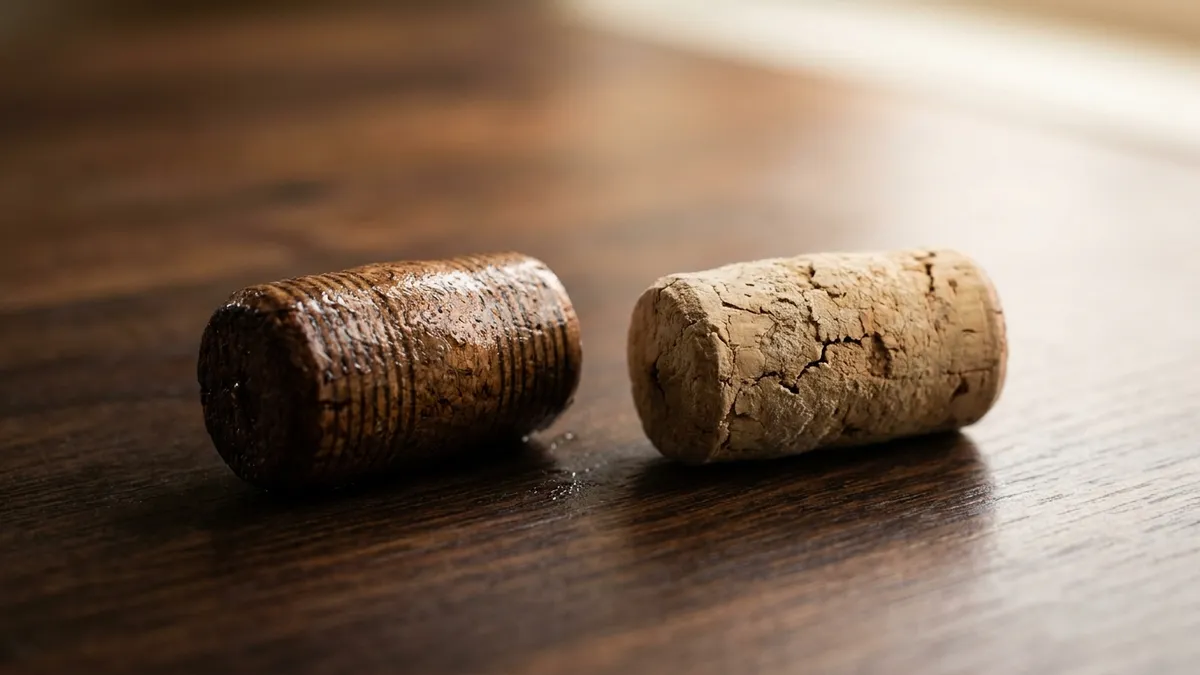
Dry air works on a different mechanism entirely. A natural cork is elastic and slightly porous by design, and it needs a certain amount of moisture to stay swollen enough to seal the bottle. Once humidity drops too low for too long, the cork loses that moisture, shrinks fractionally, and stops sealing as tightly. Air gets in, oxidation speeds up, and the wine tastes flat well before its time. This is exactly why bottles with natural corks are stored on their side: contact with the wine keeps the cork's inner face swollen even if the surrounding air runs dry.
| Source | Temperature | Humidity |
|---|---|---|
| WineFolly | 55–59°F (12–15°C) | 55–75% |
| Wine Spectator | 45–65°F (55°F often optimal) | 50–80% (70% stated ideal) |
| Stag's Leap Wine Cellars | 55–60°F (13–16°C) | 50–80% (70% stated ideal) |
| Jancis Robinson | 50–59°F (10–15°C) | Not stated |
| Tom Stevenson | About 52°F (11°C) | Not stated |
| Karen MacNeil | About 55°F (13°C) | Not stated |
What Happens If Your Cellar Gets Too Hot or Too Cold?
Sustained heat above roughly 75-77°F (24-25°C) is where real damage starts. Wine Spectator notes that anything above 70°F ages a wine faster than usually desirable. WineFolly's practical ceiling for casual storage without a dedicated cellar is 80°F (26.6°C) for about a year.
A brief spike, hours rather than days, is more forgiving. UC Davis researcher Cornelius Ough documented that wine can tolerate up to around 120°F (49°C) for a few hours without being ruined outright, per the same Wikipedia summary cited above.
Cold is a smaller, different problem. Storage that sits close to freezing does not damage wine so much as it nearly stops the aging process, which is harmless on its own. The real risk is the bottle actually freezing: the liquid expands as it turns to ice, and that expansion can push the cork partway out or crack the glass. A wine that has been briefly chilled for serving is nowhere near that threshold and will not be affected.
What Happens If the Air Is Too Dry or Too Humid?
Dry air is the more damaging of the two. Wine Spectator states plainly that dry air "will dry out the corks, which would let air into the bottle and spoil the wine." Once that happens, oxidation accelerates, fruit character fades, and the wine can taste flat or browned well before it should.
Excess humidity is a milder, mostly cosmetic problem. Very high humidity sustained for years can encourage mould on labels and on the outer surface of corks. That mould looks unappealing and can make labels illegible, but it does far less to the liquid than dry air does. If you have to err toward one side, slightly humid beats slightly dry.
Do You Need to Store Wine on Its Side?
No. Horizontal storage exists for one reason: keeping a natural cork in contact with the wine so it does not dry out. Wine Spectator says laying bottles down "is not necessary" for wine you plan to drink in the near to mid term. The same holds for a screwcap, glass stopper, or plastic cork.
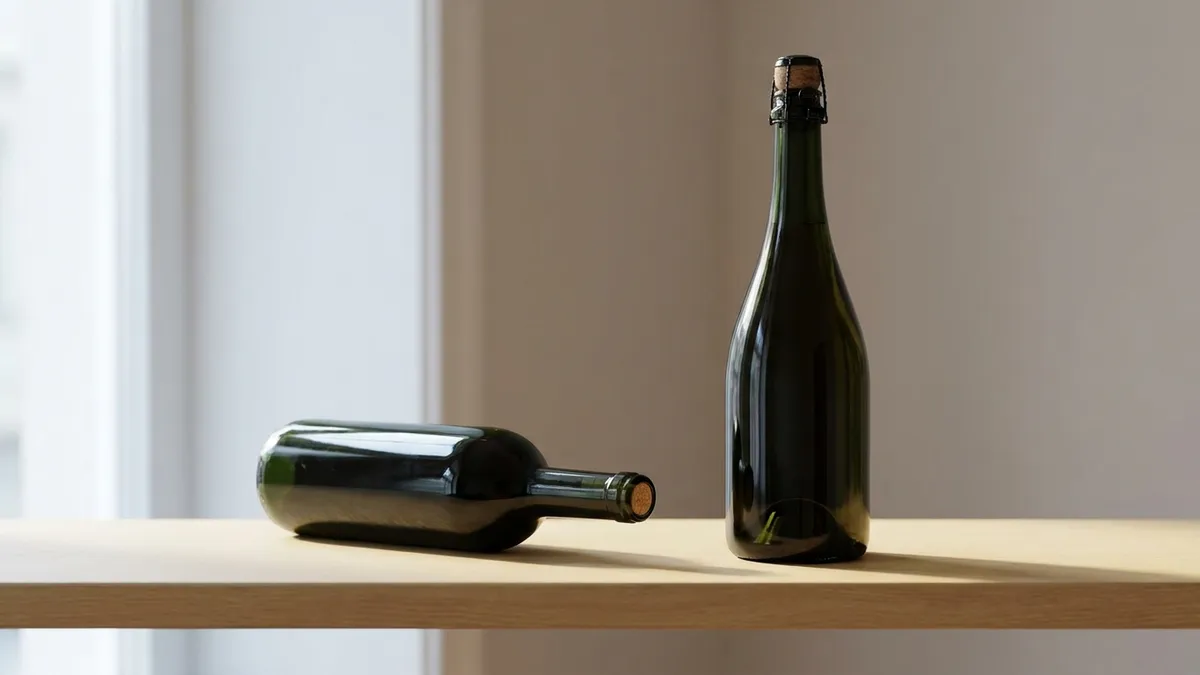
Sparkling wine flips the rule entirely. Because Champagne and other sparkling wines hold real internal gas pressure, Wikipedia's storage guidance notes they tend to age better kept upright, although the Champagne trade body (CIVC) still recommends storing them on their side. If you are unsure which closure a bottle has, our guide to screw cap vs cork covers how to tell at a glance and what each closure actually does to the wine over time.
Can You Store Wine Safely Without a Cellar or Wine Fridge?
Yes, for the large majority of bottles most people own. If a spot in your home stays under about 75°F and does not swing more than roughly 10°F in a day, it can stand in for a cellar for one to three years. The spot also needs little light and little vibration.
That covers nearly all wine under $30 you intend to drink within a normal timeframe, which is most of a home collection. Age-worthy wines and long holds are the exception: they still need the steady cold of a wine fridge or cellar.
Our guide to how to store wine at home walks through exactly which spots in an ordinary house tend to work, from an interior closet to the space under a bed. If your collection grows past a dozen bottles held for a year or more, or you want dedicated temperature control, move up to a wine fridge. Our wine fridge guide covers when the upgrade pays for itself and which features matter.
Does Light or Vibration Matter as Much as Temperature and Humidity?
Less than temperature, though light is a real long-term risk. Wine Spectator and Stag's Leap Wine Cellars both flag light, especially direct sunlight. It breaks down aromatic compounds over time, which is why wine bottles are traditionally tinted dark green or brown.
If household bulbs sit near stored wine, Wine Spectator prefers incandescent over fluorescent, since fluorescent bulbs emit small amounts of ultraviolet light.
Vibration is the smallest concern of the group for most home storage. Wine Spectator frames it as mainly relevant if you live near train stations or venues with constant heavy vibration, and notes it can disturb sediment in older wines rather than damaging young, everyday bottles. A study cited on Wikipedia's storage page found vibration can be used deliberately to speed up aging in controlled settings. Its conclusion was that doing so mostly hurts wine quality. If your wine sits on top of a running refrigerator, move it; that removes nearly all of the practical vibration risk.
How Do You Set Up a Home Space That's Good Enough?
Start with the steadiest spot in your home, not the coldest one. Walk through with a cheap thermometer over 24 hours and note which interior spot barely moves. An interior closet or cupboard on a wall shared with another heated room usually beats anything near an exterior wall, a kitchen, or a window.
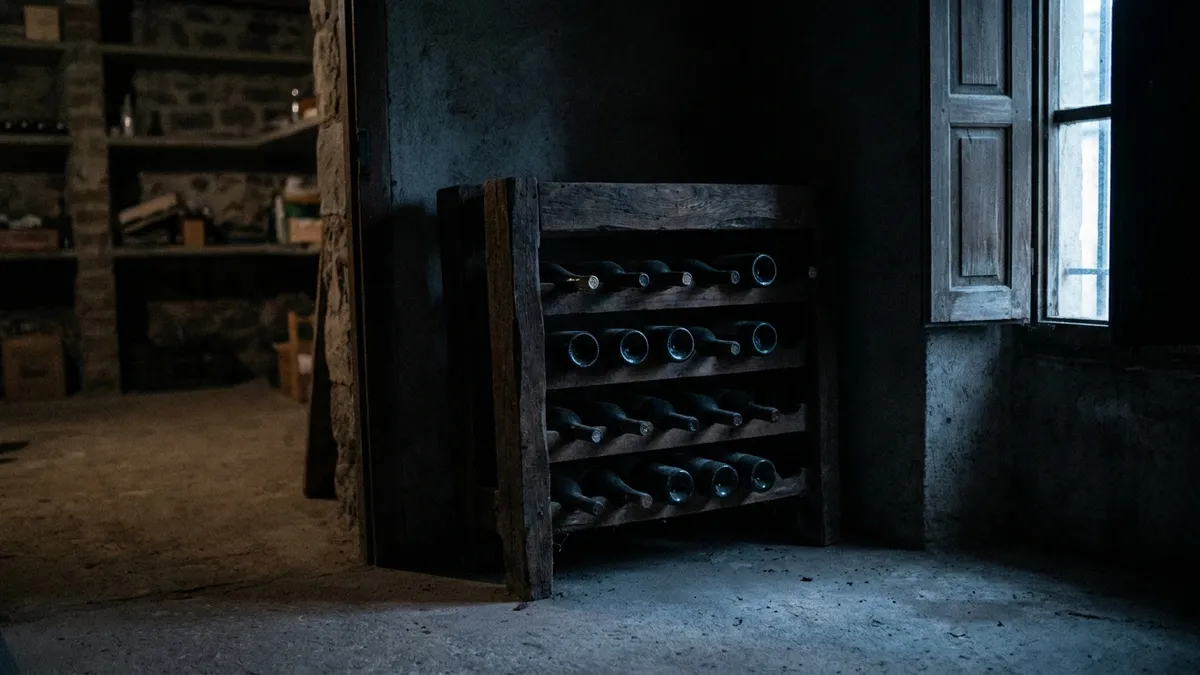
Confirm that spot stays under roughly 75°F and does not swing more than about 10°F across a normal day. From there, humidity and orientation take care of themselves for most home setups. Most homes sit in a workable humidity range without special equipment. A small hygrometer confirms it, and a shallow dish of water nearby can nudge a dry room upward.
Lay natural-cork bottles on their side, keep the spot dark, and treat this setup as sufficient for one to three years of everyday drinking. If you are holding age-worthy reds like Bordeaux or Barolo, or building a collection past a dozen bottles for the long term, that is the point where a proper wine fridge earns its cost.
The wine basics courses in the Sommy app at sommy.wine teach these storage habits as structured lessons, and the serving and storage learning hub collects every related page in one place. Once stored wine reaches the table, serving temperature takes over. Our wine serving temperature chart gives the pouring temperature for each style, and our hands-on look at how temperature affects wine taste shows what a few degrees change in the glass. Our explainer on oxidized wine shows what a bottle tastes like when storage goes wrong for long enough.
Tonight, set a thermometer in the spot you plan to use, then read it again at the same time tomorrow before you buy another bottle to store there.
Sources
Frequently Asked Questions
What is the ideal temperature for a wine cellar?
Most named sources agree on a narrow band: roughly 50 to 65°F (10 to 18°C), with 55°F (13°C) repeated most often as a defensible midpoint. WineFolly cites 55 to 59°F, Wine Spectator 45 to 65°F, and Stag's Leap Wine Cellars 55 to 60°F. What matters more than hitting an exact number is keeping that temperature stable day to day.
What humidity level is best for storing wine?
Sources disagree more on humidity than temperature. WineFolly cites 55 to 75%, while Wine Spectator and Stag's Leap Wine Cellars both cite a 50 to 80% safe range with 70% as their stated ideal. A practical target is 50 to 70%: high enough to keep corks from drying out, low enough to avoid mould on labels and corks.
Can wine be stored too cold?
Yes, in two different ways. Storage that sits near freezing barely ages the wine at all, which is not damaging by itself, but if the bottle actually freezes, the expanding liquid can push the cork out or crack the glass. Brief chilling before serving is different from long-term cold storage and will not hurt the wine.
Does temperature fluctuation actually damage wine?
Yes, and cellaring sources treat instability as a bigger risk than a slightly warm but steady room. Stag's Leap Wine Cellars says a steady 63 to 64°F room beats one swinging between 57 and 67°F. Each swing expands and contracts the liquid, pumping small amounts of air past the cork and speeding oxidation over time.
Do I need to store wine on its side?
Only for bottles sealed with a natural cork that you plan to keep for more than a year or two. Wine Spectator confirms this is not necessary for screwcap, glass-stopper or plastic-cork closures, or for wine you will drink soon. Sparkling wine is debated: some experts keep it upright because its gas pressure protects the cork, though the Champagne trade body advises lying it down.
Can I store wine without a cellar or wine fridge?
Yes, for most everyday bottles. A closet or cupboard on an interior wall that stays under 75°F (24°C) and does not swing more than about 10°F (5.5°C) in a day is workable for one to three years, provided the bottles have a real cork and stay dark and undisturbed. Age-worthy wines and long holds still benefit from dedicated cooling.
What is the maximum temperature wine can survive without ruining it?
A brief spike, hours rather than days, up to about 120°F (49°C) is unlikely to ruin a bottle outright, a tolerance researcher Cornelius Ough of UC Davis documented. Sustained heat above roughly 77°F (25°C) is where real damage starts, and WineFolly's practical ceiling for casual storage is 80°F (26.6°C) for about a year.
Sommy Team
LinkedInFounder & Wine Educator
The Sommy Team is building the world's most approachable wine education app, helping beginners develop real tasting skills through structured courses and AI-guided practice.