Do You Need a Wine Fridge? A Practical Buying Guide

By the Sommy Team — AI-assisted, human-edited.
Updated Apr 29, 2026
Contents (14)
- The Honest Answer to "Do I Need a Wine Fridge?"
- Wine Fridge Guide, in 90 Seconds
- When You Actually Need a Wine Fridge
- Why Your Kitchen Fridge Is the Wrong Solution
- Compressor vs Thermoelectric: The Two Cooling Technologies
- Single Zone vs Dual Zone: Match Your Drinking
- Capacity: How Many Bottles, Honestly
- Humidity, UV, and Vibration: The Quiet Specifications
- Built-in vs Free-standing: A Common Trap
- Setup: Getting It Right on Day One
- Energy Use, Maintenance, and Lifespan
- Red Flags Before You Buy
- A Simple Decision Tree
- Make Storage Part of How You Taste
TL;DR
A wine fridge is worth it once you keep 12 or more bottles for over a year, especially serious reds. Compressor units chill harder; thermoelectric units stay silent. Dual zone serves whites at 8–12°C and reds at 12–16°C at the same time. Aim for 60–70% humidity and stable 12–14°C for long holds.
The Honest Answer to "Do I Need a Wine Fridge?"
If you have searched for a wine fridge guide online, you have probably noticed every result wants to sell you something. This one will not. The truth is that most home wine drinkers do not actually need a wine fridge — and the people who do need one are buying the wrong size, the wrong cooling type, or the wrong number of zones.
This guide walks through the honest decision tree. It covers when a wine fridge is genuinely worth it, why your kitchen fridge is the wrong place to keep wine, the two cooling technologies and their trade-offs, and the red flags that signal a unit you will regret in a year. By the end, you will know exactly what to buy — or whether to skip the purchase entirely.
A short note on scope. We will not name brands, models, or specific products. Wine technology changes faster than any blog post can keep up with, and the right unit for a London flat is the wrong unit for a Phoenix garage. The principles below apply regardless of which retailer you buy from.
Wine Fridge Guide, in 90 Seconds
A wine fridge is worth buying if you regularly hold 12 or more bottles for over a year, drink mixed styles, or live somewhere your ambient temperature swings above 22°C. Skip it if you drink everything within one to two weeks. For long holds, target a stable 12–14°C with 60–70% humidity, the same range explained in full in our guide to wine cellar temperature and humidity. For serving, dual-zone units serve whites at 8–12°C and reds at 12–16°C at the same time. Compressor cooling is stronger and noisier; thermoelectric is silent but only manages roughly 10°C below room temperature. Match capacity to drinking pace plus a buffer: 6–12 bottles for casual, 18–32 for typical home, 36–60 for serious, 100+ for collector cabinets.
When You Actually Need a Wine Fridge
The decision comes down to two questions. How many bottles do you keep at any moment? And how long do you keep each one before drinking?
If you drink most bottles within one to two weeks of buying them, a cool dark cupboard around 18°C is genuinely sufficient. Wine does not start ageing badly in a few days, and most wines on supermarket shelves are made to drink immediately. A wine fridge for that lifestyle is a status purchase, not a quality decision.
A wine fridge becomes a real upgrade once you cross a threshold. Roughly: you regularly hold 12 or more bottles, you keep some of them for a year or more, you mix red and white styles, or your home gets warm in summer. The case strengthens further if you buy structured reds — Bordeaux blends, Barolo, Northern Rhône Syrah — that benefit from stable conditions during their slow softening curve.
If any of those describe you, the next questions are about cooling type, capacity, and zones. If none of them describe you, the right answer is a closet and a basic thermometer. Our guide to wine cellar alternatives shows how to choose and test one.
Why Your Kitchen Fridge Is the Wrong Solution
Many people assume that because wine likes "cold," the kitchen fridge will do. It will not — and the reasons are worth knowing.
The first problem is temperature. A standard kitchen fridge runs around 4°C. That is suitable for raw chicken and leftover pasta, not for wine. At 4°C most wines taste muted and one-dimensional, and serving reds straight from there gives a tannic, joyless first sip.
The second is vibration. The compressor in a kitchen fridge cycles on and off all day. Every cycle sends a small shudder through the bottle, agitating sediment and disturbing the slow chemical reactions of long-term ageing. For a bottle you will drink tonight this is invisible. For a bottle you want to hold three years, it matters, as our guide to whether vibration affects wine explains.
The third is humidity and odour. Kitchen fridges run dry. Low humidity slowly dries out corks, which lets oxygen creep into the bottle and accelerates oxidation. Worse, food smells migrate. A bottle stored next to garlic, fish, or strong cheese for six months can pick up faint off-aromas through the cork. A wine fridge is built to avoid all three problems at once, and it is worth checking that list against the fuller rundown of wine storage mistakes that ruin bottles even outside the fridge.
Compressor vs Thermoelectric: The Two Cooling Technologies
Every wine fridge on the market uses one of two cooling systems. The choice between them is the most important decision after capacity, and it is where most people get blindsided.
Compressor Cooling — Powerful but Noisier
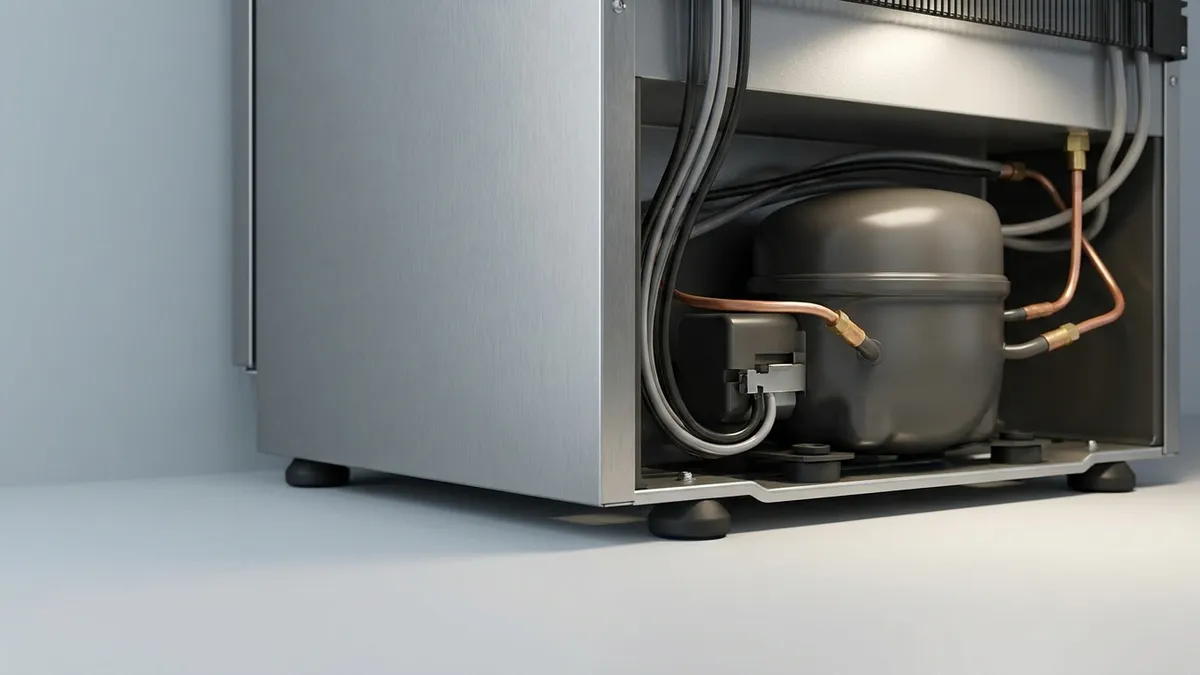
A compressor wine fridge uses the same vapour-compression refrigeration as a kitchen fridge. A small motor compresses refrigerant gas, releasing heat through coils at the back of the unit, and a fan circulates the cooled air inside. The advantages are real cooling power — these units can hit 5°C even when the room around them is 30°C — and consistent performance regardless of ambient temperature.
The trade-offs are noise and vibration. A compressor wine fridge will hum, click on and off through the day, and produce more cabinet vibration than a thermoelectric unit. Better-quality models use anti-vibration feet, dampened compressor mounts, and rubber-suspended bottle racks to soften the impact. For storage in a kitchen, garage, or laundry room, compressor is usually the right answer.
Thermoelectric Cooling — Silent but Limited
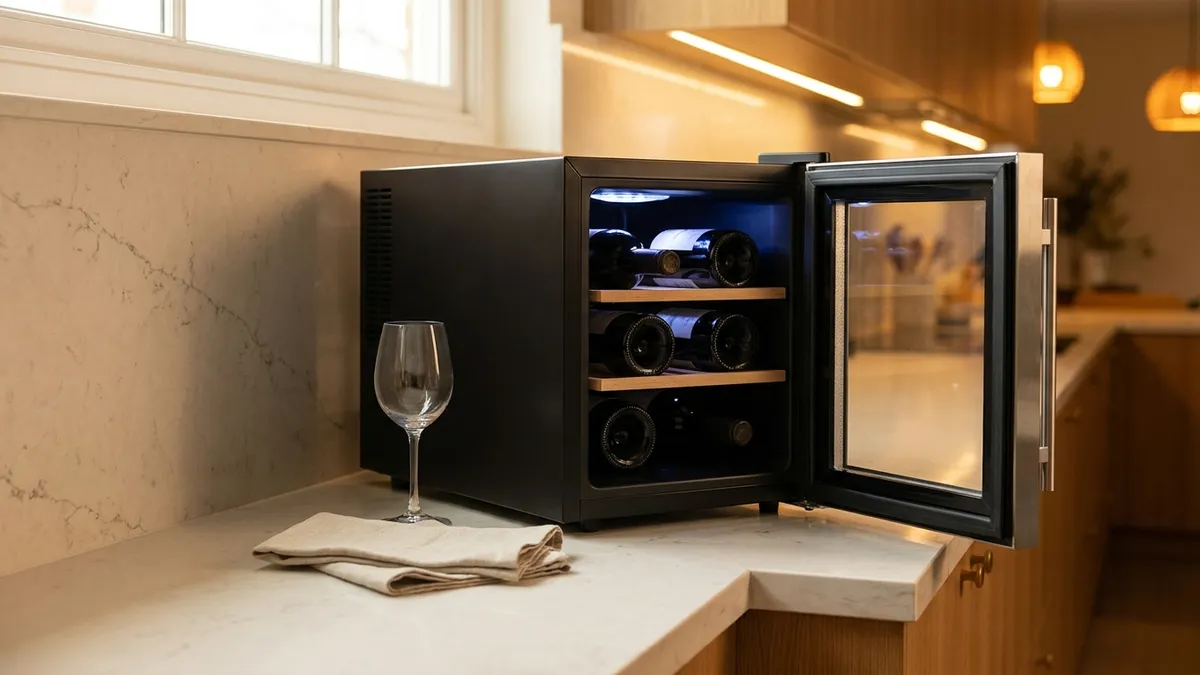
A thermoelectric wine fridge uses Peltier modules — solid-state plates that get cold on one side and hot on the other when current passes through them. There is no compressor and no refrigerant. The result is a unit that runs almost silently, with no cycle vibration, ideal for living rooms or bedrooms.
The catch is reach. A thermoelectric module can typically only drop the interior about 10°C below the surrounding room temperature. In a 22°C room, it reaches 12°C — fine. In a 28°C room in August, it stalls at 18°C, which is too warm for most wine and too warm for any white you actually want to drink. Thermoelectric is a beautiful technology with a narrow climate window. Choose it only if your room stays under 22°C year-round.
Single Zone vs Dual Zone: Match Your Drinking
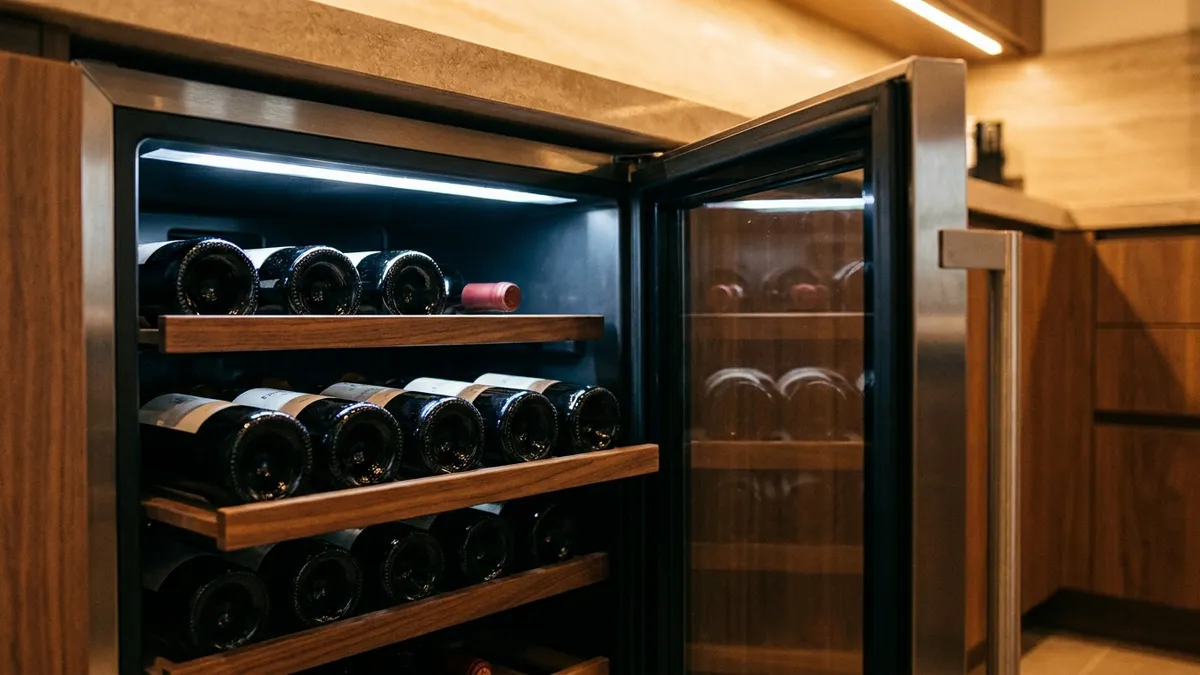
A zone is a temperature-controlled compartment. Single-zone units have one chamber set to one temperature. Dual-zone units have two stacked chambers, each with its own thermostat.
Single zone is the right choice for two scenarios. The first is a drinker who sticks mostly to one style — say, only reds, or only whites. The second is anyone storing wine for the long term, since the ideal holding temperature for both colours is the same: 12–14°C. A single-zone unit set to 13°C and forgotten is the simplest possible cellar.
Dual zone is the right choice if you serve directly from the fridge and you mix styles. The upper compartment runs cooler — typically 8–12°C — for whites, rosé, sparkling, and dessert wines. The lower compartment runs warmer — typically 12–16°C — for reds. You open the door, pull the bottle, and pour without further temperature adjustment. For more on the underlying numbers, see our complete wine serving temperature chart which covers every style by degree.
The trap with dual zone is buying it for the wrong reason. If you drink mostly one colour, the second zone is wasted real estate. And if you plan to age serious reds for ten years, dual zone is overkill — they want one stable temperature, not two ranges that creep over time.
Capacity: How Many Bottles, Honestly
Wine fridges are sold by bottle count, but the count is always optimistic. Manufacturers measure with standard Bordeaux-shaped bottles only, packed perfectly. Real-world capacity drops by 15–25% once you mix in Pinot Noir bottles, Champagne, Riesling, and the occasional magnum.
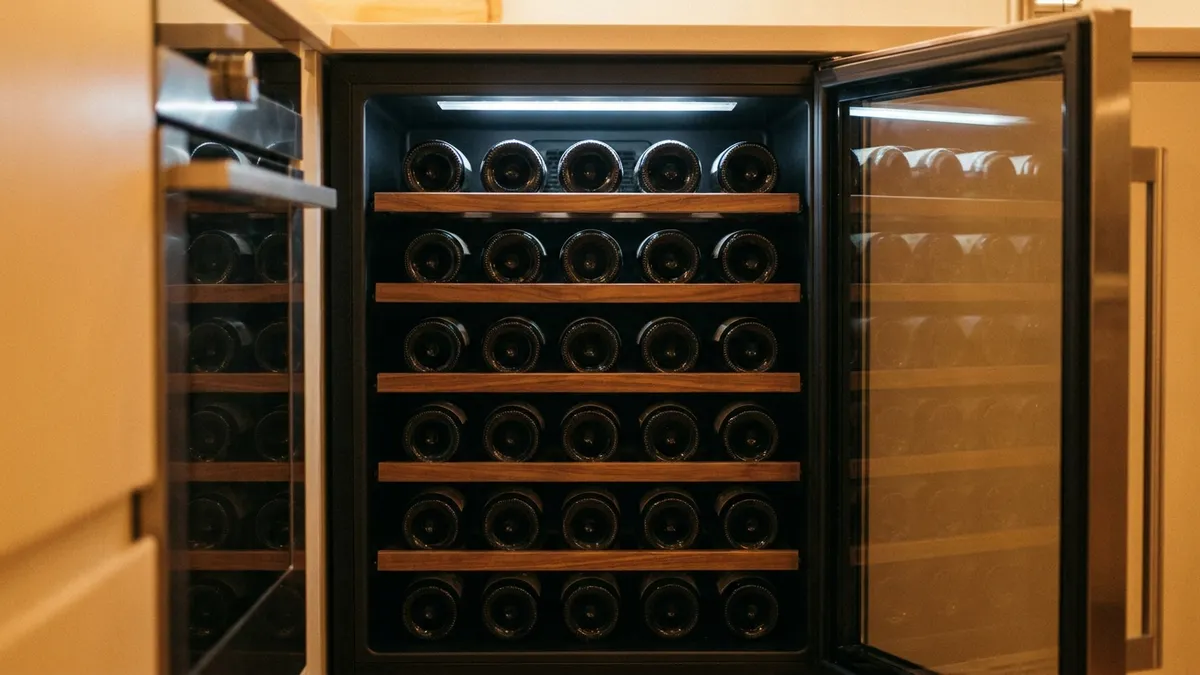
Here are the four practical tiers, with realistic use cases.
- 6–12 bottles — counter-top units. Good as a gift, a starter, or for a casual drinker who keeps a few special bottles ready to serve. Almost always thermoelectric. Not for ageing.
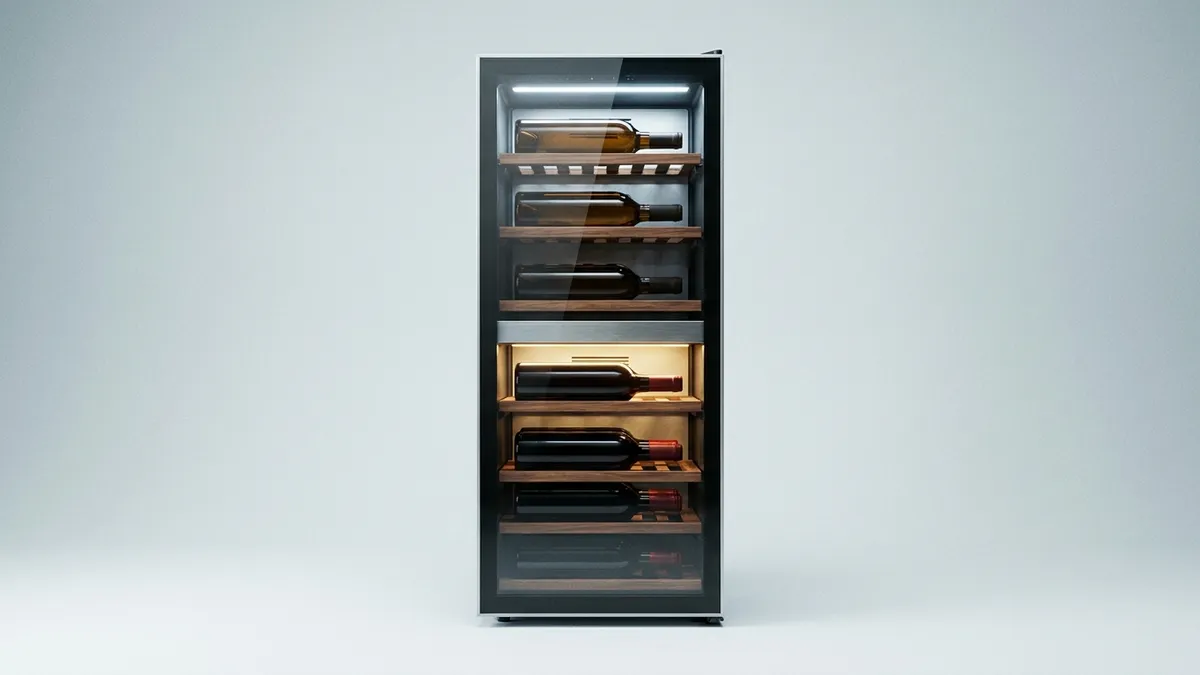
- 18–32 bottles — under-counter or short free-standing. The sweet spot for the typical home wine drinker. Holds a working selection plus a small ageing reserve. Often the best value tier.
- 36–60 bottles — full-height free-standing. For serious drinkers who buy by the case and hold structured reds across multiple vintages. Compressor cooling becomes essential at this size.
- 100+ bottles — floor-to-ceiling cabinets. Dedicated cellar territory. These are commitments, not impulse buys. Plan capacity for ten years out, since collections grow faster than people expect.
The rule of thumb: buy one capacity tier above what you currently need. Wine drinkers always end up holding more than they planned, and a fridge running at 95% capacity has poor airflow and uneven temperature.
Humidity, UV, and Vibration: The Quiet Specifications
The headline numbers are temperature and capacity. The specifications that actually decide whether your wine survives a long hold are quieter.
Humidity should sit between 60% and 70%. Below 50%, corks dry out and shrink, letting oxygen into the bottle. Above 80%, label moulds bloom. Many cheaper wine fridges do not control humidity at all — they run dry like a kitchen fridge. The fix is simple: place a small open dish of water inside the cabinet and check with a basic hygrometer. Higher-end cabinets include active humidity systems.
UV light ages wine prematurely. Ultraviolet wavelengths break down phenolic compounds and create unpleasant "lightstruck" aromas, especially in white and sparkling wines. A solid door is best; a tinted or UV-treated glass door is acceptable; never place any wine fridge in direct sun, even with a coated door. To go deeper on what light damage tastes like and how to spot it, our guide to how to tell if wine is corked covers the full set of common faults.
Vibration matters most for wines you intend to age more than three years. Anti-vibration feet, suspended compressor mounts, and rubber-cushioned shelves are the features to look for. Skip the unit that buzzes against the floor when the compressor kicks in — that buzz lasts a decade.
Built-in vs Free-standing: A Common Trap
These are not just style choices. They are different ventilation designs, and confusing them is the most common installation mistake.

A built-in wine fridge vents heat from the front, through a grille at the bottom of the unit. It is designed to sit flush inside cabinetry with no rear or top clearance. Choose this if you want a flush kitchen install or a piece of furniture rather than an appliance.
A free-standing wine fridge vents heat from the back, sometimes from the top. It needs several centimetres of clearance behind and above to release heat. Installing a free-standing unit inside a tight cabinet is the single most expensive mistake in this category — the compressor cannot release heat, runs constantly, and burns out years early. Always check the manufacturer's required clearances before deciding where the fridge will live.
Setup: Getting It Right on Day One
Once the unit arrives, three small steps protect your investment.
First, install on a level floor. A wine fridge tilted even a few degrees has uneven door seals and temperature gradients. Use a spirit level and adjust the feet.
Second, run the unit empty for 24 hours before loading bottles. This lets the cooling system reach steady-state and confirms the temperature reading is accurate. Use an external thermometer inside the cabinet to verify — many built-in displays drift over time.
Third, organise by intent rather than colour. The top of the cabinet runs slightly warmer; the bottom slightly cooler. Place "drink soon" bottles on top where small temperature swings do not matter, and "hold long" bottles on the bottom where stability is highest. If you want to internalise a serving routine that pairs the right temperature with each style, our guide on how to taste wine like a sommelier walks through the full workflow.
The Sommy app's structured courses build this kind of serving discipline into the practice loop, so the reflex of pulling whites a few minutes before pouring becomes automatic instead of a thing you have to remember.
Energy Use, Maintenance, and Lifespan
A 30-bottle compressor wine fridge typically uses 100–200 kWh per year, similar to a beverage cooler and well under a kitchen fridge. Thermoelectric units run lighter on power but constantly, since they cannot cycle off — over a year the totals end up close.
Maintenance is light. Wipe the interior every six months with a damp cloth (no detergent, which can leave odours). If your unit has a humidity reservoir, refill or replace it on the same schedule. Inspect the door seal annually; a perished seal lets warm air in and forces the compressor to overwork.
A well-built compressor wine fridge lasts 8–12 years. Thermoelectric units typically last 5–8 years before the Peltier module loses cooling efficiency. Watch for early warning signs — a compressor that runs hot to the touch, a noticeable temperature climb during summer, or a door that no longer closes flush. Replacing a unit before it fails is much cheaper than discovering a dead fridge full of warm wine.
Red Flags Before You Buy
A few specifications immediately disqualify a unit. Skip anything that fits this list.
- Thermoelectric cooling for a warm room — under-specified for any climate that hits 26°C. Will stall in summer.
- Single zone marketed for mixed cellars — fine for storage, wrong for serving directly from fridge to glass.
- Glass door with no UV treatment, in any naturally lit room — long-term storage will yellow whites and dull reds.
- Capacity sized exactly to your current collection — wine collections grow. Buy one tier up.
- Free-standing unit you plan to install inside a cabinet — heat cannot escape, compressor will burn out early.
- No vibration dampening for ageing-grade purchases — fine for week-to-week drinking, wrong for ten-year holds.
If a unit you like fails one of these, the price advantage is almost never worth it. The cost of a wine fridge spread over its lifespan is small; the cost of replacing the wine inside is not.
A Simple Decision Tree
Use this short flowchart to land on the right answer in under a minute.
- If you keep fewer than a dozen bottles and drink them within two weeks, skip the fridge and use a cool dark cupboard with a basic thermometer.
- If you keep 12–32 bottles, drink mixed styles, and live in a temperate climate, buy an under-counter dual-zone compressor unit sized one tier up from your current collection.
- If you keep 32+ bottles, hold structured reds for years, and care about long-term ageing, buy a free-standing single-zone compressor cabinet at 12–14°C with humidity control.
- If you live in a warm climate, buy compressor regardless of size — thermoelectric will fail you in summer.
- If your room is consistently under 22°C and silence matters, thermoelectric is acceptable for short-term storage and serving, not for long holds.
For deeper background on the styles that benefit most from stable storage — and which ones genuinely hold up to ageing — our Cabernet Sauvignon vs Merlot and Chardonnay vs Sauvignon Blanc guides show how grape structure shapes long-term cellar behaviour.
Make Storage Part of How You Taste
The right wine fridge is not about looking serious. It is about meeting each bottle at its best — the same reason serving temperature matters in the glass. Stable storage protects the wine you bought, and the right serving zone makes that wine taste the way the producer intended.
If you are still building the underlying tasting skill that makes any of this matter, the serving and storage learning path collects every related guide in one place. And the Sommy app's tasting courses connect storage, serving temperature, and palate training into a single practice loop, so each bottle you open is an opportunity to refine the reflex. Visit sommy.wine to start training your palate one glass at a time, and let your fridge do the quiet work of keeping each bottle ready for the moment you pour.
Frequently Asked Questions
Do I really need a wine fridge?
Not always. If you drink most bottles within one to two weeks of buying them, a cool dark closet around 18°C is fine. A wine fridge becomes worthwhile once you regularly hold 12 or more bottles for a year or more, especially structured reds that benefit from stable temperature, or whites and sparkling wines that you want ready to serve.
Why is a kitchen fridge bad for storing wine?
A kitchen fridge runs at about 4°C, which is too cold for long-term storage and far too cold for serving most wines. The compressor cycles on and off, creating vibration that disturbs sediment and fine wine ageing. Humidity is also very low, which dries out corks and lets food smells migrate into the wine through the closure.
What is the difference between compressor and thermoelectric wine fridges?
A compressor wine fridge uses the same refrigeration technology as a regular fridge — strong cooling, can hit 5°C even in a hot kitchen, more efficient at large capacity, but with cycle vibration and noise. A thermoelectric (Peltier) wine fridge uses solid-state cooling — silent, gentle, but only able to drop the interior about 10°C below room temperature, which fails in warm climates.
Should I buy a single zone or dual zone wine fridge?
Single zone is fine if you drink mostly one style — for example only reds at 14°C or only whites at 9°C. Dual zone is the right choice if you mix styles, since it can hold whites at 8–12°C in one compartment and reds at 12–16°C in the other. For long-term ageing of any colour, a single zone set to 12–14°C is actually the simplest choice.
What temperature should I set a wine fridge to?
For long-term holding, set the fridge to a stable 12–14°C and forget it. For serving directly from the unit, set whites and sparkling between 8 and 12°C, and reds between 14 and 16°C. Avoid wide swings; consistency matters more than hitting a perfect number. Use an external thermometer to confirm the actual interior temperature.
How big a wine fridge should I buy?
Match capacity to your real drinking pace plus a buffer. Six to twelve bottles suit a counter-top unit for occasional drinkers. Eighteen to thirty-two bottles fit under a counter and cover most home wine drinkers. Thirty-six to sixty bottles suit a serious collector. One hundred bottles or more belong in a free-standing or built-in cabinet for a dedicated cellar.
Do wine fridges control humidity?
Some do, most do not. The ideal humidity for long-term wine storage is 60–70%, which keeps corks supple without encouraging mould on labels. Cheaper units run dry like a regular fridge, so a small bowl of water inside the cabinet plus a basic hygrometer is a simple fix. Higher-end cabinets include active humidity control.
What is the difference between built-in and free-standing wine fridges?
A built-in wine fridge vents from the front, so it can sit flush inside cabinetry without overheating. A free-standing wine fridge vents from the back and needs several centimetres of clearance behind and above. Installing a free-standing unit inside a tight cabinet is the most common mistake — it overheats, the compressor works overtime, and the unit fails early.
Sommy Team
LinkedInFounder & Wine Educator
The Sommy Team is building the world's most approachable wine education app, helping beginners develop real tasting skills through structured courses and AI-guided practice.