How to Build a Home Wine Cellar: A Step-by-Step Guide

By the Sommy Team — AI-assisted, human-edited.
Updated Oct 1, 2026
Contents (10)
- How to Build a Home Wine Cellar, in One Paragraph
- Do You Need a Built Cellar, or Something Smaller?
- What Conditions Does a Wine Cellar Have to Hold?
- Step 1: Where Should the Cellar Go?
- Step 2: How Do You Insulate and Seal the Room?
- Step 3: Do You Need a Cooling Unit?
- Step 4: How Much Humidity Does a Cellar Need?
- Step 5: How Should You Rack and Light It?
- Step 6: How Do You Check It Works Before You Fill It?
- What Mistakes Do First-Time Cellar Builders Make?
TL;DR
To build a home wine cellar, log a dark spot's temperature first, then insulate every side and seal the door. Add a cooling unit only if the room leaves the 10 to 15°C band experts give. Aim for moderate humidity, lay cork-sealed still wine down, and test the empty room before filling it.
The best way to build a home wine cellar is in order. Find the spot that already changes temperature least, seal and insulate it, and buy cooling only if your own readings say the room cannot hold steady. A cellar is a dark, still room near 13°C. Most of the money people waste goes on equipment for a room they never measured.
How to Build a Home Wine Cellar, in One Paragraph
To build a home wine cellar, pick the steadiest dark spot in the house and log its temperature through a season. Insulate every side and fit a sealed door. Add a cooling unit only if the room cannot stay in the 10 to 15°C band most experts recommend. Then aim for moderate humidity of about 55 to 75%, lay cork-sealed still wine on its side, let sparkling stand or lie and light the room with low-heat LEDs. Before moving a single bottle in, run the empty room for a few weeks with a thermometer-hygrometer and check that the readings hold.
Do You Need a Built Cellar, or Something Smaller?
Most people need a closet or a wine fridge. Build a cellar only when you hold more bottles, for longer, than a fridge can take. Each step up the ladder below costs more and copies the same three things: darkness, cool air and slow change.
| Option | What it gives | Its limit | Build it if |
|---|---|---|---|
| Inside closet | Dark and fairly steady | Runs at room temperature | You drink most bottles within a year or two |
| Wine fridge | A set temperature in a small box | Capacity is fixed by the cabinet | Your home runs warm and you keep bottles for years |
| Passive basement corner | Cool and steady without power | Only works where the ground stays cool all year | Your log holds near 10 to 15°C through summer |
| Active cellar room | Controlled temperature and humidity at any size | Needs insulation, a sealed door and a cooling unit | You keep hundreds of bottles or age wine for a decade |

If you open most bottles within a year, stop at a closet and spend the money on wine. The wine cellar alternatives guide ranks the no-build options, and the wine fridge guide covers sizes and cooling types.
What Conditions Does a Wine Cellar Have to Hold?
Steady cold, darkness and stillness. About 13°C (55°F), the temperature of the caves used to store wine in France, is ideal for both short storage and long ageing. Most experts, Jancis Robinson among them, give a constant 10 to 15°C as the target band.
The tolerances are wider than the targets:
- 7 to 18°C: wine stores satisfactorily here, as long as changes are gradual.
- Up to 21°C: no long-term harm, though wine ages faster.
- Above 25°C for long periods: the wine can spoil and taste raisin-like or stewed. The heat damage guide shows the signs.
Speed is the reason a cellar exists. Chemical reactions in wine roughly double with every 10°C rise, so a warm room ages a bottle years ahead of schedule. Fast swings do their own damage: the cork expands and contracts with each change, which lets oxygen in. A room that sits at 16°C every day is safer than one bouncing between 10 and 18°C. The full range of expert numbers is reconciled in the wine cellar temperature and humidity guide.
Step 1: Where Should the Cellar Go?
In the spot that already changes least: usually below ground, against inside walls, and on the side of the house that gets the least sun. Soil and stone hold their temperature through the seasons, which is why basements are the classic choice.
Rule out anything next to a boiler, laundry machine, kitchen or water heater, and any wall with a window. Avoid the space under stairs or beside a washing machine too, because shaking may speed up unwanted changes in wine. The wine vibration guide explains how much movement matters.
One week only tells you about this week. The reading that decides the build is the warmest stretch of summer, so keep logging through it if you can. If a spot holds near 10 to 15°C even then, it can be a passive cellar. If it reaches the high teens, plan for cooling from the start, because adding it later means opening finished walls.
Step 2: How Do You Insulate and Seal the Room?
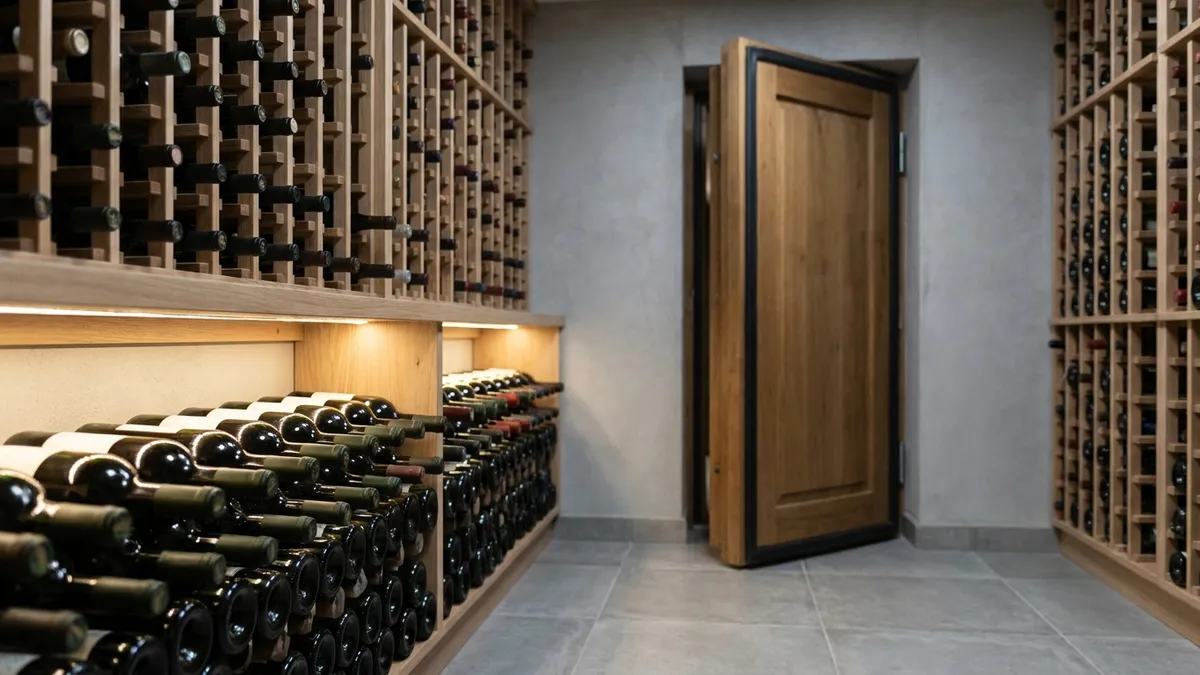
Insulate every side of the room, ceiling and floor included, and fit a solid door with seals on all four edges. An insulated cellar with a hollow interior door leaks warm air through its weakest point, so the door gets the same care as the walls.
The vapour barrier (a sheet that stops moisture moving through a wall) is where most builds go wrong. In building practice it goes on the side the warm, moist air comes from. In cold climates, where houses are heated most of the year, that is the inside of the insulation. In hot, humid climates, where houses are cooled, it goes toward the outside. In mild climates a barrier may not be needed at all.
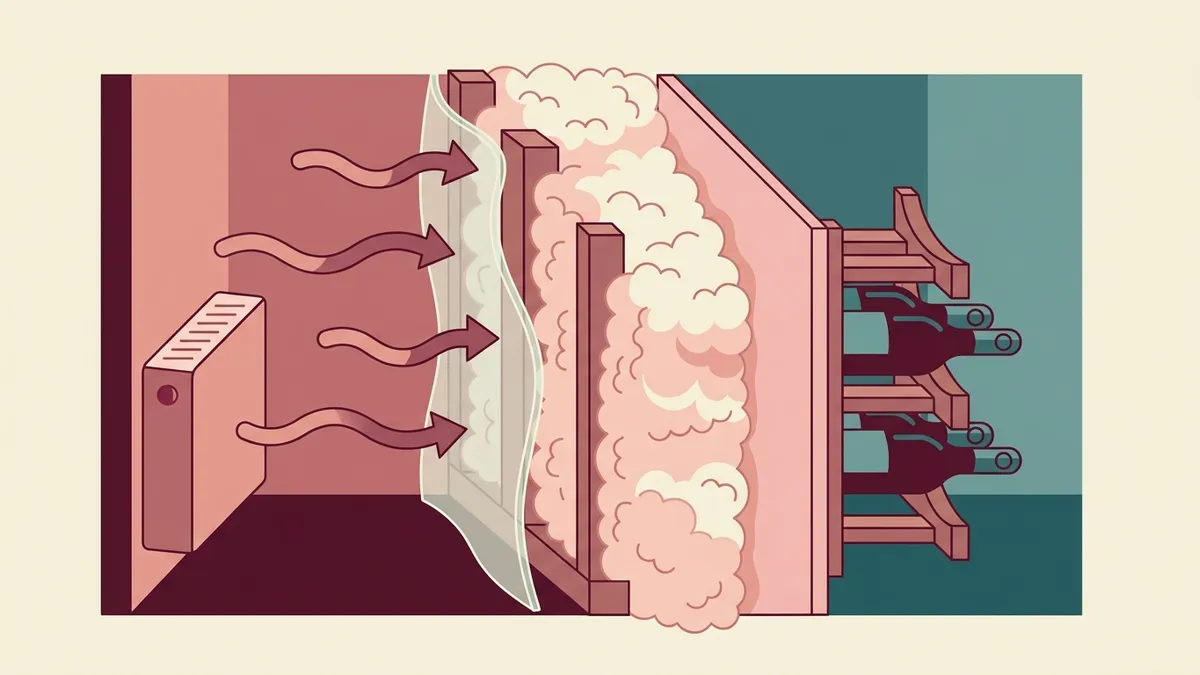
A cooled cellar flips the usual house logic, because the cellar is the cold side all year. If the room will run a cooling unit, the warm side is the rest of the house, and moisture trapped in the wrong place condenses inside the wall and grows mould. That is a reason to get a local builder to confirm the layer order for your climate before any board goes up.
Step 3: Do You Need a Cooling Unit?
Only if your log says so. A passive cellar (one with no cooling equipment) works in a naturally cool, damp place with small daily and seasonal changes, such as a basement in a temperate climate. An active cellar is heavily insulated and uses a cooling and conditioning system to hold its temperature and humidity.
If the summer log tops 18°C, or the room changes quickly when the weather turns, add cooling. Size it with an installer, who works from three things: the room's volume, its insulation and the heat on the other side of the walls. A household air conditioner is the wrong tool: it dries the air and is not built to sit at cellar temperatures.
If the numbers say cooling but the budget does not, stop at a wine fridge for the bottles you plan to age and keep the everyday ones in the passive room.
Step 4: How Much Humidity Does a Cellar Need?
Moderate, roughly 55 to 75% relative humidity (how much moisture the air holds compared with its maximum). That is the range climate-controlled storage aims for. The often-quoted 75% ideal has little research behind it, as Jancis Robinson notes, so treat the band as a guide.
The folk reason for humidity is to keep corks from drying out. A French study cited by Matt Kramer in Wine Spectator reported that the air inside a sealed bottle stays at 100% humidity whatever the closure and whichever way the bottle lies. So cellar humidity protects the outer end of the cork, the labels and the boxes; the wine already sits in saturated air.
If your hygrometer reads well under 50% for weeks, add moisture. The wine writer Alexis Lichine recommended a thin layer of gravel on the floor, sprinkled with a little water now and then. If mould spots appear on labels or walls, the air is too wet or too still, so improve the airflow.
Step 5: How Should You Rack and Light It?
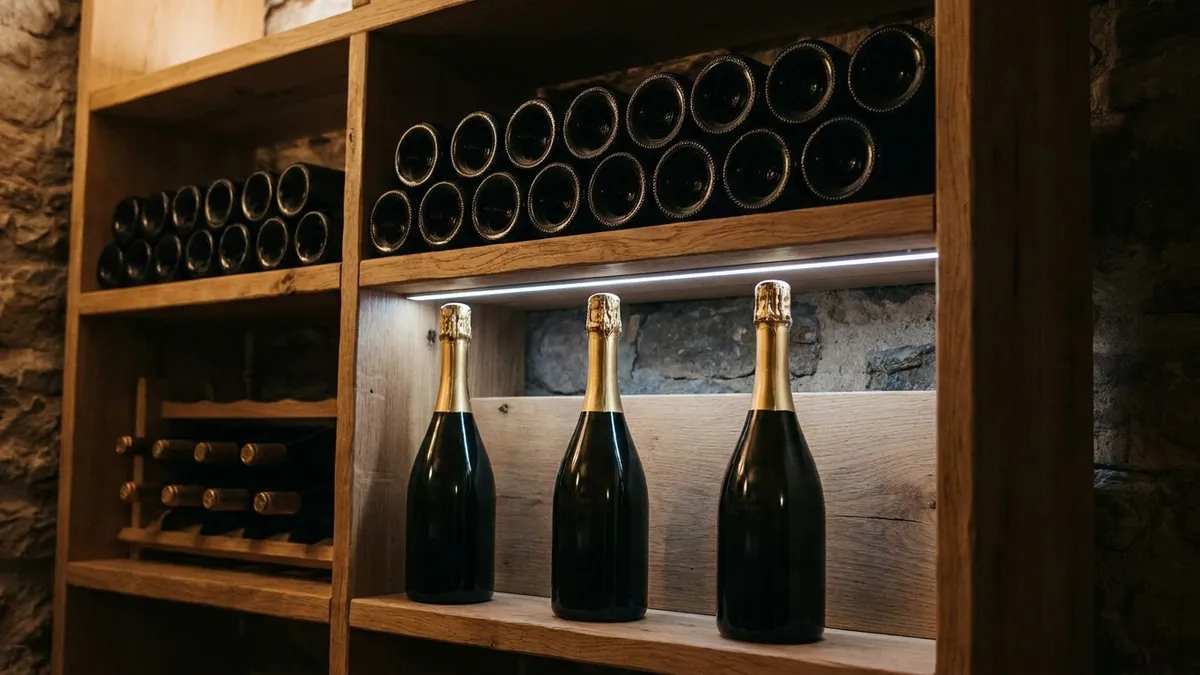
Lay still wine with a natural cork on its side, let sparkling wine stand or lie, and light the room with low-heat LEDs on a switch you turn off. Unopened sparkling wine keeps its cork moist through the pressure inside, so a shelf works too. Screw-capped bottles can go either way, as the screw cap vs cork guide explains.
Light is the next enemy after heat. Direct sunlight and incandescent bulbs react with compounds in wine and can create faults. The lightstruck wine guide explains that cabbage-like smell. LEDs give off little heat, and a room that stays dark when you are not in it needs no special glass.
Choose racks that will not rot or warp in cool, damp air, and keep a clear path so you never shift ten bottles to reach one. The wine rack guide compares materials, and the horizontal vs vertical storage guide covers which bottles go which way. For the floor, pick something that tolerates damp, such as tile or sealed concrete, rather than carpet.
Step 6: How Do You Check It Works Before You Fill It?
Run the empty room for a few weeks with a thermometer-hygrometer (one gauge that reads temperature and humidity) and move bottles in only when the readings hold. Note the high and low once a week, and again during the first hot spell.
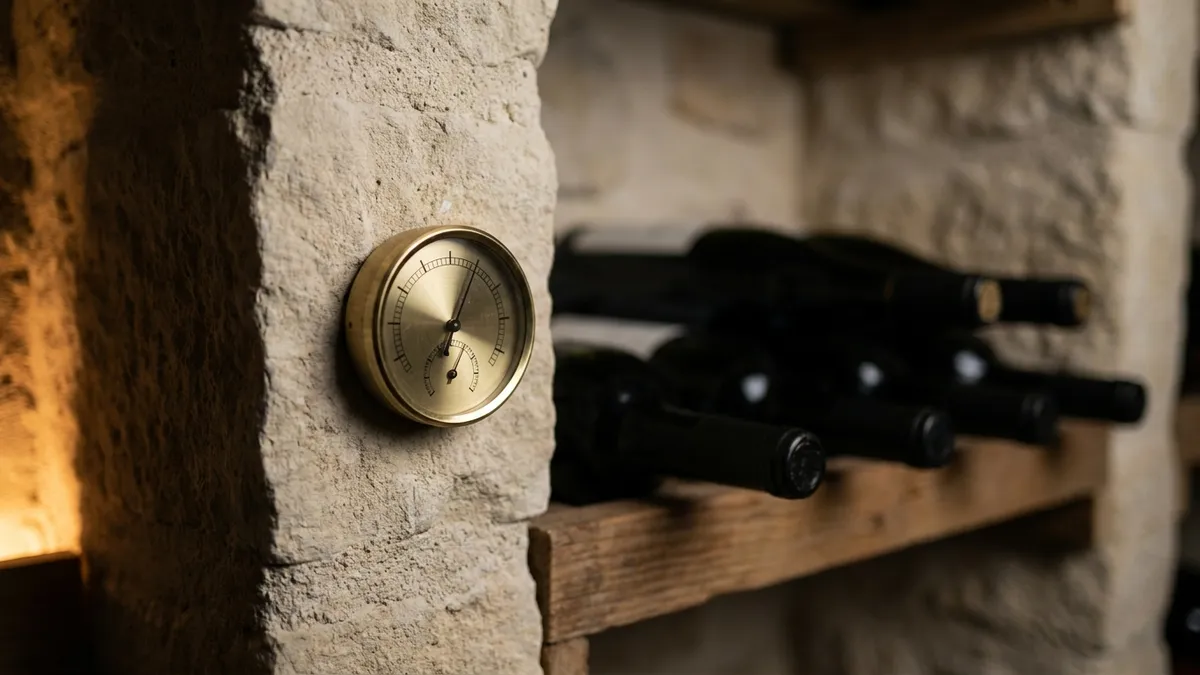
Keep the gauge on the wall after the wine arrives. A cooling unit that fails in August announces itself only through the numbers. Then stock the room on purpose: most wine is made to be drunk young, and the wine aging guide lists the styles that reward years in the dark. The wine collection guide splits a starter cellar between drink-now and keep-for-later bottles.
What Mistakes Do First-Time Cellar Builders Make?
Most first-time mistakes come from acting before measuring: the room gets insulated, cooled or filled before anyone knows how it behaves in its hottest weeks. These five are the common ones, and each costs more to fix once bottles sit in the racks.
- Building before measuring. A room that seemed cool in March can reach the high teens in July.
- Skipping the door. A hollow door with no seals undoes the insulation around it.
- Guessing the vapour barrier. On the wrong side it traps condensation inside the wall.
- Using a household air conditioner. It strips humidity and is not designed to run at cellar temperatures.
- Filling it with wine that will not improve. A cellar full of everyday bottles is an expensive cupboard.
More traps after the build, from kitchen-fridge storage to hot car boots, are in wine storage mistakes. Every storage guide is collected in the serving and storage hub, and Sommy covers the basics in a bite-sized Wine 101 course.
Pour a glass tonight, set a min-max thermometer in the spot you think could be your cellar, and read the high and low before bed.
Sources
Frequently Asked Questions
Do I need a cooling unit for a wine cellar?
Only if the room cannot hold the range on its own. A passive cellar works in a naturally cool spot with small daily and seasonal changes, such as a basement in a temperate climate. If your summer log climbs past 18°C, or the room swings quickly, it needs a cooling unit sized by an installer for its volume and insulation.
What temperature should a wine cellar be?
About 13°C (55°F) is the ideal for both short storage and long ageing, and most experts give a band of 10 to 15°C. Wine tolerates 7 to 18°C if changes are gradual, and up to 21°C without long-term harm. Long spells above 25°C risk stewed, raisin-like flavours. Slow change matters more than the exact number.
Can I turn a basement or closet into a wine cellar?
Yes. A basement is the classic passive cellar because the ground keeps its temperature steady, and a closet on an inside wall works for a smaller collection. Log either spot's temperature through a warm spell first. If it stays near 10 to 15°C and changes slowly, insulate and seal it. If not, add cooling or use a wine fridge.
What humidity does a wine cellar need?
Moderate humidity, roughly 55 to 75%, is the range climate-controlled storage aims for. The often-quoted 75% has little research behind it, and a French study found the air inside a sealed bottle stays at 100% humidity whatever the closure or angle. Cellar humidity mainly protects the outside of corks and the labels.
Do wine cellars need a vapour barrier?
Often, but where it goes depends on climate. In building practice the barrier sits on the side warm, moist air comes from: the heated side in cold climates, the outer side in hot, humid ones. In mild climates it may not be needed at all. A cooled cellar is the cold side all year, so ask a local builder.
Should wine bottles lie flat in a cellar?
Lay still wines with natural corks on their side, which is the standard rack layout and saves space. Unopened Champagne and other sparkling wines can stand or lie, because the pressure inside keeps the cork moist. Screw-capped bottles can go either way. Plan your racking with a section for upright bottles if you buy sparkling wine to keep.
Sommy Team
LinkedInFounder & Wine Educator
The Sommy Team is building the world's most approachable wine education app, helping beginners develop real tasting skills through structured courses and AI-guided practice.