10 Wine Storage Mistakes That Quietly Ruin Good Bottles

By the Sommy Team — AI-assisted, human-edited.
Updated Sep 24, 2026
Contents (11)
- The 10 Wine Storage Mistakes, in One Paragraph
- What Actually Happens Inside a Bottle When Storage Goes Wrong?
- Are You Storing Wine Too Warm?
- Is Your Kitchen Fridge Secretly Hurting Your Wine?
- Does a Stable Temperature Matter More Than a Cold One?
- Do You Need to Store Wine Bottles on Their Side?
- Is Your Humidity Too Low or Too High?
- Is Light Cooking the Wine on Your Shelf?
- Could a Hot Car or Delivery Truck Already Have Ruined a Bottle?
- Does Vibration Actually Damage Wine, or Is That Overblown?
- How Can You Tell If a Bottle's Already Been Damaged?
TL;DR
Wine storage mistakes carry unequal risk. Heat above 70°F (21°C) and direct sunlight can damage a bottle within days, while getting humidity, orientation, or vibration slightly wrong mostly matters for wine aged for years. Fix heat and light first; the other mistakes are safe to stop worrying about for bottles you will open this year.
Bad wine storage ruins more good bottles than most drinkers expect, and the common wine storage mistakes do not carry equal weight. Some, like leaving a case in a hot car, can flatten a wine's flavor within days. Others, like storing the wrong bottle on its side, barely matter unless you plan to age that wine for a decade. Ranked by how fast they cause damage, the ten mistakes below split into ones to fix now and ones you can stop worrying about.
The 10 Wine Storage Mistakes, in One Paragraph
The fastest, most damaging wine storage mistakes are heat above roughly 70°F (21°C) and direct light, both of which can visibly change a wine within days to weeks. The next tier, temperature swings and a fridge kept too cold and too dry, causes slower harm that adds up over months. The lowest-risk mistakes, precise humidity, bottle orientation, and vibration, mostly matter for wine aged five years or longer and are close to irrelevant for a bottle you plan to open this year. If you sort your habits in that order, the first fixes are the ones that count most.
What Actually Happens Inside a Bottle When Storage Goes Wrong?
Bad storage speeds up chemistry that would otherwise happen slowly and gracefully. Warmth and light accelerate oxidation and other reactions that break down fruit character, while a dried-out cork lets in extra oxygen and starts the same process from a different angle.
Wine that ages well does so through a slow, steady exchange of tiny amounts of oxygen across the cork over years. If heat, light, or a compromised seal pushes that exchange too fast, the wine skips ahead to flat, dulled, or stewed flavors before its time. Every mistake below works through one of those two channels: too much heat and light, or too much oxygen too soon.
Are You Storing Wine Too Warm?
This is the single most damaging wine storage mistake, and the one worth fixing first. Wine Spectator puts the ideal range at 45-65°F (7-18°C), noting 55°F is often cited as "close to perfect," and warns that temperatures above 70°F (21°C) age a wine faster than is desirable. VinePair pegs the same 70°F threshold as where real damage begins.
Heat changes the speed of aging as well as the outcome. According to Wikipedia's entry on wine storage, the rate of chemical reactions inside a bottle roughly doubles with every 18°F (10°C) rise in temperature. That is why a warm closet ages wine years faster than a cool one. Wine Folly cites a two-year study from Fondazione Edmund Mach showing wine kept outside proper cellar conditions lost antioxidants and color four times faster than cellared wine, and developed more fault markers along the way. The same source notes that wine can still age acceptably for about a year outside a cellar, as long as temperatures never cross 80°F (27°C).
| Temperature | What happens | Time to noticeable damage |
|---|---|---|
| Up to 69°F (21°C) | Generally safe for everyday wine, no long-term harm | No meaningful damage |
| 70-77°F (21-25°C) | Aging speeds up, fruit starts to dull | Weeks to months of exposure |
| Above 80°F (27°C) | Fruit fades, tannins turn astringent, acidity dominates | Days to weeks |
| Above 100°F (38°C), e.g. a parked car or truck | Cork can push out, wine can taste visibly cooked | Hours to a day |
Heat also shows up on the outside of the bottle before you taste anything. A cork pushed slightly proud of the neck, sticky residue near the capsule, or a warped label are all signs the wine inside has already expanded once from heat. For the full mechanism and how to spot it before buying, see our guide to cooked wine and heat damage.
Is Your Kitchen Fridge Secretly Hurting Your Wine?
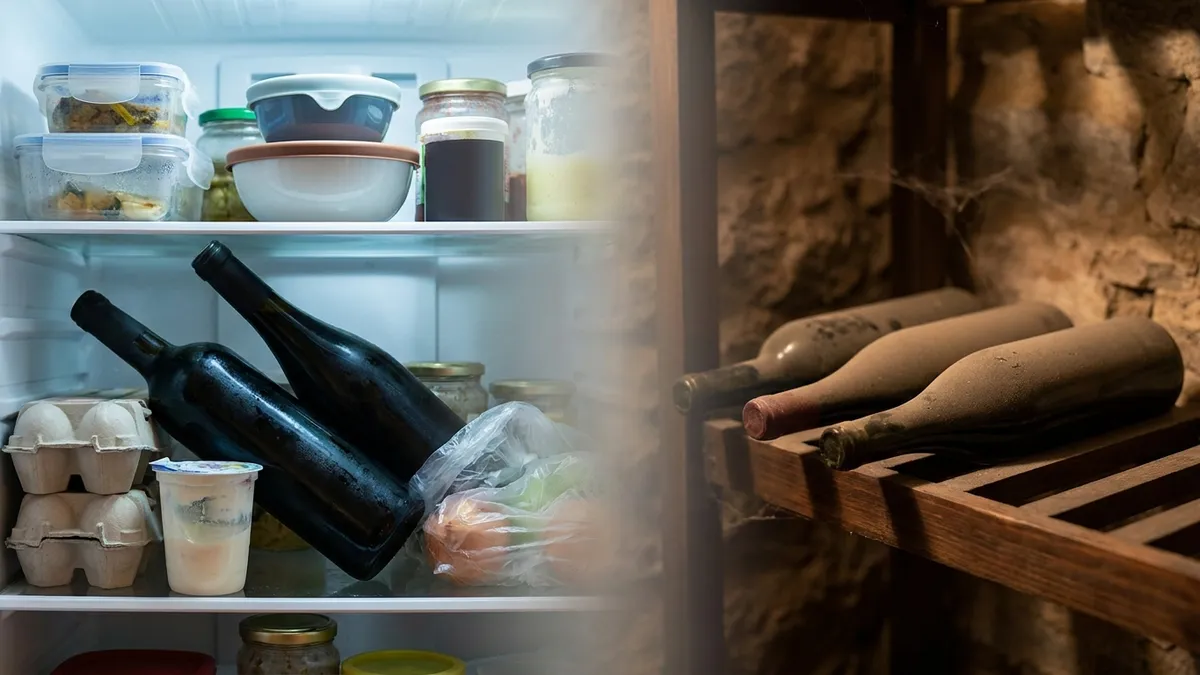
Yes, once a bottle stays for months, and using it as a long-term cellar is a near-universal mistake. The fridge runs colder than any storage guideline recommends, and its air is far drier than a cork wants. A bottle chilling for a weekend dinner is fine. A case forgotten on the door shelf for a year is not.
The fix does not require buying anything. A closet on an interior wall, away from the oven, a sunny window, or an exterior wall that swings with the weather, will hold a steadier temperature than most people expect. Our guide on how to store wine at home walks through the realistic apartment setup room by room, and our wine fridge guide covers when a dedicated unit is actually worth buying instead.
Does a Stable Temperature Matter More Than a Cold One?
Yes, and this is the mistake that trips up people who otherwise do everything right. A bottle held at a steady 62°F will usually outlast one that swings between 55°F and 70°F over the same period, even though the swinging bottle spends time closer to the "ideal" number.
Every swing forces the liquid to expand and contract, which pushes tiny amounts of air past the cork each time it happens. Do that daily for months, on a spot near a heating vent or a window that gets direct afternoon sun, and you have effectively force-fed the wine oxygen on a schedule. If the choice is a stable shelf that runs slightly warm but stays within the 45-69°F range experts describe, or a colder spot that never settles, choose the stable shelf. Our piece on how temperature affects wine taste goes deeper on why consistency changes what ends up in the glass.
Do You Need to Store Wine Bottles on Their Side?
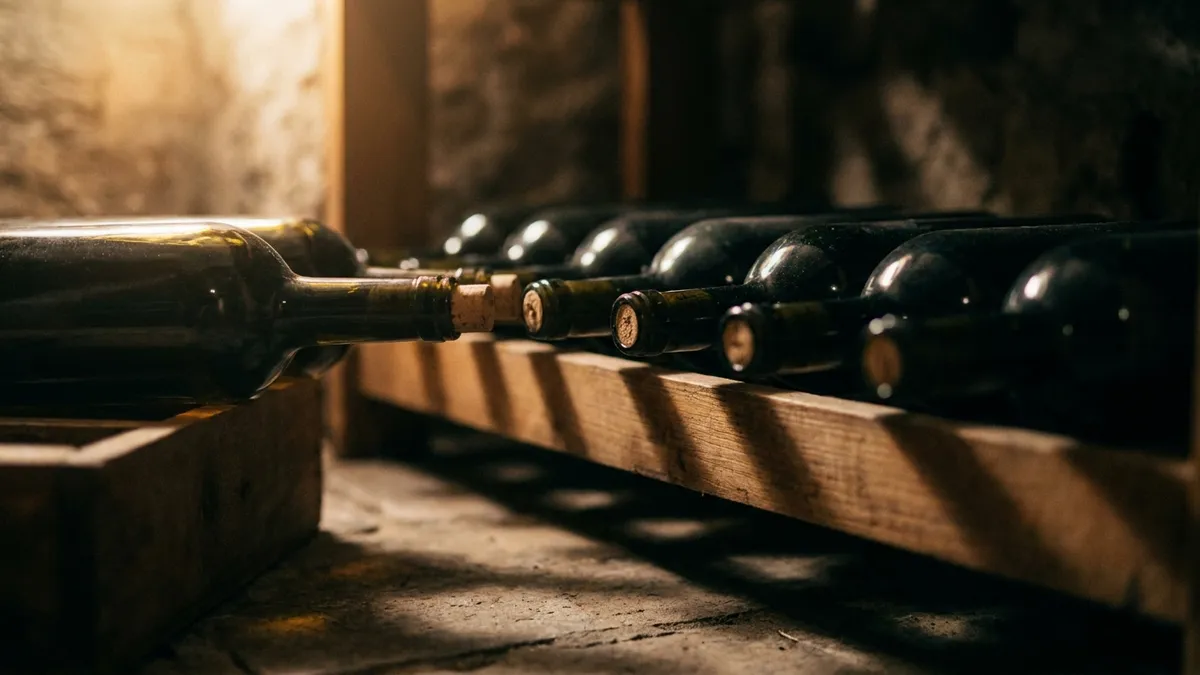
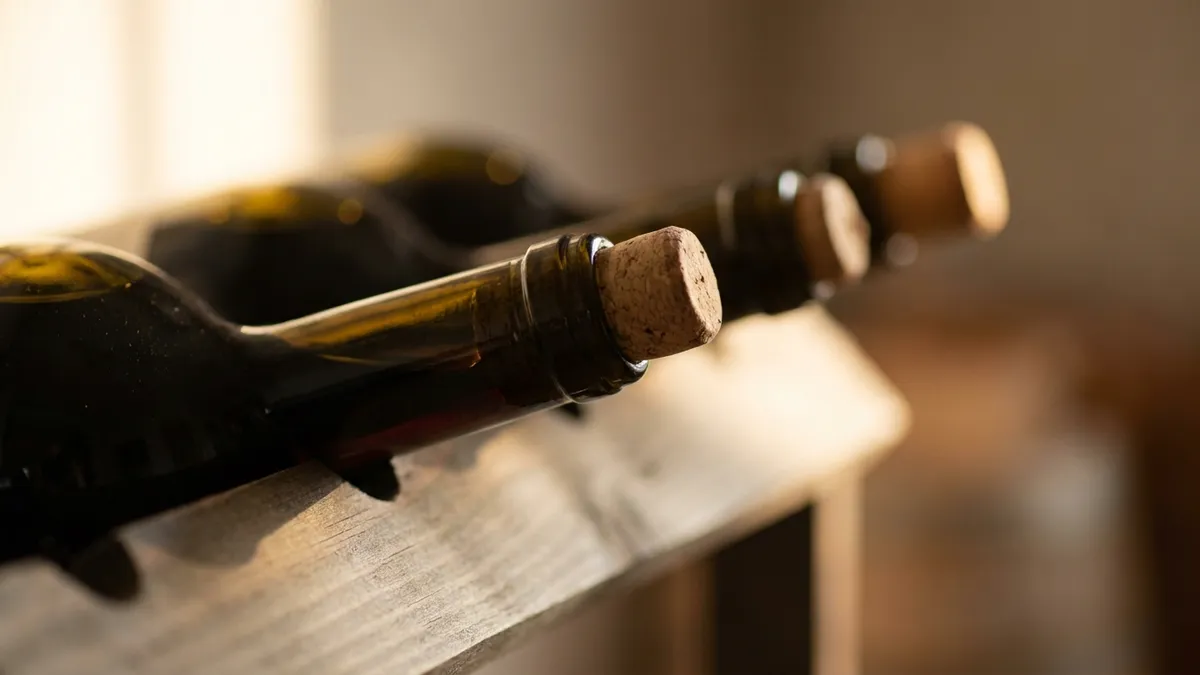
Only if it has a natural cork and you plan to keep it more than a year or two. A cork that stays in contact with wine stays swollen and airtight. A cork left dry for long enough can shrink and let air seep in.
Research from the late 1990s, cited on Wikipedia's wine storage entry, suggested a slight angle may work better than lying a bottle fully flat. The angle keeps part of the cork wet while keeping the small air pocket at the top of the bottle.
That said, this mistake is one of the most overstated on the list for two groups of drinkers. Wine Spectator notes that bottles with screwcaps, glass stoppers, or plastic corks do not need side storage at all, and neither do cork-sealed bottles you plan to drink in the near to mid term. And the same Wikipedia entry notes that sparkling wine tends to age better kept upright. Check the closure and the style before laying a bottle down. Our screwcap vs cork guide covers how the two closures actually compare on aging and reliability.
Is Your Humidity Too Low or Too High?
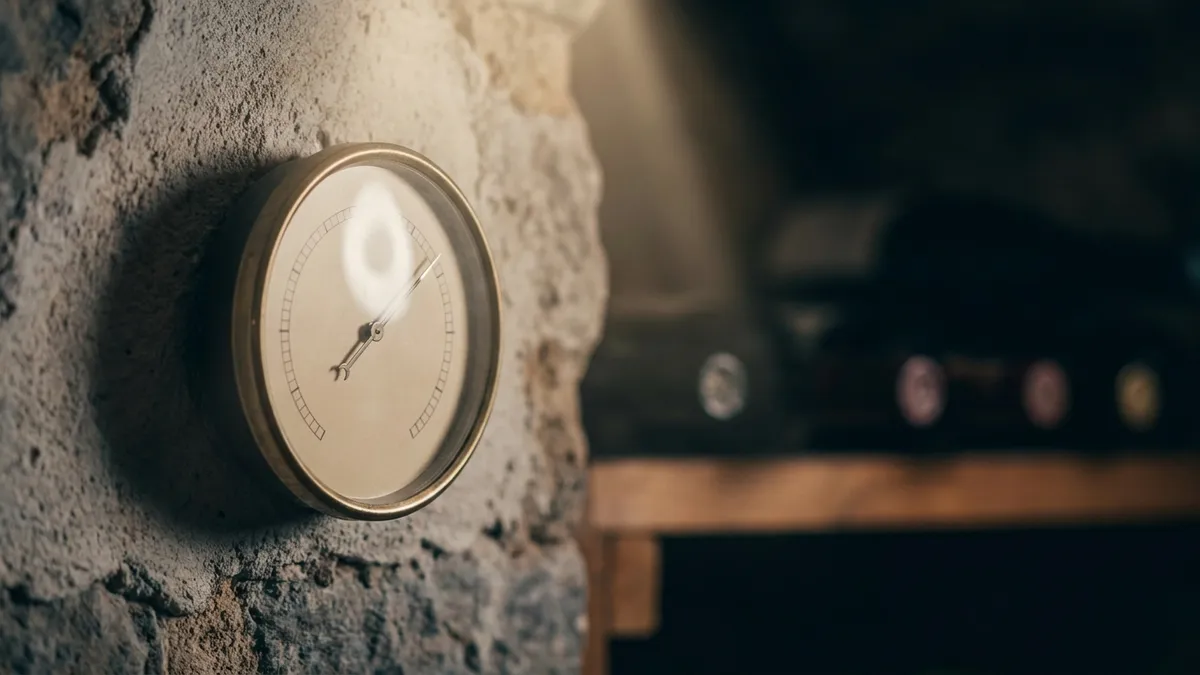
Both directions cause problems, just different ones, and both matter far less than temperature for most home collections. Wine Spectator sets a safe range of 50 to 80 percent humidity with 70 percent as the ideal target, while Wine Folly works within a slightly tighter 55 to 75 percent band.
Too dry, and a natural cork can lose moisture from the outside in, which is the same failure mode as storing it upright for too long. Too humid, and the risk shifts to mold on labels and corks rather than damage to the wine itself. Jancis Robinson, quoted on Wikipedia's wine storage page, points out that 75 percent humidity is often repeated as the ideal figure even though little research nails down one correct number. Treat the range as the guidance: a windowless closet in a normal home usually sits close enough to workable without any equipment at all.
Is Light Cooking the Wine on Your Shelf?
Yes, if it sits in direct sun or strong artificial light, one of the two fastest-acting mistakes alongside heat. A sunny counter or a brightly lit open shelf lets ultraviolet and visible light break down aromatic compounds, a fault called lightstrike. The wine then smells like wet wool or cooked vegetables instead of fruit, and the damage cannot be undone.
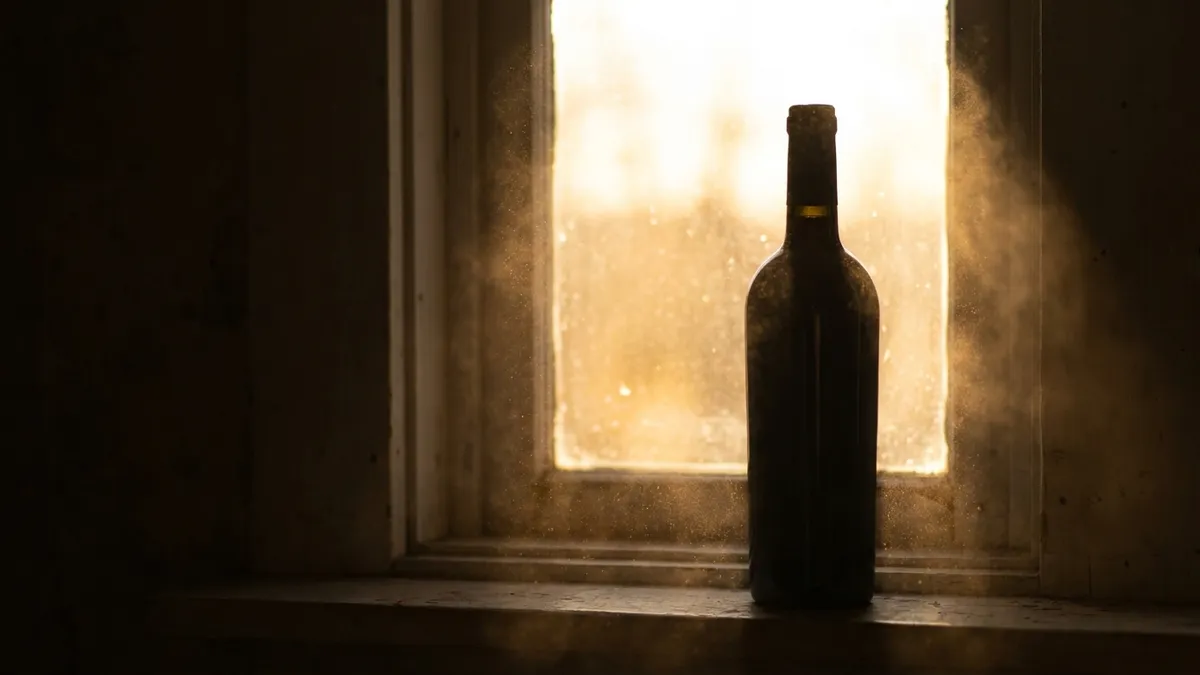
Darker glass slows this down but does not stop it. A closed cabinet, a closet, or even a cardboard box in a dim corner does more for a bottle than the nicest-looking open shelf in direct sun. If display matters to you, keep the show bottles empty or short-term only, and store what you are actually planning to drink somewhere dark.
Could a Hot Car or Delivery Truck Already Have Ruined a Bottle?
It can, and the damage happens before the wine reaches your storage spot, which is why it gets overlooked. VinePair reports that delivery trucks without climate control routinely exceed 100°F inside, and cases can sit at that temperature for hours or days in transit. A parked car in warm weather reaches similar temperatures within an hour.
VinePair notes that prolonged exposure, a week-long heat wave or a full day in a car, causes real, visible damage. A brief spike usually does not. Never let wine sit in a hot car, even to run one more errand. If you order wine online during summer, track the shipment and bring it inside the moment it arrives instead of leaving it on a porch. A bottle that already spent a hot afternoon in transit cannot be fixed at home; the fix is next time.
Does Vibration Actually Damage Wine, or Is That Overblown?
Mostly overblown, at least for the way most people live with wine. Research on vibration has found it could theoretically be used to speed up some chemical reactions in wine. The same research concluded that in most cases it harms quality instead of giving a useful shortcut, and experts have not settled the topic.
Wine Spectator frames the practical risk more narrowly: significant, sustained vibration mainly threatens to disturb sediment in older wines, keeping it suspended instead of settling, which can make a pour taste unpleasantly gritty. That is a real concern for a decade-old bottle resting near a washing machine, but it is close to meaningless for wine you plan to open within a year or two. If your shelf sits against a wall shared with an appliance, move it when it suits you; there is no rush.
How Can You Tell If a Bottle's Already Been Damaged?
Check the outside before you check the inside. A cork pushed even slightly past the neck, sticky wine residue near the capsule, or a warped or bubbled label signals heat exposure at some point in the wine's life. So does a fill level noticeably lower than a same-vintage bottle. None of these make a wine unsafe, only disappointing.
Inside the glass, heat and oxidation damage both show up as a loss of fresh fruit replaced by stewed, raisined, or flat, muted flavors, sometimes with a faint sherry-like edge. Comparing a suspect bottle against a sound one from the same vintage, when you can, is the fastest way to confirm what happened. Our guide to telling if wine is corked covers a related fault caused by a contaminated cork rather than bad storage. Tasting young versus aged wine helps you tell deliberate aging character apart from damage.
Most of these ten mistakes come down to one idea: heat and light do fast, visible damage, while humidity, orientation, and vibration mostly matter for wine you will wait years to open. Get the temperature and light right and keep each bottle somewhere stable; the rest is fine-tuning.
The Sommy app offers bite-sized courses that build the tasting vocabulary to spot when storage has changed a wine. Its serving and storage learning hub covers temperature, glassware, and pouring in one place. Put any bottle from a sunny counter or windowsill into the darkest cupboard you have tonight. When you open it, photograph the label in Sommy's AI-guided tasting mode: it walks you through look, smell, and taste and logs the notes to a tasting journal.
Sources
Frequently Asked Questions
What temperature should wine be stored at?
Most experts agree on a range rather than one number. Wine Spectator notes 55°F (13°C) is often cited as close to perfect within a 45-65°F range. Jancis Robinson recommends a constant 50-59°F (10-15°C), Tom Stevenson suggests 52°F (11°C), and Karen MacNeil recommends 55°F (13°C) for aging. Any stable point in that band works; consistency matters more than hitting one exact figure.
Is it OK to store wine upright?
For a bottle you will drink within weeks, yes. For natural-cork wine you plan to hold for years, lying it down or tilting it slightly keeps the cork in contact with liquid so it does not dry out. Screwcap and other alternative-closure bottles can stand upright indefinitely, and sparkling wine is often said to age better upright.
Can you store wine in a regular refrigerator?
For a few days to a couple of weeks, yes, with no real downside. As long-term storage it is a poor fit: standard fridges run much colder than the ideal 50-59°F range, the low humidity can dry out a cork over months, and the compressor's constant cycling adds low-level vibration that a dedicated closet or wine fridge does not have.
What humidity level is best for storing wine?
Wine Spectator puts the safe range at 50 to 80 percent humidity, with 70 percent as an ideal target. Wine Folly's own working range is 55 to 75 percent. Jancis Robinson notes that 75 percent is often cited as ideal but that little research actually pins down one correct number, so treat the range as a guideline, not a law.
Does sunlight really ruin wine?
Yes, and faster than most people expect. Direct sun and strong artificial light break down light-sensitive compounds in wine, a fault sommeliers call lightstrike, producing wet-wool or cooked-cabbage aromas. Clear and green glass offer less protection than amber glass. A windowsill or an open, brightly lit shelf is one of the most avoidable wine storage mistakes on this list.
Does vibration actually damage wine?
The evidence is thinner than the myth suggests. Research on vibration has found it could theoretically speed up some chemical reactions, but mostly with negative effects on quality, and Wine Spectator notes that significant vibration mainly risks disturbing sediment in older wines, making them taste unpleasantly gritty. For most home collections, this ranks low on the list of real risks.
How long can wine sit in a hot car before it's ruined?
Heat damage can become noticeable after days above 80°F (27°C), and a parked car in warm weather can exceed that within an hour. VinePair reports that delivery trucks without climate control regularly top 100°F, and a full day of that kind of heat can visibly cook a bottle: dulled fruit, flat aromas, and a pushed cork.
Sommy Team
LinkedInFounder & Wine Educator
The Sommy Team is building the world's most approachable wine education app, helping beginners develop real tasting skills through structured courses and AI-guided practice.