Does Wine Need to Be Refrigerated? What to Do by Situation

By the Sommy Team — AI-assisted, human-edited.
Updated Oct 29, 2026
Contents (6)
TL;DR
Opened wine needs the fridge, red included: re-corked, it stays fresh for about three to five days. Sealed bottles only need it for the days before you drink them. For months of storage a kitchen fridge is too cold and too dry, so keep them at a steady 10 to 15°C instead.
Does wine need to be refrigerated once it is open: yes, red included. Unopened wine only needs the fridge for the few days before you drink it. For anything longer, a kitchen fridge is too cold and too dry, and a cool cupboard keeps the bottle better.
Does Wine Need to Be Refrigerated? The Short Answer
Opened wine, yes; unopened wine, only if you plan to drink it soon. Once the cork is out, oxygen starts wearing the wine down, and cold slows that for every colour and style. A sealed bottle faces a different threat: dry air and changing temperatures, which work on the cork over months. The fridge helps with the first problem and makes the second worse. If the cork is out, the bottle goes in the fridge. Find your bottle in the table.
| Situation | Fridge? | What to do | Why |
|---|---|---|---|
| Sealed, opening within a week or two | Fine | Chill whites, rosé and sparkling ahead of time; reds can wait in a cool cupboard | Too short a stay for the cork to dry out |
| Sealed, keeping for months or years | No | Lay it on its side in your coolest, steadiest cupboard | Fridge air is dry and shrinks the cork |
| Opened white or rosé | Yes | Push the cork back in; finish within 3 to 5 days | Cold slows the oxygen damage |
| Opened red | Yes | Re-cork and chill; warm the glass before you drink | Same oxygen problem as white |
| Opened sparkling | Yes | Use a clamp-style sparkling stopper; finish in 2 to 3 days | The bubbles fade first |
| Opened fino or manzanilla sherry | Yes | Finish it soon, like a delicate white | The most fragile sherry styles |
| Opened sweet or cream sherry | Optional | Stopper it; it keeps for weeks | Sugar acts as a preservative |
Should You Refrigerate Opened Red Wine?
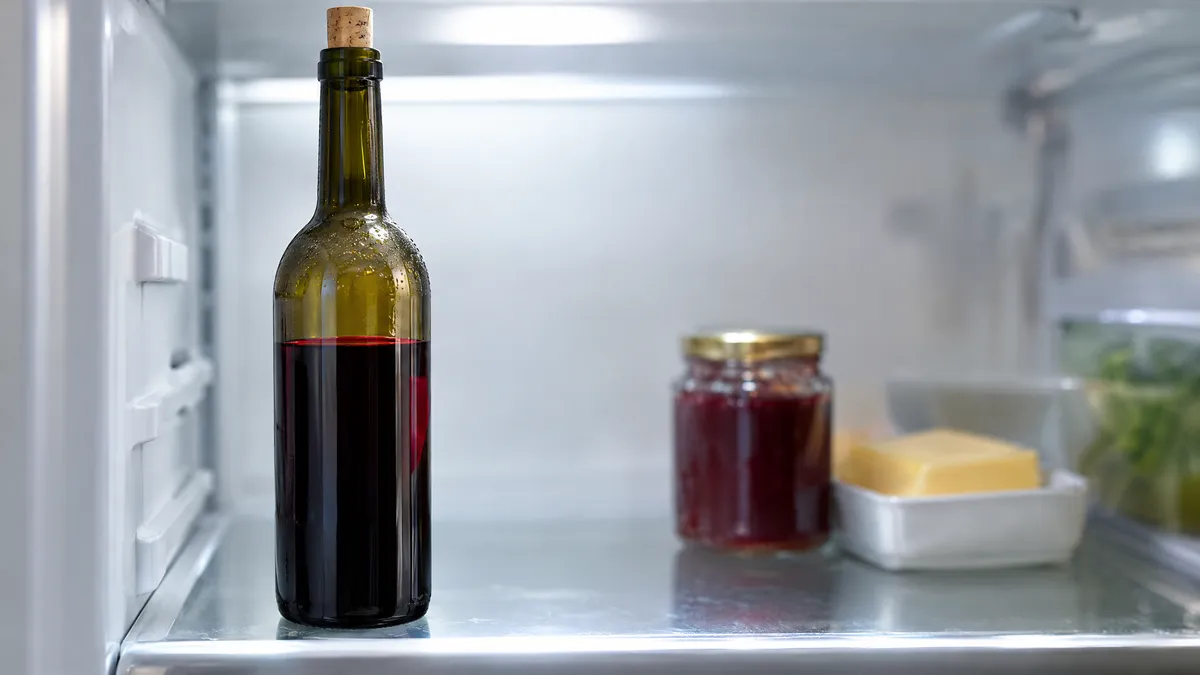
Yes. A re-corked red keeps longer in the fridge than on the counter, because cold slows oxidation (oxygen reacting with the wine, which fades its fresh fruit and leaves it flat). Wine Folly puts it plainly: "a refrigerator goes a long way to keeping wine for longer, even red wines."
Leaving open reds on the counter is a habit borrowed from serving advice. Red is poured a little below room temperature, and the fridge takes it far below that, which calls for warming the glass afterwards, never for skipping the fridge.
Straight from the fridge, a red can taste flat and smell of very little. If it does, cup the glass in both palms for a few minutes and swirl before you judge it. The full method, including a lukewarm water bath for the bottle, is in how to warm up red wine.

Quick check
One question on what you just read
You opened a bottle of red and will not finish it tonight. Where should it go?
Tap an answer to see how you did.
How Long Does Opened Wine Keep in the Fridge?
About three to five days with the cork pushed back in, according to Wine Folly's guide to open red wine. Taking the air out helps most: Wine Folly reports bottles still fresh after two weeks in the fridge under a vacuum pump.
Sparkling wine follows its own rules. A clamp-style Champagne stopper keeps it for about two to three days. A vacuum pump is the wrong tool, because lowering the pressure draws the bubbles out of the wine. If the leftover is sparkling, use the clamp stopper. Pumps, gas sprays and stoppers are compared in wine preservation tools.
Fortified wines (wines with spirit added during production) vary by style. Fino and manzanilla, the pale, dry sherries, are the most fragile and should be drunk soon after opening; in Spain, leftover fino is often poured away the same day. Sweet and cream sherries last weeks or even months, because their sugar acts as a preservative. The styles are laid out in the sherry wine guide, and day counts for other wines in how long wine lasts after opening.
Can You Keep Unopened Wine in the Fridge?
For a few days or a couple of weeks, yes; for months, no. A bottle chilled for the weekend comes to no harm. The trouble builds with time, because fridge air is too dry for a natural cork and the fridge runs well below storage temperature.
Wine writer Tom Stevenson advises against fridge storage, because refrigeration often dehumidifies the air and can quickly dry out corks. A cork needs some humidity to stay plump. Once it dries and shrinks, it can let oxygen into the bottle, and the wine ages early. Temperature swings add to the damage: as the bottle warms and cools, the cork expands and contracts, which also lets air in.
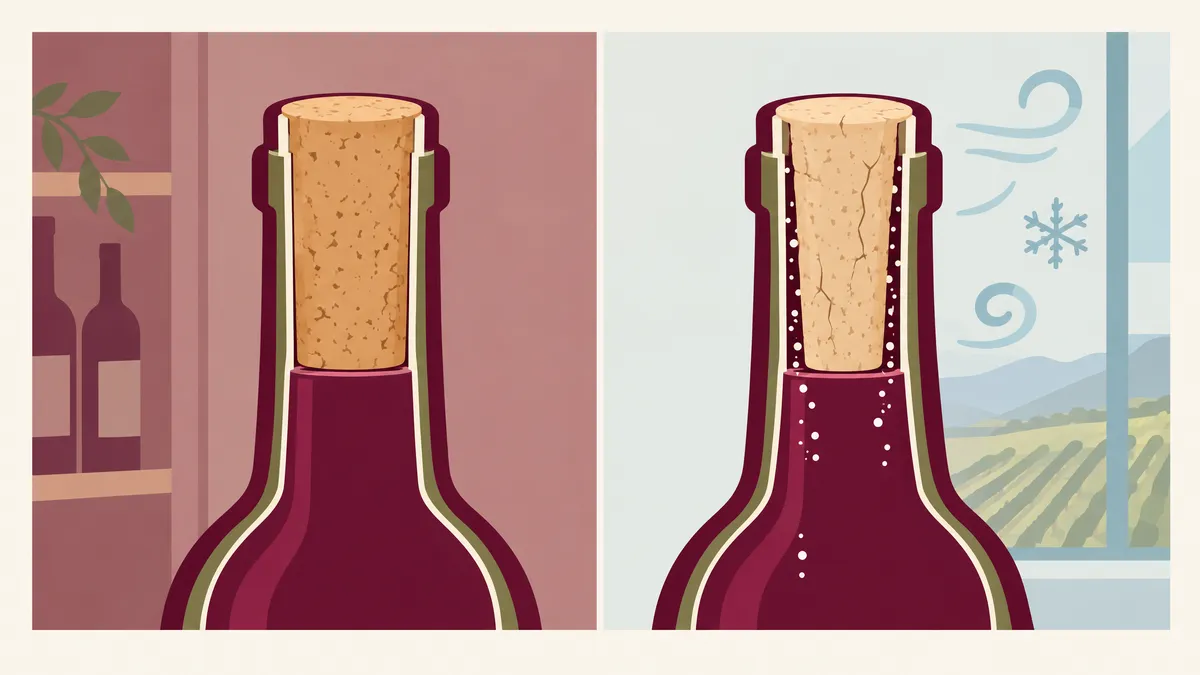
That makes dry air on the cork the real problem, more than the cold, so a screw-capped bottle escapes the drying. The closures are compared in screw cap vs cork.
If a bottle will wait more than a couple of weeks, move it to a cool cupboard and lay it on its side if it has a cork (horizontal vs vertical wine storage explains why). How to store wine at home helps you find the spot, and the wine fridge guide says when a dedicated wine fridge is worth buying.
What Temperature Should Wine Be Kept At?
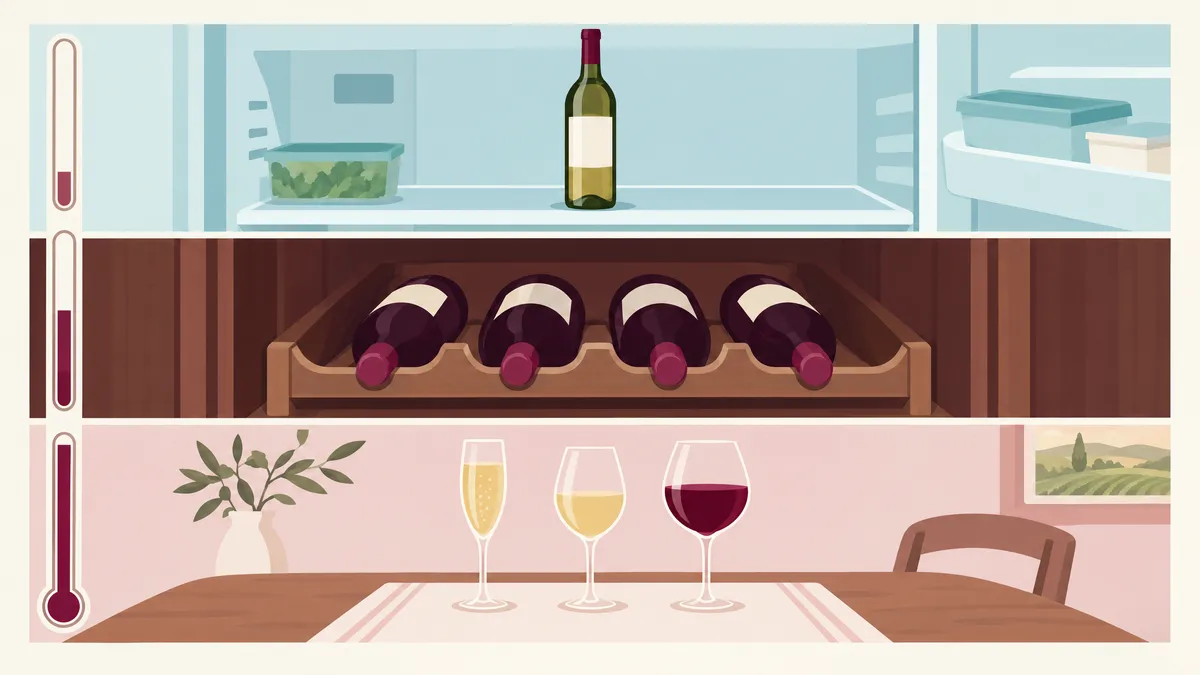
Steady and cool: most experts recommend a constant 10 to 15°C (50 to 59°F) for storing wine. Stevenson suggests 11°C (52°F) may be ideal for storage and ageing. A kitchen fridge sits well below that range, since US food-safety advice from the FDA keeps it at 4°C (40°F) or lower.
Most of the conflicting advice online comes from mixing up three temperatures that do different jobs.
| Temperature | Where | What it is for |
|---|---|---|
| 4°C (40°F) or below | Kitchen fridge | Food safety; opened wine for a few days; chilling before serving |
| 10 to 15°C (50 to 59°F) | Cellar, wine fridge or cool cupboard | Keeping sealed bottles for months or years |
| 3 to 7°C (38 to 45°F) | Fridge or ice bucket | Pouring sparkling wine |
| 7 to 12°C (45 to 54°F) | Fridge, then a few minutes on the table | Pouring white wine |
| 15 to 20°C (59 to 68°F) | A cool room | Pouring red wine |
A steady temperature matters as much as the number. If your coolest spot swings with the heating or the afternoon sun, pick a steadier one, even if it runs a degree or two warmer. Spots that work without a cellar are listed in wine cellar alternatives.
How Cold Should Wine Be When You Pour It?
Colder than the room for every style, and warmer than the fridge for most. Sparkling wine is the exception: serve it ice cold, straight from the fridge or a bucket. Whites taste best a few degrees above fridge temperature, and reds sit at the cool end of room temperature, as the second table shows.
If a white tastes of little straight from the fridge, give the glass a few minutes on the table. If a red has stood in a warm kitchen, give it a short spell in the fridge before pouring. For a white you forgot to chill, how to chill wine fast has the quick methods, and the wine serving temperature chart lists every style.
More on keeping and pouring wine sits in the serving and storage hub, and Sommy teaches the basics in its bite-sized Wine 101 course. Put any open bottle on a fridge shelf tonight with its cork pushed back in, then move sealed bottles you will not open in the next two weeks to your coolest cupboard.
Sources
Frequently Asked Questions
Does unopened wine need to be refrigerated?
No. A sealed bottle keeps best somewhere cool, dark and steady, with 10 to 15°C (50 to 59°F) the range most experts cite. A kitchen fridge is fine for a bottle you will open within a week or two, so chill whites, rosé and sparkling ahead of dinner. For months of storage, the fridge's dry air can shrink a natural cork and let oxygen in.
Can you put red wine in the fridge after opening?
Yes, and you should. Cold slows the oxygen damage that makes an open bottle taste flat, and that works for red as well as white. Push the cork back in and keep the bottle on a shelf. A red straight from the fridge can smell of very little, so warm the glass in your hands for a few minutes before you judge it.
How long does opened wine last in the fridge?
About three to five days with the cork pushed back in, according to Wine Folly. Pumping the air out with a vacuum stopper can stretch that, and Wine Folly reports bottles still tasting fresh after two weeks in the fridge. Sparkling wine keeps about two to three days under a clamp stopper. Sweet and cream sherries can last weeks or months.
Is it OK to keep wine in the fridge for months?
It is not a good idea for bottles closed with natural cork. Refrigeration often dries the air, and a dry cork shrinks and lets oxygen into the bottle, so the wine ages early. Each trip out of the fridge and back also makes the cork expand and contract. Move any bottle you will not open within a couple of weeks to a cool, steady cupboard.
What temperature should wine be stored at?
Most experts recommend a constant 10 to 15°C (50 to 59°F) for storing wine, and wine writer Tom Stevenson suggests 11°C (52°F) may be ideal for ageing. Keeping it steady matters as much as the exact number, because temperature swings work on the cork. A kitchen fridge runs at 4°C (40°F) or lower, which is well below that range.
Does sparkling wine need to be refrigerated after opening?
Yes. Close it with a clamp-style sparkling stopper and keep it in the fridge, where it holds its bubbles for about two to three days. Do not use a vacuum pump on sparkling wine, because lowering the pressure draws the gas out. Sparkling wine is also served ice cold, at about 3 to 7°C (38 to 45°F).
Sommy Team
LinkedInFounder & Wine Educator
The Sommy Team is building the world's most approachable wine education app, helping beginners develop real tasting skills through structured courses and AI-guided practice.