Wine Preservation Tools: What Works and What to Skip

By the Sommy Team — AI-assisted, human-edited.
Updated Jul 23, 2026
Contents (7)
- Which Wine Preservation Tool Works Best, in One Paragraph
- Why Open Wine Goes Downhill (and What a Preservation Tool Fights)
- The Five Wine Preservation Tools, Compared
- How Many Days Does Each Tool Actually Buy You?
- What About Sparkling Wine Preservation?
- Which Wine Preservation Tool Should You Buy?
- Habits That Beat Any Gadget
TL;DR
Wine preservation tools slow the oxidation that flattens an open bottle. Re-corking and refrigerating buys a day; vacuum pumps add one or two; inert gas sprays add several; and argon needle systems like Coravin can keep a bottle fresh for weeks or months, one glass at a time.
A half-finished bottle on the counter is a slow-motion problem: every hour it sits open, oxygen dulls the fruit and softens the structure until the wine tastes tired. Wine preservation tools exist to slow that clock — but they range from a two-dollar rubber stopper to a three-hundred-dollar argon system, and they are not equally effective.
This guide compares the five preservation methods that matter, how each one works, how many days it actually buys you, and which fits the way you drink.
Which Wine Preservation Tool Works Best, in One Paragraph
The best wine preservation tool depends on how you drink. For a bottle you will finish within two or three nights, re-cork it and refrigerate — cold roughly halves the chemical reactions inside, buying a day at almost no cost. A vacuum pump adds one to two more days by pulling headspace air out through a one-way valve. An inert gas spray, which lays a heavy blanket of argon or nitrogen over the wine, adds several days. The gold standard is an argon needle system such as a Coravin: it pours through the cork without ever exposing the wine to air, keeping an opened bottle fresh for weeks or even months, one glass at a time. Match the tool to your drinking pattern, not the marketing.
Why Open Wine Goes Downhill (and What a Preservation Tool Fights)
Wine in a sealed bottle is stable. Wine in an open bottle is a chemistry experiment, and oxygen is the lead reagent.
A brief splash of air during a tasting is helpful — it softens tannin (the drying, gripping sensation from grape skins and seeds) and lets aromas rise out of the glass. Hours of continuous exposure is a different story. Once air reaches the wine, oxygen oxidizes ethanol into acetaldehyde, a compound that smells like bruised apple, stale sherry, or wet cardboard. Given more time, that acetaldehyde converts into acetic acid — the active ingredient in vinegar. In parallel, the bright fruit molecules that give a wine its lift break down and fade.
The winemaker's defense is sulfur dioxide (SO₂), an antioxidant added at bottling. UC Davis enology research describes SO₂ as the buffer that quenches oxidation reactions; once it is used up, browning and acetaldehyde accumulate. That is why low-sulfite and natural wines fade faster, and why every preservation tool is really doing one of two jobs: removing the oxygen already in the bottle, or blocking new oxygen from reaching the surface.
There is one more variable every tool has to reckon with: headspace, the volume of air between the wine and the cork. A bottle that is three-quarters empty has far more air pressing on the wine than one that is barely opened, which is why the same wine can taste fine on night two from a full bottle and flat from a nearly empty one. If you want the full breakdown of how fast each style fades, our guide to how long wine lasts after opening has day counts for every type.
The Five Wine Preservation Tools, Compared
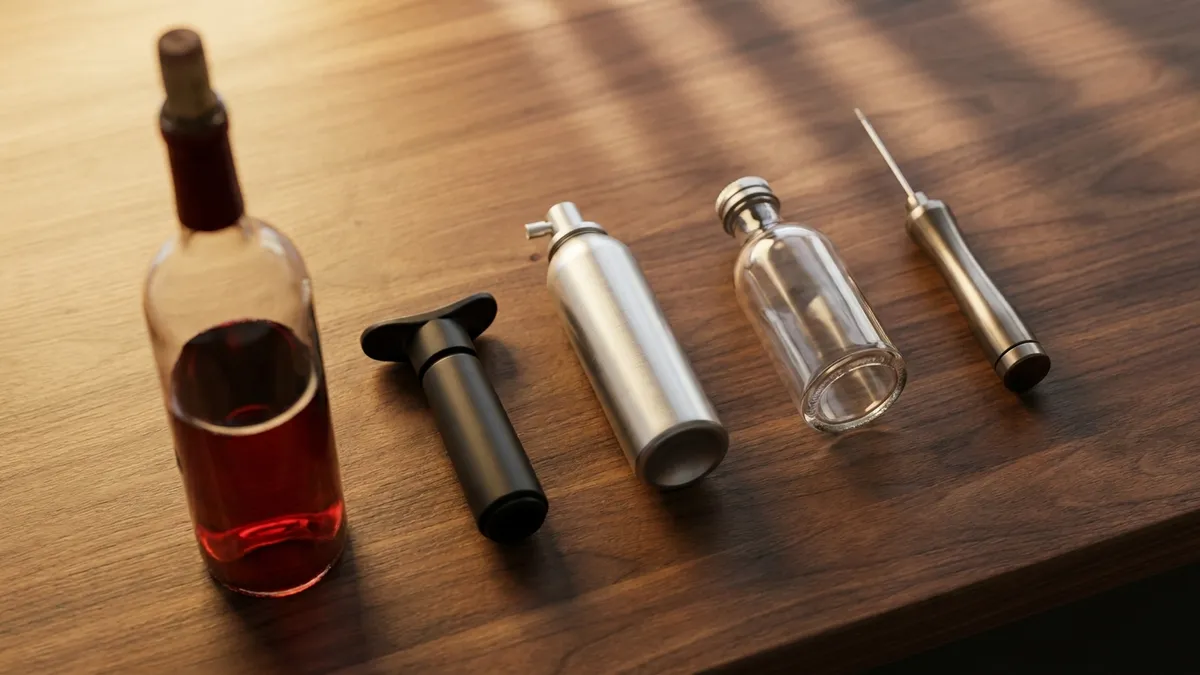
Here is the head-to-head. "Freshness gained" is the extra time each method buys over an unstoppered bottle, assuming you also refrigerate.
| Tool | How it works | Freshness gained | Cost band | Best for |
|---|---|---|---|---|
| Re-cork + refrigerate | Cold slows every reaction; the cork limits new air | +0-1 day | Free | Bottles you will finish in a night or two |
| Vacuum pump | Pulls headspace air out through a one-way valve stopper | +1-2 days | $ | Frequent by-the-glass drinkers on a budget |
| Inert gas spray | Blankets the surface with heavy argon or nitrogen | +3-7 days | $$ | Better whites and occasional splurge bottles |
| Half-bottle transfer | Decant into a clean 375 ml bottle to cut headspace | +1-3 days | Free | No-gadget savers with a clean empty bottle |
| Argon needle system | Pours through the cork under argon; wine never meets air | Weeks to months | $$$$ | One glass at a time from age-worthy bottles |
Re-Cork and Refrigerate: the Free Baseline
Before spending anything, get the free wins. Push the cork back in — upside down works in a pinch, though it seals imperfectly because the cork has swelled against the glass — and put the bottle in the fridge, even if it is red.
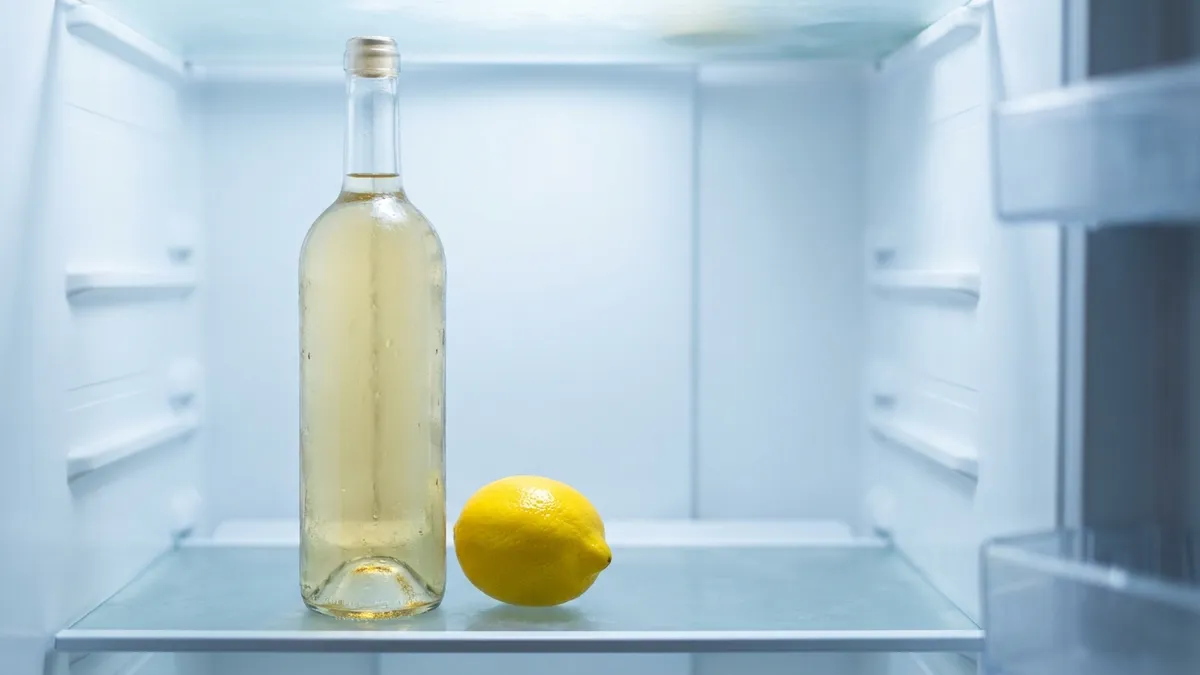
Cold is the most underrated preservation tool there is. Chilling roughly halves the rate of oxidation, so a red kept in the fridge for three nights tastes fresher than one left on the counter for two. Pull it out 20 to 30 minutes before pouring so it climbs back to serving temperature; our wine serving temperature chart covers the targets. Store the bottle upright, not on its side, to keep the wine's surface area in contact with air as small as possible.
Vacuum Pumps: Modest but Cheap
The vacuum pump is the most common gadget in the accessories drawer. You seat a rubber stopper with a one-way valve in the neck and pump until you feel resistance, drawing a portion of the headspace air out.
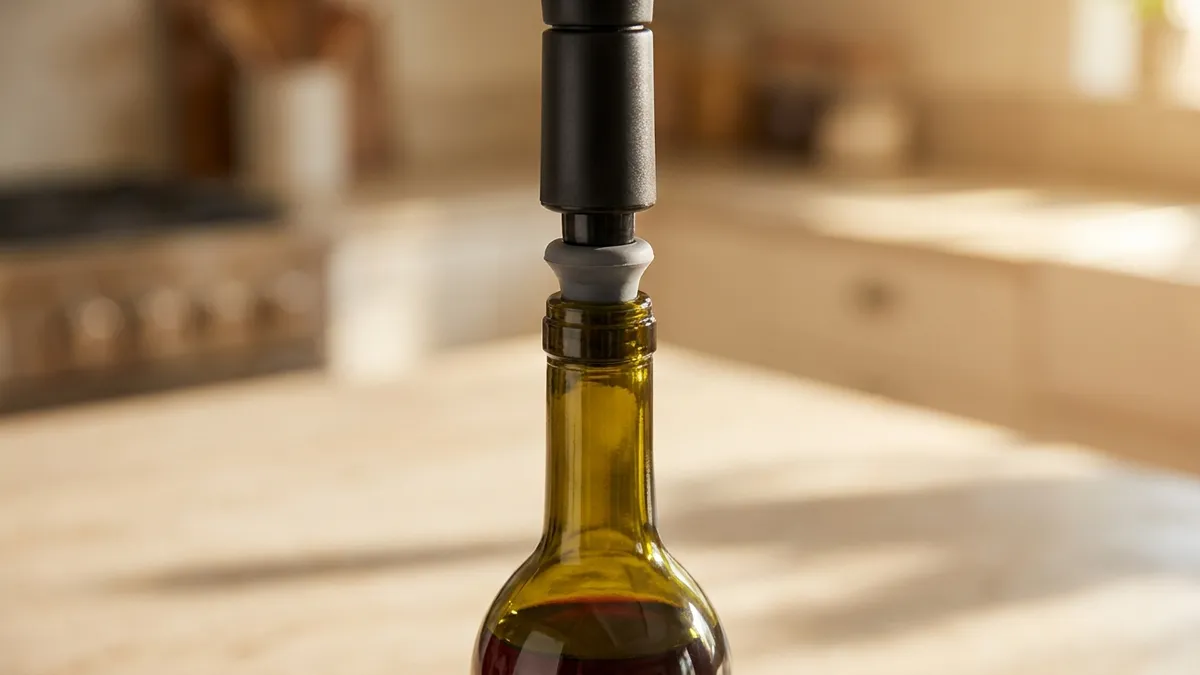
It does not create a true laboratory vacuum, and the seal leaks slowly over a day or two, so the benefit is real but modest — figure one to two extra days for still wines. It is cheap, durable, and takes two seconds to use, which is why it earns its place. Two cautions: do not use it on sparkling wine, because the suction pulls dissolved carbon dioxide out and flattens the bubbles faster, and do not expect it to rescue a bottle that is already three-quarters gone — there is simply too much air left behind.
Inert Gas Sprays: a Real Upgrade
Inert gas sprays are the mid-tier step up. You spray a short burst of argon (or a nitrogen-argon blend) into the bottle before re-corking. Because these gases are heavier than air and chemically inert, they settle over the wine as a protective blanket that keeps oxygen away from the surface.
This is more effective than a vacuum pump because it addresses the oxygen directly rather than trying to remove air that keeps sneaking back in. Expect several extra days — often three to seven — with no moving parts to wear out. A single can treats dozens of bottles. The catch is technique: you have to re-cork quickly and gently so the gas layer is not disturbed, and the benefit shrinks on a nearly empty bottle where a small squirt of gas cannot cover a large air gap.
The Half-Bottle Transfer Trick
This one costs nothing and beats a lot of gadgets. Keep a clean, empty 375 ml half-bottle with its screw cap or a fresh cork. When you have roughly half a standard bottle left, decant it into the smaller vessel and seal it.
The physics is the same principle every other tool chases: less headspace means less oxygen touching the wine. A full half-bottle has almost no air gap, so the wine oxidizes far more slowly than the same volume rattling around in a three-quarters-empty full bottle. Combined with the fridge, this buys one to three extra days for free. Sommy's course material on storage leans on this trick precisely because it works without spending a cent.
Argon Needle Systems: the Gold Standard
At the top of the range sit argon needle systems, of which the Coravin is the best-known. Instead of removing the cork, a thin hollow needle pierces through it, the bottle is pressurized with argon, and wine flows out through the needle. When you withdraw it, the natural cork reseals around the tiny hole.
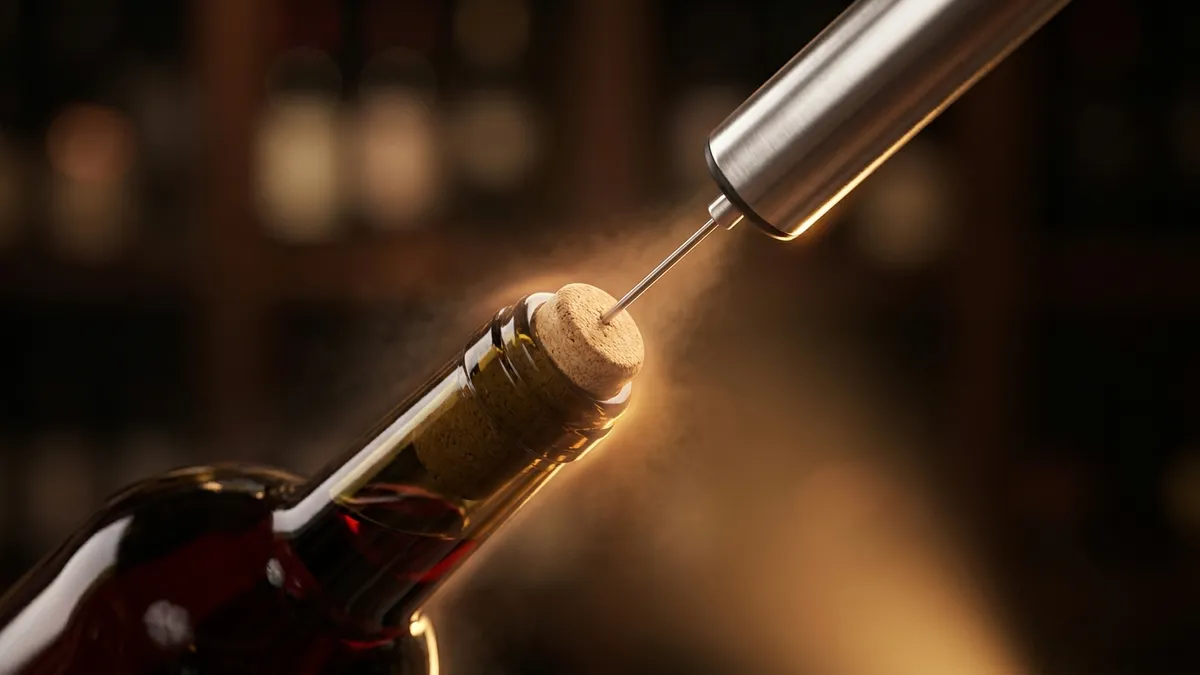
Because the wine never meets air, the manufacturer reports bottles staying fresh for weeks, months, or longer after a first pour. That makes it a genuinely different category of tool: not "slow the decline" but "pause it." The trade-offs are cost — the device plus argon capsules is the most expensive option by far — and the fact that classic needle models are designed for natural cork, not screw caps or synthetic closures (newer systems add screw-cap adapters). It is overkill for a bottle you will finish tonight, and close to magic if you like a single glass of something serious a few times a week.
How Many Days Does Each Tool Actually Buy You?
The honest answer is that the tool sets a ceiling, but the wine sets the floor. A delicate Pinot Noir or a crisp Sauvignon Blanc fades fast no matter what you do, so even a good tool only stretches it a couple of days. A structured Cabernet, an oaked Chardonnay, or a sweet wine has more to give and rewards a better tool with more days.
Style matters more than most gadget marketing admits. Sweet and fortified wines last longest because sugar and high alcohol both slow spoilage, while low-alcohol and low-sulfite wines fade quickest. To see where your bottle falls before you decide how hard to work at saving it, cross-reference the type-by-type shelf-life guide. And if a saved bottle still smells of bruised apple or nail polish when you return to it, our guide to oxidized wine explains what went wrong and whether it is salvageable for cooking.
What About Sparkling Wine Preservation?
Sparkling wine plays by different rules. It loses its carbonation — the dissolved carbon dioxide that makes the bubbles — faster than it oxidizes, so the goal is trapping gas pressure, not blocking oxygen.
The only tool that helps is a dedicated sparkling stopper: the kind with metal clamps or wings that grip the lip of the bottle and hold against internal pressure. With one on and the bottle chilled, expect one to three days before the wine reads like a slightly fizzy white. A plain cork will not hold the pressure, a vacuum pump actively strips the bubbles, and an argon system is built for still wine. The old myth about a silver spoon in the neck does nothing. For how the different fizz styles behave once open, see our guide to sparkling wine types.
Which Wine Preservation Tool Should You Buy?
Match the tool to your habit, and the decision gets easy:
- You finish bottles in a night or two. Skip the gadgets. Re-cork, refrigerate, store upright. Add a vacuum pump if you want a small cushion.
- You drink a glass or two most nights across several days. A vacuum pump or an inert gas spray plus the fridge is the sweet spot — low cost, real benefit, no fuss.
- You open serious bottles but drink slowly, one glass at a time. An argon needle system earns its price by pausing oxidation for weeks.
- You do not want to spend anything. The half-bottle transfer plus refrigeration beats most cheap gadgets outright.
Closures matter here too: a bottle that arrived under screw cap is trivial to reseal tightly, while a swollen natural cork never seats as well the second time. Our screw cap vs cork comparison covers why.
Habits That Beat Any Gadget
No tool outperforms good habits, and the best habits are free.
- Refrigerate everything after opening, reds included. It is the highest-impact free step.
- Store the open bottle upright and away from light to minimize both air contact and UV damage.
- Buy the right size. If you often drink alone, half-bottles waste nothing and need no preservation at all.
- Cook the survivors. A bottle past its drinking window is ideal for braises, risotto, and pan sauces — heat drives off the faults and concentrates the fruit.
If you want to build the palate to notice exactly when a saved bottle has slipped from "fine" to "tired," that is the kind of skill the Sommy app is built to teach, with structured tasting practice and guided feedback. Getting the storage right — the fridge, the stopper, the upright bottle — is covered in more depth in our guide to storing wine at home, and the companion piece on wine fridges helps if you are ready to move beyond the kitchen shelf. For the flip side of preservation — deliberately adding air to open a young wine up — see how to decant wine.
Sources
- Why Argon Gas Is the Best Wine Preserver — Coravin, 2024
- Oxygen Management — UC Davis Viticulture & Enology, Paso Robles Wine Country Alliance, 2019
- Sulfur Dioxide–Oxygen Consumption Ratio Reveals Differences in Bottled Wine Oxidation — American Journal of Enology and Viticulture, 2016
Frequently Asked Questions
What is the best wine preservation tool?
For most people, a vacuum pump plus refrigeration is the best value — cheap, simple, and good for a day or two. If you routinely drink one glass at a time from bottles worth saving, an argon needle system like a Coravin is the gold standard because the wine never touches air. Inert gas sprays sit in between.
Do vacuum wine pumps actually work?
Yes, modestly. A vacuum pump pulls some of the headspace air out through a one-way valve, slowing oxidation and buying roughly one to two extra days over a plain cork. It does not create a true vacuum and it strips the bubbles out of sparkling wine, so it is best used on still reds, whites, and rosés.
How does a Coravin keep wine fresh for so long?
A Coravin pushes a thin needle through the cork, pressurizes the bottle with argon, and lets wine pour out while the cork stays in place. Because argon is heavier than air and does not react with wine, it blankets the surface and blocks oxygen. The cork reseals around the needle hole, so an opened bottle can stay fresh for weeks or months.
Is argon or nitrogen better for preserving wine?
Argon is slightly better because it is denser than air, so it settles over the wine as a stable protective layer instead of mixing in. Nitrogen is lighter and disperses faster, though many spray products blend the two. Both are inert and food-safe. For a spray you use occasionally, either works; argon has the edge for long holds.
Can I preserve open sparkling wine?
Only for a day or two, and only with the right stopper. Sparkling wine loses carbonation faster than it oxidizes, so a dedicated sparkling stopper with metal clamps that grip the bottle lip is what you need. Vacuum pumps make it worse by pulling out dissolved carbon dioxide, and argon systems are built for still wine.
Do I still need a preservation tool if I refrigerate the bottle?
Refrigeration is the single most effective free step — cold roughly halves the rate of oxidation — but it does not remove the oxygen already in the bottle. A tool that pulls out air or blankets the surface with inert gas works alongside the fridge, not instead of it. Use both together for the best result.
Sommy Team
LinkedInFounder & Wine Educator
The Sommy Team is building the world's most approachable wine education app, helping beginners develop real tasting skills through structured courses and AI-guided practice.