Leftover Wine Uses: 12 Things to Do Besides Drinking It

By the Sommy Team — AI-assisted, human-edited.
Updated Sep 25, 2026
Contents (11)
- Leftover Wine Uses, in One Paragraph
- How Long Can You Use Leftover Wine For?
- What Can You Cook With Leftover Wine?
- Can You Use Leftover Wine as a Marinade?
- Can You Freeze Leftover Wine?
- How Do You Make Mulled Wine or Sangria With Leftover Wine?
- What Sweet Things Can You Make With Leftover Wine?
- Can You Turn Leftover Wine Into Vinegar?
- Does the Alcohol Cook Out of Wine?
- What Should You Never Do With Leftover Wine?
- What Should You Do With Tonight's Leftover Bottle?
TL;DR
Leftover wine that still smells of fruit is a cooking ingredient: deglaze a pan, braise, make risotto, steam mussels, marinate, freeze it in cubes, mull it, turn it into sangria, poach fruit or reduce it to syrup. Sharp, vinegary wine goes into dressings. Simmering never removes all the alcohol: about 25% remains after an hour.
The best leftover wine uses start with one fact: a bottle too tired to drink is often ideal for the pan, as long as it still smells like wine and not vinegar. Leftover wine and spoiled wine are two different problems. The first has lost some fruit to air; the second has turned sour. Sort the bottle first, then pick one of the twelve jobs below.
Leftover Wine Uses, in One Paragraph
Leftover wine that still smells of fruit, usually up to about a week in the fridge, belongs in the kitchen. Six uses are savory: deglazing a pan sauce, braising meat, making risotto, steaming mussels, marinating and freezing into cubes. Six more are drinks, desserts and dressings: mulling, sangria, poached fruit, wine syrup, a vinaigrette splash and homemade vinegar. Heat concentrates whatever is left in the wine, so a sour or musty bottle makes a sour or musty dish. Cooking does not remove all the alcohol either. A USDA study found 25% still present after an hour of simmering.
How Long Can You Use Leftover Wine For?
For cooking, usually about a week in the fridge with the cork back in. That is a few days longer than the bottle stays nice to drink. Style sets the starting point, because light, low-alcohol wines fade first and fortified wines hold on longest.
Sommy's guide to how long wine lasts after opening gives the drinking windows by style. Light reds last 2 to 3 days and most whites and fuller reds 3 to 5. Sparkling lasts 1 to 3 days, and fortified wines 2 to 4 weeks.
The clock is oxidation (air slowly reacting with the wine). First the fresh fruit fades, then the wine smells of bruised apple, and eventually bacteria turn the alcohol into acetic acid, the sour compound in vinegar. The oxidized wine explainer walks through each stage.
| Stage | How it smells | Typical time open, in the fridge | What to do with it |
|---|---|---|---|
| Fresh | Clear fruit, like the day you opened it | Up to the style's drinking window | Drink it, or cook anything |
| Tired | Fruit faded, flat, maybe a little bruised apple | A few days past the drinking window | Sauces, braises, risotto, marinades, mulled wine, sangria, freezing |
| Sharp | Sour, like salad dressing | Often a week or more, or warm storage | Vinaigrettes and pickling only, or start homemade vinegar |
| Faulty | Musty cardboard, nail polish, or visible mold | Any age | Pour it away |
If it smells of fruit, cook with it. If it smells sharp, use it only where vinegar belongs, because heat concentrates acidity (the tartness that makes your mouth water) rather than removing it. If it smells musty or shows mold, pour it out.
What Can You Cook With Leftover Wine?
Anything with a hot pan or a long simmer: deglazed sauces, braises, risotto and steamed shellfish. Heat and the other ingredients cover the aroma the wine has lost. A glass or two is enough for most recipes, so even a small leftover pour has a job.
If the wine is a tired white, use it with chicken, fish, shellfish or risotto. If it is red, use it with beef, lamb, mushrooms or a stew.
Deglaze a pan sauce
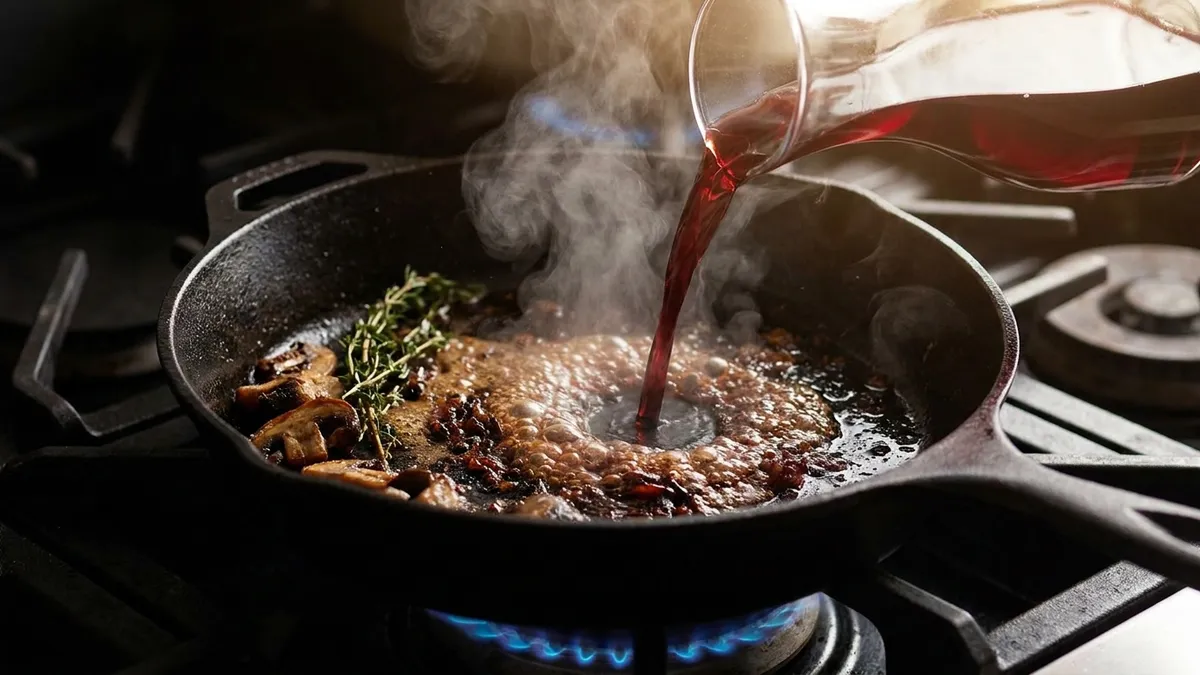
After you sear meat or mushrooms, a brown crust sticks to the pan. Deglazing means pouring in a liquid to dissolve that crust, and the savory result is called the fond (French for "base"). Wine is ideal for the job. Pour in about half a glass while the pan is still hot, scrape as it bubbles, and reduce it by half before adding stock or a knob of butter.
Braise meat in it
A braise is meat cooked slowly in a covered pot with liquid, and half a bottle of tired red is a classic base. Coq au vin, chicken braised in wine, is traditionally made with red Burgundy. French regions swap in their own local wine, from Alsace Riesling to the Jura's vin jaune. So a leftover white works too. Use it with chicken and mushrooms, then pair the finished dish using the wine with chicken guide.
Make risotto
A leftover dry white suits risotto. Add a glass after toasting the rice and let it cook off before the first ladle of stock. The wine's acidity balances the butter and cheese stirred in at the end.
Steam mussels or clams
A tired white or rosé makes a steaming liquid for shellfish. Soften garlic and shallot in a wide pot, add a glass of wine, bring it to a boil and tip in the shellfish with the lid on. The wine and shellfish juices become the sauce, so serve bread for dipping.
Can You Use Leftover Wine as a Marinade?
Yes, as long as you add oil and seasoning, keep it in the fridge, and stop at a few hours to a day. The acid in wine breaks down the surface of the meat so it absorbs more moisture, but acid alone turns the outside mushy. A good marinade balances acid, oil and spice.
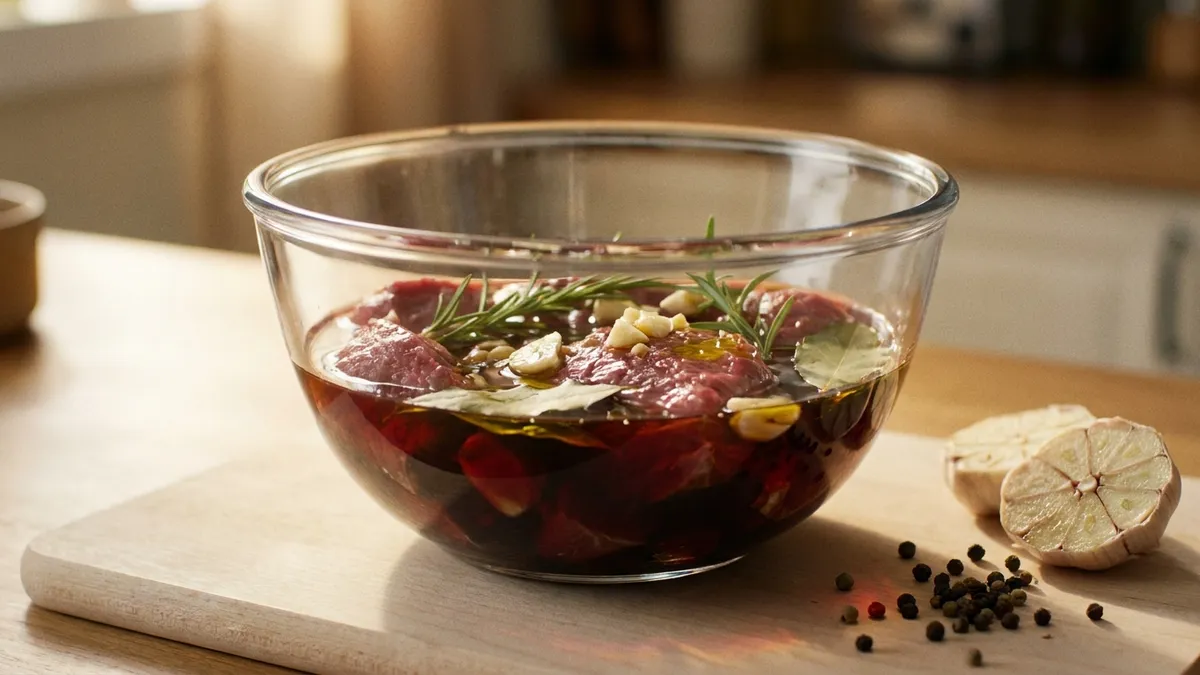
A simple ratio that works: one part wine to one part oil, plus crushed garlic, herbs and pepper. Use a glass bowl or a zip bag. Metal and glazed pottery can react with the acid. Marinate in the fridge, where the cold slows bacterial growth.
If the meat is delicate, such as fish or chicken breast, keep it under a few hours. Tougher cuts such as beef shoulder or lamb leg can sit overnight. Once the raw meat comes out, the liquid is no longer a sauce ingredient. It can only be used again if you boil it first.
Can You Freeze Leftover Wine?
Yes, for cooking. If less than a glass is left, pour it into an ice cube tray, freeze it, then move the cubes to a labeled freezer bag. Drop one or two straight into a pan sauce, stew or risotto.
Freezing and thawing can flatten a wine you might have wanted to drink, and pouring it into a tray exposes it to more air. So keep half a bottle or more stoppered in the fridge instead, and consider the stoppers and pumps compared in wine preservation tools. The full answer on bottles, corks and freezers is in can you put wine in the freezer.
How Do You Make Mulled Wine or Sangria With Leftover Wine?
Heat a heavy red gently with spice and orange, or chill a light red with fruit and a splash of juice. If the red has a lot of tannin (the drying grip on your gums), mull it, since sugar and warmth soften that grip. If it is light and fruity, make sangria.
Mulled wine
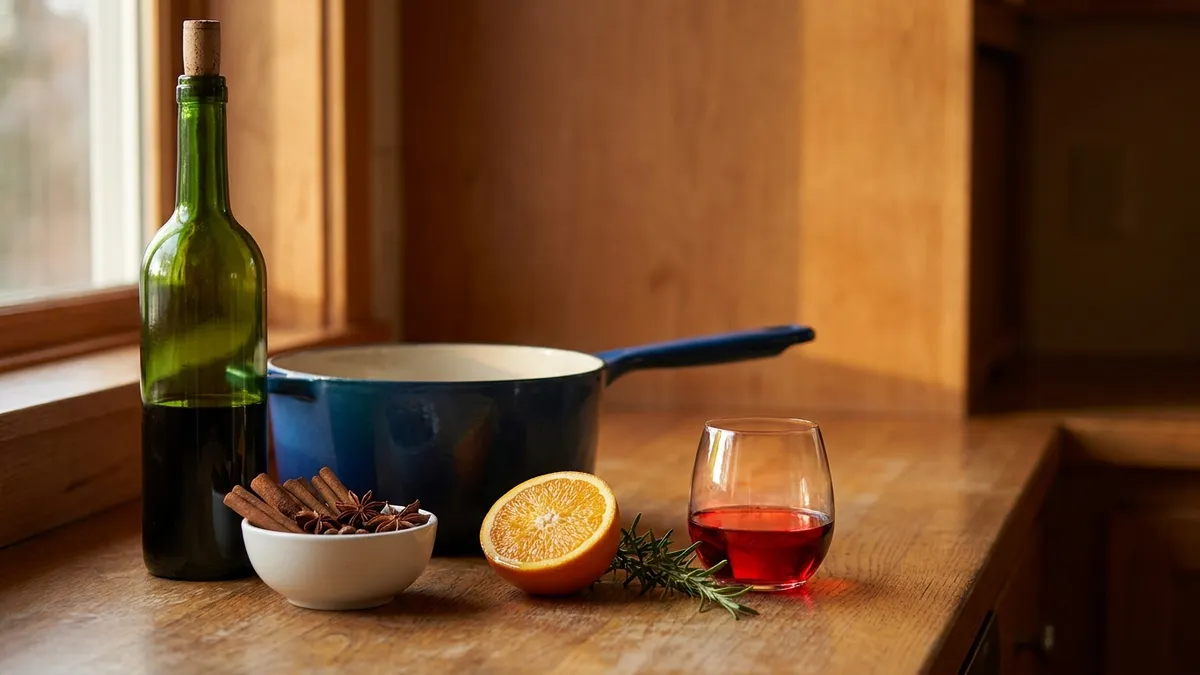
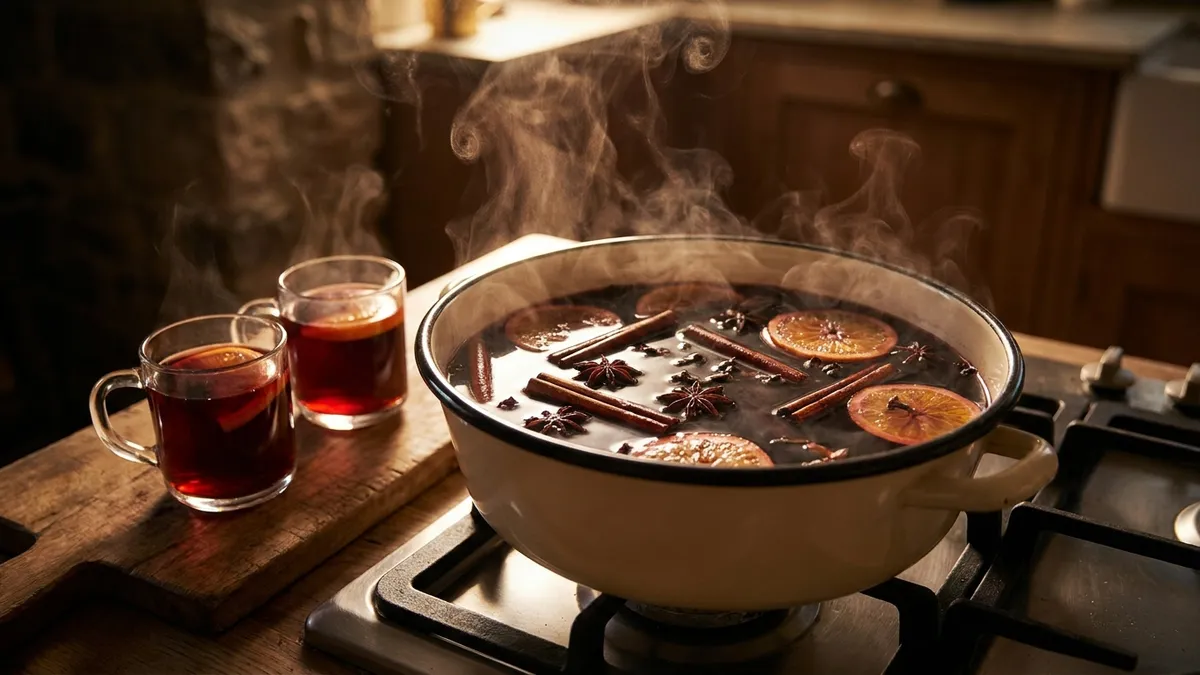
Traditional mulled wine is red wine heated with cinnamon sticks, cloves, star anise, orange and sugar. The Nordic version, glögg, is heated to 60 to 70°C, well below a boil. French vin chaud usually uses honey, cinnamon and orange. For half a bottle, add one cinnamon stick, three cloves, one star anise, a few orange slices and a tablespoon of honey, then warm it for 15 minutes without letting it bubble.
Sangria
Sangria is wine mixed with chopped fruit, a little sugar and something fizzy or citrusy, served cold. Slice an orange and an apple into the leftover wine, add a spoonful of sugar and a splash of orange juice, and chill it for at least two hours. Top it with soda water just before serving to keep the alcohol down. Under EU rules, a drink sold as sangria must be between 4.5% and 12% alcohol. Only drinks made in Spain or Portugal may use the name on its own; others must say where they were produced.
What Sweet Things Can You Make With Leftover Wine?
Poach fruit in it, or boil it down into a syrup. Both use the wine's sugar and acid, and both work with a bottle that has lost its aroma. If it is red, poach pears. If it is white, use peaches, apricots or plums.
Poached fruit
Pour the wine into a small pan with a few spoonfuls of sugar and a cinnamon stick. Add peeled, halved pears and simmer gently for about 20 minutes, until a knife slides in easily. Red wine dyes the pears a deep purple.
Wine syrup or glaze
Lift the fruit out and keep boiling the poaching liquid until it coats a spoon. Or reduce plain leftover red with a little sugar the same way. The syrup keeps for about a week in a jar in the fridge. Pour it over ice cream, yogurt or a slice of plain cake, or brush it onto roasted meat in the last minutes of cooking.
Can You Turn Leftover Wine Into Vinegar?
Yes, in two ways. A bottle that already smells sharp can go straight into a dressing. True homemade vinegar needs a live starter, air and weeks of waiting. A bottle left open overnight has not become vinegar, even if it tastes flat.
Splash it into a vinaigrette
Wine that has turned sharp works where you would use red or white wine vinegar. Whisk one part sour wine with two parts olive oil, a pinch of salt and a spoon of mustard. It is milder than real vinegar, so use a little more.
Make your own wine vinegar
Vinegar forms when acetic acid bacteria turn alcohol and oxygen into acetic acid and water. Those bacteria need air, so a vinegar jar is covered with a breathable cloth. A mother of vinegar (a jelly-like layer of live bacteria from a previous batch or a shop-bought unpasteurized vinegar) gets the process started. Finished vinegar usually holds 4 to 18% acetic acid by volume. The US, Australia and New Zealand set 4% as the legal minimum.
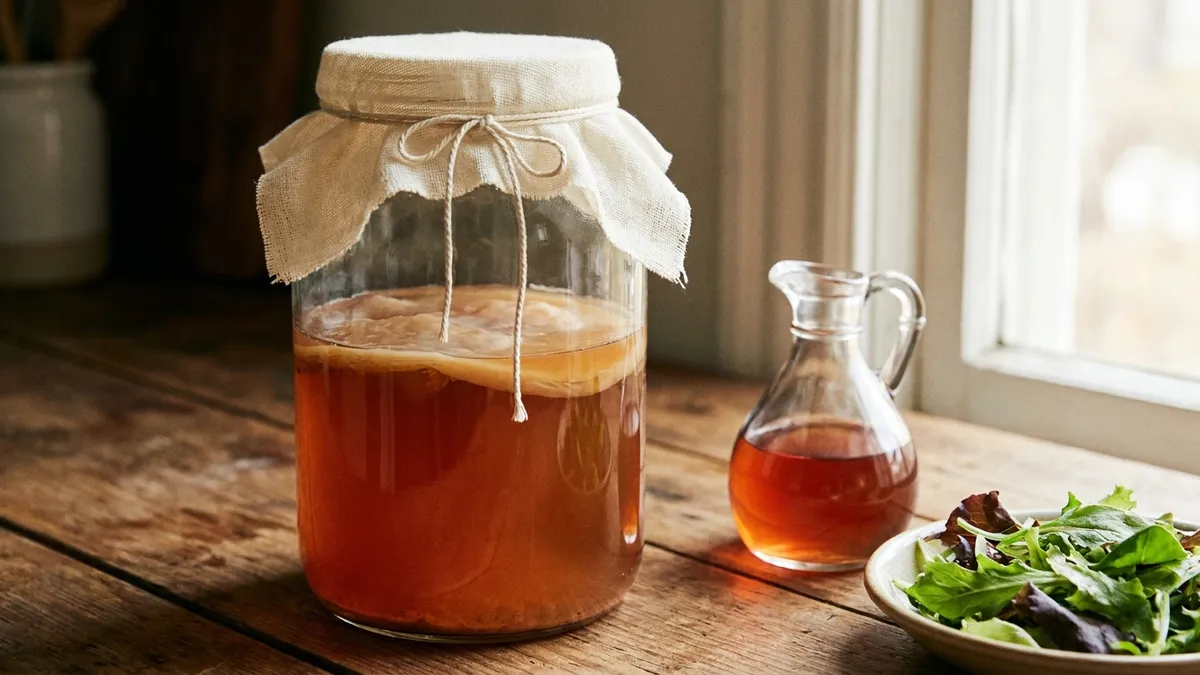
Commercial factories can make vinegar in 1 to 3 days. The traditional slow method, the one Orléans in France became famous for, takes a few months to a year. At home, mix leftover wine with the mother in a wide glass jar. Leave space at the top, cover it with cloth and keep it at room temperature out of the sun. Taste it every week or two until it is as sharp as you want, then strain it into a bottle with a cap.
Does the Alcohol Cook Out of Wine?
No. Some alcohol always stays behind. A 1992 USDA study measured how much alcohol stays in food. Dishes simmered with the alcohol stirred in kept about 40% after 15 minutes, 25% after an hour, 10% after two hours and 5% after two and a half hours.
Quick methods keep far more. Wine added to a boiling liquid and taken straight off the heat kept about 85%. Flaming it kept about 75%, and a dish soaked overnight with no heat kept about 70%. So a fast pan sauce or a glaze still carries most of its alcohol, while a three-hour braise holds very little. Finished mulled wine ranges from about 0 to 15% alcohol, depending on how long it heats and whether spirit is added.
If a guest avoids alcohol for any reason, leave wine out of the dish entirely. Stock with a squeeze of lemon or a spoon of vinegar gives a pan sauce similar acidity.
What Should You Never Do With Leftover Wine?
Never cook with a corked, moldy or badly vinegary bottle, and never turn a used raw-meat marinade into sauce without boiling it first. A corked wine smells of damp cardboard or a musty cellar. The smell can carry into the food, so pour it away. The corked wine guide explains how to spot it.
A few more rules keep the kitchen safe:
- Skip the bottled cooking wine. The supermarket kind is usually salted, which throws off the seasoning of a dish.
- Watch for nail polish. A solvent smell signals volatile acidity, covered in the volatile acidity explainer. Heat can drive off the smell, but the sourness stays.
- Keep it cold. An open bottle left warm on the counter goes sour far faster than one in the fridge.
What Should You Do With Tonight's Leftover Bottle?
Sort it before bed. Pour a splash, smell it, and match it to the table above. That one-minute check decides whether the bottle becomes tomorrow's dinner, next week's dressing or a pour down the sink, so do it while the wine is still cold.
Fruit means cook with it this week or freeze the last glass. Sour means save it for dressings. Then put the cork back and stand the bottle upright in the fridge. The habits in storing wine at home buy the rest of the bottle a few more days.
Learning to smell that fade is a skill, and the bite-sized courses in the Sommy app train your nose step by step. The serving and storage hub collects the rest of the storage guides. Then pour the last inch of the bottle into an ice cube tray and freeze it for next week's pan sauce.
Sources
Frequently Asked Questions
How long can you keep leftover wine for cooking?
Stoppered in the fridge, most leftover wine stays good for cooking for about a week, a few days past the point where it stops being pleasant to drink. Light reds and sparkling wine fade fastest, fortified wines last weeks. The real test is smell: if it still smells of fruit, cook with it. If it smells sharp like salad dressing, use it only where you would use vinegar.
Can you cook with wine that tastes like vinegar?
Only in places where vinegar belongs. A bottle that has turned sharp and sour will make a sauce or stew taste sour too, because heat concentrates the acid instead of removing it. Use it as a splash in a vinaigrette or a pickling liquid. If it smells musty, like wet cardboard, or shows mold, pour it away instead.
Does the alcohol cook out of wine completely?
No. A 1992 USDA study found that food simmered with alcohol stirred in still held about 40% of it after 15 minutes, 25% after an hour and 10% after two hours. Wine added to a boiling liquid and taken straight off the heat kept about 85%. Only long braises get close to zero, so leave wine out of dishes for anyone avoiding alcohol.
Can you mix leftover red and white wine together?
For cooking or sangria, yes. Mixed wine loses the clear identity of either bottle, but in a long braise or a fruit-heavy punch the difference barely shows. Keep mixes for dishes with plenty of other flavors, and taste the blend first: if either wine was already sour or musty, the fault carries into the whole batch.
Is supermarket cooking wine the same as leftover wine?
No. Bottled cooking wine sold near the vinegar is usually salted and made from lower-quality wine, so it pushes up the salt in a dish and adds little flavor. A leftover bottle of ordinary drinking wine does the job better. If you use cooking wine anyway, cut back the salt in the recipe.
Can you make vinegar from leftover wine at home?
Yes, but it takes weeks, not a night on the counter. Vinegar forms when acetic acid bacteria turn alcohol into acetic acid, and they need air and a live starter called a mother of vinegar. Mix leftover wine with the mother in a wide jar, cover it with cloth, keep it at room temperature and taste it every week or two.
Sommy Team
LinkedInFounder & Wine Educator
The Sommy Team is building the world's most approachable wine education app, helping beginners develop real tasting skills through structured courses and AI-guided practice.